Two printing giants, one shifting landscape. Sean Smyth, consultant and analyst at Smithers, breaks down the technology trends, growth markets, and competitive pressures reshaping the industry to 2030.
Sean Smyth has spent more than 25 years working at the senior level of the print and packaging supply chain. His latest research for Smithers, The Future of Flexo vs Gravure to 2030, charts how the two dominant conventional printing processes are faring against each other—and against the growing threat of digital. We spoke with him about what the data shows.
Which process is bigger right now: flexo or gravure?
Flexo is the larger market in both value and volume; however, gravure is growing faster in the most rapidly expanding sectors: Asian packaging and industrial and functional printing. The two processes overlap in flexible packaging, labels, and cartons, areas where flexo is steadily winning share, but they also occupy distinct niches. Gravure dominates décor printing and publications, while flexo leads in corrugated.
“In every application where they compete head-to-head, flexo is growing faster,” Smyth explains. “But gravure leads in the sectors with the fastest absolute growth.”
What are the biggest technology shifts in flexo right now?
Smyth describes several converging trends remaking the process. Press automation has advanced significantly through machine learning and zero-make-ready technology, reducing waste as run lengths fall in labels and cartons. Robotics and AI are now driving further gains—he cites Brotech’s FF-X530 as the first AI-driven flexo press. In prepress, computer-to-plate digital imaging and non-solvent plate processing have greatly improved quality, and more converters are bringing platemaking in-house.
Extended gamut printing is another area he highlights. “It’s replacing spot colours, reducing waste and cutting make-ready time,” he says. And hybrid flexo/inkjet presses are proliferating: already standard in labels, now growing in corrugated.
And for gravure—is innovation keeping pace?
Gravure press innovation is more incremental. Modern presses incorporate machine learning for automation and robotic cylinder handling, and extended gamut is making inroads. But the installed base remains dominated by older mechanical presses running solvent inks, much of which will eventually need to be retired.
The more structural issue, in Smyth’s view, is cylinder preparation. Electroplating, engraving, and chromium plating remain complex and costly, which makes in-house production difficult and restricts flexibility.
How is the sustainability agenda affecting both processes?
Environmental pressure is accelerating across both sides. Solvent inks are being replaced by water-based formulations to cut VOC emissions. Flexo platemaking is moving away from solvent washing towards water-wash systems. In gravure, the use of hexavalent chromium in cylinder production is under growing regulatory scrutiny, with alternatives under active investigation. Packaging waste legislation is also reshaping pack design, with flow-on effects for print volumes and formats.
“Flexo is further along on sustainability. Water-based inks and non-solvent platemaking are more advanced on the flexo side—and as regulation tightens, that gap may widen.”
Where does digital print fit into this picture?
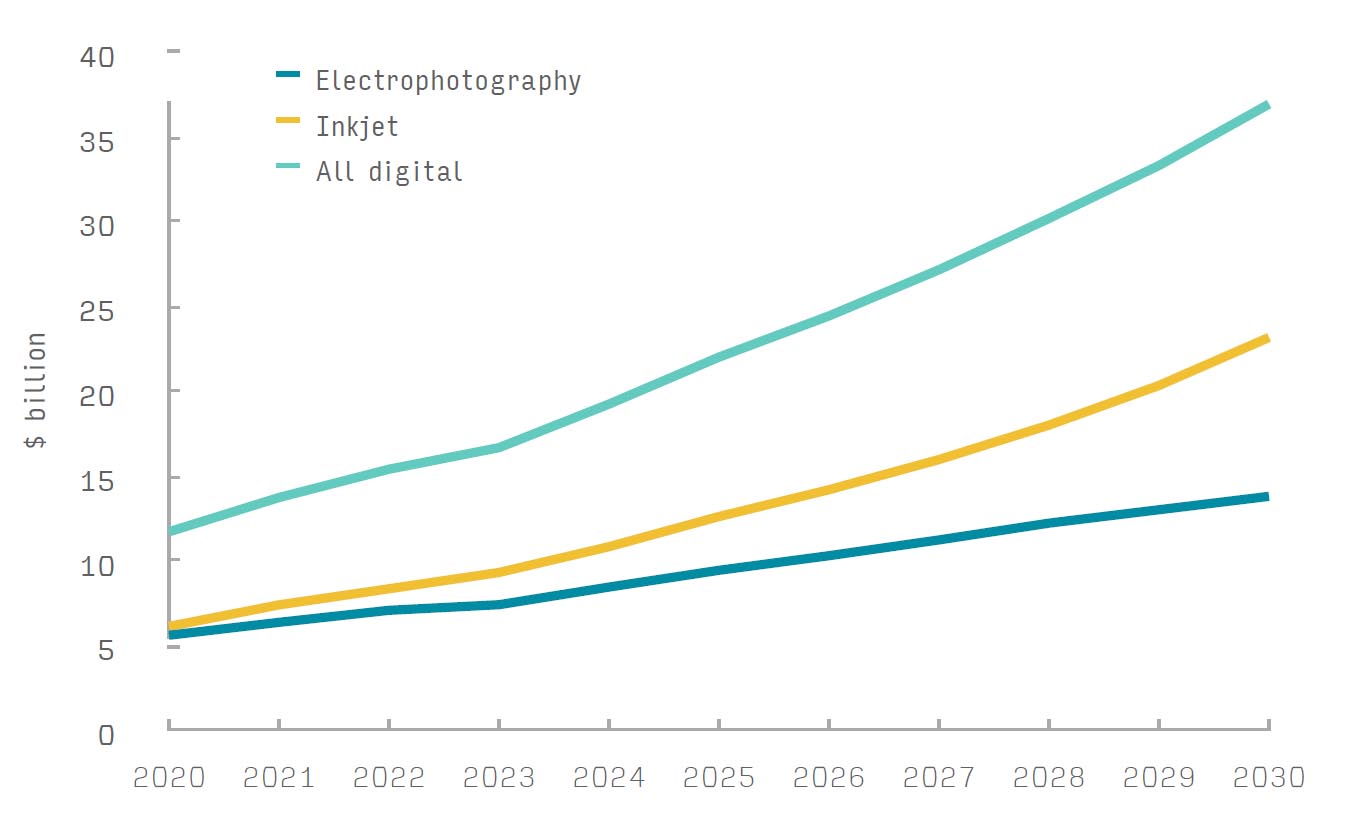
“Digital is the most disruptive competitive force for both processes,” Smyth says, “particularly in labels and packaging where shorter runs and faster design changes favor inkjet and toner-based systems.” Flexo is responding with hybrid flexo/inkjet presses, which are now standard in labels and emerging in corrugated and flexible packaging.
Gravure, he argues, is more vulnerable. Its long makereadies and high cylinder costs make it structurally uncompetitive for short runs. “Digital doesn’t yet threaten gravure in décor or functional printing, where run lengths remain high. But it’s encircling the shorter-run segments where brands are pushing hardest for flexibility.”
Which sectors are showing the strongest growth for each process?
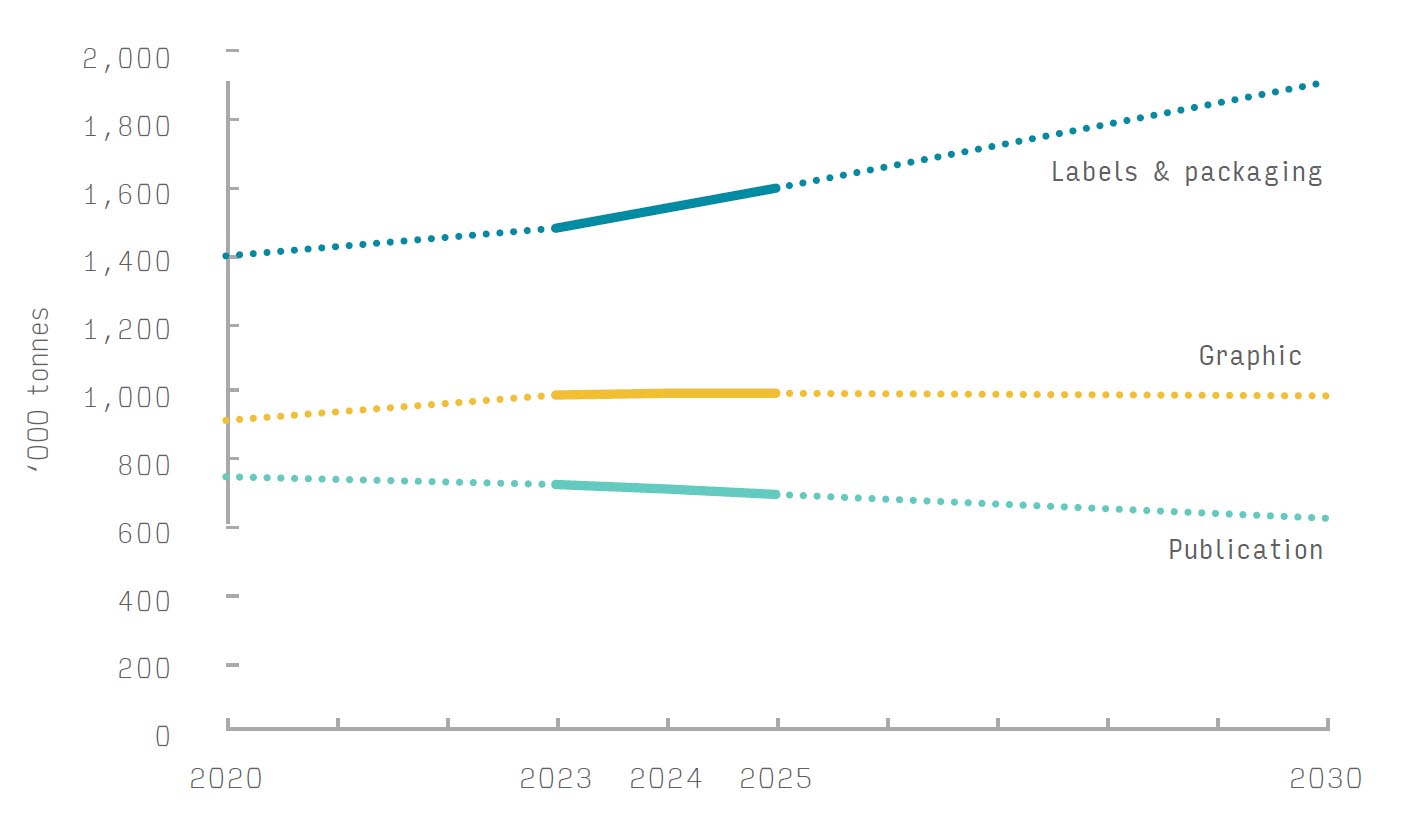
For flexo, Smyth points to packaging and labels as key growth markets, driven by consumer goods, food and beverage, and e-commerce. Corrugated packaging continues to grow—a mature market for flexo, but still expanding. Printed electronics represent a niche but growing opportunity where flexo’s coating capabilities are becoming relevant.
For gravure, Asian packaging is the standout. Rising consumer spending in China, India, and Southeast Asia is fuelling packaging demand at scale. Décor printing—wallpaper, décor papers, and flooring—is a reliable protected niche where color fidelity on reprints is a technical requirement gravure uniquely satisfies. Functional and industrial printing, including coatings and printed electronics, is also expanding.
Are any sectors in decline?
Publication rotogravure is in terminal decline as magazine, catalog, directory, and brochure print runs collapse with the shift to digital media. “This was once one of gravure’s largest segments,” Smyth notes. Flexo newspapers are also falling sharply, and flexo’s niche in book printing is contracting. Gravure is also under structural pressure in short-run labels and flexible packaging, where flexo and digital alternatives are simply more economical.
What challenges do both processes share over the next five years?
Smyth identifies the systemic pressures common to both: sustainability demands—emissions, packaging waste legislation, circular economy requirements—will require ongoing investment and reformulation. Skilled workforce shortages are universal, making automation a necessity rather than a choice. Raw material cost volatility will persist. And both processes must navigate digital disruption without losing relevance in the segments where their quality and economics remain genuinely superior.
Which process has the edge going forward?
Flexo’s advantages are accumulating, Smyth says. Prepress is faster and cheaper. Plates can be reused and in-house platemaking is practical. Press automation is reducing makeready waste and the need for highly skilled operators. Hybrid integration with digital extends its relevance to shorter runs and variable data capability. “The future for flexo in labels is likely to be flexo-digital rather than flexo alone,” Smyth notes. “Hybrid integration is the industry’s pragmatic answer to digital disruption.” And overall cost is generally lower than gravure, a decisive factor as brands push converters on pricing.
Meanwhile gravure’s future is increasingly tied to high-quality, long-run, and functionally demanding applications where its precision and consistency command a premium that justifies the infrastructure cost. Asian packaging growth will sustain overall gravure volume through the forecast period.
Sean Smyth is a consultant and analyst at Smithers with over 25 years of senior experience across the print and packaging supply chain. This article draws on his market report The Future of Flexo vs Gravure to 2030, published by Smithers.