Organizations have spent years expanding their digital communication channels, but customer behavior has remained consistently mixed. New research from Keypoint Intelligence confirms that more than half of consumers continue to keep printed copies of essential documents, from financial statements to insurance policies and medical records. Print retains a clear role in how people manage information, reinforcing the need for communication strategies that support both physical and digital channels.
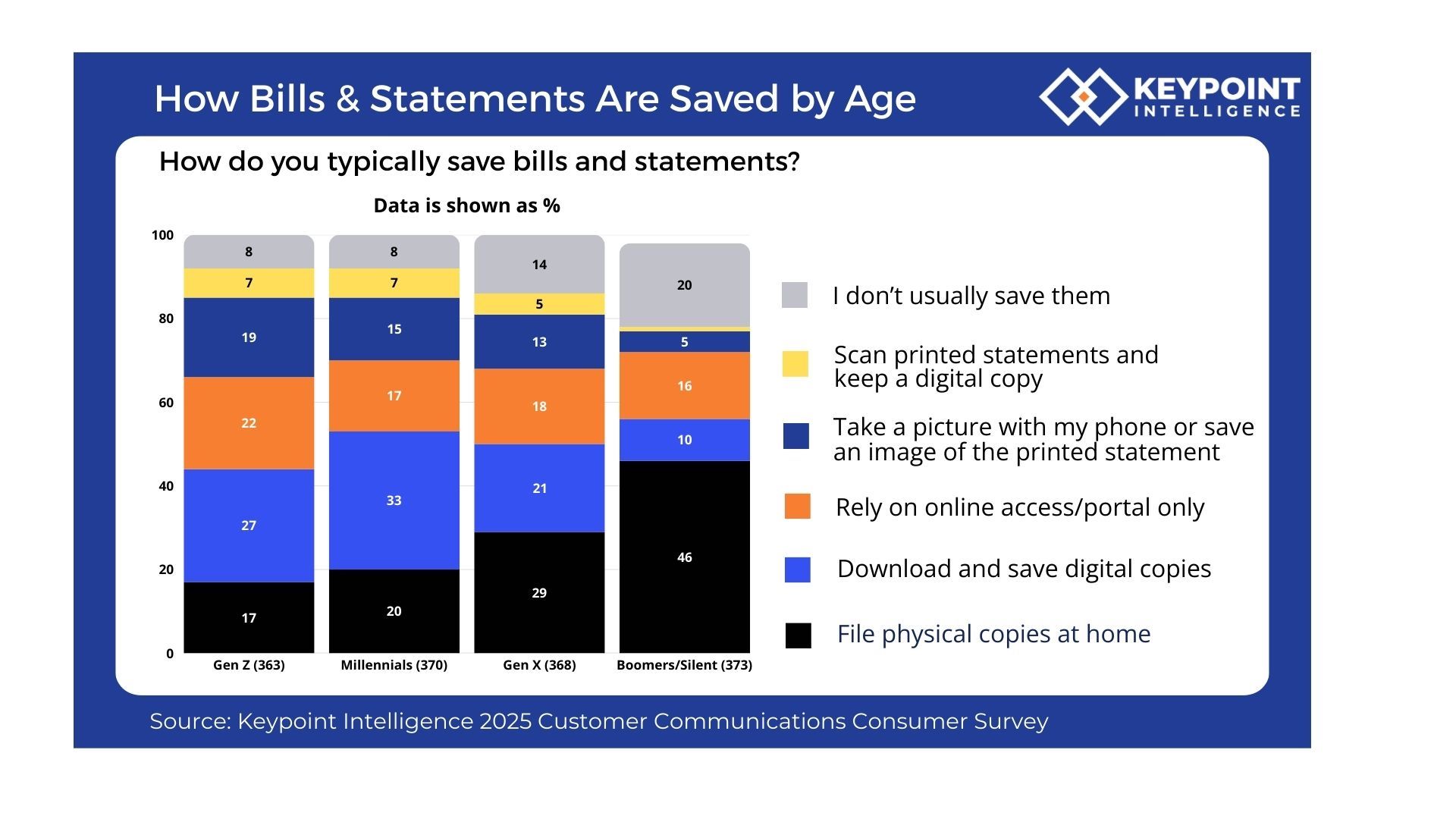
That single behavior shapes the entire customer communications landscape. Print isn’t disappearing, and digital isn’t replacing it. Instead, organizations are operating in a world where channels multiply, expectations increase, and communication workflows grow more complex, not simpler.
See What Customers Prefer
Consumer habits explain why print remains firmly in the mix. People keep documents they trust, documents they may need later, and documents that feel permanent. These preferences persist even as digital options expand.
Organizations have responded by steadily increasing their investment in customer communications. Rather than treating communications as a maintenance function, many now view them as a strategic component of digital transformation and customer experience. Budgets are rising, priorities are shifting toward data and integration, and communications are gaining visibility as a driver of business performance.
Understand Where Complexity Comes In
Most organizations now deliver communications through a mix of channels: print, email, mobile apps, secure web experiences, SMS, and conversational interfaces. But instead of replacing channels, they are adding more, and that can create operational complexity:
- Content often lives across multiple systems
- Customer data is spread between platforms
- Delivery tools are layered on top of one another
Few organizations have fully integrated platforms, making it difficult to coordinate communications across the entire customer journey. As transactional and marketing messages increasingly blend, the need for clear orchestration becomes even more critical.
Track the Role AI Really Plays
Artificial intelligence (AI) is now part of most customer communications environments, but its depth varies widely. Many organizations use AI for analytics, segmentation, or content assistance. Only a smaller group has implemented predictive or real-time capabilities.
It’s not hesitation for its own sake. It’s caution shaped by compliance obligations, brand considerations, and the need for consistency.
“AI improves communication, but human oversight protects it,” says Anne Valaitis, Principal Analyst at Keypoint Intelligence. “The best results come from blending automation with thoughtful governance.”
That balance reflects what organizations are doing: Applying AI where it delivers clear value, while retaining control where accuracy and trust matter most.
Keep Regulatory Pressure In View
Industries such as financial services, healthcare, and insurance face strict requirements that influence what can be delivered, how it must be delivered, and which channels remain mandatory. Print often remains the safest and most auditable option. This regulatory layer reinforces multi-channel strategies and slows efforts to fully eliminate physical delivery.
Turn Insight Into Smarter Decisions
The biggest opportunity ahead isn’t choosing print or digital: It’s understanding how each channel supports the customer’s experience and how they work together. Organizations with integrated data and stronger measurement practices consistently perform better because they can link communications activity to real business outcomes such as retention, satisfaction, or reduced service calls.
Build for Evolution, Not Replacement
The research points to a market that isn’t shifting toward a digital-only future. Instead, organizations are moving toward communication ecosystems built on flexibility, intelligence, and choice.
Print persists, digital expands, complexity grows—and the real advantage goes to organizations that can integrate and manage all channels intelligently.
Learning about effective marketing tactics is crucial for the success of your business as well as the success of your customers. Find out more about Keypoint Intelligence research here. Keypoint provides timely and informative insights on current and future market trends and developments through Multi-Client Studies and the Customer Communications Experience Advisory Service.