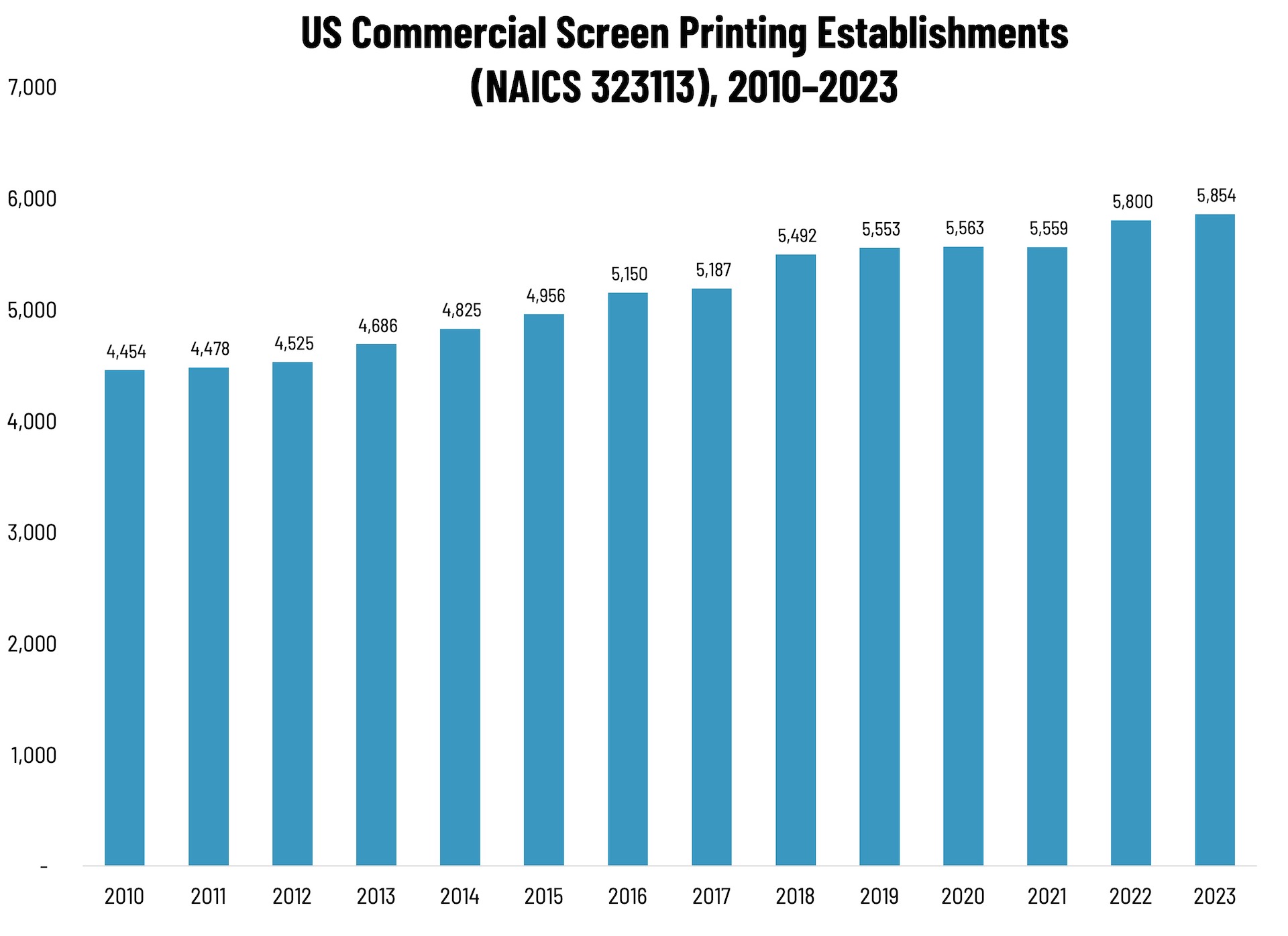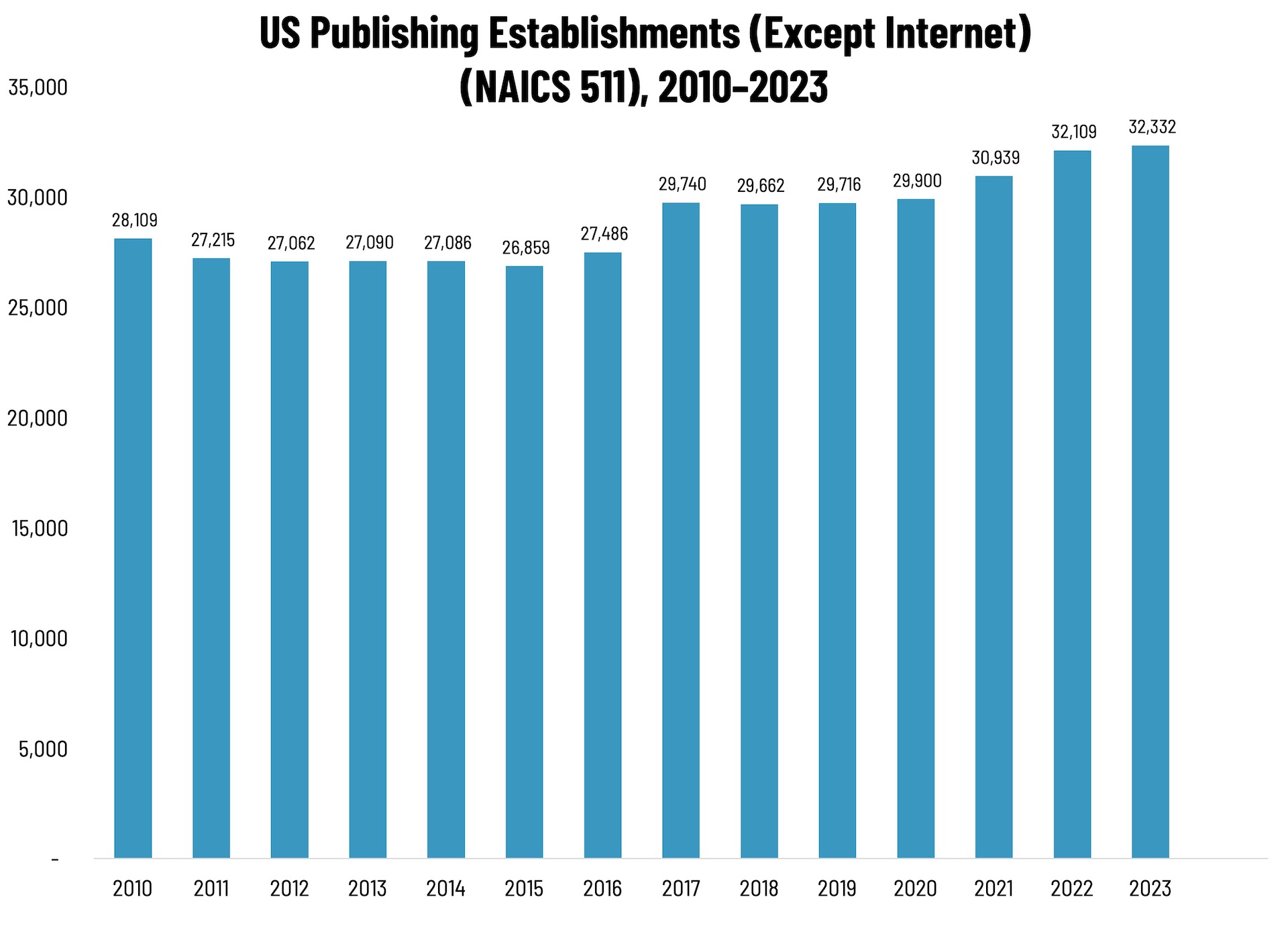
Our Friday data slice’n’dice look at the latest edition of County Business Patterns now turns to the publishing industries. As 2023 began, there were 32,332 establishments in NAICS 511 (Publishing Industries [except Internet]). This represents an increase of 15% since 2010.
The U.S. Census Bureau officially designates NAICS 511 as:
Industries in the Publishing Industries (except Internet) subsector group establishments engaged in the publishing of newspapers, magazines, other periodicals, and books, as well as directory and mailing list and software publishing. In general, these establishments, which are known as publishers, issue copies of works for which they usually possess copyright. Works may be in one or more formats including traditional print form, CD-ROM, or proprietary electronic networks. Publishers may publish works originally created by others for which they have obtained the rights and/or works that they have created in-house. Software publishing is included here because the activity, creation of a copyrighted product and bringing it to market, is equivalent to the creation process for other types of intellectual products.
“CD-ROM”…
We’ll have more to say when we dive into the specific publishing NAICS categories, as “Publishing” here refers to everything from books, magazines, and newspapers to greeting cards, to mailing lists and directories, and the catchall “other publishing” which can include maps and other specialty publishing products. Generally, though, the growth in establishments over the 2010s is due to two basic factors: economic growth following the Great Recession and lowered barriers to entry for small or self-publishers thanks to digital printing (enabling short-run on-demand publishing) and the Internet/ecommerce, easing distribution, which was always a challenge in the pre-Internet days). Spoiler alert: book publishers and “other publishers” were the two sub-categories that drove up the average number of establishments between 2021 and 2023.
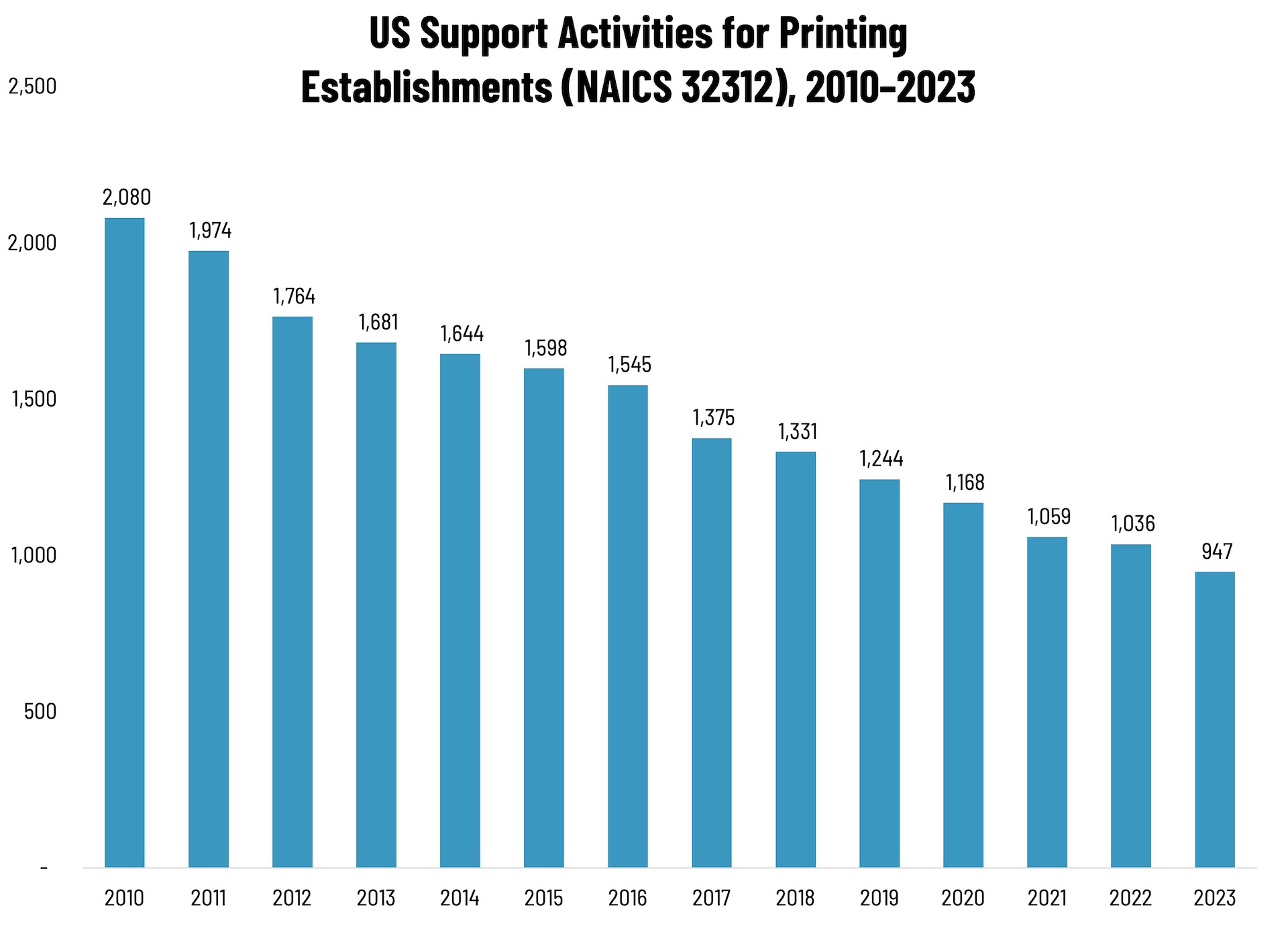
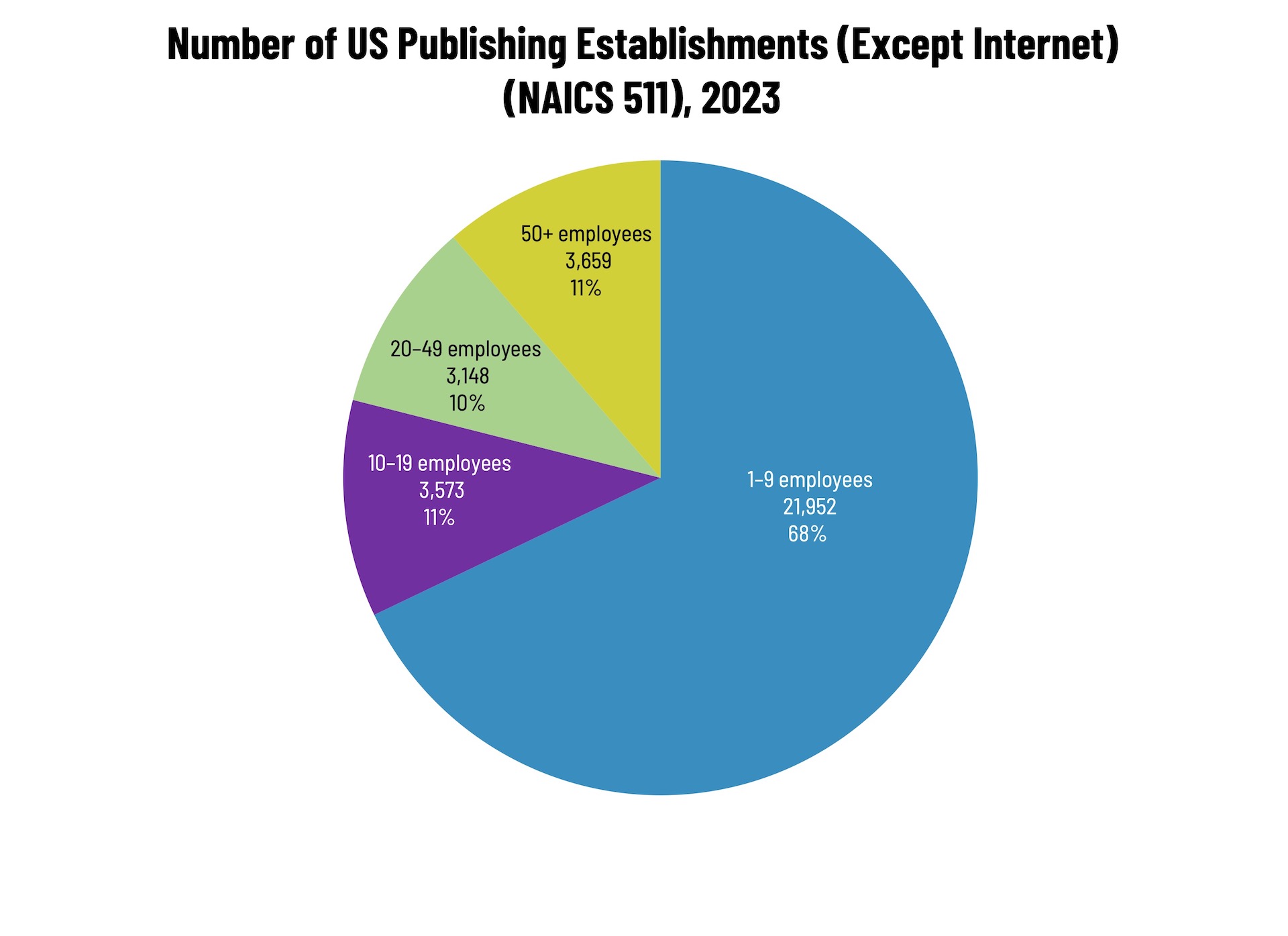
As we saw in the printing categories, publishing establishments are concentrated at the lower end of the employee-count spectrum. Small publishers (1 to 9 employees) comprise the bulk of the establishments, accounting for 68% of all establishments, with the other three employee size categories equally sized at 10–11% each.
These counts are based on data from the Census Bureau’s County Business Patterns. Throughout this year, we will be updating these data series with the latest CBP figures. County Business Patterns includes other data, such as number of employees, payroll, etc. These counts are broken down by commercial printing business classification (based on NAICS, the North American Industrial Classification System). Up next:
- 51111 Newspaper Publishers
- 51112 Periodical Publishers
- 51113 Book Publishers
- 51114 Directory and Mailing List Publishers
- 51119 Other Publishers
- 511191 Greeting Card Publishers
- 511199 All Other Publishers
These data, and the overarching year-to-year trends, like other demographic data, can be used not only for business planning and forecasting, but also sales and marketing resource allocation.
This Macro Moment
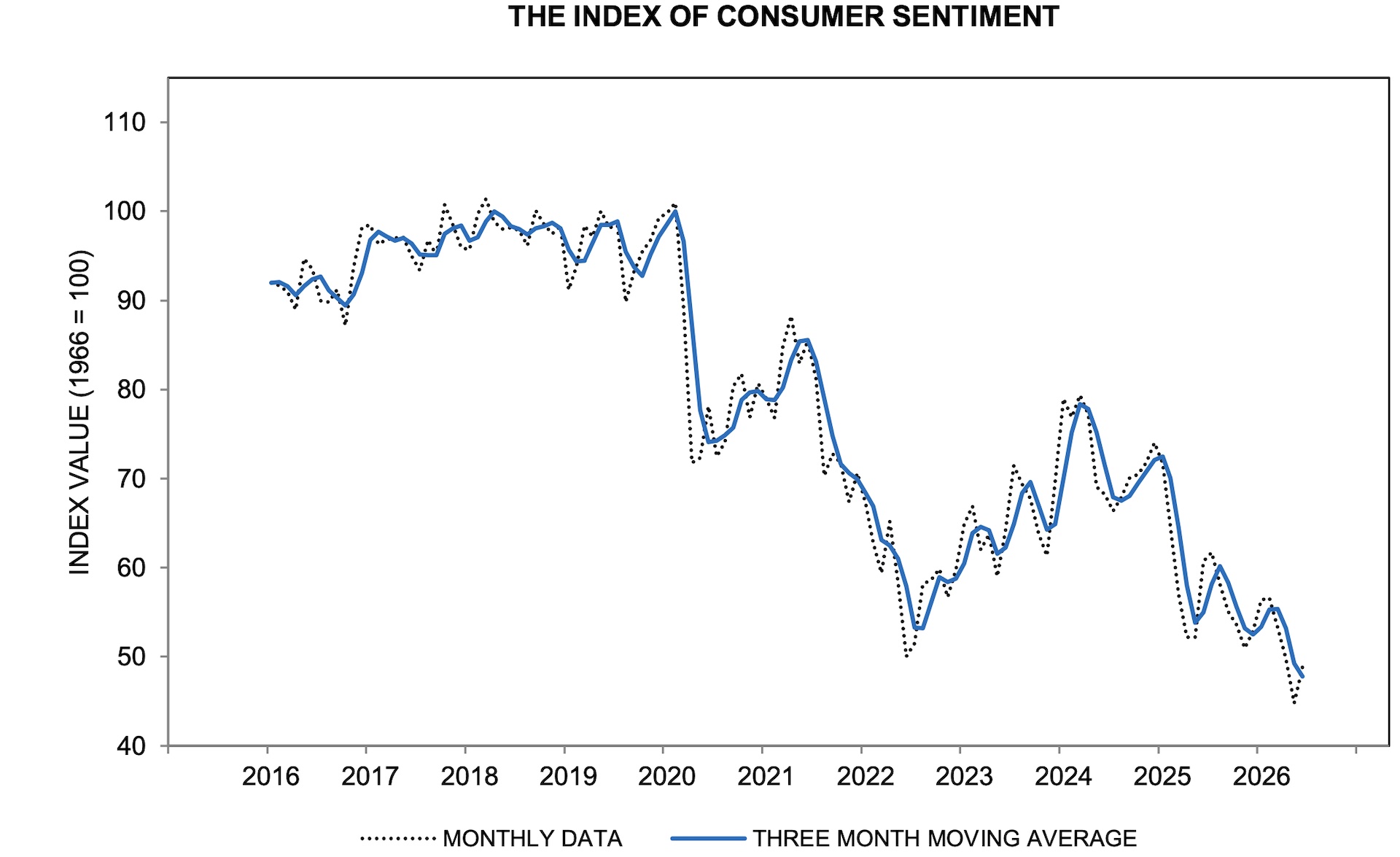
Consumer confidence is a hard thing to figure, as it seems to ebb and flow independent of what other data points would suggest. Of course, most consumers don’t pore over economic data and pretty much go on “gut” instincts—remember the “vibe-cession” in 2023–2024 when all economic indicators looked great, but everyone thought the economy was horrible? So, those instincts can be a little mysterious, but sometimes not: since 2025’s “tariffopalooza” and the cost of virtually everything began to rise, sentiment plunged. The University of Michigan’s Consumer Sentiment Survey has become the de facto benchmark for consumer sentiment, and de facto de matter is that it has remained at record lows:
University of Michigan
Said the University of Michigan in June:
This month, consumer sentiment ticked up about four index points, or 9%, with consumers experiencing some relief due to the early-month easing in gasoline prices. This measured improvement in sentiment was widespread, seen across age, education, and political party. Lower-income consumers exhibited a particularly strong sentiment increase, consistent with the fact that gasoline comprises a larger share of their budgets.
But:
Even with June’s early gains, however, views of the economy are still relatively dour. Sentiment is currently 13% below January 2026 and 19% below a year ago, as consumers remain focused on kitchen table issues. They feel burdened by the recent escalation in inflation and worry that higher inflation could remain stubborn going forward, particularly in the short run.
Waning consumer sentiment can impact consumers’ discretionary spending, which ultimately trickles up to companies that sell good and services, impacting their own discretionary spending on thing like marketing and promotion, which, ultimately, impacts print businesses who produce those marketing materials.