In the Pink
Here is a colorimetrico-existential question: is pink a color? Do we have any reason to think that it is not? Says Print magazine: “There is some controversy surrounding pink.” Is there?
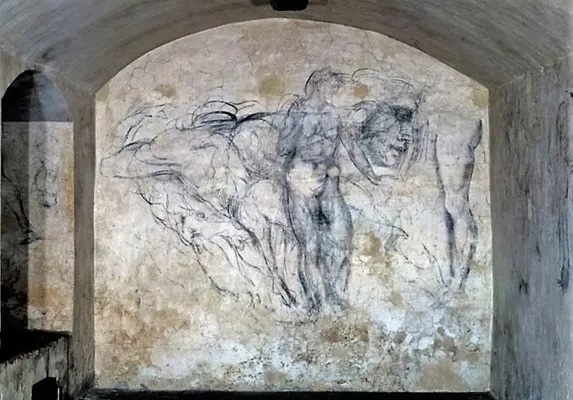
The first sentence of the latest volume in Michel Pastoureau’s History of Color series titled Pink, asks: “Is pink a color in its own right?” It goes on to note, “There are grounds for doubting this or at least asking the question.” Scientifically speaking, it is “neither color in terms of material nor light, but simply a shade of red, absent from the color spectrum.” Tell that to the Pink Panther, which Pastoureau, a historian and authority on color, states has “done more for the glory of pink than all the merchandising for little girls of eccentricities of pop art.”
Has he seen the Barbie movie? Anyway, the “Pink” book is the latest volume in Pastoureau’s deep dives into the colors—specifically, blue, green, black, yellow, and white. “He looks at color not only in artistic terms but from scientific, social and religious values.”
Pink was not always called “pink.” From the 16th through the 18th centuries, many names were ascribed to the hue. For instance, “the adjective roseus sometimes describes beautiful female skin,” he writes, “pleasing to look at or touch, but its value is more affective than chromatic.”
Although today associated with breast cancer awareness, pink ribbons had a different meaning once upon a time.
A pink ribbon is the most prized possession of an unrequited lover who dies by suicide and leaves a note to be buried with it on his person. Likewise, Jean-Jacques Rousseau writes how pink, because of its paleness, is a truer symbol of love than “excessive artificial red.”
It is interesting to delve into color not just in terms of accurate reproduction, but what the cultural significance of a particular color is and how it has changed over the centuries.
Fictional Fiction
Do you like collecting books but don’t have the time to read them all? Why not try collecting imaginary books. Yes, there is such a thing. Via Atlas Obscura:
Imaginary book collecting has a long and rich literary history—especially when it comes to humor. The writer Rabelais invented fake book titles that were bawdy send-ups of the French establishment in the early 16th century. In the 18th and 19th centuries, servants’ passages in wealthy households were often hidden by “jib doors,” bookshelves built directly into walls, and some of the more humorous-minded would put fake titles on the fake books. Charles Dickens had a whole range of books with joke titles bound for this purpose, ranging from Hansard’s Guide to Refreshing Sleep to Lady Godiva on the Horse.
Meanwhile, at the Center for Book Arts in Manhattan, Reid Byers is leading a class in bookmaking, specifically focusing on making imaginary books.
Byers’s own imaginary book collection goes far beyond making up titles. Some 30 blocks uptown from the Center for Book Arts, his creations have been on display over the past few weeks at the Grolier Club, in an exhibition entitled “Imaginary Books: Lost, Unfinished, and Fictive Works Found Only in Other Books.” And today, he is teaching students how exactly he made an entire collection of books that never existed.
In case you’re wondering how this works, in many of these cases, the imaginary books have real covers but the pages within are blank. But the joke is in the title, not the actual content.
That tongue-in-cheek seriousness is an integral part of the exhibition. It’s a list of joke book titles made beautifully three-dimensional—and Byers loves sitting in the room, watching visitors get the joke in real time. “They start going around, and at some point they start to laugh,” he says. “That’s how I know I got them—and they get it.”
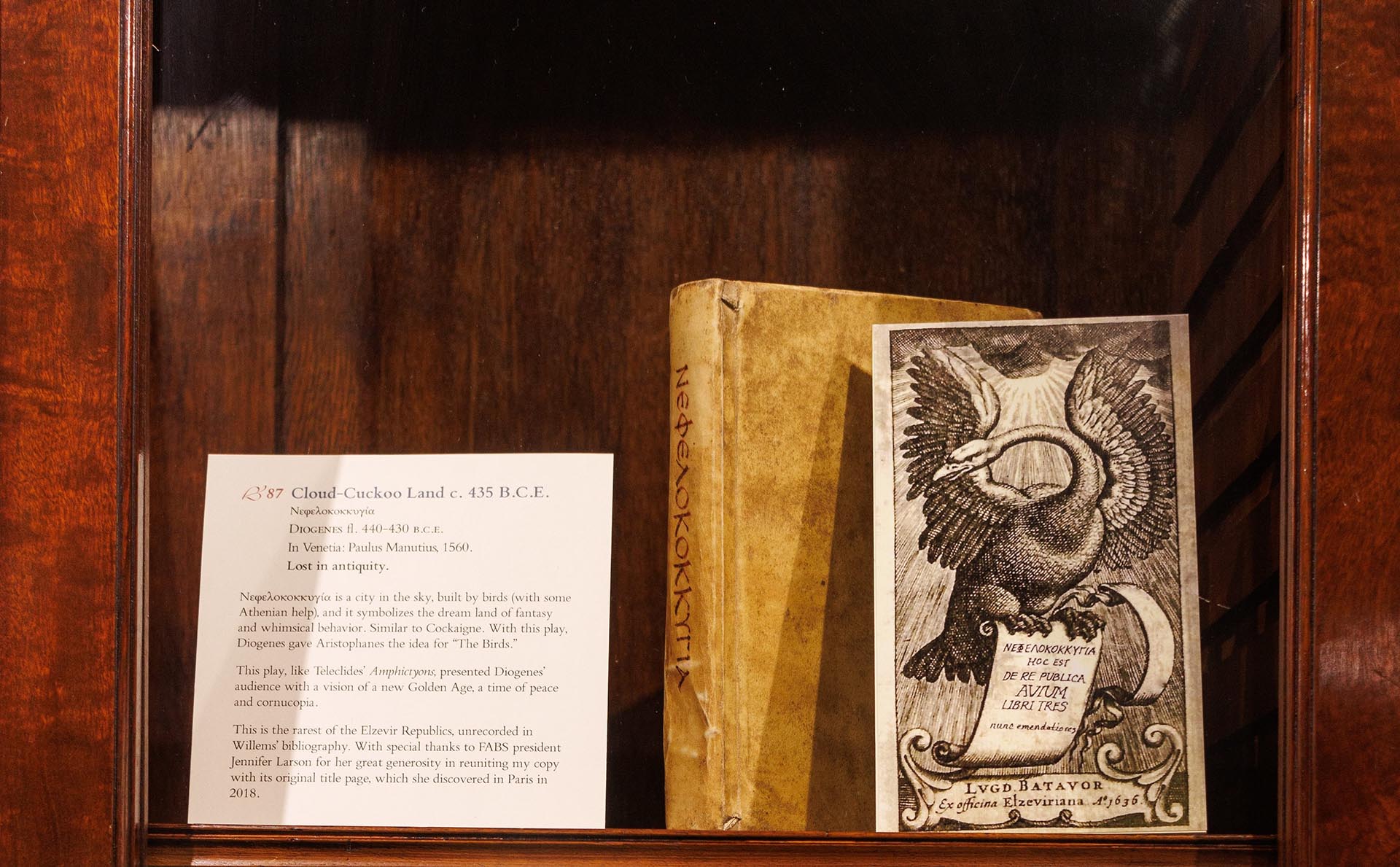
Caption from Atlas Obscura: “While Antonius Diogenes was a real Greek novelist, a book he never wrote is the crux of the 2021 novel Cloud Cuckoo Land by Anthony Doerr.” Courtesy of Janna Tew for the Grolier Club
The Pen Is Mightier…
Those of us who still use pens lament the moment a favorite pen runs out of ink and needs to be scrapped. Not only are disposable ballpoints, G2s, etc., wasteful, but breaking in a new pen takes time—and there is always the danger that you’ll not be able to find a satisfactory replacement. Some pen-wielding professionals—sketchers, writers, draftspeople—have what they call a “forever pen,” or one that only requires refills. Via Core77, if you are indeed looking for a forever pen, they highly recommend Studio Neat’s Mark Two. “Machined out of stainless steel and sleeved in Cerakote, it’s a handsome piece of industrial design that's meant to last forever.”
“Nothing extraneous. Mark Two was designed to be minimal and beautiful. There are no logos or excess ornamentation, and the seam on the body (to unscrew and replace the refill) is nearly completely hidden by a post-polishing process. The cerakote sleeve has a slightly textured, matte finish, and the body is polished and smooth.”
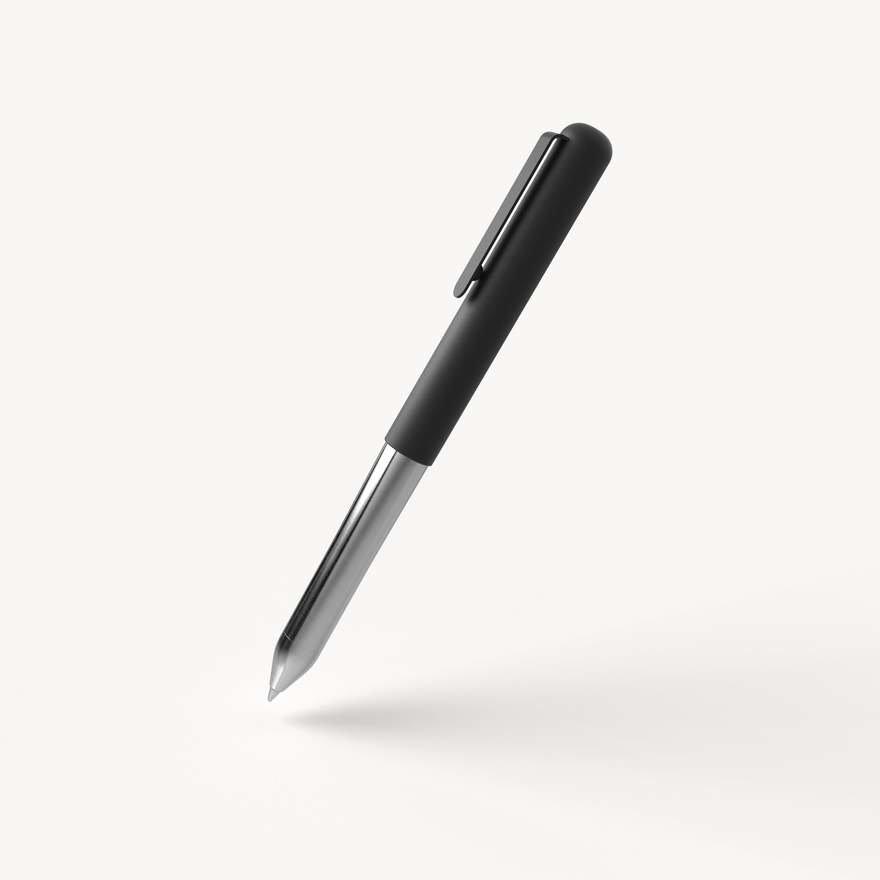
It can be ordered with or without a clip (a clip can keep it from rolling off one’s desk, if nothing else). Now we’re getting into the weeds:
For ink, the Mark Two ships with a Schmidt P8126 Mini refill, which features a 0.6mm tip. If you're not a fan of Schmidt (and I'm not, see below), Studio Neat also offers a D1 Refill Adaptor that fits within the pen and will take any D1-style refill.
A steal at $125 (avec clip), $110 (sans clip).
Grotesque Font
In several senses of the term…
Do you like Cheetos? Typography? If yes to both, good news! To commemorate National Handwriting Day, Cheetos launched a new handwriting font. Says Food & Wine:
Cheetos wants to be your next graphic design inspiration.
Good luck with that.
“Introducing The Other Hand Font: the world’s first font created entirely by a designer’s Other Hand (because they couldn’t resist reserving their dominant hand to snack on a bag of Cheetos)”
Uh huh.
Designed by Rich Silverstein at San Francisco-based Goodby, Silverstein & Partners, it was apparently inspired by the orange-stained fingers that are the hallmark of eating Cheetos (we’re told; we can’t stand the stuff).
Cheetos explained that fans can use the font in a few ways, but it all begins with downloading it for use at Cheetos.com. From there, you can use the font however you please — Word documents, in your designs, in company-wide emails, and more.
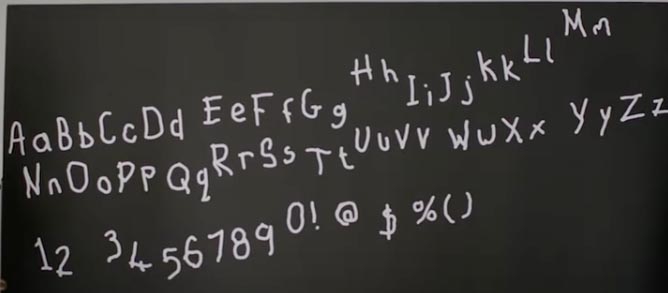
Legal briefs, obituaries, anything requiring dignity or decorum.
Cheetos is inviting fans to get creative with the font in unexpected places, like in "their email signature at work, their college essay, or even their resumes. Those with the wildest and most mischievous uses posted on social media and tagging @Cheetos will have the chance to get their hands on a limited-edition The Other Hand Font-inspired bag of Cheetos." (Though, as an adjunct college professor, I will note that you may want to also submit that paper in Times New Roman, too, just so you don't fail.)
Yeah.
Lastly, you can also make your day a little more cheerful by installing the browser plug-in created and released by Cheetos that turns any website's font into The Other Hand Font.
That’s a definition of “cheerful” with which we are unfamiliar. You can download a Chrome extension to render web pages in The Other Hand Font. Then again, it might improve Around the Web.
The Fact of the Matter
It’s hard not to be disheartened by the news these days, but every once in a while we come across a headline that foretells good news. Such as, for example, this from The Verge: “Matter will be better in 2025.” See? Not everything is terrible. We’re not sure how matter could be better—maybe less energy required to transition from liquid to gas, a higher melting point of water, more convenient plasma temperatures— Wait…What? Oh…
Matter launched with a mission to provide a reliable, secure way for smart home devices to connect to and communicate with each other across brands and ecosystems. But two years in, problems have plagued the connectivity protocol.
Ah. Not matter in general. Dang. We had hope for a minute there…
That Snow Man
One question WhatTheyThink gets on a regular basis is, “What was the very first photograph of a snowman?” But, alas, our team of experts has been unable to answer this most pressing of questions. Until now. Via Boing Boing, we can now say that the earliest known photo of a snowman was taken by Mary Dillwyn in 1854 in what is believed to be Wales.
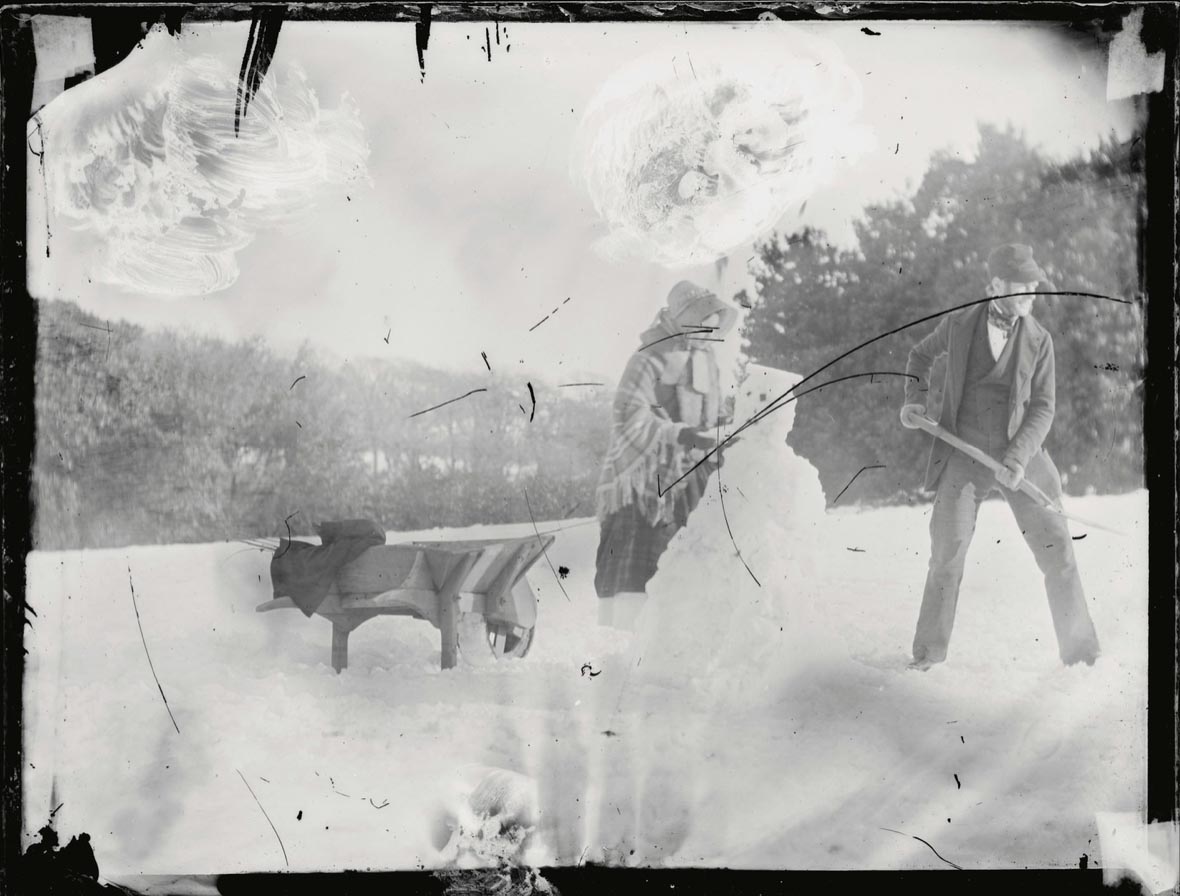
Speaking of snowmen, only the late, great David Lynch could create a super-creepy slideshow of snowman photographs:
Graphene in 3D
Was it a good week for graphene news? It’s always a good week for graphene news! A new graphene filament for 3D printing. From (who else?) Graphene-Info:
Swedish material developer Graphmatech and Lithuanian filament manufacturer Filalab UAB recently introduced a new filament called C-PETG. The graphene-enriched material is described as one of the fastest ESD-safe polymer solutions on the market. Developed for the requirements of modern electronics manufacturing, it enables printing speeds of up to 120 mm/s and reliably protects sensitive components from static electricity.
In the electronics industry, static electricity is responsible for somewhere between 8% and 33% of product losses, so C-PETG is seen as a good solution, and is being targeted for such applications as packaging, tools, and assembly aids.
Projection
Ah, the Mercator projection. A revolution in cartography in its day, and an essential tool for navigation at sea. Devised by Flemish geographer and mapmaker Gerardus Mercator in 1569, it represents a spherical object (i.e., the Earth) on a flat surface so that lines of latitude and longitude meet at right angles and thus “rhumb lines” (lines that cross all meridians of longitude at the same angle) as straight lines. The drawback to the Mercator projection is that it distorts landmasses the farther they are from the equator, making, for example, Greenland seem as if it is the size of Africa when in fact it is much much smaller. The Mercator projection has gone out of fashion, but via Boing Boing, Drew Roos’s Mercator Extreme lets you have fun with geographic distortions as it allows you to set any point on earth as the “pole.” For example, the default sets Pittsburgh, Pa., as the “pole” and maps the world in relation to it.
So you can see that downtown Pittsburgh dwarfs the rest of the country, if not the entire Southern Hemisphere.

You can remap it to any place you’d like to be the center of the world.

Caged Heat
Some years ago, while we were buying something in CVS, the checkout clerk asked, “How was your shopping experience?” Never having been asked that question before, we were rather taken aback, and responded, “Well, I wasn’t eaten by jackals in the toothpaste aisle, so it was fine.” Ask a bizarre question, you’ll get a bizarre answer. (Some of us don’t want to have a “shopping experience”; we just want to buy our crap and leave.)
This was long before the retail practice of locking away various consumer items (back then it was only razor blades)—ostensibly to prevent theft, which is not as big a deal as retailers have said—but now we might actually pause to consider the “shopping experience” which has become increasingly more annoying.
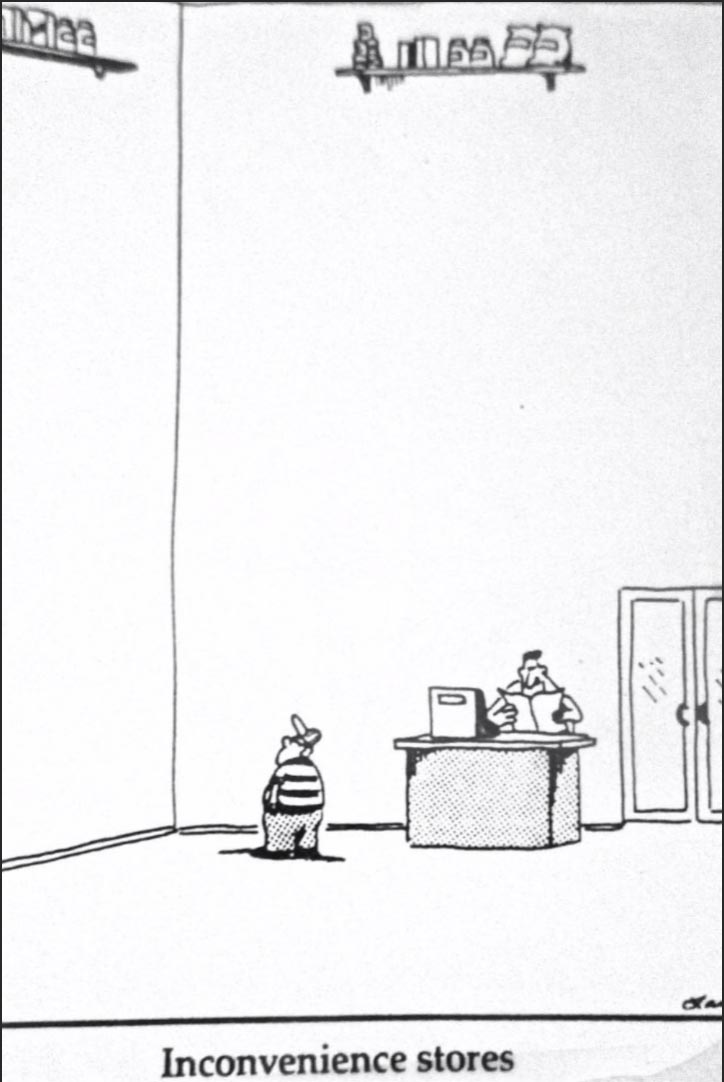
Now, making it even more annoying, is a new initiative from CVS that is using locked shelves as an excuse to make shoppers download the CVS phone app in order to unlock them. Via Gizmodo:
CVS’s new system for allowing customers to unlock common goods that have been put behind plexiglass will operate primarily through the company’s app. People hoping to actually be able to take things off the shelves like they would do in a normal store will have to download the CVS app and sign up for the company’s loyalty program. You’ll have to be logged into the app and connect to the store’s Wi-Fi, then enable Bluetooth connectivity on your device in order to activate the feature that allows you to unlock the cabinets. Shockingly, this is an improvement in convenience.
Joy.
Per The Journal, the company soon plans to load up the app with AI features, including “a search feature powered by generative AI.” Which is great, surely nothing bad will happen by allowing people to have their health questions answered by a machine known for hallucinating information.
So far Rite Aid is less annoying so we’ll stick with them. For now.
Gary Larson was way ahead of his time.
Way Mo Carnage
Something tells us this is about more than the cars. From The Byte:
On Saturday, a self-driving Waymo cab was badly trashed by a crowd, who tore the vehicle to absolute shreds as it idled in the middle of a quiet street in Los Angeles's Beverly Grove, The Los Angeles Times reports.
This is not the first incident of a mob demolishing a Waymo, as the self-driving vehicles have been controversial for snarling traffic and menacing pedestrians. What was the issue in this case?
Some reports suggest that the Waymo barged into the middle of a "street takeover" — when a group of people block off a section of road, typically to goof around in cars — but an LAPD spokesperson told the LA Times that there's no evidence of this taking place.
Waymo has responded by suing those who trash their cars so…don’t.
AI-Yi-Yi, Part the Infinity: Spicing IT Up
OK, this has gone too far. An “AI-powered spice dispenser”?!?! Good grief. Says The Byte:
Enter the Spicerr, a supposedly “AI-powered” “smart” spice dispenser that will automatically decide how much seasoning you should add to your barren foodstuffs.
They remind us of the Juicero, a fruit and vegetable juicer that had been the darling of the health food industry until Bloomberg revealed that its plastic juice packs could easily be squeezed by hand rather than with a $700 machine. Oops. Anyway, back to the Spicerr:
The Spicerr is designed like a minimalist, tech-inflected pepper grinder with a revolver’s cylinder stuck on the bottom. It holds six pre-packaged spice capsules at a time, which you have to buy from the manufacturer, like so many hated inkjet printers.
What, no subscription or “Spice as a Service”?
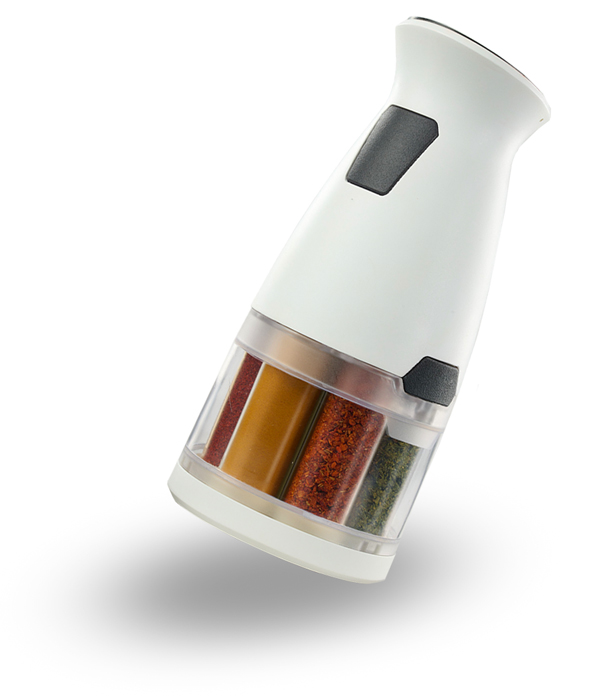
Spicerr sells an “Essential Collection” that comes with black pepper, turmeric, crushed pepper, ginger, cinnamon, and cumin, as well as three other collections for “family cooking,” “baking with kids,” and plain ol’ “BBQ.”
We know we said this thing has the “AI” label slapped on it, but it’s unclear what exactly the “AI-powered platform” actually is, other than something that collects your data, apparently, via its accompanying app.
We think it’s a marketing ploy rather than anything technical.
“By analyzing your preferences and interactions, Spicerr quickly learns your tastes and suggests dishes and spice blends perfectly suited to your palate,” the website reads.
Anyone who’s had a palate for any length of time can probably figure out what their tastes are without data. Or, better yet, just go ahead and add some paprika willy nilly. Throw caution to the wind! Use an entire bay leaf! Live dangerously! Carpe diem—seize the fish!
Eau De Donut
Over the years, we have commented in this space about various colognes, perfumes, or other unguents that allow its wearer to smell like various things, such as old books, various types of foods, the Apocalypse, etc. The latest is a collaboration between Dunkin and Native to create doughnut-themed and scented personal care items. Via (who else?) Food & Wine:
The collaboration includes deodorants, shampoos, body wash, conditioners, and lotion in four doughnut-inspired scents: First up among this bunch is Dunkin’s ubiquitous Strawberry Frosted doughnut, a scent that recalls that sugary-sweet pink creation that’s topped with rainbow sprinkles. It’s joined by the all-too-familiar Vanilla Sprinkle, a classically crowd-pleasing scent that Native says also brings coconut and citrus notes to the table. Blueberry Cobbler, on the other hand, shares a “tempting fusion of blueberry, apple, and caramel notes.” Perhaps the most perplexing fragrance of all is the Boston Kreme, a scent reportedly “filled with goodness” and a generous helping of vanilla, buttery sugar, and cream notes.
All we can think about is being chased by bees.
This Week in Printing, Publishing, and Media History
January 27
1756: Austrian composer and musician Wolfgang Amadeus Mozart born.
1785: The University of Georgia is founded, the first public university in the United States.
1832: English novelist, poet, and mathematician Lewis Carroll (né Charles Dodgson) born.
1851: French-American ornithologist and painter John James Audubon dies (b. 1789).
1880: Thomas Edison receives the patent for the incandescent lamp.
1813: Italian composer and philanthropist Giuseppe Verdi dies (b. 1813).
1908: American journalist and publisher William Randolph Hearst, Jr., born.
1922: American journalist and author Nellie Bly dies (b. 1864).
1944: English drummer, songwriter, and producer Nick Mason born. In the flesh.
2009: American novelist, short story writer, and critic John Updike dies (b. 1932).
2010: American soldier and author J. D. Salinger dies (b. 1919).
January 28
1613: English diplomat and scholar, founder of the Bodleian Library Thomas Bodley dies (b. 1545).
1706: English printer and typographer John Baskerville born.
1754: Sir Horace Walpole coins the word “serendipity” in a letter to a friend. What a stroke of luck.
1813: Jane Austen’s Pride and Prejudice is first published in the United Kingdom.
1873: French novelist and journalist Colette (née Sidonie-Gabrielle Colette) born.
1878: Yale Daily News becomes the first daily college newspaper in the United States.
1939: Irish poet and playwright, Nobel Prize laureate W. B. Yeats dies (b. 1865).
1956: Elvis Presley makes his first national television appearance.
1958: The Lego company patents the design of its Lego bricks, still compatible with bricks produced today.
1965: The current design of the Flag of Canada is chosen by an act of Parliament.
January 29
1737: American revolutionary and pamphleteer Thomas Paine (Common Sense, et al.) born.
1845: “The Raven” is published in The Evening Mirror in New York, the first publication with the name of the author, Edgar Allan Poe.
1860: Russian playwright and short story writer Anton Chekhov born.
1886: Karl Benz patents the first successful gasoline-driven automobile.
1888: English poet and illustrator Edward Lear dies (b. 1812).
1923: American author and screenwriter Paddy Chayefsky born.
1963: American poet and playwright Robert Frost dies (b. 1874).
1980: The Rubik’s Cube makes its international debut at the Ideal Toy Corp. in Earl’s Court, London.
January 30
1969: The Beatles’ last public performance, on the roof of Apple Records in London. The impromptu concert is broken up by the police.
January 31
1930: 3M begins marketing Scotch Tape.
1949: These Are My Children, the first television daytime soap opera, is broadcast by the NBC station in Chicago.
1956: English author, poet, and playwright, creator of Winnie-the-Pooh A. A. Milne dies (b. 1882).
2020: The United Kingdom’s membership within the European Union ceases in accordance with Article 50, after 47 years of being a member state.
February 1
1462: German lexicographer, historian, and cryptographer Johannes Trithemius born. His famous treatise In Praise of Scribes implored monks to not abandon manuscript copying. However, his need to distribute a large number of these treatises quickly resulted in his having to have it printed on a printing press, a great moment of historical irony.
1851: English novelist and playwright Mary Shelley dies (b. 1797).
1884: The first volume (A to Ant) of the Oxford English Dictionary is published.
1896: La bohème premieres in Turin at the Teatro Regio (Turin), conducted by the young Arturo Toscanini.
1902: American poet, social activist, novelist, and playwright Langston Hughes born.
1904: American humorist and screenwriter S.J. Perelman born.
1938: American drummer and singer (Mothers of Invention) Jimmy Carl Black born. He was the Indian of the group.
1942: Voice of America, the official external radio and television service of the United States government, begins broadcasting with programs aimed at areas controlled by the Axis powers.
1942: Welsh actor, director, screenwriter, and Python Terry Jones born.
1964: The Beatles have their first number one hit in the United States with “I Want to Hold Your Hand.”
1996: The Communications Decency Act is passed by the U.S. Congress, apparently.
February 2
506: Alaric II, eighth king of the Visigoths promulgates the Breviary of Alaric (Breviarium Alaricianum or Lex Romana Visigothorum), a collection of “Roman law.”
1468: Johannes Gutenberg dies (b. 1398).
1882: Irish novelist, short story writer, and poet James Joyce born.
1887: In Punxsutawney, Pennsylvania the first Groundhog Day is observed. Again and again and again...
1922: Ulysses by James Joyce is published. Yes.