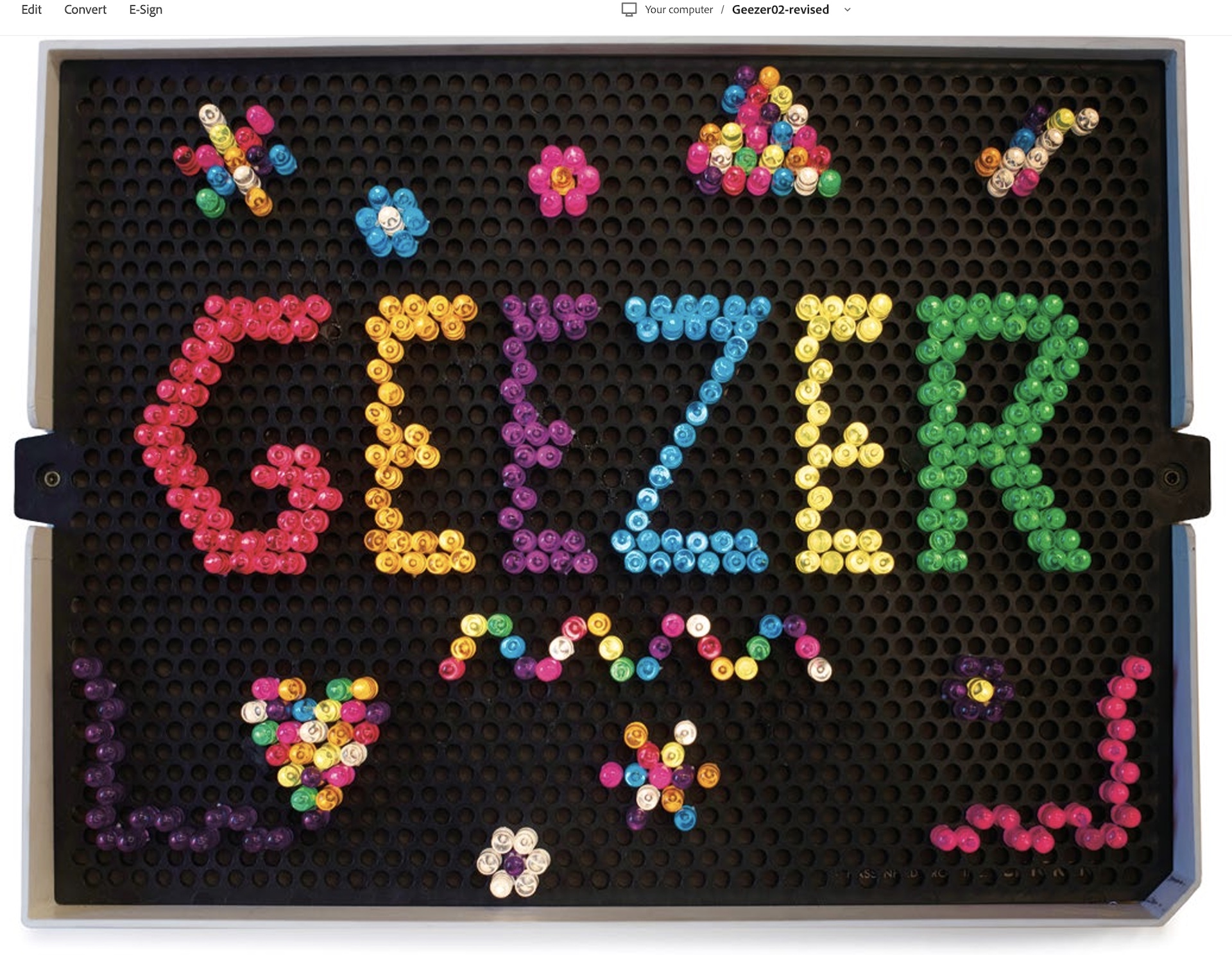
Seven months ago, Laura LeBleu and Paul von Zielbauer launched Geezer, a print-only, subscription-based magazine for Gen X readers who burned their AARP mailers when they first arrived in the mailbox. The magazine was 96 pages of matte-finish irreverence, a lovechild of The Atlantic and Mad Magazine, wrapped in a 10.75 x 15-in. format that weighed roughly two pounds and looked like a creature from the woods: slightly mysterious, utterly original, and impossible to ignore once it’s in your hands.
Then, in March, Geezer did it again. What makes the magazine irresistible is that it doesn’t look, feel, or read like anything else on a newsstand. The photography is sometimes grainy. The layouts are dense with storytelling. Second-issue article titles include “Too Illegal to Live, Too Metal to Die” (about a heavy metal parking lot), “True Hallucinations” (about the medical use of psychedelic mushrooms), and “The HRT of Darkness” (about the battle over hormone replacement therapy). Geezer explores aging without compromise, without soft coolers, and without pretending that midlife is anything other than messy, complicated, and occasionally hilarious.
But here’s the tricky thing about starting a print magazine. Once the first issue is put to bed, and at the very moment it is arriving in readers’ mailboxes and the editors and designers are riding high on ideas for the next issue, the bills start rolling in. That’s when the work of running an actual business really begins.
The Physical Product Gets All the Love
For LeBleu, that transition was a bit of a gut check. “It’s challenging to think about Geezer as a business, even though I need to, when it brings such joy,” she says. “When people hold Geezer for the first time, something magical happens. They smile. It awakens something in them that resonates with who they were when they were younger. The matte paper, the oversized format, the weight in your hands, it triggers—can I say it?—a kind of nostalgic delight. So thinking about it as a business is, frankly, a challenge.”
Still, delight counts for a lot, and it has carried Geezer to 450 subscribers by mid-spring. Issue two launched in March. People started telling friends. Independent retailers from Portland to Nova Scotia began calling. The Bold Magazine Shop in Portland found them. Issues Magazine picked them up in Canada.
But a magazine still costs money. For over-sized Geezer, in particular, a lot of money. LeBleu quickly found that smiles and nostalgia don't pay for printing, paper stock, circulation software, or Canadian shipping rates.
Print-Only Means You Can’t Cheap Out on Anything
While people have suggested reducing the size of the magazine (at 100 pages, the second edition is almost a coffee table book), LeBleu committed early to the oversized format and quality paper. Now that is a non-negotiable. “It’s what makes Geezer, Geezer,” she says. “You can’t downsize and expect readers to have the same experience.”
So instead of backing away from the vision, LeBleu started looking at all of the other costs instead.
For issue two, she moved from offset to digital printing, keeping the same paper stock but cutting costs significantly. The initial print run was 5,000 copies in what she calls “a fit of exuberance.” Now she prints 750 full books and 250 covers simultaneously. If the initial run sells through, she can print additional interiors on-demand (which, when bound with the pre-printed covers, allow the on-demand editions to match the first run) instead of gambling on a second full run. Small decision. Big difference.
Shipping kills her. Canadian orders are wonderful for distribution but catastrophic for logistics. So what’s the solution to that? LeBleu started fulfilling small orders from her house to avoid per-unit shipping costs on small batches. When larger orders arrive, the printer handles them. Substack, which seemed optional, now became essential: she publishes one or two marquee stories from each issue there, creating a gathering place between publications and converting free readers into $120 annual subscribers.
Then came SimpleCirc, circulation software that manages subscriptions, renewals, and fulfillment, the thing she’d been tracking on spreadsheets at 2 a.m. “Small expense,” she says. “Massive payoff for a little publisher like me.”
The Business Math That Keeps You Up at Night
Geezer needs 2,000 subscribers to be self-sustaining. Right now, there are 450. LeBleu plans to double to 900 by next year, then double it again. That’s the math that determines whether this stays a passion project or becomes a sustainable business.
“But I can’t imagine a world where it [the launch of Geezer magazine] doesn’t work,” LeBleu says. That’s the kind of statement that either sounds like genius or insanity, depending on whether the person saying it is right.
What you see with your eyes suggests the former. The LinkedIn love letters from readers telling her what Geezer means to them. The way people’s nervous systems visibly calm down when they hold it. The unexpected orders from stockists reaching out to carry the magazine. The Canadian orders that require expensive shipping but represent people who get it.
That creature in the woods? It’s real. People see it. Once they do, they bring it home. The business part is just figuring out how to keep printing it so they can.
If you’re an irreverent Gen Xer, subscribe here.