(Also be sure to check out Kevin Abergel’s deep dive into the psychological underpinnings of tactile embellishments here.)
Print embellishments work. Not just because they look nice (though they do), but because they trigger the same behavioral principles that have been driving retail sales for decades.
Soft touch coatings, raised varnishes, embossing, debossing—these aren’t just finishing techniques. They’re conversion tools that exploit a well-documented phenomenon: When people touch something, they’re significantly more likely to buy it.
The print industry has been selling embellishments on aesthetics and brand elevation for decades. But what if there’s a simpler value proposition? Embellished print materials increase purchase behavior through the same psychological mechanisms that retail researchers have been studying since the 1990s: the power of touch.
Maybe it’s time to reframe the conversation.
The Touch-to-Purchase Connection
Here’s what the research says:
Retail researchers have known for years that physical interaction with products dramatically increases the likelihood that someone will buy. We see it in study after study: Touch a product, and you're measurably more likely to take it home with you.
The mechanism is called the “endowment effect.” In a 2009 study, “The Effect of Mere Touch on Perceived Ownership,” for example, UCLA researchers Joann Peck and Suzanne B. Shu demonstrated that merely touching an object (even without owning it) increases feelings of ownership. Participants who touched products valued those products more highly and were willing to pay more for them than those who only looked.
The longer people held an item, the stronger their sense of ownership became. Touch creates a psychological “claim” that translates directly into purchase intent.
Procter & Gamble’s extensive shopper research program, conducted over two decades across multiple product categories, found consistent evidence that not only does touch increase the likelihood of purchase, but customers who physically interact with merchandise are willing to pay higher prices for it.
Is this, perhaps, one of the reasons retail stores put fitting rooms in the back and the registers toward the front? After a customer tries on that sweater, with every step they take toward the front of the store—towards the register—their brain is building a case for why they should own it. Retailers are banking on the endowment effect.
Where Embellishments Enter the Equation
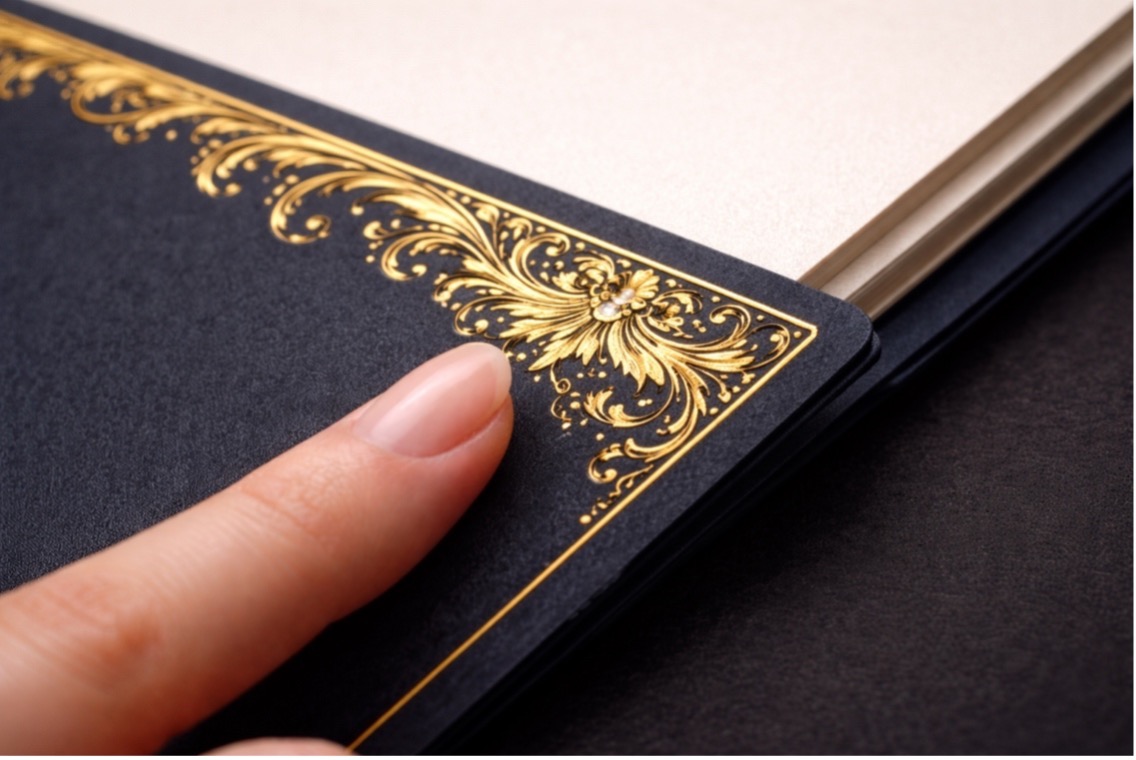
All of this should be music to the print customer’s ears. The endowment effect starts with touch, and by their very nature, print embellishments make people want to reach out and touch. Soft touch coating, raised UV varnish, embossing and debossing…When a piece includes these elements, just try not to reach out and touch it. Just try!
Every tactile interaction extends engagement time and deepens the psychological sense of ownership. While there are differences between print and retail merchandise (buyers are handling marketing pieces, not the merchandise itself), at least a percentage of that intent conveys. One study by the Foil & Specialty Effects Association found that, all other factors being equal, the additional of foiling effects to a postcard increased the response rate to that postcard by 31%.
Let’s look at the sequence of effects:
- Embellishments make printed pieces more likely to be touched. —>
- Touch creates psychological ownership (endowment effect). —>
- Psychological ownership increases perceived value. —>
- Higher perceived value increases purchase intent. —>
- Greater purchase intent drives conversion rates.
Backed by Neuroscience
Each step in this chain is supported by decades of research spanning behavioral economics, neuroscience, and consumer psychology. So when your customers add soft touch coating, raised varnish, embossing, or debossing to a printed piece, they are activating the same psychological mechanisms that drive purchase decisions in retail environments. It’s not marketing. It’s neuroscience.