WhatTheyThink

Premium Commentary & Analysis

The Primal Brain: Why Embellishments Mesmerize Us (Part 1)

In this two-part feature, Taktiful’s Kevin Abergel takes a deep dive into the complex psychological underpinnings of how and why tactile experiences such as print embellishments are so effective. In Part 1, the attraction to the shiny is a product of human evolution.

Tuesday, February 03, 2026

Picture a consumer picking up a business card edged with metallic foil or running their fingers over a brochure logo that’s raised and glossy. Instantly, the item feels special. It catches the light with a shimmer and offers a satisfying texture under the fingertips. This is no design fluke—it’s a strategic engagement of human biology. Marketers and print designers have long observed that shiny foils and tactile coatings grab attention and leave lasting impressions. Now, neuroscience and evolutionary biology are explaining why: such embellishments tap into primal instincts and reward circuits in the brain. Our attraction to glimmering surfaces and rich textures is rooted in millions of years of evolution and is reflected in how our brains process sensory stimuli. In this article, we’ll explore the science behind bling and how metallic shine and raised glossy textures activate ancient visual pathways, primal emotional responses, and even the brain’s pleasure centers.

Humans’ love of shiny objects runs deep. Very deep. Evolutionary biologists suggest that our preference for glossy, reflective surfaces may stem from an ancient survival impulse. One prominent theory argues that shiny = water, a critical resource for life. In natural environments, a sheen or glint often meant the presence of fresh water under sunlight. Over millennia, detecting a sparkle through foliage could lead animals (and our hominin ancestors) to a lifesaving oasis. Psychologists have proposed that “the visual appeal of glossiness is innate and stems from the human need for fresh water as a resource.” In other words, our brains may be hard-wired to perk up at anything that resembles a gleam of water on the horizon. Consistent with this idea, studies have found that surfaces which are shiny, reflective, or sparkling serve as informative cues to water in nature. Even in modern experiments, people unconsciously associate glossy textures with “wetness.” In one classic study, participants seeing a blank glossy sheet of paper described it as looking “wetter” than a similar matte sheet. This water reflex appears to exist across cultures and ages, from infants to adults.

Notably, research in the Journal of Consumer Psychology put this hypothesis to the test with multiple experiments (Pandelaere & Patrick, 2014). The researchers showed both adults and young children various images presented on glossy vs. matte paper. Both groups significantly preferred the glossy versions, indicating a natural draw to shine beyond mere cultural conditioning. Young children (too little to have learned that “gloss equals luxury”) still reached for the shiny images, hinting at an innate bias. One amusing observation: infants seven to 12 months old, when given glossy objects, often tried to lick them. Toddlers literally put their mouths on glossy plates more than on dull ones, akin to an animal lapping water. This quirky behavior supports the evolutionary water theory—the babies might be following a primal script, treating a shine as if it were a tempting puddle. And in a thirst experiment with adults, the effect was amplified: dehydrated participants found glossy pictures much more attractive than usual, whereas quenched participants were a bit less drawn to gloss. The thirstier people got, the more their brains seemed to crave shiny visuals, just as the water theory predicts.


Continue reading your article
with a WhatTheyThink membership.

WhatTheyThink Annual Membership

Less than $4/week.

Get unlimited access to in-depth commentary and analysis covering the latest trends, emerging technologies, operational strategies, and key events across every segment of today's printing industry.

Stay informed. Stay competitive. Stay ahead.
WhatTheyThink Day Pass

$5 for 24 hours

Unlimited access to all of WhatTheyThink. Get your Day Pass

Already a member?
Sign In

About Kevin Abergel

Kevin Abergel is a 18 year veteran in the Graphic Communications industry. Upon graduation from the University of Florida and subsequently the Florida Institute of Technology with an MBA; Mr. Abergel joined MGI Digital Technology in 2005. He attributes his long and highly successful career in digital and sensory embellishment to his keen focus on its markets -dedicating his work entirely to solving customer business problems through the enablement of innovative technologies and team building. Mr. Abergel’s unique, customized approach to each customer, reflects his deep belief that no two customers are alike, anywhere in the world, nor are the needs of their businesses.

Recent Articles from Kevin Abergel

The Shelf Isn’t Silent: Why Embellishment Is Becoming Packaging’s Loudest Voice

The Shelf Isn’t Silent: Why Embellishment Is Becoming Packaging’s Loudest Voice

Taktiful’s Kevin Abergel spoke with Marika Knorr of CCL Label to unpack what is quietly becoming one of the most influential forces in packaging today. What emerged from the conversation was not just a discussion about printing techniques or decorative effects. It was a deeper look at how embellishment is reshaping the way brands compete, communicate, and convert at the shelf. Read More
The Rise of a New Voice in Digital Embellishment Design: How Emelie Dahlbacka Is Shaping the Future of Fifth- and Sixth-Color Print

The Rise of a New Voice in Digital Embellishment Design: How Emelie Dahlbacka Is Shaping the Future of Fifth- and Sixth-Color Print

For years, the spotlight has been fixed on presses, speeds, substrates, and finishing capabilities. But as digital embellishment technology matures, a new truth is emerging. Taktiful’s Kevin Abergel explains how the real differentiator is no longer just what the machines can do, but what designers choose to do with them. Read More
Meet Emelie Dahlbacka: The Next Rockstar of 5th & 6th Color Embellishment Design

Meet Emelie Dahlbacka: The Next Rockstar of 5th & 6th Color Embellishment Design

In this episode of the Digital Embellishment Show, Kevin Abergel sits down with Emelie Dahlbacka, Creative Director at VBS in Sweden, who is quickly emerging as one of the most exciting designers working with fifth- and sixth-color technology today. From her first experience with specialty toners to winning global awards, Emelie shares how she approaches design with the machine in mind and why that mindset is the key to unlocking real value in embellishments. Read More
Digital Embellishment Market Booms: Top Applications and Emerging Use Cases

Digital Embellishment Market Booms: Top Applications and Emerging Use Cases

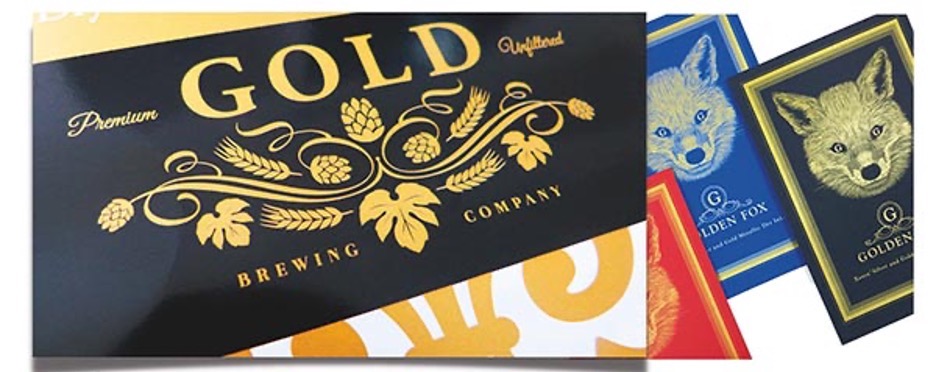
In part 2 of this two-part feature, Taktiful’s Kevin Abergel talks with Sean Roberts, National Director of Digital Embellishment at Konica Minolta, about the kinds of applications that are seeing the most traction with digital embellishment. Read More

Digital Embellishment Market Booms: Insights and Trends for 2026 and Beyond

Digital Embellishment Market Booms: Insights and Trends for 2026 and Beyond

In part 1 of this two-part feature, Taktiful’s Kevin Abergel talks with Sean Roberts, National Director of Digital Embellishment at Konica Minolta Business Solutions U.S.A., Inc. (Konica Minolta) about the latest trends driving this market, from the rise of embellished direct mail to innovations on the horizon. Read More