- Many businesses are falling short of their digital press utilization targets.
- PSPs must understand their workflow challenges so they can identify areas that can be improved with automation.
- Survey respondents were largely aware of and receptive to emerging technologies like artificial intelligence and robotics.
By Eve Padula
Introduction
In today’s rapidly evolving industry, it’s more important than ever for printers to understand press utilization, automation, and emerging technologies so they can make the right investments. To shed light on these trends, Keypoint Intelligence conducts annual research of businesses in North America and Western Europe about their print volumes, software investments, top challenges, and plans for the future. This article highlights some top-level findings from our in-depth research and offers recommendations to help print service providers make the most of their existing and planned technological investments.
About the Survey and Its Respondents
In mid-2025, Keypoint Intelligence conducted a web-based survey of businesses in the United States/Canada and Western Europe. The survey captured a total of 181 responses, with 97 from North America and 84 from Western Europe. This article provides some top-level findings from the global survey results, but there are separate deliverables available covering North America and Western Europe for those who want a deeper dive on the regional data.
As shown in the Figure below, over half of businesses were based on North America. A substantial minority came from various countries in Europe, with the highest share based in Italy.
Figure 1: Location 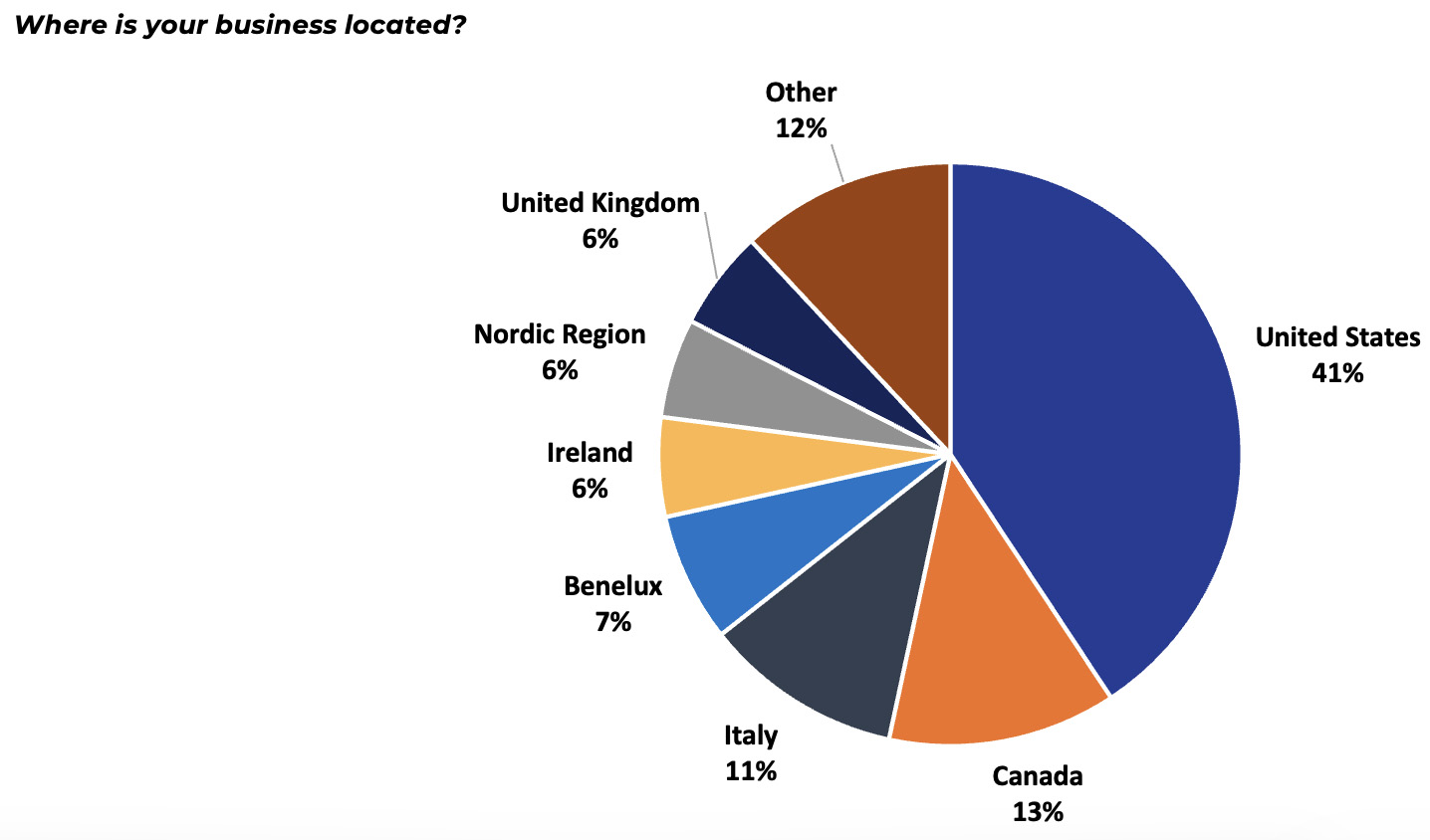
N = 181 Total Respondents
Source: Global Software Investment Outlook; Keypoint Intelligence 2025
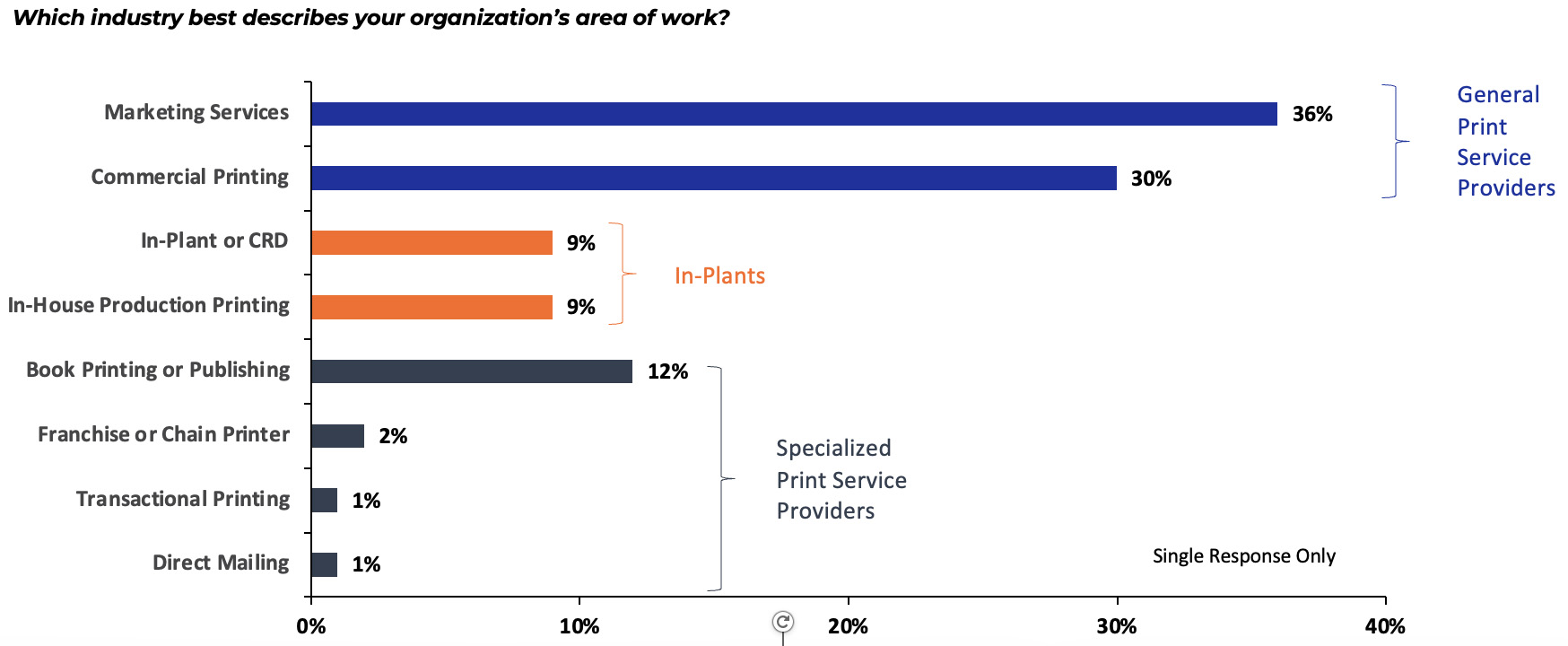
When respondents were asked about their area of work, most were general print service providers (i.e., marketing service providers or commercial printers). Meanwhile, 18% were in-plants and another 14% were specialized print service providers (PSPs).
Figure 2: Area of Work
N = 181 Total Respondents
Source: Global Software Investment Outlook; Keypoint Intelligence 2025
Key Survey Findings
Press Utilization
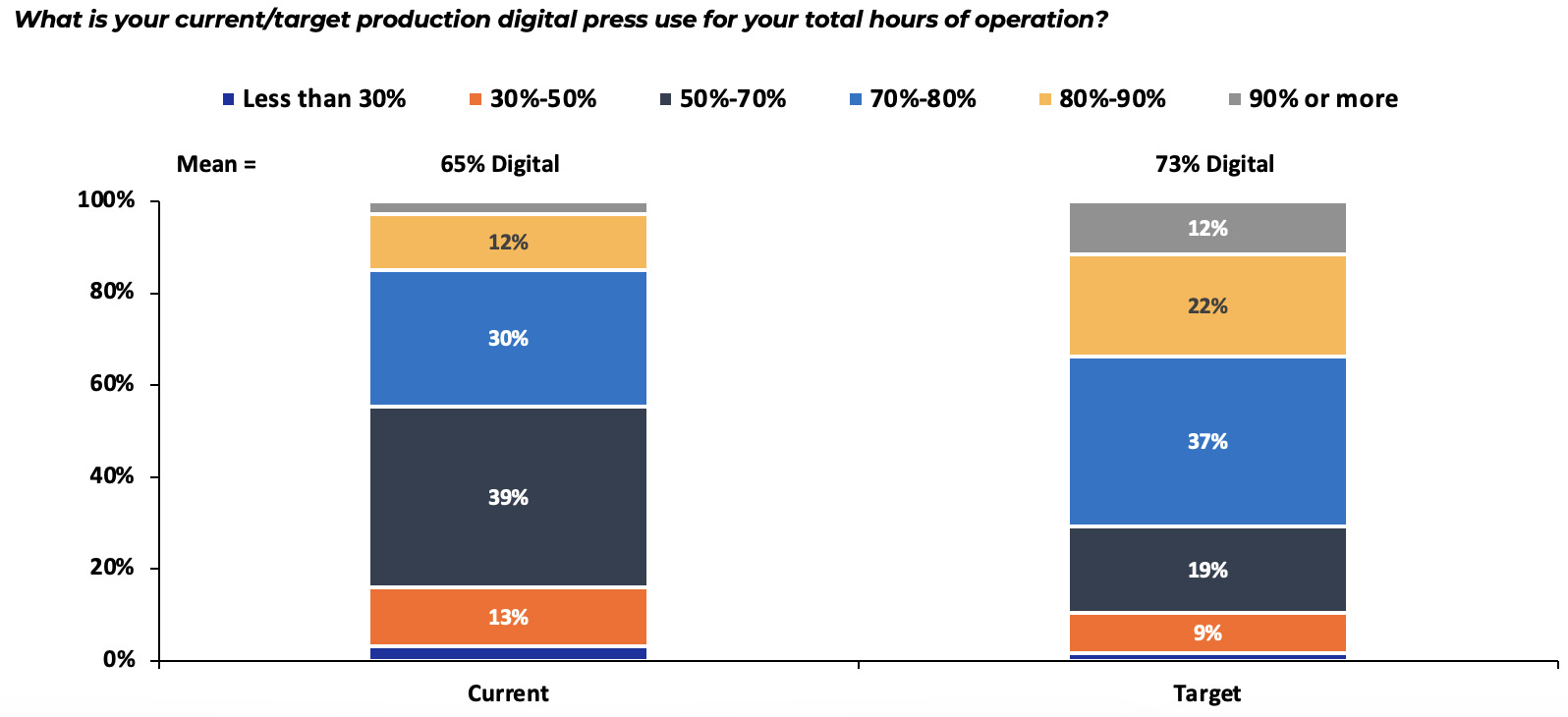
When asked about their current digital press use by total hours of operation, survey respondents reported an average of 65% digital. At the same time, however, these respondents had a target digital press use of 73%. This means that many businesses are falling short of their digital press utilization targets.
Figure 3: Digital Press Utilization – Current vs. Target
N = 181 Total Respondents
Source: Global Software Investment Outlook; Keypoint Intelligence 2025
Among our total survey participants, over half (55%) reported a digital press utilization that was below their target. This points to a need for more automation, since a higher level of automation will bring a higher average digital utilization. It is important for PSPs to understand their current level of press utilization and identify what is holding them back from reaching their target. When respondents were asked why their digital production presses were not being used as often as desired, the most common reasons included insufficient print volumes (42%) and approval delays (34%).
Automation
Although our research shows that automation is improving over time, full automation is still a long way off. Over half (51%) of respondents had mostly integrated automation, but only 2% were fully automated. It should also be noted that Western Europe was more automated than North America.
Figure 4: Level of Workflow Automation by Region
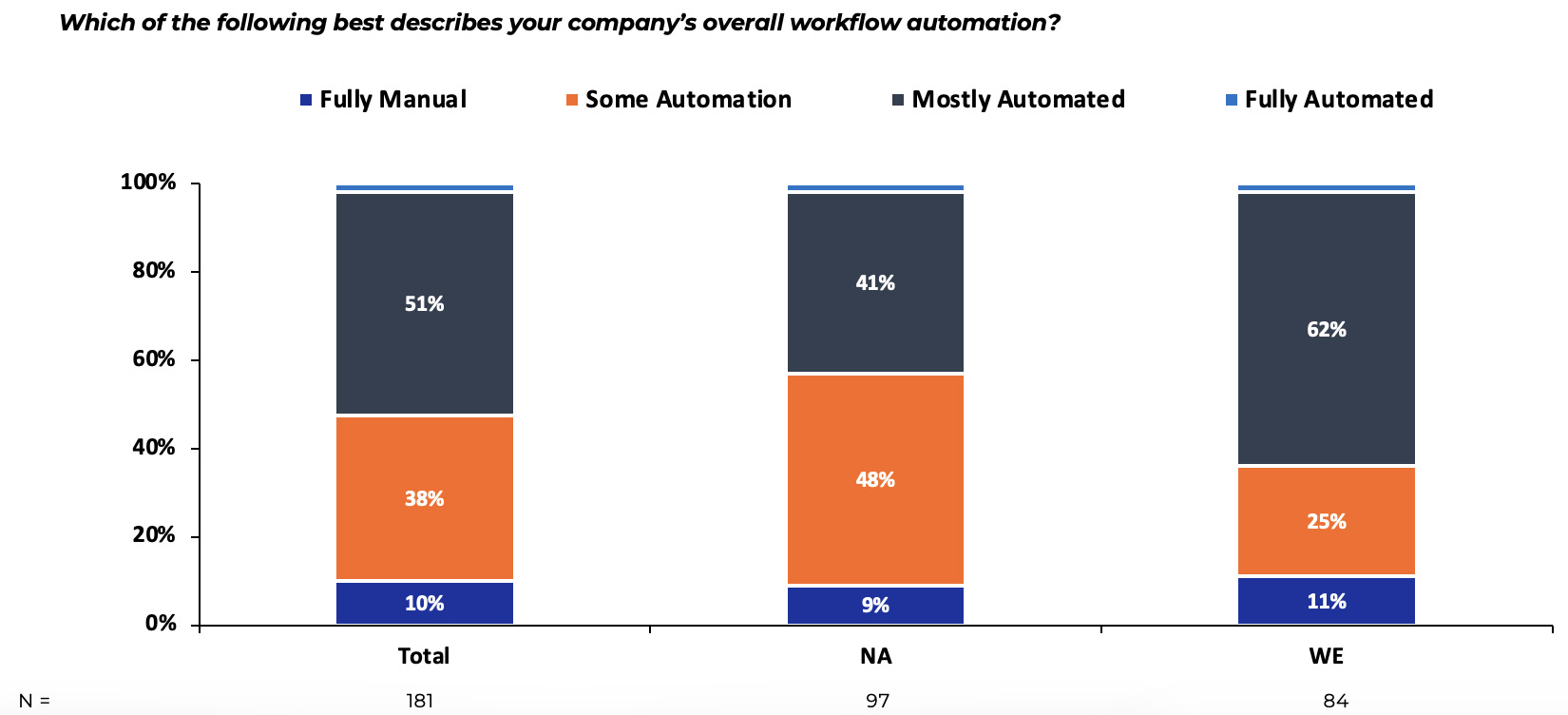
Base: Total Respondents
Source: Global Software Investment Outlook; Keypoint Intelligence 2025
The most automated processes among our survey participants include finisher setup, job routing, and preflighting. PSPs must better understand their workflow challenges so they can identify areas that can be improved with automation.
Artificial Intelligence
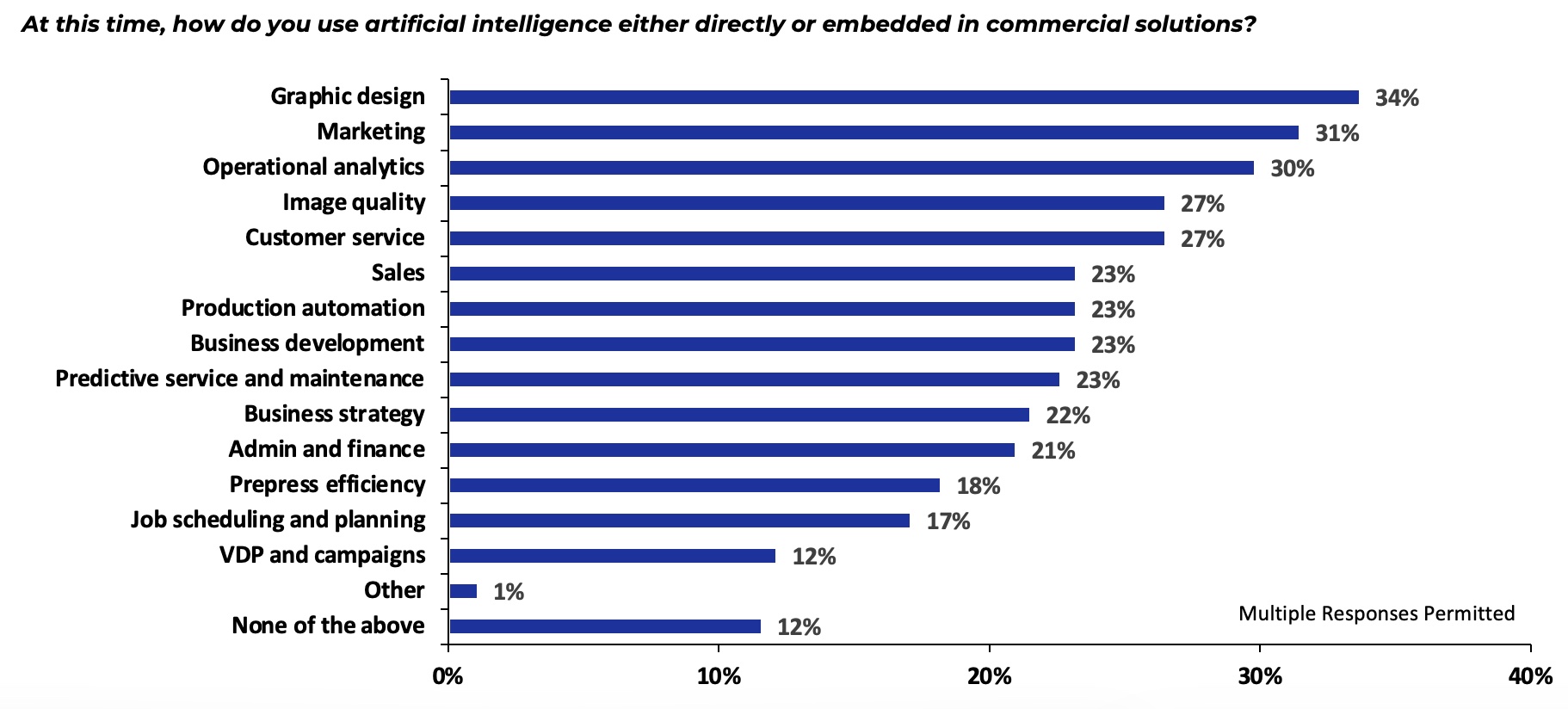
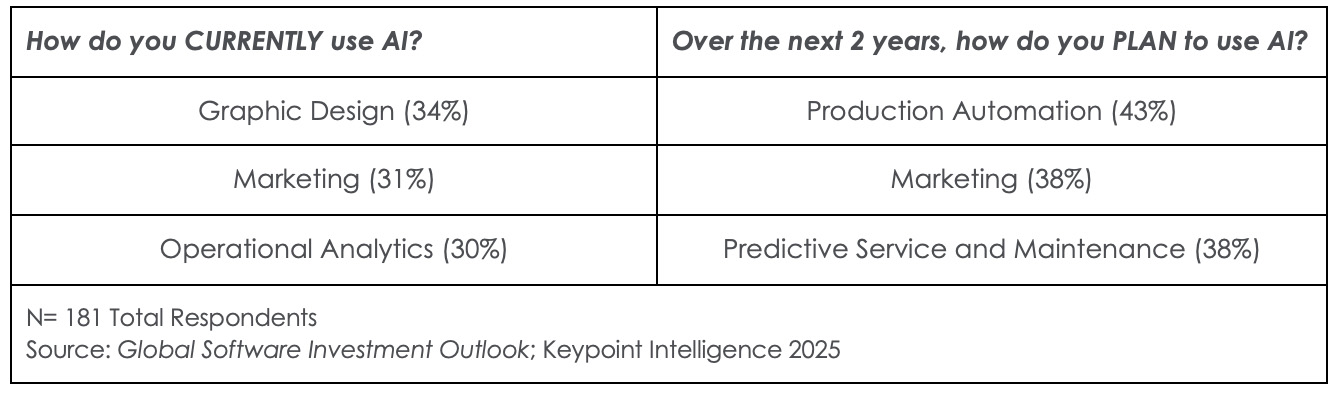
Use of artificial intelligence (AI) continues to increase. Survey participants are currently using AI in a variety of ways (either directly or embedded in commercial solutions), and they also have big plans for the future. At this time, the most common uses for AI include graphic design, marketing, and operational analytics. In the future, respondents most commonly hope to expand to print-specific areas like production automation and predictive service/maintenance. Savvy PSPs understand that they must embrace AI-enabled solutions to improve their effectiveness and efficiency.
Table 1: Use of AI – Current and Future (Top Responses Only)
Keypoint Intelligence’s research shows that perceptions of AI are largely positive. When total survey participants were asked to describe their opinion about using and adopting AI at their businesses, the greatest percentage (26%) reported that they saw an opportunity with AI from the start and were already achieving what they hoped to. Another 22% stated that AI was delivering even more benefits than they expected, and they might even change their software brand if it meant getting more from AI.
Robotics
As was the case with AI, survey respondents were largely aware of and receptive to robotics. Even so, they acknowledged something would need to happen before they fully committed to a robotic future. Specifically, half of respondents wanted to see a proven return on investment and nearly as many needed to better understand how robotics could be integrated with their existing systems and processes.
In terms of timeline, about 70% of total respondents expected to invest in articulated/fixed robot arms and/or guided vehicles/mobile robots at some point in the next decade. Less than 15% of respondents believed that they would never invest in these technologies. Robotics are a big opportunity, so PSPs should begin developing plans for a robotic future so they can address their labor challenges.
Opinion
PSPs are certainly changing with the times, but their journey has only just begun. Digital press utilization is improving, but it is still falling short of target levels. As we move into the future, emerging workflow automation technologies will become even more embedded in everyday operations. While innovations like AI and robotics might be differentiators right now, they will soon become necessary for doing business and keeping up with the competition. Technologies like AI and robotics are here to stay, and their capabilities are improving all the time. Today’s printers are seeking AI and robotics out. They will find compelling reasons to make these investments so they can improve their workflows and remain competitive in the future.
If you’d like to learn more about our annual software investment research, click here.
Eve Padula is a Senior Consulting Editor for Keypoint Intelligence's Production Services with a focus on Business Development Strategies, Customer Communications, and Wide Format. She is responsible for creating, analyzing, and formatting many types of content, including forecasts, blogs, industry analyses, and research/multi-client studies. She also manages editing and client distribution for many types of deliverables.