By Marc Mascara, Principal Analyst at Keypoint Intelligence
Walking through the corrugated exhibits at FESPA 2026, the emphasis was clear: Converters can no longer afford to evaluate digital production in isolation. Digital printing remains important, but the conversation has shifted toward automation, workflow integration, plant-wide visibility, and the use of operational data.
The reason is practical. Greater SKU complexity, shorter lead times, tighter quality requirements, labor constraints, and growing sustainability expectations are exposing the limits of siloed technology investments. A faster press can only help so much if scheduling, material movement, converting, and finishing still operate in silos.
It’s time to connect all these parts of the production process.
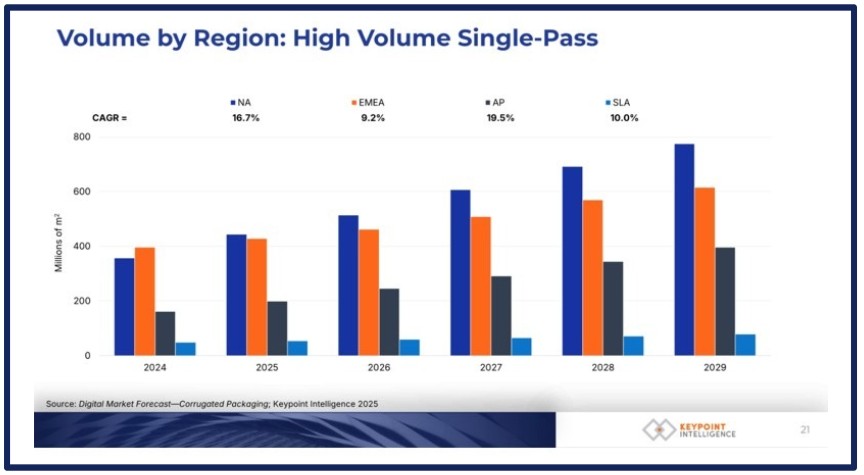
The market data points in the same direction. Keypoint Intelligence forecasts high-volume, digital single-pass corrugated print volume to grow at a 16.7% CAGR in North America and 19.5% in Asia-Pacific through 2029, underscoring the need for connected workflows that can support higher production volumes without adding operational complexity.
That is why many corrugated producers are looking beyond machine specifications and asking how each investment affects the whole plant. The question is no longer simply whether a press performs well on its own. Rather, it is whether that technology helps the plant produce more efficiently, reduce waste, improve consistency, and elevate the value of print.
Throughput and print costs still matter, but they are increasingly being evaluated alongside broader questions: How efficiently does work move through the facility? Where do delays occur? How well is capacity being used? Where can waste be reduced?
Reliable production data is becoming central to answering those questions, particularly as converters work to eliminate operational silos that limit visibility and slow decision-making. Without it, converters struggle to identify bottlenecks, understand true job profitability, or make informed decisions about where the next operational improvement should come from. In practical terms, this connects the process from order entry and planning through production, quality control, and performance reporting.
Suppliers are moving in the same direction. During an interview at FESPA, it was clear that the company’s vision centers on a fully connected, digitalized, and automated production environment where data moves seamlessly across the workflow. In that model, presses, converting equipment, software platforms, and business systems operate as part of a connected process rather than as standalone technologies.
BOBST has put that vision into practice through its Connected Packaging strategy and BOBST Connect platform. The value is not in connecting systems simply because it is possible—it is in seeing how work actually moves through the plant, then using that insight to improve results.
“Connectivity is not the end goal. It is the foundation that allows automation, analytics, and continuous improvement to scale across the plant.” —David Arnaud, Product Marketing Director for flexo folder-gluers and rotary die-cutters at BOBST.
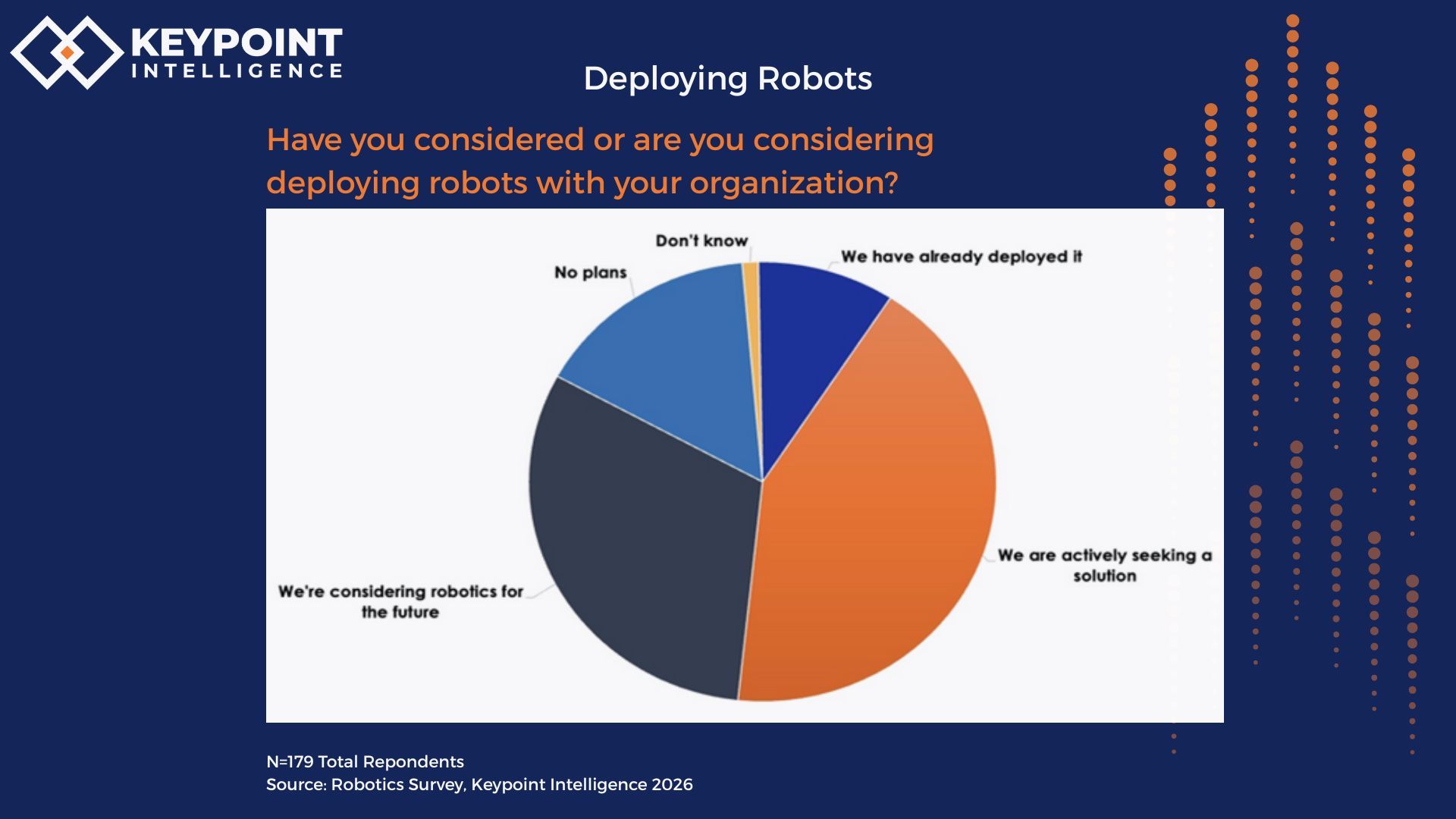
That foundation matters because many of the industry’s next capabilities depend on it. Sustainability initiatives increasingly require detailed information about material usage, waste, energy consumption, and operational efficiency. Artificial intelligence (AI) applications such as predictive maintenance, scheduling optimization, and advanced analytics depend on consistent plant data. Robotics delivers greater value when integrated into production workflows rather than deployed as a standalone automation project.
These developments point to a broader industry trend. Equipment manufacturers, software developers, workflow providers, and automation companies are investing in tools that help converters gain better control over plant operations. While their approaches differ, the goal is largely the same: Improve decision-making by improving access to reliable information.
According to Arnaud, “That is why connectivity matters. It helps converters run stronger plants, gives suppliers a more meaningful way to prove value, and provides brand owners with a more responsive, efficient, and transparent supply base.”
For converters, connected manufacturing will not happen all at once. Progress will come through a series of decisions that improve data flow, automate manual processes, connect systems, and make operational performance easier to measure. The goal is not simply to collect more data, but to give converters better information at the points where operational decisions are made.
For suppliers, the opportunity extends beyond machine capability. Converters increasingly want solutions that fit into a larger operational strategy and contribute to measurable improvements in productivity, quality, scheduling, waste reduction, and asset utilization.
What stood out at FESPA was not one major technology announcement. It was the growing recognition that corrugated competitiveness now depends on how well the whole operation works together. Production is becoming more complex—to not just survive but thrive, converters need clearer visibility and better information and tighter coordination across the plant. The companies that build those capabilities will be better positioned to run efficiently, respond quickly, and make decisions with confidence. For brand owners, the outcome is straightforward:
Better customer experience, better product, better success for all.
About the Author
Marc Mascara is Principal Analyst, Labels & Packaging at Keypoint Intelligence, bringing more than 25 years of experience in production print, packaging, and digital transformation. He has held leadership roles at Canon Solutions America, Eastman Kodak, EFI, Creo, and Scitex, helping converters and commercial printers adapt to evolving technologies and market demands. A frequent industry speaker, Marc shares insights on digital print, packaging innovation, and market trends.