By John Nelson
Digital printing is growing rapidly driven by the substitution of analog processes as well as the commercialization of new opportunities using digital printing technologies. A new market report, The Future of Screen vs Digital Printing to 2030, from Smithers identifies that the global print market increased in value from $904.0 billion in 2020 to $1.0 trillion in 2025 with the associated volume increasing from 1.9 trillion square meters to 2.0 trillion square meters. This represents growth of 2.8% CAGR in value and 1.0% CAGR in volume for these five years.
Screen and digital printing represent two technological extremes, with the former a comparatively simple though versatile process that is mature, while digital printing is fast-growing and the subject of extensive technological development and innovation that are designed to broaden its application reach.
The landscape for screen printing has evolved and high-volume businesses in point-of-sale, signage, packaging, and ceramic printing have seen strong competition from digital printing, resulting in the process becoming niche in areas that it once dominated. Screen printing is growing in the industrial and functional printing sectors where its versatility and ability to accurately deposit precisely controlled volumes of complex fluids make it the preferred printing method for many applications in this sector.
The use of screen printing has been severely impacted by growth of digital printing in the PoS display/signage sectors as well as increasing competition from flexo and other analog processes in print categories including labels and packaging. While screen printing in the graphic and package/label printing sector fell by 1.9% CAGR in value between 2020 and 2025, digital printing in this sector grew by 6.2% CAGR in both value and volume.
Key Drivers and Trends
The effect of global geopolitical events in recent years has led to some unusual demand patterns, with many end use segments seeing a fall in 2020 followed by recovery in the following two years. Some of this apparent recovery was caused by supply chain shortages and serial price increases. Many businesses in the printed products supply chain switched from a just-in-time methodology to a more cautious “just-in-case” mentality, where supplies of some essential raw materials were secured ahead of demand and in advance of announced price increases.
Outside the geopolitical situation, there are several key drivers that will combine to shape the printing business and influence demand for screen and digitally printed products. Sustainability is having a major impact, and is being driven by heightened consumer and brand awareness as well as government initiatives, particularly in the European Union.
Increased focus on sustainability is also leading to widespread use of recycled materials in many printed products including textiles, plastic products and various types of packaging.
Technology Developments
There are few manufacturers of high-end screen printing equipment and much of the development work is focused on inks rather than the process itself. There are incremental developments designed to automate processes, reduce energy consumption and improve sustainability, along with developments of digital screen exposure to increase productivity, lower costs, and reduce the requirement for skilled labor.
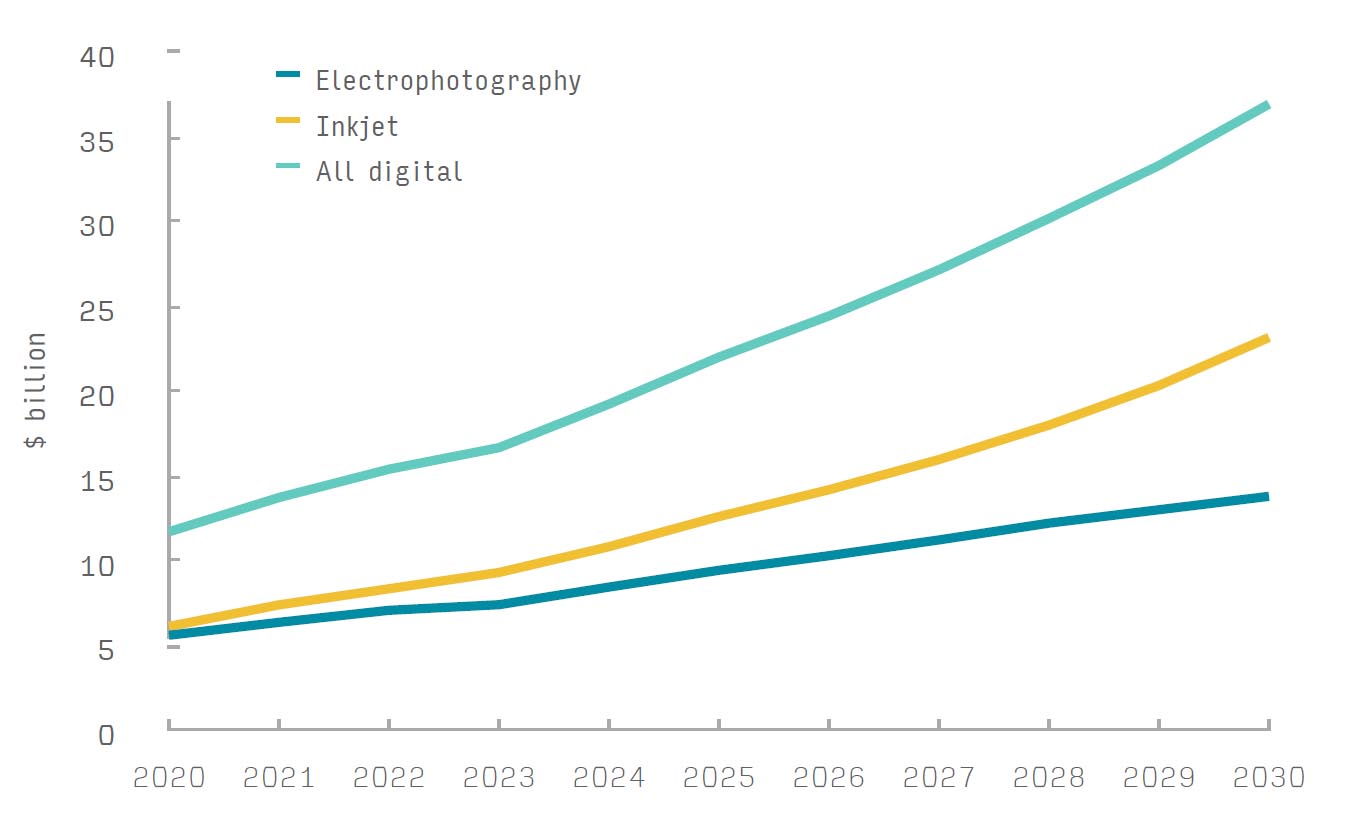
Digital printing has been the fastest growing print technology throughout the review period and much of this growth comes from inkjet, which has steadily increased relative to electrophotography and is forecast to continue to do so in the five years to 2030. Inkjet is a more scalable technology than electrophotography, allowing higher production speeds and wider substrate width, and can be more cost-effective.
In broad terms, developments in digital technologies are designed to reduce total cost of ownership, enhance automation and connectivity, improve productivity and increase production throughput. Improvements in these areas are critical for increasing the viability of digital printing for medium- and long-run production which will allow the process to be increasingly effective when competing with analog printing.
The Future of Screen vs Digital Printing to 2030 is available to purchase now from Smithers. It combines expert technical analysis with a comprehensive market dataset, quantifying the sector across 2020-2030 by print technology, end-use application, geographic and leading national market.
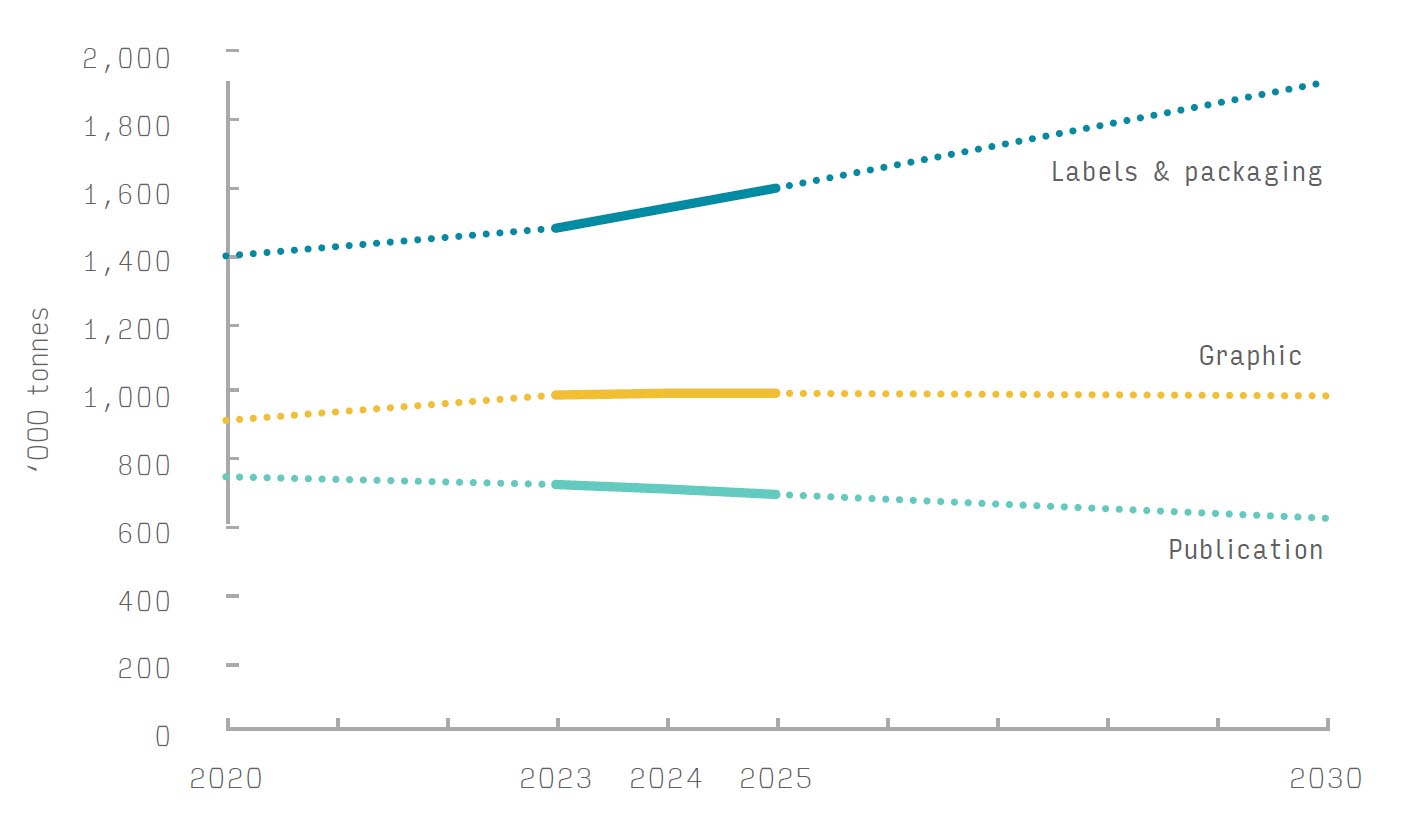
Global Printing Output by Brocess, 2025 (million m²)
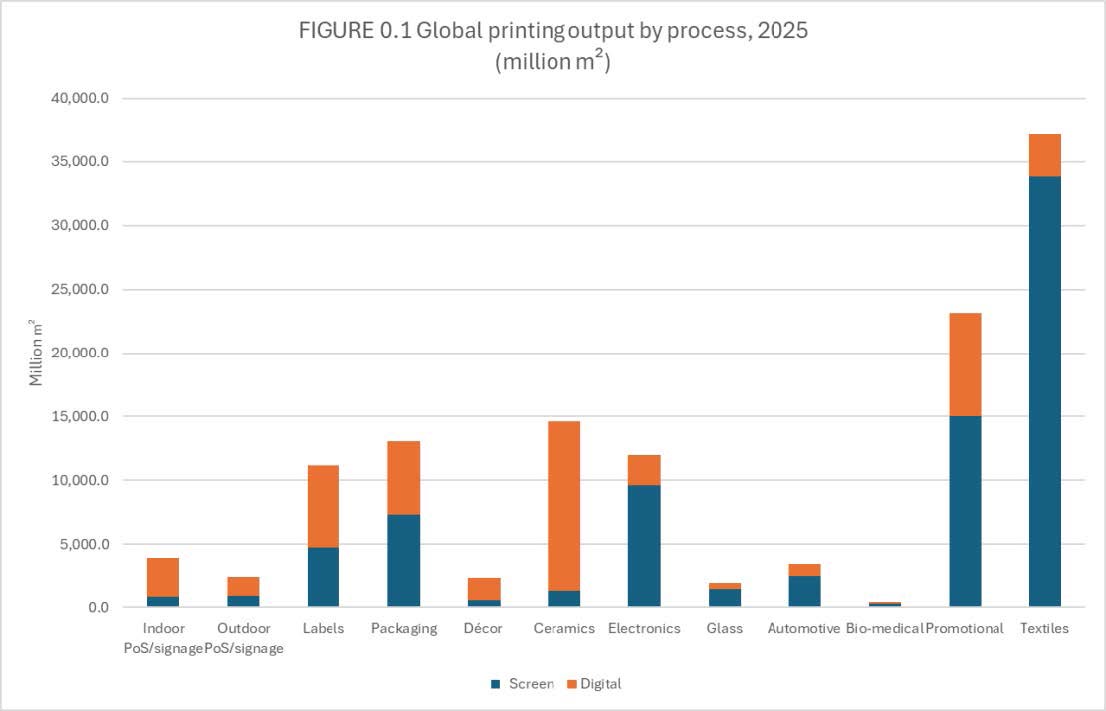
Source: Smithers
John Nelson is an award-winning editor and journalist working in the market reports and consultancy business of Smithers. Here he covers market and technology developments across multiple technical and commercial segments; including home and personal care, sustainability, packaging, printing, paper, nonwovens, rubber and tires.