(Adobe Stock)
“Could you imagine purchasing a press made another country for $2 million and then when it lands here in the docks in the U.S. being told you owe another $200,000 in tariffs?” asks Keith Sullivan, President and CEO of Sull Graphics in Ball Ground, Ga.
For printers like Sullivan, it could be more than just something to speculate about.
From its headquarters in Placentia, Calif., Print & Finishing Solutions (PFS) distributes prepress, press, and finishing equipment from more than 35 manufacturers to 1,000 customers per year. This gives Christian Stauss, owner of PFS, insight into the effects of tariffs from the standpoint of both the OEMs and the end-using equipment buyers.
“Prices are clearly going up across the board,” according to Stauss, who notes that four or five of his vendors have notified him of price increases with very little lead time. “Their containers are landing now, and they're having to pay tariffs” on the shipments, he says.
Unease Is Universal
Sullivan’s question remains a rhetorical one for now, and he hopes it’s one that his commercial print and marketing solutions company ultimately won’t have to answer. But he speaks for virtually every print-related enterprise in the country in his frustration over what the Trump administration’s tariff policies could mean for the future of his business.
Another Georgia printer, Patrick Blackburne, owner and CEO of Canterbury Press in Atlanta, says the problem with tariffs is that “as business owners, we don’t like to make plans on rules, guidances, or policies that are changing on a seemingly daily or hourly basis. So really the uncertainty is almost worse than the actual tariffs themselves.”
Given the caprice of the administration’s tariff rollouts so far, uncertainty is something that print business owners everywhere will have to go on living with.
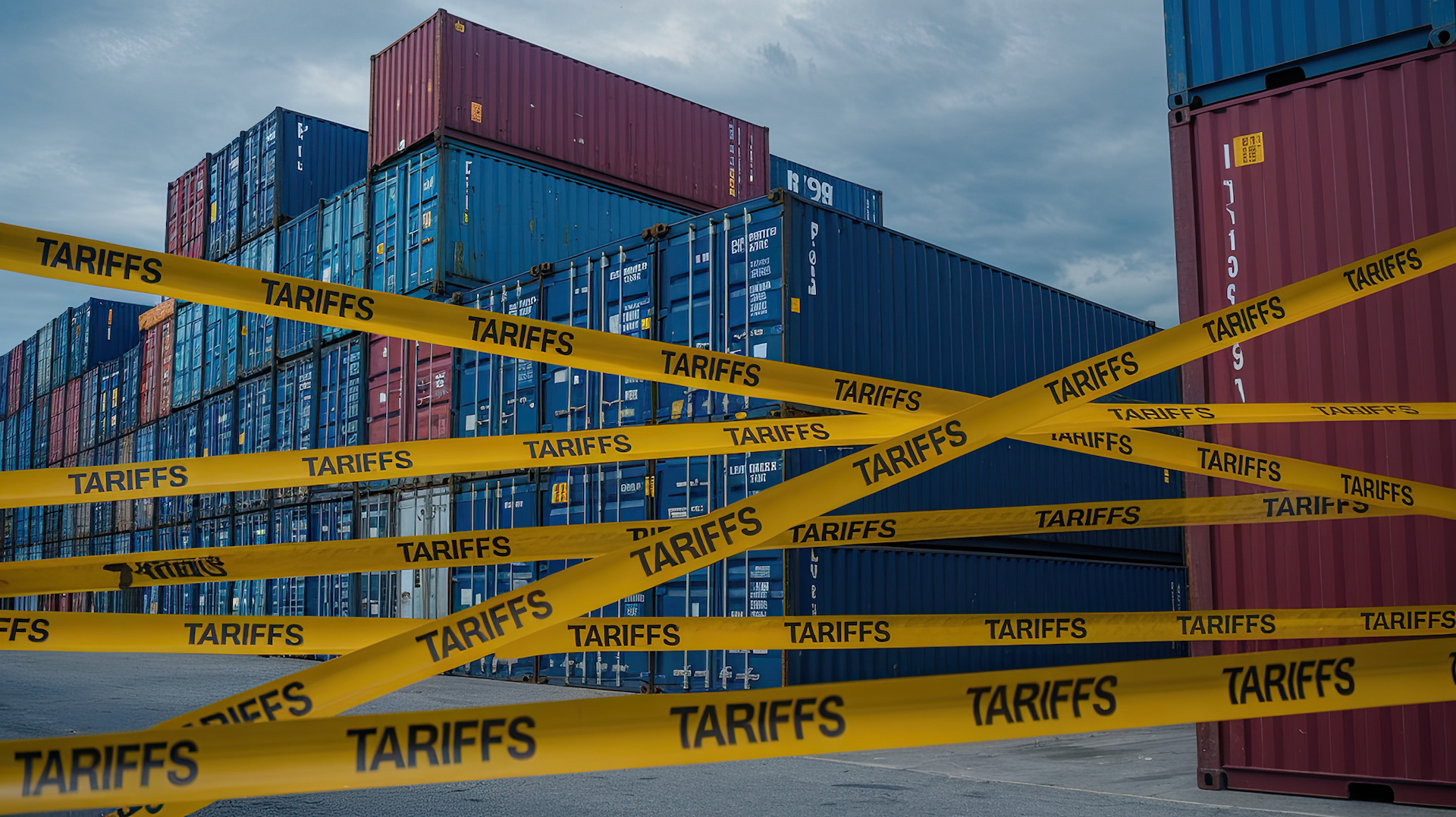
When this story was submitted for publication on May 28, a minimum 10% duty was in place on imported goods worldwide, with many additional levies imposed or threatened on a country-by-country or product-specific basis. The printing industry was already feeling the economic sting of tariffs placed on paper and aluminum plates.
Fairly or unfairly, this patchwork of rulings means that anticipating the pain points of tariffs has become central to every print business owner’s strategic planning—a task made no easier by the fact that it’s impossible to know how much more pain is on the way.
Nowhere but Up
Printing is one of a number of manufacturing techniques employed by NCCO, founded in 1905 as a producer of coupon books and restaurant guest checks. Today the St. Paul, Minn., company caters to a cross-section of food service markets with a variety of solutions for making their kitchens and related operations run more efficiently.
Ben Olk III, President of NCCO, says that because the company sources 60% to 70% of its raw material from domestic providers, it is protected to that extent from tariff fluctuations. But that leaves the 30% of input materials coming in from foreign sources, which often are of higher quality and (until now) better priced than comparable materials NCCO can obtain in the U.S.
“The foreign suppliers have obviously raised their prices to us because of the tariffs,” says Olk, “and as a result, the domestic manufacturers have chosen to raise their prices to us as well.” While he doesn’t fault his domestic suppliers for doing this—the costs of the materials they import have also gone up dramatically—he sees it as something that his company may not be able to avoid making a corresponding reaction to.
Olk points out that for the last three to four years, NCCO has kept its pricing stable by growing volume and increasing operating efficiency. But now, with tariff-driven pressure from suppliers on the rise, “we’re definitely at a point where we’re considering going with a price increase.”
Ephemeral Estimates
Sullivan says that as a printer and a supplier of promotional products, Sull Graphics has been hit by tariffs on both fronts. The pass-through price increases, including those from domestic vendors, have ranged from 2% to 10% on raw materials and to more than 100% on promotional items imported from China.
“This has definitely made it hard for us to estimate jobs because a lot of times we don’t see that tariff until after we’re billed,” says Sullivan. “It’s not even guaranteed at the time of estimate that that's going to be the final price for materials that we use.”
He adds that deliveries of some materials are either being delayed or not coming in at all. The result is that “we’re having to adjust our customers’ expectations on things or try to lean them in a different direction.”
At Presentech, a full-service digital printer in Atlanta, owner David Midler says he has not seen any price increases at all—but this doesn’t reassure him.
“The reason we haven’t seen price increases is because nobody is bringing product over that’s subject to a tariff,” he explains. “People have just canceled orders, and we’re seeing stock shortages everywhere we look.”
Presentech has tried to protect its trade show and display business from running out of material by stocking up more than usual on items like retractable banner stands. “But that leads to the issue of higher inventory management costs,” Midler observes.
The ambiguity of the situation means that the impact of tariffs can be uneven.
Instead of inflicting pain, the most recent round of tariffs has brought a small bonus to Wallace Carlson of Minnetonka, Minn., in the form of two jobs that had been printed by plants in Canada and Mexico. But Brian Turbeville, President, notes that both projects could be “one time hits” if an eventual lifting of tariffs sends them back where they came from.
Meanwhile, the company is still smarting from tariffs already imposed on aluminum plates. Turbeville says these duties have driven up his plate costs by 50%.
“Multitude of Approaches”
Tom Ling, President and CEO of Advantage Colorgraphics in Anaheim, Calif., says he has seen his suppliers take “a multitude of approaches” to their tariff obligations, with some passing costs through and others absorbing them.
This sometimes work to his advantage. “We’ve had an example where a paper company passed on the 10% and their competing paper mill did not, at least for the 90-day period,” Ling elaborates. “Then the other company backed off on it at 5% and ultimately pulled it all the way back.”
In Ling’s view, the pressure that tariffs place upon suppliers can be a positive outcome for businesses like his. “If one entity is going to hold it, it creates that competitive environment where the other one has to really think about whether they’re going to pass it along fully,” he says.
Kathryn Holmes, CEO of K&W Finishing in Baltimore, Md., points out that because her shop doesn’t purchase the same quantity or variety of input materials that a commercial printing business would, its exposure to tariffs is correspondingly smaller. She says that although several vendors have notified her of tariff-related surcharges, her only pass-through price increase so far has come from a supplier of metal rings that go inside the turned-edge binders K&W manufactures.
Holmes says that since the Trump administration tariffs were first announced, K&W Finishing has been asked to quote on several large jobs that were being produced out of the country. A nearby plastic thermoforming business to which K&W supplies labels also has seen some of its business return home, according to Holmes.
“I did take it as a really good sign that things are coming back from overseas, that the tariffs are working,” Holmes says. “I am definitely pro-tariff to the extent that I understand tariffs.”
Suppliers Largely Silent
Printers naturally are hanging on every word their suppliers give them about product pricing and availability—not that the vendors are disclosing much about either.
According to Midler, “no one is saying anything.” He suspects this is because vendors know the kind of resistance that announcing higher prices due to tariffs would give rise to. “People are really quiet about it,” he says.
Allocations—caps on the sizes of orders vendors will agree to fulfill—have been “threatened” but not yet put into place for NCCO, according to Olk. His most immediate concern is the looming shutdown of a source of specialty paper made nowhere else in the US. The scheduled closure of this plant at the end of the year would oblige NCCO to turn to foreign producers of the paper, Olk says.
Turbeville says that so far, Wallace Carlson has heard nothing from its suppliers concerning what can be ordered and how much will be charged. Delivery of an order for coffee cups to be resold as advertising specialty items is late, but Turbeville says he can’t directly ascribe the delay to any impact of tariffs on the supplier’s end.
Caution on the part of suppliers has meant dealing with increased prices, shorter quote validity periods, and warnings of limited availability, according to Sullivan. When it comes to goods out of China, “no one knows” what will happen next. This is why suppliers are urging their customers to protect themselves by ordering ahead of their busy seasons, Sullivan observes.
“Frustratingly Fluid”
Blackburne notes that Canterbury’s vendors “are in the same situation as us. They don’t know what they should pre-buy to try to get ahead of tariffs, how much they’re going to absorb, how much they’re going to pass along. All of that is pretty frustratingly fluid.” He says that when the first round of tariffs against products from Canada was announced, several suppliers notified Canterbury that unless orders were placed by specific dates, the pricing would be adjusted.
K&W Finishing is “cautiously optimistic” that it can hold the line on vendor pricing and is doing what it can to source what it needs from US suppliers, according to Holmes.
Ling says that although he has not heard much from his vendors about availability, he is keeping tabs on what tariffs could do to the cost of imported raw materials in the consumables he uses—for example, the photoinitiators in UV ink, which could raise the price of the ink by multiple percentage points.
The equipment vendors that PFS does business with are passing along the cost of their tariffs, according to Stauss. “They’re obviously concerned that it will impact potential sales, but at the same time that they realize that the majority of printing and bindery equipment is made outside the United States,” he says. “So they know that from a competitive perspective, that everybody’s costs are going up.”
What Will Customers Do?
Of even greater concern to printers than their vendors’ reaction to tariffs is how the ripple effect of a tax on imports might change their customers’ spending plans.
As of April, worries about tariffs hadn’t slowed down the pace of operations at Presentech. “We are busier than we’ve ever been,” declares Midler, noting that the month was one of the company’s best ever. He attributes this to the large volumes of business Presentech does with state and county governments and the healthcare sector, which he says have not been impacted the way other markets have.
He recognizes, however, that “just because we have not seen companies pulling back or canceling does not mean that a day from now, that couldn’t happen.” Although most people believe that the pressure will be short-term and that the situation will work itself out, “if it doesn’t, then things could change rapidly,” Midler says.
Pass the “Pepperoni”
Olk notes that a trend to watch in the industries he serves is the so-called Pepperoni Price Index—the idea that increased demand for frozen pizzas to be eaten at home signals economic downturn across the board.
He says the pepperoni effect can be seen in the fact that “the restaurant industry has shown pretty significant decline since the first of the year. It’s just a consistent level of decline.” He says that his customers, who are being “bombarded” by other suppliers with significantly higher price increases than anything NCCO would envision, are starting to push back against the upward adjustments.
“They’re challenging the suppliers to validate the increases,” Olk says. “They’re looking for alternatives too. We’re not the only US-based game in town, so they have choices. We want to make sure that we honor their need to be competitive and support their growth opportunities.”
Customers feeling nervous about tariffs aren’t hesitating to act on their fears, according to Sullivan.
“They scrutinize every dollar they spend. If anything seems to raise prices slightly, they either scale back or change their marketing campaign strategies,” he says. Corporations with fixed budgets expect their vendors to do more with less. Sull Graphics has responded by steering its customers to “more cost stable options” such as substituting US-made materials for those manufactured elsewhere.
Less Funding, Less Printing
Blackburne points out that tariff fears aren’t the only policy-related developments causing customers to rethink their spending plans.
“We have a number of customers that are either directly or indirectly reliant on government funding grants,” he explains. “If those go away or reduce significantly, their funds to procure our products would go away.” Universities and others fearing loss of public funding hesitate to make long-term engagements given the level of uncertainty, Blackburn says.
Ling says he’s less alarmed by tariffs than he is by the postal rate increases set to take effect in July. He believes that tariffs can help the packaging side of his business through the price increases they would drive in packaging manufactured overseas.
“We’re getting a lot of inquiries to do packaging stateside,” he says, adding that if the duty on imported packaging exceeded 50%, “there could be a pretty good change in the supply chain.”
K&W Finishing has a customer at the very epicenter of the furor over tariffs: the White House itself. Holmes says that since 2020 the company has made the gold-stamped folders that enclose executive orders signed by the President, along with stationery and other items for the Executive Branch and Congress.
Being a vendor to the Oval Office has subjected her to tariff pressure of a sort. “When Trump’s people came in, they asked about everything: what is coming from the US? What are you making yourself? They wanted to have all those answers,” she says.
Tough Calls on Capex
For printers, the short-term pressure of tariffs raises tough questions about longer-term business planning, particularly when it comes to capital expenditure for equipment.
According to Stauss, smaller printers facing the prospect of tariffs are likelier to take a wait-and-see attitude toward equipment purchasing than larger printers who are continuing to move ahead with their plans. He says PFS prepared for the advent of tariffs by front-loading its inventory with equipment and supplies purchased at pre-tariff prices “which we then hope to pass along to our customers.”
Stauss advises shops of all sizes to make active decisions about purchasing based on what they need now, when (as of this writing) tariffs on graphic equipment imported from countries other than China remain at 10%.
Tariff-driven uncertainty has put everything related to capex on pause at Canterbury Press, according to Blackburne.
“We’ve essentially frozen any potential large-scale investments,” he says. “If all of a sudden large numbers of clients are pulling back their spend or don’t have their funding, the business plan for capital investment may simply not be there anymore.”
The result is that “we do not feel as though we have the information or the stability we need to make the decision that would be best for our business,” Blackburne says. “And we don’t have confidence that the stability will be there in the…call it short to medium term.”
“No Way Right Now”
Presentech has no capital equipment plans at present and none in the offing, according to Midler. “There’s no way I would put something in right now,” he says. “The market’s too volatile, and we have to see where it settles.”
Caution will be the order of the day at NCCO for as long as the business lies under the shadow of tariffs, according to Olk.
“We’re managing cash much more closely today than we have in a long time,” he explains. “That cash management has implications for capital expenses, travel expenses, and marketing efforts. I’m just hyper aware of the uncertainty of the economic structure as it exists today.”
“I’m definitely afraid to invest,” says Holmes, noting that her reluctance applies not only to equipment but to real estate space that K&W Finishing urgently needs. In the wake of the tariff announcements, “our business is just so up and down” despite picking up work from the closures of other trade binderies in the Baltimore–Washington, D.C. area.
“Even when you’re not in uncertain times, they're usually right around the corner,” Holmes observes.
Provisional Pause
Having spent $4 million on new equipment in 2023 and 2024, Wallace Carlson has put its capital investment plans on pause—but not, says Turbeville, because of tariffs.
“We’re talking about more equipment. We have nothing in the plans or in the works that we’ve delayed at this point. We just aren’t ready for it,” he explains. It’s his belief that tariffs will have worked their way out of the picture by the time he is ready for the next round of investment.
“I really don’t anticipate they're going to affect me” in terms of equipment acquisition, Turbeville says.
Ling declares that the possibility of paying more because of tariffs won’t put him off a planned investment in a new piece of machinery he wants to install at Advantage Colorgraphics. The device will take 12 months to manufacture and deliver, and the contract specifies that a tariff imposed during that period will increase the quoted price.
That’s an added expense Ling is prepared to absorb if need be. “I’m not concerned about it from an acquisition standpoint. I'm concerned about it from a cost standpoint,” he says. “I obviously hope that it doesn’t happen, but it’s not going to deter me from moving forward.”
What’s to Be Done?
Despite the potential for economic hazard that tariffs create, printers’ feelings towards them can be nuanced. To be sure, there’s unhappiness about the way tariffs have been implemented and how disruptive they’ve proven to be. But to some, the impetus behind them is legitimate, and the protections they’re said to offer are overdue.
Among those staunchly opposed to tariffs is Midler, whose frustration with what is taking place runs deep. So does his apprehension about where it could lead.
“I think that we are all just pawns in some crazy game that’s being played,” he asserts. “The only thing that’s really going to make a difference is if the shelves for consumer products start to empty out. If we can’t get the stuff that we want as a heavily consumer-based nation, then things are going to get nasty, and we’re not there yet.”
In Olk’s view, tariffs do equal damage to America’s standing in the world and its well-being at home.
“From the economic perspective, what are we trying to accomplish with these tariffs?” he asks. “It’s not clear what the real goals are.” The present policy “just continues to alienate the US in a way that is detrimental to not only long-term national interest, but to global interest as well.”
“I would challenge anyone in the administration to come up with a more coherent plan for dealing with our industrial base and to be more thoughtful than what we’ve seen in the past,” Olk declares.
Blackburne points out that tariffs harm American consumers and American businesses alike. By implementing them, he says, “you are creating an environment where everyone is essentially delaying, postponing, or otherwise foregoing investments.”
What’s more, tariffs represent a “self-imposed marketing challenge” that differs fundamentally from other kinds of economic crisis that the country has had to endure. “This is 100% policy-driven, and intentionally so,” Blackburne declares. “At the end of the day, the ones getting harmed are American business owners, American employees, and American consumers.”
Appeal for Support
In Sullivan’s opinion, the tariffs being imposed or threatened now are the wrong answer—or at least an incomplete answer—to the right question.
“We support protecting American manufacturing, but tariffs without supporting domestic alternatives are hurting small businesses that rely on global supply chains to meet customer needs competitively,” he explains. “There needs to be a smarter approach: one that protects intellectual property and trade fairness without crushing the supply chains that many of us rely on.”
America must support its existing businesses while it rebuilds domestic capacity so that “companies like ours can continue to serve customers and sustain jobs without pricing ourselves out of the market,” Sullivan urges.
Holmes believes that using tariffs for economic leverage is a painful but necessary step to take. “We need to do what we need to do to support manufacturing in the United States,” she says. “I think some very difficult decisions need to be made to get us out of our country's overall deficit.” She trusts the Trump administration to take a firm but pragmatic approach to making tariffs work as intended.
Turbeville likewise says he hopes the present administration will “hold strong” and build a better economy for the country with the help of tariffs, which he calls “one tool in the toolbox of negotiation.”
“I believe the way they’re being used will actually help us in the long run,” Turbeville asserts. “I think that all of this is a necessary tool to regain the strength that the US has relinquished.”
Message to Mar-a-Lago
Ling says he has made his feelings known to the Trump administration through letters he has written to the President at his Mar-a-Lago resort and at the White House. He has asked for a minimum 60% tariff on China without advocating for tariffs across the board, which he believes the industry’s narrow profit margins cannot sustain.
“From a printing industry standpoint, we’ve been suffering in having to yield to China’s prices,” Ling says. He thinks a targeted tariff would help printing and packaging businesses like his to regain some of the work it has lost to China over the decades.
Stauss urges the Trump administration to do two things: provide more transparency on the timing and likely impacts of its tariffs; and refrain from imposing them on items that aren’t currently manufactured in the U.S.
“Small businesses generally don't have the financial cushion to ride things out for a long time,” Stauss observes. “Nor do they have the ability to absorb 10% cost increases. If we at least knew what the timeline and potential outcomes were, we could plan better.”
As for exempting products no longer made—and unlikely ever to be made again—in the US, “that would speak to most printing industry equipment,” Stauss says. “If there are no alternatives, the input costs and the end price have to go up, which puts pressure on the industry.”
What it all comes down to is dispelling the pall of uncertainty that tariffs have thrown over the entire US economy. As Stauss says, “if you’re a middleman, which we are and most business owners are in some sense, it’s hard to price your goods and services when you don’t know the cost.”