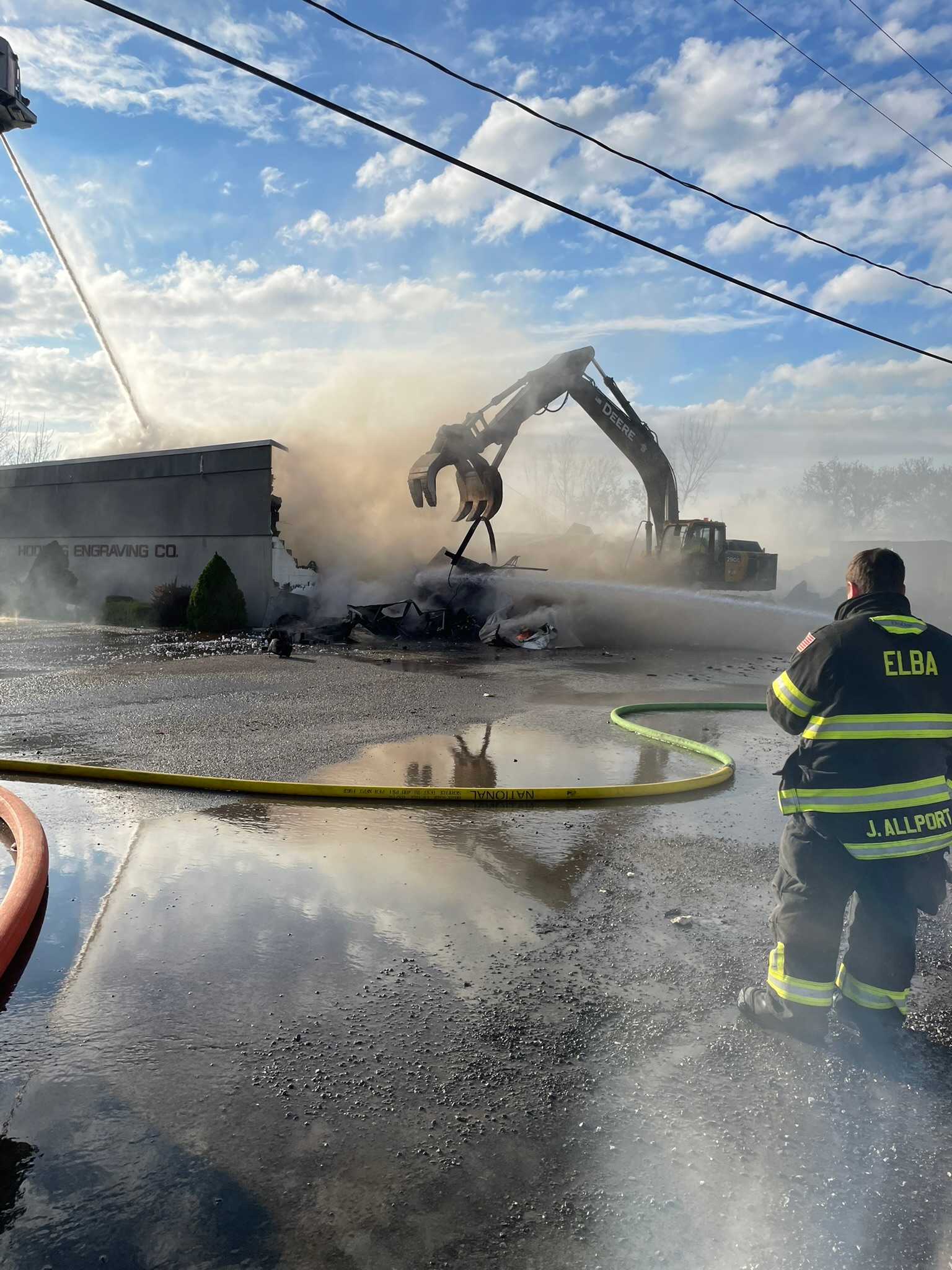
At Hodgins Engraving, a fire in a storage area for magnesium plates became so intense that extinguishing it required tearing the building apart with mechanical excavators. “Once the firefighters brought the excavators in,” recalls owner Becky Almeter, “they literally just destroyed the entire building. They were picking up presses and throwing them.”
In celebration of Women’s History Month, it has been the tradition of the Print & Graphic Communications Association (PGCA) to interview female leaders from its membership for Signature, the association’s newsletter. This year, Kim Tuzzo, PGCA’s Marketing/ Programs Director, had an in-depth conversation with Becky Almeter, President of Hodgins Engraving, located in Batavia, N.Y.
Hodgins Engraving is a third-generation, family-owned business that offers commercial and specialty print services. The latter include engraving, foil stamping, letterpress, and thermography. On May 2, 2025, Hodgins Engraving’s building was destroyed by a catastrophic fire. The discussion centered around the fire, the aftermath, and how Almeter was able to overcome the challenges of rebuilding the business.
The interview was first published in the March 2026 issue of Signature. A two-part version appears here with the permission of PGCA —Ed.
Kim Tuzzo: Thank you for agreeing to do the interview. We have been wanting to find out how you’re doing and how things are going.
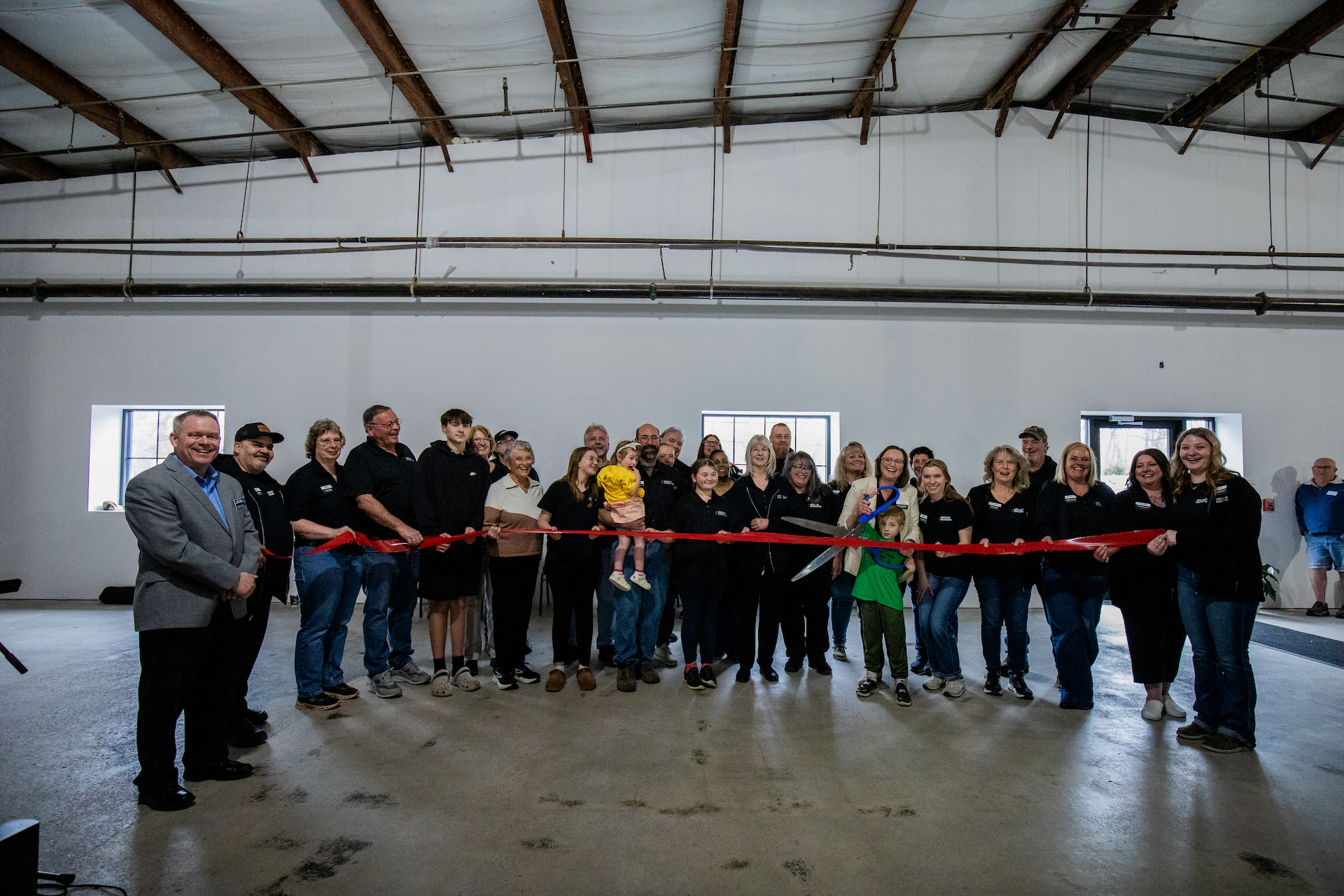
Becky Almeter: It's going pretty well actually. We moved our offices into the new building right before Christmas. We’ve been slowly getting equipment set up in our shop, which took a little bit longer because the electricians were still building out the panels and the wiring. But last week, we were able to fully move into the production space too.
We still have a lot of organizing and more equipment we need to get. It'll be a little bit before we really ramp up, but at least we're moved in, we're operational and we're producing, so it's all good.
KT: Please talk about what happened leading up to the fire.
BA: I was in the building that day (May 2, 2025). Most of our employees were there that day except for maybe one or two. My husband Jeremy is our production manager and he was in my office talking to me because we had an employee quit that morning.
A press operator went to our photoengraving department and used a piece of equipment that shouldn’t have been used in that department. It sparked and caught the magnesium that was in the area. (Photoengraved magnesium plates have a wide range of applications including printing, embossing, engraving, and stamping —Ed.)
We have fire retardant that’s for magnesium specifically, but the employee used a fire extinguisher instead. I feel that if my husband had been in the area where he usually is at the time, it probably wouldn’t have gotten out of hand like it did. It maybe wouldn’t have even happened in the first place. It was really bad timing.
The fire extinguisher, which is an obvious choice sometimes, ended up making the fire worse and it actually spread. The room with the magnesium just went up like wildfire. Our building was compact, with a very low roof and all of the heat was contained in that photoengraving area.
The magnesium and other chemicals were burning extremely hot. When the fire departments came, they started to try and go into the building, and they realized it wasn't safe. They pulled all the men out and decided to fight the fire from the outside.
20-Alarm Conflagration
At that point, when it first happened, we were hopeful that the fire department would be able to put the fire out and we would only lose a portion of the building. But they called for backup, and over 20 fire companies helped fight the fire. They ran out of water from the hydrants and pumped water from Tonawanda Creek across the street. The firemen were up high on ladders spraying down on the building.
Eventually, they realized that the building couldn’t be salvaged and they brought in giant excavators and started ripping the building apart. They ripped the roof off, they ripped the walls down, they ripped into the rubble so that they could get at the flames with the hoses. It was about 11:00 in the morning when the fire started. We ended up going home at 9:30 that night.
The firefighters were still actively fighting the fire until midnight or one o'clock in the morning. Spraying water on magnesium makes it burn hotter. They kept spraying the building to keep the fire from spreading while feeding the magnesium. There are videos online showing white-hot flames just roaring out of the side of the building.
KT: Did the fire spread to any nearby buildings?
BA: On the same property, but across the parking lot, there were apartment buildings and a store, but they were intact. Thankfully, we had a storage container in our parking lot and the presses and other things stored in it were not damaged. But the whole building was gone.
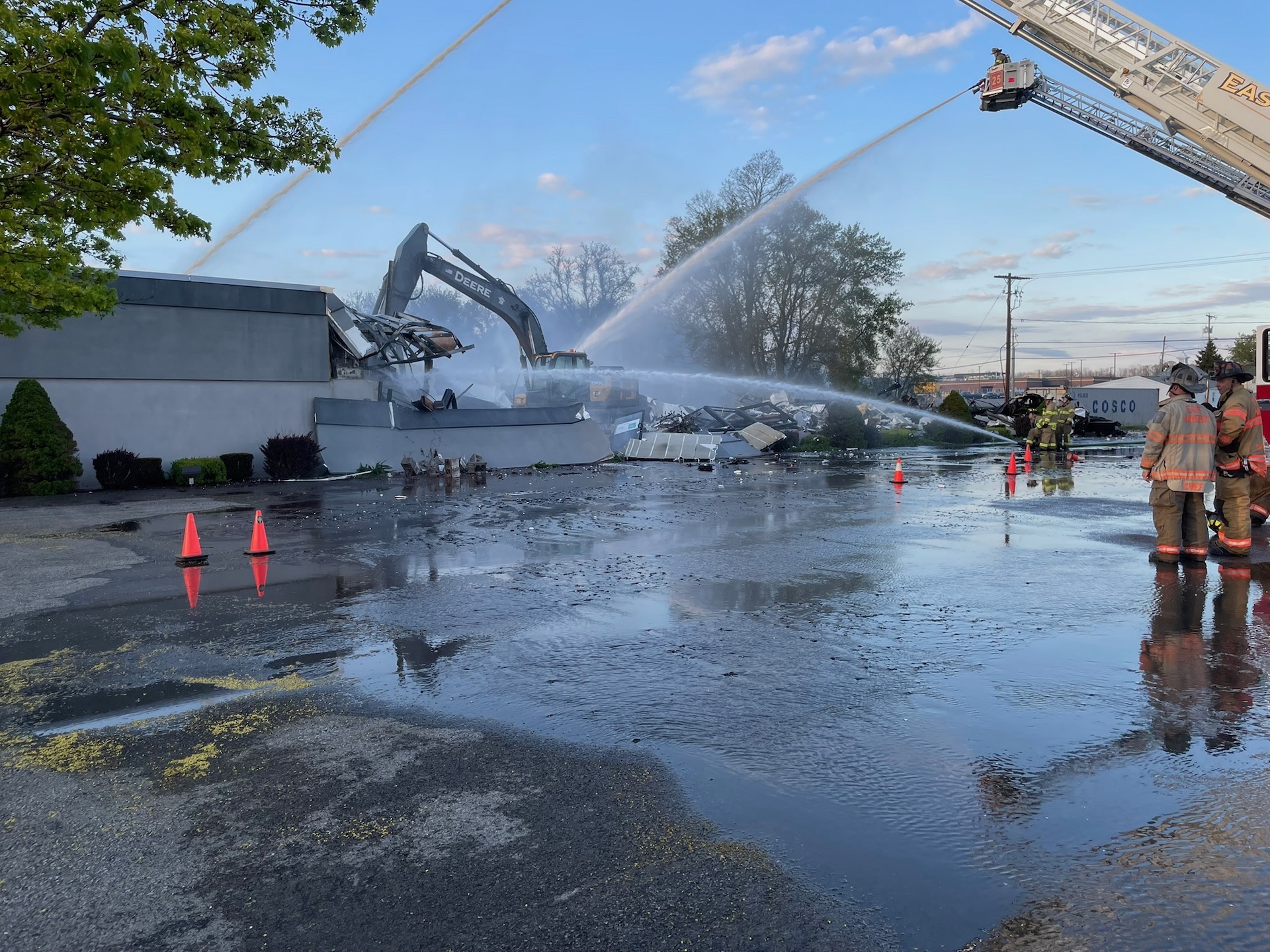
The fire at Hodgins Engraving did not spread to adjacent structures, but the site had to undergo weeks of environmental testing and cleanup afterwards. With nothing left, a search for a new building became a matter of survival.
“Nothing Could Be Salvaged”
KT: What was your first thought the next day?
BA: When the fire first started, I thought, “Okay, we’re going to have some damage to the building. We're probably going to have to close for a while, but this is manageable.” Once the firefighters brought the excavators in, they literally just destroyed the entire building. They were picking up presses and throwing them. Then we knew that nothing could be salvaged, not any equipment, nothing.
I wasn't really thinking too far into the future, but at that point I assumed we were just going to be done. I thought we were just going to close up shop, tie up our accounting somehow, end the business and just be done and walk away. And then very shortly after the fire, within days, it became very clear that we had business that we could continue doing. And that really surprised me.
It was very overwhelming at the time. But we started calling customers and emailing customers right away. The fire happened on a Friday. We had a team that got together that Sunday at a coffee shop. We brought our computers and we said, “What do we need to do?”
And we just made a game plan, started reaching out personally to customers. So on that Sunday night, we sent out this mass email to our customers and letting them know what happened.
We started talking to a realtor in Batavia about finding some space. Our IT team was key for us to be able to retain our data and be able to get set up quickly and get back to operating. Every order that we had in process, we emailed the customer and said, “We can't produce this.”
And we were just overwhelmed by the number of customers who said, “It’s okay. Just let me know when you can get back up in operation and can get this order out.” We were just not expecting that response.
We had your help at PGCA, and we had the International Engraved Graphics Association (IEGA) help us by gathering together groups of suppliers we could outsource to. IEGA had a list of their members and who could do what. They organized a Zoom call with us and everyone just said, “We’re here. Send us the work. It’s not a problem.”
Peerless Peer Support
The same thing happened with PGCA. Tim Freeman met with me and introduced me to Steve Zenger (President/CEO, Zenger Group, Buffalo, N.Y. —Ed.) and helped us connect with a bunch of printers, and not just for work, but equipment. A lot of printers said, “Hey, I’ve got an extra offset or die-cutting press or whatever. I’ve got some equipment that’s sitting around if you would like it.” We had people make an offer that our operators could run their equipment in their space, which we did not end up doing, but we had all of these offers, days after the fire.
It just became clear that people were there to support us and our customers weren't going anywhere, for the most part. Some did have to pull their work, which is understandable. But the vast majority of people just said, “Let us know when the order will come. That’s okay. Take your time. Just keep us posted.” They wanted to know what our plan was, and that there was a plan.
And once we started saying, “Okay, yep, we’re going to outsource orders to other vendors until we get our shop back up.” Then most customers were like, “OK, then we’ll just get it when we get it.” About a month into the outsourcing, we got into a pretty good groove where we were back to normal turn times, it was just that somebody else was doing the work.
So it did take probably a month or so to get a workflow set up, to figure out who we’re sending work to, and get all of the orders that were in production at the time of the fire, start over with dies and plates and send them somewhere. So there was a little bit of a delay. But then, like I said, about a month afterwards, we had all of our office staff come back.
Space Swiftly Secured
That Sunday after the fire, a couple of local realtors showed us several options of office space available. We signed a lease on office space the next day and we were able to move in immediately. Our IT company and the cable company came in and set up the servers and internet that day. I just couldn’t believe how quickly things moved.
KT: I was reading the fire update on your website, and I was just surprised how fast you were able to get access to your files and get set up.
BA: Our IT company is Millennium Computers here in Batavia, and Josh, our contact, was actually off the day of the fire. But he stopped what he was doing and logged into our servers remotely as soon as he heard the fire was going on. His quick action probably saved us and was the main reason why we were able to get up and running so quickly. We lost less than a day’s worth of work, open orders, that had to be recreated.
Once we got that office space, Josh got some temporary servers to house our MIS system and our internet so we could get back to our e-commerce sites. He also got computers for everyone and got them all set up. Our customer service team and our prepress team were back and running probably a week after the fire. We started with a few people in each department, hiring more people back as the work increased.
“Just Let Us Know What’s Next”
The whole rebound right after the fire was very quick due to Millennium’s work, and due to our customers saying, “We'll be here, just let us know what's next.” We didn't expect that. And then all of a sudden, we had obligations to fulfill, we had work to do, and our competitors, our vendors, other printers, said, “Send me whatever you want.”
Mentally, it was kind of like, “Wow, we still have a lot of business. We have enough to keep going. We have enough to look at a new building.” It wasn't really an option to rebuild on the same space. I thought, “Well, we have some work back, but I'm not sure how much is going to stick.”
We found the building we are in now in June. It's the perfect size and location; with some renovation, it's the perfect building. We outlined our floor plan to be about a third of what we had before the fire, expecting business wouldn’t return to pre-fire levels.
And now sitting here today, I would've done that differently, but I didn't know at the time that we were going to be able to retain as much business as we have. I'm hoping we can expand and take on more space in the building. Mentally, it was a progression—like you have nothing and then, you have a little more, and then, well, you have a little more, and then it's working.
(In Part 2: how Hodgins Engraving rebounded from the catastrophe by turning it into an opportunity to forge a new identity and direction for the business.)