(This is a revised version of the story that ran yesterday.)
Ready for some good news? Sustainable packaging has moved from a nice talking point to a real, monetizable premium. That shift isn't just about swapping substrates. It's about understanding which groups of consumers will pay more, how much more they'll pay, and where printers can reasonably charge for added value.
Not One Market, but Tiers of Willingness
When you look at recent U.S. data, one pattern is clear: There's a broad base of consumers who like the idea of sustainable packaging and a smaller, higher-value segment willing to actually pay a meaningful premium for it.
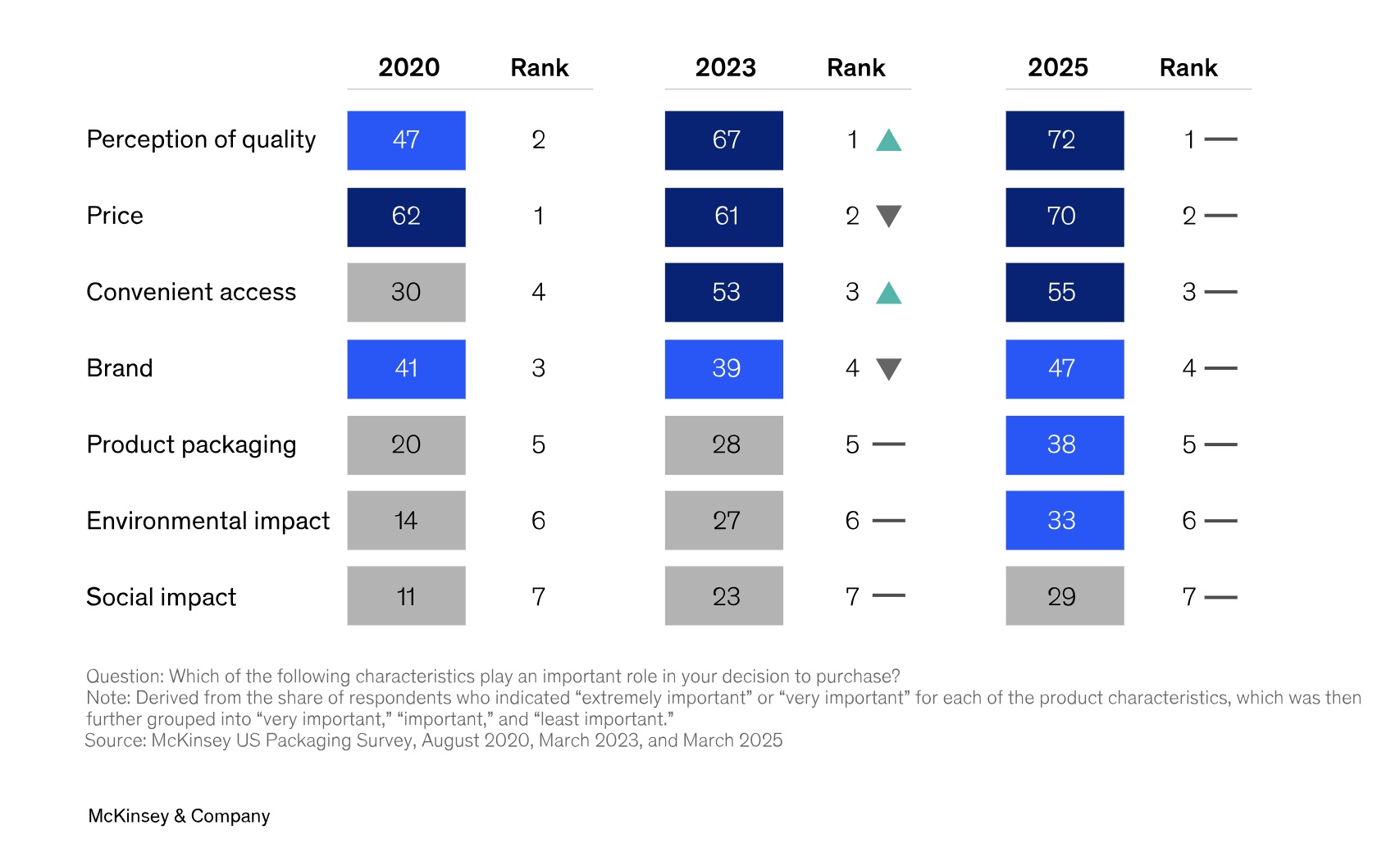
McKinsey's 2025 U.S. consumer packaging survey, for example, found that the percent of Americans citing “environmental impact” as a top purchasing factor has grown from 14% in 2020 to 27% in 2023 to 33% in 2025. Hoo-ra. While only 13% of Americans say they're willing to pay "a lot more" for sustainable packaging, roughly 12% of U.S. consumers are willing to pay 7–10% more, with that willingness concentrated in younger and higher?income segments.
Trivium Packaging's 2023 Buying Green Report, surveying 9,000 consumers across North America, Europe, and South America, reflects a similar trend. It found that 71% of consumers are actively choosing products based on the sustainability of the packaging, and 82% of consumers overall are willing to pay more for it, rising to 90% of Gen Z consumers.
The key insight isn't the average. It's the segmentation. A majority of Americans will comfortably accept a small increase, provided product quality and convenience aren't compromised. And there's a smaller, commercially important group willing to pay more when packaging aligns with their environmental values.
The Demographics of Premium Willingness
The highest-potential U.S. segments look exactly as you'd expect:
- Younger generations, especially Gen Z and younger Millennials
- Higher-income households
- More urban and coastal consumers
- Shoppers who self-identify as environmentally or socially conscious
These buyers are already paying premiums in categories like organic food, clean beauty, and DTC lifestyle brands. For them, sustainable packaging reinforces the story they're already buying: "This brand reflects my values." That alignment is what makes a real packaging premium possible.
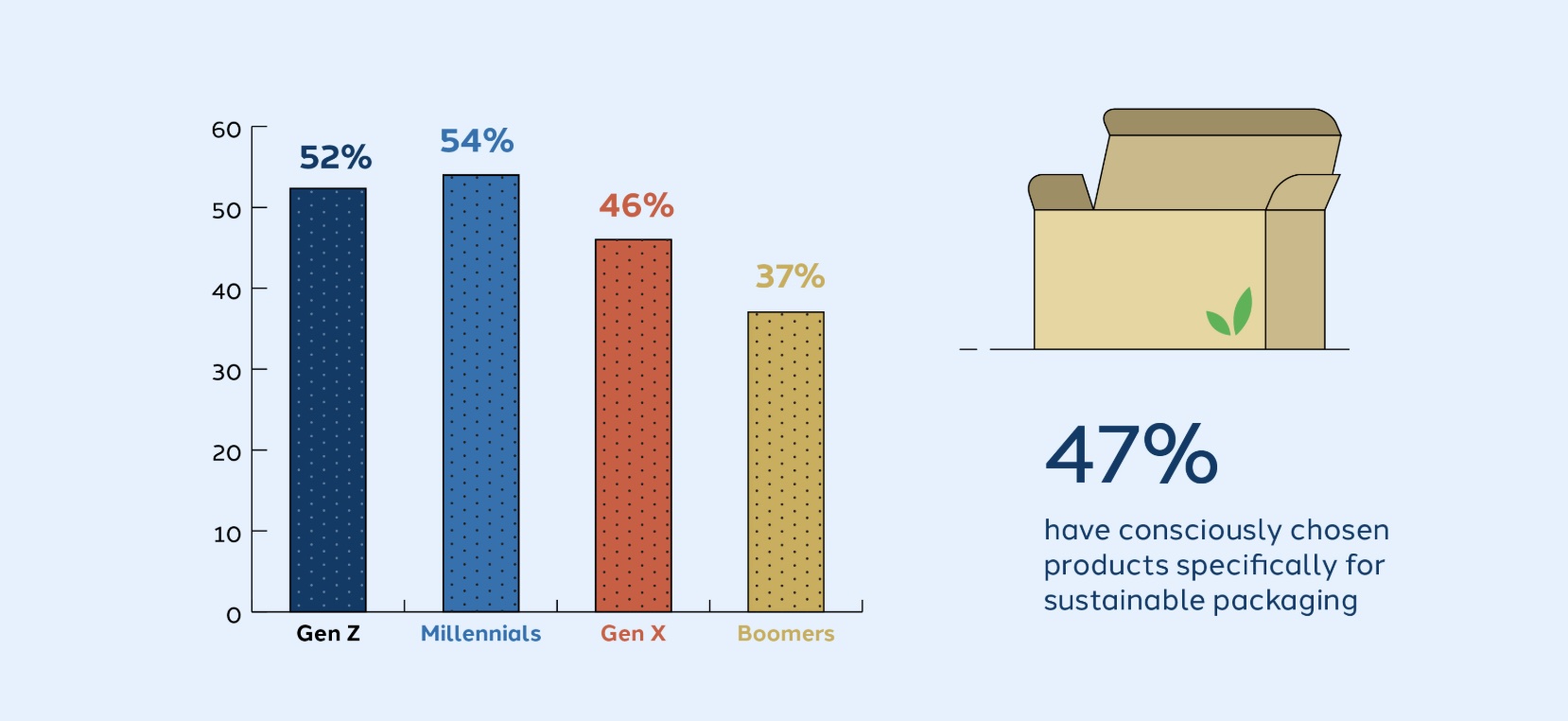
Source: Shorr Packaging: 2025 Sustainable Packaging Consumer Report
Indeed, according to Shorr Packaging’s 2025 Sustainable Packaging Consumer Report, 47% of consumers say they have already consciously chosen to purchase products specifically because they came in sustainable packaging. This rises to 54% of Millennials and 52% of GenZs.
Where the Premium Shows Up
Attitudes are nice, but as Americans like to say, "Show me the money." Do these premium claims translate into higher shelf prices? Can brands recover higher packaging costs and then some?
The evidence is encouraging. McKinsey & Company’s research on food packaging found that 50% of consumers are willing to pay a premium for sustainable food packaging. Breaking that down: 47% will pay 1-3% more for sustainably packaged fresh produce, while 28% will pay 4-6% more. Similar patterns hold for meat, poultry, fish, and dairy products.
McKinsey's research with NielsenIQ found that products with sustainability claims grew 28% cumulatively from 2018-2023, versus 20% for products without such claims. This offers quantitative support that brands are successfully capturing premium positioning in the market.
Of course, sustainable packaging materials cost more to source and convert than conventional options. That cost delta remains one of the biggest barriers to adoption. Even so, adoption is growing. The only way both can be true is if, at least in some categories, brands are using sustainability as part of a broader value proposition to justify higher price points.
What This Means on the Ground
So, is sustainable packaging a premium product category that justifies higher prices? In theory, yes. Especially if you position it that way.
This about it like this: You're not just selling packaging. You're selling access to a segment. Younger, higher-income, values-driven U.S. consumers are where brands can confidently charge more for eco-friendly products. When you propose a higher-cost sustainable packaging structure, you're really helping the brand win and retain those customers. That's worth real money.
Furthermore, premium sustainable specs belong in premium categories. Think organic and specialty foods, craft and functional beverages, beauty and personal care, wellness, and design-driven brands. These products already live in higher price bands, which gives your clients room to absorb and then recover the added packaging cost.
Framing the Premium in Sales Conversations
For your customers, the mental model is simple: There's a (small but powerful) slice of the U.S. market that expects sustainable packaging and is willing to pay for it. Those are the same customers many brands target for growth. How can you encourage (and even actively help them) to go out and find those customers that are both?