Net History
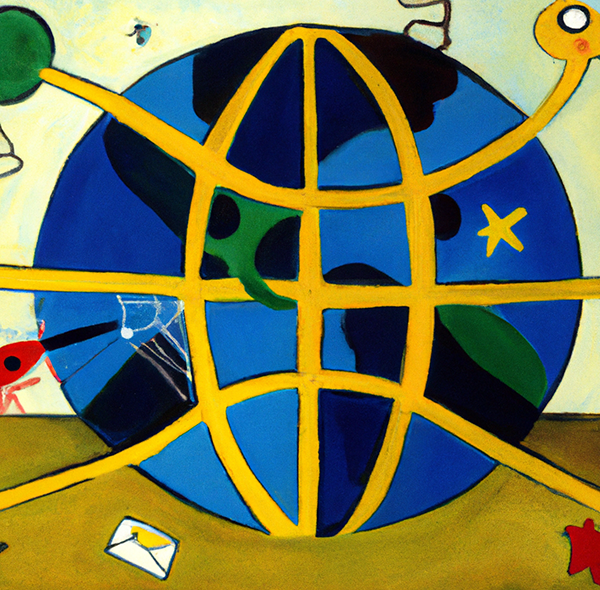
Over at Ars Technica, part 3 of their excellent “History of the Internet” series is now up. The theme of this installment is “the rise of the user”—and pretty much where it all went to hell. (We have previously linked to Part 1 and Part 2.) They pick up the story in 1996, as the “search engine wars” started to heat up. Sites like Yahoo!—which had been more or less “hand-curated” had yielded to more algorithmic search engines like AltaVista and Excite, which had launched in 1995. But two Stanford students, Larry Page and Sergey Brin, were working on a different approach they called “BackRub,”
Their “BackRub” software created a map of all the links that pages had to each other. Pages on a given subject that had many incoming links from other sites were given a higher ranking for that keyword. Higher-ranked pages could then contribute a larger score to any pages they linked to. In a sense, this was a like a crowdsourcing of search: When people put “This is a good place to read about alligators” on a popular site and added a link to a page about alligators, it did a better job of determining that page’s relevance than simply counting the number of times the word appeared on a page.
So in August 1996, BackRub was launched as a link from Stanford’s website. A year later, it was renamed as “Google”—an accidental misspelling of the mathematical term googol, which had been coined by mathematician Edward Kasner’s nine-year-old nephew to describe a 1 with 100 zeros after it. By mid-1998, their site was getting more than 10,000 searches a day, so they cast about for VC money to start a proper company. Interestingly, they had a tough time, even at what was approaching the height of dot-com mania.
at the time, search engines were considered passée. The new hotness was portals, sites that had some search functionality but leaned heavily into sponsored content. After all, that’s where the big money was. Page and Brin tried to sell the technology to AltaVista for $1 million, but its parent company passed. Excite also turned them down, as did Yahoo.
Angel investor Andy Bechtolsheim, co-founder of Sun Microsystems, gave them $100,000, which was enough to get Google going. But they still needed a way to make money from search.
The founders were concerned that if search results were influenced by advertising, it could lower the usefulness and accuracy of the search.
Ha! No chance of that.
They compromised by adding short, text-based ads that were clearly labeled as “Sponsored Links.” To cut costs, they created a form so that advertisers could submit their own ads and see them appear in minutes. They even added a ranking system so that more popular ads would rise to the top.
The next steps along the development of the Internet were expanding the types of media supported. If you remember ~1997–1998, you recall that the so-called World Wide Web was mostly text with a few images here and there. What started the next phase was a new compression algorithm.
In 1993, researchers at the Fraunhofer Institute developed a compression technique that eliminated portions of audio that human ears couldn’t detect. Suzanne Vega’s song “Tom’s Diner” was used as the first test of the new MP3 standard. Now, computers could play back reasonably high-quality songs from small files using software decoders.
And this of course would spell doom for the music industry (remember Napster?).
But what would completely change the nature of the Web was the ability for two-way flows of information. That is, users could input data, not just click around to static online information repositories.
This intelligent two-way interaction changed the web forever. It enabled things like logging into an account on a website, web-based forums, and even uploading files directly to a web server. Suddenly, a website wasn’t just a page that you looked at. It could be a community where groups of interested people could interact with each other, sharing both text and images.
This also enabled blogging, as well as collaborative websites like Wikipedia, as well as newer forms of communication.
Not every Internet innovation lived on a webpage. In 1988, Jarkko Oikarinen created a program called Internet Relay Chat (IRC), which allowed real-time messaging between individuals and groups. IRC clients for Windows and Macintosh were popular among nerds, but friendlier applications like PowWow (1994), ICQ (1996), and AIM (1997) brought messaging to the masses. Even Microsoft got in on the act with MSN Messenger in 1999. For a few years, this messaging culture was an important part of daily life at home, school, and work.
Be sure to go read the whole thing to see how we got to where we are today.
The final phase, from 2000 through today, has primarily been about the users. New companies like Google and Facebook may have reaped the greatest financial rewards during this time, but none of their successes would have been possible without the contributions of ordinary people like you and me. Every time we typed something into a text box and hit the “Submit” button, we created a tiny piece of a giant web of content. Even the generative AIs that pretend to make new things today are merely regurgitating words, phrases, and pictures that were created and shared by people.
Just Our Type
If you are a graphic designer, chances are one problem to inevitably run into involves trying to spec out different font choices—often requiring font licensing with no guarantee that the client will ultimately like any of those choices. What to do? Well, The Type Founders, a type foundry collective (specifically indie type foundries), has developed an app (in beta) called Typographer that aims to help designers test real fonts in real-world use cases, such as when pitching new business or prototyping. Says Print magazine,
Typographer is a centralized resource for type discovery, testing, and syncing that reduces this friction and helps your creative flow. It’s affordable for small in-house teams and agencies that need access to a library of high-quality fonts, curated by a trusted source, that syncs with your workflow. You can explore, test, and pitch as much as you’d like. When using the fonts you discover in decks, comps, and prototypes, there are no limitations before you actually buy.

Discovery is one of Typographer’s best features. You can filter by category, intent, and attributes, and the app will also provide suggestions for similar fonts you might have missed. Because the library is curated with type from foundries that have stood the test of time, you can trust every morsel of type you discover on the app.
A steal at $9 a month (or $90 for the year). But, they say, “beta users with an annual plan will get a $100 credit in font licenses across any of The Type Founders’ foundry sites.”
Dialing it In
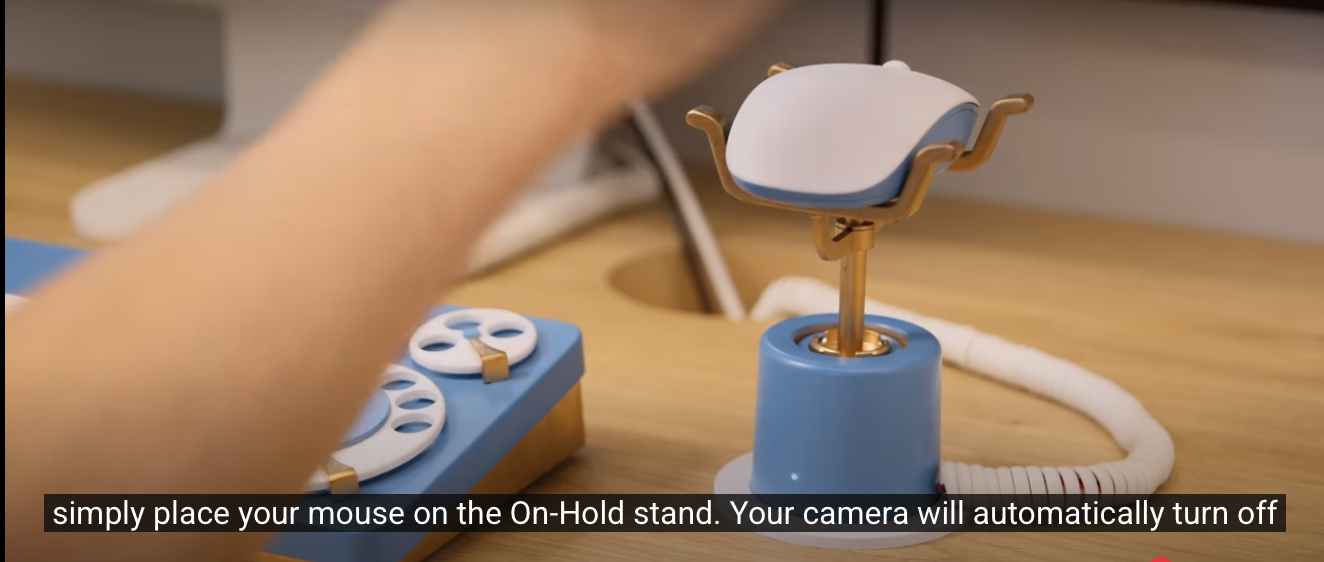
Google Japan, it seems, has something of an annual tradition in designing wacky keyboards (for example, here and here, and we linked to one a few years ago here). This year, via Core77, the Gboard Dial Editionattempts to evoke a time when the rotary phone was king.

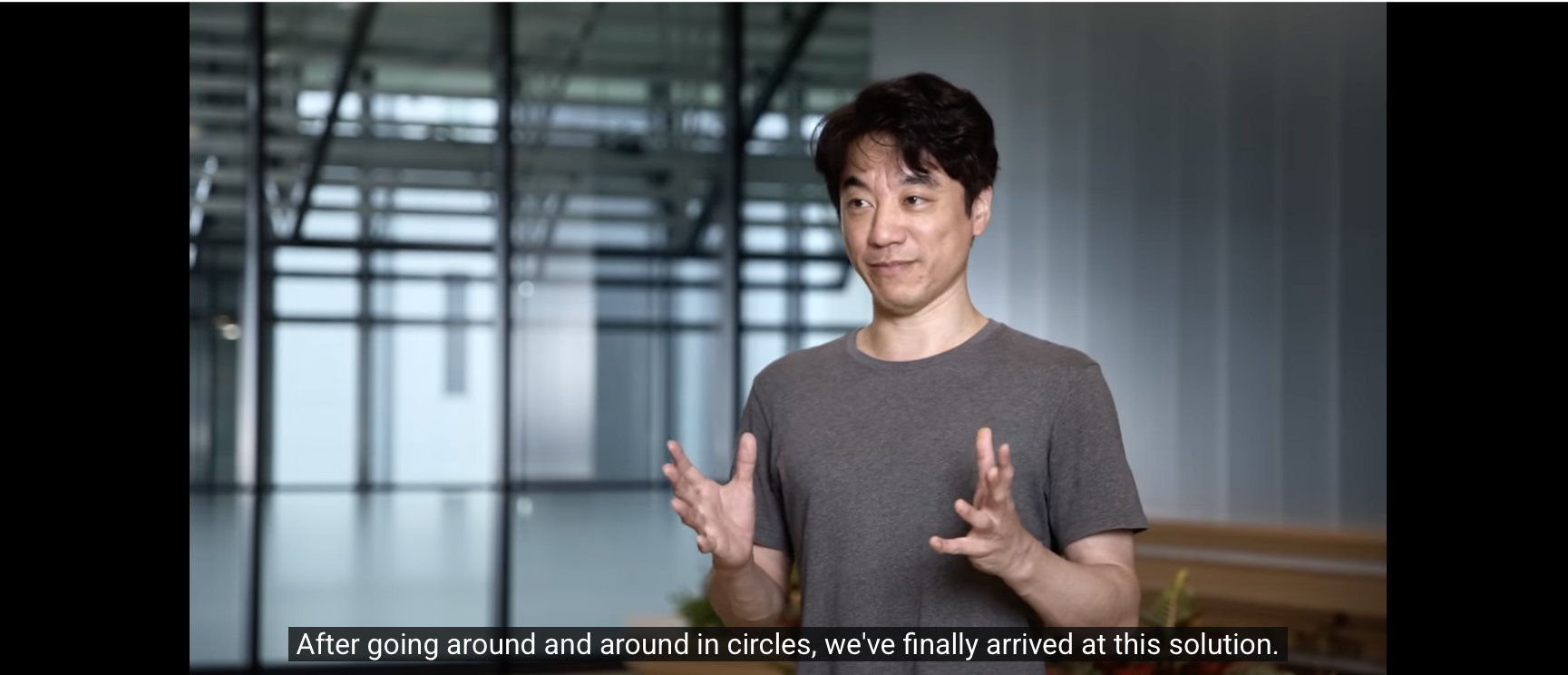
This is, of course, a joke, and if you ever harbored the assumption that engineers don’t have a sense of humor, be sure to check out the associated video (be sure to turn subtitles on).
There is even a proposed switchhook for when you need to step off a Zoom call for a moment.
It’s pretty funny.
Maps
We admittedly love maps, especially printed maps, despite the convenience of the digital alternative, especially when trying to navigate around the almost daily road changes via Syracuse, N.Y.’s ongoing I-81 project. But via Laughing Squid, Mike Estrin of List 25 offers several interesting facts about maps.
they seem so ordinary, right? Just pieces of paper or pixels on a screen showing you where to go, where you are, and how to get where you’re trying to be. But if you look closer, they’re way more than just directional cheat sheets. Some maps are full of lies, some exaggerate, and some are just plain weird.
Sure, he does mention our old friend the Mercator Projection (which we dealt with last week—and, by the way, The Mercator Projection would have made for a great Robert Ludlum novel title), and he mentions “trap streets,” fictional roadways or other items added to maps to catch plagiarists. (If a map company publishes a map with a street that only exists on a rival’s previous map, it’s a safe bet they copied it.) He also mentions one such fictional map feature—which we have also mentioned before: the town of Agloe, N.Y., which started as a “trap town” but eventually became real. He also points out that even in the age of Google Maps and GPS, paper maps are still a popular application. Check it out:
Building Code
If you know the way to San José, and have actually been there, you may have noticed, atop one particular building—not coincidentally the headquarters of Adobe—a series of four circles that rotate every few seconds.
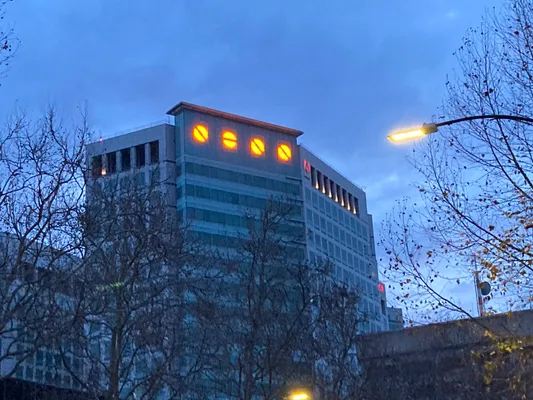
Called “the San José Semaphore,” it has graced the city’s skyline since 2006 and, far from being a simple architectural design, is actually a code being beamed out across the city. When the code is cracked—and there are people who have done it—the artist, Ben Rubin, comes up with a new code. Via Atlas Obscura:
two tech workers attending a downtown seminar on how to flirt with girls
Good grief…
spotted the Semaphore and spent the next several months breaking down the code. In the summer of 2007, they announced that hidden beneath references to James Joyce's Ulysses and the Vigenère cipher was the entire text of Thomas Pynchon’s novel The Crying of Lot 49.
The second code-cracking was in 2017, when
a Tennessee math professor cracked the next code, discovering that the circles had been transmitting an audio recording of the first moon landing.
A new code started being transmitted on May 11, 2023. When in San José, try to crack it!
Artificial Intelligence, Actual Life
We have mixed feelings about this. From Futurism:
A team of researchers from Stanford University and the Arc Institute in Palo Alto, California say they’ve created viruses with AI-designed DNA that can target and kill specific bacteria.
It’s worth remembering that this isn’t really “life,” as we know it. Despite their effects, viruses aren’t really alive, comprising, essentially, just bits of RNA.
[Viruses] aren’t made of cells, and are driven by a ruthless set of programmed instructions to multiply at all costs. Since their genomes are pretty simple, they’re easier to tinker with and less ambitious for a human or machine to recreate.
So the team drew up 302 virus designs, and to test them they print—or chemically assembled—them and set the, loose on real strains of E. coli.
As it turned out, some of them worked. Once inserted into the poor waiting germs, 16 of the AI-designed viruses successfully infected their hosts by inserting their DNA, hijacking the bacteria to start cranking out copies of themselves, and then burst through the cell’s body, killing it.
Sixteen out of 302…well, OK, not the best results in the world, but it ain’t nothin’! Still, the researchers did find that their bacteriophage bots could kill three different E. coli strains, outperforming natural bacteriophages.
As promising as the results are, they also raise huge ethical concerns. If an AI model can come up with functioning phages, it could also be potentially abused to create bioweapons, experts warned, or even unintentionally create an out-of-control virus.
And heaven knows we’ve not seen an out-of-control natural virus before. Ultimately, though:
according to Venter, the AI usage isn’t all that radical — it’s “just a faster version of trial-and-error experiments.”
Ice Nine Baby
They say that the Inuit have “hundreds” of words for snow, but that’s not really true. But it is true that scientists have identified 21 types of ice, including the most recent—ice XXI—that can be a solid at room temperature, which instinctively causes all sorts of Kurt Vonnegut-induced fears. Anyway, via Gizmodo:
In a recent Nature Materials paper, a team of scientists led by the Korea Research Institute of Standards and Science (KRISS) reported the discovery of ice XXI, an entirely new phase of ice that forms when water is rapidly compressed at room temperature. What’s particularly intriguing about this ice form is that it emerges within the pressure range of ice VI—a previously known form of ice thought to exist inside icy moons such as Titan and Ganymede.
Despite comprising only two elements—hydrogen and oxygen—water can form a bewilderingly diverse range of crystalline structures as a solid—that is, as ice.
“There are many questions [as to] how such a simple material makes a lot of different crystal phases,” said Geun Woo Lee, study senior author and a KRISS researcher, in an interview with European XFEL. So researchers want to “understand the detailed paths of the crystallization from water to ice.”
So researchers play around with different temperatures and pressures, and can identify the various ways that water molecules arrange themselves into ice.
The idea of a form of ice that can form at room temperature is terrifying to anyone who has read Kurt Vonnegut’s 1963 scifi satire Cat’s Cradle, about the development if “ice-nine,” or ice that can form at room temperature and proceeds to destroy the world. But then, creating ice XXI is not especially easy:
For the experiment, the researchers fabricated two diamond anvil cells, a contraption akin to a “nutcracker on steroids,” capable of producing extreme pressures of up to two gigapascals, or 20,000 times more than normal air pressure. As the team repeatedly compressed and decompressed water molecules within the cells, giant X-ray lasers at the European XFEL captured every microsecond of change within the ice.
They then managed to determine the exact structure of ice XXI: a tetragonal crystal composed of large, repetitive units—something unlike any other kind of ice anyone has seen before.
“Our findings suggest that a greater number of high-temperature metastable ice phases and their associated transition pathways may exist,” added Rachel Husband, study co-author and a physicist with the DESY Center in Germany. Further investigations could offer “new insights into the composition of icy moons,” she said.
Graphene Is Only Skin Deep
Was it a good week for graphene news? It’s always a good week for graphene news! A multifunctional electronic skin (e-skin) system based on a laser-induced graphene (LIG) composite platform. From (who else?) Graphene-Info:
The e-skin system leverages graphene's electrical conductivity, large surface area, and structural flexibility to achieve high-performance tactile sensing with simultaneous mechanical and thermal detection capabilities.
The upsettingly named “e-skin” is a prelude to the next generation of wearables.
The proposed LIG/PDMS/AgNWs composite e-skin demonstrates a promising platform for next-generation wearable electronics by combining high mechanical flexibility, robust electrical responsiveness, and adaptive algorithmic analysis. Its compatibility with portable and AI-assisted health monitoring frameworks paves the way for advanced applications in sports science, rehabilitation, and preventive medicine.
On a Role
As we careen toward the holiday season, if you have kids, chances are that they will be appearing in a Nativity pageant or play, a hallmark of the Christmas season. But did you know that the role a person plays in such pageants has been correlated with their later success in life? Via CNBC, a 2019 study published by U.K. telecom firm Virgin Media found that:
children who played an ox in their school nativity went on to earn the highest salaries later in life, with adults who played the part landing an average salary of £43,000 ($55,370).
Which is pretty remarkable, as there are no oxen mentioned in the Nativity story in the Gospel of Luke. (There are no animals at all in Matthew’s Nativity story as Mary gave birth at her and Joseph’s home which, in Matthew’s Gospel, was actually in Bethlehem, and thus required no travel, inns, or mangers.) Meanwhile:
those who had played Angel Gabriel in their school pageant were the second-highest earners, with an average income of £40,000.
What about the starring roles?
Playing the role of Mary or Joseph correlated to an average annual income of £39,000 and £38,000 respectively, the data showed.
If you played one of the Magi (who, by the way, only appear in Matthew and not in Luke), you could look forward to a salary of £26,000, so you’ll need to be on the lookout for discount frankincense or myrrh.
At the other end of the scale, kids who played a sheep or lamb in the school nativity made less than half of the former oxen’s average income in later years, earning an average £20,000.
And not just salary; the study also gauged which industries Nativity pageant performers were likely to go into.
Children who played Mary were most likely to grow up to work in the retail industry, while those who landed the part of Joseph were most likely to go on to a career in finance or banking.
Ironically, not carpentry. The high-paid oxen were most likely to end up in advertising, while Angels Gabriel ended up in marketing.
Lambs and angels were most likely to pursue a career in health care, according to the research.
Still, we would not recommend putting these things on a resumé or LinkedIn page.
Oops
And people wonder why flying cars are so slow to…er, take off. From Gizmodo:
Two “flying cars” collided on Tuesday during an air show rehearsal in China, injuring one of the pilots, according to a report from CNN.
According to flying car manufacturer Xpeng, the crash was apparently the result of “insufficient spacing”—or, “could you please scootch over!” It turns out, through, that the term “flying car” isn’t necessarily accurate.
The X2 aircraft is sometimes referred to as a “flying car,” though it doesn’t have wheels and can’t drive on the ground before taking flight. It’s more accurately described as an electric vertical-takeoff-and-landing vehicle, abbreviated as eVTOL.
Comme çi:

Inventing a flying car isn’t the hard part. We’ve had roadable aircraft since the 1950s, built by inventive tinkerers who got impatient for the future to arrive. But all of the other details that actually go along with bringing a flying car to market are complicated. Piloting them obviously comes with risks, and there are many regulatory hurdles since sane governments don’t want these things just falling out of the sky.
And we’ll just leave that right there…
Salem’s Lot
(Optional musical accompaniment to this item.)
Regardless of where in the county it happens to be, if you come from a town called “Salem,” you will at some point in your life inevitably be asked, “Oh, is that the one with the witches?” The “one with the witches” is of course Salem, Mass., and it’s kind of bizarre how the 17th-century execution of innocent women has now become kitschy fun. In one case, via an art installation in Salem, Mass. From Atlas Obscura:
Nine feet tall, made of polished bronze, and planted right in the middle of a central town green, the scandalous statue is all but impossible to avoid. Perched on a broomstick and backed by a crescent moon, it depicts Samantha Stephens, the nose-twitching heroine of the hit 1960s TV show Bewitched.
That said, there are those who bump on these kinds of things.
Some residents, thinking of another of the city’s scandals, were peeved. “We’re right near the courthouse where people were tried for witchcraft,” resident Jean Harrison told NPR. “Having a kitschy statue just seems to trivialize what these people went through.”
And it wasn’t all that trivial. In 1692 in Salem, 185 people were accused of witchcraft in Salem—and 19 of them were executed. Unfortunately, this was not especially unusual.
Between the 13th and 18th centuries, tens of thousands of accused witches were killed in Europe, and hundreds more in the American colonies.
And for some reason—morbid curiosity no doubt—“witch tourism” began almost immediately. Salem, Mass.’s economy and culture grew and changed over the course of 18th, 19th and early 20th centuries—it was a major seaport as well as a manufacturing hub, supporting tanneries and steam cotton factories galore. Salem is the birthplace of Nathaniel Hawthorne, the National Guard, and Monopoly. (Well, two out of three ain’t bad.) But my mid-20th century, those things started to change and Salem was left with its witches—or, more specifically, tourism.
As you pull into Salem, one thing is immediately clear: The city has really leaned into this new branding. The Salem High School mascot is a witch, with huge green eyes and warts to match. Another flies over the masthead of the local newspaper. City police wear patches that say “The Witch City, Massachusetts,” complete with a big-hatted specimen. This past March, they were accused of Freudian slippagewhen they asked the community to “Please remove cats from school lots.” (They meant “cars.”)
Sure they did.
Recipes Carved in Stone
This is actually pretty cool. One of the things that is inevitably lost as the generations pass is family recipes. Who knows if this is a thing among today’s generations, but back in the day, mothers and grandmothers were the keepers of what were very often cherished family recipes, many of which have been passed down through the generations. And one great tragedy is that when these family members leave us, the recipes often leave us as well. (An industry analogy may very well be when an old, experienced estimator—whose own “recipes” formed the basis of a print company’s pricing—retires or otherwise “exits the industry,” that pricing expertise goes with them.)
Unlike estimating, we would likely not entrust the recreation of family recipes to AI.
But, via (who else?) Food & Wine, the departed are using a unique medium to keep family recipes alive.
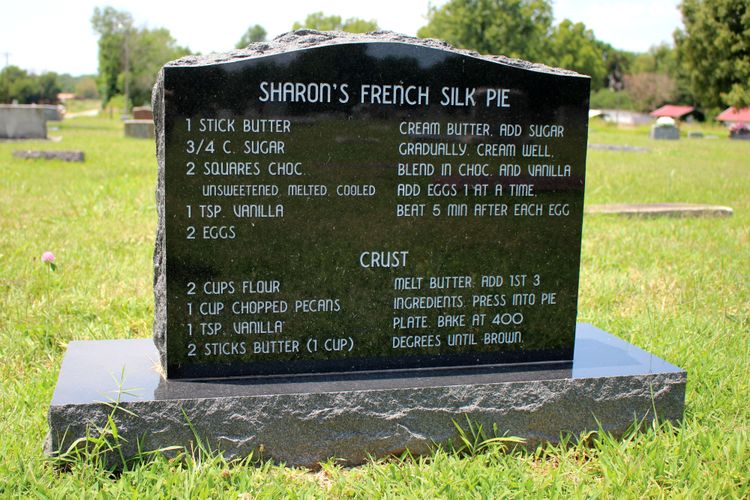
Author Rosie Grant’s debut book, To Die For: A Cookbook of Gravestone Recipes, collects 40 recipes from around the world, that are carved into a headstone or associated with one — such as a recipe title that’s etched into a gravestone without its instructions. Complete with interviews with the families connected to each gravesite, Grant’s cookbook is a thoughtful tribute to the strong ties between specific dishes and their makers and the legacy those relationships leave behind.
Grant explained that roughly half of the recipes she’s found were put on headstones by loved ones of a person who had died, while the other half are typically chosen by the deceased. For a few passionate home cooks, that means pre-planning a headstone featuring their signature recipes so that family members don’t have to worry about it in a time of grief.
It might be easier and a tad more convenient to get your elders to write the recipes down in advance…
This Week in Printing, Publishing, and Media History
October 13
1881: First known conversation in modern Hebrew by Eliezer Ben-Yehuda and friends.
1892: Edward Emerson Barnard discovers first comet discovered by photographic means.
1903: The Boston Red Sox win the first modern World Series, defeating the Pittsburgh Pirates in the eighth game.
1983: Ameritech Mobile Communications (now AT&T) launched the first US cellular network in Chicago.
October 14
1582: Because of the adoption of the Gregorian calendar, this day does not exist in this year in Italy, Poland, Portugal, and Spain.
1884: George Eastman receives a U.S. Government patent on his new paper-strip photographic film.
1888: Louis Le Prince films the first motion picture, Roundhay Garden Scene.
1894: American poet and playwright e. e. cummings born.
1912: The Power of Paper: Former president Theodore Roosevelt is shot and mildly wounded by John Flammang Schrank. Regardless, Roosevelt delivers his scheduled speech—the text of which in his coat pocket blunted the impact of the bullet.
1926: The children's book Winnie-the-Pooh, by A. A. Milne, is first published.
1947: Chuck Yeager becomes the first person to exceed the speed of sound.
1968: The first live TV broadcast by American astronauts in orbit is performed by the Apollo 7 crew.
October 15
99 BC (probable): Roman poet and philosopher Lucretius born.
70 BC: Roman poet Virgil born.
1582: Adoption of the Gregorian calendar begins, eventually leading to near-universal adoption.
1783: The Montgolfier brothers; hot air balloon makes the first human ascent, piloted by Jean-François Pilâtre de Rozier.
1844: German composer, poet, and philosopher Friedrich Nietzsche born.
1878: The Edison Electric Light Company begins operation.
1881: English novelist and playwright P. G. Wodehouse born.
1908: Canadian-American economist and diplomat John Kenneth Galbraith born.
1923: Italian novelist, short story writer, and journalist Italo Calvino born.
1926: French historian and philosopher Michel Foucault born.
1939: The New York Municipal Airport (later renamed LaGuardia Airport) is dedicated (and has not been updated since).
1956: FORTRAN, the first modern computer language, is first shared with the coding community.
1964: American composer and songwriter Cole Porter dies (b. 1891).
October 16
1758: American lexicographer Noah Webster born.
1847: Charlotte Brontë’s novel Jane Eyre is published in London.
1854: Irish playwright, novelist, and poet Oscar Wilde born.
1923: The Walt Disney Company is founded.
1927: German novelist, poet, playwright, and Nobel Prize laureate Günter Grass born.
1950: The Lion, the Witch and the Wardrobe by C.S. Lewis is published.
October 17
1558: Poczta Polska, the Polish postal service, is founded.
1757: French entomologist and academic René Antoine Ferchault de Réaumur dies (b. 1683). After observing wasps building their nests, Réaumur was the first to propose making paper out of wood.
1771: Premiere in Milan of the opera Ascanio in Alba, composed by Mozart at age 15.
1814: Eight people die in the London Beer Flood.
1827: Bellini’s third opera, Il pirata, premieres in Milan.
1888: Thomas Edison files a patent for the Optical Phonograph (the first movie).
1907: Marconi begins the first commercial transatlantic wireless service.
1915: American playwright and screenwriter Arthur Miller born.
1919: RCA is incorporated as the Radio Corporation of America.
1979: American humorist and screenwriter S. J. Perelman dies (b. 1904).
October 18
1851: Herman Melville’s novel Moby-Dick is first published as The Whale.
1871: English mathematician and engineer, invented the mechanical computer Charles Babbage dies (b. 1791).
1922: The British Broadcasting Company (later Corporation) is founded by a consortium, to establish a national broadcasting service.
1931: Thomas Edison dies (b. 1847).
1947: American singer-songwriter and pianist Laura Nyro born.
1951: The Studio for Electronic Music was established at the West German Broadcasting facility in Cologne, making the first modern music studio.
1954: Texas Instruments announces the first transistor radio.
1964: English journalist, author, and programmer Charles Stross born.
1979: The Federal Communications Commission begins allowing people to have home satellite earth stations without a federal government license.
2019: NASA Astronauts Jessica Meir and Christina Koch take part in the first all-female spacewalk when they venture out of the International Space Station to replace a power controller.
October 19
1386: The Universität Heidelberg holds its first lecture, making it the oldest German university.
1745: Irish satirist and essayist Jonathan Swift dies (b. 1667).
1900: Max Planck discovers Planck’s law of black-body radiation.
1903: Swedish wrestler and actor Tor Johnson born.
1931: English intelligence officer and author John le Carré (né David John Moore Cornwell) born.