History of the World Net, Part 1
If you’re a fan of both technology and history, be sure to check out a new three-part feature Ars Technica just launched: “A History of the Internet.” Part 1 starts in 1966 with the compelling lede:
In a very real sense, the Internet, this marvelous worldwide digital communications network that you’re using right now, was created because one man was annoyed at having too many computer terminals in his office.
That man was Robert Taylor, the director of the Advanced Research Projects Agency’s Information Processing Techniques Office. The agency—acronymmed ARPA—was created in 1958 by President Dwight Eisenhower, a response to the Soviet Union’s launch of Sputnik.
So Taylor was in the Pentagon, a great place for acronyms like ARPA and IPTO. He had three massive terminals crammed into a room next to his office. Each one was connected to a different mainframe computer. They all worked slightly differently, and it was frustrating to remember multiple procedures to log in and retrieve information.
So he began with a simple question: “Wouldn’t it be great if there was a network that connected all these computers?” It was an idea that preceded Taylor by a few years.
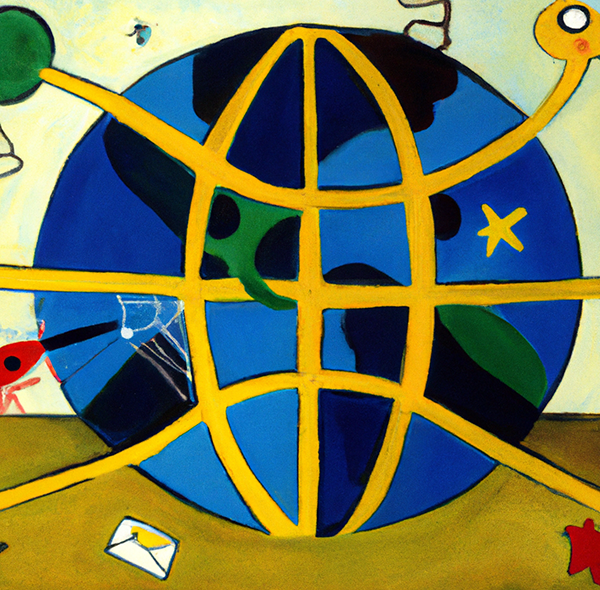
Taylor’s predecessor, Joseph “J.C.R.” Licklider, had released a memo in 1963 that whimsically described an “Intergalactic Computer Network” that would allow users of different computers to collaborate and share information. The idea was mostly aspirational, and Licklider wasn’t able to turn it into a real project. But Taylor knew that he could.
And what follows is a convoluted tale that winds through the development of “packet switching,” thick bowls of alphabet soup, the first email ever sent (1972), and the evolving “ARPANET.” Part 1 ends in 1992 with the battle between TCP/IP and OSI for control of the network, and the teaser for Part 2:
But this impossible argument and the ultimate fate of the Internet was about to be decided, and not by governments, committees, or even the IETF. The world was changed forever by the actions of one man. He was a mild-mannered computer scientist, born in England and working for a physics research institute in Switzerland.
Think you know who it is? To be continued…
Super Calendar
What is the oldest calendar known to science? (No, not a Far Side Off-the-Wall Calendar from 1986 we recently found in a box in the basement.) Via Popular Mechanics, researchers from the University of Edinburgh working in southern Turkey found markings at Göbekli Tepe, a temple-like complex filled with intricately carved symbols. They “indicate the makings of a solar calendar that tracks days, seasons, and years.” The monument is 12,000 years old.
By analyzing the symbols carved onto pillars, the team believes that every “V” could represent a single day, given that one pillar featured 365 days. And among those, the summer solstice in particular was highlighted with a V worn around the neck of a bird-like beast meant to represent the summer solstice constellation during that time. The calendar explanation could help explain why the V symbol appears on so many other nearby statues of deities linked to time and creation, with the V almost always showing up around their neck.
The creators of the carvings also tracked the cycles of the Moon and Sun, as well as various astronomical phenomena, such as the Taurid meteor stream, which lasted 27 days.
The researchers believe that the temple carvings show the ancient civilization was recording dates precisely, noting how the movement of constellations across the sky differed based on the time of the year. This would be 10,000 years before Hipparchus of ancient Greece documented the wobble in the Earth’s axis in 150 BC, making this newfound calendar well ahead of its time.
They don’t appear to have used their calendar to note dentist appointments or other daily minutiae.
I’m with the Banned
Here’s a tip for aspiring authors: want to sell more books? Get banned! Via Marginal Revolution, a new study has found that:
the circulations of banned books increased by 12%, on average, compared with comparable nonbanned titles after the ban. We also find that banning a book in a state leads to increased circulation in states without bans. We show that the increase in consumption is driven by books from lesser-known authors, suggesting that new and unknown authors stand to gain from the increasing consumer support. Additionally, our results demonstrate that books with higher visibility on social media following the ban see an increase in consumption, suggesting a pivotal role played by social media. Using patron-level data from the Seattle Public Library that include the borrower’s age, we provide suggestive evidence that the increase in readership in the aggregate data is driven, in part, by children reading a book more once it is banned.
This should surprise no one; banning something is often its best publicity. Not that we are in any way in favor of book bans, but it’s good to know that they have an effect that is opposite to what was intended.
AI-Yi-YI, Part the Infinity: AI Has the Receipts
And they’re fake. The Byte reports that OpenAI’s 4o model image-generating is good at generating text inside images, but unfortunately that makes it exceptionally useful for generating fake documents.
Case in point, Menlo Ventures principal Deedy Das tweeted a photo of a fake receipt for a lavish meal at a real San Francisco steakhouse, as spotted by TechCrunch. “You can use 4o to generate fake receipts,” Das wrote. “There are too many real-world verification flows that rely on 'real images' as proof. That era is over.”
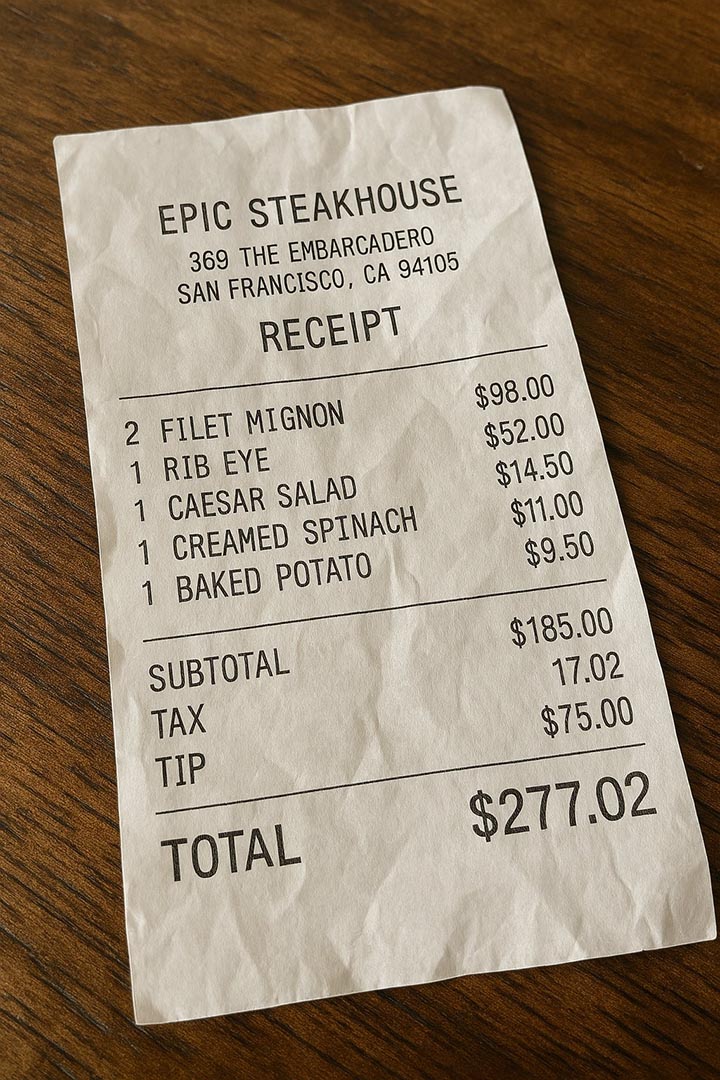
Hmm…no drinks or beverages of any kind? But at least AI tips really well.
Another user even managed to edit the image further by adding a realistic filter and food stains —the perfect way to commit expense fraud, if you were so inclined. And that’s the tip of the iceberg. Das also found that 4o was happy to generate fraudulent prescriptions for controlled substances like Zoloft.
Not that it was ever impossible to fake a receipt—anyone remotely proficient with Photoshop could do that (not that we ever have). But it just got easier, it seems.
Even before the advent of powerful AI-powered image generators, a 2015 survey found that 85 percent of respondents admitted to lying to get reimbursed with more money. Many of these kinds of fraud cases fall through the cracks due to a lack of internal controls and flawed accounts payable processes.
The Fabric [Waste] of Our Lives
As Cary Sherburne and Debbie McKeegan have written often, fabric and textile waste is a major environmental blight. Now, via Core77, NextOfKin Creatives have teamed up with Mobella Galleria, a furniture design store in Bangkok, Thailand, to launch a project called “Softech’ture: Rethinking Fabric Waste.”
This initiative explores how discarded textiles can be deconstructed to reconstruct into functional and aesthetic homeware. With nearly 45% of fabric offcuts wasted during production, Softech'ture embraces designing for responsible living by transforming textile waste into purposeful objects.
The project uses textile “offcuts” into lamps, vases, coasters, and skateboards (?) via shredding, molding, and compression.

Beyond waste reduction, Softech'ture champions circularity, proving that discarded materials can be reimagined into compelling, functional pieces. As sustainability takes center stage in design, this project exemplifies how innovation and conscious material reuse can shape a more responsible future for living spaces.
Dear Microsoft
Whilst we understand that occasionally software like Word and Excel needs to be updated, it doesn’t need to be updated EVERY DAMN WEEK!

Especially since every update seems to make the software worse.
…
OK, we’re better now. On with Around the Web.
Forever Graphene 2
Was it a good week for graphene news? It’s always a good week for graphene news! Removing “forever chemicals” with graphene. A couple of weeks ago, we linked to a story about how researchers are upcycling hazardous “forever chemicals” into graphene. Now, filters using graphene oxide (GO) are being used to remove those forever chemicals, as well. From (who else?) Graphene-Info:
Researchers from Monash University and The Pennsylvania State University, in collaboration with NematiQ, a wholly owned subsidiary of Clean TeQ Water, have developed a novel water filtration membrane that effectively removes small PFAS molecules (a group of man-made chemicals known for their persistence and resistance to breakdown), overcoming a significant challenge faced by conventional water filters.
The team designed a beta-cyclodextrin (βCD) modified graphene oxide (GO-βCD) membrane with nanoscale channels that selectively retain PFAS while allowing water to pass through.
The Voice
As we indicated recently in “This Week in Printing, Publishing, and Media History,” the very first recording of a human voice was made in 1860 by Edouard-Léon Scott de Martinville on a phonautograph machine—a “phonautogram” is basically “squiggles on paper” that can be played back on the proper hardware. In 2008, researchers at the Lawrence Berkeley National Laboratory in Berkeley, Calif., did successfully convert a phonautogram recorded in 1860 to a digital audio file. It was a 10-second clip of a singer, possibly female, warbling “Au clair de la lune.” (We also linked to a broadcast by Charlotte Green, BBC Radio 4’s newsreader, who played the restored phonautogram on her broadcast, but was unable to get through the next story—an obituary—without cracking up.)
The phonautograph never took off, but Thomas Edison’s phonograph did. In 1888, to promote his machine, Edison recorded a number of famous Victorian-era figures, people you wouldn’t have thought would have a voice recording saved anywhere. Via Laughing Squid, a documentary looks at how prominent Victorians were recorded to show off the phonograph. These figures included
poets and composers like Robert Browning and Arthur Sullivan, to major political figures like William Gladstone.
Edison himself never got to record Queen Victoria, but his rivals did. He was not amused.
Screen Kiss Off
A neighbor living next door to the Around the Web Cultural Accretion Bunker just bought a new car and lamented that all the physical controls were now replaced by touchscreen controls. (We were also bemused to learn that the dealership had offered to set him up with a “car consultant” to show him how to operate all the high-tech…silliness. Says Gizmodo:
Infotainment screens have been around for years. Once Tesla gained traction with its iPad-like controls in the mid-2010s, the technology took over. Today, roughly 97% of new vehicles have a touch screen, and nearly a quarter have one that’s 11 inches or larger.
But, as we have linked to in this space several times over the years, in-car infotainment screens may be on the way out.
As much as carmakers seem to love infotainment screens, consumers are less enthusiastic about them. Just 15% of drivers in 2024 said they would want a full-width infotainment display. Windshield base displays with less functionality are slightly more popular but still appeal to just 18% of those planning on buying a new car.
And for a very basic reason.
The growing pushback against vehicle touch screens is ultimately a matter of safety and convenience. While having all your controls in one place sounds useful, navigating between menus to find the right settings can be frustrating, slow, and unsafe if done while driving. It also means basic car functions may be at the mercy of software glitches and lag.
With physical controls, you can adjust the heat or A/C by feel, so you don’t have to take your eyes off the road. (We’re also not especially sanguine about so-called self-driving features.)
And, believe it or not, automakers are actually listening.
Some car brands have started responding to these concerns by toning down the “screenification” of their vehicles. Volkswagen announced it will bring back physical buttons after backlash against its more screen-heavy models. VW CEO Thomas Schäfer said the reliance on touch screens “did a lot of damage” to the brand’s reputation among frustrated drivers.
Our next car may very well be a used 1976 Dodge Dart.
Twas Drones that Killed the Beast
Fans of old movies may well recall the climactic scene from the 1933 film King Kong, when the titular giant ape carries Fay Wray to the top of the Empire State Building. (By the way, the most brilliant book title of all time has got to be Fay Wray’s autobiography On the Other Hand.)
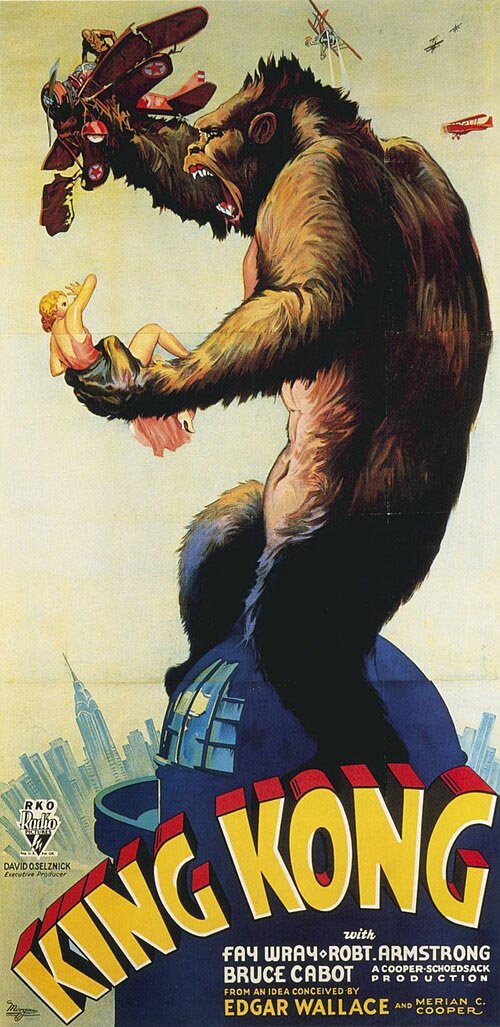
Anyway, via Laughing Squid, Studio Hock recreated the Kong’s iconic ascent using drones.
The wind and cold from the height of the building, the general business of Manhattan, and the magnetic fields from surrounding steel structures made this feat rather difficult, but it worked beautifully nonetheless.
Pretty neat. (YouTube won’t let us embed it, so watch it here.)
The Pilgrimage Has Gained Momentum
When in San Francisco, be sure to visit the world’s biggest two-headed calf museum. Called the Two-Headed Calf MOOseum, it was founded by Henry S. Rosenthal and is a monument to bovine polycephaly. Says Atlas Obscura:
Not all two-headed calves are two-headed in the same way. Some have two distinct heads, others share one neck. One duo even has an extra pair of legs sticking straight up into the air. Some of the twin heads stare down at you with beatific smiles from mounting plates on the wall, others have forever-frozen gazes on full bodies. There’s a cabinet of ephemera that includes photographs, figurines, plush toys, collectible coins, and even preserved fetuses all documenting the many sides and appeals of two-headedness.
And, yes, it is a real thing.
Polycephaly is a rare condition that results from an embryo not splitting entirely. Typically such embryos do not survive long enough to make it through a live birth, and if they do, they usually only live a few days because their organs are not formed correctly. Lucky, a two-headed calf born in Kentucky in 2016, was an exception. He lived 108 days and died the night before he was to have a potentially life-saving operation.
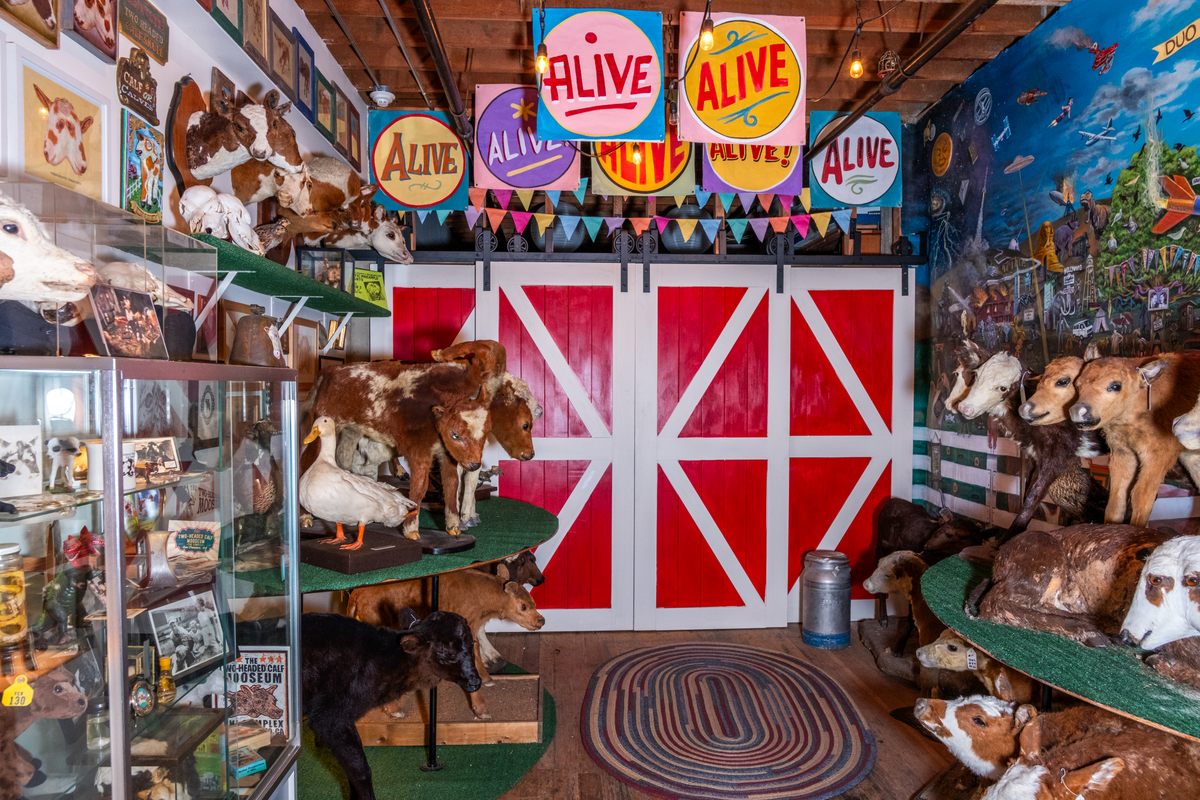
If you’re interested, the Two-Headed Calf MOOseum is only open by special arrangement. Drop Rosenthal a note at [email protected] to make an appointment.
Blood Oyster Cult
Consider the oyster. A delicacy for some, a vital medical research tool for others. Scientists have discovered that the blood of an oyster—specifically the Sydney rock oyster—contains proteins that make antibiotics more effective. Says Food & Wine:
Researchers extracted proteins from oyster blood and tested their efficacy against several types of bacteria, particularly those causing respiratory infections and becoming increasingly resistant to conventional antibiotics — commonly known as drug-resistant superbugs. They then discovered that when combined with standard antibiotics, these oyster proteins enhanced antibiotic effectiveness by up to 32 times.
By the way—Sydney Rock Oyster would be a great band name. Moving on…
Even better, the proteins had no negative impact on human cells, which suggests they may be suitable for therapeutic use.
“Oysters have evolved remarkable immune defenses as a matter of survival in their challenging environments because they live in coastal waters teeming with bacteria, viruses, and parasites,
You may not want to bring this up the next time you’re at a raw bar, or something will get brought up…
but can’t rely on antibodies or adaptive immunity like humans do, since they don’t have a sophisticated immune system,” says Angelo Falcone, MD, an integrative medicine physician and founder of Dignity Integrative Health and Wellness. Instead, oysters have developed robust immune responses, including antimicrobial proteins that provide an arsenal of compounds working through various mechanisms to neutralize pathogenic threats, he explains.
The “power of oyster blood” (sounds like an incantation in some kind of pagan ritual—“by the power of oyster blood, I thee wed”) may also help in the fight against so-called “superbugs,” bacteria that have evolved a resistance to antibiotics.
Some of the most concerning drug-resistant superbugs include methicillin-resistant Staphylococcus aureus, vancomycin-resistant Enterococcus, and extensively drug-resistant tuberculosis. However, more of these microbes are developing over time, posing a serious threat to human health, Rhoads says.
Since the oyster blood proteins work in ways that are different than the ways antibiotics work, the bacteria are not immune to them.
These proteins are particularly valuable due to their ability to enhance conventional antibiotics through synergistic action, which occurs when the combination of two or more drugs produces a greater effect than that of each drug alone.
So it will be interesting to see how therapeutic uses of oyster blood develop.
Oh, and if you think just eating more oysters will help boost your immune system, sorry: the useful proteins will just get digested.
Shell Shock
One thing that will probably not help boost your immune system is the “Sm’oyster,” a dessert launched by Fleet Landing, a seafood restaurant and raw bar in Charleston, S.C. And it is indeed what it sounds like: a roasted oyster topped with chocolate, toasted marshmallow, and crumbled graham crackers. An oyster s’more, essentially. And…why? Says (who else?) Food & Wine:
This isn’t the first time Fleet Landing has tested a sweet shellfish creation. Chef Lucas Hanagriff, the raw bar manager of the restaurant, tells Food & Wine that “in thinking about what we could do special or different, the thought of a dessert oyster crept in. I had never seen or heard of such a concept in my limited oyster eating and research.”
The Inspiration was apparently a Girl Scout Cookie.
“A certain chocolate and mint cookie was left in my presence after hours, and while I enjoyed one staring at oyster shells, I wondered what a salty version would be like,” he jokes. “This led to our first dessert oyster: an oyster topped with crushed chocolate and mint cookie and vanilla bean whipped cream (or ice cream). It was nice to enjoy, but I felt like something was missing.”
If you’re skeptical about what this tastes like, Hanagriff says it’s similar to a saltier s’more. And as anyone who’s ever tried salted chocolate will tell you, adding an unexpected touch of salinity can be incredibly delicious.
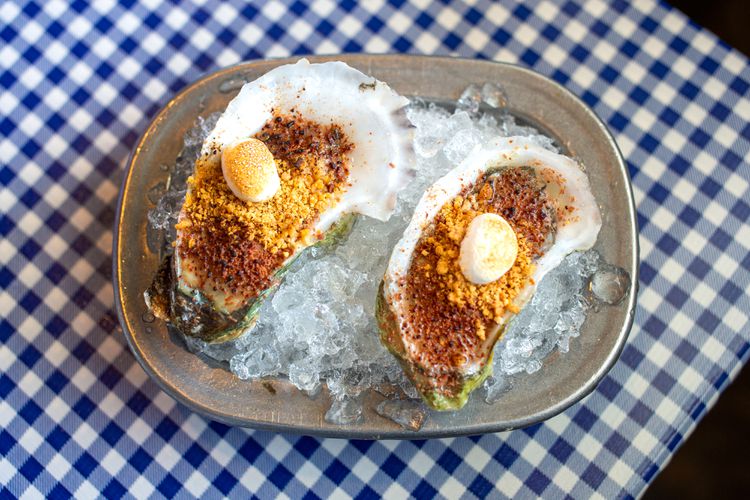
We’ll wait for the hot fudge shrimp scampi.
This Week in Printing, Publishing, and Media History
April 14
1629: Dutch mathematician, astronomer, and physicist Christiaan Huygens born.
1828: Noah Webster copyrights the first edition of his dictionary.
1894: The first ever commercial motion picture house opened in New York City using 10 Kinetoscopes, a device for peep-show viewing of films.
1939: The Grapes of Wrath, by American author John Steinbeck is first published by the Viking Press.
April 15
1452: Italian painter, sculptor, and architect Leonardo da Vinci born.
1755: Samuel Johnson’s A Dictionary of the English Language is published in London.
1888: English poet and critic Matthew Arnold dies (b. 1822).
1924: Rand McNally publishes its first road atlas.
1980: French philosopher and author, Nobel Prize laureate Jean-Paul Sartre dies (b. 1905).
April 16
1844: French journalist, novelist, and poet, Nobel Prize laureate Anatole France born.
1871: Irish author, poet, and playwright John Millington Synge born.
1889: English actor, director, producer, screenwriter, and composer Charlie Chaplin born.
1947: Scottish singer-songwriter Gerry Rafferty born.
1994: American novelist and critic Ralph Ellison dies (b. 1913).
2012: The Pulitzer Prize winners were announced, it was the first time since 1977 that no book won the Fiction Prize.
April 17
1397: Geoffrey Chaucer tells The Canterbury Tales for the first time at the court of Richard II. Chaucer scholars have also identified this date (in 1387) as the start of the book’s pilgrimage to Canterbury.
1524: Giovanni da Verrazzano reaches New York harbor. (“If only there were a bridge here,” he is thought have remarked.)
1790: American inventor, publisher, and politician, 6th President of Pennsylvania, Benjamin Franklin dies (b. 1706).
1897: American novelist and playwright Thornton Wilder born.
1955: English singer-songwriter and guitarist Pete Shelley born.
1957: English novelist, essayist, lyricist, and screenwriter Nick Hornby born.
2014: Colombian journalist and author, Nobel Prize laureate Gabriel García Márquez dies (b. 1927).
April 18
1918: American publisher, creator of CliffsNotes Clifton Hillegass born.
1930: The British Broadcasting Corporation announced that “there is no news” in their evening report.
2020: Europe surpasses 100,000 COVID-19 deaths.
April 19
1824: English-Scottish poet and playwright Lord Byron dies (b. 1788).
1927: Mae West is sentenced to 10 days in jail for obscenity for her play Sex.
1971: Launch of Salyut 1, the first space station.
1987: The Simpsons first appear as a series of shorts on The Tracey Ullman Show.
2013: American journalist, author, and publisher, founder of USA Today, Al Neuharth dies (b. 1924).
April 20
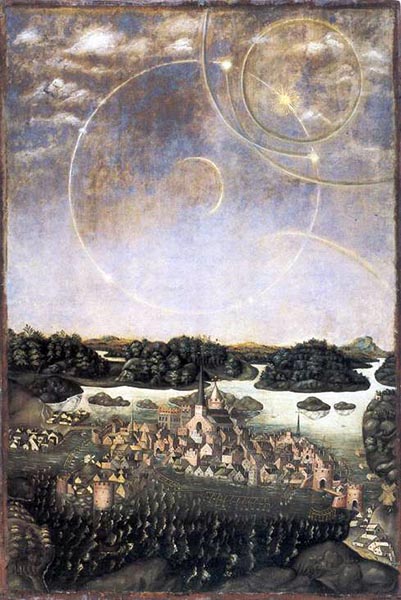
1535: The sun dog phenomenon observed over Stockholm and depicted in the famous painting Vädersolstavlan.
1893: Spanish painter and sculptor Joan Miró born.
1912: Anglo-Irish novelist and critic, creator of Count Dracula, Bram Stoker dies (b. 1847).