Have you ever wondered why there are so many generative AI platforms out there? Just like people, each has its own personality and quirks, and when creating AI content, there is enough variety to enable you to find the one(s) that best match your needs and goals.
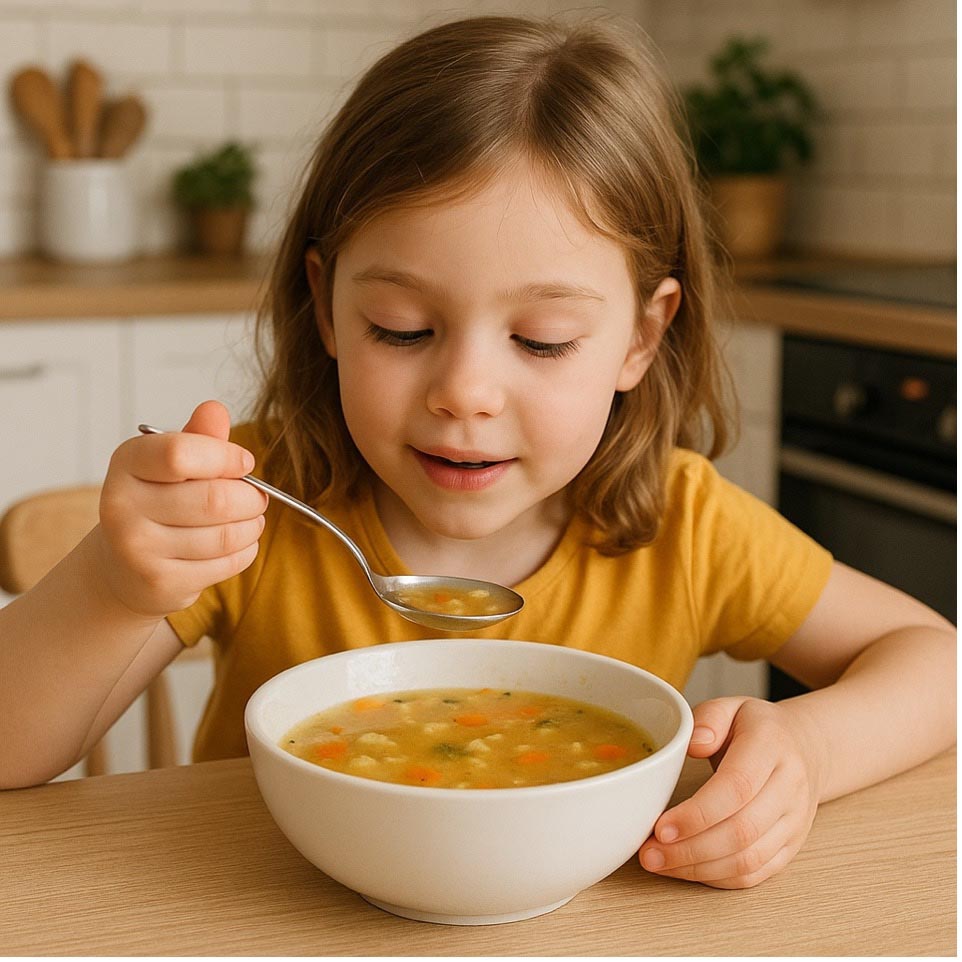
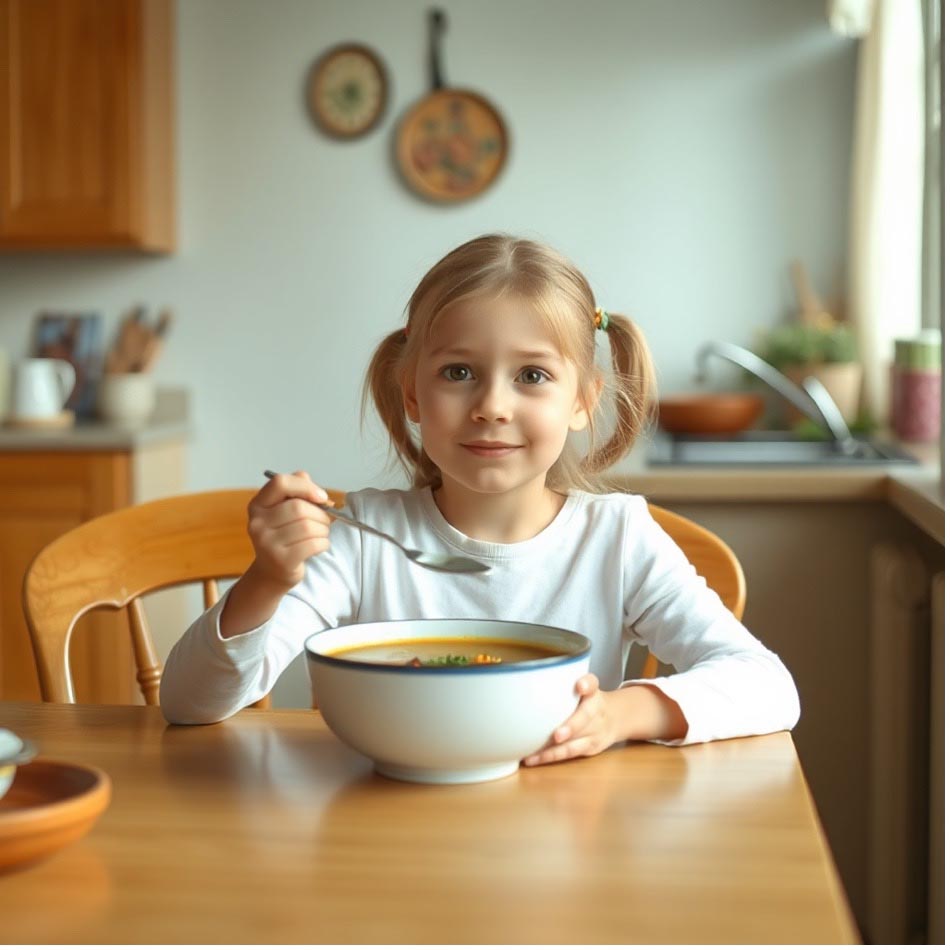
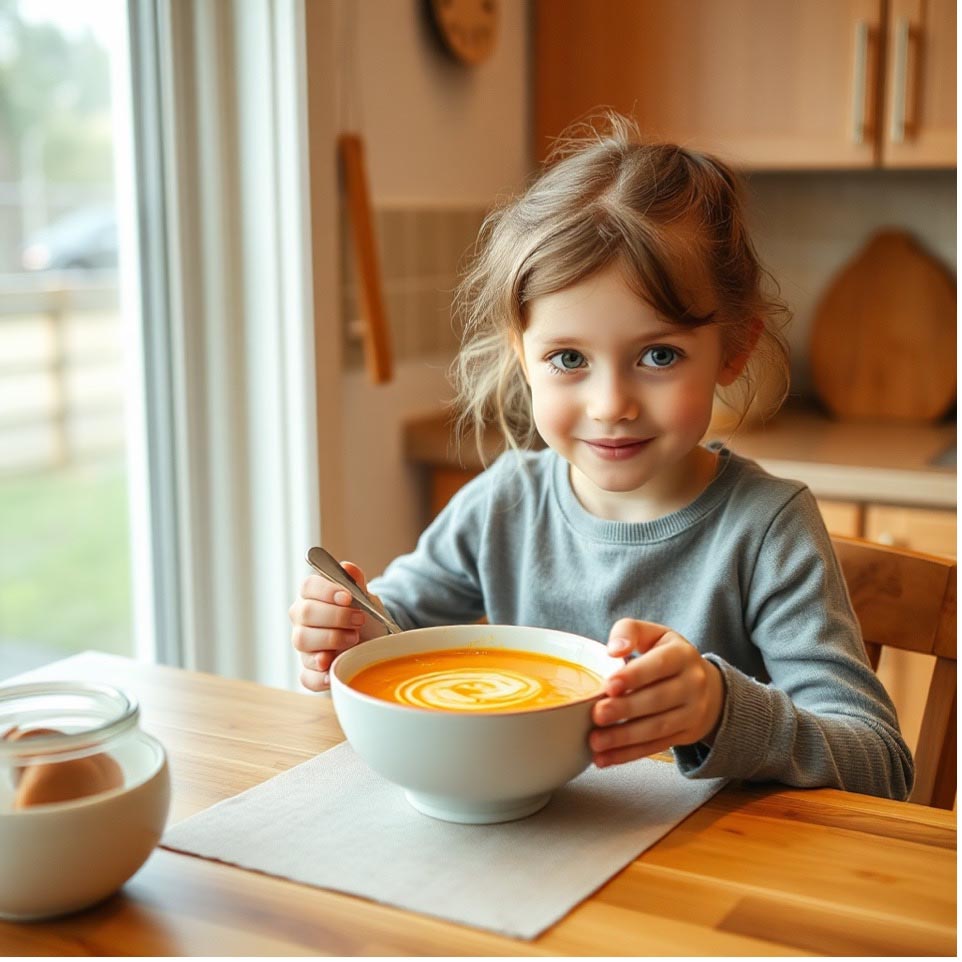
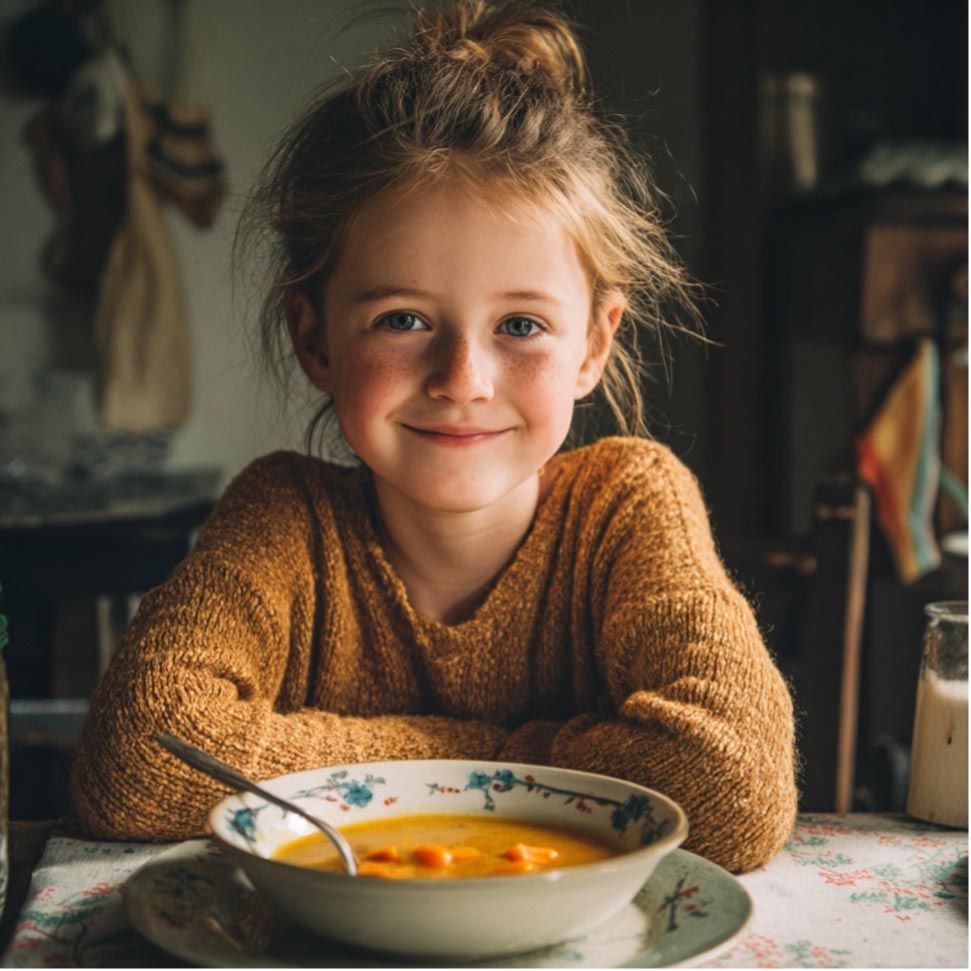
To illustrate the variety of approaches and styles, we used a purposely broad image prompt and input it into four popular AI image generating platforms: Chat GPT 4.0, Wonder AI, Imagine AI, and Midjourney. We used the same prompt each time to see how each platform would interpret the prompt and what we could learn from the results.
The prompt was as follows: “A young girl sitting at her kitchen table and enjoying a bowl of soup.”
Let’s look at how each platform interpreted this prompt.
ChatGPT4.0’s Interpretation
Wonder AI’s Interpretation
Imagine AI’s Interpretation
MidJourney’s Interpretation
Because the prompt was intentionally broad, it allowed the individual tendencies of each platform to show. Some of these tendencies could be overridden with more specific prompts, but for the purposes here, it was helpful to keep it vague to see what the platform would do.
What Can We Learn?
What can we learn? Some of the best insight comes from AI itself. Indeed, you will hear the same recommendation from the most AI savvy among us: Let AI teach you about itself. So we uploaded all four of these images into ChatGPT and asked the platform what we could learn from the fact that they were all created from the same prompt.
Here is what ChatGPT told us:
Each image reflects how its respective platform “interprets” the same prompt, offering insight into what kinds of visual training data the model has been exposed to.
ChatGPT (DALL·E): The composition is clean, emotionally warm, and somewhat staged—suggesting a preference for family-friendly, photo-like scenes commonly seen in stock imagery.
Wonder AI: This version leans into artistic aesthetics—richer tones, stylized lighting, and a moodier ambiance—implying training with more creative, painterly datasets (think illustration or editorial photography).
Imagine AI: This image might focus more on bright, polished visuals with commercial clarity, resembling product or lifestyle photography, possibly geared toward e-commerce or modern digital visuals.
Midjourney: Known for stylized, cinematic quality, Midjourney often produces dramatic lighting, enhanced textures, and emotional resonance—likely trained on a wide array of art, film, and design references.
Lesson: The output reflects not just the prompt, but the platform’s training data and visual biases.
In all four cases, one thing really jumps out: Despite the images’ differences, all of the girls look similar. They are all white, with mid-brown hair and blue eyes. That’s a training data set issue. If you want diversity, you’ll have to ask for it.
It’s All About the Prompt
ChatGPT then asked if we wanted suggestions on how to revise the prompt and add specificity to get closer to what we might be looking for. Of course, the answer was “yes.” Here is how ChatGPT suggested we revise the prompts to achieve different effects, as well as the results of those suggestions.
- Commercial / Lifestyle (for Ads, Packaging, or E-commerce)
Chat GPT’s prompt: A cheerful young girl with shoulder-length brown hair sits at a bright, modern kitchen table, smiling as she lifts a spoonful of colorful vegetable soup from a white bowl. The kitchen is clean and stylish, with natural lighting and soft decor in the background.
Here is the result:
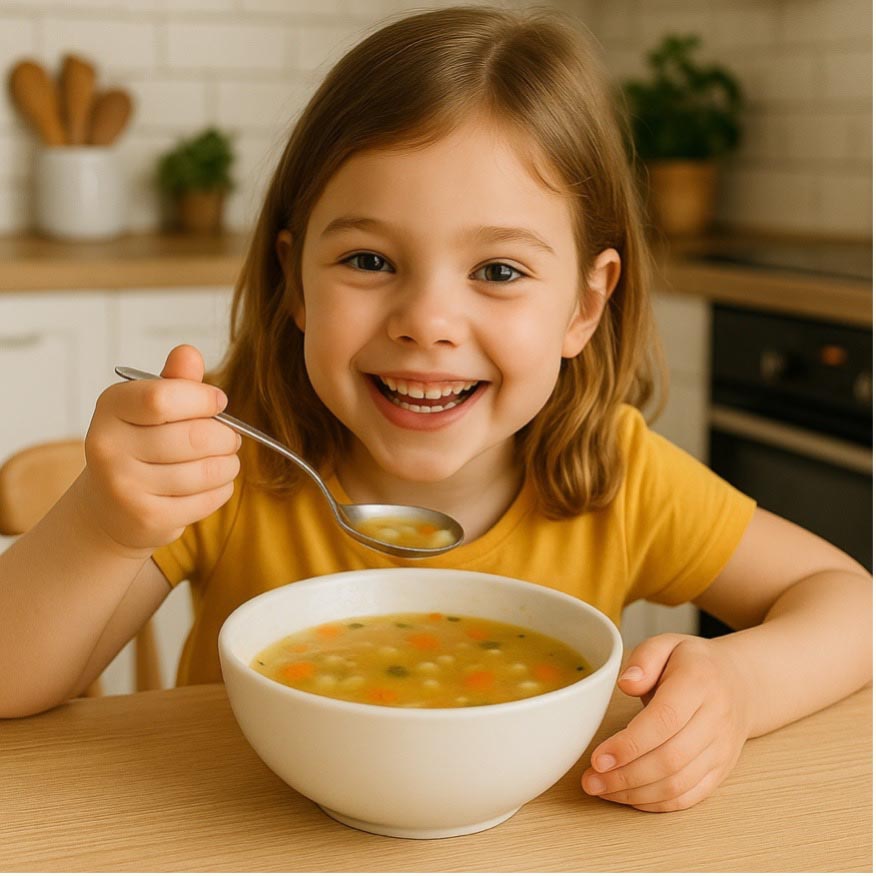
Chat GPT’s suggested uses: Brand campaigns, food products, household goods.
- Photorealistic / Documentary
Chat GPT’s prompt: A natural candid moment of a young girl eating soup at the kitchen table. She wears a casual shirt, her hair in simple pigtails, and sunlight filters through the window beside her. The table is slightly cluttered, capturing a real-life morning scene.
Here is the result:
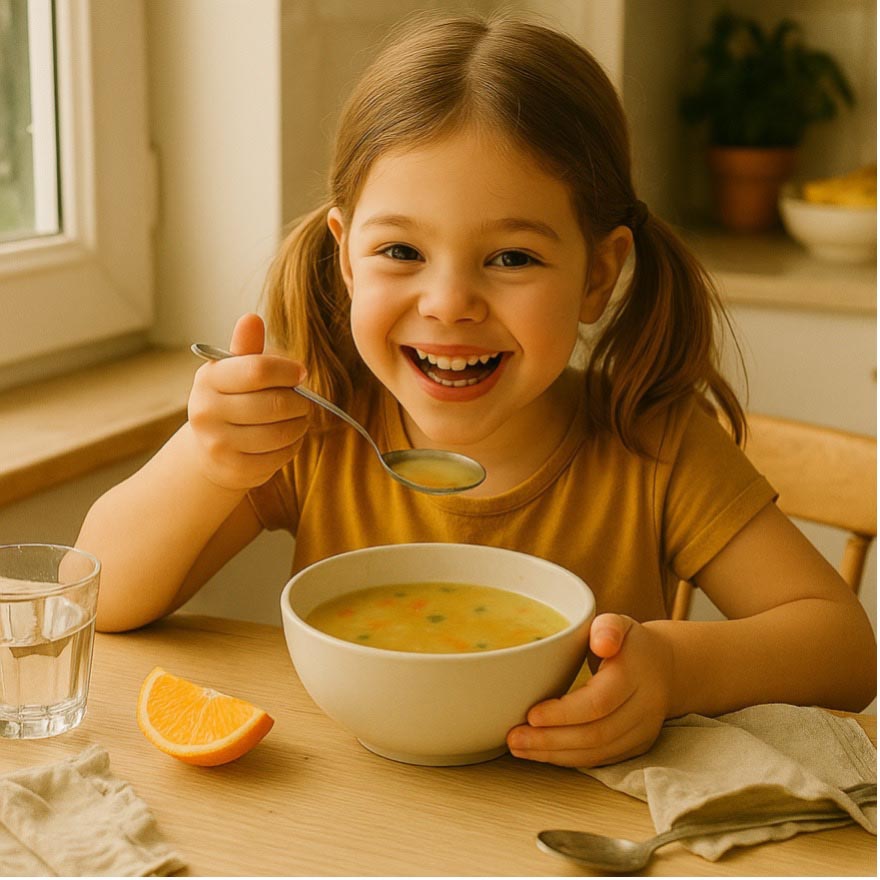
Chat GPT’s suggested uses: Editorial content, family features, authentic storytelling.
3. Cozy/Cottagecore/Vintage
Chat GPT’s prompt: A young girl with freckles and messy hair in a chunky knit sweater sits at a rustic wooden kitchen table, smiling gently over a bowl of homemade soup in a floral ceramic bowl. The background is dim and warmly lit with vintage kitchenware and lace curtains.
Here is the result:
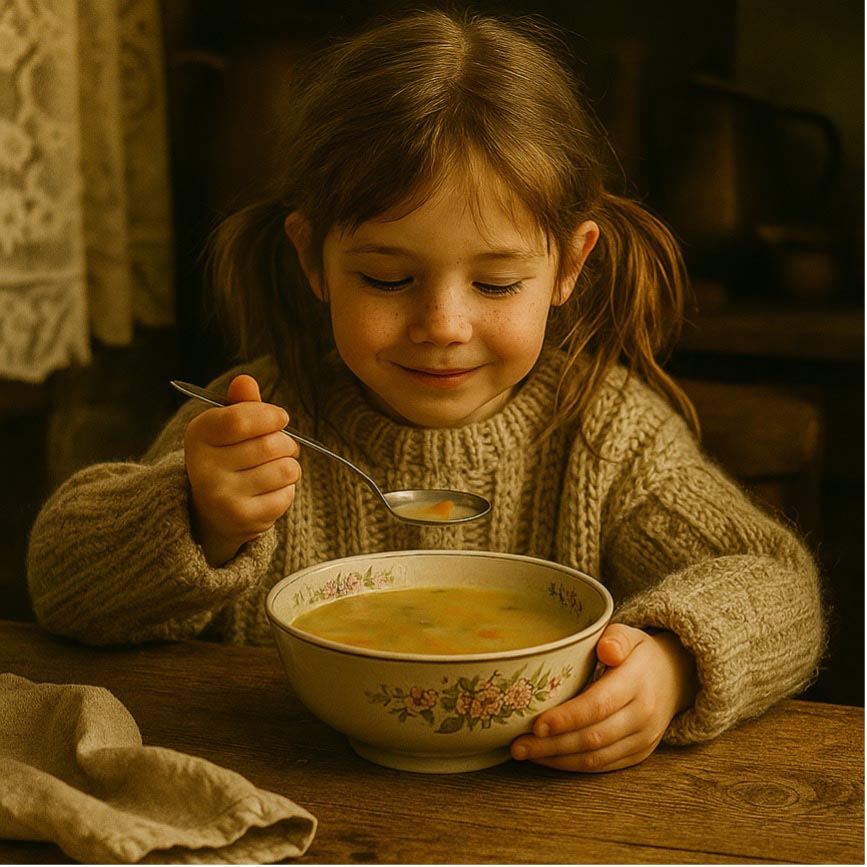
Chat GPT’s suggested uses: Book illustrations, nostalgic visuals, slow living themes.
4. Fine Art/Cinematic
Prompt: A soft-lit portrait of a young girl at a wooden kitchen table, holding a spoonful of soup with a calm, contemplative expression. Her face is partially illuminated by morning light streaming through a nearby window. The room has earthy tones and minimal composition.
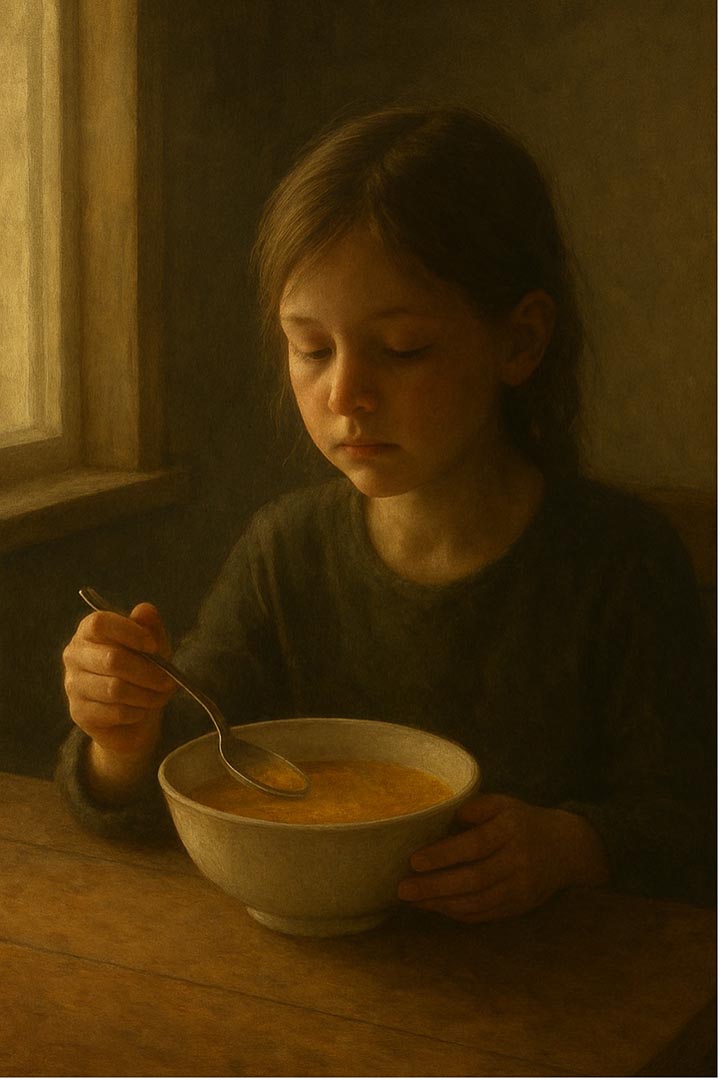
Chat GPT’s suggested uses: Gallery-style AI art, high-end illustration, emotional tone.
All of these re-generations were done using ChatGPT. If this experiment were tried on each of the other platforms, even with the more specific prompts, expect the tendencies of other AI platforms still to shine through.
Hence the importance of trying different platforms. It’s not just about the features they offer (such as the ability to set aspect ratios, orientation, change styles), but about their base tendencies. It won’t take long to figure out which one(s) match your preferences and style needs better than others.
Want to narrow down the list quickly without using a lot of time? Describe the types of images you create, and for what purpose, in ChatGPT and ask the platform to recommend some places to start. You might be surprised how helpful that can be. Because when it comes to AI, let AI be your guide.