Picture this: It’s December 1843. You’re Sir Henry Cole, a civil servant, museum founder, postal reform champion, and social butterfly extraordinaire. Your friends are flooding you with correspondence, and Victorian etiquette demands you respond to every letter. The pile is growing. Your anxiety is mounting. You need a solution.
What Cole did next would inadvertently create one of the most enduring revenue streams in printing history.
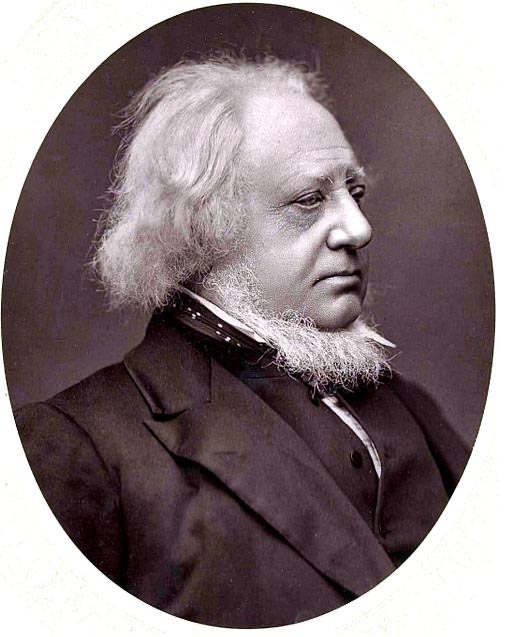
Woodburytype of Henry Cole by Lock & Whitfield. Source: Wikipedia
The Accidental Entrepreneur
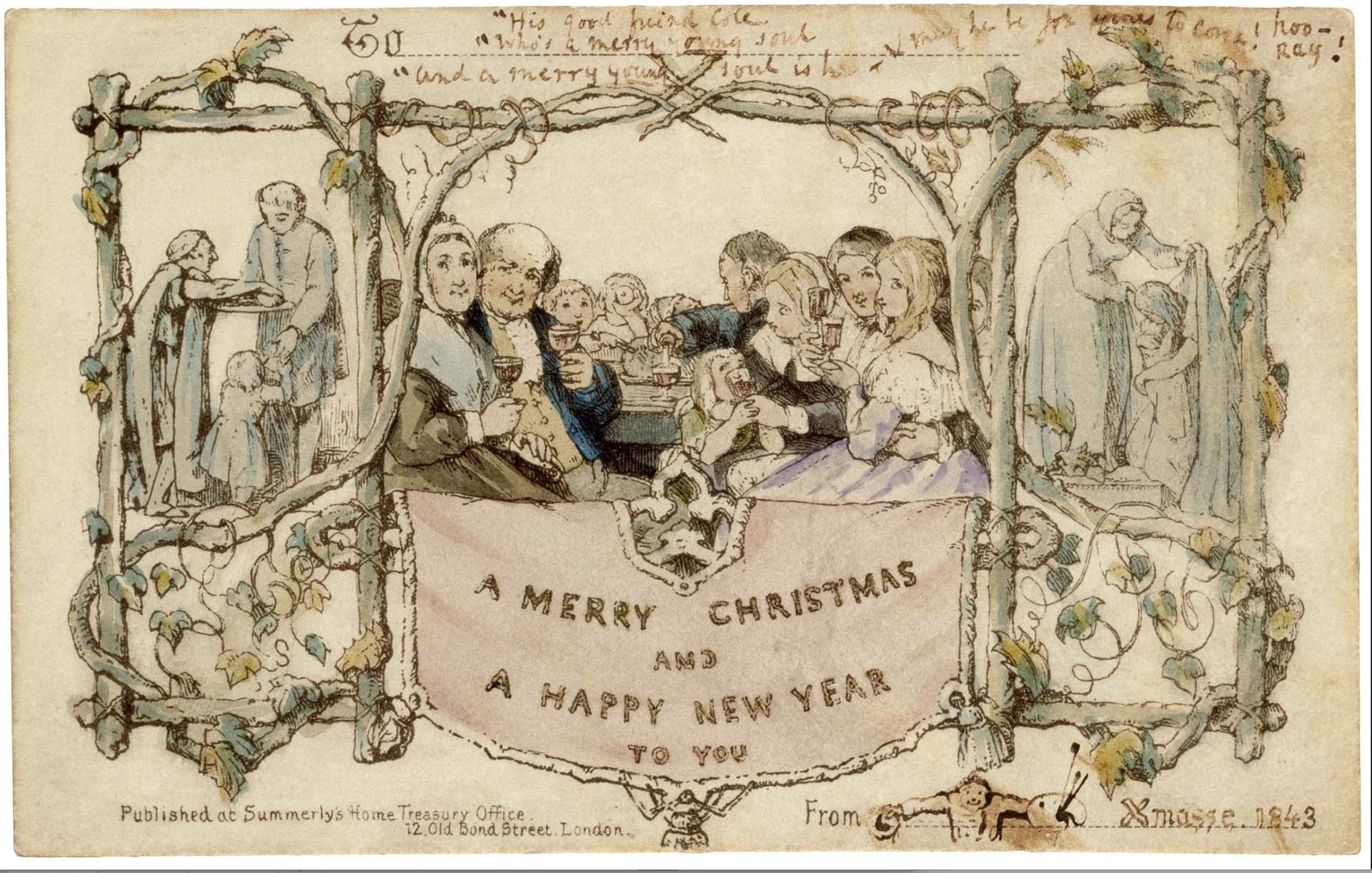
Cole’s solution was elegantly simple: commission his artist friend John Callcott Horsley to design a single image that could be reproduced lithographically. The result was a triptych showing the Cole family raising their glasses in celebration (scandalously, the children appeared to be drinking wine, much to the horror of England’s Temperance Movement), flanked by scenes of charitable giving.
Cole had a thousand copies printed on cardboard measuring 5 1/8" × 3 1/4". He added blank lines for “TO:” and “FROM:” and included the greeting “A Merry Christmas and A Happy New Year To You.” He used what he needed and sold the rest for a shilling each at his art shop.
Was it a commercial flop, as some historians claim? Perhaps. But it was an idea whose time would come.
(NOTE: One of Cole’s original 1843 cards sold at auction in 2001 for £22,250, suggesting that even flops can become priceless given enough time.)
When Infrastructure Met Opportunity
Here’s what made Cole’s timing accidentally brilliant: He had helped establish the Penny Post just three years earlier. Suddenly, anyone in England could mail correspondence for a single penny. Railways were replacing horse-drawn carriages, exponentially increasing mail capacity. The infrastructure for a card-sending revolution was in place.
But it took decades for the market to catch up to the technology.
The real explosion came in the 1870s and 1880s, driven by three converging factors that any modern print executive would recognize: improved technology, favorable economics, and demographic change.
The Technology Play
Chromolithography changed everything. When German immigrant Louis Prang set up shop near Boston in the 1870s, he wasn’t just printing Christmas cards. He was creating miniature art pieces. Some of his designs used up to 30 different colors, with embossing, varnish, and fringed embellishments.
By the 1880s, Prang was cranking out over five million cards annually. The printing process that once required hand-coloring now allowed for mass production at scale.
Then in 1883, the United States adopted uniform postal rates. Suddenly, the cost to mail a card to a relative in California was the same as mailing one across town. Combined with improving printing economics, Christmas cards became affordable for the masses, available in tobacco shops and dime stores.
By the 1920s, the industry employed more than 5,000 American workers. Each year’s designs were produced by well-paid artisans and guarded like trade secrets to prevent imitation by rival firms.
The Christmas card had become big business.
Christmas Cards Go Mainstream
But the modern Christmas card as we know it? That’s thanks to Joyce Hall and his brothers, who in 1915 revolutionized the format with a simple insight: People wanted to write more than a postcard allowed, but less than a full letter. The Hall Brothers company (later Hallmark Cards) introduced the folded 4" × 6" format inserted in an envelope.
By mid-century, Christmas cards had become an American institution. The average American household was buying 30 greeting cards annually.
For the printing industry, this translated into predictable seasonal revenue that could be counted on like clockwork every fourth quarter. Design studios thrived. Specialty finishes proliferated. Quality paper became a selling point. The Christmas card market drove innovation in everything from foil stamping to die-cutting.
Today (even in the midst of digital clamor that would have sent Sir Henry into Victorian apoplexy) the Christmas card lives on:
- Americans still purchase approximately 1.3 billion Christmas cards annually.
- Christmas cards represent about 23% of the 6.5 billion greeting cards Americans buy each year
- Approximately 73% of Americans still send Christmas cards.
Yes, the industry is contracting, but as Mark Twain is reputed to have said, “The reports of my death are greatly exaggerated.” Christmas cards are still putting up some big numbers.
Raise a Glass to Sir Henry Cole
As you wrap up your year-end planning and look toward 2026, pour yourself something festive and raise your glass to Sir Henry Cole. He was just trying to solve his own problem. But in doing so, he created an industry that has provided steady work for printers, designers, and postal workers for 181 years.
Not bad for someone who just didn’t want to write so many letters.