- A Keypoint Intelligence survey revealed that over a quarter of print service providers don’t plan to make any further investments in offset technology because they intend to transition to 100% digital in the future.
- One major challenge for the offset to digital transition is that some PSPs seem to lack awareness about their cost crossover points.
- Keypoint Intelligence has launched a web-based Cost and Time Crossover Point Estimator that enables PSPs to quickly and easily calculate cost crossover points.
By German Sacristan
Introduction
The printing industry continues to experience a natural and organic shift from offset to digital printing, primarily driven by a growing demand for shorter print runs and greater customization. Despite this transition, a critical question persists—why is it that all potential digital printing volumes are not being produced digitally? This article explores some of the key barriers that continue to hinder the transition to digital.
Offset vs. Digital
Printing is one of the few industries where analog (offset) printing remains dominant despite an increasing adoption of digital technologies. The transition is certainly occurring, but it is slow, largely because of cost differences. For example, consumables like ink remain significantly cheaper in offset printing—a factor that’s unlikely to change in the near term due to the fundamental differences between offset and digital inks.
Although the organic shift toward digital progresses, analog printing remains resilient and relevant despite its decline. Offset printing continues to be more cost-effective for longer print runs due to its lower consumable costs and economies of scale. Even so, trends toward shorter runs and customized print communications are slowly shifting market dynamics in favor of digital printing. Digitally printed communications are easier to personalize, which enables more targeted and effective engagement. Notably, a recent Keypoint Intelligence survey revealed that over a quarter of print service providers (PSPs) don’t plan to make any further investments in offset technology because they intend to transition to 100% digital.
Figure 1: Offset Equipment Purchasing Plans
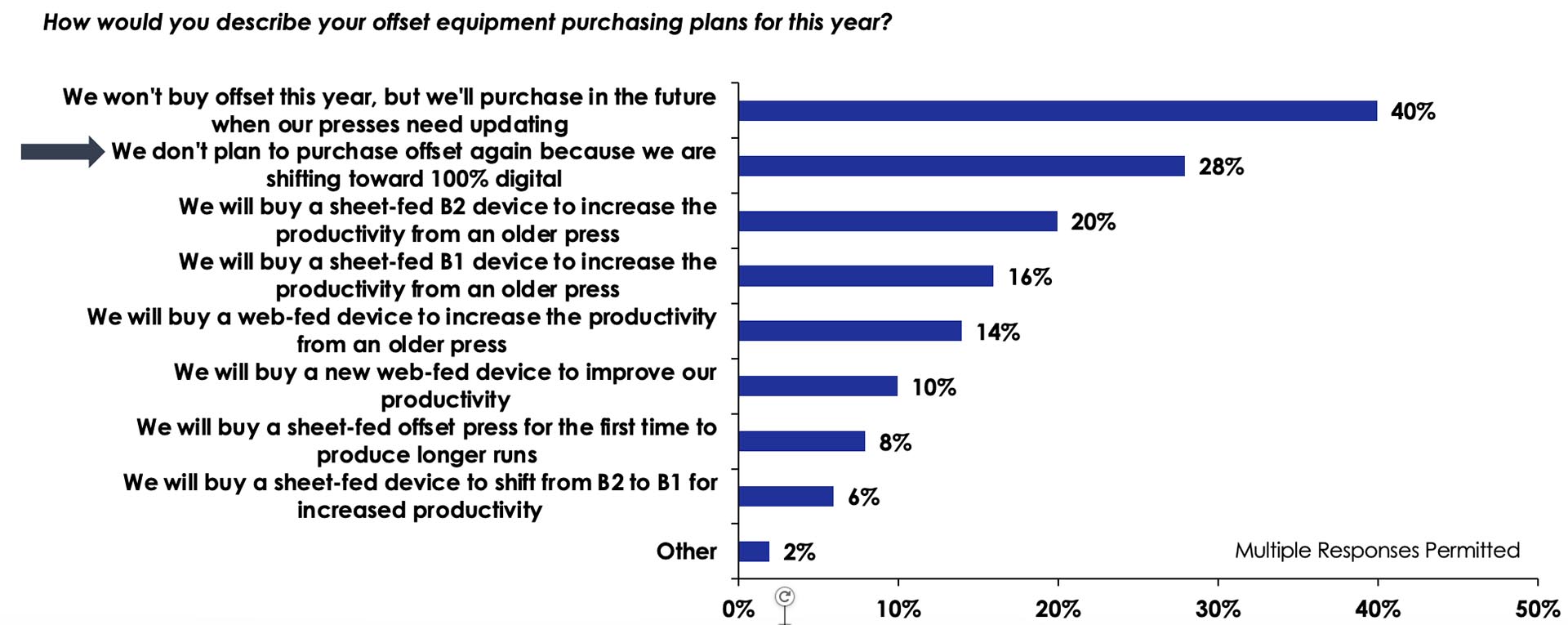
N = 50 Total Respondents
Source: Pre-drupa Survey; Keypoint Intelligence 2024
The real question of interest is this—how quickly are PSPs transitioning to digital, and what factors are influencing this pace?
The Crossover Point
The transition to digital printing has gained significant momentum, fueled by changes in cost dynamics, operator labor challenges, and (as stated earlier) the ongoing trend towards shorter runs and customization. The crossover point—where digital becomes more economical than offset—has recently shifted due to two major factors:
- Rising Offset Costs:Offset-related expenses associated with makereadies, paper waste, and plates have seen a significant increase.
- Falling Total Cost of Ownership (TCO) for Digital:Over the past decade, the TCO of large production digital printing equipment has dropped by more than half. Modern large production digital presses offer lower running costs, while producing far larger average monthly print volumes (AMPVs) than the presses that were available 10 years ago.
One major challenge for the market is that some PSPs seem to lack awareness about their cost crossover points. Surprisingly, Keypoint Intelligence’s 2024 Color Embellishments survey found that 30% of PSPs do not calculate their cost crossover points at all. Equally concerning, 26% of PSPs that do calculate these points rely on an outdated method (i.e., using a calculator instead of software) that can be time-consuming and potentially less reliable. The sample sizes for this survey are small, but Keypoint Intelligence believes them to be indicative of current industry trends.
Figure 2: Calculating Crossover Points
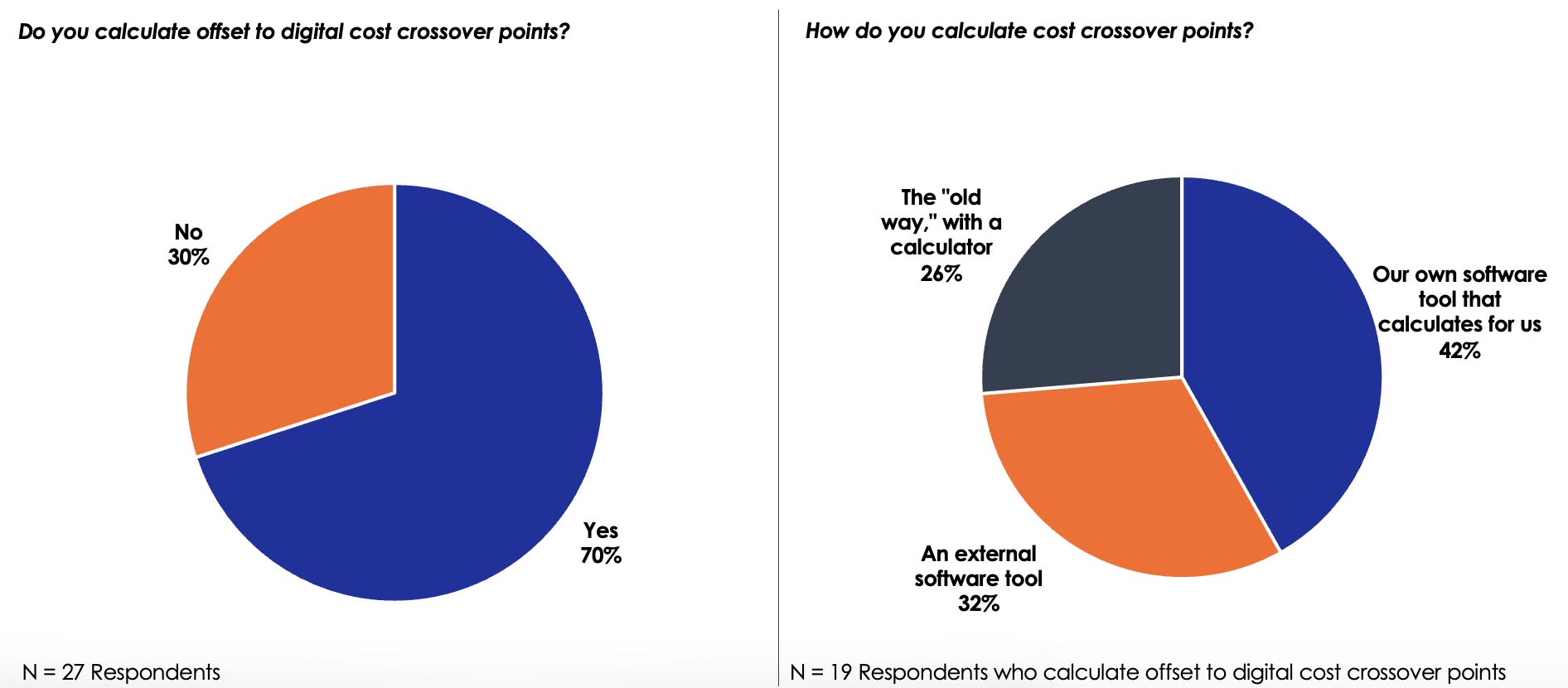
Source: US Color Embellishments Survey; Keypoint Intelligence 2024
Calculating cost crossover points is a crucial exercise in understanding the cost-effectiveness of their operations, yet many PSPs face significant challenges. According to this same survey, the most common challenges associated with calculating cost crossover points include a lack of necessary data (40%) and a belief that the process is too time-consuming (30%). These obstacles often deter PSPs from performing such calculations, but staying informed about cost crossover points enables PSPs to optimize production choices and improve profitability in the long run.
An Efficient Tool
The printing industry is in urgent need of tools that enable PSPs to quickly and easily calculate cost crossover points. Recognizing this need, Keypoint Intelligence has launched a web-based Cost and Time Crossover Point Estimator.
This tool addresses the data and time barriers that PSPs face by:
- Leveraging market-average data to fill information gaps
- Providing cost crossover estimates in seconds
- Enabling easy customization of inputs to reflect each individual PSP’s unique operational metrics, resulting in personalized estimations
Designed for fast pre-qualification and decision-making, the tool ensures that PSPs can allocate each job to the most cost-effective technology. Digital printing vendors can also use the tool to quickly identify which of their customers may fit the profile to benefit from investing in a new digital printing press. If you would like a free demonstration of this tool, please contact us here.
The Bottom Line
The shift from offset to digital printing represents a transformative opportunity for our industry. At the same time, however, its success and acceleration hinges on PSPs’ ability to quickly, easily, and accurately determine their cost and time crossover points. Keypoint Intelligence’s online tool, powered by market-average data, simplifies this process—empowering PSPs to make informed decisions in seconds and stay responsive to market shifts.
German Sacristan is the Director of Keypoint Intelligence’s Production Print & Media group. In this role, he supports customers with strategic go-to-market advice related to production printing in graphic arts and similar industry segments. German’s responsibilities include conducting market research, industry and technology forecasts, custom consulting and development of analyses, editorial content on technology, as well as support to clients in the areas of production digital printing.