High Definitions
(Optional musical accompaniment to this item.)
How many of you still have a printed dictionary? Sure, we can easily look words up online when we need to, but there is something satisfying about thumbing through a printed version. And if you’re in the market for one, Merriam-Webster is releasing a new edition—the Twelfth—of its Collegiate dictionary. Via Boing Boing:
The updates include over 5,000 new words, such as cold brew, farm-to-table, rizz, and dad bod, as well as 1,000 new phrases and idioms. Another new addition is word lists like “Words From the 1990s” and “Words For Things That Often Go Unnamed.”
The last edition appeared in 2003—and a lot has happened since then, not the least of which with Merriam-Webster.
“Over the last ten years, our revenue has grown by nearly 500%, mostly from our digital products,” says Barlow. “But we still love books, and that's why we’re so proud of the Twelfth Edition. This beautiful red dictionary may not be the biggest part of our business, but in many ways it’s the heart.”
It releases November 18. A steal at (wow!) $34.95.
Dial Done
If we’re honest, the most surprising thing about this story is that AOL still offered dial-up service. Anyway, via AP, it is officially being discontinued.
Dial-up is now no longer advertised on AOL’s website. As of Wednesday, former company help pages like “connect to the internet with AOL Dialer” appeared unavailable — and nostalgic social media users took to the internet to say their final goodbyes.
Those of us who remember the pre-WiFi, pre-broadband era aren’t all that nostalgic—dial up was always a crap shoot (especially in hotel rooms), it was not unusual to get kicked off, and if someone emailed a JPEG, you were pretty much stuck for what could be hours. Then there was the onslaught of AOL diskettes (later CDs) mailed ad nauseam. Someone in the late 90s or early 2000s had started a small business repurposing AOL CDs into coasters, which—shockingly—we still have, although it has seen better days:
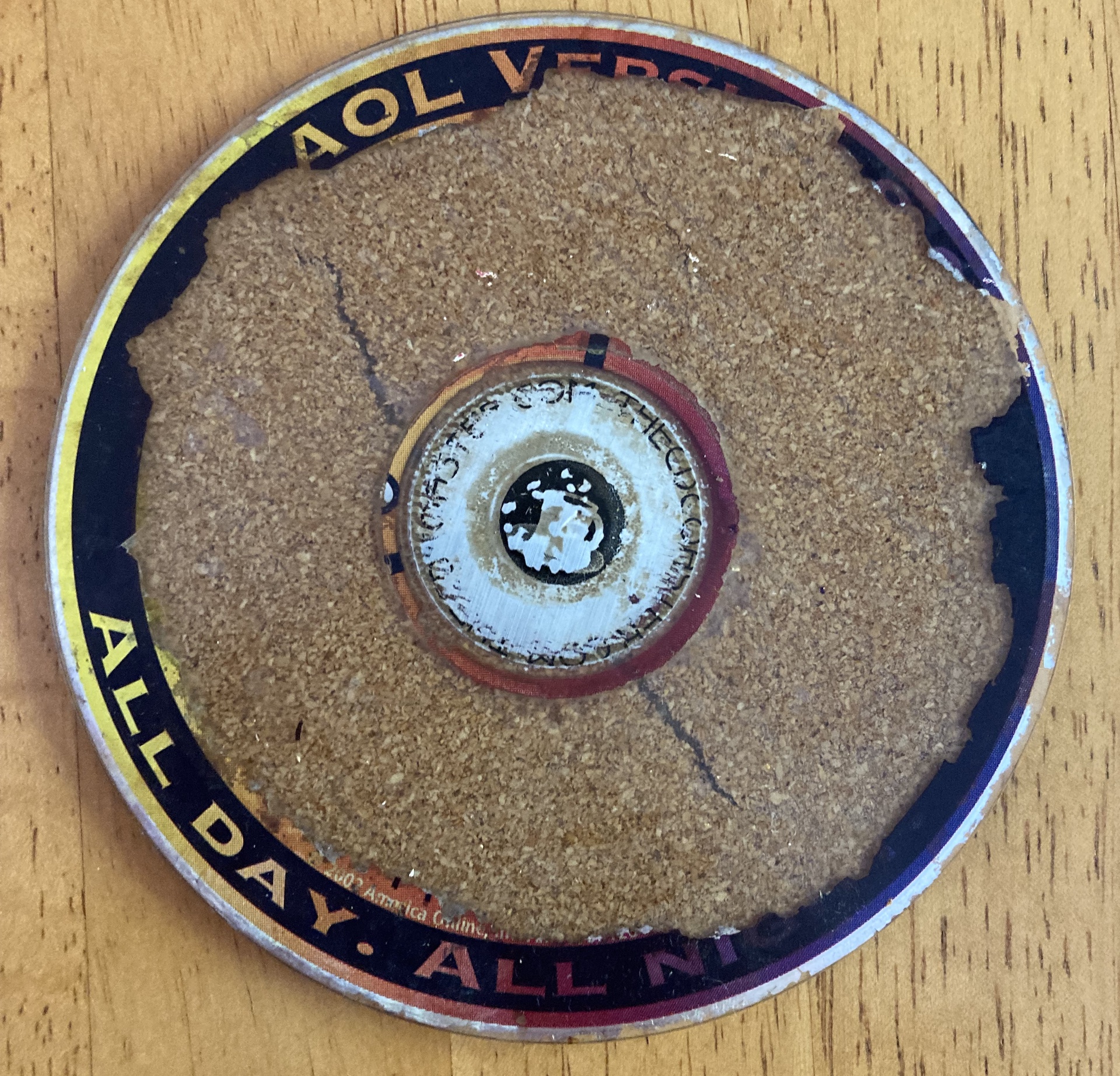
We tend to take WiFi and broadband for granted, but some people still do rely on dial up for Internet access.
A handful of consumers have continued to rely on internet services connected over telephone lines. In the U.S., according to Census Bureau data, an estimated 163,401 households were using dial-up alone to get online in 2023, representing just over 0.13% of all homes with internet subscriptions nationwide.
AOL itself has had a tumultuous history, even if it was groundbreaking in its day (and its famous “You’ve got mail!” sound sample inspired the 1990s rom-com of that same). It was founded as Quantum Computer Services in 1985, but in 1991 rebranded as America Online and hit the public market, where it came a juggernaut of early ISPs. Just as the dot-com bubble was on the verge of bursting, it merged with Time Warner, leading to one of our favorite Onion stories: “AOL Acquires Time-Warner In Largest-Ever Expenditure Of Pretend Internet Money,” with the great punchline, “In an effort to keep pace with AOL, website blairwitchproject.com is expected to acquire General Motors sometime later this week.” After the TW merger went south, AOL was acquitted by Verizon, and then resold, with Yahoo!, to a private equity firm.
Robuilder
We’ve linked often to robots and 3D printers—but how about a walking 3D printer robot that builds walls? There is such a thing and it was developed to address Australia’s housing crisis. The Charlotte robot was developed by two Australian companies—Crest Robotics and climate technology company Earthbuilt Technology. Says Core77:
Charlotte uses local materials to build. It's hooked up to wheeled vehicle that's loaded with sand, earth and waste products like crushed brick. The 'bot essentially digests these, then poops out a composite material in layers to build walls.
Surely there’s a better way to describe it… Says Earthbuilt Technology, a bit less graphically:
“Earthbuilt® was conceived with a simple insight: the real cost and carbon of construction come from repeated industrial processing and endless transport. Our patented printer shortens the supply chain to a single, low-energy, high-speed process. Using local soil or clean waste, Earthbuilt® creates strong, durable walls without cement, firing, or manual laying.”
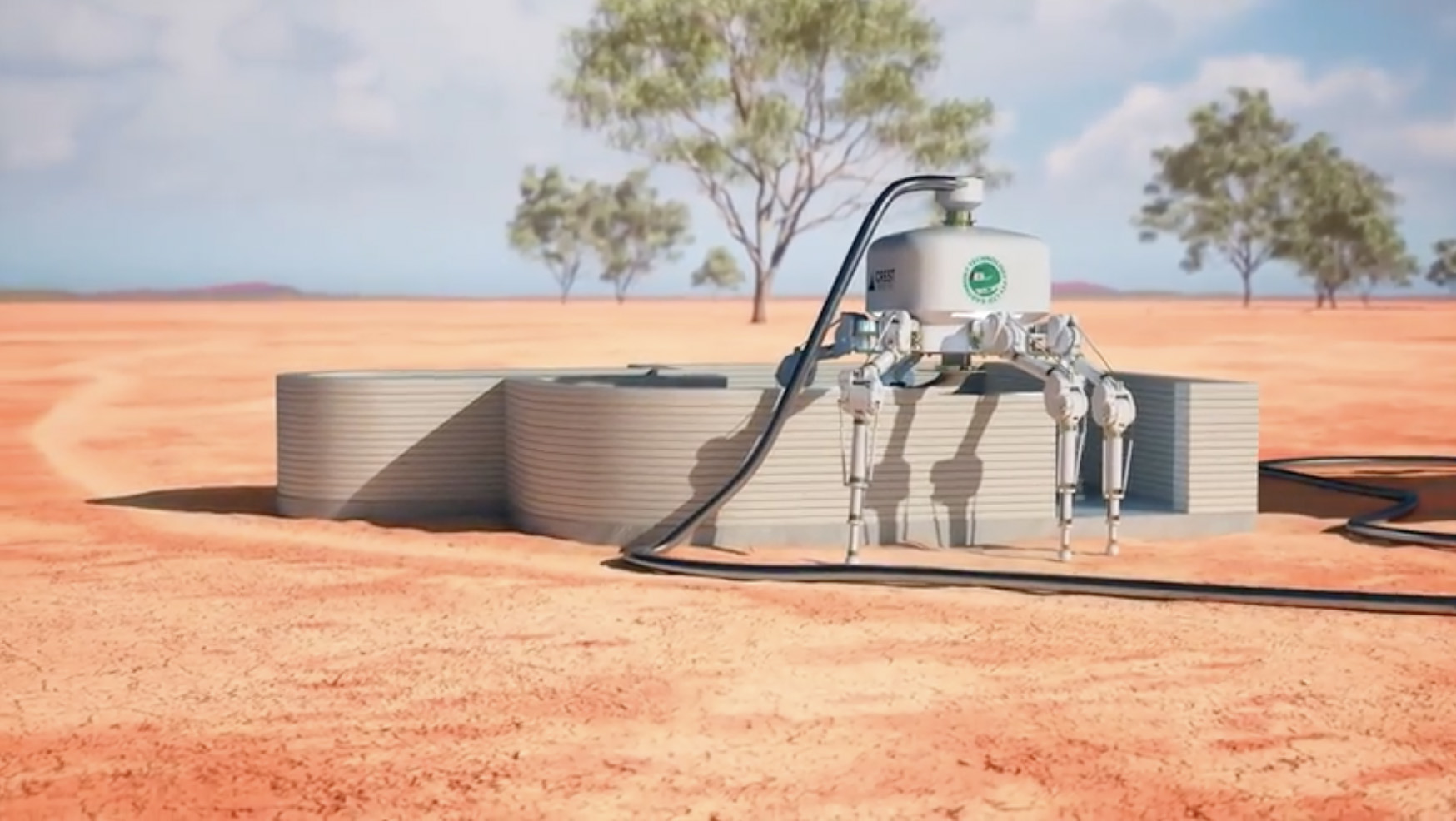
The company also envisions Charlotte working on the Moon—in which case the company would need to change its name to Moonbuilt.
Knit Wit
Here’s one for Cary.
One environmental problem is the solo cup, those single-use (usually) red cups that are a party staple. No one knows how many are routinely discarded every year—and recycling facilities can’t always handle them. But engineering student Lauren Choi had a brilliant idea: turn discarded solo cups into textiles. Says Good News Network:
She had long had an interest in sustainable fashion, but it was after she graduated in 2020 that she was able to secure grant funding to buy an extruder machine which can turn shredded plastic cups into thread. She had tried to build one of these machines herself in her parent’s garage during school years, and knew that they were the key to turning her vision into a reality.
A graduate of Johns Hopkins, Choi partnered with two other engineering colleges to develop a non-toxic, natural substance that would turn plastic thread into a soft and comfortable yarn ready for knitting.
Final solution ready, and missing only the machinery, Choi received further grant funding from none other than Reynold’s Consumer Products, the parent company of Hefty—one of the largest producers of plastic solo cups in America.

Her supply chain now is anchored in North Carolina and Virginia where the yarn is made from the shredded cups. It’s then shipped to a facility in Brooklyn where a 3D knitter creates the sweaters and beanies available on the New Norm’s collection in a single knit using filament yarn rather than spun yarn.
The process also has the advantage of not shedding microplastics, another environmental scourge.
“3D knitting has a lot less waste compared to traditional cut-and-sew, where many fabric scraps are wasted,” Choi told the Guardian. “Instead, our pieces are knit straight out of the machine without any seams – it’s just one full garment that doesn’t need additional sewing.”
The sweaters are a steal at $45–$85.
O My
What is the oldest letter in the Latin alphabet? There is a case to be made for “O,” although there are caveats. Via Laughing Squid, Patrick Foote of Name Explain explains.
In my estimation, a letter is composed of three key elements. The sound it makes, the name of the letter itself, and the shape of the symbol. So what one of these elements makes it so old? First off, the name isn’t that old. The symbol being called an O only really dates back to the Romans and the Latins, which yes, was a long time ago, but we can go further than that.
That is, to the Phoenicians.
Their language of Phoenician is seen to have come into being around 1300 BC. and the symbols they used to represent their language in written form drew inspiration from the hieroglyphs of ancient Egypt. …But among these strange and ancient symbols, you will probably spot a simple little circle. This guy is the precursor to the letter we know as O today. And from its inception in the Phoenician alphabet well over 3,000 years ago, its shape has never changed.
Inflation Alert
Over in our data section, we often talk about inflation. But over at Print magazine, Steven Heller talks about inflation in a different sense: inflatables. Perhaps best epitomized by those inflatable, animated dancing men you often see outside car dealerships, there is a wide variety of inflatables that are used for marketing and promotional purposes. (And plays a role in a famous montage from an episode of Better Call Saul.)
The concept was originally conceived by Peter Minshall, an artist from Trinadad and Tobago, along with Doron Gazit and Arieh Dranger, for the 1996 Atlanta Olympics. Minshall called his creation the “Tall Boy,” but Gazit eventually patented the concept of an inflatable dancing human-shaped balloon, which has grown into a thriving advertising display genre.
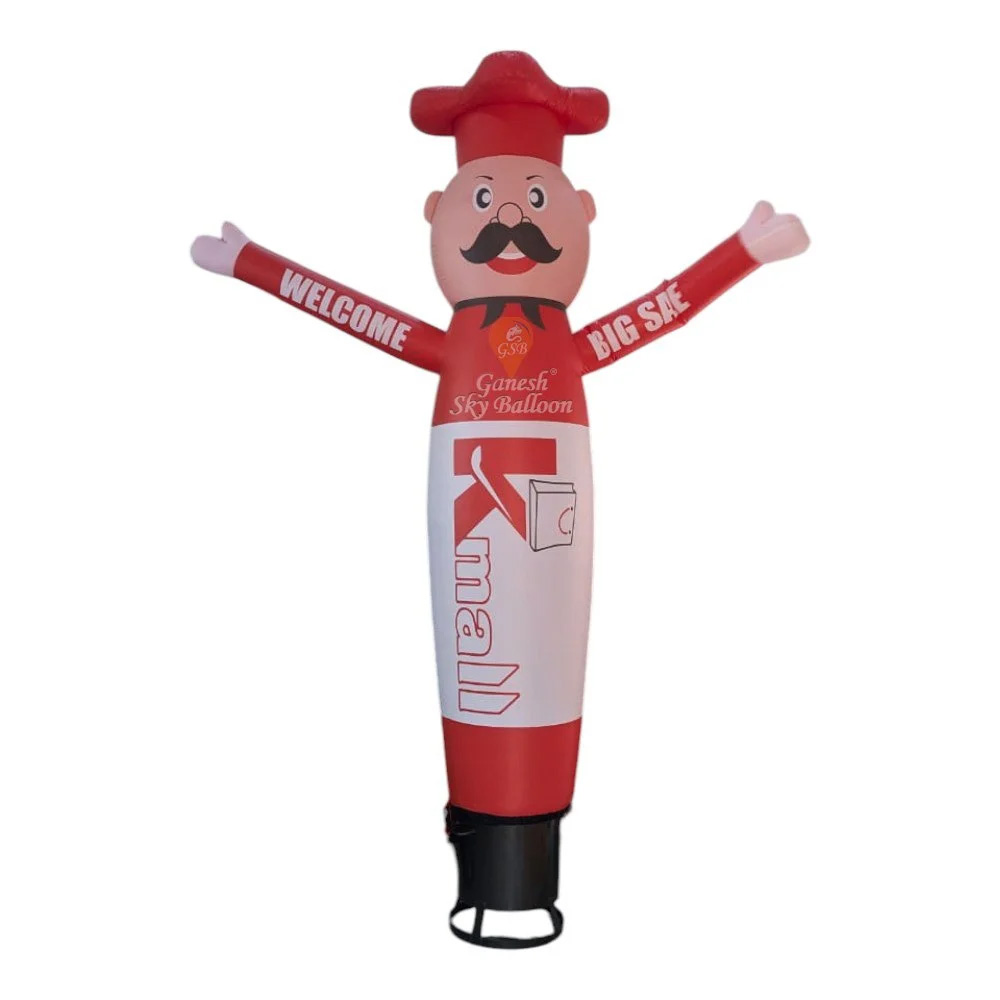
The genre has grown and grown and inflatables—often powered by fans that make appendages or other parts of the figure move—appear in many retail settings these days. And as the holiday season begins (first Halloween then Christmas) the inflatable concept has expanded to decorations—Home Depot, for example, has an extensive line of Christmas inflatables.
TV Debut
Here’s a trivia question: who was the first person to ever appear on television? Uncle Miltie? Sid Caesar? Gorgeous George Wagner? The name William Taynton probably does not ring a bell, but a century ago, on October 2, 1925, a recognizable moving image of a human face was transmitted for the first time. Although scientists had been trying to invent “television” since the 1850s, it was Scottish inventor John Logie Baird who was the first to successfully accomplish it.
Says the BBC:
He set up a laboratory [in Hastings, on the south coast of England] to begin his television experiments, improvising his apparatus from scrap materials such as an old tea chest fitted with an engine. At the centre of Baird's system was a large disc spinning at high speed to scan images line by line using photodetectors and intense light. These signals were then transmitted and reconstructed to produce moving pictures. When he succeeded in transmitting a silhouette, the decades-long dream of creating television moved into focus.
He soon left Hastings and set up a new lab in Soho in London.
His mechanical device emitted such fierce heat that it was difficult for humans to withstand the intensity. In his experiments, he had to use a ventriloquist's dummy that he nicknamed Stooky Bill. But on 2 October 1925, the 37-year-old enlisted a human guinea pig and made an astonishing breakthrough.
And the “human guinea pig” was William Taynton, a 20-year-old office boy working downstairs from where Baird had set up his lab.
Baird sat him down in front of his transmitter: the human subject who could provide the necessary motion that the stalwart Stooky Bill couldn't. Taynton said that he began to feel the heat and was scared, but Baird assured him he had nothing to worry about. "He disappeared to go down to the receiving end to see if he could see a picture," Taynton recalled. "I got into focus, but couldn't stop there much more than a minute because of the terrific heat from these lamps, so I pulled away."
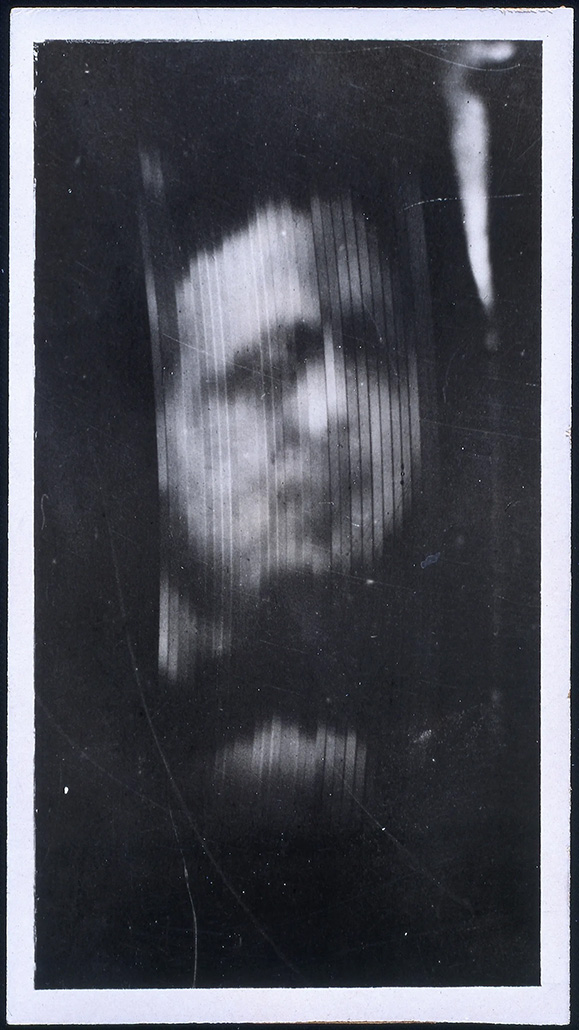
On 26 January of the following year, Baird gave the world's first public demonstration of television. While his pioneering machine was ultimately overtaken by technology developed by better resourced firms, he had paved the way for everything that followed.
So as we mark 100 years of television, let’s give a thought to two people who were there at the beginning.
Botdega
Could this be the future of retail? Via Futurism, back in August, a bodega opened in Beijing that was staffed not by a human but by a humanoid robot.
Video shared on social media shows the Galbot G-1 — a dual-armed humanoid bot released in June 2024 — maneuvering around a small corner store, handing goods to customers like an old-fashioned shopkeeper.
Yes, and they do use the term “robodega.”
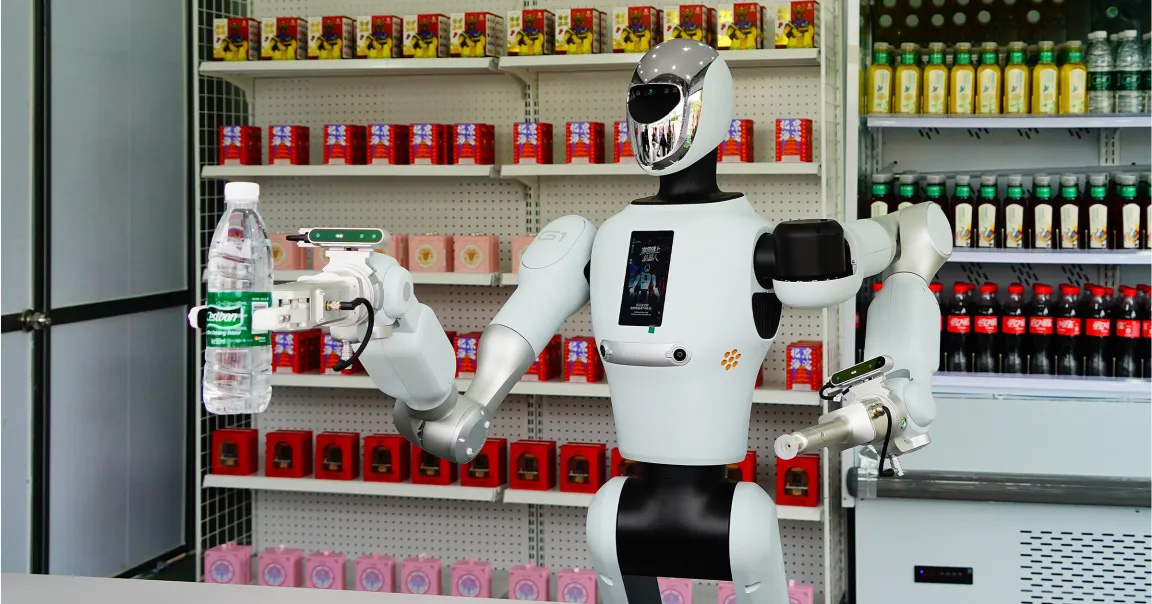
“The humanoid robot Galbot G-1 runs everything, serving thousands of customers each day,” one video chimes. “From greeting visitors to serving drinks, snacks, and pharmaceuticals, Galbot autonomously handles every order, with zero teleoperation, powered by Galbot’s proprietary GroceryVLA and GraspVLA.”
Whilst this is more a proof-of-concept at the moment, the company says it plans to roll the robodegas out to 100 stores across 10 Chinese cities in the next year. There are still two main impediments: speed (the G-1 is reportedly very slow) and, oddly, natural voice interaction.
There’s also the tricky question of which regional dialect to bestow on a customer-facing robot by default — a trickier task than one might think.
Maybe in the future, we’ll be seeing 711K convenience stores popping up.
CAPTCHA the Flag
Are you not a robot and fiercely proud of it? If so, you can put your humanity to the test with a new online game from Neal Agarwal called I’m Not a Robot. Says Boing Boing:
It starts with the obvious "I am not a robot" reCAPTCHA, moves on to a devilish version of "Select all the squares that contain a stop sign," and quickly goes off the rails from there. I am currently stuck at level 10.
We got stuck on vegetables.
Graphene Drones On
Was it a good week for graphene news? It’s always a good week for graphene news! Graphene-based batteries to power next-gen drones. From (who else?) Graphene-Info:
Volatus Aerospace, a Canadian company focused on aerial intelligence and unmanned aircraft systems, and VoltaXplore, a joint venture between Martinrea International and NanoXplore aimed at commercializing the production of graphene-enhanced lithium-ion batteries for the electric vehicle market, have announced the signing of a Letter of Intent for the future supply of Canadian-made lithium-ion battery cells to power Volatus’ next-generation drones.
… These high-performance cells will deliver increased endurance, faster charging, and improved cold-weather performance for Volatus’ UAV platforms.
What Fresh Hell…
Last week, we bemoaned Samsung’s new line of refrigerators that feature screens displaying ads. Even worse than that, in China, a new kind of torture has been devised—assuming this is true, which it may not be. Says Futurism:
Recent video shared by China Insider — an outlet co-produced by anti-China media groups NTD and The Epoch Times, for what it’s worth — shows an incredible video of a woman forced to scan a QR code with her phone in order to activate a toilet paper dispenser.
After scanning the code, the woman has the choice to either pay a few cents for some bathroom tissue — or, strikingly, watch an ad. The bizarre mechanism might be vaguely dystopian, but it’s admittedly pretty seamless from a user point of view, taking just a few seconds of effort.
It sounds bad, but apparently toilet paper theft from public restrooms is a problem.
A related bit of context: public toilet paper isn’t a given in the People’s Republic; most public bathrooms operate on a system of BYOTP, meaning that well-outfitted restrooms are even more likely to become targets.
Anyway, it doesn’t sound especially farfetched.
In a Pickle
Are you a pickle aficionado? Would you pay $38 for a jar of pickles? What if they were branded by Pamela Anderson? Via (who else?) Food & Wine:
Pamela Anderson teamed up with Los Angeles–based Flamingo Estate to release a limited-edition $38 jar of small-batch pickles, with proceeds supporting the California Wildlife Center.

The pickles feature a refined flavor profile of dill, rose, mustard, garlic, pink peppercorn, guajillo chile, and smoky sea salt, designed to taste more mature.
Are they any good?
With no added sugars, the first bite released a wash of subtle smokiness — as if the spear had just been lifted from the grill at a backyard barbecue. A second bite, this time with a few pink peppercorns stacked on top, delivered a delicately zesty punch. Nothing overwhelmed; each ingredient worked in concert, while every spear retained that essential, satisfying crunch that defines a great pickle.
The rose petals, though technically present, played more of a whisper than a note. A faint floral sweetness tucked behind the bolder, smokier accents of mustard seed, guajillo chile, and pink peppercorn. Those flavors took center stage, creating a profile that felt grown-up and complex.
Fortunately, it’s safe to Google Pamela Anderson and pickles and not have Tommy Lee turn up.
This Week in Printing, Publishing, and Media History
September 29
1547: Spanish novelist, poet, and playwright Miguel de Cervantes born.
1901: Italian-American physicist and academic, Nobel Prize laureate Enrico Fermi born.
1902: French journalist, author, and playwright Émile Zola dies (b. 1840).
1954: The convention establishing CERN (the European Organization for Nuclear Research) is signed.
2012: American publisher Arthur Ochs Sulzberger dies (b. 1926).
September 30
1939: NBC broadcasts the first televised American football game between the Waynesburg Yellow Jackets and the Fordham Rams. Fordham won, 34–7.
1947: The World Series, featuring the New York Yankees and the Brooklyn Dodgers, is televised for the first time. (The Yankees won.)
1980: Ethernet specifications are published by Xerox working with Intel and Digital Equipment Corporation.
October 1
1843: The News of the World tabloid begins publication in London.
1861: Mrs Beeton's Book of Household Management is published, going on to sell 60,000 copies in its first year and remaining in print until the present day.
1957: First appearance of In God we trust on U.S. paper currency.
October 2
1789: The United States Bill of Rights is sent to the various States for ratification.
1890: Groucho Marx (né Julius Marx) born.
1925: John Logie Baird performs the first test of a working television system.
1959: Rod Serling’s anthology series The Twilight Zone premieres on CBS. The first episode is “Where Is Everybody?”
1985: American essayist and journalist E. B. White dies (b. 1899).
2004: American photographer Richard Avedon dies (b. 1923).
October 3
1896: English author and poet William Morris dies (b. 1834).
1949: WERD, the first black-owned radio station in the United States, opens in Atlanta.
1954: American guitarist and singer-songwriter Stevie Ray Vaughan born.
1957: The California State Superior Court rules that Allen Ginsberg’s Howl and Other Poems is not obscene.
1987: French playwright and screenwriter Jean Anouilh dies (b. 1910).
2005: English actor and screenwriter Ronnie Barker dies (b. 1929).
October 4
1535: The Coverdale Bible is printed, with translations into English by William Tyndale and Myles Coverdale.
1582: The Gregorian Calendar is introduced by Pope Gregory XIII.
1669: Dutch painter and illustrator Rembrandt van Rijn dies (b. 1606).
1880: American newspaperman and short story writer Damon Runyon born.
1883: First run of the Orient Express. (No murder on it…yet.)
1927: Gutzon Borglum begins sculpting Mount Rushmore.
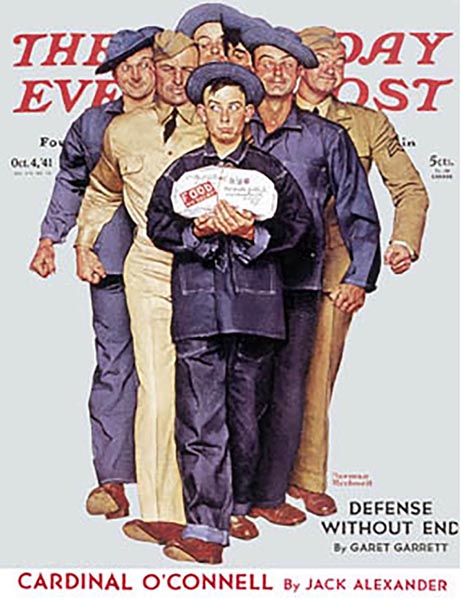
1941: Norman Rockwell’s Willie Gillis character debuts on the cover of The Saturday Evening Post.
1957: Sputnik 1 becomes the first artificial satellite to orbit the Earth.
1985: The Free Software Foundation is founded.
1989: English actor and screenwriter Graham Chapman dies (b. 1941).
October 5
1947: In the first televised Oval Office address, President Truman asks Americans to reduce their consumption of grain in order to help starving Europeans.
1949: English biographer, novelist and critic Peter Ackroyd born.
1970: The Public Broadcasting Service (PBS) is founded.
2011: American businessman, co-founder of Apple Inc. and Pixar Steve Jobs dies (b. 1955).