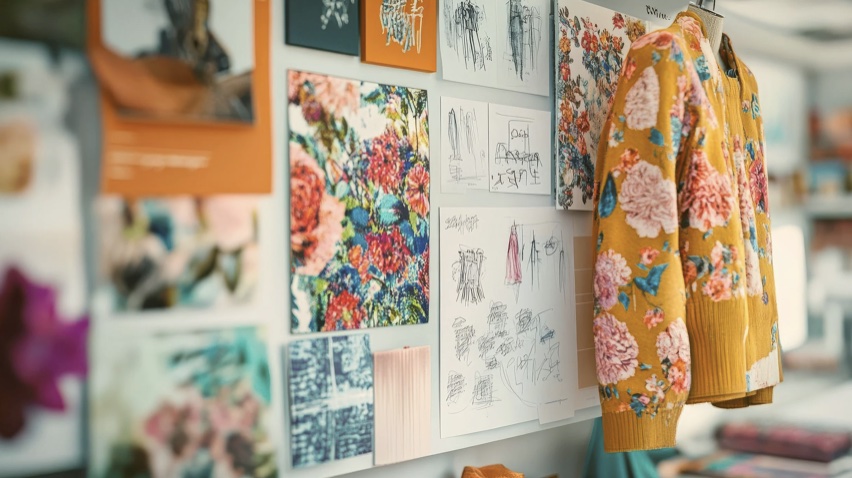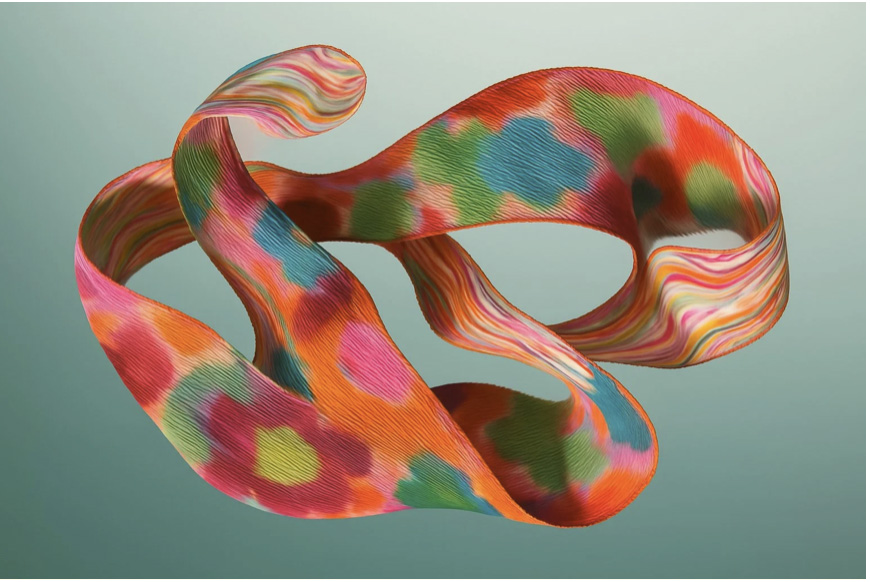
(Image courtesy of Texintel)
Is the rise of artificial intelligence a death knell for human creativity, or the dawn of a new, technologically-enhanced renaissance for artisans? As AI platforms like OpenAI’s GPT series evolve to understand and even emulate human emotion, the design world faces a pivotal moment. For the textile community, in particular, the question is not if AI will change the industry, but how we can steer that change to enhance, rather than erase, the value of human-centric design.
The fear surrounding AI is palpable. We worry about job displacement, the homogenization of style, and the potential for algorithms to devalue the very skills that define our profession. This anxiety is not new. It echoes the Luddites’ resistance during the Industrial Revolution, a period when machinery threatened to make the artisan obsolete. Yet, history shows us that technology did not kill craft; it redefined it. The Arts and Crafts movement, the Bauhaus, and Wiener Werkstätte all emerged as powerful reactions, reasserting the value of the human hand in a mechanized world.
Today, we stand at a similar crossroads. The future does not lie in rejecting AI, but in mastering it. We must become a new generation of “techno-craftisans”—designers who leverage AI not as a replacement for creativity, but as a powerful collaborator that frees us to focus on what truly matters: intuition, imperfection, and the soul of our work.
To navigate this new landscape, the trends agency Alcova, on behalf of the Heimtextil trade fair, has conducted groundbreaking research into the intersection of AI and textiles. Their findings offer a compelling vision for 2026/27, outlining how we can prepare for a new era of design by embracing technology without sacrificing our humanity.
Key Takeaways: Removing Fear and Embracing a New Era
The core message from Alcova’s research is one of cautious optimism. AI is a tool; and like any tool, its impact depends entirely on the user. The goal is not to let AI take the role of the creator, but to use its computational power to augment our own.
Experiments conducted by Alcova, where they tasked AI with curating trends, revealed its limitations. While capable of generating aesthetically pleasing images, the results lacked personal touch, cultural resonance, and the “soul” that makes a space feel like a home. AI can produce a technically perfect design, but it cannot replicate the story, the heritage, and the beautiful, crafted irregularities that come from the human hand.
This points to a future where the value of design shifts. The focus will be less on flawless execution—something an algorithm can achieve with ease—and more on the narrative, the process, and the visible signs of human involvement.
Six Trends Shaping the Future of Techno-Craftsmanship
Alcova’s research identifies six key trend directions that will define the textile industry in 2026 and beyond. These trends, to be displayed in a physical display at the Heimtextil show in January, Frankfurt, offer a roadmap for designers looking to thrive in an AI-driven world.
Remedia: This trend explores the dynamic interplay between different mediums. Think of a digital design that is physically printed, then digitally scanned again, creating beautiful “glitches” and unexpected depth. It’s about celebrating the imperfections that arise when digital and physical worlds collide.
Visible Co-Work: Here, the collaboration between human and machine is made explicit. A piece might feature a 3D-printed structure (created with AI assistance) that is then hand-finished with traditional techniques, like the work of Natalia Triantafylli with clay and 3D-printed PLA. The contrast between the machine’s precision and the artisan’s touch becomes a central design element.
Sensing Nature: Instead of simply mimicking nature, this trend uses technology to interpret it. AI can be used to analyze natural patterns—the growth of lichen, the ripple of water—and translate that data into complex, organic textile designs that feel both innovative and deeply connected to the natural world.
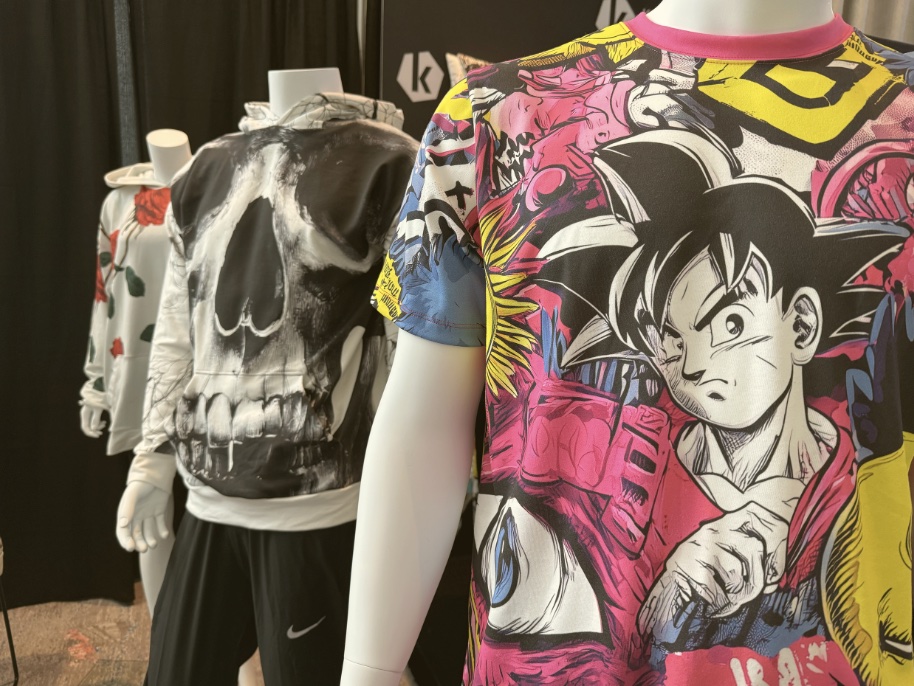
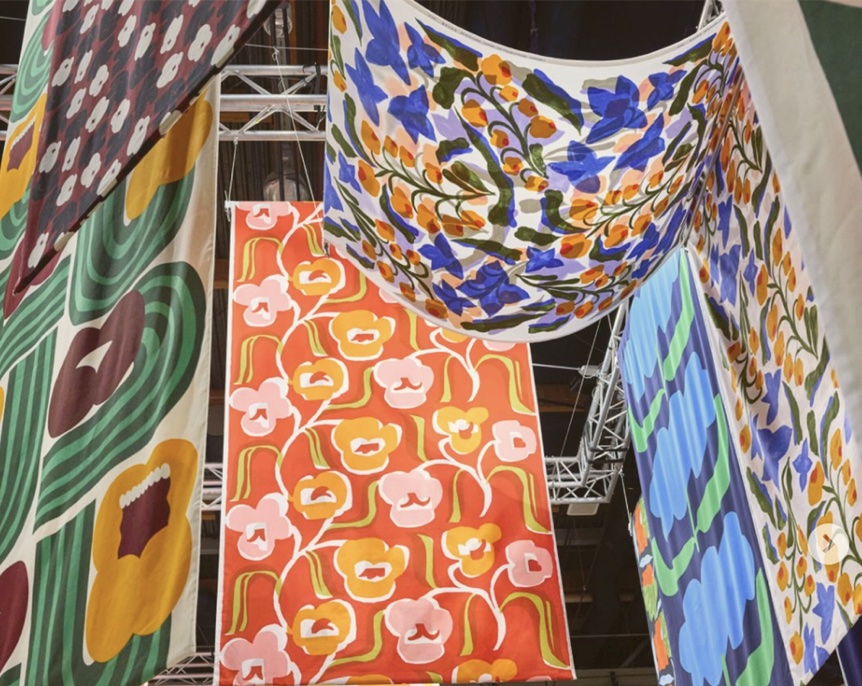
A Playful Touch: Amidst the complex interplay of natural and synthetic aesthetics, there is a growing trend of incorporating an element of playfulness. This approach leverages bold, whimsical designs, unexpected forms, and vibrant colors to spark curiosity and joy. It disrupts the seriousness of traditional design by reintroducing a sense of levity and experimentation. Whether through eccentric shapes, humorous graphics, or an overall sense of fun, this trend reconnects us with the instinctive human desire for creativity and spontaneity.
Crafted Irregularity: This is a direct celebration of the human hand. In an age of digital perfection, the visible slubs, unique dye patterns, and slight asymmetries of handmade textiles become markers of luxury and authenticity. Aliki Van der Kruijs “Made by Rain,” where textiles are designed by exposing them to weather, is a prime example of embracing unpredictability as a creative force.
The Uncanny Valley: This trend deliberately plays with the boundary between the familiar and the strange. AI can generate ornamental forms that are recognizable yet subtly “off,” creating intriguing objects that challenge our perceptions of what is machine-made versus human-made. It's a space for provocation and aesthetic disruption.
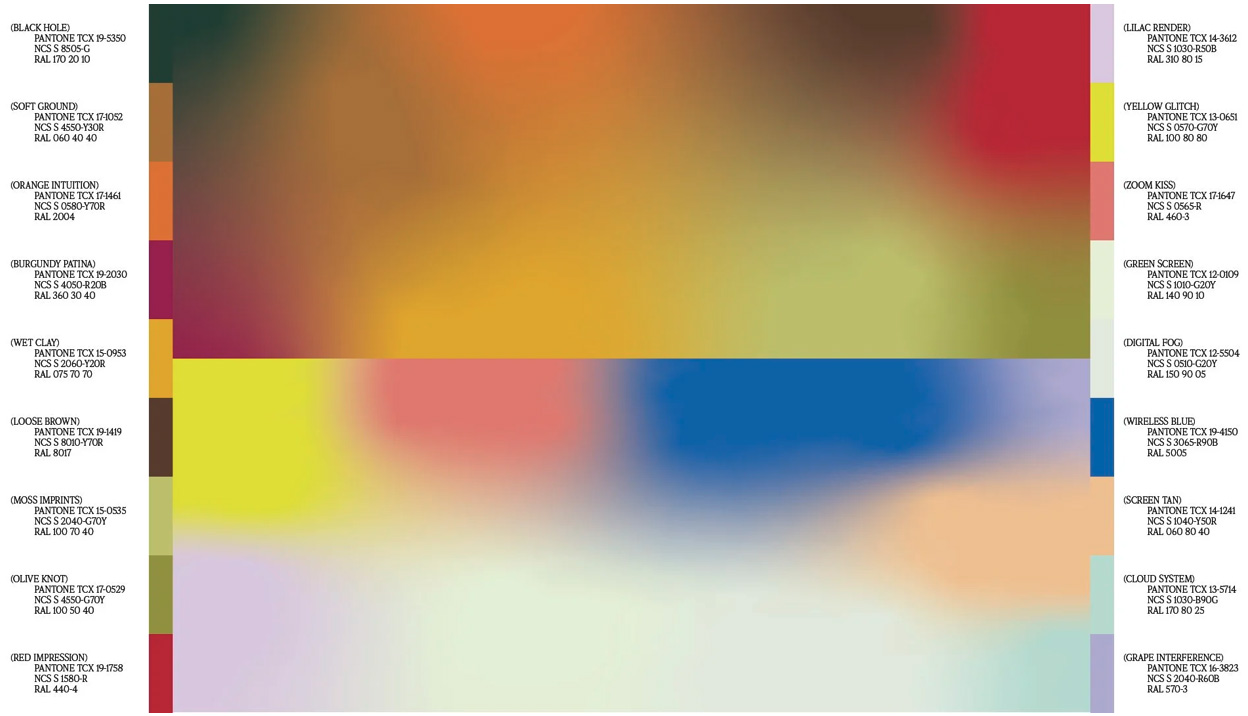
A Polarized Color Palette
The color story for this new era reflects the tension between the digital and the physical. Earthy, grounding tones provide a stable foundation, but they are punctuated by sharp, synthetic, “glitchy” hues. This juxtaposition creates a dynamic and unexpected visual language, where natural and artificial colors empower one another.
The Human-Centric Future: Practical Insights for the Techno-Craftisan
So, how do we prepare for this future? The path forward requires a blend of strategic adaptation and a staunch defense of our creative values.
First, we must embrace the role of the techno-craftisan. This means actively experimenting with AI as a tool for ideation, pattern generation, and process optimization. For example, AI can rapidly generate hundreds of initial concepts for a project, as seen in the Bjerke Ingels installation at the Venice Biennale, but the final curation, refinement, and emotional touch must remain human. It’s about using AI to do the heavy lifting so that we can focus on the higher-level creative decisions.
Second, we must champion perfect imperfection. The more prevalent AI-generated perfection becomes, the more valuable human-made irregularities will be. We should lean into techniques that highlight the maker’s hand and tell a story through the material itself. This is where our true competitive advantage lies.
Finally, and most critically, we must advocate for our value. The rise of AI necessitates robust regulation to protect the rights of creators. Without clear guardrails established by governments and industry bodies, we risk the mass commoditization of creative work. We cannot allow AI to be trained on our designs without permission or compensation. Protecting our intellectual property is not just a legal issue; it is fundamental to preserving the economic viability of our entire profession.
The future of design is not a battle of human versus machine. It is a dialog. By embracing AI as a partner, celebrating the unique qualities of human creativity, and demanding the protections we deserve, we can ensure that the next era of design is not one of obsolescence, but one of unprecedented innovation and profound authenticity. The machine can generate an image, but only a human can create meaning.