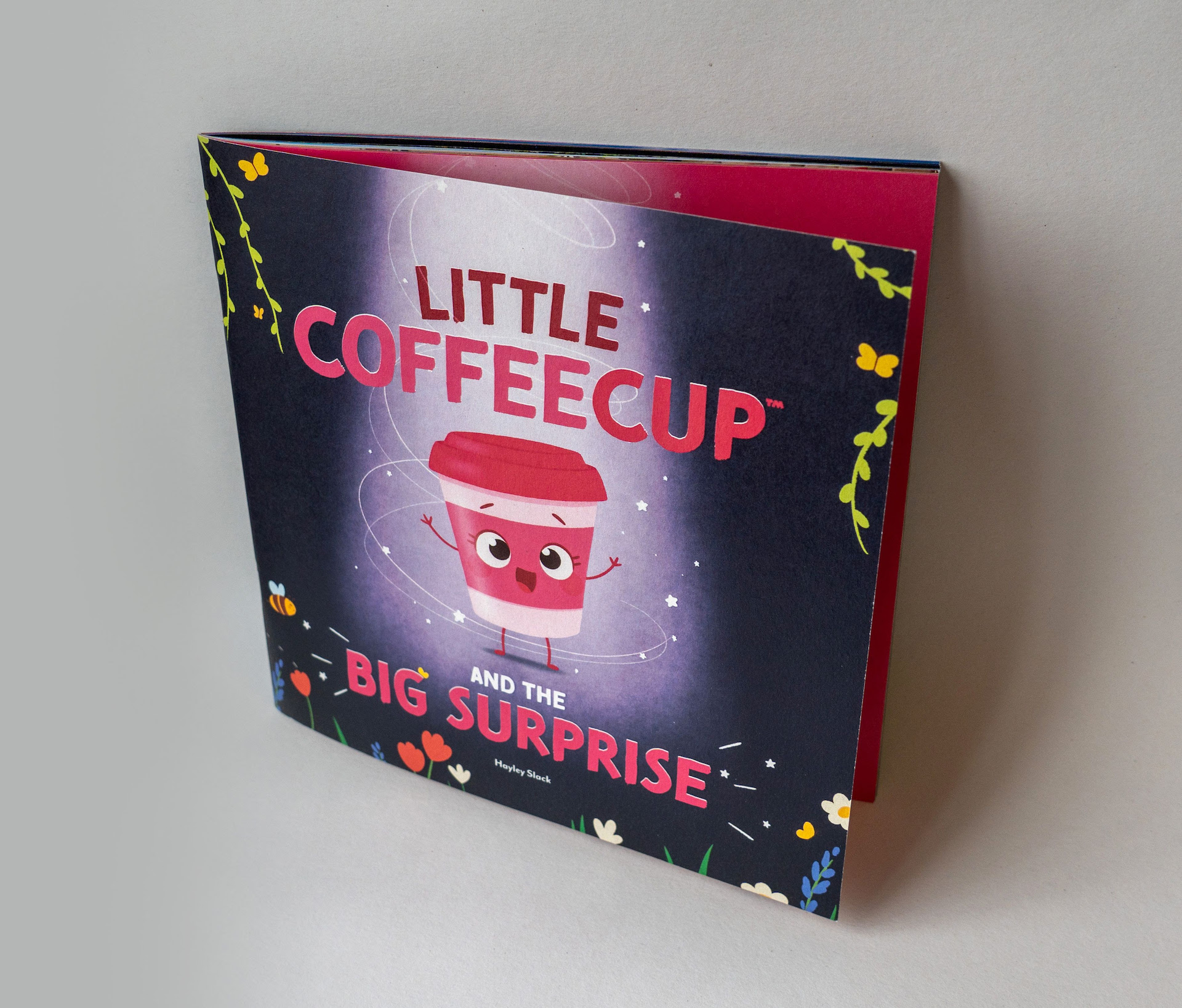
Did you hear that? It was the sound of the impact of the world’s first published children's book printed on paper made from recycled coffee cups. It’s a great sustainability story, and one that reinforces the value of print as both a sustainable product in itself and one that can contribute to the world’s circular economy.
But there is an even larger story that needs to be told, as well.
Little Coffee Cup and the Big Surprise
First, here’s the quick rundown on the book: Little Coffee Cup and the Big Surprise is the debut title from author and sustainability advocate Hayley Slack. Each 36-page book is made from 13 recycled coffee cups collected from across the United Kingdom.
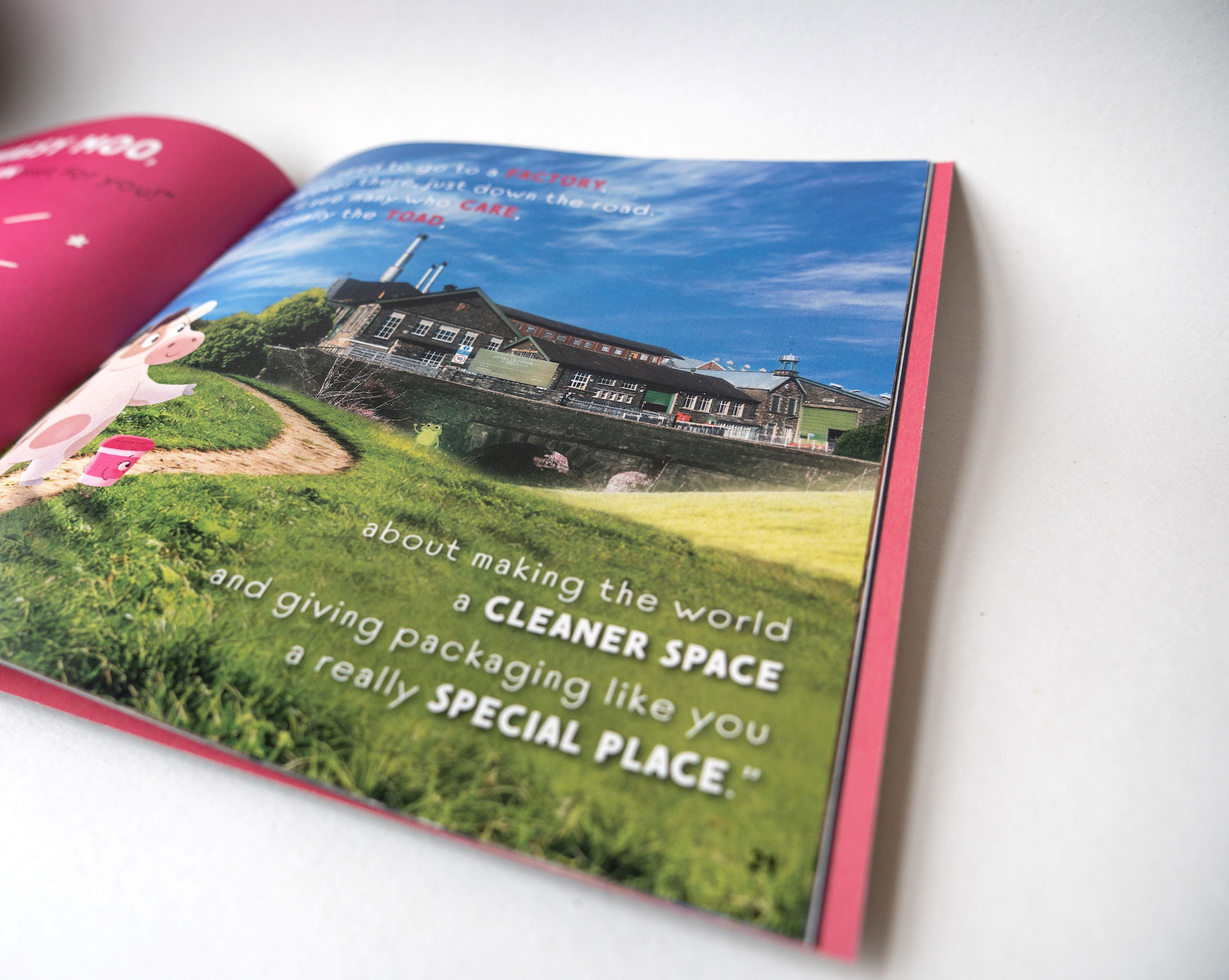
The story tracks the adventures of Little Coffee Cup, who leaves the comfort of a café to discover the big, wide world. At the end of his adventures, Little Coffee Cup ends up at the very same recycling plant, Burneside Mill in Cumbria, where the paper for the book about him is made. While the story is playful and fun, its ultimate goal is to spark conversations about waste, reuse, and the circular economy.
“As a mum of two and someone who works in the waste industry, I wanted to create something meaningful that would make kids and parents think differently about what we throw away,” says Slack, as quoted in the press release to promote the book. “Books have the power to shape how children see the world, so why not use them to also show how the world can be?”
The Larger Story Within a Story
Little Coffee Cup and the Big Surprise is, in fact, a great story, but there is a bigger story here, too. That is the process behind it.
Traditionally, coffee cups are considered non-recyclable because of the thin layer of plastic used in these cups to make them waterproof. This layer is very difficult to separate from the paper fibers themselves, making takeout coffee cups nonrecyclable in the traditional recycling stream.
But this doesn’t mean they aren’t recyclable at all. It just takes a dedicated recycling process. Enter CupCycling®.
Widespread recycling of paper cups has long been seen as theoretically possible, but with so many challenges involved, it was impractical: contamination risks from leftover drinks and food debris, the complexities of separating the plastic barrier linings and sorting different materials, and the economics of working with items that are relatively bulky but lightweight compared to other paper materials, among others.
“All of these created a chicken-and-egg problem for paper cup recycling,” notes the release on Little Cup and the Big Surprise. “Without a reliable supply of recycled material, the end markets for that material can’t develop. But without those end markets, waste management companies have no incentive to invest in paper cup recycling, which means there is no supply of recycled material.”
Challenge Becomes a Mission
But James Cropper, who runs the Burneside Mill, took on the challenge as a mission. Working with retailers to offer separate collection bins that separate takeout beverage cups from other recycling, CupCycling® has diverted 58 million coffee cups from the landfill in the past year alone. The mill ultimately has a capacity of 700 million cups.
Here’s how it works:
- UK retailers & major brands such as Costa, McDonald’s, Pret, Greggs, Starbucks, and Shell are part of the UK's National Cup Recycling Scheme, led by Valpak. Participating stores often provide in-store bins specifically for hot and cold cups, even if they’re from other brands.
- On-the-go bins are installed in areas with heavy foot traffic (travel hubs, campuses, shopping centers) often through grants like Hubbub’s Cup Fund. Bins are clearly labeled and placed alongside regular bins to reduce contamination.
- Waste management firms offer dedicated collection services, providing businesses, cafés, offices, universities, and public venues with specially designated cups-only drop locations. Once full, these bins are gathered separately from general waste.
- The collected cups are baled close to the collection point and aggregated for efficient bulk delivery.
- Cups are transported in bales to specialized mills (such as the one operated by James Cropper), where they are processed and turned into high-quality fiber used to produce everything from children’s books to luxury packaging.
This works thanks to retailer cooperation, dedicated infrastructure (bins and signage), waste management partners who bale and transport the cups, and schemes that make it economically viable. Without such infrastructure and awareness, however, most cups still end up in general waste. However, where systems are in place, notable collections and transformations into new paper products are occurring.
Can We Do It Here?
Unfortunately, we do not yet have the equivalent of CupCycling® here in the United States, although early trials are in process.
Some specialized recycling companies in the U.S. do accept coffee cups, but only under strict conditions:
- Recology (West Coast): Accepts coffee cups in certain cities (e.g., San Francisco) through special sorting.
- Sustana Fiber (Wisconsin): Can process paperboard from used cups, separating plastic lining, but only if collected and shipped properly.
- Northstar Recycling: Works with large food and retail clients to recycle waste streams, including packaging like cups, on a business-to-business scale, not for consumers.
These programs aren’t accessible to the general public and require commercial volumes or controlled collection. But maybe—just maybe—Little Coffee Cup could create some momentum and awareness to change that. The Burneside Mill is already recycling the fibers from 58 million coffee cups. What’s 642 million more to hit capacity?
Editor’s note: You can preorder the book here, as well as sign up to receive early access to educational resources and bonus content.