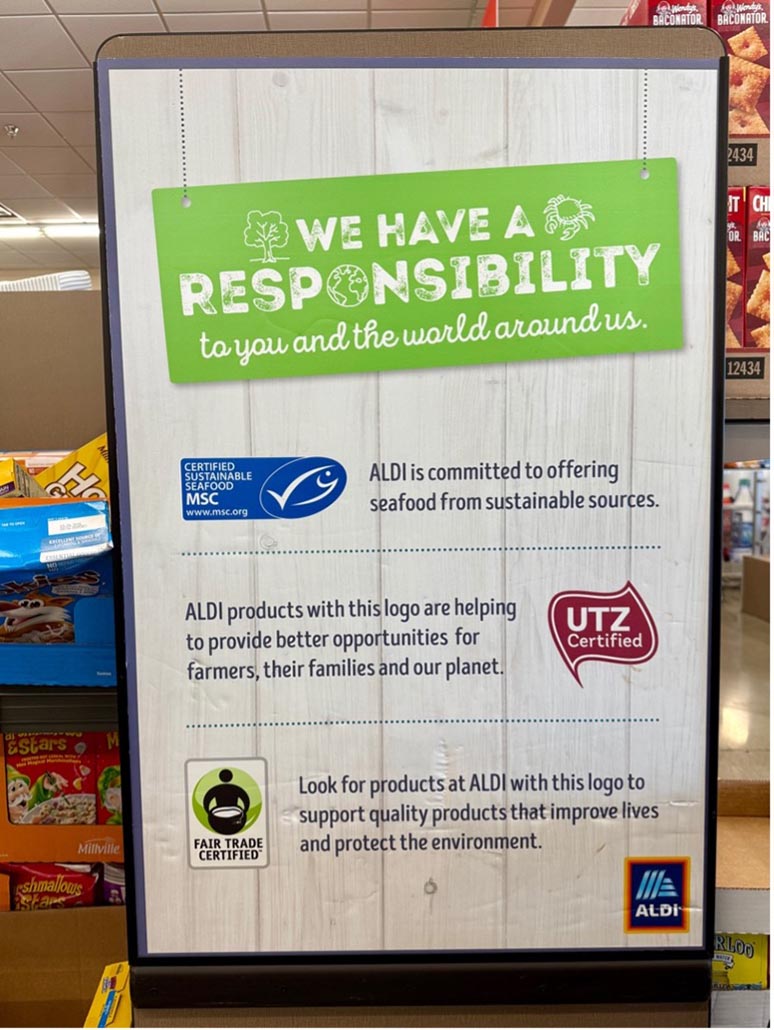
At eye level at the Aldi checkout is a freestanding sign touting its commitments to sustainability—“We have a responsibility to you and the world around us.”
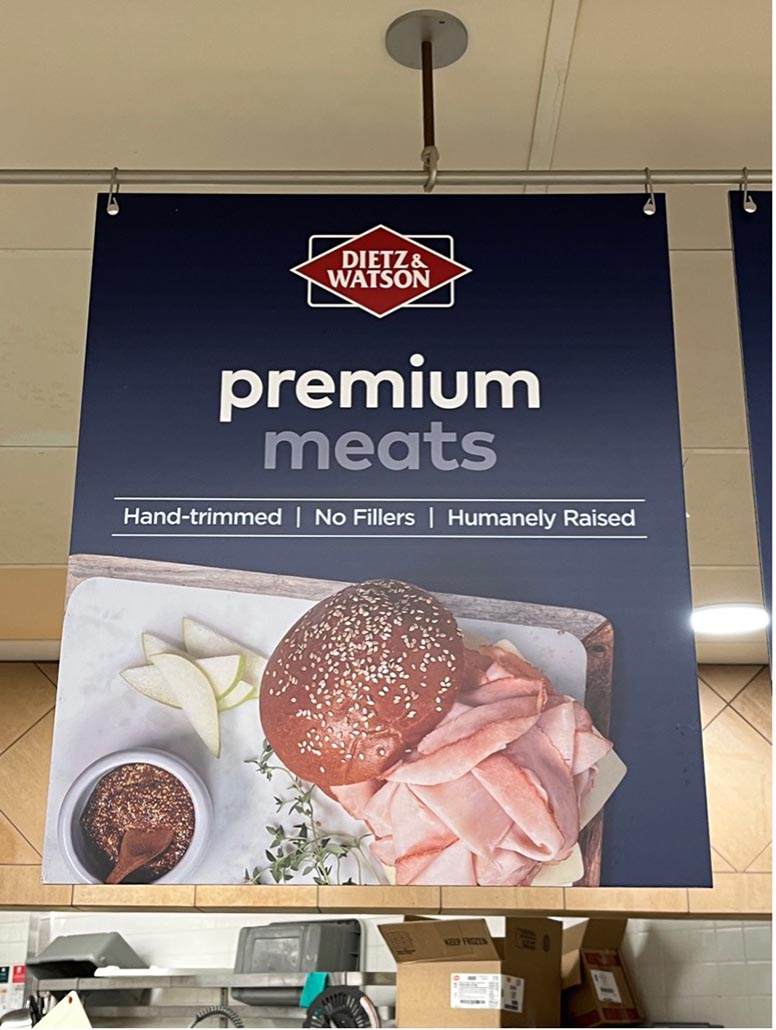
Swaying over the deli counter at a local grocery store is a sign from Dietz & Watson: Premium Meats: Hand Trimmed • No Fillers • Humanely Raised.
In a quick-grab refrigerator at a Walmart checkout is a bottle of Coke whose wrapper announces: “I’m a 100% recycled bottle.”
Everywhere you look these days, companies are touting their environmental commitments in-store where customers are doing their shopping. Such environmental graphics (and packaging) could mean the difference between customers choosing one brand over another, or it could simply make customers feel that much better about a choice they were going to make anyway. Whatever the goal, the impact can be powerful.
Environmental Signage Influences Behavior
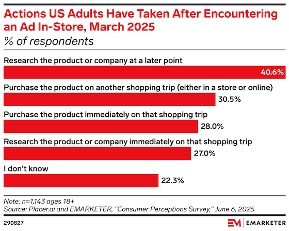
According to new data from Placer.ai and EMarketer, environmental signage does more than influence perception. It causes people to take action. Even if it’s to research the product later, these signs and other “tells” do, in fact, influence shopper behavior.
Placer.ai/EMarketer found that environmental signage results in the following behavior changes among in-store customers:
- 0% research the product or company while on that shopping trip.
- 6% of people research the product or company at a later point.
- 0% purchase the product immediately.
- 5% purchase the product on another shopping trip.
With consumers increasingly concerned about environmental and social issues, and with those concerns impacting their shopping choices, the growth in mission-focused in-store graphics just make sense. Grab the attention of your shoppers at the moment of decision using the very information that’s important to them.
That’s why now may be an opportunity to talk to your customers about updating their signage, too. Are there causes your customers’ customers are particularly passionate about? Sustainability and environmental impact? Social and ethical justice? “Made in the USA”? If so, and if your customers’ brand(s) or product(s) align with those causes, it might be time for an in-store signage update.