As the number of printing and deposition applications that inkjet technology tackles continues to increase the ability to pursue them to successful outcome is highly dependent on the head technology. As a result, printhead manufacturing has continued to evolve to enable what is needed. In this second article in our 2023 series on “industrial inkjet integration” we explore some of the recent developments that either are powering printers of the present or hopefully will be powering the additive manufacturing machines of the future.
The Printhead Dichotomy
In the commercial print space that evolution occurs in terms of speed - or throughput - of the printing system, and the Si-MEMS manufacturing we have described in a previous article has largely become the technology of choice. In general, though, the miniaturization of the printhead components tends to result in a lower viscosity specification and this lends itself to those substrates that are porous that can work well with aqueous inks since the water is a thin carrier/diluent. However, when we look at more functional applications then there is still a need to use hybrid approaches to improve ink performance, including both analog coatings materials (primers and coatings) and combined ink chemistries.
For 3D printing and other mechanically functional additive uses of inkjet it remains advantageous to work at higher viscosity, and this is where the traditional “bulk” PZT heads are continuing to contribute. Often combined with Si-MEMS elements, like the Dimatix SQ head with which the author started his inkjet career, which used a silicon faceplate on a S-class head module made with big pieces of piezoelectric.
Thus we see a bifurcation of the development in printheads that follows the diverging needs of the fluids they are asked to deliver. In this article we take a quick insight into new and emerging printheads on both side of the divide.
Si-MEMS Heads Technology
The Fuji Dimatix Samba printhead has become somewhat of the go-to piezo printhead in industrial printing systems aiming to compete with the 500ft/min+ speeds made possible by Kodak’s Ultrastream™ and HP TIJ™ technologies. What all these inkjet platforms have in common is the fact they are made from silicon. As a result of the success demonstrated in the market, more and more head manufacturers have developed head along similar lines, or like Epson with their PrecisionCore™ technology, decided to take their proven technology and offer it to the OEM market.
[caption id="attachment_6350" align="aligncenter" width="598"]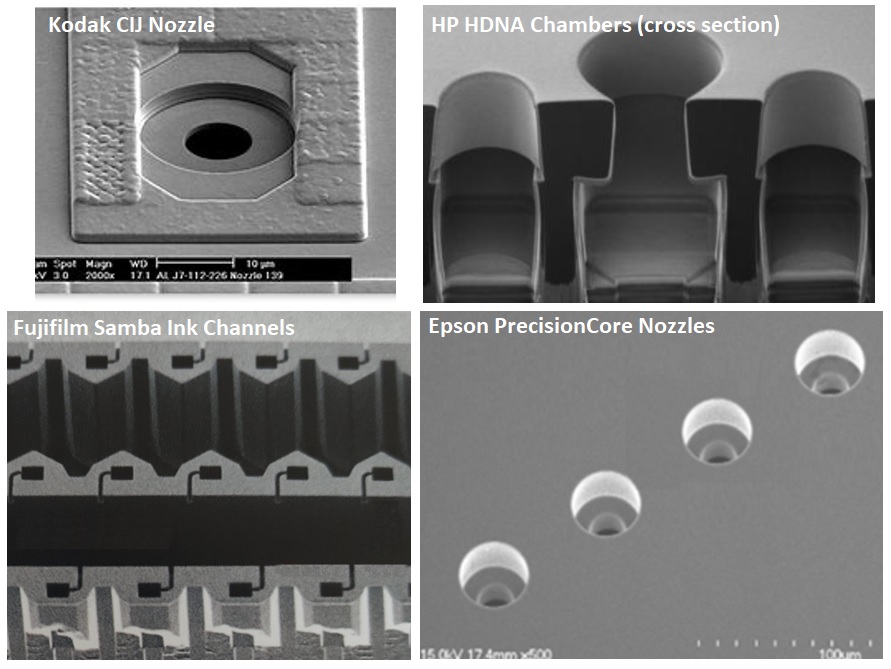 Figure 1: Images of Si-MEMS structure from different printhead vendors[/caption]
What accelerates the use of these new technologies is the supporting hardware to implement them, including the electronics boards and ink supply. HP technology is largely vertically integrated, but through HP SPTS they do offer modules that enable integrators to implement TIJ. Memjet has a similar approach. Fujifilm also achieve a similar objective by equipping OEMs with JPC components.
The most recent piezo head launches using Si-MEMS were the Epson D3000-A1R and the Ricoh TH6310F, both of which support recirculation past the nozzles and are therefore ideally suited to the afore-mentioned water-based use. As in the case of Samba itself, back in 2013, the actual implementation into third-party machines lags behind these commercial announcements. The ability to drive them with data is key part of ramping this commercialization and both Meteor and Global inkjet Systems have announced support for one or other of thee heads.
However, Epson have also targeted more industrial uses with a recent announcement of their solvent-compatible versions of the S800-S1 and i3200(8)-S1HD, which don’t offer nozzle recirculation but instead increase the compatibility with more aggressive solvent often used to deliver more diverse chemistries.
Non-piezo offerings continue to evolve also, with Kodak and HP continuing to invest in print head developments, although the independent industrial uses are much more modest than the big, fast printers they sell under their own brands.
Bulk Piezo & Other Heads
Beyond the high-speed, high-resolution demands of production inkjet, inkjet labels and packaging resides the incredibly diverse world of functional printing and the print head development for this market has also accelerated in recent years. For example, following the penetration of their RC1536 series into applications like ceramics, Seiko have launched a version with a metal faceplate.
Meanwhile, UK-based manufacturer, Xaar, have continued to push their high viscosity capability in their Nitrox platform and have extended their chemistry capability into water-based with the launch of their “Aquinox” printhead. With this offering they are looking to enable applications where higher loading of materials, such as pigments and resins, relative to water content can be used to reduce the drying requirement and thus minimize energy consumption and increase sustainability of inkjet printing. With a nozzle addressability of 720dpi, the head is in a similar form-factor to its proven 2001 platform as used in labels and ceramic tiles. As for Seiko, the latter application presents a particular opportunity since ceramic glaze formulations are typically water-based.
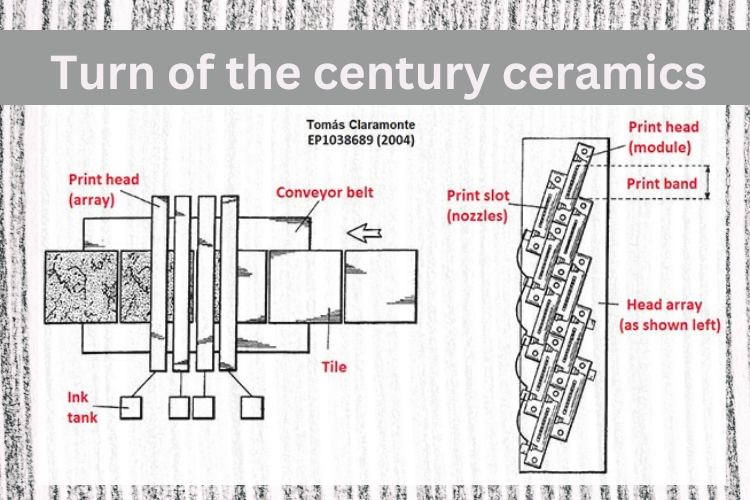
[caption id="attachment_6351" align="aligncenter" width="572"]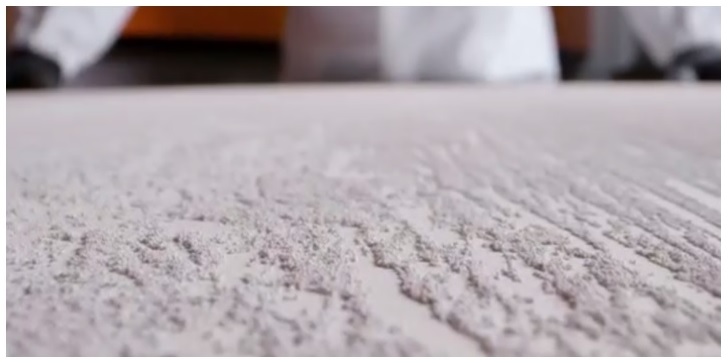 Figure 2: Manufacturing of ceramic tiles continues to demand more of printhead suppliers[/caption]
What is even more exciting is the completely new print head design being developed for deposition applications. The two most interesting from a technology perspective are hailing from European start-ups Scrona and Quantica.
There has been commercial single-nozzle elctrohydrodymanic (EHD) systems in the market for some time, notably from SJT corporation, and they offer the most amazing printing resolution for materials like conductive nanosilvers. Scrona is developing a multi-nozzle ejection device based on the EHD principle which is manufactured with the same Si-MEMS techniques being used for thermal and piezo device mentioned above.
As with any printhead technology the ability to drive the head, and to prove its value is crucial in the early stages of development. Scrona have partnered with reputed supplier of materials deposition printers, Notion Microsystems to offer such a platform in the form of the n.jet EHD. Scrona have recently announced installation of such a test machine at Nano Dimension, parent company of the afore-mentioned Global Inkjet Systems and leading developer of additively manufactured electronics (AME). The potential to EHD is not only in the extremely small features, but also in terms of the high viscosity profile that theoretically possible since the ejection does not involve forcing the ink through a nozzle. Viscosities up to 10,000x that of water (10,000cP) are quoted as possible, which is around that of honey.
Also developed specifically for additive manufacturing (a.k.a. 3D printing) the Quantica head occupies a middle-ground both in terms of viscosity but also in terms of the number of nozzles. With capability of hundreds of centipoise (100x water) and a droplet size closer to standard piezo drop-on-demand heads, the design does use a nozzle and offers recirculation, which means it can print with trickier chemistries. The main difference is in the actuator design. To overcome the viscosity limits introduced by forming pressure waves in the nozzle chamber, the NovoJet head uses a large piece of piezo ceramic to drive a big plunger that literally pushes the ink through the nozzle. This makes it a little more like a valve jet type design.
[caption id="attachment_6352" align="aligncenter" width="706"]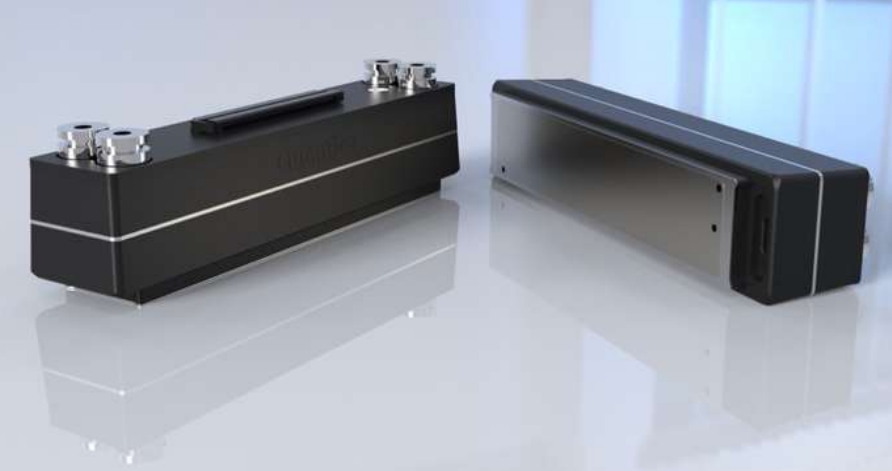 Figure 3: The Quantica NovoJet print head aims to increase materials capability for multi-material 3D print.[/caption]
Hopefully we have given some trademark Inkjet Insight into how print heads are evolving to meet the needs of inkjet integrators looking to satisfy a burgeoning field of applications. Next time we shall re-visit our original insight topic of the role of ink formulation. In the meantime, your humble Insight author will be talking more about industrial printheads and their design and manufacture at the upcoming Inkjet Academy which runs as part of the IMI Inkjet Conference event in Florida in May. If this article has whetted your appetite, then come along to get some face-to-face insights!