- Printing presses, software suites, and specific workflow solutions are tools that are designed to do particular jobs. The people and partnerships that surround the tools are the resources.
- An often-overlooked resource is readily available information that answers common questions or provides valuable tips to educate and guide customers through the print process.
- By embracing data analytics tools, you can eliminate guesswork and become better positioned to make more informed business decisions.
By Karen Kimerer
Introduction
The print communication industry continues to transform by adapting to the digital age while preserving print’s original intent. Today’s print service providers (PSPs) find themselves navigating an evolving landscape that demands a blend of traditional craftsmanship and advanced technologies. To remain competitive and keep up with the pace of change, it's essential to have the right resources working for you. The ramifications of not having them can be significant and far-reaching for even the most well-tooled organizations. With the right resources, PSPs can continue to improve business operations and strengthen their competitive edge.
Now is a great time to take inventory of your available resources and identify what's needed to help you push boundaries, embrace innovation, and refine how you respond to the communication demands of your prospects and customers. This article explores a handful of the resources that will likely be most pressing for print communication providers as we move into the future.
Tools vs. Resources
Having the right tools for the right job can make a world of difference, yet having all the tools that you can dream of does not automatically lead to business success. Imagine you are building a house. A hammer is a tool that is specifically designed to drive nails; it performs a specific function and is essential for the overall task of building. Meanwhile, the wood used to build the house is a resource. Rather than being explicitly designed for this particular task, it can be used for various purposes. The value of a piece of wood lies in its potential to be used in multiple ways. Similarly, printing presses, software suites, and specific workflow solutions are tools that are designed to do particular jobs. The people and partnerships that surround the tools are the resources.
Like customer data, partnerships and credit worthiness are resources. Your talented team is also a resource. The point is that the value of your technological investments and surrounding tools lies in how you use your resources. Understanding the difference between tools and resources is crucial for planning and decision-making. PSPs that know best how to access and leverage their resources are positioned to increase profit and strengthen their competitive advantage. As a result, your resources just might be the silver bullet you've been searching for.
Print Communication Resources
Now that you understand the difference between tools and resources, let’s have a look at some of the resources that can help you along in your journey toward growth and profitability.
Customer-Based Resources
Understanding your customers' evolving needs and expectations is essential for tailoring the right products, services, and experiences. What resources can you employ to make it easier to understand your customers?
To start with, effective customer feedback mechanisms are essential. Regular surveys, voice-of-the-customer interviews, and opportunities to provide reviews online or through social media all help gather customer insights. Each of these resources can adapt to changes in the market and provide information that you can use to shape your business.
An often-overlooked resource that most customers appreciate is readily available information that answers common questions or provides valuable tips to educate and guide them through the print process. Since many of today’s buyers of print have not been specifically trained to be print buyers, this has never been more important. The key is to ensure that the content is easy to locate and refreshed regularly.
Sustainability and Education
Sustainability in a company involves a holistic approach that encompasses various resources. Efforts to reduce your environmental impact and promote social responsibility are important to ensuring long-term economic success. PSPs that prioritize sustainability benefit from reduced operational costs and improved brand reputation. To support these important initiatives, PSPs must make it easy for their entire organization to understand the company's priorities and adopt eco-conscious practices. Consider conducting a sustainability audit on your business and seek opportunities to demonstrate your commitment to sustainability…but don’t stop there! Provide a handbook with talk tracks that each of your employees can access to describe and share your alignment with this important topic.
On that note, it goes without saying that your employees are your most important resource. We all know how difficult it can be to find great talent. Make it a priority to train highly skilled employees, equip them with the necessary knowledge to operate new technologies, and adapt to changing market trends that include delivering an exceptional customer experience. Well-trained employees are an asset that you can't put a price tag on. The takeaway here is to be sure that every employee has an actionable professional development plan. Foster a culture of continuous learning to ensure a competent and agile workforce.
The Importance of Partnerships
Strategic partnerships open doors to a collaborative market approach. Partnerships provide access to new expertise, resources, and opportunities. PSPs can find great partners in their technology providers. Many of these partners will have resources that can help PSPs expand their reach and develop innovative programs that address their customers' needs. Make it a practice to sit down with your solution providers to learn where else they can help outside the technologies or software they provide. Industry associations are another great place to find strategic partners—the events that they host are designed to foster valuable connections and collaboration opportunities.
Informal partnerships are also a great resource. In fact, your loyal customers are likely one of the best-kept secrets when it comes to improving your sales and marketing efforts. Effective marketing and sales strategies are crucial for attracting new customers. Implement loyalty programs that encourage your customers to send new prospects your way. Tools like customer relationship management (CRM) systems are the backbone of nurturing customer engagement. Information about contacts at a specific account and dates the reveal the last point of contact provides the knowledge you need to keep customer communications relevant and meaningful.
Leveraging Data-Driven Decisions
Data from various sources (e.g., customer behavior from your CRM, time and material costs inside your production process) can also play a critical role in understanding where you can optimize operations. When you embrace data analytics tools, you eliminate guesswork and are therefore positioned to make more informed business decisions.
How often have you been on the fence trying to decide if an investment will improve operations, only to get stuck and fall back on the status quo? Imagine knowing your business so well that you can identify everything from where and how your customers make inquiries to when orders get delivered. The visibility you gain from this data indicates exactly how you and your customers can benefit from more efficient practices. Data then becomes a resource that you can't operate without.
Making the Most of Artificial Intelligence
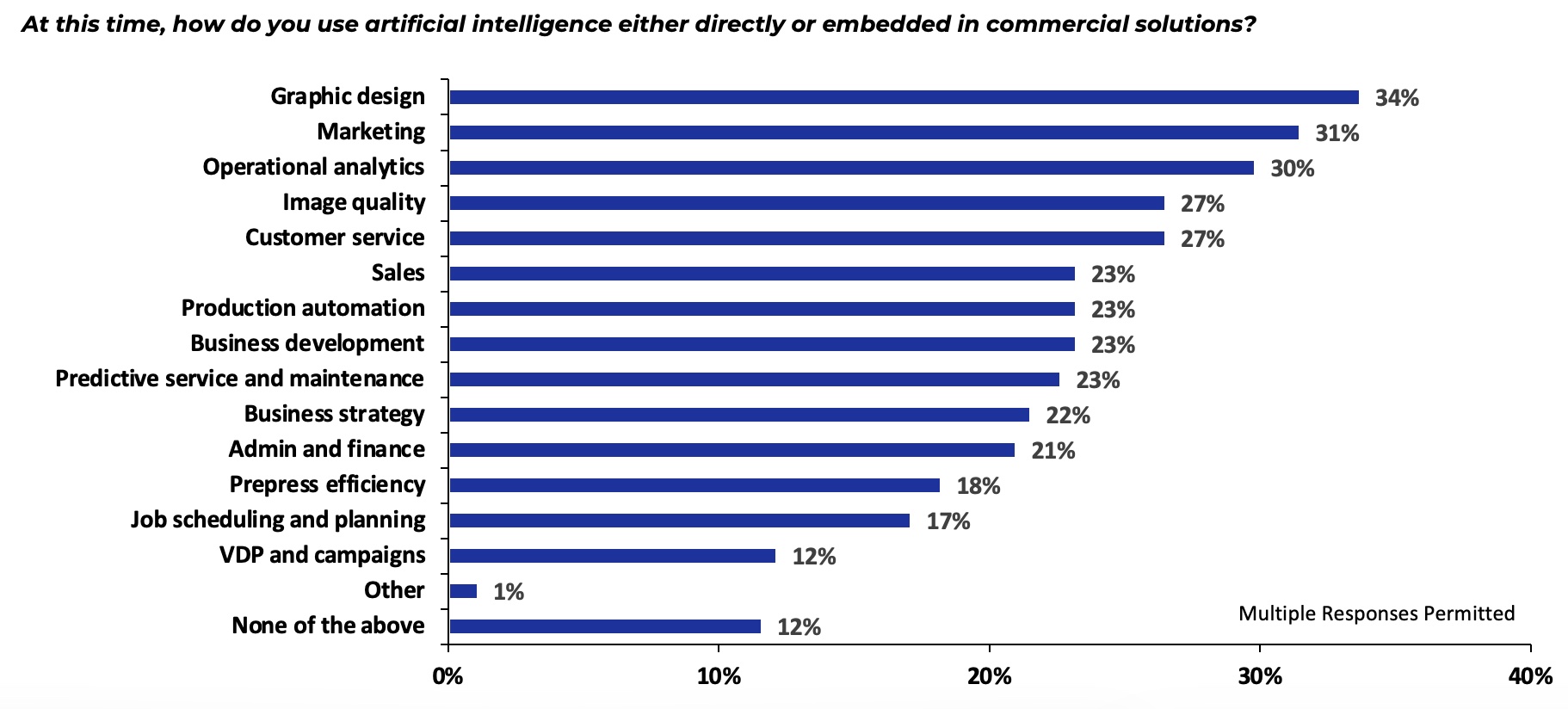
No discussion about embracing innovation for future growth would be complete without a mention of artificial intelligence (AI), which has taken the world by storm over the past couple of years. AI can enhance printed communications in a wide variety of ways. Here are just a few:
- Better personalization: AI can be used to create targeted messaging in direct mail, brochures, flyers, pamphlets, and many other types of communications. Text and images can be customized based on known customer data.
- Cost effectiveness: AI can be used to accurately predict printing needs based on demand to reduce waste and lower costs. Meanwhile, AI-driven printing solutions can optimize ink consumption while also suggesting eco-friendly options.
- Content generation: AI can be used to help create higher quality printed marketing materials with automated writing. It can also ensure that the content itself is accurate and well-structured.
- Data-driven insight: AI can test different versions of printed communications to identify the most effective designs and messages. It can also be used to analyze customer behaviors and response rates for better print marketing strategies.
The Bottom Line
PSPs can create a powerful competitive edge when they prioritize resources that deliver maximum value. This is a great way to level the playing field, and it enables even the smallest PSPs to take on the big rivals. Even so, your list of resources surely extends beyond what is mentioned in this article. As you set out to navigate the future in our ever-changing industry, don’t underestimate the power of your existing resources. All the while, take the time to consider what you might be missing. The beauty of focusing on resources as opposed to tools lies in the capacity to deliver results without a hefty price tag.
As part of the Business Development Strategies Consulting Service at Keypoint Intelligence, Karen Kimerer has experienced the many challenges of expanding current market opportunities and securing new business. She has developed a systematic approach to these opportunities, addressing the unique requirements of becoming a leader in our changing industry.