Earlier this month, Walmart announced a “comprehensive rebrand refresh” that is taking the Internet by storm, and not in a good way.
In its announcement, Walmart included a variety of images, including its new logo with custom font and images of a mobile shopping page on a smartphone, reusable shopping bags, shipping boxes, a model wearing a hat, and more. But as the social media world is known for doing, users focused almost entirely on the one thing they could ridicule—the logo—which admittedly looks every bit like a brighter, thicker version of its old one.
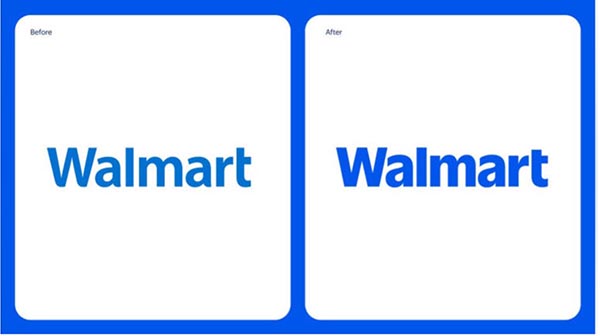
Source: X user @Dexerto
“Are you kidding?” one X user writes. “Surely this is some kind of joke.” Another adds: “You know there is some marketing company that got paid millions for this and is out there laughing.”
Of course, the reality is that any rebrand goes far beyond tweaking the logo. Walmart is a multinational company with tons of touchpoints, including in-store signage and merchandising, OHO and online advertising, and print and digital advertising. As pointed out by @schwinnabego, whose X channel is dedicated to brand insights, the refresh also includes standards for brand photography, usage of the color palette, standards for applications, details of how text should be scaled, graphics and layout for banners and ads, do’s and don’ts for print ads, and so on.
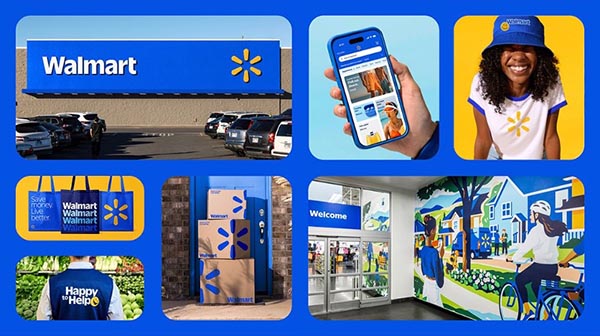
Source: Walmart
“When you have a multinational company with hundreds of touchpoints [and] thousands of employees and agencies, you have to create a unified set of standards so the brand feels cohesive,” he states. “There is much more to this rebrand than this very small tweak.”
But the hullabaloo makes one wonder what Walmart was thinking. Not about the logo, but how it rolled out its rebrand. Any rebrand for a multinational company does cost millions, but if a “nearly identical to the one” logo is where you publicly seem to hang your rebrand hat, it’s not a good look.
Try Better Messaging
Should Walmart have anticipated and tried to pre-empt the outrage with a better rollout message? Possibly. Rather than giving visual (only) examples of what a brand refresh looks like, it could be argued that the messaging could have been clearer.
For example, when it describes the brand refresh, Walmart focused on elements associated with the logo:
- Wordmark
- Iconic Walmart “spark”
- Updating of its blue and yellow to True Blue and Spark Yellow
- Use of True Blue and Spark Yellow in its color palette
Then, after these, it vaguely references “tone.”
What about everything else? The press release refers multiple times to a refreshed brand “identity,” but doesn’t mention any of the other aspects beyond those commonly associated with a logo. The image reflects them, but that requires users to exert the power of deduction, which is far less interesting than controversy.
Eventually, the Internet chatterbox will move on, but it did deflate Walmart’s rollout balloon a bit. Walmart can take it, of course, but it is a bit of a lesson for other companies looking to do a brand refresh. Don’t assume that people will read (or read into or beyond) your press release the same way you do. Spell things out clearly and don’t leave important details (like all of the other aspects of a brand refresh) up to chance.