WhatTheyThink

Premium Commentary & Analysis

B2 Digital Saves the Day for Cut-Sheet Color

Every year, Keypoint Intelligence – InfoTrends publishes its digital printing forecast to identify placements of digital devices, installed base, print volumes, and revenues achieved. This article provides an overview of some recent top-level forecast data and also explores how new developments in a long-established market can create new opportunities while also driving print volumes.

Thursday, August 16, 2018

Every year, Keypoint Intelligence – InfoTrends publishes its digital printing forecast to identify placements of digital devices, installed base, print volumes, and revenues achieved. Although these forecasts are issued on an annual basis, there is always something new to discover within the many facets of the digital print market, which includes humble light production printers all the way up to ultra-high volume rollfed devices.

After the launch of the first Indigo and Xeikon presses, heavy-production color was the eponymous segment of the digital printing market for many years. Only in recent years has the market become more diverse, causing some areas to thrive while other long-established product classes began to decline. Production devices like the Canon imagePRESS 10000VP, the Ricoh Pro C9000 Series, and the Xerox Color 1000i (as well as the new Iridesse device) came in at the lower end of the market, essentially launching what we now call the high-production market. These products greatly expanded the existing placement numbers, but they are now competing against the “classic” A3 based Indigo, iGen, and NexPress devices. Moving forward, we expect to see even more devices introduced at the lower end of the market, and this will likely have a detrimental effect on some long-established products in the segment. Furthermore, a number of A3-based inkjet printers have recently entered the market and more are expected to come. The A3 high- and heavy-production markets would actually be in decline if it were not for the newer A3-based inkjet devices that have recently come into the market or are expected to be released soon.

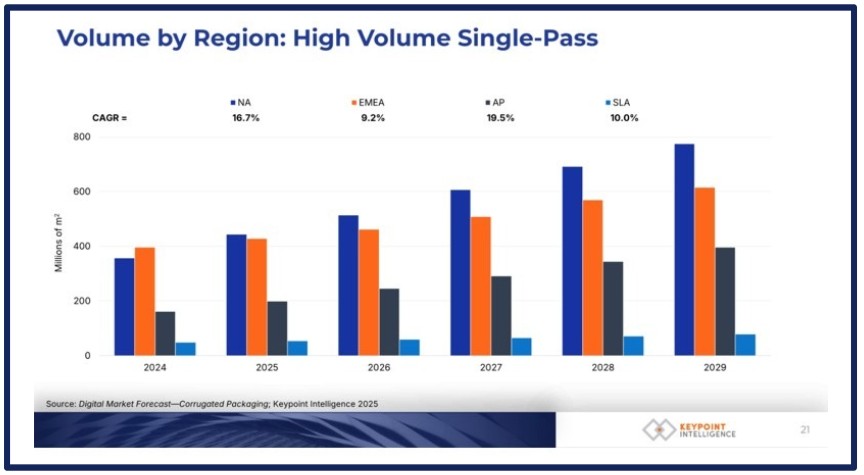
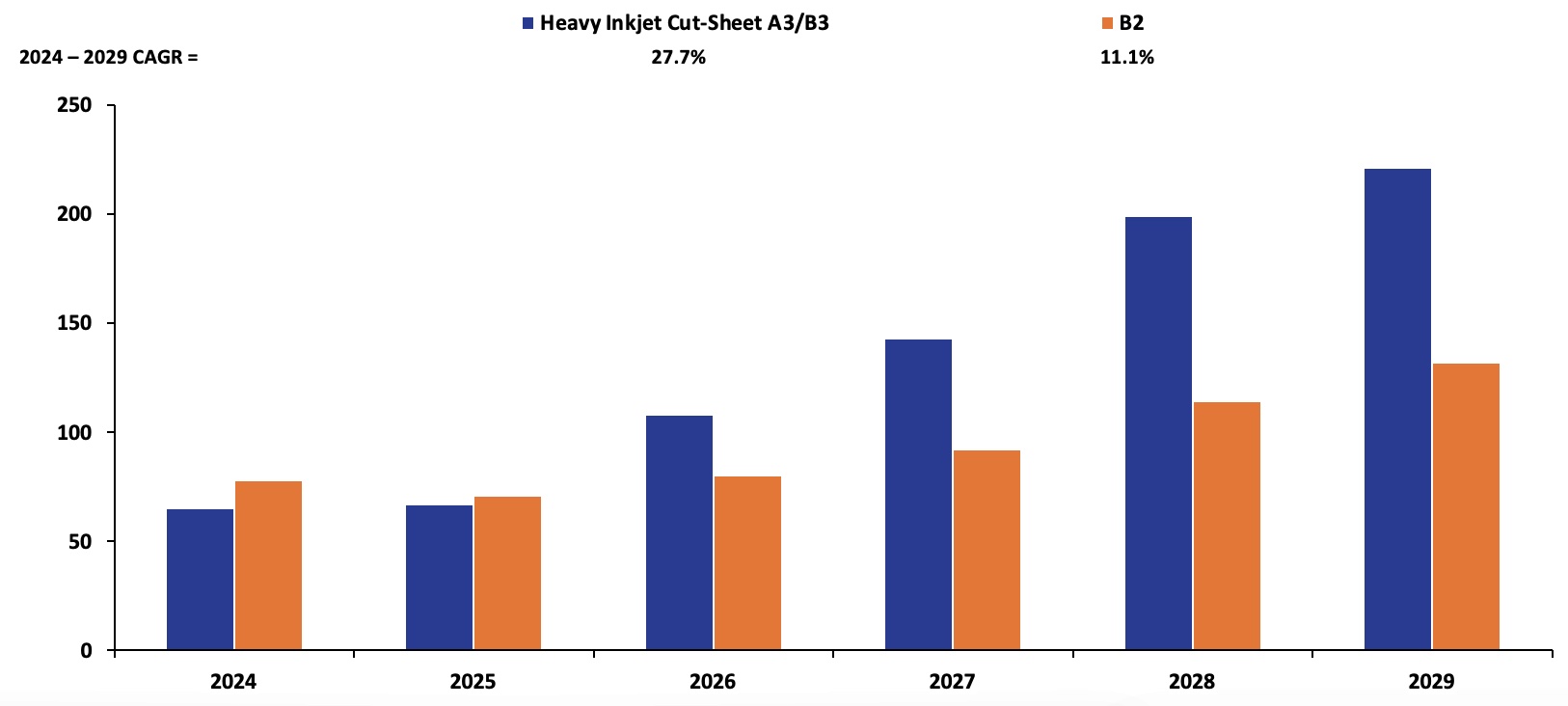
The more established A3-based heavy production presses face even more competition, primarily from B2 digital devices. Faster digital B2 devices first entered the scene during drupa 2008, but the market didn’t really take off right away—a rather disappointing two dozen units were sold in the U.S. on an annual basis for a number of years. Finally, in 2016, placements suddenly tripled to 80 units (even excluding packaging presses) as the devices matured and the market began to capitalize on the new opportunities. 2017 saw some more growth for digital B2 devices, although the rate was slower. This was to be expected after the rapid growth that occurred in 2016. Moving forward, placement growth is expected to continue at a more moderate pace of about 15%. Despite the growth in the B2 segment, A3-based devices are expected to account for the majority of placements for many years to come. These devices will also see some growth, albeit at a slower rate of about 4%.


Continue reading your article
with a WhatTheyThink membership.

WhatTheyThink Annual Membership

Less than $4/week.

Get unlimited access to in-depth commentary and analysis covering the latest trends, emerging technologies, operational strategies, and key events across every segment of today's printing industry.

Stay informed. Stay competitive. Stay ahead.
WhatTheyThink Day Pass

$5 for 24 hours

Unlimited access to all of WhatTheyThink. Get your Day Pass

Already a member?
Sign In

About Keypoint Intelligence

Since 1961, the digital imaging industry has relied on Keypoint Intelligence for independent hands-on testing, lab data, and market research to drive product and sales success. Keypoint Intelligence has been recognized as the industry’s most trusted resource for unbiased information, analysis, and awards. Clients have harnessed this knowledge for strategic decision-making, daily sales enablement, and operational efficiency improvements. Keypoint Intelligence continues to evolve with the industry by expanding its offerings and intimately understanding the transformations occurring in the digital printing and imaging sector.

Recent Articles from Keypoint Intelligence

Production Inkjet Printing: Ever Expanding, Ever Evolving

Production Inkjet Printing: Ever Expanding, Ever Evolving

Production inkjet technology has emerged as the cornerstone of today’s printing revolution. Inkjet has become a versatile and efficient solution for print service providers of all sizes. As we move into the future, critical factors like automation, artificial intelligence, and greater media flexibility promise to further enhance inkjet's capabilities while uncovering new opportunities for growth and innovation. Read More
Rising Print Cost Pressures: What They Mean for You

Rising Print Cost Pressures: What They Mean for You

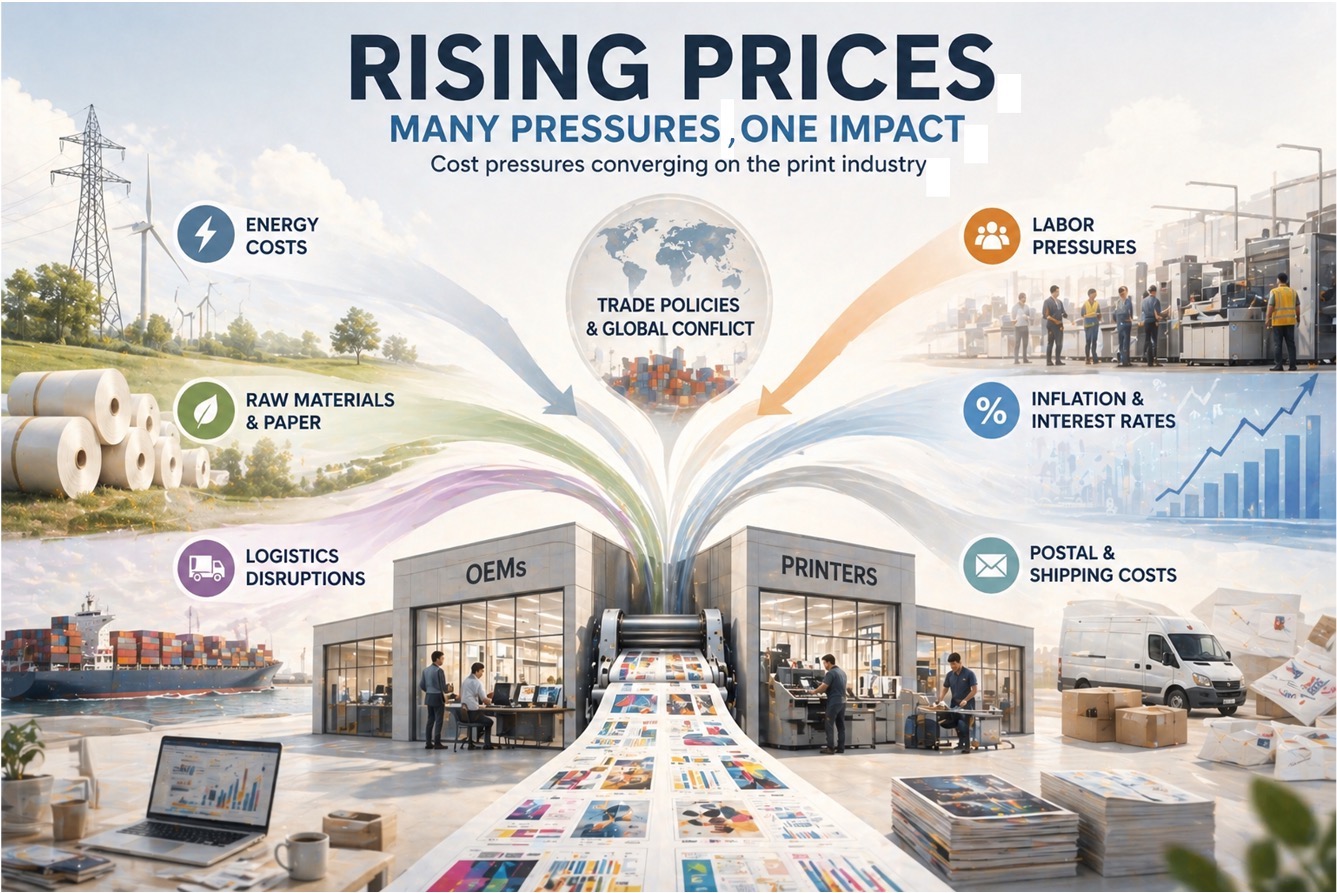
Higher print costs are nothing new, and there’s no sign of them letting up. Factors like energy costs, labor pressures, inflation, logistics disruptions, and postal costs are converging on the printing industry and causing higher prices. Rather than moving in isolation, these factors are combining and intensifying. This article explores some of the key pressures that the printing industry is facing. Read More

10 Things PSPs Should Consider Before Adopting Robotics: What You Need to Know to Begin the Journey

10 Things PSPs Should Consider Before Adopting Robotics: What You Need to Know to Begin the Journey

Labor shortages, production bottlenecks, and growing workflow complexity are forcing print service providers to take a closer look at robotics and automation. In this article, Keypoint Intelligence examines where robotics can deliver the greatest operational impact, the challenges PSPs should prepare for, and the practical steps companies can take to build a more efficient and stable production environment. Read More

The Role of Label Printing in Today’s Landscape

The Role of Label Printing in Today’s Landscape

Label printing doesn’t feature prominently in discussions about the digital transformation or the future of the printed page. Even so, it is one of the most consistently active segments in the broader printing landscape. This article explores the evolving factors that make label printing worth a closer look. Read More

Fostering Connections with Improved Personalization

Fostering Connections with Improved Personalization

Personalized print is a tangible form of communication that can bridge the gap between a customer’s desire to be recognized and the often impersonal nature of digital-only content. This article explores the psychology of personalized print and why it’s such a powerful way for brands to connect with their audience. Read More