Premium Commentary & Analysis
In the first part of this series we looked at the historical departure from delivering color images that were accurate to providing the more vivid colors automatically through the modification of film dies to provide additional saturation.
Thursday, September 11, 2003
Continue reading your article
with a WhatTheyThink membership.
Less than $4/week.
Get unlimited access to in-depth commentary and analysis covering the latest trends, emerging technologies, operational strategies, and key events across every segment of today's printing industry.
Stay informed. Stay competitive. Stay ahead.WhatTheyThink is the global printing industry's go-to information source with both print and digital offerings, including WhatTheyThink.com, WhatTheyThink Email Newsletters, and the WhatTheyThink magazine. Our mission is to inform, educate, and inspire the industry. We provide cogent news and analysis about trends, technologies, operations, and events in all the markets that comprise today's printing and sign industries including commercial, in-plant, mailing, finishing, sign, display, textile, industrial, finishing, labels, packaging, marketing technology, software and workflow.

10 Things PSPs Should Consider Before Adopting Robotics: What You Need to Know to Begin the Journey
Why Highly Targeted Communications Make Digital Print Essential to Modern Marketing
Wide Format in 2026: How Technology Is Reshaping Competitive Advantage

No third-party integrations. No disconnected systems. DynamicsPrint® extends Microsoft Dynamics 365 F&SCM with print-specific ERP designed to scale globally with your business. Read More
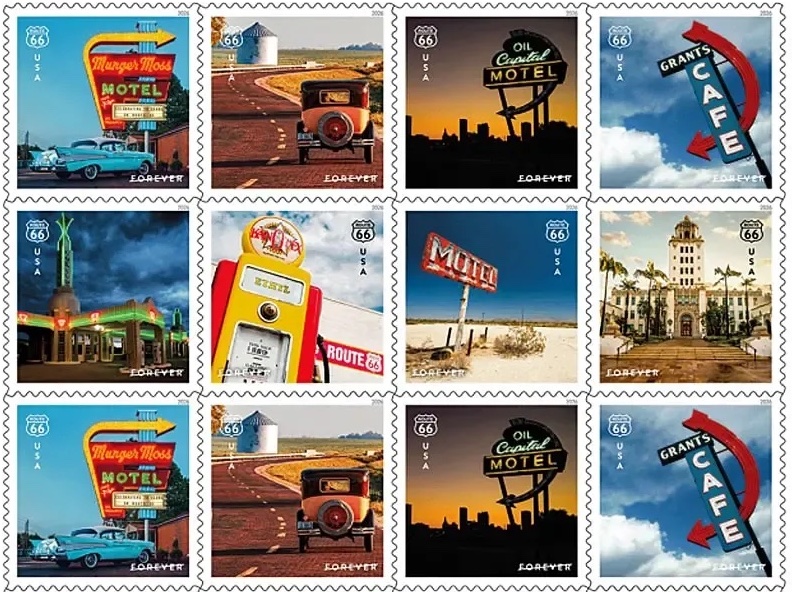
The 1835 “Moon Hoax” made ridiculous news stories credible. The USPS is issuing the 2026 Route 66 Centennial Stamp Collection. Highlights from the recent Sustainable Brands Conference. Researchers have created what might be the most accurate mathematical representation of color perception ever. When in North Dakota, visit the Theodore Roosevelt Presidential Library, which opens tomorrow, July 4. An Etsy gardening scam features AI-generated plant images and fake seeds. Good grief: corneal tattooing is a thing. Graphene radar-absorbing coatings for defense use. If you missed Monday’s Strawberry Moon, more moons are coming. Answering the burning question: “do bug zappers still exist?” Turn any water bottle into a water vessel for dogs. Is there any advantage to “alkaline water”? Welcome to WhatTheyThink’s weekly miscellany. Read More
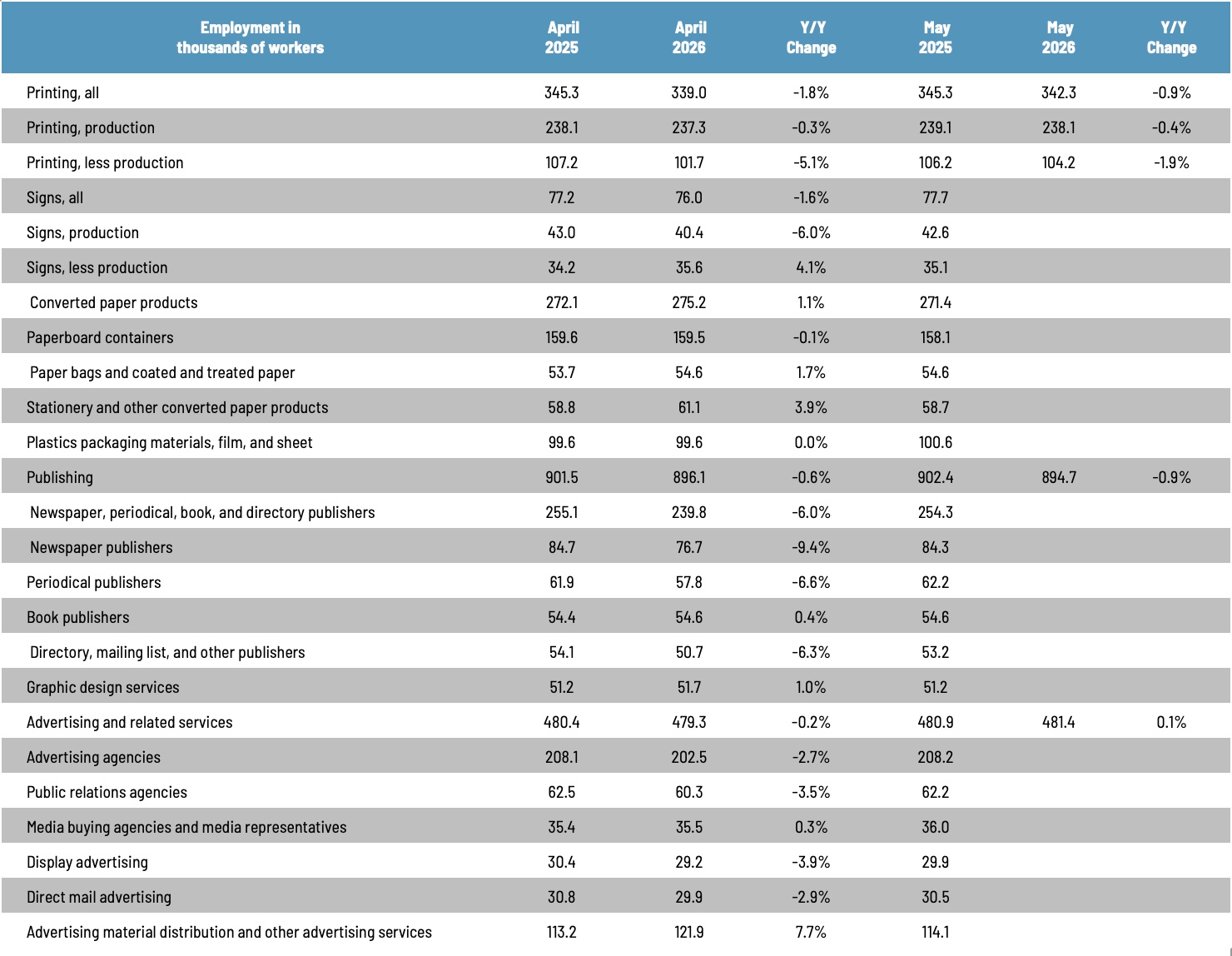
After a sluggish four months, the employment situation picked up in May, with overall printing industry employment up 1.0% from April, production employment up 0.3%, and non-production employment up 2.5%. Read More

Digital printing is the answer to the agility of modern work?ow. Mohawk Digital offers a diverse collection of fine and production papers for Inkjet, Dry Toner and HP Indigo presses. Read More

Newspaper Club has partnered with type foundry abcD8 to create a custom typeface inspired by the visual history of newspapers. MAD magazine has published its 600th issue. “Wordhord: Old English Word of the Day.” New evidence for the cause of death of the model for Botticelli’s “Birth of Venus.” Attending a Zoom meeting while on a roller coaster. Graphene-enabled PFAS-free firefighting foam. A jacket that can harvest moisture from the atmosphere. The iPhone’s Vehicle Motion Cues are surprisingly effective at reducing car sickness. An e-bike designed specifically to carry children. “Do fitness trackers still work if you have tattoos?” Rouser Lab’s “Earth’s black box” attempts to track humanity’s spiral into environmental destruction. “Beef tea” was a thing in the 19th century. Welcome to WhatTheyThink’s weekly miscellany. Read More