It Takes All Types
If you were in New York City last month, you may have attended Typographics 2026, a two-day conference devoted to type, language, and visual culture. Held at Cooper Union’s historic Great Hall June 26–27, typography was the primary topic but, according to Print magazine, “everything traditionally deemed illegitimate became the star of the show.”
Again and again, speakers returned to questions of identity, authorship, and what happens when designers refuse standardized systems in favor of practices rooted in community, memory, and lived experience. If there was a prevailing theme, it was that design standards are never neutral. They determine what is preserved, what is considered professional, and whose visual languages are allowed to endure.
For example:
The opening presentation by Iranian-American designer and FISK founder Bijan Berahimi immediately set that tone. Speaking on Type Identity, Berahimi reflected on working with musicians in an era where collaborations increasingly begin through unofficial channels like Instagram direct messages rather than institutional networks or record labels. What artists seek, he argued, is not a predetermined aesthetic but kinship—a shared way of seeing.
Interestingly, book artist and graphic designer Kelli Anderson went for a tactile experience in her most recent book, Alphabet in Motion.
Her interactive artist book relies on paper mechanisms, movement, and tactile experimentation to explain typography and technology through analog play. She encouraged attendees to treat low-resolution processes and handmade construction as sites of discovery—insisting that some of our richest interfaces are the ones that keep the hand connected to the mind.
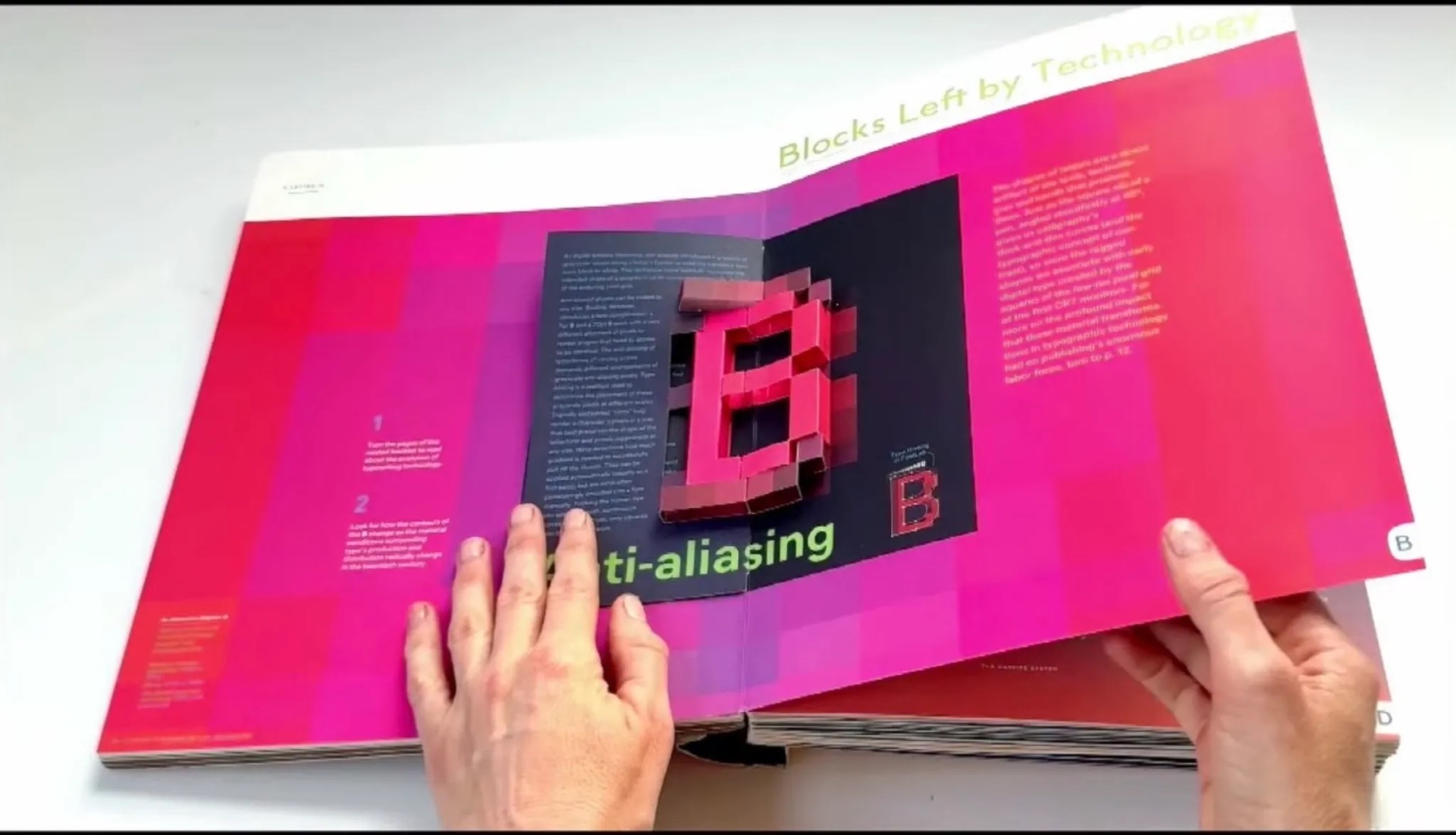
Photo by Kelli Anderson
A talk by sign painter Abraham Lule focused on rotulismo, a traditional form of hand-painting commercial signs and lettering seen on buildings and storefronts in Mexico City—an art that is under fire.
When city officials attempted to standardize hand-painted neighborhood signage in the name of civic order and discipline, they dismantled a living archive shaped by working-class craftspeople, migration histories, and local economies. Lule argued that although rarely recognized as such, vernacular lettering has always been monumental in its cultural significance.
Click through for summaries of the other presentations, which show the extent to which “typography” and “design” are not just about typeface choices or color combinations. Design can’t be separated from the culture in which it is used.
The conference kept returning to the idea that typography’s future lies less in perfecting design standards than in recognizing the visual intelligence that has long existed in our communities, landscapes, and everyday material culture.
AI-Yi-Yi, Part the Infinity: Dot May Trick
Are you a content creator trying in vain to keep AI from nicking your content? Via Popular Science, one interesting experiment is designer Eric Lu’s Ghost Font, which is based on AI’s inability (for now) to figure out optical illusions.
Ghost Font’s underlying mechanisms are deceptively simple. Text is entered by a user and overlaid within hundreds of moving dots in a short video animation. The dots composing the words move up the screen while the rest of the pinpoints move downward, generating a visual opposition that the human mind can detect and discern. Pausing the video creates a stationary picture that allows the words to disappear amid the overall clutter. AI (or the human eye, for that matter) can’t decipher the message in the still image, but that’s also where people get the upper hand.
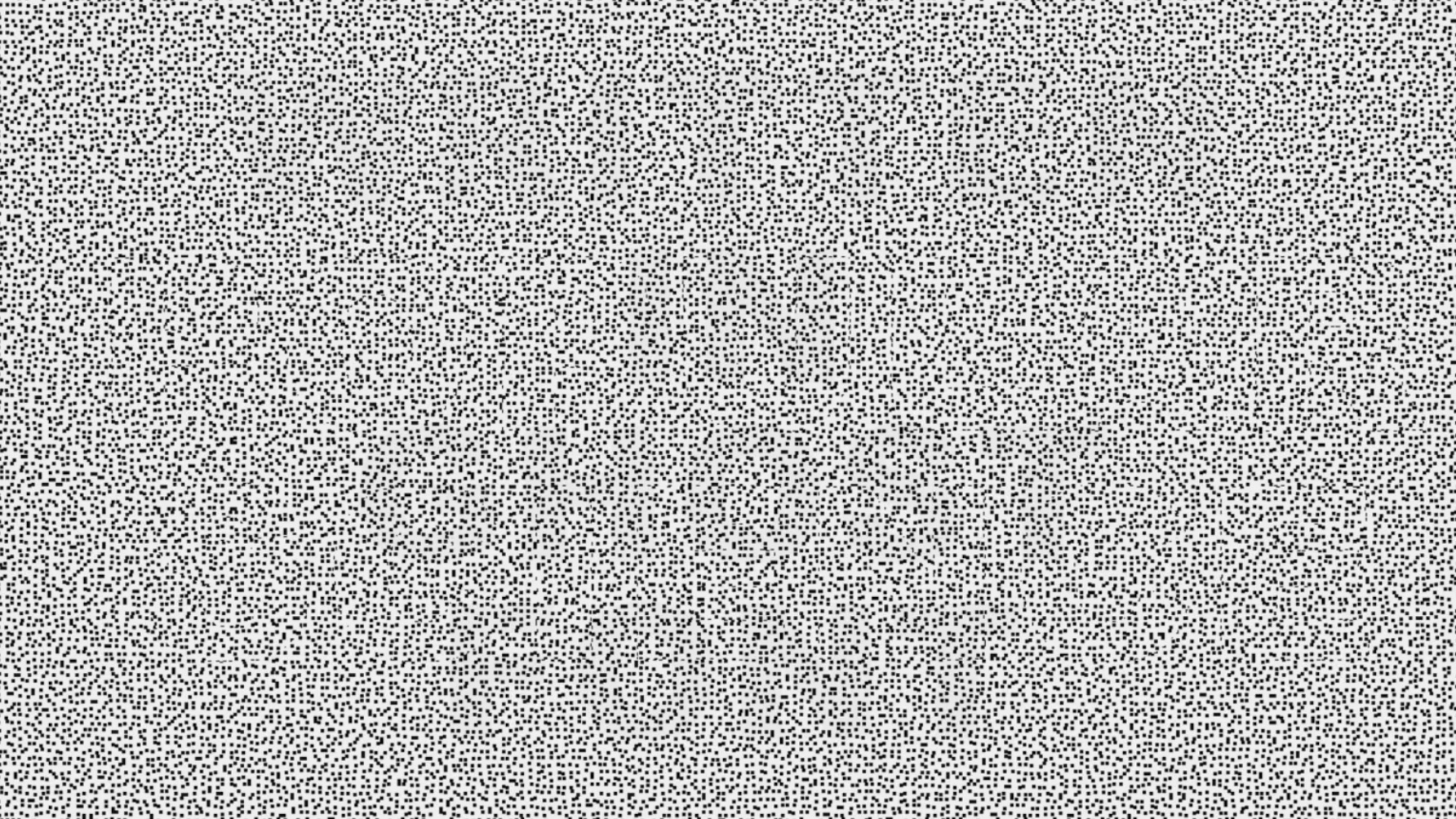
Looks like a bad Seurat painting, right? But if you watch it as a video, you can read the text. Not easily, and reading a lot of text this way would probably send us running to the optometrist, but it’s an interesting idea.
While the human brain interprets motion as a fluid pattern, multimodal AI still examines videos by their individual frames. Think of it like a flipbook. Humans will see the cumulative animation while running through the pages, but AI is still forced to look at the image on each individual page. As an added protection, Ghost Font files also include the static decoy message “written in Ghost Font,” which further confuses AI by making it seem like that’s the only actual text to scan.
Lu says he has successfully tested the program using Anthropic’s Claude Fable and OpenAI’s GPT-5.6 Sol Ultra.
Alas, we may be in an arms race with AI.
OLE!(D)
Well, here’s some potential good news, if you find the cost of electronics going up and up. Particularly, OLED displays. They’re visually great, but very pricey. But that may change, thanks to…inkjet printing? Says Gizmodo:
On Thursday, TCL CSOT shared details of a new China-exclusive laptop, the Lenovo Legion R9000P, complete with a 16-inch OLED display made by TCL’s touted “IJP”—aka inkjet printing—manufacturing process. The laptop screen supposedly hits a max 240Hz refresh rate, though neither company is sharing much else about the laptop specs. Lenovo sells several different Legion R9000 laptops in the Asian market.
How does inkjet printing fit into the manufacture of a display?
Organic light-emitting diode [OLED] displays make use of thousands of individual self-emissive lights that can display red, green, and blue colors. Most OLEDs are constructed using a vacuum thermal evaporation process that relied on so-called fine metal masks (FMM) to pattern the organic substrates. It’s a complicated and often wasteful process that requires specialized factories to make these screens. TCL said that using inkjet printing is more efficient and lower-cost since it doesn’t use an FMM or waste as much material.
TCL has been proclaiming the inkjet-printing OLED future for years now. Hell, we’ve known about this method of OLED manufacturing for more than a decade. Back in 2023, the China-based screen maker showcased a folding TV-sized OLED screen made using inkjet printing. In 2024, TCL claimed it finally managed a “breakthrough” in inkjet OLED manufacturing, promising better image quality and overall OLED lifespan.
Further bridging the print/digital divide.
Up to Our Next
Print magazine asks an…interesting question: “what happens when a type foundry stops designing fonts as static objects and starts designing them as living systems?”
We have a serif infestation and have to call Orkin?
At any rate, the issue is the impetus behind the Next Series, a type project developed by Northern Block, the UK-based type foundry.
While we often cover type releases like movie premiers, advancement in typography isn’t always aesthetic. Increasingly, it’s about infrastructure and engineering. The language support. The responsiveness across screens and sizes. The way a typeface performs on a phone, a billboard, a multilingual brand platform, and an app interface.
Ah. So Next is a “flexible, future-ready collection…designed to perform seamlessly across languages, platforms, and technologies.”
For example, there is their Lintel Next, an expansion of one of their existing fonts.
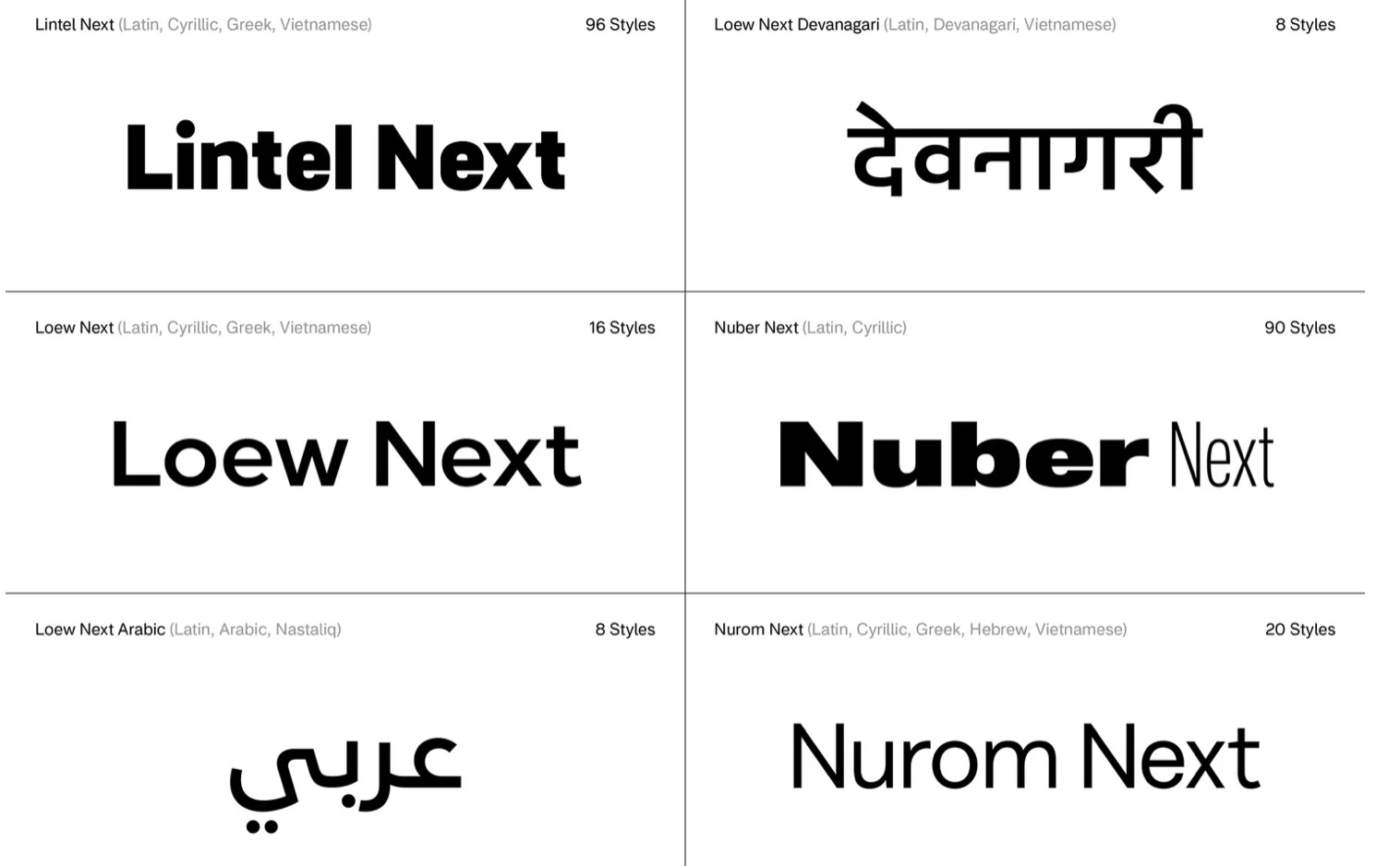
It now spans 96 styles, multiple widths, and expanded script support—not because bigger automatically means better, but because contemporary typography has to flex in ways earlier generations never imagined. Today’s letterforms don’t just need to look sharp. They need stamina and range.
Design is global these days, hence the addition of Arabic, Devanagari, Hebrew, Greek, Cyrillic, Vietnamese, and broader Latin support.
Art for Sale
Are you an artist? If so, you may have discovered that creating art is easy compared to finding ways of getting it displayed or sold. This is of course makes it an economic challenge to create more art. However, one Minnesota artist hit upon a solution: an art vending machine. Via Good News Network, Lilyan Lauzon, who goes by the nom d’art OneTiredArtist, created the “Mini Art Vending Machine” for herself and other local artists that will dispense small pieces of original art for $1. It is installed at Minneapolis bookstore Inkwell, where she works as community outreach manager.
“For new and emerging artists, it’s really hard to find spaces to sell your artwork, and I wanted to make a project that was fun and collaborative for local artists,” said Lauzon.
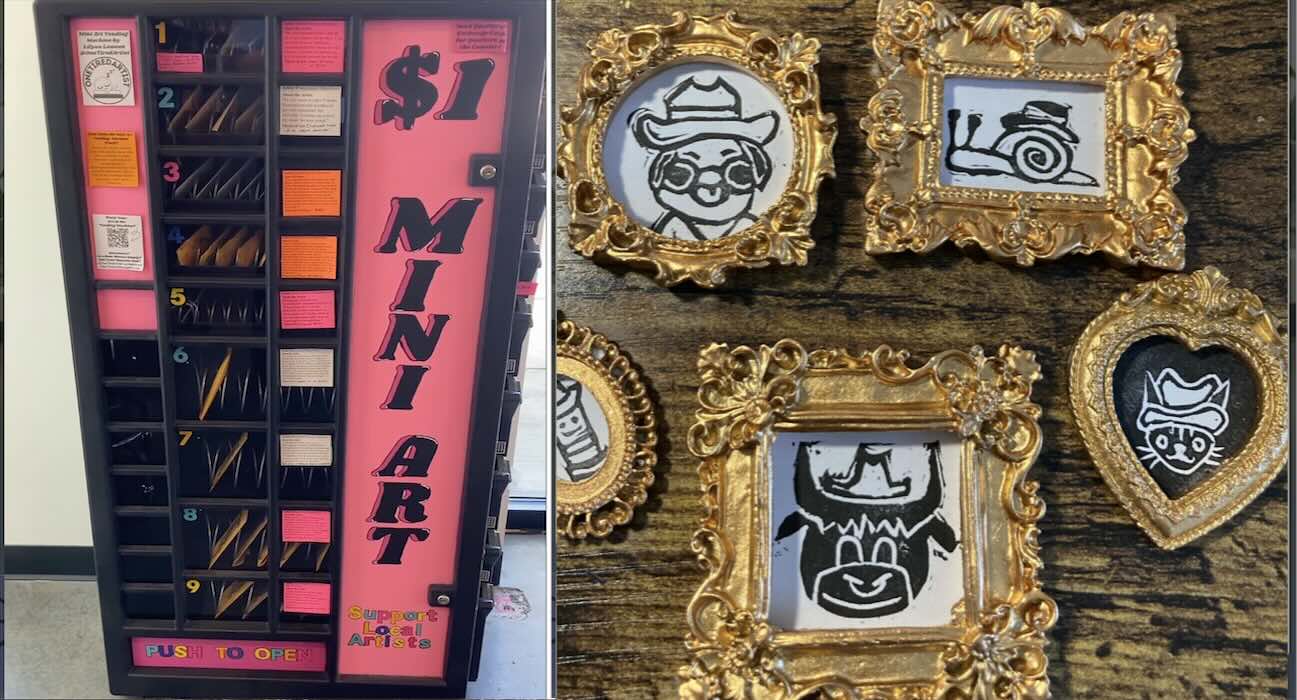
Each row features mini works by the same artist, whose bio can be read about on the left-hand side of the machine.
It appears to be a hit—nearly 3,000 pieces of art have been sold, with the money going to the artist. It needs restocking every month, and has driven new business for the artists.
“Artists have told me that people have come to their art fairs to buy more of their artwork because of what they got in this snapshot of their portfolio,” said Lauzon. “There’s also been a few people who have had larger commissions come out from the mini art vending machine.”
Good news indeed.
Paper Cuts
Our Mount Monadnock Media Maven points to Rogan Brown, who makes intricate sculptures out of paper.
I choose paper cutting as my medium for its simplicity and accessibility — transforming an everyday material into intricate, layered structures.

Inspired by the sweeping narratives of scientific discovery and innovation that shape our contemporary world, my art represents the perspective of an outsider — a non-scientist striving to visualize, comprehend, and internalize these evolving paradigms. Whether exploring our shifting perception of microbial life or grappling with the conceptual revolutions of quantum physics, my pieces reflect an attempt to assimilate new ways of seeing and understanding nature.
Pretty amazing.
Orb-an Area
In the 1920s, Germany held a kind of World’s Fair called the “Jahresschau Deutscher Arbeit” (“Annual Exhibition of German Work”). In 1928, it was held in Dresden with the theme being “The Technological City.” Via Core77, the centerpiece of the exhibition was the Kugelhaus (“Globe House”), a spherical, six-story steel building designed by German architect Peter Birkenholz. It included exhibition halls, an elevator, and a restaurant.
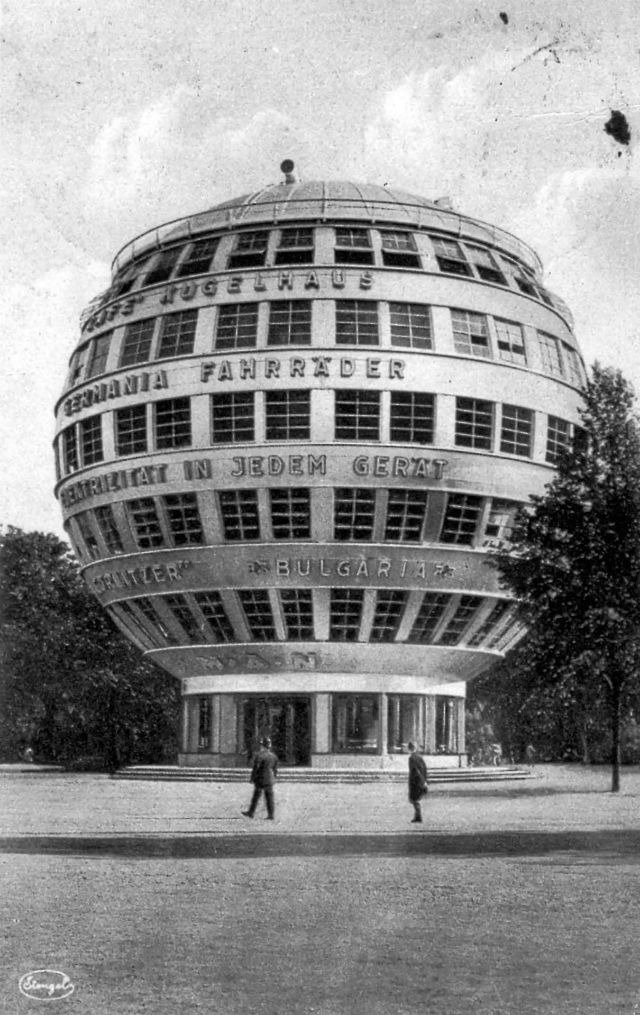
It wasn't terribly practical; while the sphere had a diameter of roughly 80 feet and a volume of 268,400 cubic feet, each floor only yielded about 1,000 square feet and change. But it was, for the time, jaw-dropping.
Although, if it ever fell off its base, one can envision it rolling through the city like something out of Raiders of the Lost Ark.
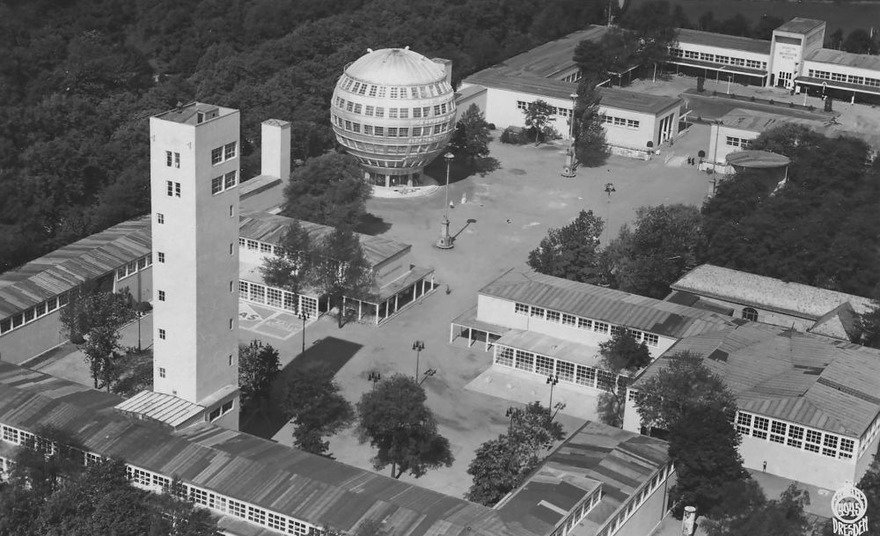
The plan was to eventually build a row of these, but it never came to fruition. In the 1930s, as the Nazis took power, they didn’t know what to make of the structure; they ultimately deemed it “degenerate art” and “un-German,” and they demolished the structure in 1938.
Boy, the more we hear about those guys, the less we like them…
The Brolly Problem
Anyone who has ever been to the UK knows that it rains a lot. As a result, an umbrella is a vital accessory. However, first umbrella user in England was treated to insults and abuse.
In the 1750s, Englishman Jonas Hanway took a trip to France, and returned with a new-ish invention that had become popular: an umbrella. Carrying it around the rainy streets of London, says Atlas Obscura:
People were outraged. Some bystanders hooted and jeered at Hanway as he passed; others simply stared in shock.
The parasol had been used in the Far East for centuries, not necessarily to keep dry, but to keep shaded from the sun, and in the early 18th century, a Paris merchant named Jean Marius invented a lightweight, folding, waterproof version. In 1712, French Princess Palatine bought one, and umbrellas soon became all the rage among the French nobility. And this was the reason they were hated in Britain, and indeed to carry one was to commit a major social faux pas:
In the minds of many Brits, umbrella usage was symptomatic of a weakness of character, particularly among men. Few people ever dared to be seen with such a detestable, effeminate contraption. To carry an umbrella when it rained was to incur public ridicule.
There was of course a bit of the cross-Channel animosity: the British also regarded umbrellas as “too French.” Not that Hanway cared all that much.
Jonas Hanway, always stubborn, paid little attention to the social stigma. An eccentric man, he was no stranger to controversy—he fervently opposed the introduction of tea into England, at one point penning an “Essay Upon Tea and Its Pernicious Consequences” (1756). He published four books on the development of British trade in the Caspian Sea, leading 20th-century scholar Charles Wilson to call him “one of the most indefatigable and splendid bores of English history.”
Umbrellas were particularly loathed by drivers of hansom cabs: they were a threat to business, since when it rained, Londoners took cabs rather than walk. So they in particular were hostile toward Hanway.
According to the British history magazine Look and Learn, when they saw him walking by, they often “pelted him with rubbish.” On one occasion, a hansom cab driver even tried to run Hanway over with his coach. Hanway reacted by using his umbrella to “give the man a good thrashing.”
But other people began to see the light (or shade) and by the time Hanway died in 1786, umbrella usage started to take off across England.
On rainy days, more and more people could be found traversing their cities and towns with umbrellas held proudly above their heads. As a symbol of the changing social norms, people were also becoming less self-conscious about owning umbrellas.
Now, about the winter hat…
Graphene Has Vision
Was it a good week for graphene news? It’s always a good week for graphene news! Graphene oxide composite enables a flexible memristor for low-light artificial vision.
“Memristor”?
From (who else?) Graphene-News:
Memristors are seen as a key building block for flexible neuromorphic vision systems. Because they can rapidly tune their resistance in response to optoelectronic inputs, they emulate the way biological synapses adjust signal weights – the behavior needed for artificial retina-like sensors that sense and compute in the same place, rather than shuttling data to a separate processor.
Under dim illumination, the memristor's conductance range expands, which lets the device filter noise more effectively and, in practice, amplify faint optical signals. Fed low-contrast images, the device outputs clean silhouettes and enables feature extraction for object recognition in low light.
Graphene oxide’s role in all this for the device’s mechanical durability and electrical behavior.
The composite proved highly flexible in testing, continuing to operate reliably after thousands of bending cycles, and its resistance to cracking under deformation makes it a candidate for wearable use - including attachment to curved skin to pick up weak ambient light signals.
See?
Weird AI
(A pun that only works with a sans serif typeface.)
Gotta say, a lot of AI content is about as (inadvertently) funny as a “Weird Al” Yankovic parody or original song, so perhaps there was some logic in an artificial intelligence company to hire “Weird Al” to be their spokesman. But it was not to be. Says Gizmodo:
“I was offered this commercial before the tour. I’m not going to mention any names, but they told me it was for a business. It was business software that would increase productivity. And they offered me a nice pile of money. I said, ‘Oh well, yeah, sure, I could do that,'” he told the outlet. “And then a week before we’re supposed to shoot it, I find out, oh, this is, it’s AI. And I thought, ‘Oh no, I can’t be the poster boy for AI, forget it.’ So I felt bad about kind of pulling out at the last minute. But yeah, I’m not, I’m not down with that.”
And “Weird Al” practices the opposite of what AI does.
Yankovic also doesn’t just create a cheap sound-alike track a la the Suno AIs of the world. He recreates the compositions from scratch. Whenever possible, he also signs contracts with the original artists so they get a writing credit on his parody track and royalties from his work.
Remember: it’s all about the Pentiums.
The LEGO Set Is Out There
Are you a fan of the classic 1990s TV series The X Files? Do you like LEGO? If yes to both, you’ll be all over this: “The X-Files” set by LEGO Ideas.
The LEGO Ideas?The X-Files?set recreates iconic moments from the series, centred on a detailed build of?Fox Mulder’s office, paired with a forest clearing scene and a hovering UFO. The set includes 8 Minifigures: Fox Mulder, Dana Scully, Walter Skinner, Mr. X, Alex Krycek, Carl Busch, The Flukeman and a grey alien, allowing fans to recreate key investigations and encounters.

We’re not sure we ever knew that Carl Busch was the real name of the Cigarette-Smoking Man.
The 1,478-piece set is a steal at $199.99. If you purchase it between August 1-10, you get a free complementary “Scully’s Lab” set.
Gillian Anderson (Scully) does a cute promo for the set.
Grounds for Happiness
Could wet coffee grounds be used to generate cleaner sources of energy? New research suggests that they could. Via Food & Wine, a team of researchers at the Korea Institute of Geoscience and Mineral Resources developed a way to turn wet coffee grounds into high-grade biofuel.
The process is laid out in a study published in the journal Chemical Engineering. To quickly convert wet coffee grounds into biofuel, the researchers use a first-of-its-kind flame plasma pyrolysis technology. This technology blasts the wet coffee grounds with hot flames that reach up to 1,652°F, rapidly vaporizing the moisture in the grounds.
Didn’t McDonald’s get sued for serving coffee at that temperature? Anyway, the process creates what is called a “popcorn effect,” in which the coffee grounds are converted into porous biochar, a charcoal-like material.
The researchers found that the biochar produced from wet coffee grounds has the potential to be a more efficient heating source than wood. The coffee biochar has a heating value of 29 MJ/kg, while wood has a heating value of 15 to 20 MJ/kg, depending on the type and size.
The researchers also discovered that this coffee biochar could be converted into a long-lasting, energy-rich carbon that burns efficiently. The flame plasma pyrolysis technology removes sulfur compounds from biochar, producing a clean fuel. (According to the Environmental Protection Agency, burning sulfur produces sulfur dioxide, which fuels air pollution.)
The process doesn’t generate many pollutants so it could be a potentially environmentally friendly way to make renewable fuel.
This product could even be used to purify water, filter air, and absorb industrial waste, according to the researchers.
However, the big impediment is scale.
But while humans produce a lot of wet coffee grounds, we don’t generate enough to make used coffee grounds the next big thing in energy, says John Atkinson, PhD, associate professor of Civil, Structural and Environmental Engineering at the University at Buffalo School of Engineering and Applied Sciences.
We’re doing our best!
This Week in Printing, Publishing, and Media History
July 20
1822: Give peas a chance—Austro-German monk, geneticist and botanist Gregor Mendel born.
1903: The Ford Motor Company ships its first automobile.
1938:– The United States Department of Justice files suit in New York City against the motion picture industry charging violations of the Sherman Antitrust Act in regards to the studio system. The case would eventually result in a break-up of the industry in 1948.
1969: Apollo 11’s crew successfully makes the first manned landing on the Moon in the Sea of Tranquility. Americans Neil Armstrong and Buzz Aldrin become the first humans to walk on the Moon six and a half hours later.
July 21
1816: German-English journalist and founder of Reuters Paul Reuter born.
1899: Ernest Hemingway born.
1911: Marshall McLuhan, Canadian author and theorist, born.
1948: Doonesbury creator Garry Trudeau born.
1969: At 02:56 UTC, astronaut Neil Armstrong becomes the first person to walk on the Moon.
2015: American novelist, short story writer, and playwright E. L. Doctorow dies (b. 1931).
July 22
1598: William Shakespeare’s play The Merchant of Venice is entered on the Stationers’ Register. By decree of Queen Elizabeth, the Stationers’ Register licensed printed works, giving the Crown tight control over all published material.
1893: Katharine Lee Bates writes "America the Beautiful" after admiring the view from the top of Pikes Peak near Colorado Springs, Colo.
1898: American poet, short story writer, and novelist Stephen Vincent Benét born.
1932: American novelist Tom Robbins born.
1967: American poet and historian Carl Sandburg dies (b. 1878).
July 23
1829: In the United States, William Austin Burt patents the typographer, a precursor to the typewriter.
1888: American crime novelist and screenwriter Raymond Chandler born.
1903: The Ford Motor Company sells its first car.
1957: English comedian, actress, and screenwriter Jo Brand born.
1962: Telstar relays the first publicly transmitted, live trans-Atlantic television program, featuring Walter Cronkite.
July 24
1847: Richard March Hoe patented the rotary-type printing press.
1895: English poet, novelist, and critic Robert Graves (I, Claudius and Claudius the God) born.
1900: Zelda Fitzgerald, American author, poet, and wife/drinking buddy of F. Scott Fitzgerald born.
1901: Author O. Henry is released from prison in Columbus, Ohio, after serving three years for embezzlement from a bank. The ending was not a surprise.
1969 : Apollo 11 splashes down safely in the Pacific Ocean.
July 25
1834: English philosopher, poet, and critic Samuel Taylor Coleridge dies (b. 1772).
1837: The first commercial use of an electrical telegraph is successfully demonstrated in London by William Cooke and Charles Wheatstone.
1965: Judas! Bob Dylan goes electric at the Newport Folk Festival.
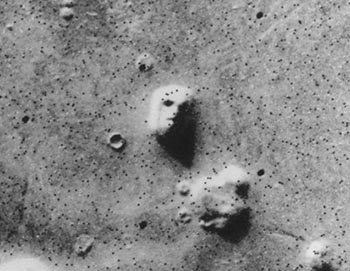
1976: Viking 1 takes the famous Face on Mars photo.
July 26
1502: German printer Christian Egenolff born.
1856: Irish playwright, critic, and Nobel Prize laureate George Bernard Shaw, born.
1887: Publication of the Unua Libro, founding the Esperanto movement.
1894: English novelist and philosopher Aldous Huxley born.
1928: American director, producer, screenwriter, and cinematographer Stanley Kubrick born.
1989: A federal grand jury indicts Cornell University student Robert T. Morris, Jr. for releasing the Morris worm, thus becoming the first person to be prosecuted under the 1986 Computer Fraud and Abuse Act.