Born on the Bayeux
If you happen to be in London this fall, the hottest ticket in town will be to see the Bayeux Tapestry at the British Museum. Indeed, on July 1 when tickets went on sale, thousands rushed to snap up a chance to check out the historic artifact, a least on their own home soil.
Transporting the fragile tapestry has been a logistics nightmare—they’re not rolling it up into a poster tube and sending it via UPS. Says Le Monde:
The delicate tapestry will be transported from its usual home in northern France, but the precise arrangements are being kept secret as heritage experts and artists have fretted that it could be damaged in transit. British Museum director Nicholas Cullinan said they were "expecting huge demand" for the exhibition, likening the sale to the annual rush for Glastonbury music festival tickets.
For those not in the know, the Bayeux Tapestry is an embroidered cloth roughly 230 ft. (70m) long and 20 in. (50cm) tall that depicts 58 scenes from the Norman conquest of England in 1066. William, Duke of Normandy, battled England’s King Harold II, events culminating in the Battle of Hastings. The Tapestry is believed to have been created in the 11th century, only a few years after the events it depicts. Believed to have been made as gift to William, it tells the story from the Norman point of view, and has been well-preserved in at the Musée de la Tapisserie de Bayeux in Bayeux, Normandy, France. The museum is closing for renovations, so the Tapestry in on loan to the British Museum.
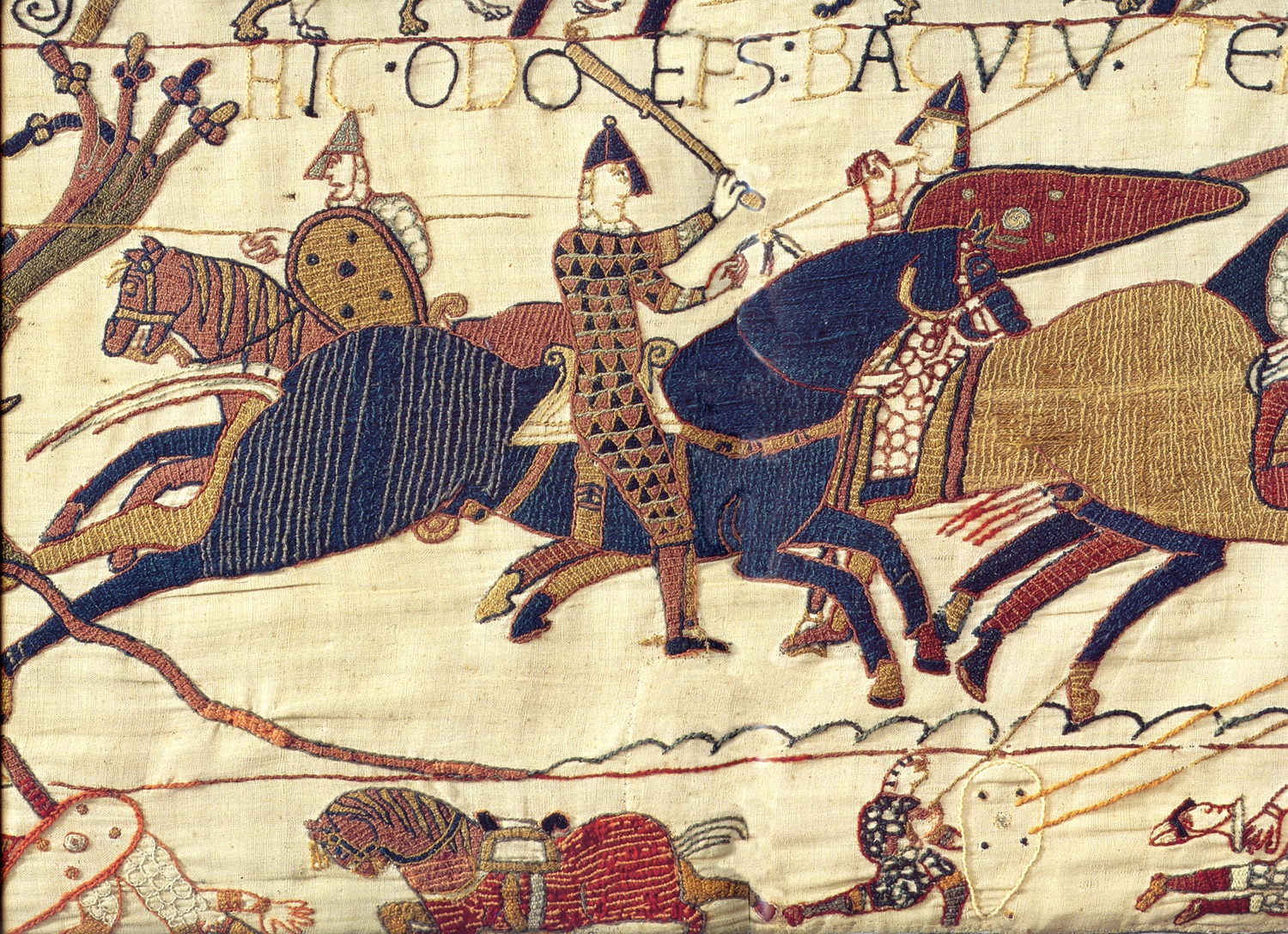
French officials have said the 70-meter tapestry will travel from its usual home in the northern French town of Bayeux in a crate designed to cushion vibrations, but little else has been revealed. "The details are quite closely guarded, but it will travel through the tunnel," Cullinan told BBC Radio 4, referring to the Channel tunnel that connects the UK and France. "It's coming by land, and it will be with us fairly soon. So it's very exciting."
Surely, someone is writing an “Oceans 11”-esque tapestry heist movie.
The exhibition will run from September to next July. Top-tier tickets are a steal at £33.
Post-Life
One doesn’t come across too much good news from the world of newspaper publishing, but, via Good News Network, the Pittsburgh Post-Gazette just got its existence renewed. Now, the Post-Gazette is one of the country’s most historic papers—one of its first editions published the text of the brand-new U.S. Constitution. It’s also won three Pulitzer Prizes for journalism and photography. This year, however, it filed for bankruptcy. But that was not the end of the story, or the paper. On May 4, it was bought by the Venetoulis Institute for Local Journalism.
The Venetoulis Institute is owned by a hotel magnate named Stewart Bainum Jr., and the PPG is the second paper the Institute has acquired following its purchase of the Baltimore Banner in 2022.
“Local journalism is essential to a strong community, but across the country the business model has been under severe strain,” Bainum said in the press release. “We believe there is a path forward — one that combines great journalism with a diversified business model built on scale and exceptional talent.”
So that’s good news.
Cool Threads
Parts of the country (and world) are experiencing record heat waves (heck, they even shortened part of the Tour de France), so the eternal question is, what is the best clothing to wear to keep cool? Obviously not a parka, but are there certain fabrics or even colors that are better than others? Conventional wisdom says that since white reflects the sun’s rays, it’s better than a dark color, which absorbs the sun’s rays. However, that may not be entirely true. Via the BBC:
this theory gets a little more complex when we start talking about the thickness and fit of clothing, because heat doesn't just come from the sun – it comes from our bodies too. When that heat from our bodies hits the white clothing, it is reflected back at us.
Indeed, a 1980 study of Bedouins—an indigenous, semi-nomadic desert-dwelling people who wear black robes—found that heat exposure was the same regardless of whether they wore black or white robes.
Black coloured fabrics are a better radiator of heat – meaning they absorb heat emanating from the body – so this can also play a role in cooling your body down. The Bedouin's secret is wearing loose-fitting black clothing, especially if it's windy. The loose black clothes heat up the space between the fabric and the skin, promoting an upward air current – like a chimney – and providing cooling relief.
So it’s more the fit than the color—if you’re wearing something tight-fitting, white is the better option.
Fabrics with texture – such as seersucker or pique, a fabric often used in sports polo shirts – also help to lift clothing off your skin, rather than staying snug and tight-fitting.
Of course, as the old cliché goes, it’s not so much the heat, it’s the humidity.
When it comes to fit, lightweight woven fabrics such as cotton and silk are usually better at hanging loosely than knits. This is especially important when it's humid – in dry heat, wicking alone may be enough because the sweat will be absorbed from your body and evaporate in the heat. When it's humid and hot, the air around you is already saturated with water vapour, meaning the sweat your clothes just soaked up doesn't have anywhere to go.
And, says George Havenith, a professor of environmental physiology and ergonomics at Loughborough University in Leicestershire, UK, an even better option is to not wear anything at all.
Clothes protect your skin from burning, but being naked is better for keeping cool. The less clothing you wear, the more opportunity there is for an evaporative heat exchange between your skin and the air.
But please…not in public.
Dino Snore
One thing to probably not wear in hot weather is leather.
Cary Sherburne has written periodically on non-animal-based leather and while we’re not entirely certain that this qualifies, it is an interesting idea: leather made from Tyrannosaurus rex cells. We kid you not, and a handbag made from said T. rex cells went up for auction in Paris this week. Says Le Monde:
“In recent years, we’ve developed techniques – biotechnologies that allow us to instruct a cell culture to produce, so to speak, genuine T.Rex skin in the laboratory,” Iacopo Briano, a palaeontology expert associated with the sale, recently told Agence France-Presse (AFP).
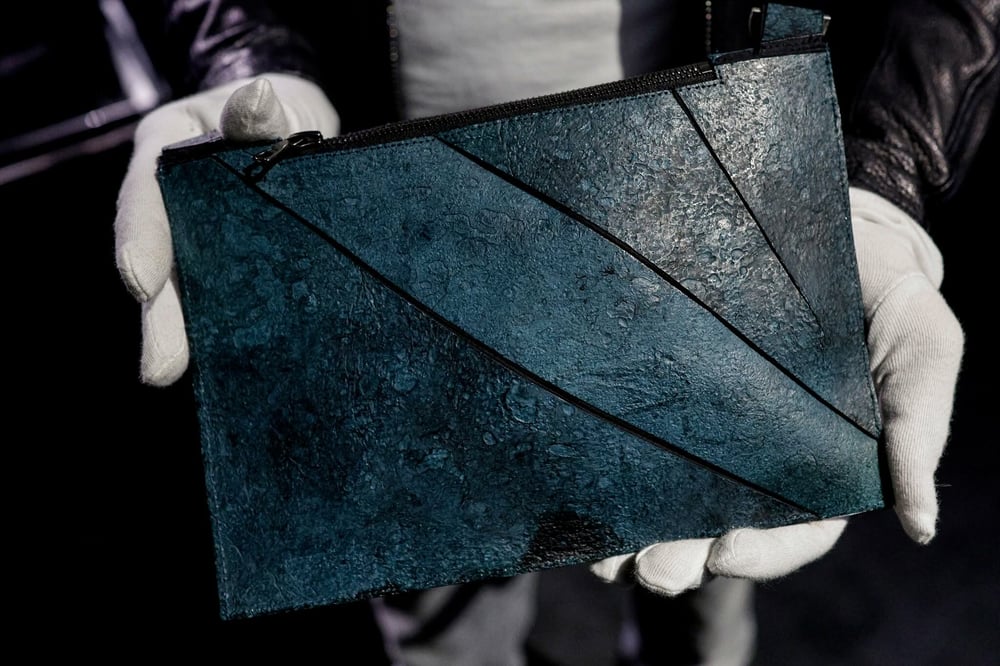
Introduced last spring in Amsterdam, the bag was created using traces of collagen from a T. rex femur found in Montana 25 years ago.
The auction house Drouot, where the bag is to be sold at 6 pm [on July 13], described it as “an object without precedent in the history of luxury” and a “scientific feat” that makes it possible to create leather “without any reliance on animal rearing,” in a recent statement. Briano noted the material differs from vegan leather, which is mostly made from plastic.
Its value had been estimated at between €300,000 and €500,000. Alas, it failed to sell. Says FashionNetworkUSA:
Auctioneers Giquello had touted the "one-of-a-kind" piece to sell for more than $500,000 but bids barely broke the $150,000 mark, said the Drouot house where the sale took place.
Bummer. Maybe it only fit those tiny T. rex arms. Still, we can envision having it be the basis of a pretty good Jurassic Park parody.
You Have Got to Be Kidding, Part the Ongoing: Who Do We Appreciate?
Really? Via Engadget, yesterday, July 16, was “AI Appreciation Day.” Please kill us.
Going off the website, the proper way to celebrate AI Appreciation Day includes suggestions like "thank a person who builds or maintains AI," "talk to a child or skeptic about it," "sign the pledge and put the day on your calendar." As satirical as these ideas sound, they're apparently very much real recommendations.
Uh, no.
We should be embracing the human experience instead of celebrating this AI slop of an excuse for a holiday. Instead of putting AI front and center for a day, you can support a local artist by buying some of their work, you can swim in a natural body of water before it's forever impacted by data centers powering AI or you can catch up with old friends instead of burning through tokens with an AI chatbot. These are just a few tangible things that we should be appreciating on July 16, instead of AI.
Happily, we missed it.
Just for Starters
Does this paragraph sound familiar?
The story so far. In the beginning the Universe was created. This has made a lot of people very angry and has been widely regarded as a bad move.
Yes, that is the opening line of The Restaurant at the End of the Universe, Douglas Adams’ follow up to The Hitchhiker’s Guide to the Galaxy.
How about this?
It was the best of times, it was the worst of times, it was the age of wisdom, it was the age of foolishness...
Yep, Dickens’ A Tale of Two Cities.
This?
It is a truth universally acknowledged, that a single man in possession of a good fortune, must be in want of a wife.
Jane Austen’s Pride and Prejudice.
Via Boing Boing, Verba Prima is a site that serves as a repository of literary opening lines.
Its archive contains thousands of first sentences from notable literary works. It's a simple way to explore how famous authors chose to begin their stories.
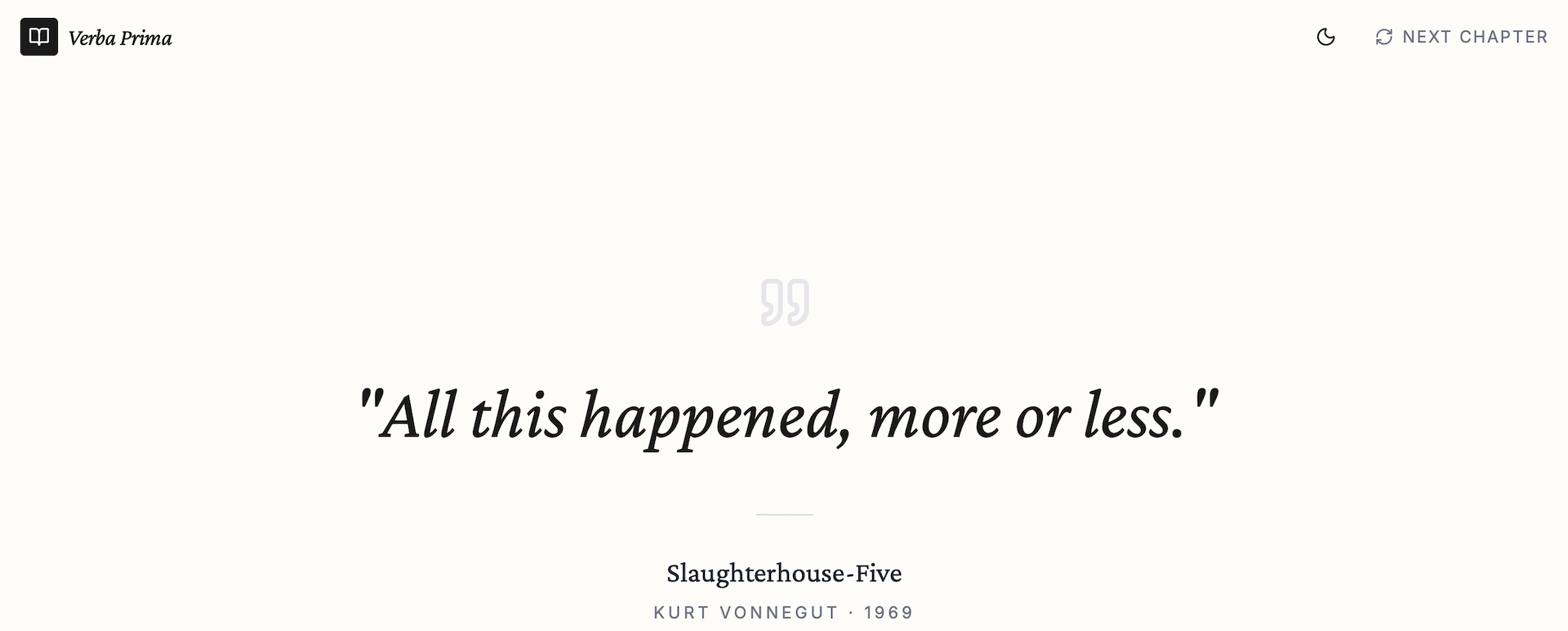
Click “next chapter” to jump from one opening line to the next, which seem to be randomly generated, and include both literary classics as well as more modern novels, like Ha Jin’s Waiting.
For readers, it's an easy way to discover books they may have otherwise overlooked. For writers, it's a useful reminder of how much work a first sentence can do.
Jumbo Jet
Back when we were in school, paper airplanes were generally frowned upon, but recently a group of students constructed the world’s biggest paper airplane. Says Popular Science:
It’s easy to craft a paper airplane capable of soaring across a classroom,
Yeah, but it’s the subsequent detention that’s the problem…
but one that can travel 200 feet is a bit harder. A group of students from Italy’s University of Pisa not only managed to reach that distance on a single glide—they did so with the Guinness World Record holder for the largest paper airplane ever assembled.
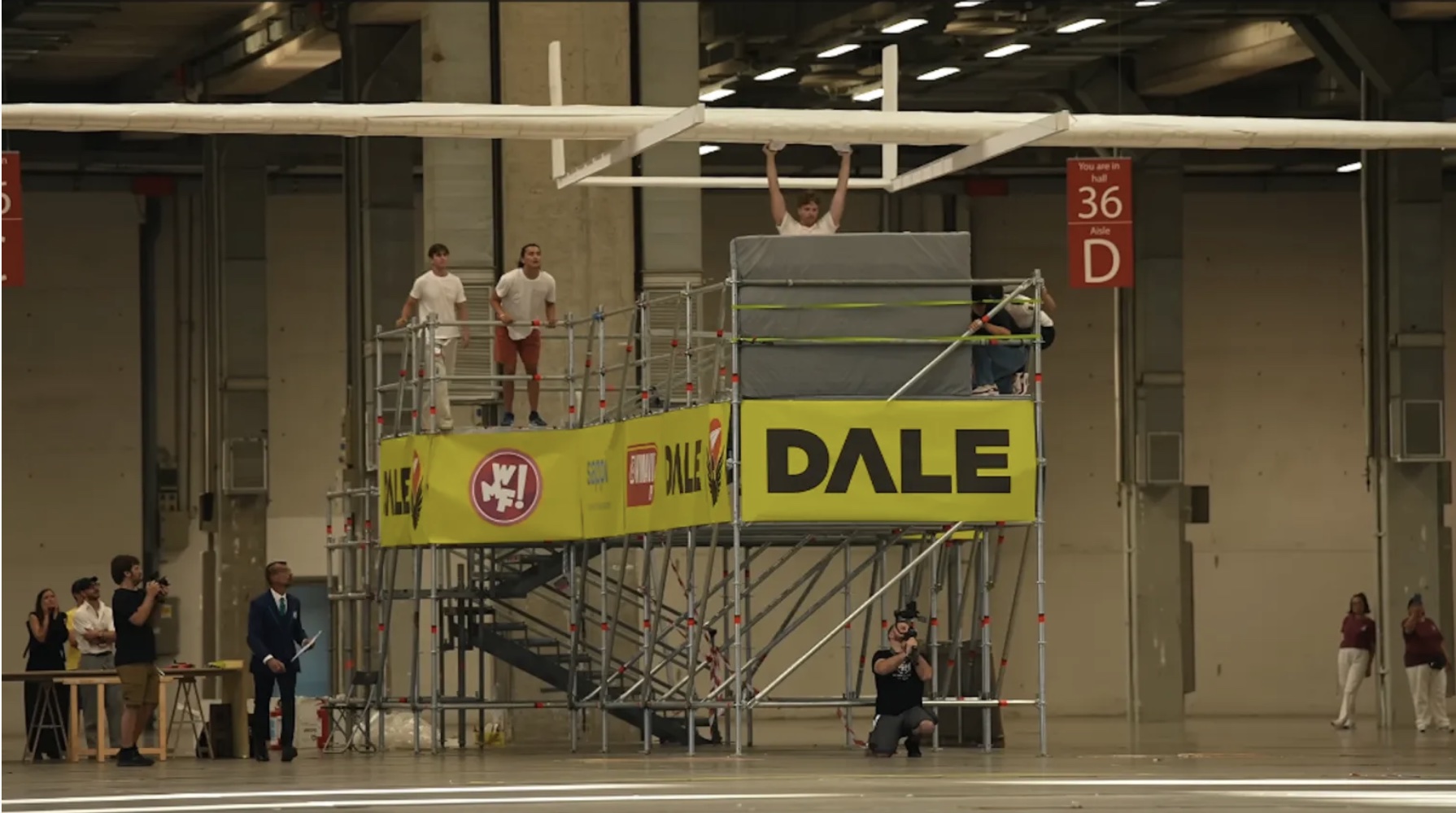
Built using only paper and some glue, the team’s nearly 23-foot-long creation and its over 65-foot wingspan cruised through a warehouse at Italy’s annual We Make Future expo on June 25. According to the university’s announcement, the students broke a record previously held since 2013 by Germany’s Braunschweig Institute of Technology.
Using glue seems like cheating, but fair play to them.
Marginal Notes
Those who are knowledgable about typography and typesetting are familiar with “justification,” or making a block of text flush with both left and right margins. This is in contrast to “ragged right,” where text is flush only to the left margin and is—ergo—ragged on the right margin. (Like most website text.) There is also the less common “ragged left” where—you guessed it—text is flush only to the right margin. Justification has been the bane of typesetters since the advent of type, and has generally been accomplished with a combination of variable word (and sometimes letter) spacing and hyphenation. So-called “H&J” (hyphenation and justification) capabilities have gotten better over the years, but you still come across typeset paragraphs that have giant word spaces or egregiously spread out letters.
We mention this because, as troublesome as English language justification can be, via Gizmodo, justifying Arabic text is even more challenging.
Arabic [justification] works differently. Formal written calligraphy, of the type seen in Qur’ans and other written manuscripts, flows to both margins, a technique pioneered by an ill-fated 10th-century scribe named Ibn Muqla. The rules for achieving this were complex, but can be summarized by a technique called “kashida,” which dictates that, as La Vita Nouva (henceforth LVN) puts it, “You justify by reshaping the letters, not by spacing the words.”
This fact goes a long way towards explaining why written Arabic is so elegant and beautiful—but also why reproducing this written style has proven a nightmare for generations of typesetters. Ever since the Gutenberg press, typography has revolved around the idea that glyphs are discrete and immutable: a given letter looks the same on the first page of a text as it does on the last.
This works for Latin alphabets, and as well as alphabets like Cyrillic, Greek, and others that consist of a small number of discrete letters.
Other scripts, however, don’t fit this paradigm particularly well, for several reasons. Take Chinese, for example, with far more characters than could ever fit on a typewriter; or Devanagari, with its distinctive line across the top of words; or Arabic with its fluid, mutable characters.
As LVN explains, Arabic is essentially the opposite of the one-glyph-for-every-letter approach, and why it gave early typographers conniptions: “Arabic is cursive always. There is no print-versus-handwriting distinction, no block letters…Each letter, therefore, changes shape depending on its neighbors (an isolated form, an initial, a medial, a final), and six letters refuse to connect forward at all, which breaks words into joined clusters and gives the script its rhythm.”
It wasn’t until the 1820s that a printing system could render Arabic properly.
This is because, as LVN explains, “where a Latin [font] needs somewhere around a hundred sorts, a serious [Arabic] [font] needed many hundreds: positional forms, ligatures, vowel marks, every one a separately cut piece of metal, and a compositor who could navigate that case fast enough to keep his job.”
Digital typography has helped and there are several fonts that will generate calligrapher-approved Arabic text. However, web browser support—where much text is read these days—remains inconsistent and Arabic text that looks great in one browser can look wretched in another.
“the maddening part is that proper Arabic justification is not an unsolved research problem.” The result is that, for all our modern technological wizardry, resolving support tickets like the one LVN received ultimately falls back on the same time-honored solution pioneered a millennium ago: fixing things slowly and painstakingly by hand.
Graphene Tears Up
Was it a good week for graphene news? It’s always a good week for graphene news! Laser induced graphene sensor enables dopamine detection in tears. From (who else?) Graphene-News:
Dopamine is central to movement, cognition, and emotional regulation, and abnormal levels are linked to disorders including Parkinson’s disease and schizophrenia. Because current monitoring methods often rely on blood, urine, or implanted devices, the researchers focused on tears as a faster and less invasive alternative. The team built the sensor using laser-induced graphene and then functionalized it with nickel nitrate and urea. This combination increased the number of active sites, improved electron transfer, and boosted the oxidation signal from dopamine, which is the key electrochemical event the sensor measures.
It's enough to make you cry.
Geranium Hospital
Here’s an…interesting idea: a plant hospital. Via Good News Network:
Found in Edinburgh, Scotland, the Hilda Houseplant Hospital allows horticulturalists, whatever the level of expertise, to drop off their plants for ‘surgery’, which may include repotting, pest removal, or liquid drip.
It’s basically a plant shop, but it seems like a nice idea.
Rosanna says customers bring the plant into the shop and describe the issues they’re facing at a consultation, with care prices based on the size of the plant.
Can you get health insurance for your plants?
“There’s an awful lot of feelings and emotions attached to the houseplants that we see, and when they come to collect and get care information, there’s so much relief and joy.”
Robot Rumpus
Quick trivia question for you sci-fi fans: what was the first robot to appear in a movie?
It didn’t have a name, but was a humanoid robot in a short film by Georges Méliès (more famously the director of A Trip to the Moon) called Gugusse And The Automaton. It was made in 1897—long before Czech playwright Karel Capek coined the term “robot” in 1923 in his play R.U.R. (Rossum’s Universal Robots).
The film is a 45-second-long reel that had been sitting in a series of basements and garages for decades until it was sent unbidden to the Library of Congress, where archivists discovered what it was: quite probably the first depiction of a robot in cinema, as well as an early film by one of cinema’s pioneering filmmakers. Says Popular Science:
In the brief silent film, Méliès portrays a magician named Gugusse who is showing off an “automaton” in what looks like a proto–robot manufacturing facility. The automaton is dressed as a clown and stands on top of a pedestal. After some exuberant jumping, Gugusse begins twisting a crank at the bottom of the pedestal, apparently winding up the automaton like a toy. Once wound up, the robot moves its arms up and down, much to Gugusse’s delight.
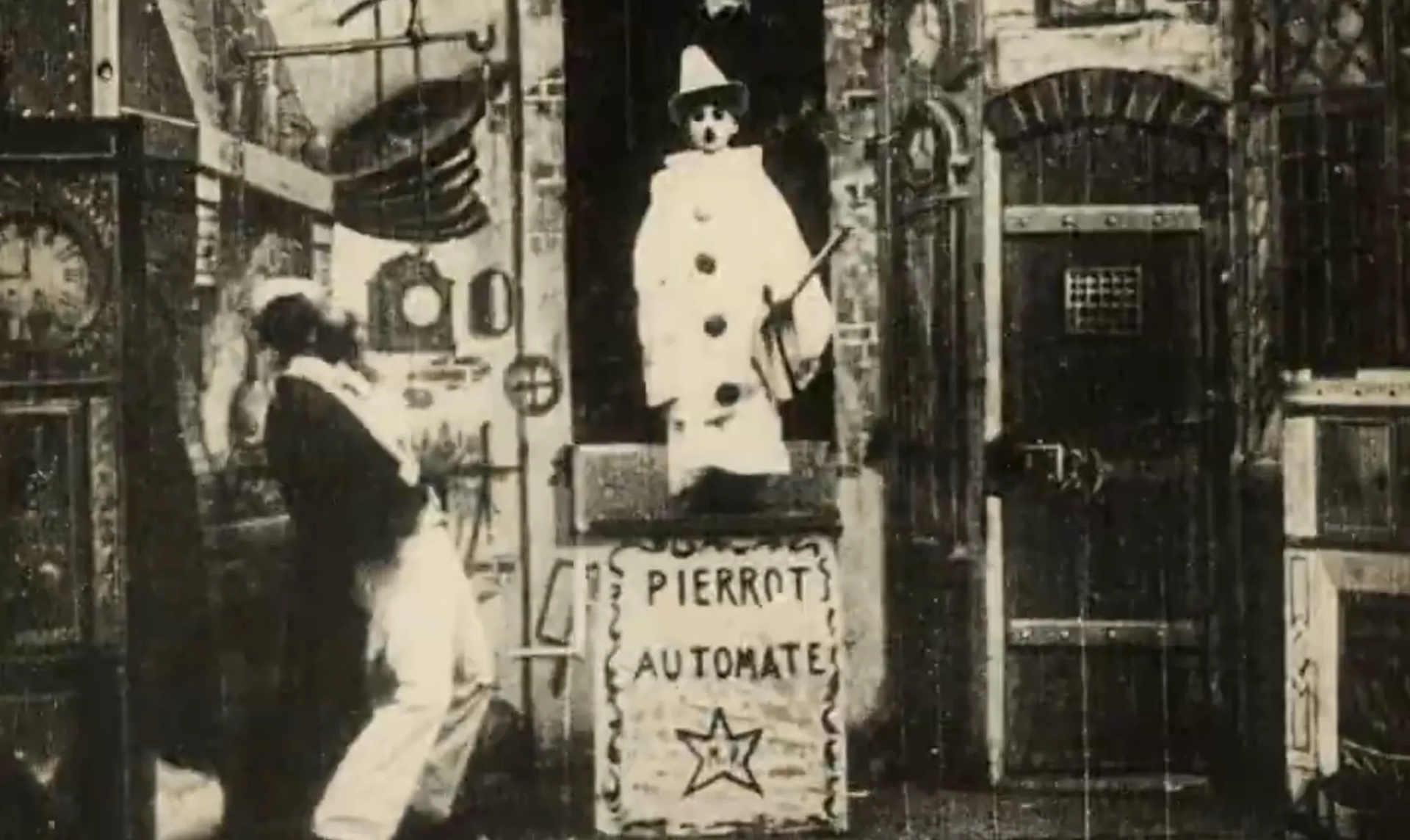
However, things soon go terribly wrong.
In the next scene, the automaton is replaced by a larger humanoid figure.
Which kind of looks like Freddie Mercury.
Gugusse once again winds it up, and the machine again responds by moving its limbs. But this time, after a few sporadic gyrations, the automaton reorients itself toward the magician and begins using the walking sticks in its hands as weapons, aggressively beating its creator.
The creator fights back and finally crushes it with a large cartoony mallet. So the first movie robot was evil and hostile.
Méliès mavens had known that such a film had been made, but thought it had been lost to the mists of time.
Technicians at the Library of Congress were examining the film reels when they began noticing telltale signs of Méliès’s work. After consulting a Méliès expert, they received confirmation that they were looking at a coveted, long-lost film. They then spent more than a week scanning and stabilizing the footage in order to convert it into a digital format. It is now available to view for free in 4K.
And you can do so here.
The Nose Knows
We all know about AI, but what about AO? What is AO, you ask? Artificial Olfaction. OK, we made that up, but scientists are working on developing an electronic nose. Why would they do this? To detect food spoilage, food-borne pathogens, and allergens. Says Food & Wine:
In June, a team from UC Berkeley showcased their new device in Science Advances, explaining that the technology can detect the scents associated with spoiled food far more accurately than we can and even detect common food allergens like peanuts. As Carla Bassil, a Ph.D. student in electrical engineering and computer sciences at Berkeley and the study’s lead author, shared with UC Berkeley News, the technology could one day be added to our kitchen appliances, making detection a breeze.
Specifically, integrating it into so-called “smart fridges” that can alert people when food is about to go off.
The nose uses its 16 gas sensors, each of which is programmed to detect different combinations of compounds associated with spoiled food or allergens. The nose then uses machine learning that Bassil trained to recognize the scents associated with seven foods: strawberry, blueberry, banana, walnut, hazelnut, cashew, and peanut. She also trained it on the scents of raw chicken, milk, and eggs, both fresh and after being left out at room temperature for 24 and 48 hours.
While the study only showcases the tech, Bassil added that she has also created a portable version that can be used alongside an iPhone app, so one day you can bring it with you on your travels or to meals out around town, just in case.
We think it would be rather rude to bring this to a restaurant.
This Week in Printing, Publishing, and Media History
July 13
1793: Journalist and French revolutionary Jean-Paul Marat is assassinated in his bathtub by Charlotte Corday, a member of the opposing political faction.
1956: The Dartmouth workshop is the first conference on artificial intelligence.
1985: The Live Aid benefit concert takes place in London and Philadelphia, as well as other venues such as Moscow and Sydney.
July 14
1798: The Sedition Act becomes law in the United States making it a federal crime to write, publish, or utter false or malicious statements about the United States government.
1853: Opening of the first major US world’s fair, the Exhibition of the Industry of All Nations in New York City.
1910: American animator, director, producer, actor, and co-founder of Hanna-Barbera William Hanna born.
1912: American singer-songwriter and guitarist Woody Guthrie born.
1965: The Mariner 4 flyby of Mars takes the first close-up photos of another planet.
1974: British comedian David Mitchell born.
2015: NASA’s New Horizons probe performs the first flyby of Pluto, and thus completes the initial survey of the Solar System.
July 15
1606: Dutch painter and etcher Rembrandt van Rijn born.
1779: American author, poet, and educator Clement Clarke Moore born.
1799: The Rosetta Stone is found in the Egyptian village of Rosetta by French Captain Pierre-François Bouchard during Napoleon's Egyptian Campaign.
1930: Algerian-French philosopher and academic Jacques Derrida born.
1947: American singer-songwriter and musician Roky Erickson born.
1956: English singer-songwriter and guitarist Ian Curtis born.
2003: AOL Time Warner disbands Netscape. The Mozilla Foundation is established on the same day.
2006: Twitter is launched.
July 16
1661: The first banknotes in Europe are issued by the Swedish bank Stockholms Banco.
1862: American journalist and activist Ida B. Wells born.
1907: American farmer and businessman Orville Redenbacher popped out.
1935: The world’s first parking meter is installed in Oklahoma City, Oklahoma.
1956: American playwright and screenwriter Tony Kushner born.
1969: Apollo 11, the first mission to land astronauts on the Moon, is launched from the Kennedy Space Center at Cape Kennedy, Fla.
In 2019, CBS News livestreamed the Apollo 11 launch on its YouTube channel:
https://www.youtube.com/watch?v=zYnF31el-ik&feature=youtu.be
July 17
1717: King George I of Great Britain sails down the River Thames with a barge of 50 musicians, where George Frideric Handel’s Water Music is premiered.
1889: American lawyer, author, and creator of Perry Mason Erle Stanley Gardner born.
1902: Willis Carrier creates the first air conditioner in Buffalo, N.Y.
1954: American author, screenwriter, and producer J. Michael Straczynski born.
1955: Disneyland is dedicated and opened by Walt Disney in Anaheim, Calif.
2001: American publisher Katharine Graham dies (b. 1917).
2006: American crime novelist Mickey Spillane dies (b. 1918).
July 18
1811: English author and poet William Makepeace Thackeray born.
1817: English novelist Jane Austen dies (b. 1775).
1906: American director, playwright, and screenwriter Clifford Odets born.
1937: American journalist and author Hunter S. Thompson born.
1968: Intel is founded in Mountain View, Calif.
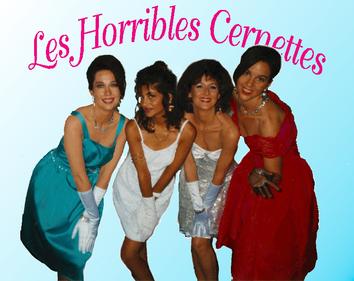
1992: A picture of Les Horribles Cernettes was taken, which became the first ever photo posted to the World Wide Web.
July 19
1834: French painter, sculptor, and illustrator Edgar Degas born.
1868: American “singer” and educator Florence Foster Jenkins born.
1947: English singer-songwriter and guitarist (Queen) and astrophysicist Brian May born.
1977: The world’s first Global Positioning System (GPS) signal was transmitted from Navigation Technology Satellite 2 (NTS-2) and received at Rockwell Collins in Cedar Rapids, Iowa, at 12:41 a.m. Eastern time (ET).
1983: The first three-dimensional reconstruction of a human head in a CT is published.