Spine-Tingling
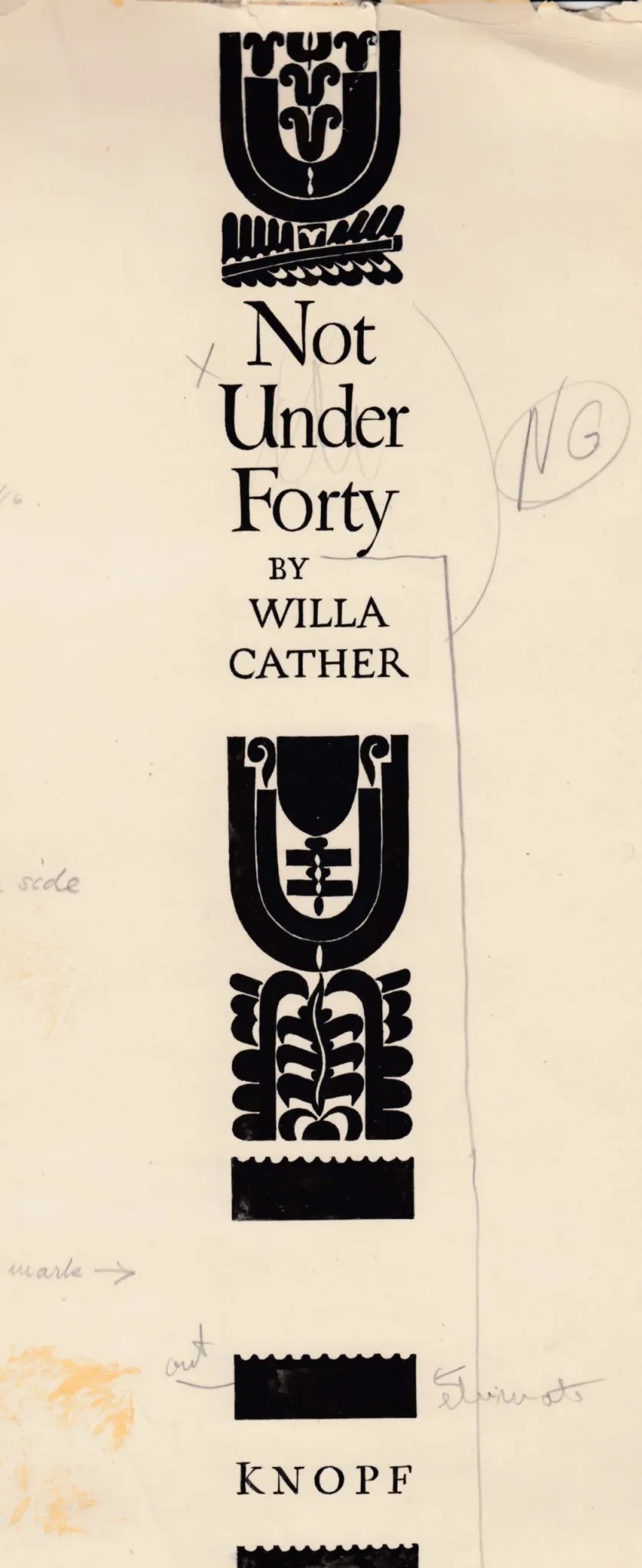
We never thought about this before, but it seems odd that publishers spend so much time fussing over book cover design when, on most bookstore shelves, it’s actually the spine that is the first thing a book browser sees. Book designer W.A. Dwiggins knows this, and as a result devotes almost as much attention to spine design as cover design. Via Print magazine, a sample of Dwiggins’ hand-drawn spine designs.
For those who have never seen a paste-up created with original artwork, feast your eyes on Dwig’s singular perfection—every mark is his handiwork. And when he made the occasional mistake, he replaced it with hand-drawn type or ornament.
Robots Go Postal
As we have intimated often in this space, China is doubling down on robots big time. Last year, China broke the record for the number of industrial robots in operation, and the country produces about 90% of the world’s humanoid robots. Now, via Futurism, the state-owned post office has started employing/deploying humanoid robots for package sorting, beginning with a major mail processing facility in the city of Guangzhou. The unspecified number of robots are said to be capable of processing up to 1,200 parcels per hour.
According to reporting shared on Chinese social media, the robot in question is a Xingdong M7, produced by the company RobotEra. Though the base unit isn’t bipedal — it appears to be a torso on a stand, basically —the M7 is advertised as having a 360-degree field of view integrated with 3D LiDAR, which it uses to guide arms its with 7 degrees of freedom, and hands with 12.
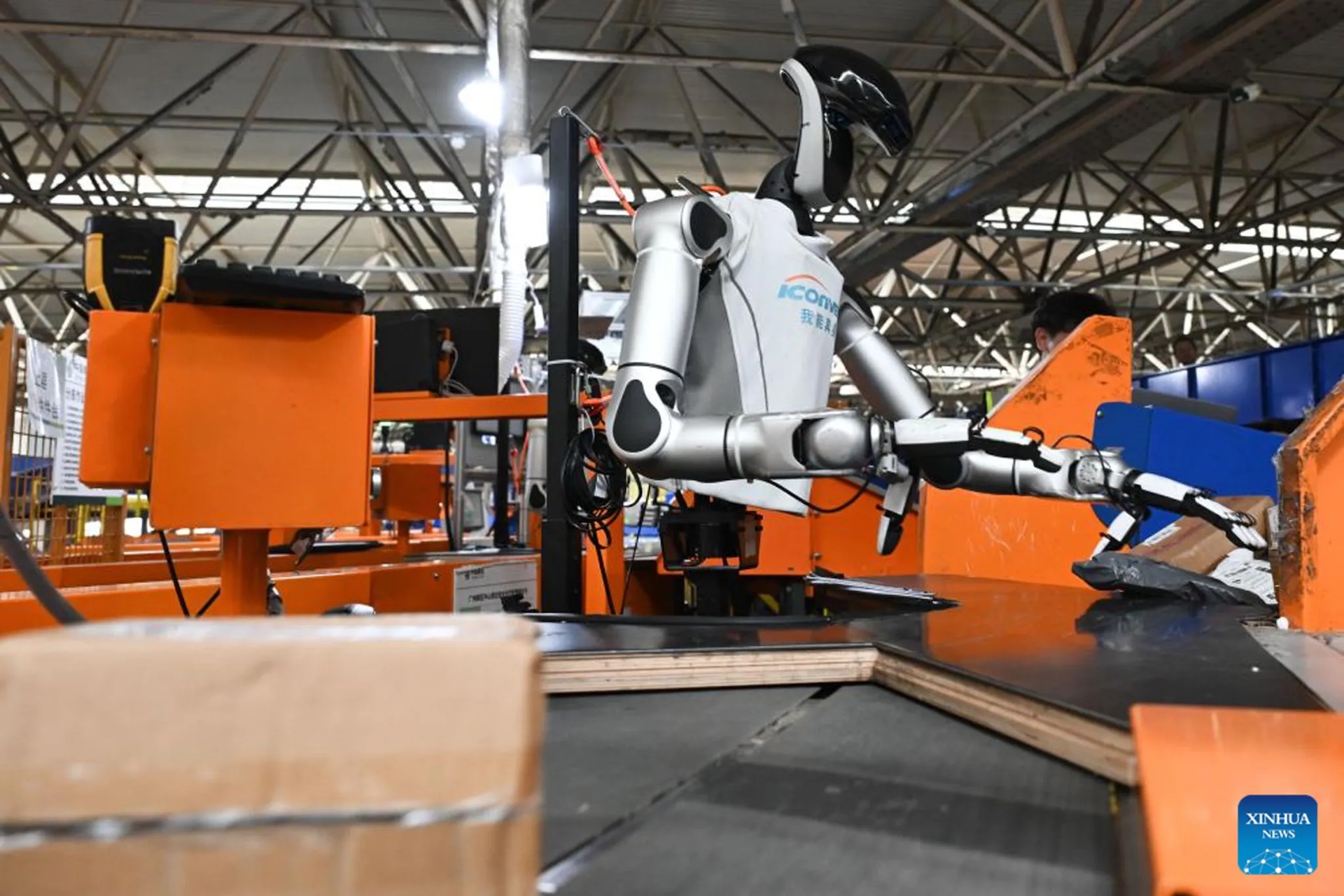
This seems like a logical development; the USPS has used automatic mail processing equipment for decades (maybe not a robot per se, but it’s still a machine). Still, some doubt the efficiency of robot package sorters.
Despite the buzzy photo-op, there is a question of how efficient each particular M7 actually is on the jobsite, especially compared to a human package handler. In a recent test of a similar robot by US firm Figure AI, a human intern was able to sort 192 more packages than his metallic co-worker over a 10-hour shift, despite taking lunch and bathroom breaks.
The thing is, even if humans are marginally faster than ’bots, finding people to do this kind of work is the real challenge.
It Doesn’t Feel Like a Tuesday
(Optional musical accompaniment to this item.)
Looking for a solution in search of a problem—or at least one that is not AI-related? Via Core77, New-Zealand-based Stupid Engineering designed an amusingly overproduced Day Display.
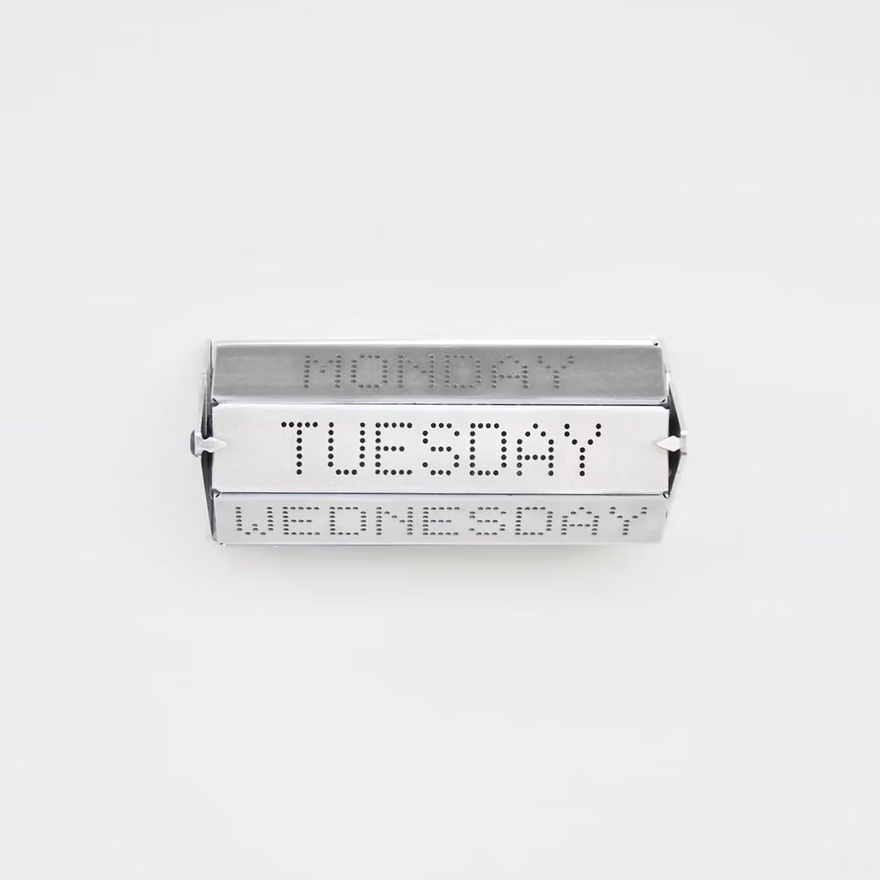
Now, if you think the idea of a wall-mounted slab of aluminum that displays the day is kind of dopey, well, that’s the point.
"Made of precision milled and bent 2mm aluminium, the Day Display is a Stupid solution to a stupid problem."
Adds Ben, the industrial designer who developed it:
"Stupid Engineering started as a personal project during some downtime at my work. Setting myself the challenge of creating aesthetically pleasing, easily manufacturable objects that achieve a goal or function in the simplest/silliest/stupidest way possible."
Gotta say, though, those of us who have challenges navigating the space-time continuum might find this useful.
Poetry in Motion
If Beat poet Allen Ginsberg were alive today, he’d be turning 100, and being destroyed by madness, starving hysterical naked, would be the least of the problems of the best minds of his generation at this point.
Anyway, back in 1959, Fantasy Records had released Howl and Other Poems, spoken-word album featuring Ginsberg himself reciting several of his works. Now, via Boing Boing, Craft Recordings is reissuing the album, reproducing the original package design on “eco-friendly green blend vinyl.”

The record catches Ginsberg performing the title poem alongside "America," "Sunflower Sutra," "A Supermarket in California," and "Footnote to Howl," drawn from his Big Table reading in Chicago and sessions at Fantasy Studios in San Francisco. It arrived three years after the 1957 obscenity trial that ended with a court affirming the poem's literary value — a free-speech victory City Lights publisher Lawrence Ferlinghetti was arrested to win. In 2019, the Library of Congress added Ginsberg's "Howl" to its National Recording Registry.
Not many people are aware that Ginsberg wrote a follow up poem about Natalie Schafer’s character on Gilligan’s Island called “Mrs. Howl.”
Food Photos
Via the BBC, check out the winners of this year’s World Food Photography Awards. We hasten to add that this is not simply snapping a picture of a meal and posting it to Instagram, which according to “Weird Al,” is a tacky thing to do. On the contrary:
The 2026 competition, sponsored by Tenderstem® Bimi® Broccolini, drew nearly 9,000 entries from more than 50 countries, immortalising harvests, markets, family kitchens, street food, celebrations and survival. With just one click, food photographers around the world created a global portrait of food culture, showing not just what people eat, but how food is woven into everyday life.

Winner, Cream of the Crop: Albert González, Spain
In Ine, a fishing village in Kyoto Prefecture, Japan, squid dries in the sun using the traditional technique of himono. The preservation method, used for fish and seafood, draws flavour from salt, air and time, linking the village's food traditions to the sea that sustains it.
It’s a pretty fascinating collection.
Socket to Me
Do you like electrical plugs? Not necessarily for their obvious usefulness, but for their aesthetics? If so, be sure to check out the Museum of Plugs & Sockets. Says Boing Boing:
A man with the delightful name of Oof Oud spent his career studying DNA and chromosomes at the University of Amsterdam. Then he retired and built the Museum of Plugs and Sockets — a sprawling website cataloging over a thousand electrical plugs and sockets from more than 25 countries.
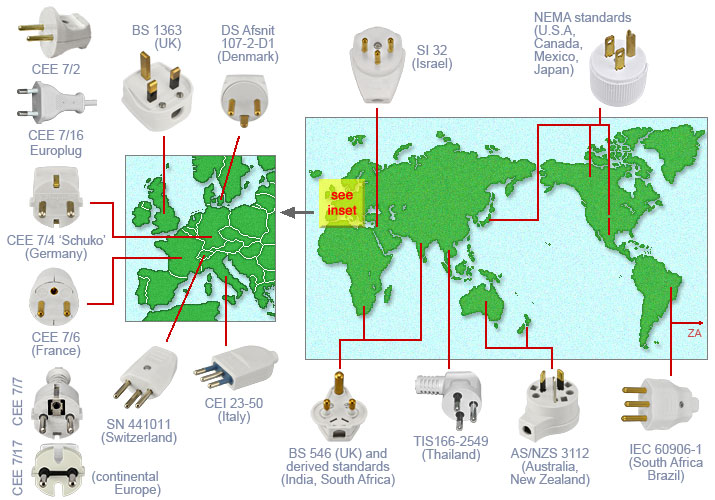

The collection started in the early 1990s when a university technician found a batch of old three-phase plugs during a building relocation and handed them to Oud instead of tossing them. That act of rescue grew into an obsession with what Oud calls "the diversity of incompatible systems" — the fact that the world never agreed on how to plug in a lamp.
He'd have fun with computer peripheral cables.
Screwed at the Pump?
Here’s an Around the Web Public Service Announcement. It’s possible you may have heard about a new gas station scam called the “screw method.” According to AL.com, via Boing Boing, it involves…
fraudsters sticking a screw in the nozzle cradle of the gas pump so that the level never fully returns to the off position when you're done filling up. That supposedly prevents the machine's mechanisms from knowing the transaction is done and allows the scammer to pull up to the pump and fill up on someone else's dime.
Apparently, when gas prices rise, gas station/pump scams proliferate. But you’ll be happy to know that despite what social media, legitimate media outlets, and even police departments may have warned, the “screw method” scam is a hoax. Says Snopes.com:
The people and organizations promoting the unsubstantiated warning failed to cite any credible, verified reports of criminals using screws to defraud consumers at gas pumps. Because of this, we've rated the claim false.
…We have yet to locate and verify a single reported case of a criminal carrying out the "screw method" scam as described, much less the alleged activity widely occurring — as social media users essentially claimed.
So that’s one less thing to worry about.
Flight of Fancy
Do you love flying? In a plane? Well, if so, sorry…you’re on your own. Root canal is preferable to flying these days. But, if you crave a long flight, via Laughing Squid, you can take the world’s longest domestic flight.
Sam Denby of Half as Interesting explored which nonstop domestic flights are the longest, noting that his requirements were that neither immigration nor customs nor passport would be required upon arrival.
He looked at some flights in France to other French provinces (i.e., France to Tahiti), but varying immigration requirements made them “less domestic.”
So, what’s the world’s longest domestic flight that actually feels like a domestic flight? No immigration, no customs, no passport. Well, that title goes back to the Boston-to-Honolulu nonstop. …Hawaii is, of course, a fully fledged US state, making it a completely seamless domestic flight experience. Passengers from Boston to Honolulu go through the exact same checks as those from Boston to Baltimore.
He doesn’t specify which airline(s) offer this particular route. Given how hideously nickel-and-dimey airlines have become these days, we have no doubt there would be an extra fee to not have to go through customs, have carry-on luggage (actually not making that one up), or, indeed, sit inside the plane.
Et Tu, Graphene?
Was it a good week for graphene news? It’s always a good week for graphene news! Well, maybe not… Skeleton Technologies launches graphene-based GrapheneUPS for AI data centers. GrapheneUPS is a UPS (uninterrupted power system) designed for AI data centers that need continuous power as well as the ability to comply with grid connection codes. From (who else?) Graphene-News:
GrapheneUPS uses a continuous AC?DC?AC double?conversion topology that isolates sensitive AI computing equipment from grid disturbances such as voltage dips, short interruptions and fluctuations during grid restoration, while also helping data centers meet evolving grid connection and grid code requirements without separate stabilization equipment at the point of connection. According to Skeleton, the system can enable up to 40% more computing power while requiring up to 44% less grid connection capacity, and delivers roughly 50% lower volume for the same performance compared to conventional UPS systems, supporting deployment in white space, gray space or as a containerized outdoor solution.
Enjoy the Silence
What is the quietest spot in the U.S.? We’re unsure that it’s possible to determine such a thing conclusively, but, via Atlas Obscura, one highly touted candidate is one square inch of space in Washington state’s Olympic National Park. And a small red pebble marks the spot. So who determined this?
One Square Inch of Silence, an independent research project created by the author and Emmy Award-winning acoustic ecologist Gordon Hempton, aims to protect the space from human noise intrusions. The tiny quiet spot, accessible via a three-mile rainforest hike down the Hoh River Trail near Forks, was designated on April 22, 2005 (Earth Day) as a “noise control project” to ensure the decibel count at the square inch would never rise.
The idea is that it’s a place utterly devoid of “ambient noises,” and by “ambient” they mean human-produced noises, like airplanes and cellphones.
But the area isn’t completely silent. It’s designed to highlight the difference between natural sounds—things like the soft trickle of rainwater or the buzzing hum of an insect—and human noise. Hempton launched this "sanctuary of silence" with the hope the place will allow people to listen to and connect with the sounds of nature. The absence of anthropogenic noise is also good for the wildlife, as human noise often negatively affects animals’ feeding, breeding, and nesting habits.
So, when in Forks, Wash., be sure to stop by. Just make sure your mobile phone is off.
Surely You’re Eating, Mr. Feynman
Not many people these days likely know about Richard Feynman, the Caltech physicist who somehow became the most famous theoretical physicist in the world—not that there was an awful lot of competition. His early work was on the Manhattan Project, and in1965, he shared the Nobel Prize in Physics with Julian Schwinger and Shin’ichir? Tomonaga “for their fundamental work in quantum electrodynamics (QED), with deep-ploughing consequences for the physics of elementary particles.” Feynman become one of the great popularizers of science, through several series of books and lectures targeted at lay audiences. His friend Ralph Leighton published several bestselling collections of Feynman’s anecdotes including Surely You’re Joking, Mr. Feynman! (1985) and What Do You Care What Other People Think? (1988). We also highly recommend James Gleick’s 1993 biography Genius: The Life and Science of Richard Feynman.
Anyway, we bring this up because, via LiveScience, researchers have finally cracked a 50-year-old “Restaurant Problem” that Feynman jotted down over lunch. In the late 1970s, Feynman went to lunch with Leighton at a restaurant in Glendale, Calif. Leighton couldn’t decide if he should order his favorite dish or risk trying something new.
Feynman turned the choice into a math problem, and solved it on a piece of notebook paper. His equation showed exactly when Leighton — or any indecisive diner, for that matter — should stop taking risks and stick with what one knows is good.
We could all benefit from the solution to this problem. Unfortunately, there was another problem: Feynman’s notes were unreadable.
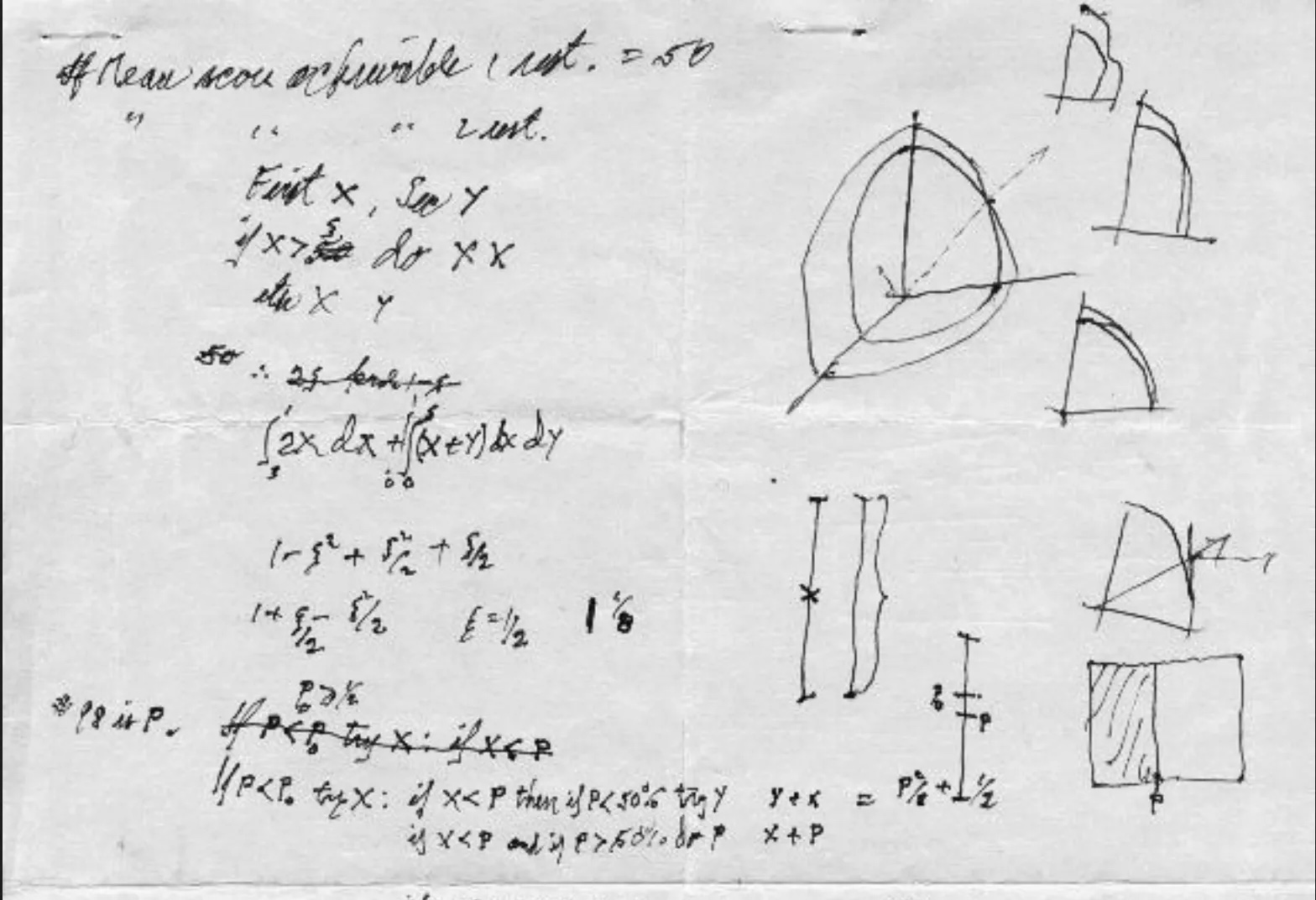
But now, researchers reconstructed a decision-making problem from Richard Feynman's previously undeciphered notes and proved him to be right. The findings were published on June 1 in the journal Proceedings of the National Academy of Sciences.
The conundrum:
Imagine you're visiting a new city for a week. Each night, you can either try an unknown restaurant or return to the best one you've already found. You want to maximize your total dining experience over the whole trip.
In mathematics, this is considered an “optimal stopping problem,” and really applies to just about any kind of decision-making—house hunting, job searching, etc.
But Feynman argued you can always go back to a previous restaurant. The goal is to maximize your cumulative enjoyment, not just find the single best spot.
Feynman's notes showed that the optimal strategy involves a quality threshold — a minimum score you require before committing — that starts high and drops as your trip runs out.
Brian Christian, a computer scientist and cognitive scientist at University of Oxford, and his collaborator Tom Griffiths starting tackling the restaurant problem 13 years ago. They found Feynman’s original notes through the Feynman Lectures website. They proved that Feynman’s solution was the best, then decided to try to determine if people actually solve the problem this way.
They recruited 2,520 participants online and presented them with a digital version of the scenario: a grid of restaurants in a virtual city, each with a hidden quality score revealed only on the first visit. Participants aimed to maximize their total score over a fixed number of nights. Each person played just once.
The results were not unexpected.
The answer: People don't follow Feynman's optimal curve in reality. Instead of the precise mathematical threshold, participants used a much simpler rule. Their quality bar started high and dropped by the same fixed amount each night regardless of how long the trip was or what the restaurant landscape looked like.
The results have implications beyond dining out.
The results fit into an emerging framework in cognitive science called "resource rationality." The idea that humans aren't perfectly rational, but make good use of the limited time and brainpower they have.
Now, what to have for lunch…
Cake Walk
When you hear the word “complexity,” you don’t immediately think of cakes. Or vice versa, for that matter. But, via Atlas Obscura, Malaysia’s kek lapis Sarawak is a type of cake that is amazingly complex and almost too beautiful to eat.
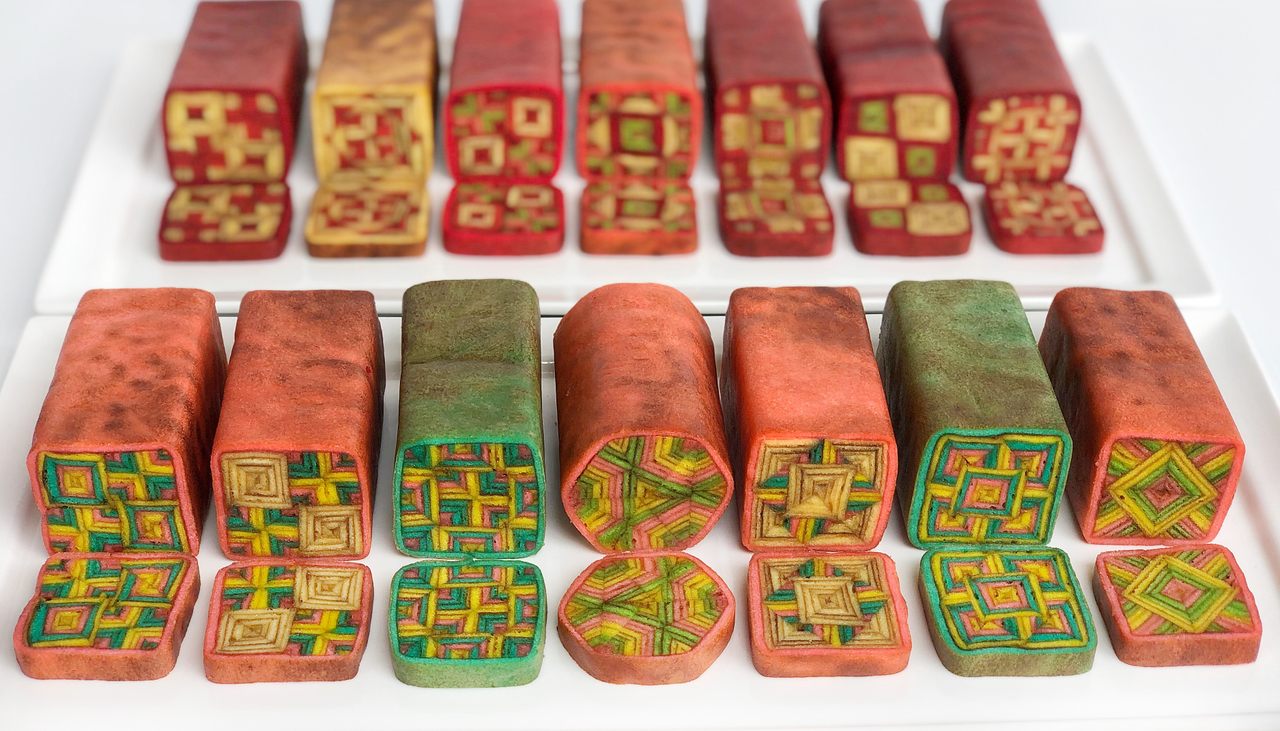
Lapis means “layers” in Bahasa Malaysia, Malaysia’s national language, and Sarawak is a state located on the northwestern coast of Borneo. The kek (cake) is aptly named. Slice off a piece and you’ll find a kaleidoscope of colorful layers, meticulously arranged in distinct geometric patterns. Making it is a long, grueling process that tests even the most seasoned of Sarawak’s bakers.
Interesting, kek lapis Sarawak is not something that has been down through hundreds of generations.
It originated in the 1970s and 1980s, when the Betawi people from Indonesia introduced Sarawakians to kek lapis Betawi, or lapis legit, a localized version of the spit cakes that Dutch colonists used to enjoy. Lapis legit incorporates spices such as cinnamon, cardamom, clove, and star anise into a fluffy batter of butter, flour, and eggs, which bakers cook in multiple brown and beige layers.
Sarawak’s version of kek lapis, however, is much more colorful and complicated, with its inner layers made vibrant with food coloring and natural extracts. Bakers in Sarawak also added their own spin on the cake’s flavors, resulting in concoctions such as kek lapis Cadbury and kek lapis Oreo. Building these cakes requires a vivid imagination, an almost mathematical mind for detail, and perhaps most importantly, a steady hand.
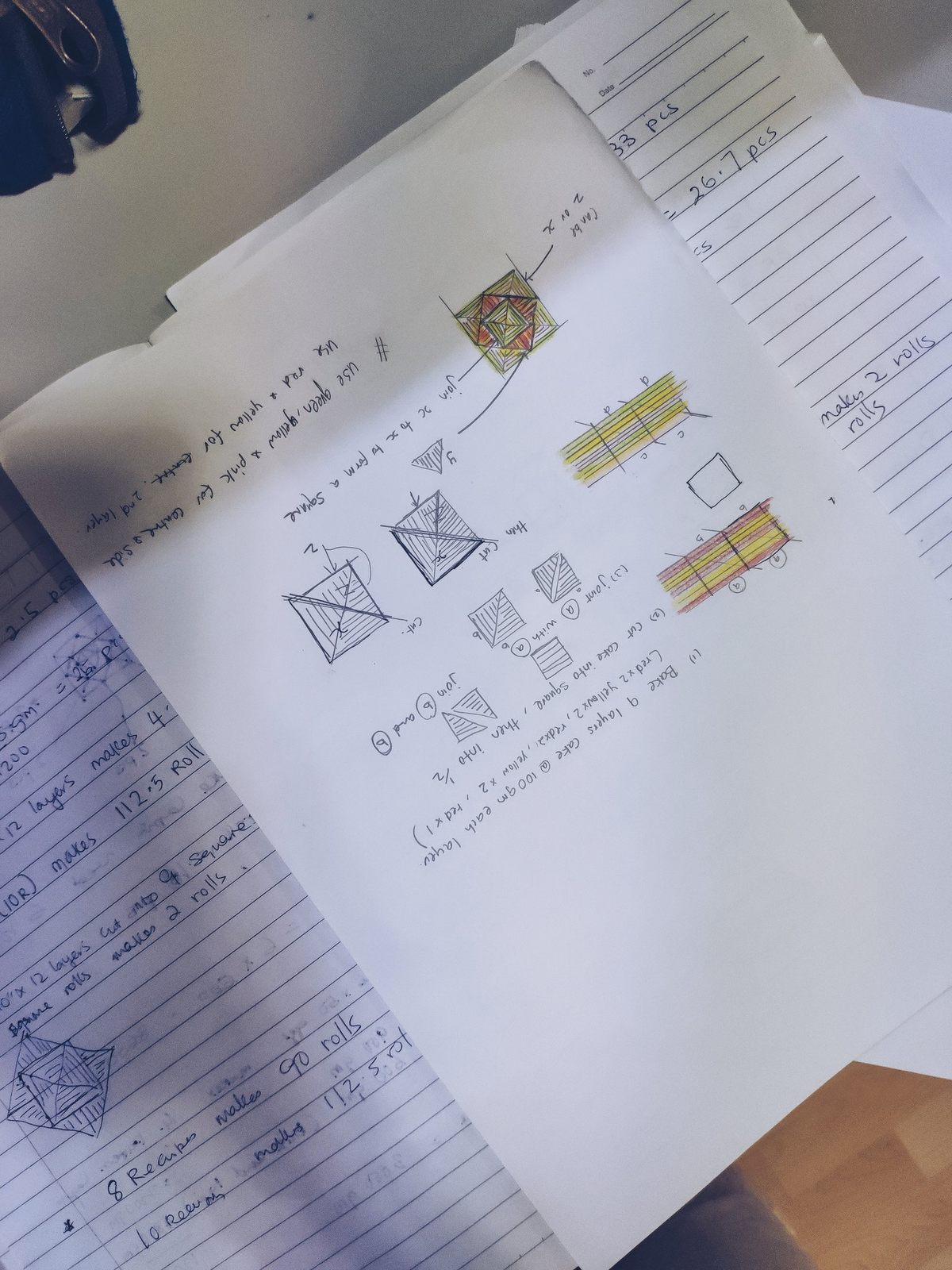
Ah yes, the traditional kek lapis Oreo—just like grandma used to make. We’re also amused that modern kek lapis Sarawak bakers use elaborate diagrams:
Did Richard Feynman ever attempt this?
This Week in Printing, Publishing, and Media History
June 9
1523: The Parisian Faculty of Theology fines Simon de Colines for publishing the Biblical commentary Commentarii initiatorii in quatuor Evangelia by Jacques Lefèvre d’Étaples.
1870: English novelist and critic Charles Dickens dies (b. 1812).
1891: American composer and songwriter Cole Porter born.
1930: A Chicago Tribune reporter, Jake Lingle, is killed during rush hour at the Illinois Central train station by Leo Vincent Brothers, allegedly over a $100,000 gambling debt owed to Al Capone.
1934: Donald Duck makes his debut in The Wise Little Hen.
1961: American screenwriter, producer, and playwright Aaron Sorkin born, and walking and talking in no time.
1973: Secretariat wins the U.S. Triple Crown.
June 10
1793: The Jardin des Plantes museum opens in Paris. A year later, it becomes the first public zoo.
June 11
1572: English poet, playwright, and critic Ben Jonson born.
1892: The Limelight Department, one of the world’s first film studios, is officially established in Melbourne, Australia.
1910: French biologist, author, inventor, and co-developer of the aqua-lung Jacques Cousteau born.
1935: Edwin Armstrong gives the first public demonstration of FM broadcasting in the United States.
1936: The London International Surrealist Exhibition opens.
1998: Compaq Computer pays US$9 billion for Digital Equipment Corporation in the largest high-tech acquisition.
2002: Antonio Meucci is acknowledged as the first inventor of the telephone by the United States Congress.
June 12
1817: The earliest form of bicycle, the dandy horse, is driven by Karl von Drais.
1916: American director and producer Irwin Allen born.
1920: American cartoonist Dave Berg born.
1939: Shooting begins on Paramount Pictures’ Dr. Cyclops, the first horror film photographed in three-strip Technicolor.
1939: The Baseball Hall of Fame opens in Cooperstown, N.Y.
1949: English singer-songwriter, bass player, and producer John Wetton born.
1959: American singer-songwriter and musician John Linnell born.
1985: American computer programmer and co-creator of Mozilla Firefox Blake Ross born.
June 13
1865: Irish poet and playwright W. B. Yeats born.
1971: The New York Times begins publication of The Pentagon Papers.
1983: Pioneer 10 becomes the first man-made object to leave the central Solar System when it passes beyond the orbit of Neptune.
June 14
1618: Joris Veseler prints the first Dutch newspaper Courante uyt Italien, Duytslandt, &c. in Amsterdam (approximate date).
1822: Charles Babbage proposes a difference engine in a paper to the Royal Astronomical Society.
1933: Polish-American novelist and screenwriter Jerzy Kosi?ski born.
1936: English essayist, poet, playwright, and novelist G. K. Chesterton dies (b. 1874).
1951: UNIVAC I is dedicated by the U.S. Census Bureau.
1966: The Vatican announces the abolition of the Index Librorum Prohibitorum (“index of prohibited books”), which was originally instituted in 1557.