Frank Plechshmidt is a designer, and was designing labels for a supplement co-packing company owned by a friend of his. “My friend asked me, if I wanted to join him and help do the designs for packaging, websites, marketing, graphics, etc. I also needed to order all the packaging materials including folding cartons, leaflets, and also labels, and as the company grew it became more and more labels.”
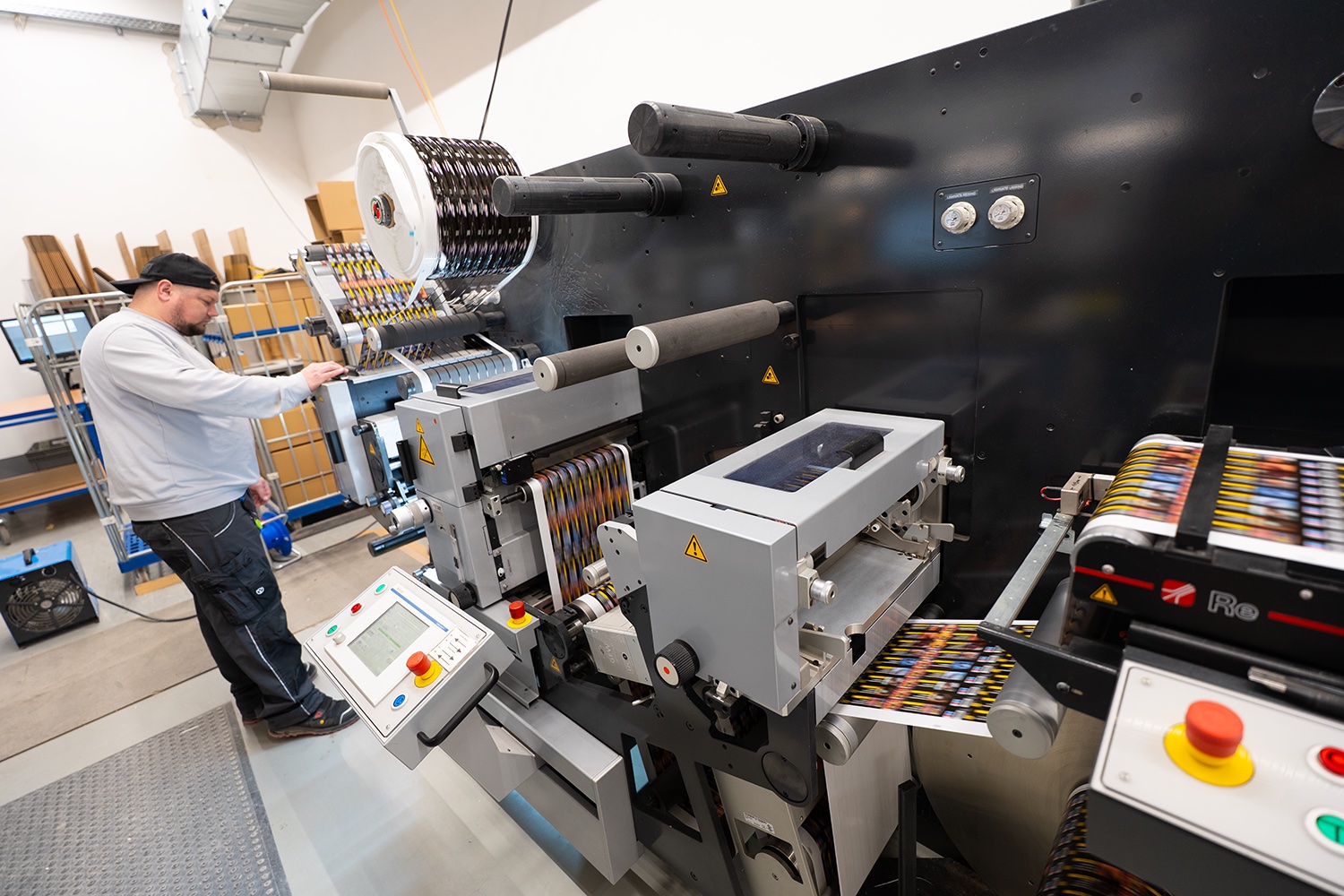
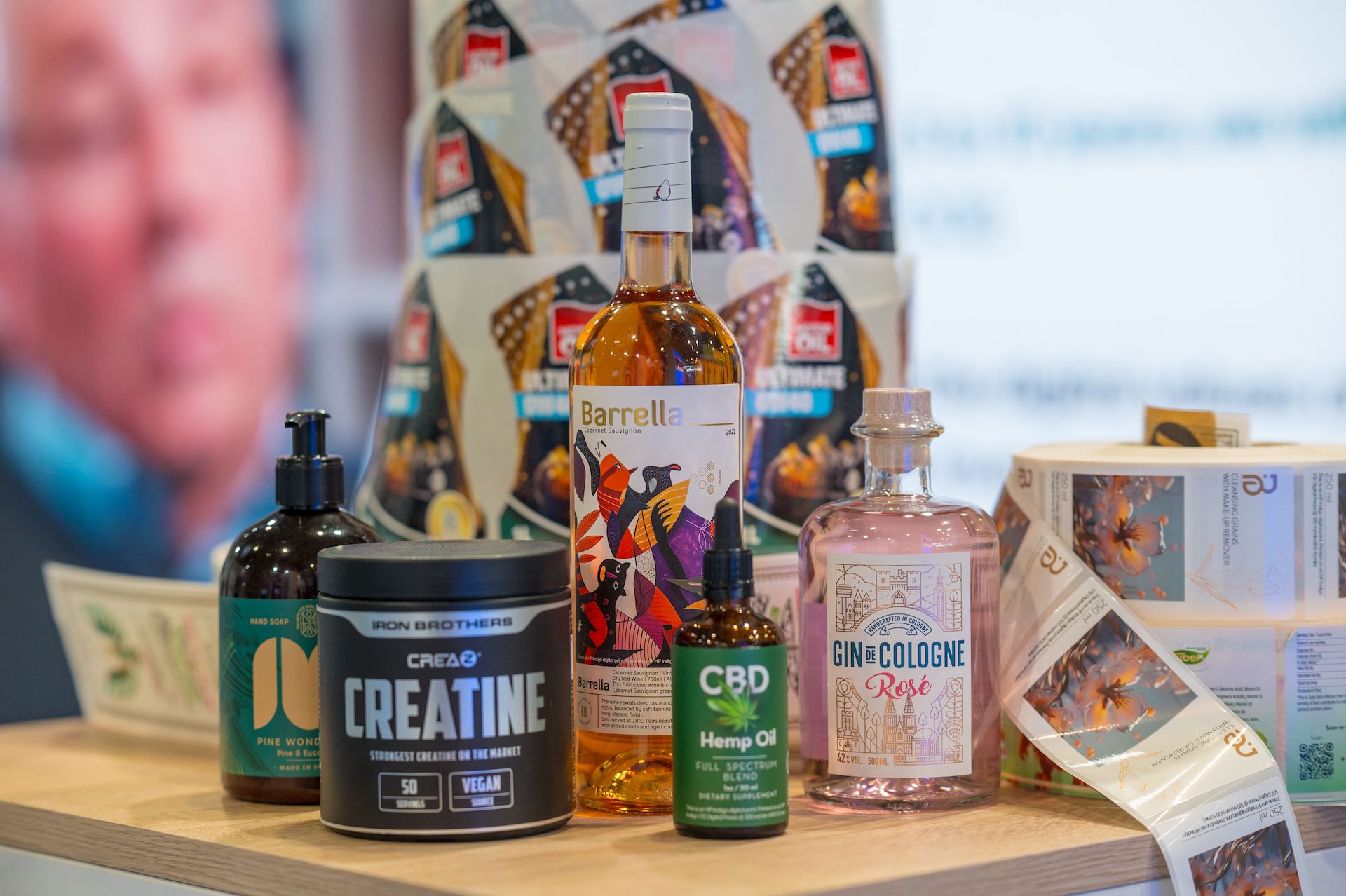
So, he started the company from scratch, designing the processes and then convincing the banks to lend him some money. Label!sten are specialists in small quantities of labels, they do it by standardizing production: standardized materials and standardized sizes for labels and for pouches. Then they batch jobs together, “so we can take 20 jobs together in a basket, produce them, and then we divide them afterwards again. We have been doing it with labels since 2013 and since 2021 we also do it with pouches.”
No Minimum Order Quantity
When they started, “We always needed just 100, 200, 500 pieces, sometimes 2,000, but not always the same quantities, and nobody wanted to print them, because they all had conventional equipment.”
So in 2013, they started printing labels themselves on a very small Epson ColorWorks narrow web inkjet printer with a roll feeder and rewind attached. It was just a 4-in. (10cm) or a 6-in. wide web, so he started small and printed as few as 500 and realized he could also print 5,000 pieces—it didn’t matter.
Although, he said, the ink and substrate material were “crazy expensive,” they started with cut and stack, crack and peel labels. After printing, they would apply them to the cans, and as they grew, they purchased a machine for automatic application.
They continued growing and in 2015 they got a second desktop printer. “I signed the deal for the HP Indigo press, because I saved so much money on the ink compared to the to the click charge that I could use the money I save for the financing of the press,” said Plechshmidt. In 2019, he acquired an Indigo 6900, and an Indigo 6K in 2022.
Today, he is “the head of heads,” the CEO and founder of Label!sten, and it has remained a digital first company. To manage the processes, he writes software himself, including the ERP, CRM, and production systems. “I programmed all the processes in-house and all the processes outside as well from the first user registrations inquiry. The calculation tool is on the website and it’s all connected together.”
Currently they have four locations: a sales office in Luxembourg, a 15,000 sq.ft. label production facility in Marktredwitz, and a new 25,000 sq.ft. pouch production facility in Thiersheim they moved into in September last year. In the new pouch facility, they are currently running two HP Indigo 200K presses and three pouch lines for standard pouches, and one additional one for flat bottom pouches. They also recently added a new sales office in Brooklyn, NY (US).
Enter the HP Indigo V12
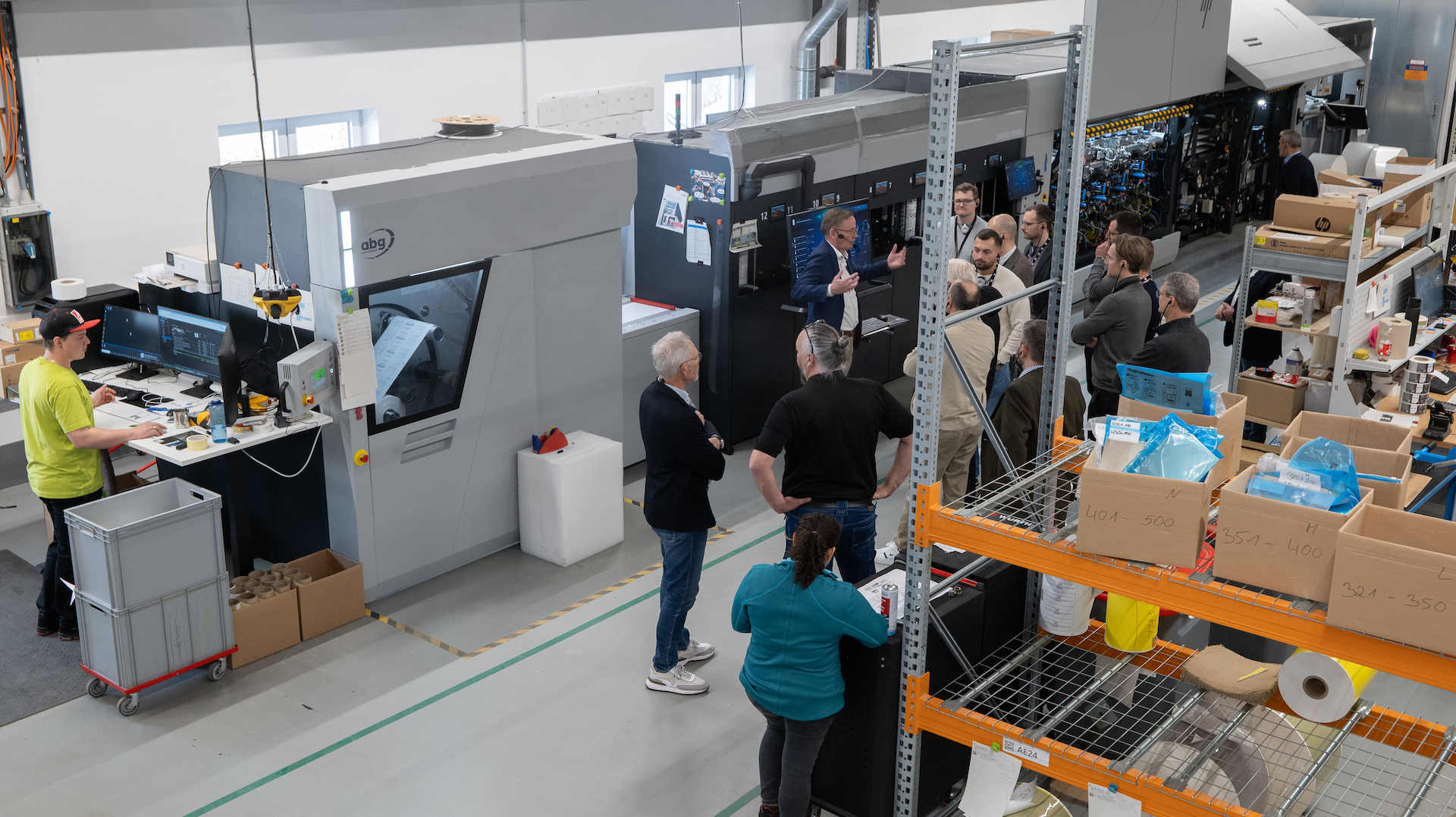
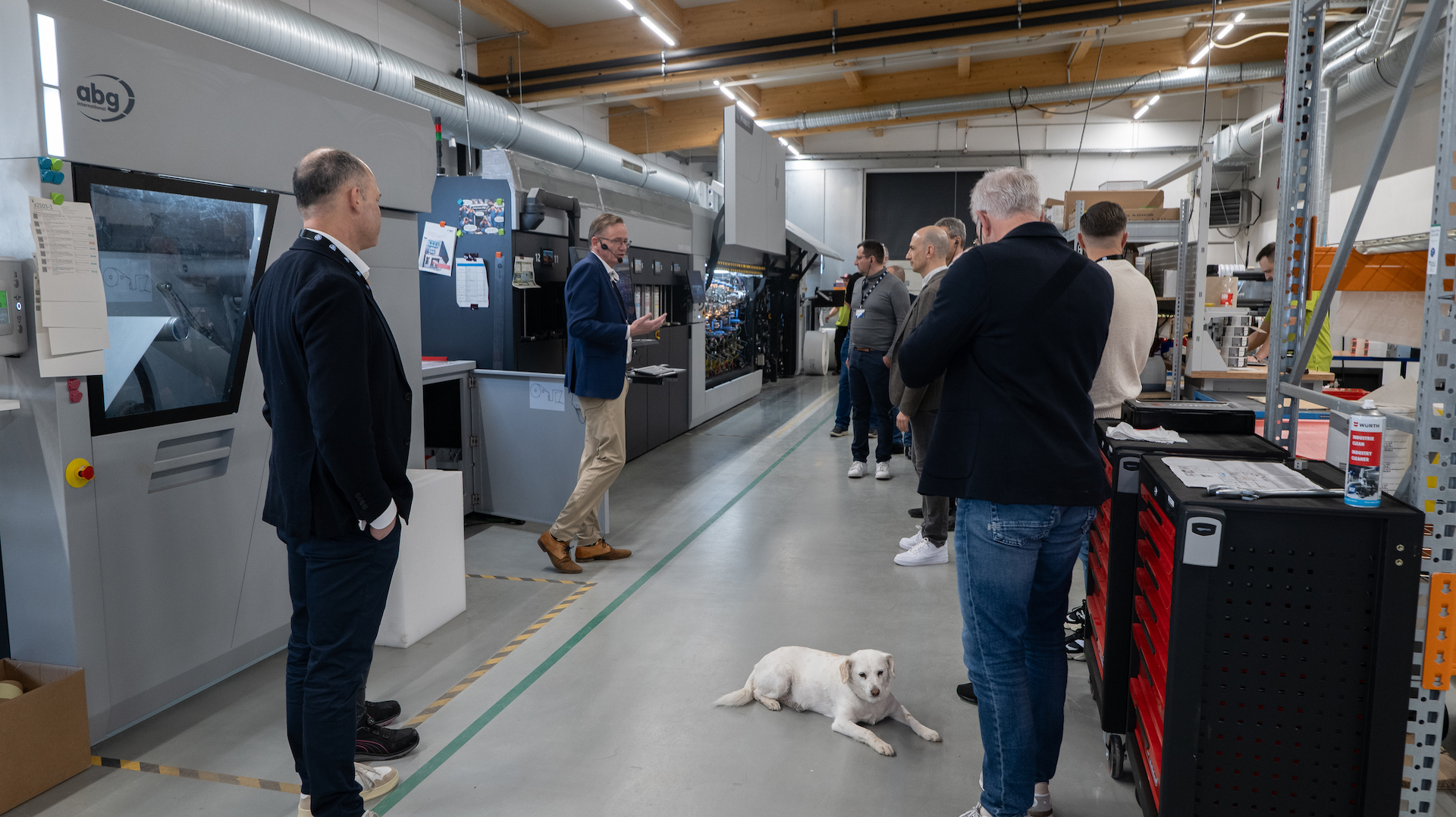
“HP convinced me with the design of the Indigo V12 the first day of LabelExpo in 2020 in Brussels,” he said. “It was a WOW moment, and I said I need this press, but I don’t know why yet.”
Fast forward six years, and Plechshmidt realized, “there was nobody else in Europe purchasing a V12 that was a purely digital operation. I didn’t decide it because it was cheaper to move flexo to digital. I decided because it was much faster, so I can produce lot bigger volumes much faster.”
First he needed to convince his managers that they don’t have to select which job they print on which machine. “We needed a machine where we can print the same quality and the same colors like we do on the Indigo 6K, so let’s go for the V12 and be able to print jobs wherever we need to,” he said. “With the V12 it doesn’t matter how long the runs are—if they are five meters or 5,000 or 50,000 meters, it doesn’t matter, and if you want to have 500,000 labels tomorrow, they can do it.” Now they have two Indigo 6K units running parallel to the Indigo V12. Since the Indigo V12 was installed, they found they could run even small runs, since you only need to print at least five meters per job—“that’s what we do.”
Recently, he was in their label facility and the Indigo V12 was running a number of small runs of “three seconds, five seconds, six seconds, eight seconds—it just kept changing.” Though he was told that’s not done that often on the V12, it can be done if needed. As they become more aware of how the V12 fits in their production, they may eventually switch one 6K to the flexible packaging facility, but for now the two 6K machines are still running labels.
Sustainability
Sustainability is a passion of Franks, and he is always looking for something to help make a change, beyond just putting solar panels on the roof. Then in 2019, at an HP workshop, they presented a slide that explained that 25% of all packaging is thrown away before it sees a product.
“I thought, that’s what I do all the time already, because I just produce what the customer needs at the moment, and there is the overproduction we have, and the customer also orders more than they need, so we need to work on those affecting the 25% waste. That was and is my mission at the moment.” Today, he tells all the printers in the plant to just print what the customer needs and don’t oversell. He also tells the buyers from the companies, from the brands, “Instead of throwing away 25% of all your packaging, pay the cost of digital 33%. You get the right amount, and don’t throw anything away.
“We have a pouch facility,” he added, “where the two Indigo 200Ks are running together. We have three pouch lines. We just need to set up the pouch maker twice a day because then we can do all the sizes and the setup is ready. Now it's all about scaling.”
The Digital Future Is Already Here
Two years ago, they had no sales people, now they have 10. With labels, they didn’t need salespeople because all the growth multiplication came just from word to mouth. “With flexible packaging, it’s harder to sell,” he said. “You need to educate the customer and tell them how it works, the benefits, conformity declarations, certifications, etc. You need to build more brand equity and trust, and look for selling opportunities like trade shows. We are continuing to hire salespeople.”
Plechshmidt also found that bringing in young talent is becoming easier, since the digital mindset is something the younger generation loves. “We have a lot of young employees,” he said, “and they love working with the computers at the front of the Indigo 200Ks and the Indigo V12. Every machine has a computer, they’re connected to the system, and they can look at the labels and pouches they produced.” He says that helps keep the company young and attractive customer-wise as well. “I think it’s that nice people attract nice people,” he added. “I also have a really good management team, one for labels and one for packaging, which allows me to have a lot of time for programming.
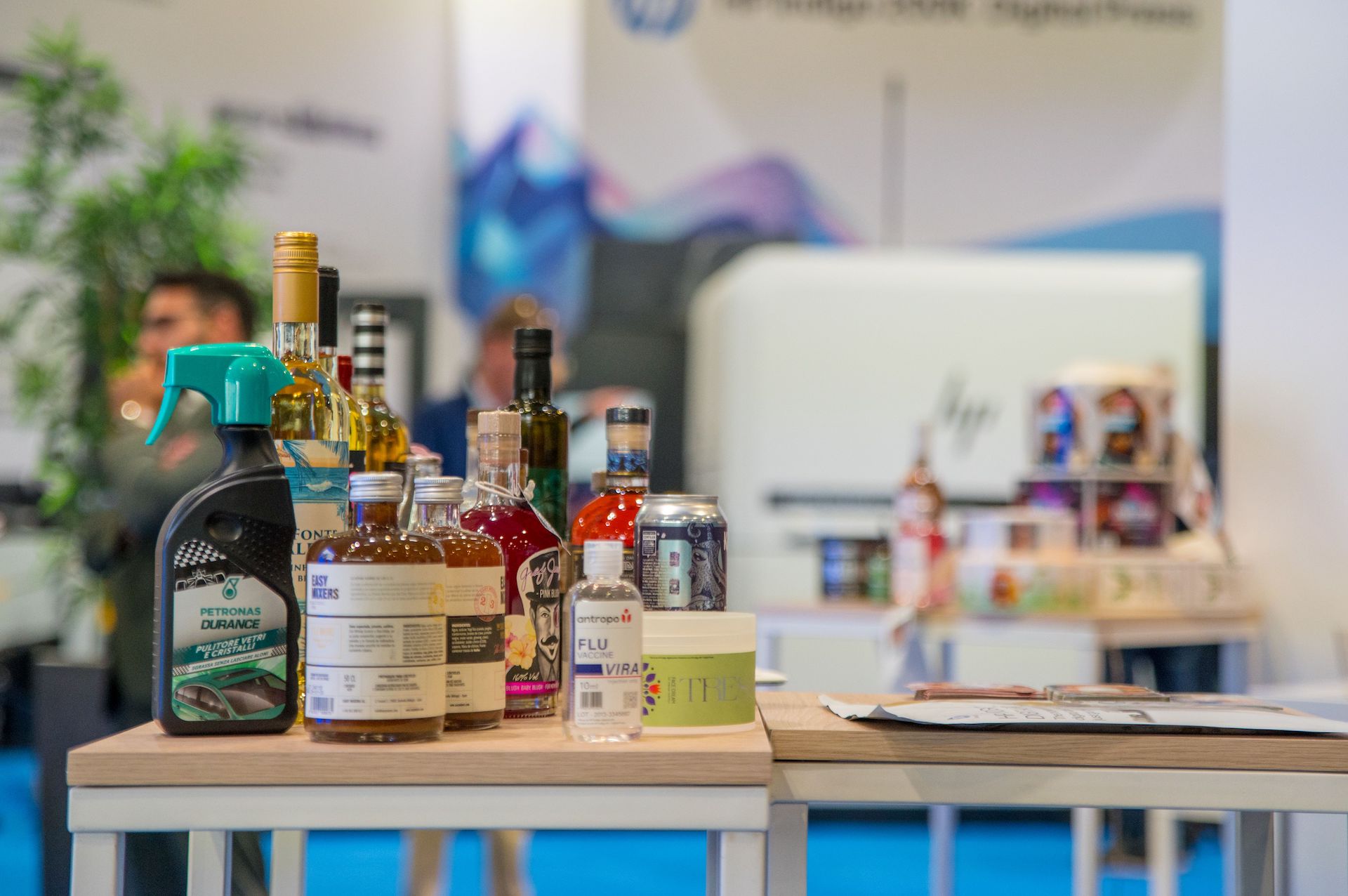
“We have a lot of customers who are using flexo and roto, and it takes time to educate them that they can buy the same volumes with shorter delivery times,” he continued. “So that’s how we convince all our customers they don’t need to plan a lot anymore, they just need to give us the files in and they get their 200,000 labels in three days with the HP Indigo V12.”
More to Come…
2026 is moving at an increased pace. I would like to address your interests and concerns in future articles as it relates to the manufacturing of Print, Packaging, and Labels, and how, if at all, it drives future workflows including Industry 4.0 and 5.0. If you have any interesting examples of hybrid and bespoke manufacturing, I am very anxious to hear about them. Please feel free to contact me at [email protected] with any questions, suggestions, or examples of interesting applications.