Say Cheeze
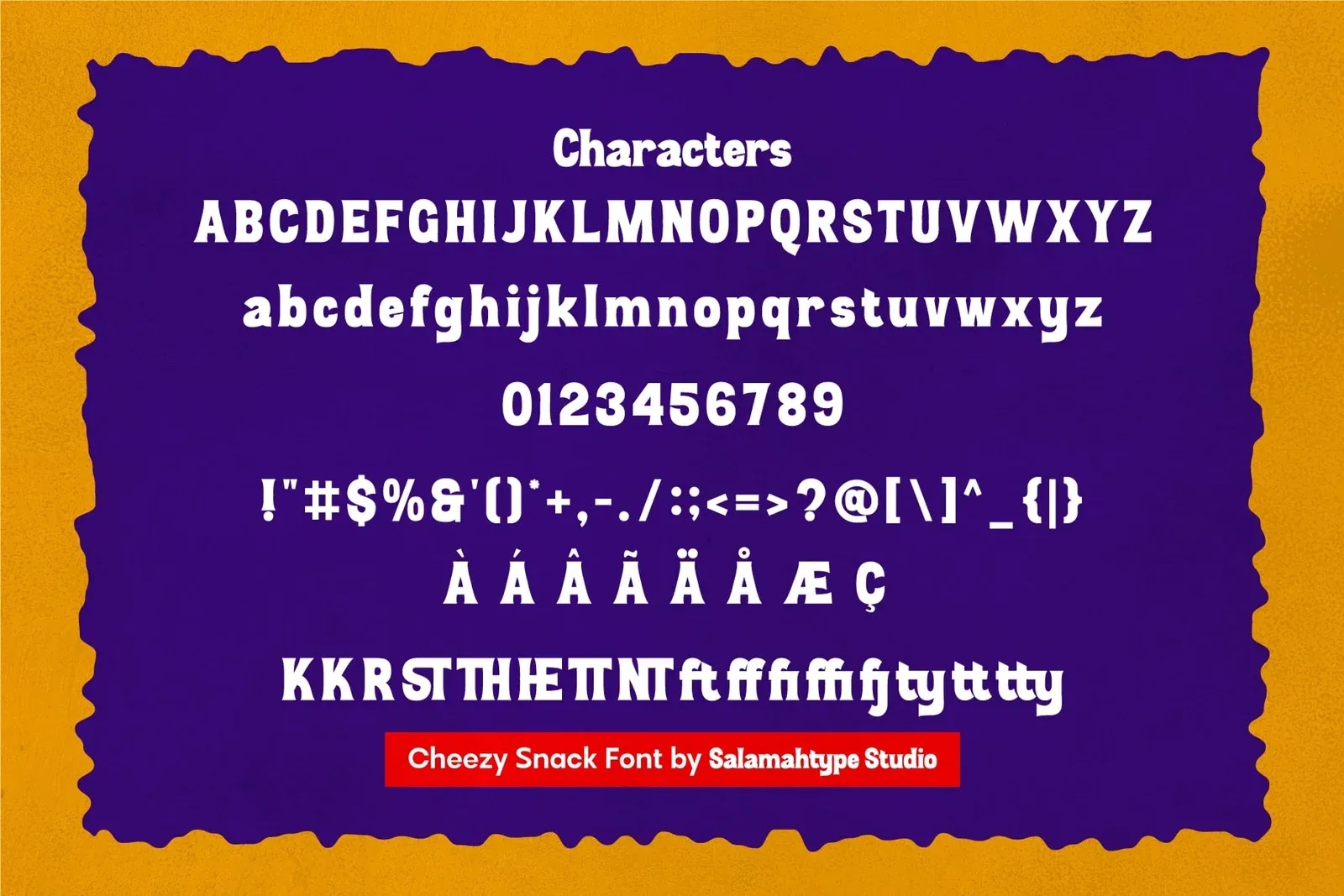
Hey, designers, are you looking for a nice retro typeface? Print magazine recommends Cheezy Snack, created by Salamahtype, a font that evokes memories of old 1970s snack packs.
The letterforms are thick, bouncy, and loud, with the kind of nostalgia that demands to be printed on something covered in artificial cheese dust. Available in both regular and oblique styles, the typeface is built for logos, packaging, posters, and social graphics that aren’t afraid to take up space.
What’s interesting about Cheezy Snack isn’t that it’s retro. We’re drowning in retro fonts. It’s that it understands a particular flavor of nostalgia that continues to dominate branding. As consumers grow increasingly skeptical of polished corporate aesthetics, designers keep reaching for visual cues that feel familiar, handmade, and a little imperfect. The result is a wave of packaging and identity work that borrows heavily from vintage food branding, convenience-store graphics, and the kind of commercial ephemera once considered disposable.
Carp Diem
Here’s a niche corner of the industry that a savvy print service provider—or one who might be floundering—could potentially see opportunities in: fish printing. Via Good News Network, it’s called gyotaku and can be traced back to 19th-century Japan, where it began as a way of documenting one’s catch: fishermen would coat a fish with sumi ink and press it onto washi paper. Et voilà: one fish print. (Could we call this ichthyography?) The art developed, fisherman developed some tricks that yielded the best prints, and soon switched from black-and-white (or, ahem, gray-scale) to color. And some of the tricks that have developed involve cleaning and preparing the fish—something we don’t usually associate with prepress.
Preparation is key since a fish comes with all kinds of slime and liquid that could ruin the delicate rice paper typical of gyotaku prints. The slime has to be removed and various openings plugged to prevent water from leaking out.
There are two primary methods: “direct gyotaku” consists of little more than drying the fish, applying ink or paint, and rubbing it with paper. As a result, the image appears in reverse. To get an image that is not reversed, there is a method that we will here call “offset icthyography”:
The indirect method sees either paper or cloth placed over the fish and secured with rice paste to a board. This allows the artist to create a work that isn’t in reverse.
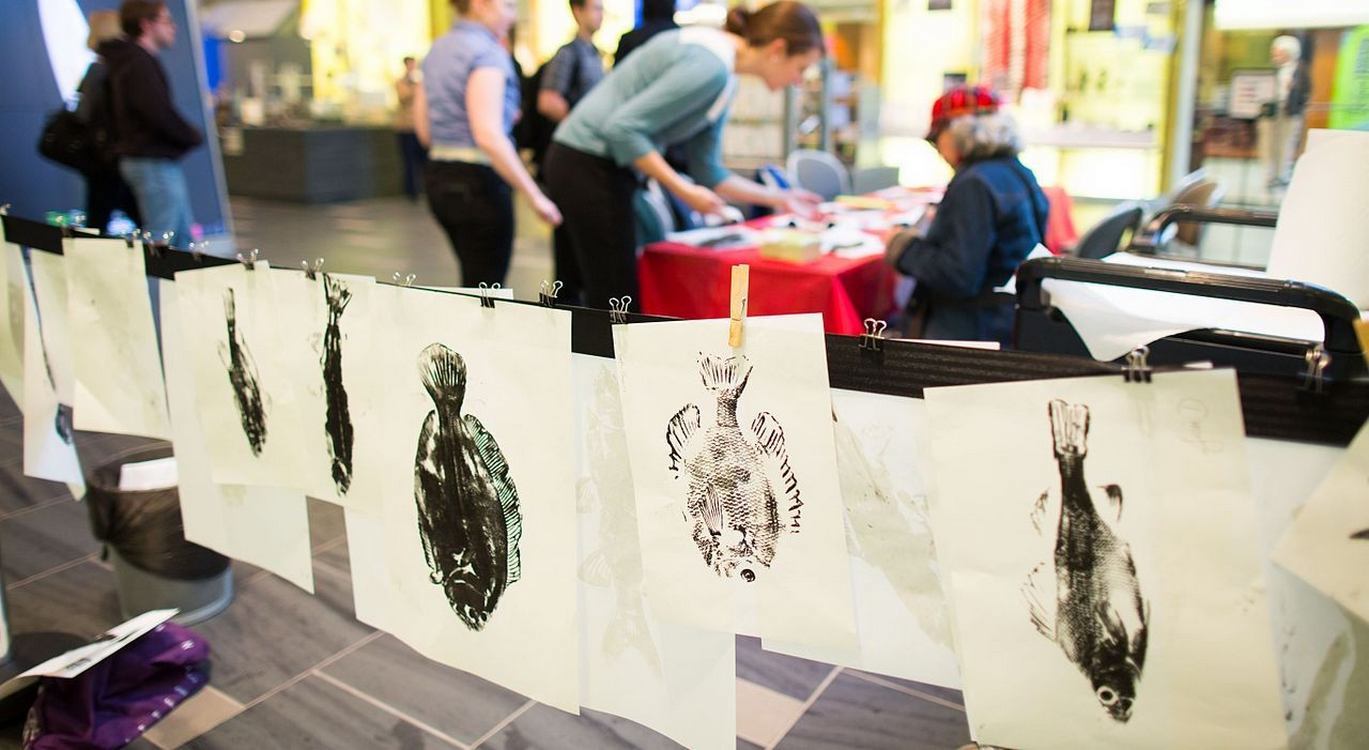
Science History Institute, photograph by Conrad Erb CC 3.0. via Wikimedia
By the way, in either method, the eye must be painted in afterward as ink will not stick to a fish’s eye. The tradition also stipulates that the eye is the only thing that can be added after printing. So if you wanted to imprint some variable data on it, you’ll be trout of luck.
Oh, and in case you’re wondering, yes, the fish can be eaten afterward.
Additional innovations have seen a variety of different coloring techniques that reflect the iridescence of a fish’s scales or the density of the animal’s skin pigments during various life stages.
The art has spread beyond Japan and is practiced in Australia, Italy, America, Hawaii, Brazil, and elsewhere.
In Italy, Elena Di Capita “has expanded the horizons of gyotaku in Europe.
Her work is focused mainly on schools of anchovies, the most important fish in her home region. She deviates from the traditional gyotaku by mixing different biological environments and by creating huge compositions with a highly dynamic look.
No indication that gyotaku is going digital any time soon, although we may soon see the emergence of new DFEs (digital fish ends).
Purple Rein
If you’ve ever had trouble color-matching, say, a purple logo or brand color, there’s a reason for it: apparently, the color purple doesn’t exist. (Don’t tell Alice Walker.) According to Popular Mechanics, purple is a non-spectral color “created when your brain compensates for the conflicting signals from red and blue wavelengths hitting your eyes simultaneously.”
Your brain determines color by comparing signal strength differences from three types of cone cells that detect short, medium, and long wavelengths, allowing you to perceive up to a million colors including the invented hue of purple.
Indeed, the rainbow acronym ROYGBIV is not ROYGBIP. But wait, you might say, isn’t violet purple? Well, no.
violet (along with the rest of the colors in a naturally occurring rainbow) has something purple doesn’t—its own wavelength of light. Anyone who ever ended up with a sunburn knows violet wavelengths are real, as the Sun’s ultraviolet (UV) radiation is the reason you need to wear sunscreen, even though you can’t see those wavelengths (more on that later). Red, orange, yellow, green, blue, and indigo are all just as real. But purple? Well, purple is just your brain’s way of resolving confusion.
The colors in the visible light spectrum are detected by photoreceptor cells in the eye called cones, which can only see colors that have wavelengths between 350 to 750 nanometers. (If we were a bee, we could see ultraviolet wavelengths, but we’re not sure it’s worth it.) There are three types of cones (short, medium, and long), which respond to different wavelengths of light.
Cones do not actually see colors themselves, but they send electrical signals based on the wavelengths they absorb through the optic nerve to a part of the brain called the thalamus, where the signals are processed. Once those signals are parsed, they are sent to the visual cortex, which makes sense of how many cones were activated by a wavelength of light, and the strength of the signal from each cone (and type of cone). The brain then determines what color you are looking at by comparing the differences in signal strength, allowing us to see up to a million colors.
When the cones pick up “in-between” colors like teal, the brain does the math and averages how many cones of which type picked up that particular wavelength. Teal light would trigger most of the short cones, but also a few of the medium cones.
The problem with purple is that it isn’t supposed to be possible to create a color from wavelengths on opposite ends of the spectrum. The shortest wavelength detection made by your S cones (violet light) has no overlap with the longest wavelength detection made by your L cones (red light). To compensate, the brain bends the spectrum into a circle, making the two extremes meet at purple. It’s an illusion of physics and neuroscience that makes us think we see a nonspectral color.
The upshot is, if you’re trying to match PMS 268, good luck.
Grazie Mille
If you happen to be in New York City next week (June 8–12), celebrate America’s 250th anniversary in a unique way. Via Print magazine, the Zig Zag Festival is designed to be a “visual bridge between Italy and the United States.”
It is a celebration of illustration and comics in honor of the 250th anniversary of America, organized by the Italian Cultural Institute of New York and curated by Hamelin, a Bologna-based organization specializing in children’s literature, illustration and comics, and author and illustrator Steven Guarnaccia, in collaboration with the Bologna Children’s Book Fair.

Cecilia Ruiz, Mr. Fiorello’s Head, Enchanted Lion, 2023.
Illustration is a field through which Italy and New York have engaged with an ongoing and vital exchange of narrative art and artists. Featured Zig Zag presenters include Mac Barnett, Debbie Bibo, Nicholas Blechman, Marianna Coppo, Kirsten Hall, Emiliano Ponzi, Cecilia Ruiz, Felicita Sala and Olimpia Zagnoli.
There doesn’t appear to be a website, but Print has a complete rundown of activities, all of which are free.
South Florida Substandard
Sigh. We’ll probably be seeing a lot more of this… Via Futurism, a supposedly “independent, locally owned digital news publication” called the South Florida Standard was actually all AI-generated.
The writers had AI-generated profile pictures and made-up biographies to match their beats — a practice that’s become a hallmark sign of AI-fabricated“journalists” — and churned out an extraordinary amount of content, much of which turned out to be plagiarized from other outlets.
So who was behind it?
With the help of University of South Florida journalism professor Casey Frechette, the real reporters traced the South Florida Standard to more news sites in South Carolina and California — titled the Charleston Sentinel and the San Francisco Download, respectively — and, finally, connected them all to a Philadelphia-based guy named Drew Chapin, who runs an image management firm called The Discoverability Company.
Which ironically was hard to find…
On the Discoverability Company’s website, Chapin describes himself as a “digital fixer for people and businesses who need the internet to tell a better story about them.”
… But after some dogged reporting by the investigative team, Chapin finally admitted to journalists that he was indeed the owner of the South Florida Standard — and 17 similar AI-powered properties in total. According to him, all it took was a $10 domain name and some limited AI tooling, and he could spit out a fake news site in under 20 minutes. Bleak.
Another sign that the Apocalypse is upon us.
The New Machines
This is kind of click-baity but, via Laughing Squid, animator Chill Dude Explains explores some once-essential analog technologies that have been replaced by digital alternatives. Dial up modems (remember them?), “rabbit ear” television antennas, floppy disks—it’s a bit of a technological nostalgia trip, but these kinds of things are a bit arbitrary. For as long as humans have made and used tools, some new technology has always replaced some older technology. We’d love to see a video on technologies that dominated the 14th century but were replaced by the technologies of the 15th century.
Anyway, if you want to take a technological trip down random access memory lane, check out the video.
Elementary
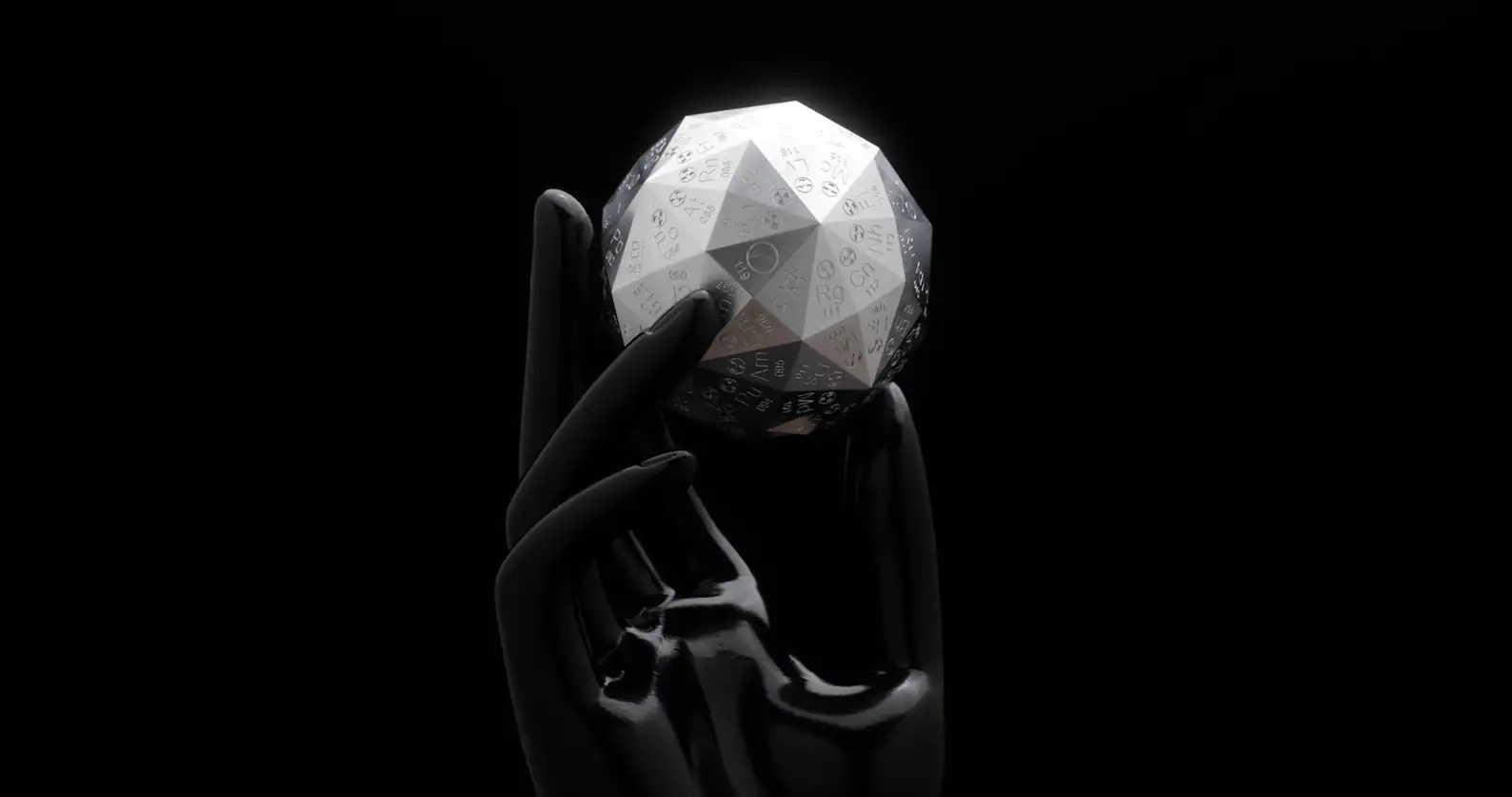
If you have ever played Dungeons & Dragons in your youth—or even as an adult (who are we to judge?)—you are familiar with dice of various numbers of sides. If memory serves, there was even a 20-sided die that we happily don’t remember what it was used for. We do remember that accidentally sitting or stepping on a five-sided die was quite painful. We bring this up because, via Boing Boing, TheMintTinGuys have produced Periodic Table D120 dice. It is 2.4-inches in diameter, CNC-machined from Aluminum 6061, laser-etched and contains all the known elements of the periodic table.
Are you ready to roll the elements? We've taken the beauty of the periodic table and transformed it into an awe-inspiring, meticulously crafted 120-sided aluminum CNC-machined die—each face laser-engraved with a different element symbol. Whether you're a scientist, a tabletop gaming enthusiast, or simply someone who appreciates the elegance of precision engineering, this is the dice you never knew you needed—until now!
A steal at $120.
Graphene Heads On
Was it a good week for graphene news? It’s always a good week for graphene news! Linktop launches graphene-based cooling headband. From (who else?) Graphene-News:
China-based developer and manufacturer of smart wearables and telehealth devices, Linktop, has launched the Lifestone Graphene Cooling Headband, a wearable device designed to enhance athletic endurance by reducing core body temperature and heart rate during high-intensity activities. The headband uses graphene's thermal conductivity to enable passive heat dissipation without batteries or evaporative cooling.
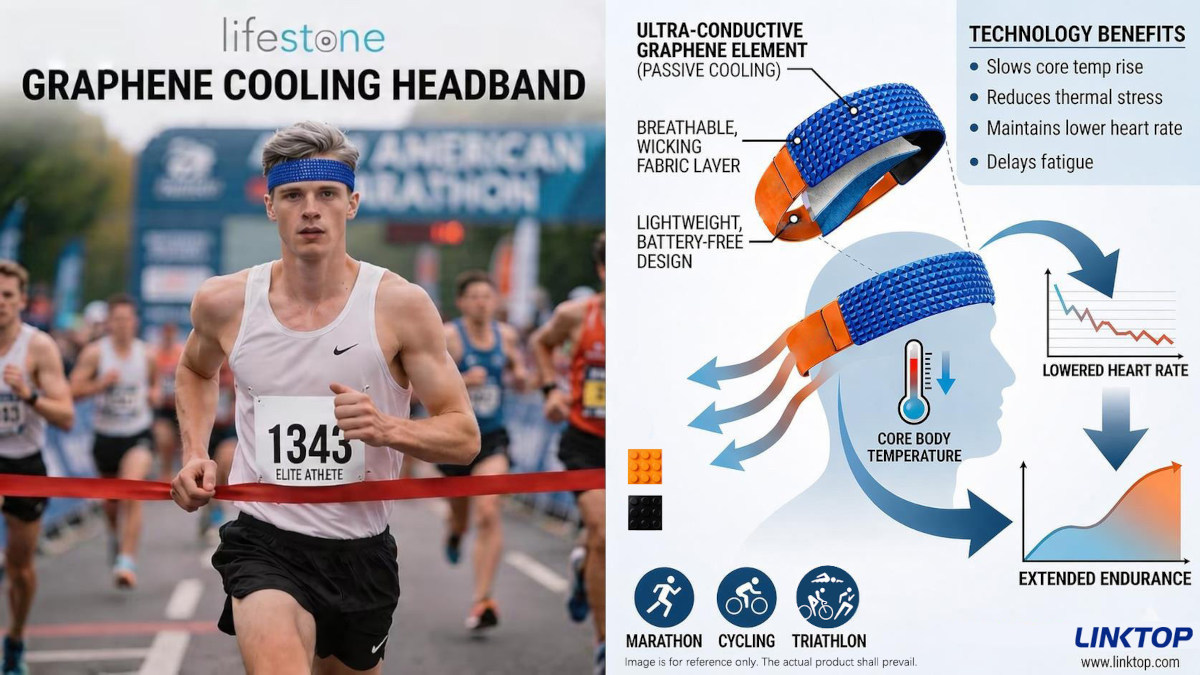
The lightweight, breathable headband is suited for marathons, cycling, triathlons and outdoor training. Linktop plans to integrate the device with its wearable ecosystem, including smart rings, to enable real-time monitoring and AI-driven personalized training recommendations.
AI-Yi-Yi, Part the Infinity: Acid Shopping Trip
Have you ever gone window shopping while tripping on LSD? No, nor have we, but now, via Boing Boing, Amazon makes it easy to simulate the experience, by creating an AI shopping tool that lets you search for items that don’t exist.
Available starting today, the Amazon app will generate images of products as you type words into the search bar. With the example of clothing, Amazon shows the AI bar generating a product that matches the user’s description, though the product pictured doesn’t actually exist.
Why, exactly?
that image is meant to be used to “find products that look like these AI images.”
Apparently the idea is to bridge the gap between “imagination” and “product discovery.”
Now, as customers search for products using descriptive language—like color, texture, or pattern—AI-generated images instantly take shape in the suggestions below the search bar, shifting and refining with each word added. Customers can tap the generated image that best aligns with their vision and shop for visually similar products.
Great—we’ll get a pair of gloves with six fingers. Like a lot of AI stuff, this seems highly unnecessary.
Amazon already has millions of products, many of them fake or fake-adjacent, mislabeled, drop-shipped, duplicated, or photographed into visual lies. The last thing the store needed was a feature that creates a perfect-looking product that nobody sells.
Know When to Fold ’Em
Looking for a folding chair that doesn’t look like your bog-standard folding chair? Well, via Core77, the Kael Walnut Folding Chair by a company called Esspur is a unique option.

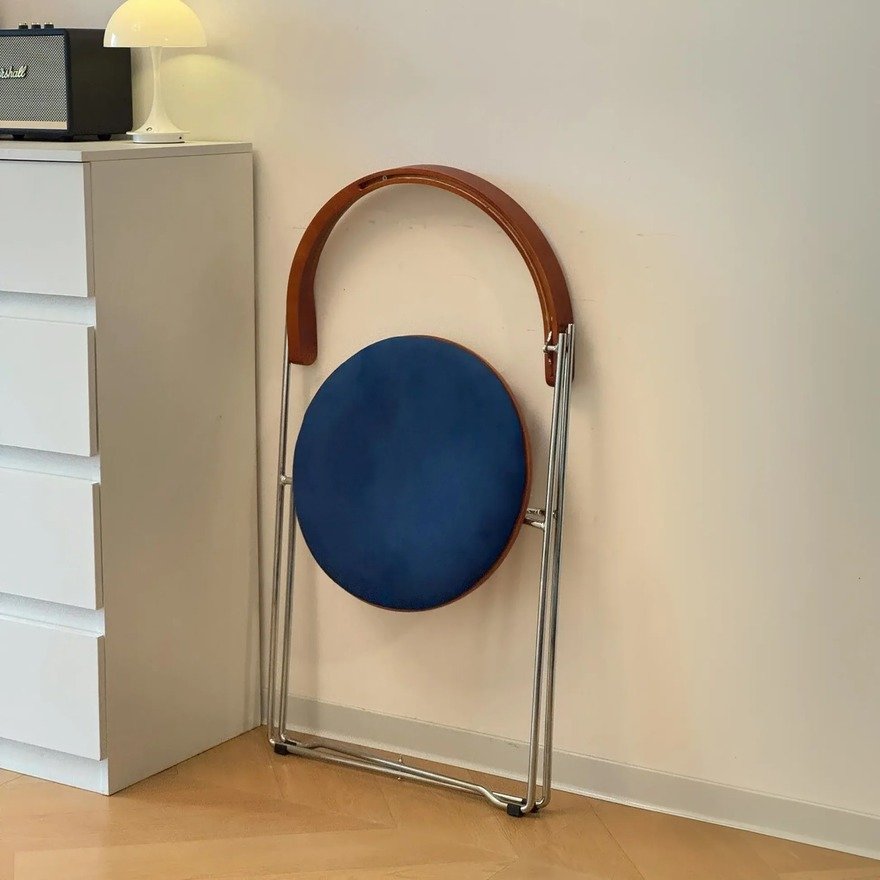
Core77 doesn’t seem to think it’s particularly high quality, and the company doesn’t appear to have any history, but it’s an interesting idea. A steal at $180.
Greater Tuna
Here at WhatTheyThink, we provide the content that truly matters to the industry, and what information could be more vital than tips for how to win a tuna-throwing contest? Well, via Atlas Obscura:
To throw a tuna, prepared to hold the fish by the tail and spin. That’s the way it’s done in the city of Port Lincoln in South Australia where “tuna tossing” isn’t just some unconventional salad preparation. The tuna toss is part of an annual festival called Tunarama that celebrates the town’s seafaring history—and the wealth it’s created.
And they should know, as Port Lincoln has the largest fishing industry in Australia.
Reputedly, the prevalence of high value fish like southern bluefin tuna has helped the city go from a sleepy port town into a place with the highest number of millionaires per capita.
They are often called “tuna barons.” Everyone else just works for scale.
And, hey, the winner can even practice a little gyotaku and print the winning tuna.
Al Gee!
Microplastics. They appear to be everywhere and research suggests they are not great for human health. How do we get rid of the stuff? New research from a team at the University of Missouri has found that a solution may involve engineered algae. Says Food & Wine:
In the December issue of the journal Nature Communications, researchers from Mizzou, led by Susie Dai, reported findings on a modified train of algae that the team explained was designed to capture microplastics in contaminated water. According to Dai, her goal with both the algae and her work is to clean waterways and recycle the collected plastic into bioplastic materials, ensuring it all has somewhere to go.
Dai engineered algae to produce limonene, which is a natural oil found in, among other things, oranges.
The limonene naturally made her algae water-repellent, and because microplastics also repel water, the two "come together like magnets" and form clumps. Those clumps then sink to the bottom and create a solid layer of biomass, which can be collected, removed, and, one day, recycled.
She also said that the new algae can grow in wastewater by feeding on “excess nutrients,” and we’re going to assume that’s a euphemism for something unpleasant.
“While our research is still in the early stages," Dai explained, "our eventual goal is to integrate this new process into existing wastewater treatment plants so cities can clean their water more effectively and reduce pollution while creating useful products at the same time."
This Week in Printing, Publishing, and Media History
June 1
1495: John Cor, a Scottish monk and servant at the court of James IV, records the first known batch of Scotch whisky.
1857: Charles Baudelaire’s Les Fleurs du mal is published.
1872: American publisher, founder of the New York Herald James Gordon Bennett, Sr. dies (b. 1795).
1890: The United States Census Bureau begins using Herman Hollerith’s tabulating machine—the first “computer”—to count census results. They may still be using it.
1936: English illustrator and animator Gerald Scarfe born.
1980: Cable News Network (CNN) begins broadcasting. And thus begins the decline of newspaper circulation.
June 2
1840: English novelist and poet Thomas Hardy born.
1896: Guglielmo Marconi applies for a patent for his wireless telegraph.
June 3
1140: The French scholar Peter Abelard is found guilty of heresy.
1889: The first long-distance electric power transmission line in the United States is completed, running 14 miles (23 km) between a generator at Willamette Falls and downtown Portland, Ore.
1924: Czech-Austrian lawyer and author Franz Kafka dies (b. 1883).
1929: American game show host and producer Chuck Barris born.
1961: American lawyer, academic, author, and founder of the Creative Commons Lawrence Lessig born.
1965: The launch of Gemini 4, the first multi-day space mission by a NASA crew. Ed White, a crew member, performs the first American spacewalk.
June 4
1783: The Montgolfier brothers publicly demonstrate their montgolfière (hot air balloon).
1876: An express train called the Transcontinental Express arrives in San Francisco, via the First Transcontinental Railroad only 83 hours and 39 minutes after leaving New York City. (Insert your own Amtrak joke here.)
1907: American actress Rosalind Russell born. Russell starred with Cary Grant in His Girl Friday, one of the best—and funniest—newspaper movies ever made.
1917: The first Pulitzer Prizes are awarded. Laura E. Richards, Maude H. Elliott, and Florence Hall win the first Pulitzer for biography (for Julia Ward Howe); Jean Jules Jusserand wins the first Pulitzer for history for his work With Americans of Past and Present Days; and Herbert B. Swope receives the first Pulitzer for journalism for his work for the New York World.
June 5
1851: Harriet Beecher Stowe's anti-slavery serial, Uncle Tom's Cabin, or Life Among the Lowly, starts a ten-month run in the National Era abolitionist newspaper.
1910: American short story writer O. Henry dies (b. 1862).
1919: American-Swiss author and illustrator Richard Scarry born.
1947: American singer-songwriter and violinist Laurie Anderson born.
1956: Elvis Presley introduces his new single, “Hound Dog,” on The Milton Berle Show, scandalizing the audience with his suggestive hip movements.
2012: American science fiction writer and screenwriter Ray Bradbury dies (b. 1920).
June 6
1756: American soldier and painter John Trumbull born.
Portrait of Alexander Hamilton by John Trumbull, 1806.
1799: Russian author and poet Alexander Pushkin born.
1875: German author, critic, and Nobel Prize laureate Thomas Mann born.
1892: The Chicago “L” elevated rail system begins operation.
1933: The first drive-in theater opens in Camden, N.J.
1946: American bass player and songwriter Tony Levin born.
2016: English playwright and screenwriter; works included Equus and Amadeus Peter Shaffer dies (b. 1926).
June 7
1810: The newspaper Gazeta de Buenos Ayres is first published in Argentina.
1848: French painter and sculptor Paul Gauguin born.
1911: American engineer and designer Brooks Stevens born, most famous for designing the Wienermobile.
1955: Lux Radio Theatre signs off the air permanently. The show launched in New York in 1934, and featured radio adaptations of Broadway shows and popular films.
1958: American singer-songwriter, multi-instrumentalist, producer, and actor Prince (né Prince Rogers Nelson) born.
1970: English novelist, short story writer, essayist E. M. Forster dies (b. 1879).
1971: The United States Supreme Court overturns the conviction of Paul Cohen for disturbing the peace, setting the precedent that vulgar writing is protected under the First Amendment to the United States Constitution.
1975: Sony introduces the Betamax videocassette recorder. Alas, the “videotape war” of the late 70s and early 80s would result in VHS becoming the dominant format...for a while.