To the Letter
Typography has often been seen as merely “a neutral system for delivering words.” But, via Print magazine, type is not just about legibly presenting text. It can be a conveyor of culture. Such is the thesis of Between Worlds, a typographic project by Brooklyn-based designer Daniel Irizarry, Designer & Creative Director at Athletics.
Built as a bilingual exploration of the Puerto Rican diaspora, the work treats type not as a stylistic layer, but as cultural infrastructure. Across three display typefaces, each rooted in a different facet of Puerto Rican and Puerto Rican–American experience, Irrizarry constructs a visual language that holds contradiction: island and mainland, pride and displacement, visibility and erasure.
The three typefaces highlighted are:
Borinqueneers is a bold condensed display typeface inspired by the 65th Infantry Regiment of the U.S. Army, a unit composed of soldiers from Puerto Rico.
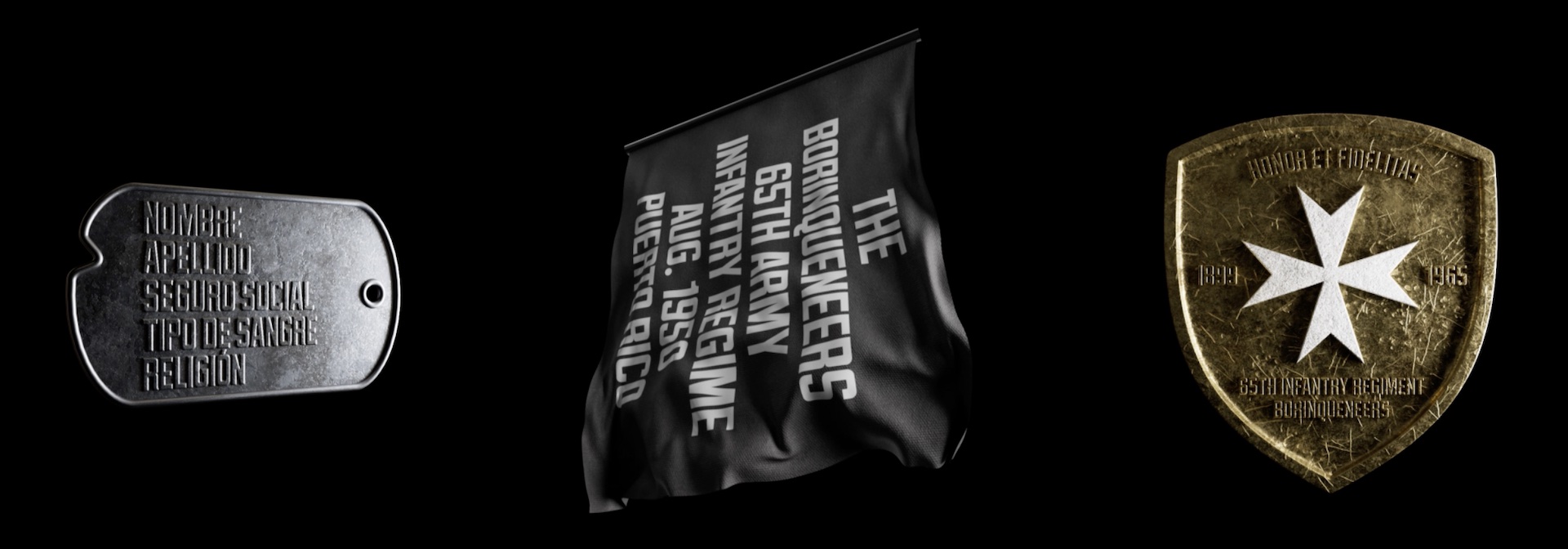
Piragua is an inverted-contrast display typeface inspired by Puerto Rican advertising, commercial posters, and the bright visual language of early to mid-century street commerce.
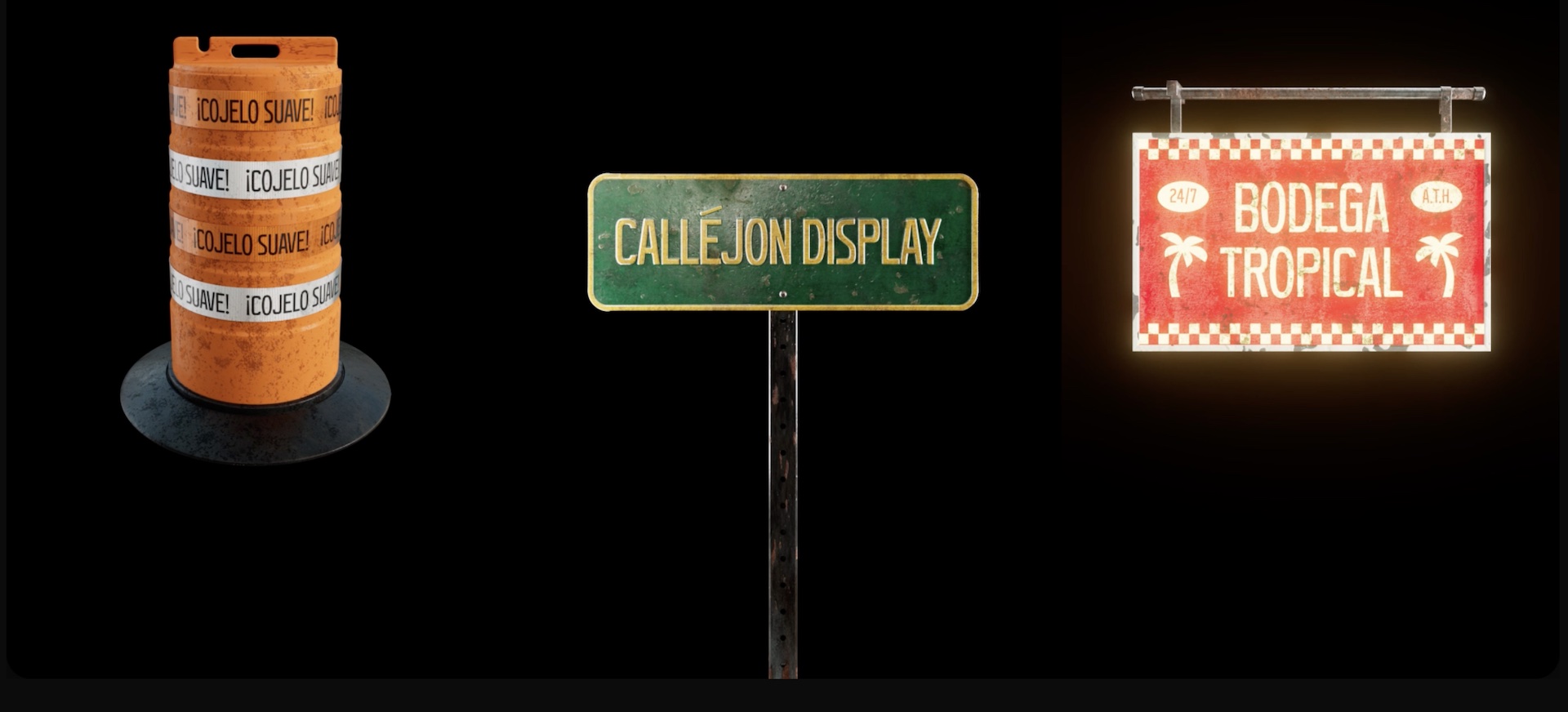
Callejón is a signage-inspired condensed display typeface rooted in the voice of the people. It celebrates the visual language of Puerto Rican street culture from the 1920s to the 1960s, drawing from the hand-painted and manufactured signage that animated plazas, markets, neighborhood storefronts, and bodegas.

That raises a broader question for the discipline. As design systems scale and standardize, what responsibility do type designers have in maintaining cultural specificity? And when language alone falls short, can form carry what words cannot?
Indie 500 422
Here’s some good news for book lovers. According to The Guardian, independent bookstores are making a comeback.
About 422 new indie bookshops opened in 2025, according to the American Booksellers Association, a 31% rise from 2024. Countless independent restaurants, coffee shops, fitness centers, movie theaters, clothing stores and other small businesses also continue to thrive even in this era of ever-bigger retailers, fast-casual restaurants and massive e-commerce platforms.
A lot of what is driving this is what we have been tracking in our economic analyses: since COVID, we have been seeing strong growth in new business formation, a consequence of what had been called the Great Resignation:
There’s also no shortage of entrepreneurism and independence in this country. For the past few years, there have been between 400,000 and 500,000 new business applications filed every month! Millions of people want to own businesses and be their own boss, and these people will find their unique way to present their business products and services to their customers in order to earn a livelihood. The more the economy consolidates, the more opportunity there is at the edges.
Small businesses also tend to have happier employees.
It’s generally better and more enjoyable for people who work in small businesses, which is why, despite the compensation that larger organizations can offer, small businesses make up half of the country’s workforce.
And at least small businesses allow their employees to answer the call of nature, unlike one big online retailer.
Daily Plan It
If you have small children, you know that one thing they can’t possibly get enough of is…city planning! Oh, yes, nothing fires a child’s imagination more than designing a safer and more convenient urban center. Or at least such was the belief of New York City Mayor Fiorello La Guardia’s Committee on City Planning. In the 1930s, they published the kids’ book The ABC of City Planning, designed to educate its youngest citizens. Via Boing Boing, the book’s foreword says:
CITY PLANNING is not for "Adults Only". Children of all ages can understand the necessity for a finer, better, safer and more convenient city. Unless they do understand it, and it becomes as fundamental as the ABC, we can never hope to make our city the healthful, happy home it should be for our children and our children's children.
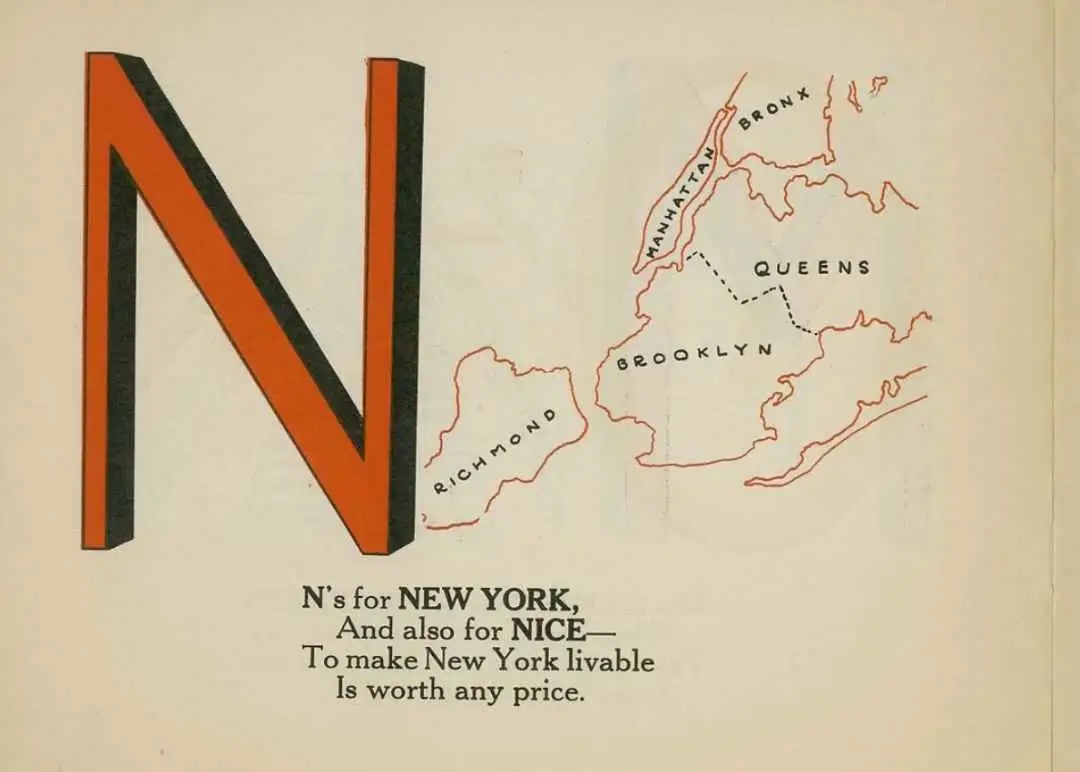
Mind you, they did have a bit of an agenda, as La Guardia had a thing against elevated trains.
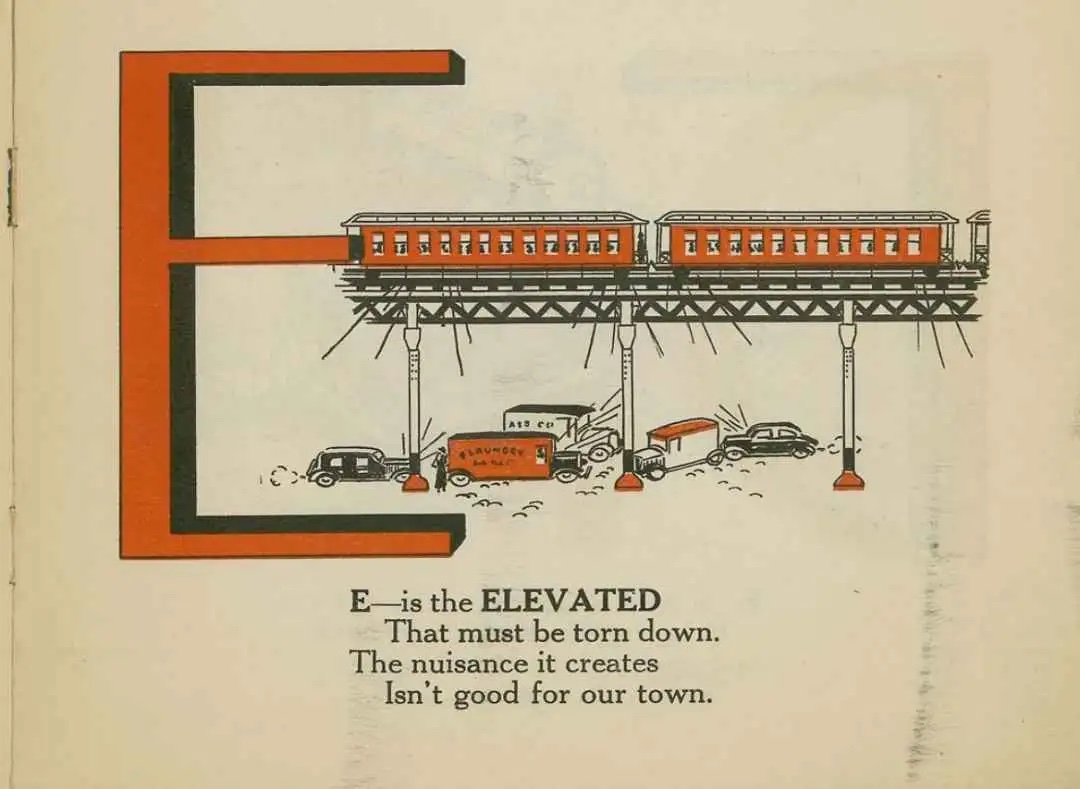
La Guardia got his wish and longtime New Yorkers may remember the old Third Avenue El, which was dismantled between 1950 and 1973. (The replacement, the Second Avenue subway, has been a boondoggle since the 50s and remains only partially built to this day.)
Gotta say, the entry for “X” was a bit dark for a children’ book:
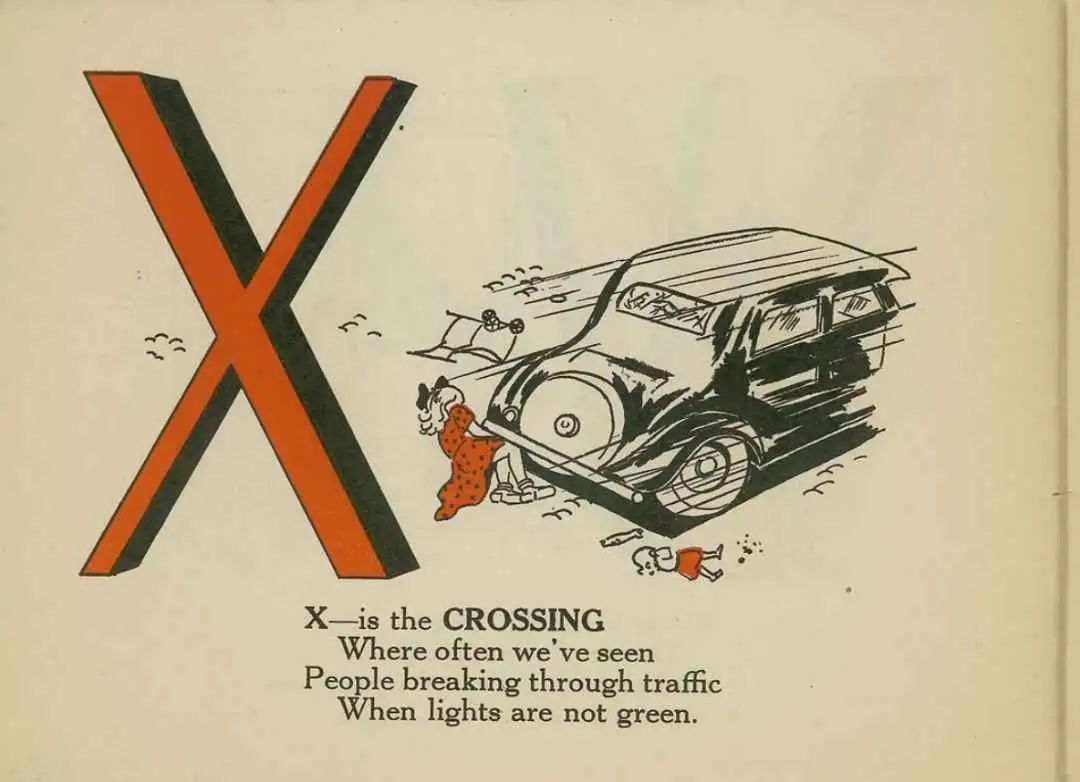
Say what you want about elevated trains, but at least there was less carnage.
The entire book is available here, if you need some bedtime reading for your children.
Duly Noted
Back in the day before mobiles, households typically had only one phone—or maybe one primary “family” phone and the occasional extension for when conversation needed to be a little more private. We don’t necessarily miss those days, but there was one common accessory to the family phone that was a big product area: the telephone memo pad, where phone answerers would leave messages for family members who missed a call.
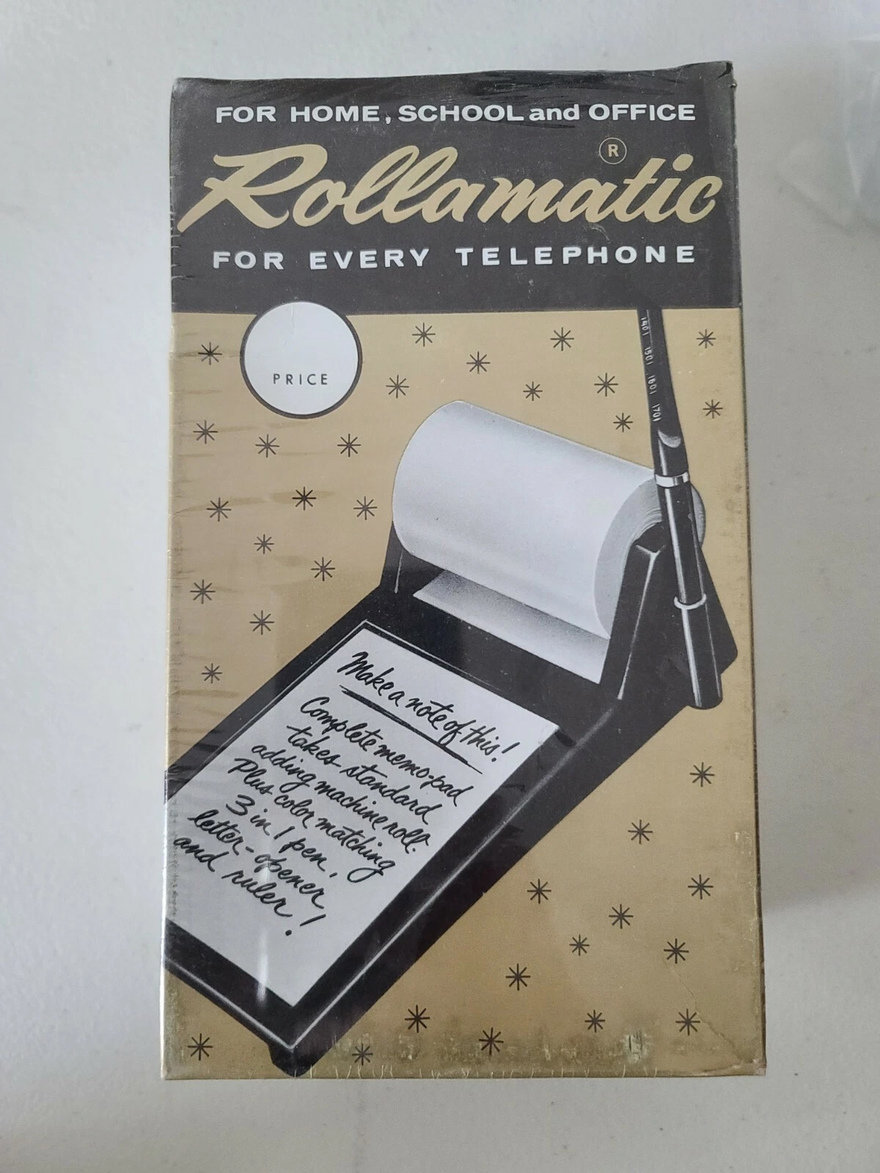
And of course it wasn’t just phone messages; Arrested Development taught us in the early 2000s why you should always leave a note.
Anyway, we bring this up because, as ever, what’s old is new again and, via Core77:
in 2017 George & Willy, a New-Zealand-based signage design studio, produced this throwback aluminum Note Roller as one of their inaugural products. Obviously it wasn't designed to be paired with a phone, but to provide a handy place to jot notes on an ergonomic surface.
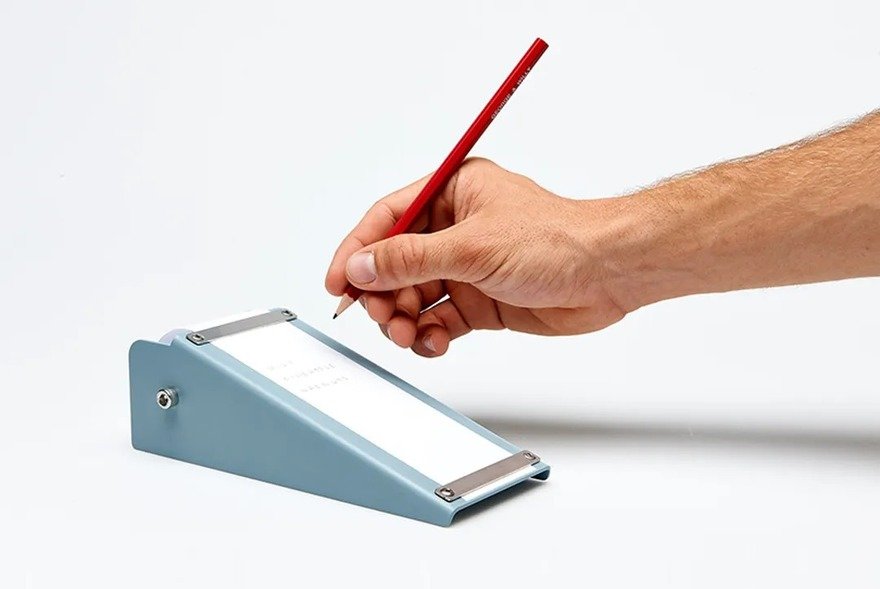
But, alas, it has since been discontinued. Core77 did some investigating, and apparently the only extant equivalent to the phone memo pad is a brass Desktop Roll Note Pad, made by South Korea’s JoplinWorks and distributed in the US by stationery retailer WMS&Co.
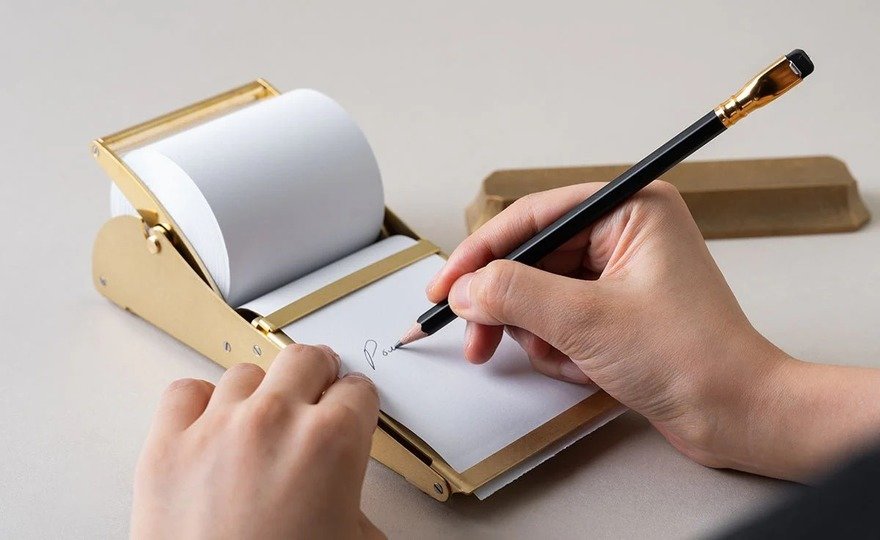
A steal at $200.
Hare Raising
If you have ever leafed through illuminated Medieval manuscripts—and who among us hasn’t?—you may have noticed weird illustrations in the margins, usually involving knights fighting giant snails or armed killer rabbits? What was behind this? Drunk monks? Via Laughing Squid, Peter Austin explores these “drolleries,” often featured in Medieval art memes.
All such absurd illustrations found within illuminated manuscripts are known as grotesques or drolleries, a term derive from the same root word from which we get the modern adjective droll, as in whimsically amusing …So, one major category of drollery humor is the world turned upside down, a disruption of the natural order, or a subversion of expectations.
The choice of benign critters like bunnies and snails was the point.
The joke isn’t simply that any old animal is picking a fight with a human. it wouldn’t work as well if it was a lion or a bear. It’s that these particular animals are ones that were at the time so often on the receiving end of human violence, persecuted for their destruction of crops and even eaten by certain members of the population.
Watch it here.
H to He
The blockade of the Strait of Hormuz is obviously having an impact on the price of oil and thus gas, but other items are impacted as well. Fertilizer is one big item that passes through the Strait (which will impact farming), but one item that doesn’t get enough attention is helium. We think of helium only in the context of party balloons or squeaky voices, but it’s an important element in a variety of applications, from MRI machines to semiconductors to various kinds of scientific research. Construction Physics details the importance of helium. Helium—the second lightest element after hydrogen—has the lowest freezing and boiling points of all the elements, which is largely what makes it so useful.
Its low boiling point makes helium very useful for getting something really, really cold. When a liquid boils, it transforms into a gas, and during this process it will pull energy from its surroundings due to evaporative cooling. This is why your body sweats: to cool you down as the liquid evaporates. When a liquid has a very low boiling point, this heat extraction happens at a very low temperature. Helium also stays a liquid at much lower temperatures than other elements. Nitrogen freezes solid at 63 K, and hydrogen freezes at 14K, but at atmospheric pressure helium stays a liquid all the way to absolute zero. If you need to cool something to just a few degrees above absolute zero, liquid helium is essentially the only practical way to do that.
Cooling is why it’s essential for MRI machines and superconductor research. And while it’s one of the most plentiful elements in the universe, it’s actually not easy to obtain on Earth, for a somewhat obvious reason.
Because helium is so light, it rises to the very top of the atmosphere, where it eventually escapes into space. So essentially all helium used by modern civilization comes from underground.
One big source of helium is Qatar.
Qatar is responsible for roughly 1/3rd of the world’s supply of helium, which was formerly transported through the Strait of Hormuz in specialized containers. Thanks to the closure of the strait, helium prices have spiked, suppliers are declaring force majeure, and businesses are scrambling to deal with looming shortages. (For many years the US government maintained a strategic helium reserve, but this was sold off in 2024.)
Here’s an idea: why can’t they transport helium over land by blimp? Seems like the perfect conveyor…
Graphene Up On the Roof
Was it a good week for graphene news? It’s always a good week for graphene news! Positive results from trial production of graphene-enhanced roof tiles. From (who else?) Graphene-News, First Graphene (FGR) announced the results from its first production trial with the UK’s largest precast concrete manufacturer and supplier FP McCann.
The five-month project used 40 tonnes of PureGRAPH® enhanced cement, developed by First Graphene's partner Breedon Group, to produce more than 10,000 tiles at FP McCann's Cadeby manufacturing facility in the UK. The final graphene-enhanced cement roof tiles were tested for quality, efficiency and carbon emission reduction potential, as well as performance consistency.
The production process achieved a cradle-to-gate reduction in carbon emissions of up to 14%, reinforcing the lower-carbon benefits of graphene for cement. The required amount of cement for the tiles was also reduced by up to 8%.
Importantly, the trial confirmed graphene enhanced cement, classified as CEM-II, could produce the same roof tiles at the same strength with fewer materials and lower costs compared to CEM-I.
Sock it to Me
It may seem hard to believe, given that spring is taking its time to come, but beach weather is on the way. If you are beachbound, Core77 has an interesting alternative to the traditional beach umbrella: a giant windsock.
The ShadeSock is an alternative to beach umbrellas or sail shades. Intended for beaches that get a steady breeze, it's essentially a giant windsock. Unlike an umbrella, it works with the wind (and indeed, requires it in order to stay aloft) rather than fighting it. And unlike a sail shade, it's completely silent.
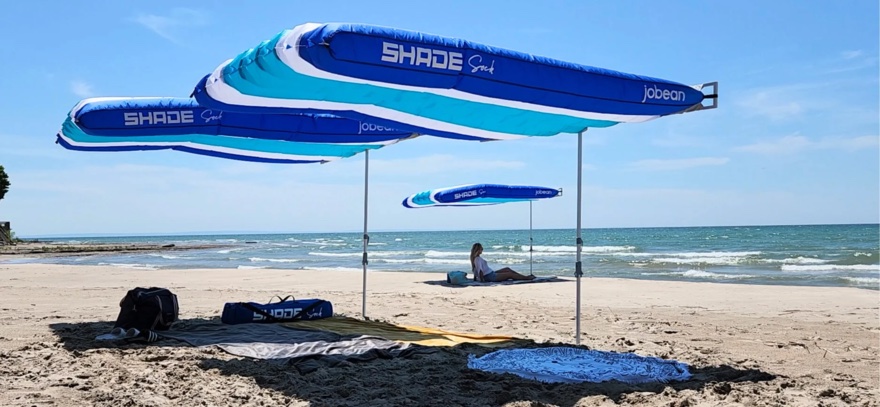
The downside is that if there is no wind, it’ll just flop down. And since the wind dictates which direction it faces, you may end up staring away from the ocean. But, hey, it’s a big windsock!
Don’t Talk About Our Storm, Martha
You may have seen some of the horrific video of the recent tornadoes sweeping across Oklahoma, and the weatherpeople are working overtime to warn the public about the imminent dangers of new twisters. But, via Atlas Obscura, in the first half of the 20th century, weather forecasters were discouraged—or even outright forbidden—from mentioning tornados.
From 1887 up until 1950, American weather forecasters were forbidden from attempting to predict tornados. Mentioning them was, in the words of one historian, “career suicide.”
…Less than confident in their own predictive powers, and fearful of the responses of a panicky public, “the use of the word ‘tornado’ in forecasts was at times strongly discouraged and at other times forbidden” by the Weather Bureau, Edwards writes, replaced by euphemisms like “severe local storms.”
One pioneer in tornado research was John Park Finley, an officer with the Army Signal Office. The U.S. Army Signal Service first opened a weather forecasting office in 1870, which Finley joined in 1877.
His hope was to develop a method of tornado prediction so that storms’ arrivals could be broadcast to local communities–possibly, he wrote, through the ringing of church bells “in some peculiar manner.” He visited storm sites and pored over historical twister accounts. Eventually, he began adding tornado forecasts to his in-house weather reports.
Naturally, not everyone was a fan.
“nervous superiors sent [Finley] new instructions: the word tornado was banned from forecasts.” Besides an excitable public, there were commercial concerns; the businessmen of Tornado Alley had “complained that Finley was giving potential investors the idea that their region was twister prone.”
Of course, nothing like this could ever happen today.
The Signal Office’s forecasting division was eventually transferred to the Department of Agriculture, where it became the U.S. Weather Bureau. Though the Bureau thrived in its new home, developing warning systems for everything from floods to hurricanes to forest fires, it held fast to its tornado position. “Forecasts of tornadoes are prohibited,” announced the Weather Bureau Stations Regulations of 1905, 1915, and 1934.
And the death toll from tornados climbed, as no one was allowed to warn the public to seek shelter. Brilliant.
As tornado forecasting got more reliable (it’s still far from perfect), prohibitions on using the word eased up.
These days, tornado forecasting is still hard to pull off–“we don’t fully understand” how they work, writes Edwards. But thanks to technological advances, changing priorities, and ever-more-detailed science, the average annual tornado death toll has gone down significantly since the 1950s (though some storms, like 2011’s Joplin, still kill hundreds). It helps, of course, that forecasters no longer have to twist away from the word.
Bag Bots
Back in the 1970s, there was a famous commercial for Samsonite American Tourister luggage, in which a large primate violently ape-handles a suitcase, a metaphor for the rough treatment airport baggage handlers can give luggage. Human airport workers have gotten gentler over the years (or baggage has gotten more resilient—or maybe some combination of both), but maybe we need to revisit the strength of our luggage—at least if we fly to Japan. Via Ars Technica:
Humanoid robots are getting a new gig as baggage handlers and cargo loaders at Tokyo’s Haneda Airport—part of a Japan Airlines experiment to address a human labor shortage as airport visitor numbers have surged in recent years.
The pilot (as it were) program is set to launch later this month.
Most robotic productivity so far has relied on robotic arms and similarly specialized robots that perform the same predictable tasks on assembly lines and in warehouses. By comparison, humanoid robots face a much stiffer challenge in dealing with more open and unpredictable work environments, and it remains to be seen whether the latest robotic software and hardware will be up to the task.
Watch a video here.
Presumably, the robots will need to put in much more effective work if they’re to prove as productive as human airport workers. Having robots working directly alongside humans will also introduce new safety considerations for airports like Haneda Airport, which is Japan’s second-largest airport, with flights arriving approximately every two minutes. The first step in the pilot program will involve identifying which airport areas will be safest for humanoid robots.
Wait until they replace TSA agents with robots. Yowza.
For the Birds
One of our favorite sketches from Monty Python’s Flying Circus involves an accountant who wants to make a career change into lion taming. For some reason this sketch came to mind when we read, in Engadget, about the shoe company AllBirds that has decided to pivot from being a shoe manufacturer to an AI firm. Huh?
The San Francisco company has plans "to pivot its business to AI compute infrastructure, with a long-term vision to become a fully integrated GPU-as-a-Service and AI-native cloud solutions provider." It's also changing its name to NewBird AI.
It gets worse.
Allbirds has always been known as an eco-friendly shoe company and, well, there's no real way to do AI while protecting the environment. The company plans on getting rid of any eco-friendly branding, with stockholders being asked to approve a charter amendment proposal to "remove references to the company being operated for the environmental conservation public benefit."
So that’s awesome. And it just proves that Wall Street is just insane.
To that end, the announcement that Allbirds was transitioning from shoes, a product category it has a decade of experience in, to AI compute, a product category it has no experience in, shot the stock up by over 400 percent. Financial Times has suggested this uptick will be short-lived and that retail investors should stay away.
When the AI bust comes, it won’t be pretty.
AI-Yi-Yi, Part the Infinity: FoodTalk
If you hang about on TikTok, and you’re something of a foodie, you may have encountered what has become an increasingly popular trend: AI food videos featuring animated, talking foods. Joy. Says (who else?) Food & Wine:
Instead of highlighting specific recipes, this content category focuses on providing users with essential cooking information, such as how to chop an onion or the names and purposes of different pasta shapes. If you haven’t come across an AI-generated cooking video yet, there is one crucial warning to keep in mind: They’re kind of creepy.

And they are—almost quite literally—AI slop.
The now-trendy clips of talking food are a classic example of AI slop, and you’ll often notice they’re posted by spam accounts
But no talking Spam?
with no clearly identified creator behind the username. This is an easy way to garner engagement without filming original videos, and for many accounts, it’s working. The unsettling nature of these videos, combined with the very basic cooking tips they share, has captured millions of views on social media.
Another sign that the Apocalypse is upon us.
This Week in Printing, Publishing, and Media History
April 27
1667: Blind and impoverished, John Milton sells the copyright of Paradise Lost for £10. (He never regained it.)
1791: American painter and inventor Samuel Morse born.
1882: American poet and philosopher Ralph Waldo Emerson dies (b. 1803).
1896: American chemist and inventor of nylon Wallace Carothers born.
1981: Xerox PARC introduces the computer mouse.
April 28
1926: American novelist Harper Lee born.
1948: Igor Stravinsky conducted the premiere of his American ballet Orpheus at the New York City Center.
1973: The Dark Side of the Moon by Pink Floyd, recorded in Abbey Road Studios, goes to number one on the US charts, beginning a record-breaking 741-week chart run.
April 29
1863: American publisher and politician William Randolph Hearst born.
1953: The first U.S. experimental 3D television broadcast showed an episode of Space Patrol on Los Angeles ABC affiliate KECA-TV.
1968: The musical Hair opens at the Biltmore Theatre on Broadway.
1980: English-American director and producer Alfred Hitchcock dies (b. 1899).
1986: A fire at the Central library of the City of Los Angeles Public Library damages or destroys 400,000 books and other items.
1996: The off-Broadway musical Rent opens on Broadway at the Nederlander Theatre. No day but today.
April 30
1897: J. J. Thomson of the Cavendish Laboratory announces his discovery of the electron as a subatomic particle, over 1,800 times smaller than a proton, at a lecture at the Royal Institution in London.
1927: Douglas Fairbanks and Mary Pickford become the first celebrities to leave their footprints in concrete at Grauman's Chinese Theater in Hollywood.
1938: The animated cartoon short Porky’s Hare Hunt debuts in movie theaters, introducing Happy Rabbit, an early version of Bugs Bunny.
1939: NBC inaugurates its regularly scheduled television service in New York City, broadcasting President Franklin D. Roosevelt's N.Y. World's Fair opening day ceremonial address.
1993: CERN announces World Wide Web protocols will be free.
May 1
1753: Publication of Species Plantarum by Linnaeus, and the formal start date of plant taxonomy adopted by the International Code of Botanical Nomenclature.
1786: In Vienna, Austria, Mozart’s opera The Marriage of Figaro is performed for the first time.
1840: The Penny Black, the first official adhesive postage stamp, is issued in the United Kingdom.
1971: Frank Romano’s national holiday—Amtrak (the National Railroad Passenger Corporation) takes over operation of U.S. passenger rail service.
1999: SpongeBob SquarePants premieres on Nickelodeon after the 1999 Kids’ Choice Awards.
2002: Dr. Joe Webb’s national holiday—OpenOffice.org releases version 1.0, the first stable version of the software.
May 2
1519: Italian painter, sculptor, and architect Leonardo da Vinci dies (b. 1452).
1611: The King James Version of the Bible is published for the first time in London, England, by printer Robert Barker.
1885: American actress and gossip columnist Hedda Hopper born.
1895: American playwright and lyricist Lorenz Hart born.
1952: The world’s first ever jet airliner, the De Havilland Comet 1 makes its maiden flight, from London to Johannesburg. (Certain airlines are still using it...)
1955: Tennessee Williams wins the Pulitzer Prize for Drama for Cat on a Hot Tin Roof.
2000: Rand McNally’s national nightmare—President Bill Clinton announces that accurate GPS access would no longer be restricted to the United States military.
2012: A pastel version of The Scream, by Norwegian painter Edvard Munch, sells for $120 million in a New York City auction, setting a new world record for a work of art at auction.
May 3
1469: Italian historian and philosopher Niccolò Machiavelli born.
1913: Raja Harishchandra, the first full-length Indian feature film is released, marking the beginning of the Indian film industry.
1935: American businessman and founder of the Ronco Company Ron Popeil born. But wait! There’s more!
1952: The Kentucky Derby is televised nationally for the first time, on the CBS network.
1957: Walter O’Malley, the owner of the Brooklyn Dodgers, agrees to move the team from Brooklyn to Los Angeles.
1958: Danish-English comedian, author, and radio host Sandi Toksvig born.
1959: English actor, director, and screenwriter Ben Elton born.
1960: The Off-Broadway musical comedy The Fantasticks opens in New York City’s Greenwich Village, eventually becoming the longest-running musical of all time.
1965: Welsh actor and comedian Rob Brydon born.
1973: The 108-story Sears Tower (now officially the Willis Tower) in Chicago is topped out at 1,451 feet as the world's tallest building.
1978: The first unsolicited bulk commercial email (which would later become known as “spam”) is sent by a Digital Equipment Corporation marketing representative to every ARPANET address on the west coast of the United States.