Graphene Speaks!
Was it a good week for graphene news? It’s always a good week for graphene news! Our own Cary Sherburne talks with Terrance Barkan, Executive Director of the Advanced Carbons Council (né the Graphene Council). From (who else?) Graphene-News WhatTheyThink, one of the missions of the Advanced Carbons Council is to spot faux graphene:
In the case of textiles specifically, and other products as well, we can do competitive analysis and destructive testing. For example, we’ve tested more than nine different gloves that we have procured from the market that claim to have graphene in them. These are safety gloves or hand protection for metal workers, for example. We dissolve the polymers or fibers in paraffin or hydrochloric acid to liberate what’s left to see if there is carbon and if that carbon is indeed graphene. If not, they get a letter from us informing them the gloves have been tested, and it didn’t show any graphene. In some cases, they may have been relying on a supplier but have never tested the materials themselves.
No…I…
We have no doubt linked in the past to Gadsby, a 1939 novel by Ernest Vincent Wright, notable for being written without words that contain the letter E. It is not the only such book; in 1969, French author Georges Perec wrote La Disparition, a novel that also does not contain the letter E, which was translated in English in 1994 by Gilbert Adair as A Void—also sans E. (We’re not sure if it’s a book we should in fact avoid.)
Now, via Boing Boing, comes not a novel but a short story that was written without using another vowel.
Carol Shields—the American-born Canadian novelist who won a Pulitzer Prize for The Stone Diaries in 1995—wrote a short story called “Absence” without using the letter I a single time. It appeared in her 2000 collection Dressing Up for the Carnival, three years before her death.
It’s a rather more philosophical exercise than a linguistic one.
The story is self-referential: a woman sits down at her word processor and discovers one of the keys is broken — “a vowel, the very letter that attaches to the hungry self.” Rather than give up, she writes around it. She can’t say “I,” so she finds other ways to refer to herself. She resolves to write about the experience: “‘A woman sat down and wrote,’ she wrote.” Dropping the letter E is a feat of vocabulary. Dropping the letter I is a feat of identity.
You can check out “Absence” at the Internet Archive, or in Shields’ Collected Stories.
I’m a Believer
Fans of the band The Monkees are well-versed in the fact that the mother of Monkees singer Mike Nesmith (Bette Nesmith Graham) invented Liquid Paper in 1956, the world’s first correction fluid, which was originally called Mistake Out. It was such a success that it naturally spawned any number of competitors, most notably, perhaps, Wite Out.
We mention this because, via PopSci, the concept of correction fluid may be far older than anyone realized. Indeed, more than 3,000 years older.
Experts at the Fitzwilliam Museum in Cambridge were preparing a papyrus copy of the Book of the Dead, an anthology of spells designed to help the deceased navigate the afterlife, for a new “Made in Ancient Egypt” exhibit. This particular papyrus, created between 1290 and 1278 B.C.E., had been prepared for the senior royal scribe Ramose, and was interred with him until it was unearthed in 1922 by archaeologist William Flinders Petrie from a tomb in Sedment al-Gebel, about 70 miles south of Cairo.
As they started prepping the papyrus, they noticed that a scene illustrating Spell 117, included a drawing of a jackal-headed god—probably Wepwawet—but a thick white pigment appears along either side of the jackal’s body, altering the outline of the figure and slimming it down.
“It’s as if someone saw the original way the jackal was painted and said, ‘it’s too fat; make it thinner,’” Helen Strudwick, the exhibition’s curator, said in a statement reported by Smithsonian Magazine, “so the artist has made a kind of ancient Egyptian ‘Tipp-ex’—also known as ‘Wite-out’ or ‘Liquid Paper’—to fix it.”
What was it made of?
The team's analysis of this proto-correction fluid also revealed the nature of the mixture. The jackal had been drawn with an oily huntite, while the white correction liquid was primarily a combination of calcite and huntite. The correction liquid also featured flecks of yellow, which the museum experts believe may have been an attempt to help the white liquid better mesh with the paler papyrus.
And it may actually turn out that Liquid Paper was originally invented by actual monkeys.
Lady Edison
Have you ever heard of Beulah Louise Henry? She has been called “Lady Edison,” having 49 patents and more than 100 inventions. She got an early start; in 1896, when she was nine years old, she created her first invention, a device that let a man tip his hat without having to put down his newspaper (ah, those were the days). But, via PopSci, her legacy was based on inventions targeted at women and children.
A doll with eyes that changed color with the press of a button, a sewing machine without a bobbin (a threaded spool that slowed down work because it had to be frequently refilled), a clock designed to help kids learn to tell time, and others
In 1912, she received her first patent for an ice cream maker that could run using either a motor or a hand crank (not everywhere was electrified at that time) and required minimal ice (which was not readily available until the advent of the freezer a few decades later). She came from privilege (her father had been a successful lawyer and orator) but, as you can imagine, the early 20th century was not a particularly enlightened time when it came to women accomplishing things, so there were any number of biases against female inventors. But she was tenacious, and ultimately achieved commercial success with a parasol featuring a snap-on cover that could be changed to match a woman’s outfit.
Despite never marrying or having children, Henry could see the potential the market in children’s toys held. Her next inventions captured the kiddie entertainment zeitgeist of the early-20th-century, including a realistic doll with a built-in radio, a water floaty anchored by inflatable swans, and a variety of different ways of sealing and covering air-filled balls.
She initially had a hard time securing patents, but even back then money talks and once her inventions started selling well, a lot of the resistance was broken down, even if most what she designed was targeted toward women. Such as:
a special attachment that allowed typists to create a duplicate of a document without getting their hands dirty, an industrial sewing machine that made two parallel rows of stitching for stronger and more durable seams, and others—were Henry’s specialty.
And thus she built an empire.
Henry was granted her final patent, the 49th, for a new type of “direct and return” envelope in 1970. She’s believed to have come up with more than twice that many inventions over the span of her life, half of which never made it to the patent stage. Still, says Swisher, “it was rare for any inventor to [acquire so many patents],” regardless of their gender.
She was finally recognized by the National Inventors Hall of Fame in 2006.
What Time Is it?
Sometimes designers, and designers of all kinds, can overthink things. Many years ago, we received an event calendar from the AIGA that was so elaborately designed that it was impossible to determine that it actually was an event calendar, much less what and when the actual events were. Industrial designers, too, can go a bit off the rails. For example, via Core 77, Japanese product brand Balmuda’s tabletop clock that makes it rather difficult to determine what time it is.
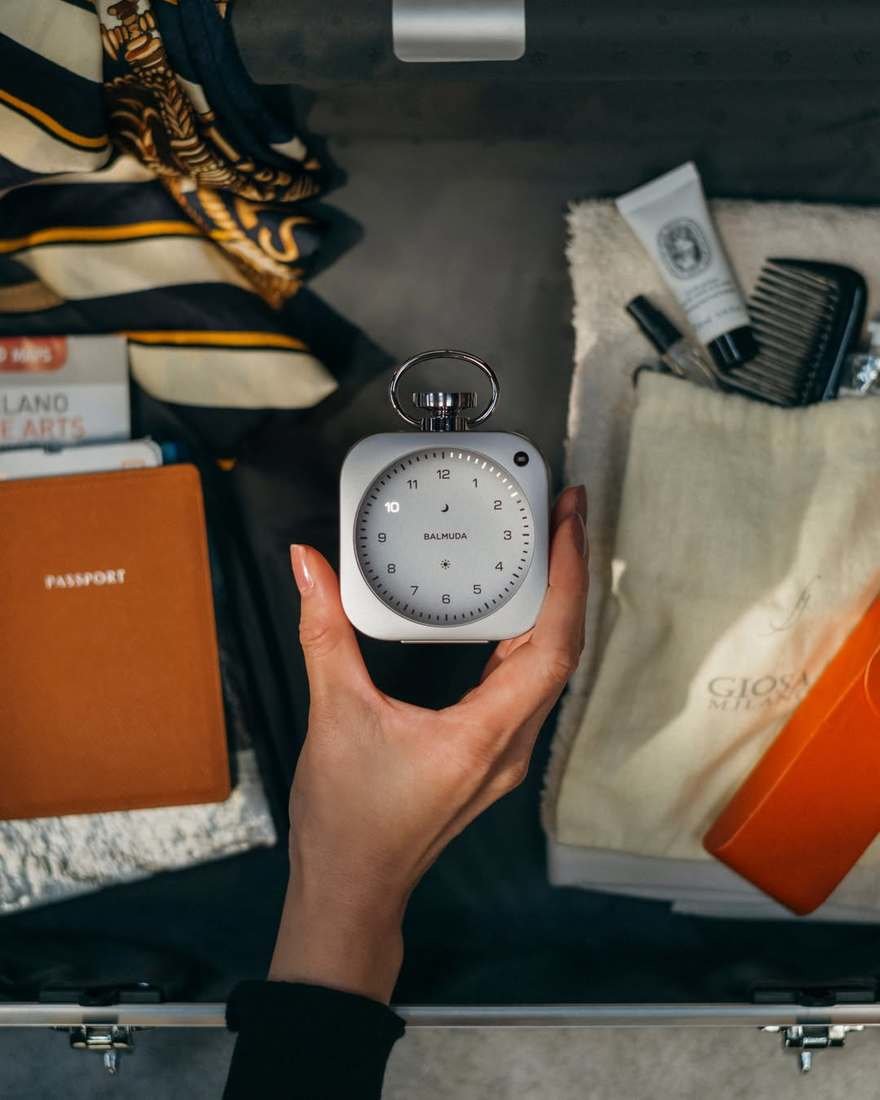
Now, it’s not impossible—it’s 10:10 on that clock—but it does take a bit of work.
Most damning for me is the lack of hands. There is a market who so prizes novelty that they are willing to decipher clocks rather than read them.
Waxing Colorful
What would happen if you melted down a few hundred different-colored crayons and reformed them into one, giant, mutant crayon? If this is the sort of burning question that comes to you, well, wonder no longer. Via Laughing Squid, Connor of Connor Creates did such a thing, turning 357 individual crayons into a giant, multicolored drawing tool.
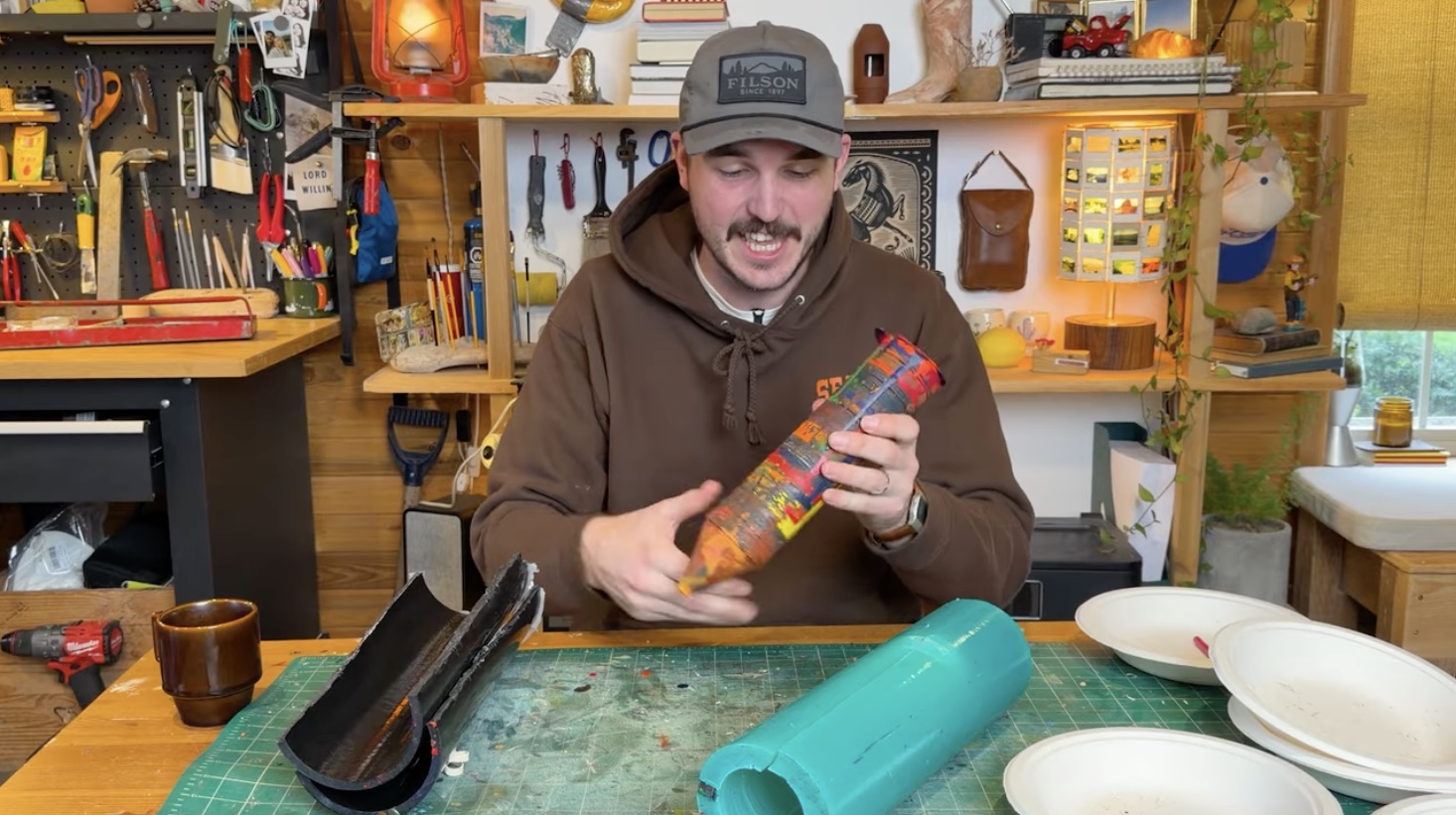
Connor shared the process of making the mold, finding the crayons, chopping them up, and cooking them down, and pouring the mixture into the mold. When it was finally unveiled, Conor added his final touch.
And it apparently received the seal approval from the most important user.
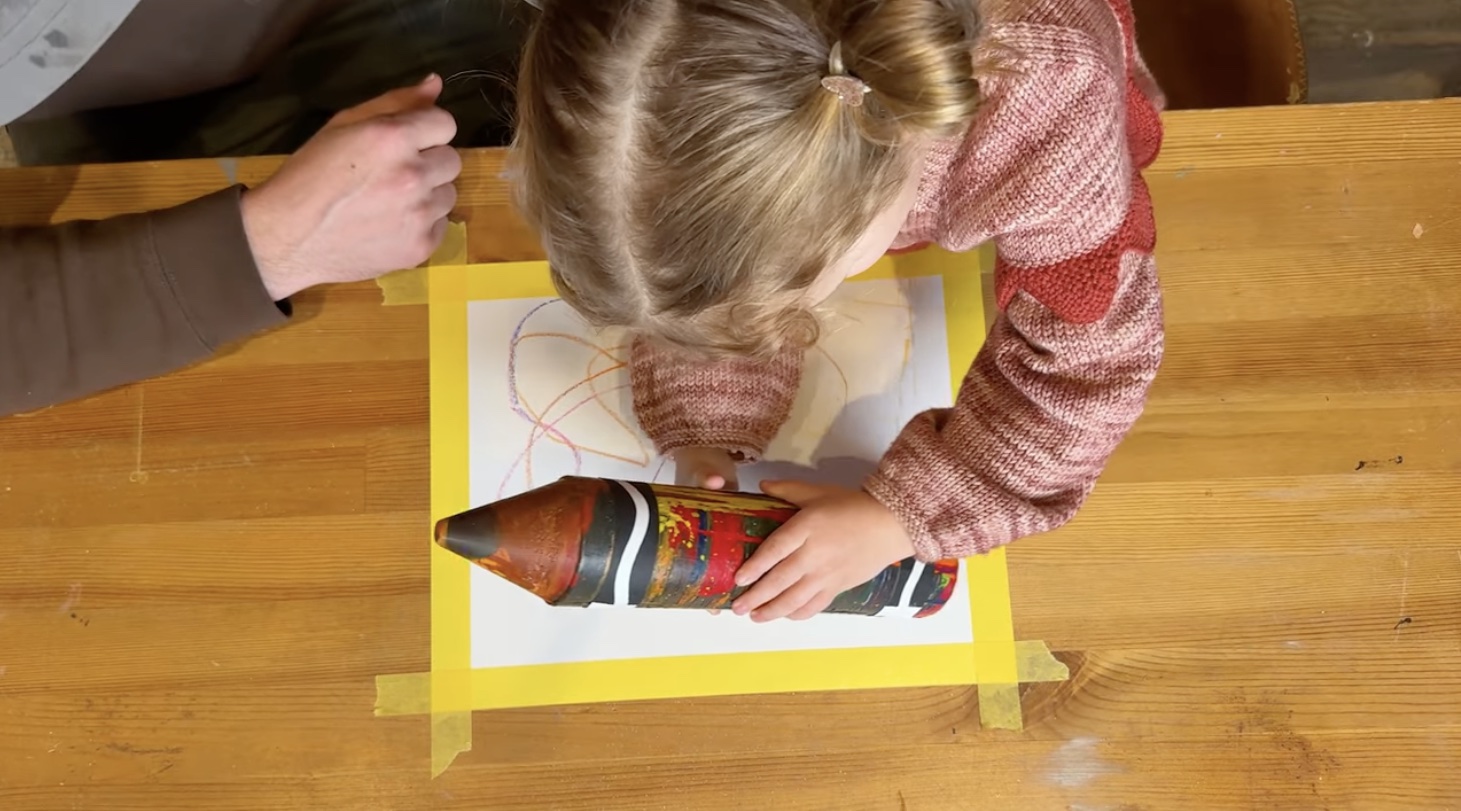
Watch the video here.
Lost in MySpace
Remember MySpace? Digg? StumbleUpon? All those old sites from the dawn of social media have been rendered obsolete by the current social media deathsites like Facebook and Xitter (this could explain why we never get any likes on our Friendster site).
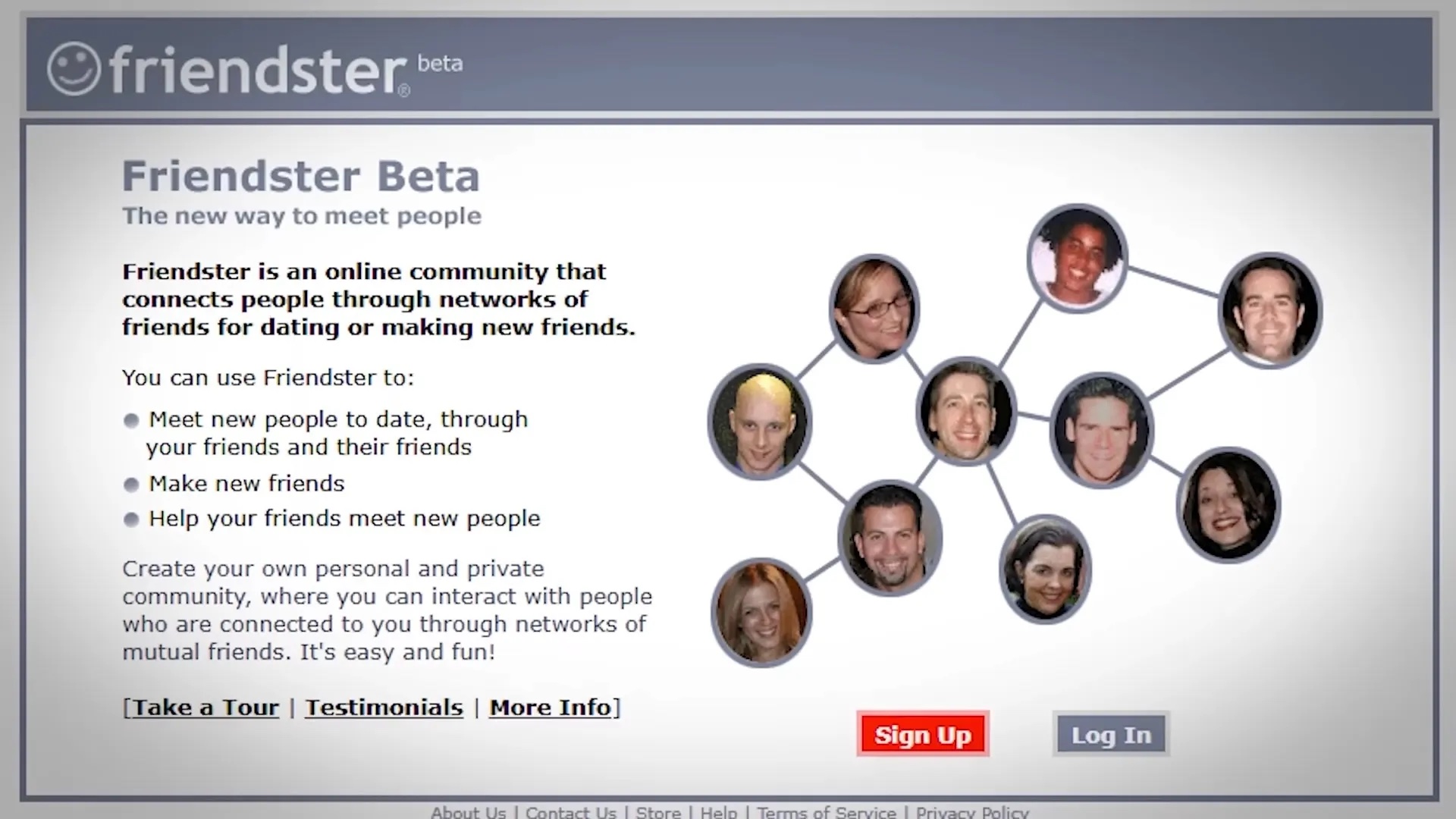
Via Laughing Squid, Weird History takes a little trip back to the beginning of the end of modern civilization. Watch it here.
I Got Your Number
(Mandatory musical accompaniment to this item.)
If you were near a radio in 1981/82, one song you could not avoid was the Tommy Tutone hit “876-5309/Jenny,” a song so relentlessly catchy that even 45 years later we remember Jenny’s number better than our own. Which was part of the problem; people who actually had that number would routinely get crank calls asking for “Jenny.” It was reportedly highly annoying. (We suspect “555-5309” wouldn’t have been much of a hit.) Companies also began exploiting the number—as recently as 2006, national plumbing franchise Benjamin Franklin Franchising began using a toll-free version of the number (1-866-867-5309), which it used in adverts as “867-5309/Benny.”
Jenny’s number is back in the news; via the Good News Network, Tommy Heath—the lead singer of Tommy Tutone (which was the name of the band, not a guy)—partnered with global nonprofit Cancer Support Community to turn the phone number into a cancer support hotline.
Tommy Heath, the group’s frontman, told People Magazine in an exclusive interview that he hopes “when someone is depressed and confused, they’ll go, ‘Hey, I’ll call 867-5309. Somebody’s waiting there to help me.’ And I hope they smile at that point.”
Heath, who still tours—despite having a minor case of skin cancer—was motivated by having family members affected by cancer, as well as seeing the ravages of the disease on his age cohort.
“Anyone impacted by cancer can call CSC-867-5309 [272-867-5309] to receive immediate support, trusted information, and personalized guidance from trained specialists at Cancer Support Community,” said the organization’s CEO Sally Werner.
What’s the Matter?
It’s not every day that scientists discover a new fundamental particle of matter, but that’s exactly what researchers at CERN have done. Now, we all know that the fundamental unit of matter is the atom, and that atoms contain protons, neutrons, and electrons. Protons and neutrons are particles called hadrons, and hadrons are composed of even smaller particles called quarks. There are six types—or “flavors”—of quark: up, down, charm, strange, top, and bottom.
Via Futurism, however, scientists operating the Large Hadron Collider (LHC, and one needs to be careful typing “Hadron”) have discovered what they say is an entirely new type of particle, which they have called Xi-cc-plus, consisting of two charm quarks and one down quark. It’s a lot like a proton, but with two heavy charm quarks replacing a proton’s usual two up quarks.
Basically, the LHC lives up to its name: it rams hadrons together to produce exotic subatomic particles that tend to be unstable and short-lived—these include baryons and mesons, which are also types of hadrons. So far, the LHC has led to the discovery of 80 new hadrons—so maybe it is every day a new fundamental particle of matter is discovered.
Xi-cc-plus is four times as heavy as your garden-variety proton, and the forces holding it together grow as the distance increases, not unlike a rubber band. And it’s the forces that are the real focus of this research
“The more we learn about these particles, the more we can learn about the strong force, and that is the same strong force that binds our protons and neutrons together,” University of Manchester physicist Chris Parkes told [the Guardian].
It was all made possible by upgrading the LHC to the LHCb—Large Hadron Collider beauty—experiment, which specializes in the detection of heavy particles that contain bottom and charm quarks. So it’s pretty niche equipment.
“This is just the first of many expected insights that can be gained with the new LHCb detector,” University of Warwick professor Tim Gershon, who will take over the lead at the LHCb in July, told The Guardian.
Clone Alone
In the 1996 comedy Multiplicity, Michael Keaton does what all of us wish we could do: he clones himself, in order to get done all the things he needs and wants to get done. However, he clones himself one too many times, and the last clone he makes is like a xerox of a xerox of a xerox—sort of dim and not very bright. A comedy, to be sure, but via Discover, that’s actually not far off the mark.
In a 20-year experiment, researchers repeatedly cloned mice from a single original donor, producing more than 1,200 animals across 58 generations. The mice appeared healthy and lived normal lifespans. But with each round of cloning, mutations quietly accumulated in their DNA, eventually reducing success rates and bringing the process to a halt. By the final generations, cloning succeeded less than 1 percent of the time. The findings, published in Nature, show that while cloning can sustain individuals, it may not sustain a species.
The upshot is that mammals (at least) need to reproduce sexually rather than asexually to avoid genetic anomalies. This may or may not be a good thing.
Cancel My Subscription
One of the most annoying contemporary trends is that, increasingly, one can’t actually buy anything anymore. More and more things require subscriptions, and isn’t paying a monthly cost for something so much better than shelling out for it once? Take, for example, a car. One of the happiest moments of one’s life is sending in that last car payment and, aside from the occasional repair or check up, not having to shell out any more money on it.
Naturally, automakers and auto dealers are trying to change that. BMW controversially made seat warmers a subscription service, and although they relented on the seat warmers, they remain committed to the “features as a service” model. (We’ve even heard of high beams as a service.) Not unexpectedly, Tesla is getting into this action.
The company has discontinued Autopilot as a standard driver-assistance option in the United States and Canada, updating its configurator so new vehicles no longer ship with the full suite. Instead, they now come standard only with Traffic Aware Cruise Control, which relies on the vehicle's vision-based sensors and onboard computing to monitor traffic ahead and automatically adjust speed and following distance.
The software-ization of cars is having predictable effects.
What's missing is the software layer that uses the same camera data and neural networks to track lane boundaries, plan a lateral path, and issue continuous steering commands through the electric power steering system. In other words, the hardware remains fully capable, but Tesla no longer enables the lane-keeping logic by default.
At this stage, rather than buy a new car, we’re tempted to go buy a used 1975 Dodge Dart.
Lawn Order
Put beer on your lawn? Granted, we’ve had a few beers over the years that we were tempted to spill out on the ground, but we had no idea that it might have been beneficial to the lawn. So Natural Light has launched Lawn Brew, a fertilizer made from beer grains. Says Food & Wine:
“When spring rolls around, you’ll find Natural Light fans doing two things: enjoying a cold beer and working on their lawn,” Krystyn Stowe, the head of marketing at Busch Family & Natural Family, Anheuser-Busch, said. “We couldn’t resist the idea of bringing those worlds together, so we transformed larger leftovers into Lawn Brew. Their favorite beer brand is now both in a can and on the fertilizer, helping make their yard the greenest in town.”
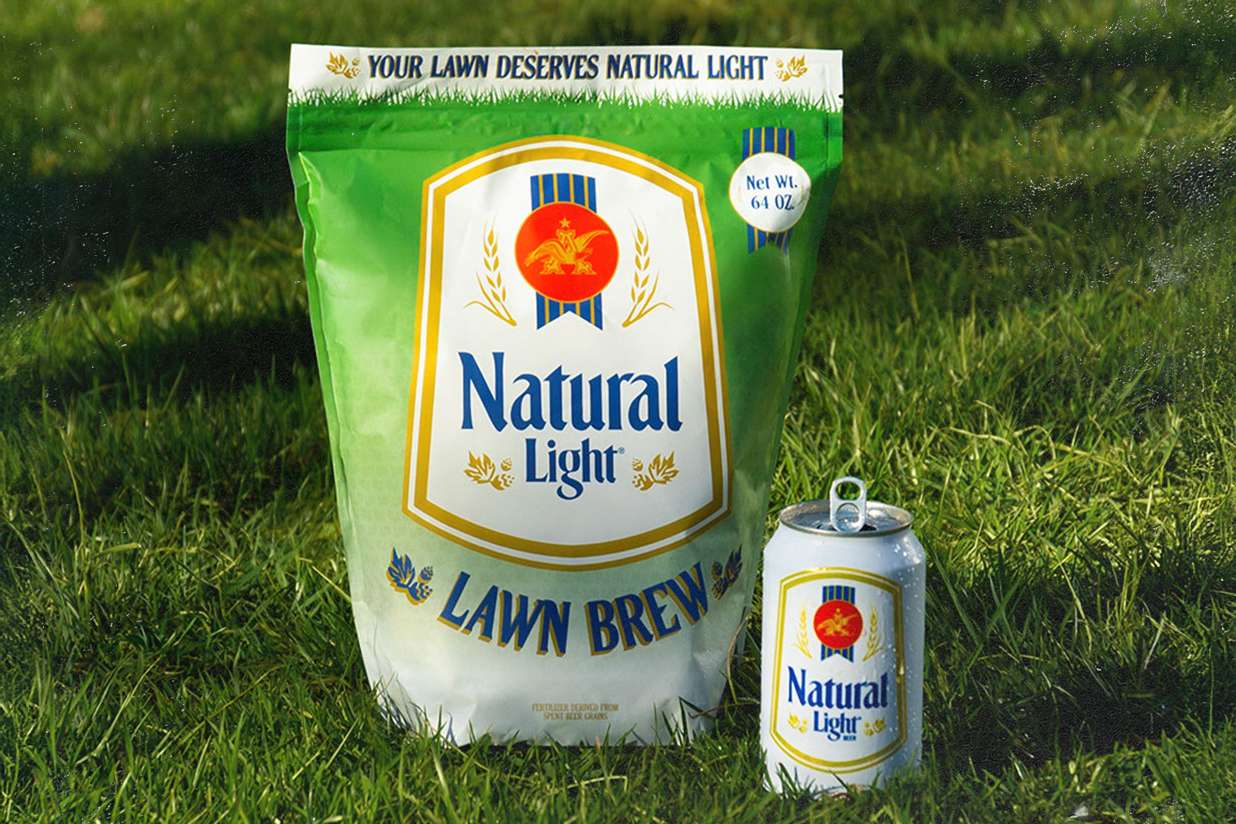
And it might actually work.
There is even some research to support these claims. According to a 2022 study, brewers’ spent grain led to “soil organic content and total nitrogen content up to 72 and 42% higher, compared to the unamended soils,” and helped lower pH levels, increase organic acids, and doubled phosphorus availability, creating an ideal environment for plants.
However, if the grass grows too high, it’ll teeter and flop over.
This Week in Printing, Publishing, and Media History
April 6
1483: Italian painter and architect Raphael born.
1861: First performance of Arthur Sullivan’s debut success, his suite of incidental music for The Tempest, leading to a career that included the famous Gilbert and Sullivan operettas.
1892: American journalist and author Lowell Thomas born.
1895: Oscar Wilde is arrested in the Cadogan Hotel, London, after losing a libel case against the Marquess of Queensberry.
1947: The first Tony Awards are presented for theatrical achievement.
1992: American science fiction writer Isaac Asimov dies (b. 1920).
April 7
1770: English poet William Wordsworth born.
1805: German composer Ludwig van Beethoven premieres his Third Symphony at the Theater an der Wien in Vienna.
1927: The first long-distance public television broadcast (from Washington, D.C., to New York City, displaying the image of Commerce Secretary Herbert Hoover).
1949: The Rodgers and Hammerstein musical South Pacific opens on Broadway; it would run for 1,925 performances and win 10 Tony Awards.
1964: IBM announces the System/360.
1969: The Internet’s symbolic birth date: Publication of RFC 1.
April 8
1820: The Venus de Milo is discovered on the Aegean island of Milos, which archaeologists found disarming.
1904: Longacre Square in Midtown Manhattan is renamed Times Square after The New York Times.
1942: American director, producer, and special effects artist Douglas Trumbull born.
1947: Mood for a day: English guitarist, songwriter, and producer Steve Howe born.
1959: A team of computer manufacturers, users, and university people led by Grace Hopper meets to discuss the creation of a new programming language that would be called COBOL.
April 9
1553: French monk and scholar, author of Gargantua and Pantagruel, François Rabelais dies (b. 1494).
1821: French poet and critic Charles Baudelaire born.
1830: English photographer and cinematographer Eadweard Muybridge born.
1860: On his phonautograph machine, Édouard-Léon Scott de Martinville makes the oldest known recording of an audible human voice. In 2008, researchers at the Lawrence Berkeley National Laboratory in Berkeley, Calif., did successfully convert a “phonautogram”—“squiggles on paper,” essentially—recorded in 1860 to a digital audio file. It was a 10-second clip of a singer, possibly female, warbling “Au clair de la lune.” It is believed to be the earliest known sound recording, preceding Thomas Edison’s attempts by almost two decades. (Poor Charlotte Green, BBC Radio 4’s newsreader, who played the restored phonautogram on her broadcast, but was unable to get through the next story—alas, an obituary—without cracking up.)
1898: American singer, actor, and activist Paul Robeson born.
1928: American singer-songwriter, pianist, and mathematician Tom Lehrer born.
1959: NASA announces the selection of the United States’ first seven astronauts, whom the news media quickly dub the “Mercury Seven.”
1965: Astrodome opens; first indoor baseball game is played.
April 10
1710: The Statute of Anne, the first law regulating copyright, comes into force in Great Britain.
1847: Hungarian-American journalist, publisher, politician, and founder of Pulitzer, Inc. Joseph Pulitzer born.
1925: The Great Gatsby by F. Scott Fitzgerald is first published in New York City, by Charles Scribner’s Sons.
1934: American journalist and author David Halberstam born.
2019: Scientists from the Event Horizon Telescope project announce the first ever image of a black hole, located in the center of the M87 galaxy.
April 11
1976: The Apple I is created.
2007: American novelist, short story writer, and playwright Kurt Vonnegut dies (b. 1922). So it goes.
April 12
1932: American singer and ukulele player Tiny Tim (né Herbert Khaury) born.
1981: The first launch of a Space Shuttle (Columbia) takes place: The STS-1 mission.
1990: Jim Gary’s “Twentieth Century Dinosaurs” exhibition opens at the Smithsonian Institution National Museum of Natural History in Washington, D.C. He is the only sculptor ever invited to present a solo exhibition there.
1992: The Euro Disney Resort officially opens with its theme park Euro Disneyland; the resort and its park’s name are subsequently changed to Disneyland Paris.