- Because consumers still want physical representations of their memories, photo merchandise items (including photo books) remain one of the fastest-growing applications in the industry.
- Platforms that facilitate online design and ordering of photo books are setting the stage for a customer experience that integrates digital efficiency with the tactile satisfaction of a physical product.
- Simplifying the decisions that must be made throughout the photo book design process can minimize shopping cart abandonment and enhance the overall experience.
By Karen Kimerer
Introduction
Despite the prominence of digital media, our industry is witnessing a continued popularity of physical photo books. This trend presents a significant market opportunity for modern print service providers (PSPs). As digital media continues to dominate, PSPs must diversify their offerings to stay competitive. By tapping into the growing demand for photo books, service providers can take advantage of a new revenue stream. The photo book market continues to experience growth, driven by consumers’ desire for personalized and tangible representations of their memories.
By strategically leveraging their existing printing infrastructure and expertise, PSPs can add photo book printing to their portfolio of services. The diverse range of customers, including individual consumers, corporate clients, and professional photographers, enables them to secure a strong position in the industry. This article explores the market potential of photo books and considers how PSPs can benefit from adding photo book printing to their offerings.
The Opportunity
The photo book market has witnessed considerable growth in recent years. Because today’s consumers still want physical representations of their cherished memories, photo merchandise items (including photo books) remain one of the fastest-growing applications in the industry. According to Keypoint Intelligence’s most recent US Production Printing Application Forecast, photo merchandise is expected to achieve a compound annual growth rate (CAGR) of 8.3% between 2024 and 2029.
Figure 1: Fastest-Growing Color Applications (2024–2029 CAGRs)
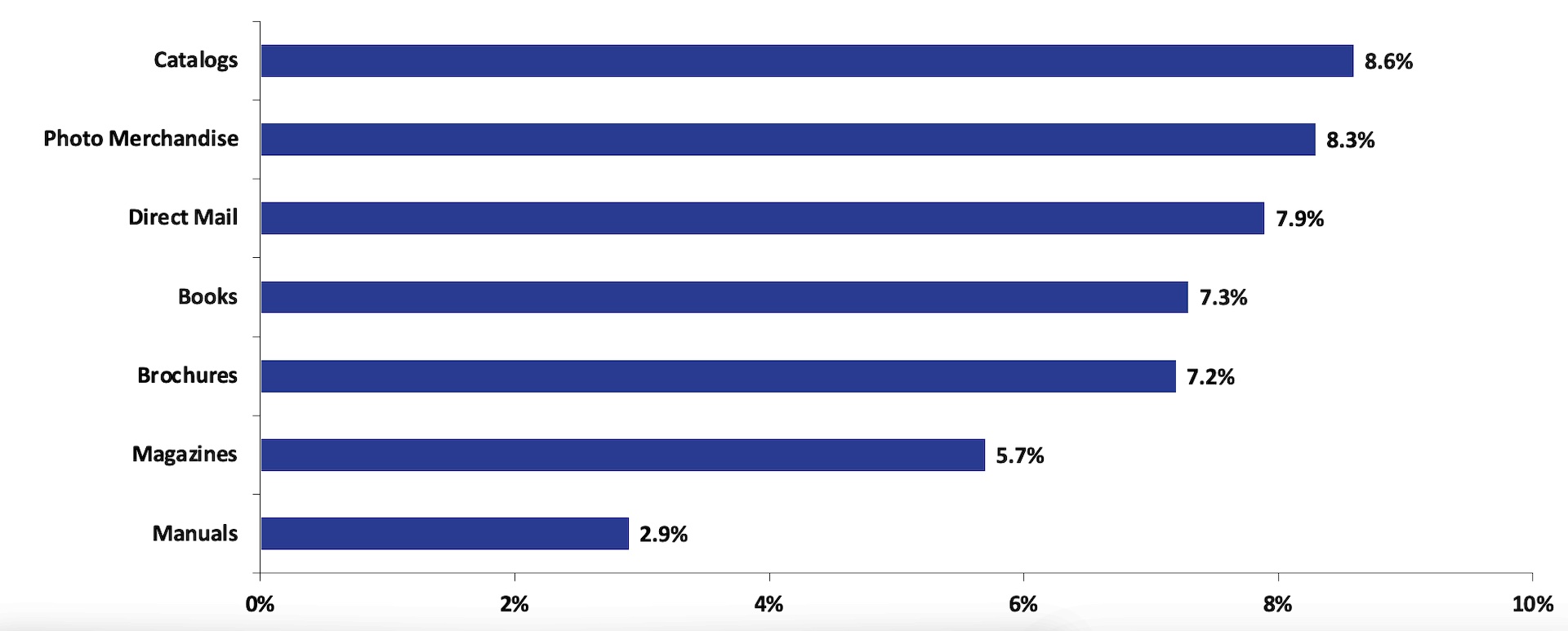
Source: United States Digital Production Printing Application Forecast; Keypoint Intelligence 2025
Based on the popularity of photo books, it’s clear that preserving memories is a priority that is highly dependent on printed photos. The desire to reminisce among consumers and businesses of all sizes can be a win for PSPs. Additional contributors to the healthy growth of photo products point to advanced print technologies, which make it easier than ever to reproduce quality photos. There was a time when the effort required to lay down smooth skin tones and realistic colors often exceeded the price of the photo item, but this is no longer the case. Today’s digital print technologies and advanced color management tools enable PSPs to consistently meet or exceed their customers’ expectations. Additionally, online design tools make the process of creating photo books easier than ever. Consumers can exercise their creativity and maintain complete control over the final product.
Strategies for Success
Although the expanding photo product market offers a promising avenue for growth, not understanding what might work or where to start can create problems. Informed decisions will likely come easier if you start with a strategy. Consider the following tactics:
Analyze the Whole Process
The seamless integration of print technology with digital interfaces is revolutionizing how PSPs operate. Platforms that facilitate online design and ordering are setting the stage for a seamless customer experience that integrates digital efficiency with the tactile satisfaction of a physical product. These integrations also enable rapid scaling of operations to meet peak demands without compromising on quality, highlighting the agility of modern print solutions.
Take inventory of your resources, then consider every touchpoint that your potential photo book customers will encounter. Where are your strengths? What do the gaps look like? Take advantage of internal employees with the skills and passion to make dazzling photo products a reality. A strategic plan to bridge the gap between your current offerings and the potential of the photo product market will help set the path for success.
Define Your Market
The market you choose to serve is a key element of success. If you want to work with professional photographers, print technologies that are capable of producing extremely high-quality images will be crucial. PSPs that are less interested in producing coffee-table-quality books have a span of opportunities across various customer segments. Examples include individual consumers, corporate customers reliant on events and clubs, or associations that have a strong desire to hold on to their memories. PSPs can venture successfully into new territories with the right technologies and a clear understanding of market needs.
Simplify the Design Process
How will the audience create their photo book and other photo products, and what decisions will they need to make along the way? Intuitive online tools will attract customers who may be hesitant about creating a photo product. Photo books are highly personalized products that require customer involvement in the design process. Simplifying the decisions that must be made throughout the design process can minimize shopping cart abandonment and enhance the user experience. At the same time, however, providing too many options (e.g., an excess of paper types, cover materials, and binding styles) can lead to frustration and stranded shoppers.
Expand Beyond the Traditional
The application of photo books is expanding beyond the traditional. From marketing brochures with a personal touch to customized yearbooks and even tailored business presentations, the potential for diversifying into new printed products is immense. Innovative companies with the right technologies and a clear understanding of market needs can help PSPs venture successfully into these new territories and even create their own.
PSPs are selling more than a product—photo merchandise fosters an experience centered upon creating and sharing memories. This community-centric approach is particularly appealing in a digital age when much is lost on ideation. Photo books can create a sense of belonging and connection among users while also enhancing customer loyalty and uncovering new markets for print providers.
The Bottom Line
As we look toward the future, the photo book market offers more than just a profitable venture; it represents an opportunity to be at the forefront of a cultural shift in how we preserve and celebrate our memories. For PSPs, this is a call to innovate, integrate, and inspire. Whether by adopting new technologies, exploring new markets, or engaging deeply with current customers, the path forward is ripe with potential. In the pursuit of new business opportunities, embracing the photo book industry doesn’t just align with market growth—it also fosters a broader cultural trend toward personalized, meaningful products.
As part of the Business Development Strategies Consulting Service at Keypoint Intelligence, Karen Kimerer has experienced the many challenges of expanding current market opportunities and securing new business. She has developed a systematic approach to these opportunities, addressing the unique requirements of becoming a leader in our changing industry.