Background
Prior to drupa 2024, Keren Yakolev Zur was the VP Head of Product Strategy & Business Development at HP. She started at HP Indigo in 2016 and was an integral part of the team that drove the growth of digital print and packaging, driving short runs and making things in a different way. Having worked with Keren in her past life at HP, I reached out to see what she was up to. According to Keren, “The reason I left HP, about two-and-a-half years ago, is that I realized that a big part of the vision that we had at Indigo regarding digital print was really about minimum orders. But while the printing equipment was designed to handle them, there was a long and challenging process between the concept, design, and ultimately placing the print or packaging order.”
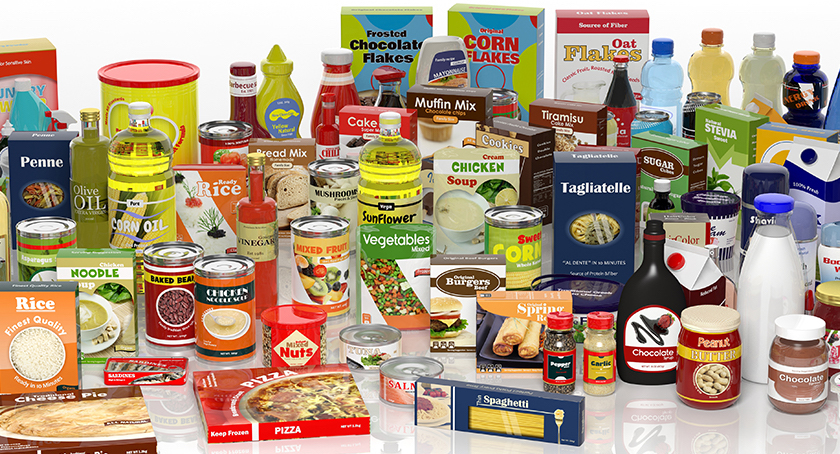
Keren was regularly approached by small businesses, whether a small coffee shop, or someone selling cookies or coffee beans, etc., looking for branded cups, branded paper bags, branded labels, and even branded pouches. For the big companies like Coke, Nestle, Procter & Gamble, Nutella, Ferrero, etc., this was their norm, but the small guys who were the drivers to initially adopt digital, it’s not readily accessible—because when they go to the converter for packaging, there is a real need for expertise. Furthermore, if they’re in need of multiple products, whoever is doing paper cups is usually not doing folding carton, whoever is doing folding carton is probably not doing a FlexPak, whoever is doing a FlexPak is not doing paper bags, etc. So if they’re not coming from the packaging industry, they probably won’t understand the formats, media, and other aspects of finishing equipment.
For a small business, they also need to go to a designer, and perhaps the designer needs to do four products, if not seven products, and then they need to look for a converter. Sometimes they will need to get a middleman that will manage the entire packaging process, who will approach different converters and each of them would need to do the design, structural work, and prepress, for each piece. So while it is a minimum order that should print and convert somewhat automatically, today the entire operation behind it is very manual.
One of the other lessons she learned at Indigo was that everybody liked Mosaic, the random pattern generator, but most never used it because it was difficult to use and it came at the end of the process on the print provider side. In essence, the print provider wound up offering you a design after you already came with a design, so it was “a chicken and egg thing.” “For the big guys like Coke and others, we met them at the beginning of the design process, but the smaller ones had a design when they submitted it to the PSP and weren’t ready to change it,” she said. Enter dappas.
dappas
Their motto is “Custom packaging. Low minimums. No stress.” With DoorDash, Uber, and Airbnb, for example, the digital platform did change complex and traditional industries. So how do you increase access for an SMB that doesn’t have the knowledge of or expertise in converting different products? Additionally, how can you drive the order volumes like those seen in photobooks, and other types of commercial print products from companies like Shutterfly and Snapfish, while at the same time provide a stream of that business to the various converters who have the necessary converting equipment? E-commerce platforms for print products have been very successful for many commercial print providers, so why not an e-commerce platform for packaging products?
The ultimate goal of dappas is to easily facilitate design and eliminate the entire prepress production process, so all the converters who are working with dappas are getting a stream of work which is ready to go to press and converting. No one really needs to open the file and check that, on the pouch, the logo is in the center, the edges are not getting cut off, etc. The design of the dappas platform was achieved using state of the art technology and AI to create a platform that can change the way companies look for packaging.
For the packaging consumer, since 80% of the small businesses are looking for something similar, why do they need to reinvent the wheel every time they need a product? If a baker and needs a box for a cake, for example, they could probably all use the same size boxes for the cakes. Or for cookies. They probably need the same size, but they’re using different size packaging just because they really don’t understand the cost benefits of standardization within the different product offerings.
Win/Win
The driving concept of dappas is, how do you make it a win/win for the customer and also for the converter? Just giving converters the work is easy, “but we want to ensure that the prepress will be locked and because they also need to get good pricing.” If there is no incentive for the converter and they have to do a lot of work, they’ll not reduce the quantities, and they’ll not reduce prices. If that happens, you can’t really make a change on the supply-and-demand dynamics. “I really believe that in order to change and make digital more accessible, we need also to affect the prices.” It was very important to change the production floor on the one hand, but also the front end and how people will see and use it. To help that, dappas is finding and working with converters on the offerings that they created.
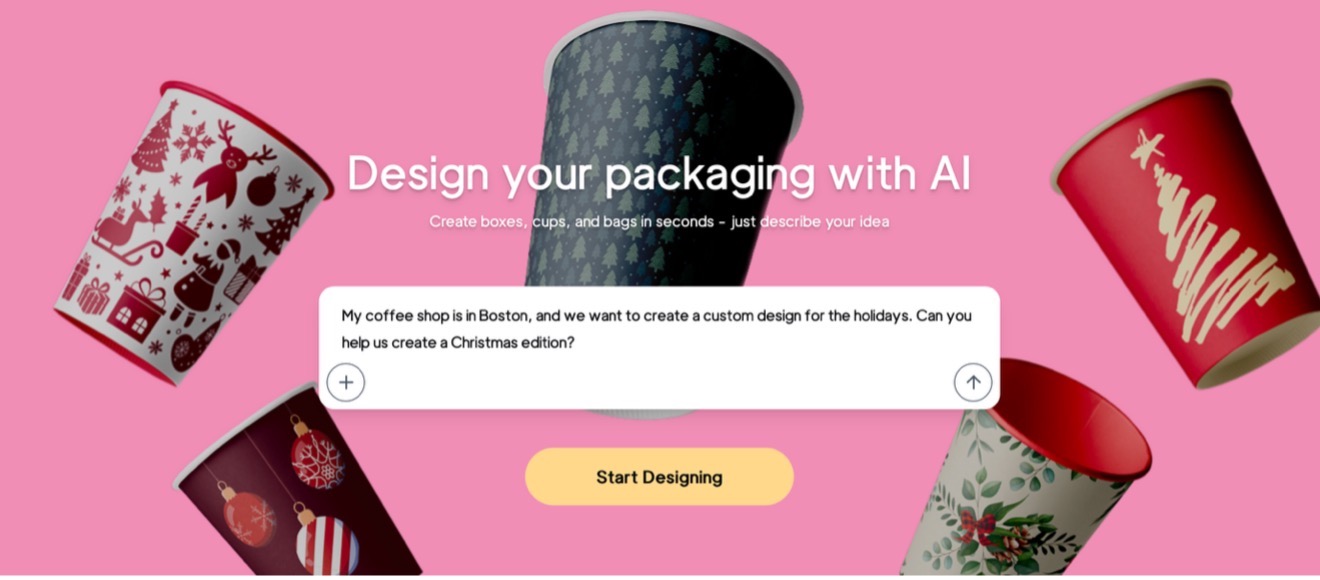
With dappas, customers initiate the designs with an easy to use e-commerce interface sitting on top of an AI engine. You upload your logo or identify a theme. For example you can identify that “I am a Cuban coffee shop in Miami” and get three different designs back for review with a Cuban look and feel. This actually happened in their initial trials, and the coffee shop actually ordered all three. But the important thing here is that you really don’t need a designer, or if you are a designer, you can also upload your own design and take advantage of the design and product flexibility. The platform is implemented so that the design elements can be applied to the entire product portfolio, and thus you don’t need to redesign for cups, bags, pouches, etc.; you have a consistent branding of the products. The idea is that once you have implemented one product, you can implement other products with one click. You log in and you can start a new account, or if you are returning you can see your own previous designs, start with that and begin to add, edit, etc.
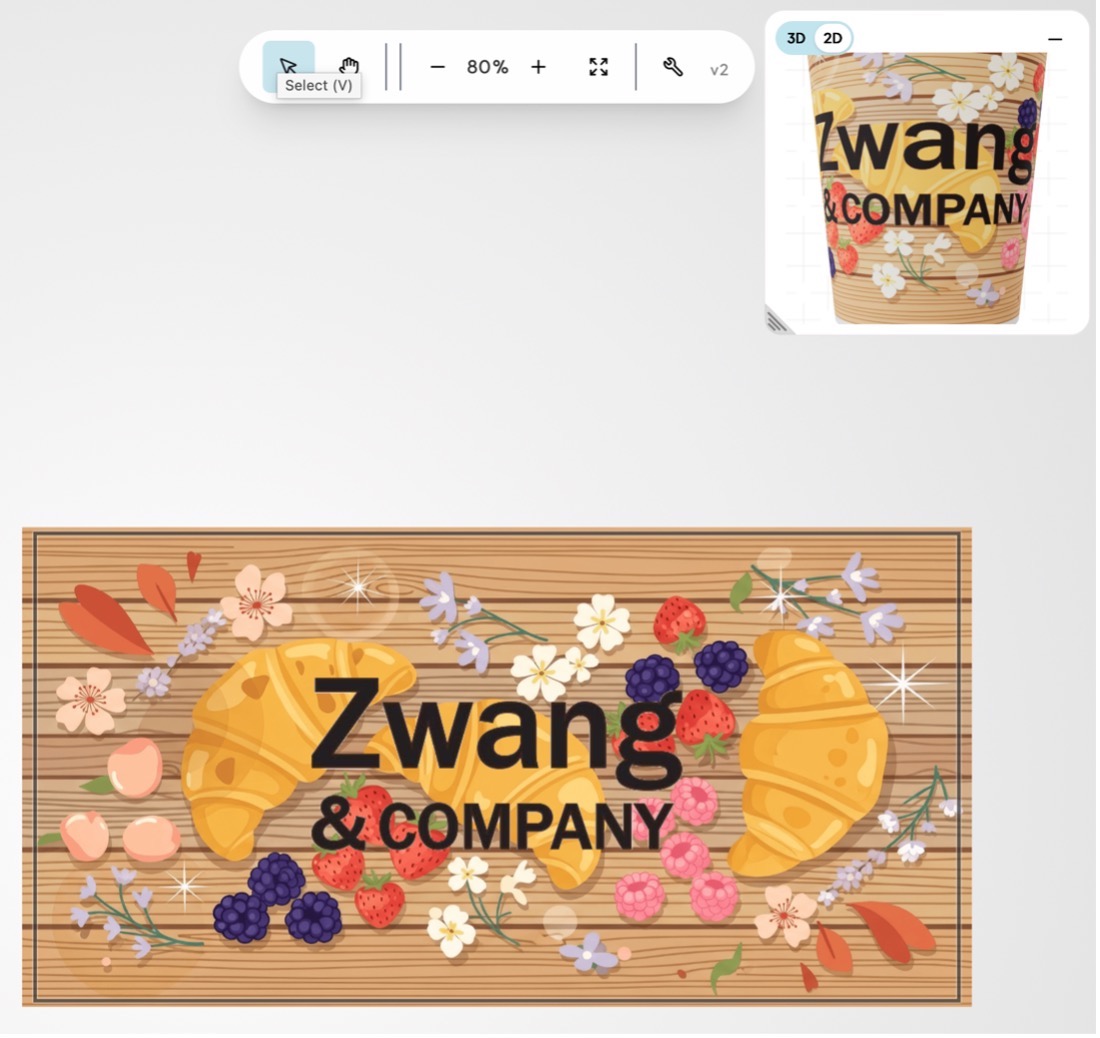
As you can see below, I decided to order a cake box for my new bakery business. I found the interface fairly easy to navigate, and made some changes along the way. After I did the design, with a click I was able to see it in 3D.
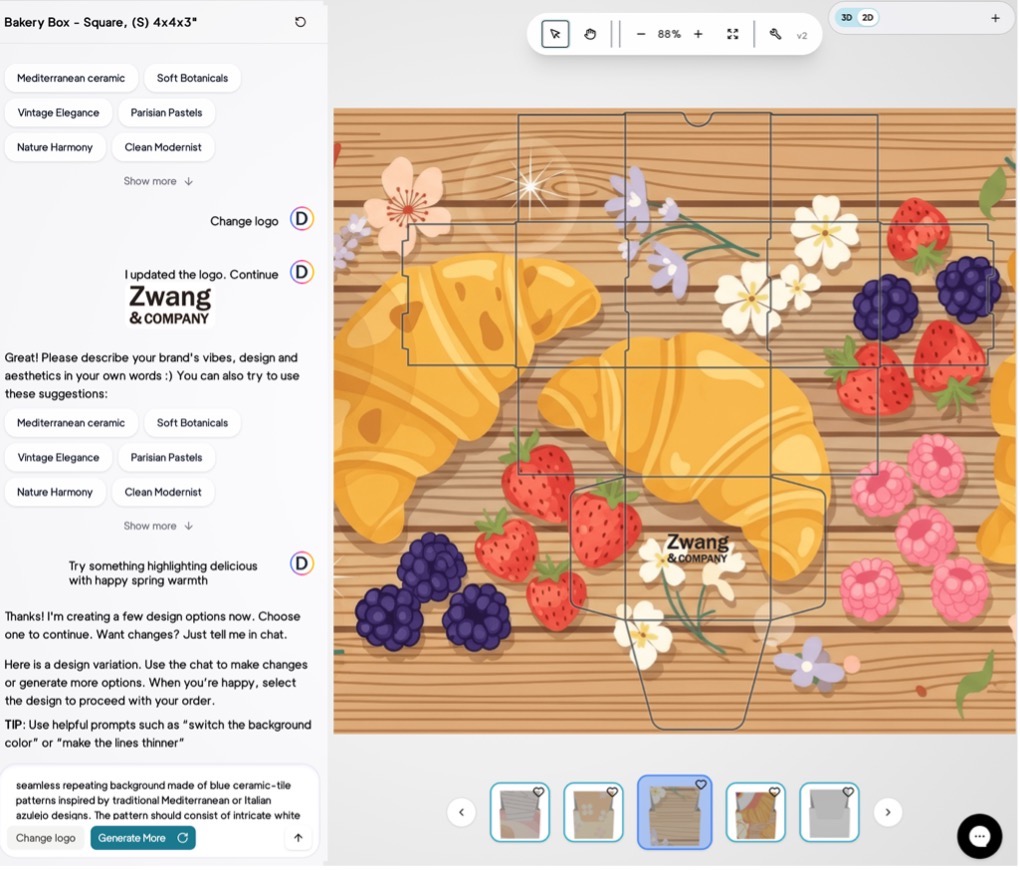
At this point dappas doesn’t have a logo maker, so for my box I just picked up one of my logos. One of the things they understand is that there are many third-party logo makers, including Wix, Fiverr, and others that they can collaborate with since they don’t want to reinvent something that already exists. The idea is for dappas to leverage whatever does exist and enable their customers to just upload their logo and then really get a simple packaging experience. The whole process took me about 20 minutes from launch to shopping cart.
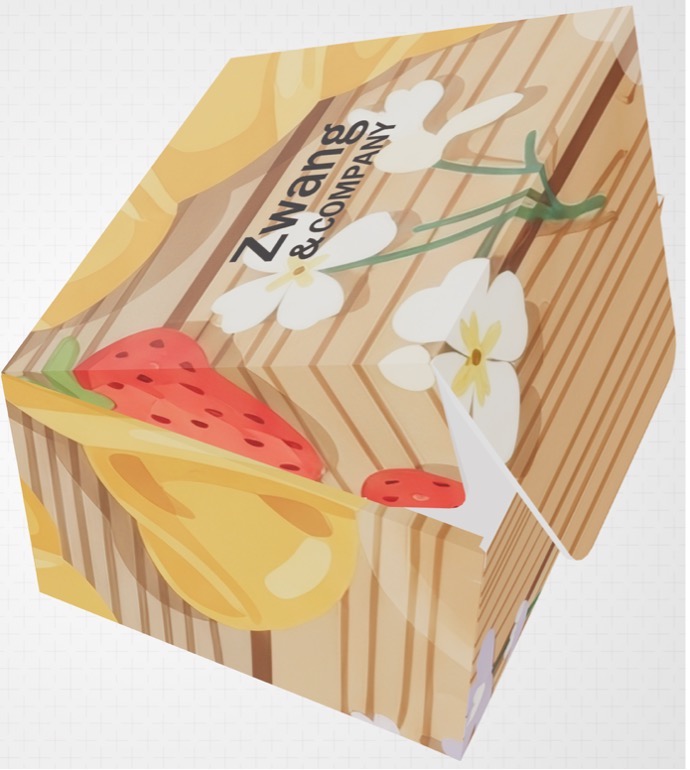
With dappas, you may have your own brand design but perhaps you want to add other elements. You can easily get elements from the system and preview them online. According to Keren, “I don’t think that we are going to replace all the designer’s work. I actually think dappas is a great tool for designers to leverage, but ideally for business owners that really want to simplify things, and do something quick. It is also structured so that if they already have a design created and it’s in the system, and then a holiday or event arrives and they just want to add those elements while still maintaining the branding, it’s just a click away.”
There is a lot of R&D involved in the creation of dappas, and it’s now a growing team of 10 people.
Taking Off
dappas is already selling in the US, and has customers that they worked with, along with an early selected converter who did the color calibration and testing to verify. Initially it was easier for them to start with a converter who had an Indigo, since they know the equipment and have access to people that can help them understand and manage the new process. However, they are now looking for other converters who have other types of digital or inkjet printers and converting equipment to build their back end to support increased volumes and new products.
The pricing is very approachable for small orders. In the case of the box, there was a 250 minimum at $1.10/unit. In the shopping cart at check-out you have an option to add other products with one click. I added a single wall coffee cup at $0.67 each for a 100 unit minimum.
In the last few months, they started the chatter in social media and people are going online and looking for them, so they have had trouble staying below the radar. Now that it is officially released, it is going to continue to evolve over time. In the meantime, they need to continue build their back-end production partners. “If I look at all the e-commerce I’ve watched grow over the years, they survived because they started with one good back-end service provider, and then they put another one on and got them set up, and then they got another one, and got them set up, and all of a sudden they’ve got a strong team of PSPs, and they can shoot the work wherever they need to.
“I saw how the packaging industry is growing on the digital perspective,” she added, “but there was no real solution for that. Now Vistaprint and even Canva are doing packaging, and they are building the channels. But the angle we took was end-to-end, so you don’t really need to come with a design that fits 100% the sizes that you chose, and you don’t need to go to a designer. Just upload your logo and let the AI in the system do the work.” Today, dappas supports the creation and production of cups, FlexPak, boxes, labels, tissue papers, and paper bags. They are already thinking about new products.
The dappas platform design is a great blend of using a standard Shopify e-commerce platform, exceptional engineering and AI. It provides a real solution for SMBs as well as a great feeder platform for PSP converters, who have digital print and the appropriate converting equipment.
Disclaimer: I am not opening a bakery, so don’t try to order!
More to Come…
I would like to address your interests and concerns in future articles as it relates to the manufacturing of Print, Packaging, and Labels, and how, if at all, it drives future workflows including “Industry 4.0 and 5.0.” If you have any interesting examples of hybrid and bespoke manufacturing, I am very anxious to hear about them as well. Please feel free to contact me at [email protected] with any questions, suggestions, or examples of interesting applications.