By APTEC, HK
Role of Digital Proof in Print Production
In the print production process, digital proof is an indispensable part. It is as a bridge for communication and commitment between printing company and client. Through digital proofing, client can preview the printed color effects and confirm in advance the expected/required color performance. So digital proof is also named as contract proof. At the same time, the proof serves as a standard for color and content during printing.
Current Practice for Calibration of Digital Proof
Imaging technology and color reproduction technology for digital proofing differ from traditional offset ink printing, leading to difference in color and tonal reproduction. Therefore, using the calibration method of offset printing is not suitable for digital proofing. Instead, Color Tone Value (CTV) calibration is the most ideal and effective method. CTV can provide a more precise calibration scheme tailored to the characteristics of digital proof, ensuring that it more accurately simulates the printing effect, thereby providing reliable reference for print production.
ISO published “ISO 20654: Graphic technology—Measurement and calculation of spot color tone value” in 2017, which is mainly used for spot color control. Advanced Printing Technology Centre (APTEC) researched and innovatively applied it to process color with ideal results. In addition, apart from 4C offset printing, APTEC also further expanded CTV’s application to digital printing, flexography printing, different substrates and multi-color. According to APTEC’s practical experience, it is proven that CTV can bring better print performance. Consistent colors can be achieved in the design and print production process, and print quality can be improved.
CTV enhances the monitoring of digital proofing systems and improves the color accuracy in the print production process
CTV is a linear calibration method that ensures the output color tone meets the target LAB values, achieving the goal of “50% tone in file matching the appearance of 50% tone as well as equal to 50% in print.” Using this linear “50=50 calibration method” brings numerous benefits in daily operations and maintenance. It is straightforward and easy to implement, allowing operators to quickly apply, which reduces operational complexity and the errors. Additionally, it provides an intuitive reflection of the digital proofing machine’s performance across all tonal condition, enabling operators to identify and address equipment condition promptly.
Regarding the daily maintenance, performing this “linear 50=50 calibration” helps to monitor equipment’s performance changes, which can provide data support for maintenance. This ultimately extends the equipment's lifespan and lowers production costs.
In the print production process, once the CMYK print sequence is correct, other parameters, like paper and solids, meet the target aims of digital proofing, the key to achieving accurate color is to master the CMYK dot change data. If CMYK dot change data can be obtained from the digital proofing in advance, adjustments during the printing process can be made which helps to achieve accurate color simpler and more effective.
However, the color reproduction principles of digital proofing differ from traditional offset printing. Traditional method of using density measurement to calculate tone cannot accurately measure the tone data of digital proof, leading to inaccurate color and longer calibration time. In contrast, CTV calculates LAB value for the print dot, unaffected by different color reproduction principles. Through CTV, it can more accurately obtain dot data of digital proofing and apply this data in the print production for color reproduction, achieving precise consistency between digital proof and printed colors.
Calibration Process for Digital Proof
- Get ready for the digital proofing machine: check the condition of the digital proofing machine and perform comprehensive adjustments according to the supplier’s recommendations. For example, regularly clean the printhead to ensure consistent print quality; calibrate the print head to ensure no streaks or other print problems occurred; ensure the proofs are clear and complete.
- Conduct linearization: based on actual needs, set the maximum ink coverage, choose appropriate resolution, print mode, ink type, and color mode. These settings directly influence the color performance and tonal reproduction of the digital proofing.
- Print CTV test chart: based on the configured linearisation parameters, print the CTV test chart containing different color tones which is important for calculating the CTV curve.
- Data measurement: Utilize a spectrophotometer to measure the LAB values of each tone in the CTV test chart.
- CTV calculation: Calculate the CTV values for each tonal range by software, and determine the compensation curve.
- Apply in-RIP color management system: Import the compensation curve into the output system’s RIP.
- Validation and testing: Print samples applied the compensation curve and check the calibration results. If necessary, further adjustments are needed.
- Print IT8 test chart: Print the IT8 chart including the CTV compensation curve, followed by measurement.
- Create ICC profile: Measure the IT8 chart with the compensation curve by spectrophotometer. Based on the measured data, create an ICC profile and apply it to the system for color
Examples of applying CTV:
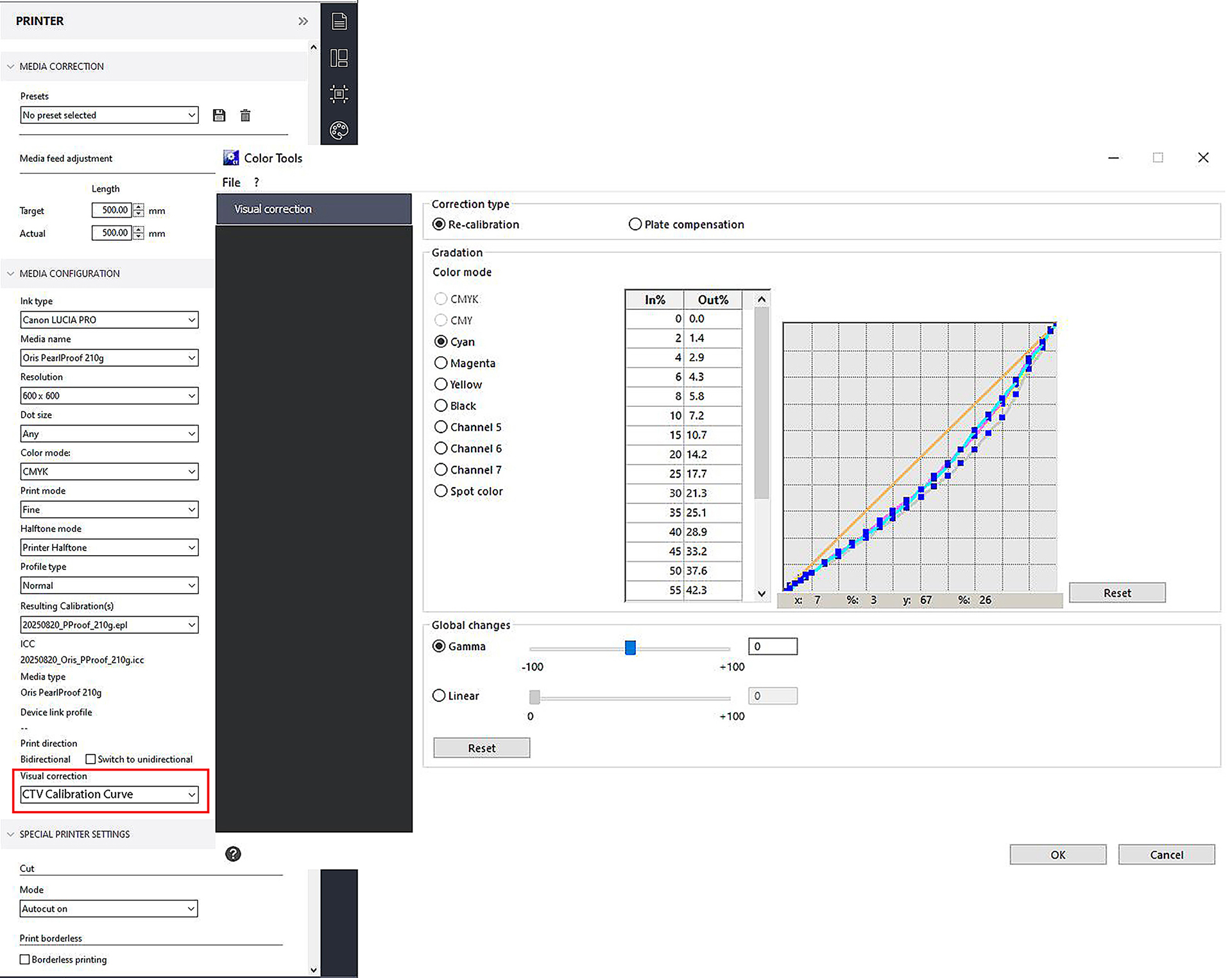
CTV applied in Fiery XF
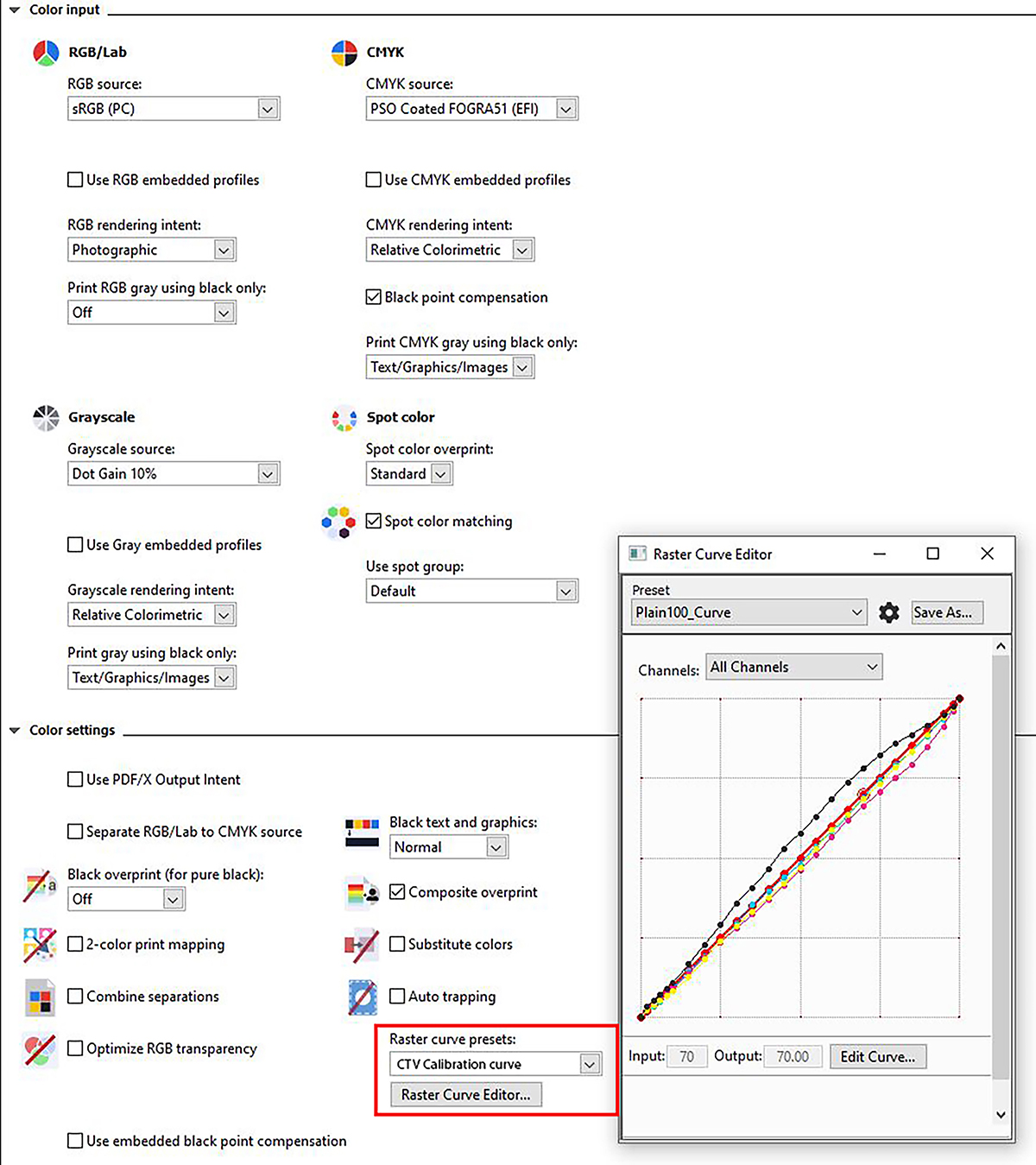
CTV applied in Fiery Toner
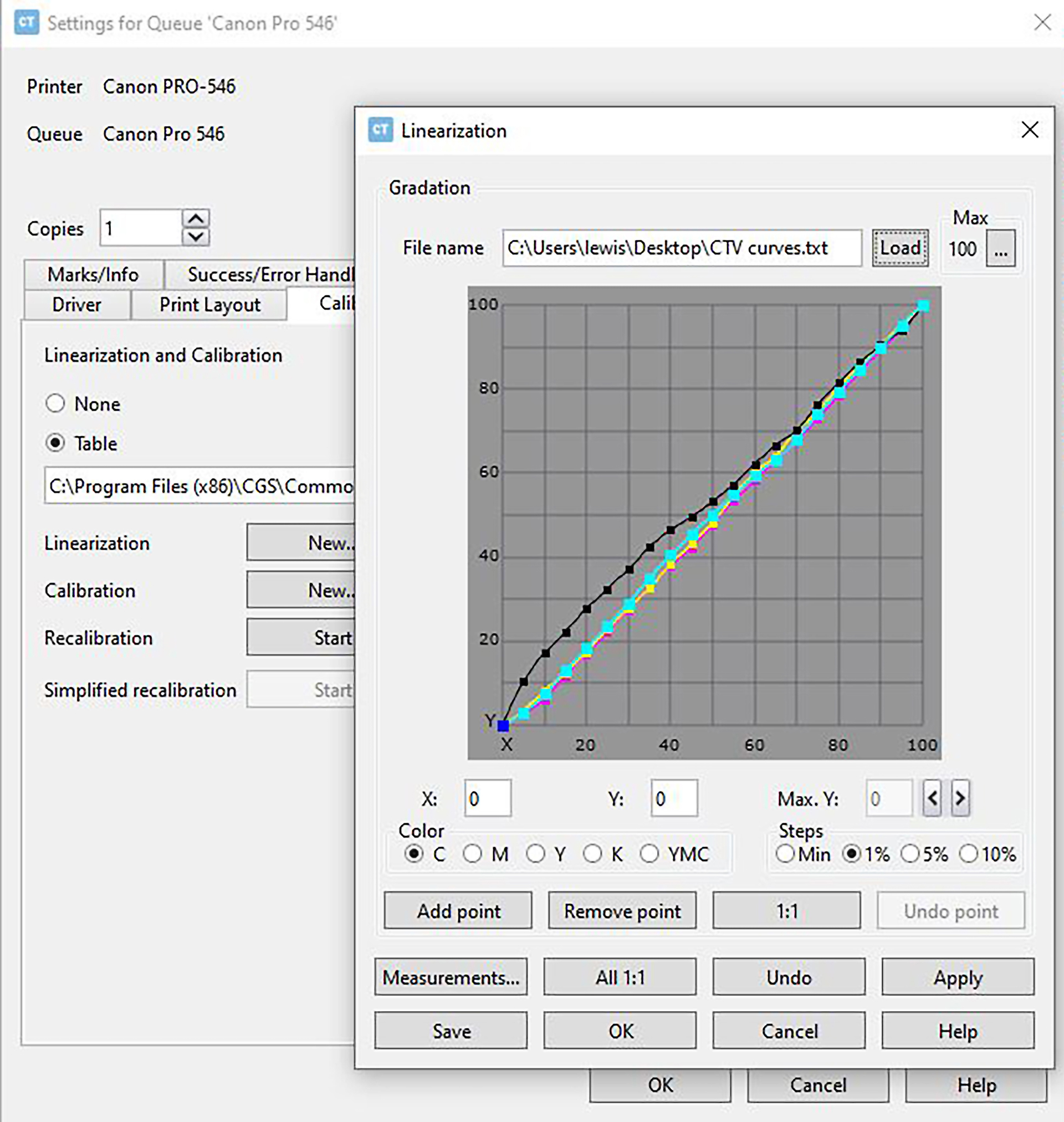
CTV applied in CGS Oris Color Tuner
Combination of CTV Calibration and ICC Color Management
The ICC profile is primarily used for color conversion in order to ensure that different devices produce accurate and consistent color, while CTV calibration focuses on ensuring the accuracy of tonal reproduction, as well as the consistency and stability of the machines. CTV compensates the shortcomings in tonal control during ICC application by accurately measuring and calculating the tones throughout the digital proofing process.
CTV calibration does not replace ICC profiles. Rather, they have distinct characteristics and purposes that cannot substitute for one another. However, when they are combined, it can significantly enhance the color accuracy, consistency, and stability of the digital proof.
APTEC has created eight sets of ICC profiles for offset and flexography for different substrates by using CTV. Please refer to: https://www.color.org/registry/index.xalter.
Conclusion
By using CTV in both digital proofing and in printing, color consistency between the proof-to-press can be achieved. Using CTV in digital proofing not only addresses the shortcomings of traditional calibration methods under digital proofing but also serves as a communication bridge for the tone between digital color samples and printing. CTV provides an accurate, stable, and repeatable color control solution for print production. Through the integration of CTV and ICC color management, digital proofing can more realistically and stably simulate printing effects, establishing a reliable color benchmark in the production process.
To know more about the application of CTV, please contact APTEC at [email protected] or visit www.ctv-aptec.org.
Next up: CTV in prepress.