By APTEC, HK
Printing calibration is an essential means to ensure printing quality, consistency, and stability in production. It directly impacts the accuracy of color reproduction and the performance of tonal ranges. The calibration method for digital printing is unique due to the different technologies involved—such as toner, inkjet, and electronic inks—resulting in significant differences between digital and offset printing in terms of color reproduction:
- Different screening: Offset printing mainly uses Amplitude Modulated (AM) screening, while digital printing employs continuous-tone or Frequency Modulated (FM) screening or hybrid. The rules for dot gain differ completely and are not based on conventional dot gain.
- Different ink/pigment properties: Digital printing technologies includes toner, inkjet inks, or UV pigments, which differ significantly from traditional printing inks. Therefore, nearly all digital printing requires ICC profiles for color matching.
- Different color reproduction methods: Digital printing relies on color management via ICC profiles for color control, rather than solely controlling solids and print dots.
Compared with other calibration methods, Color Tone Value (CTV) truly aligns with the color reproduction for digital printing, leading it as the most effective calibration method.
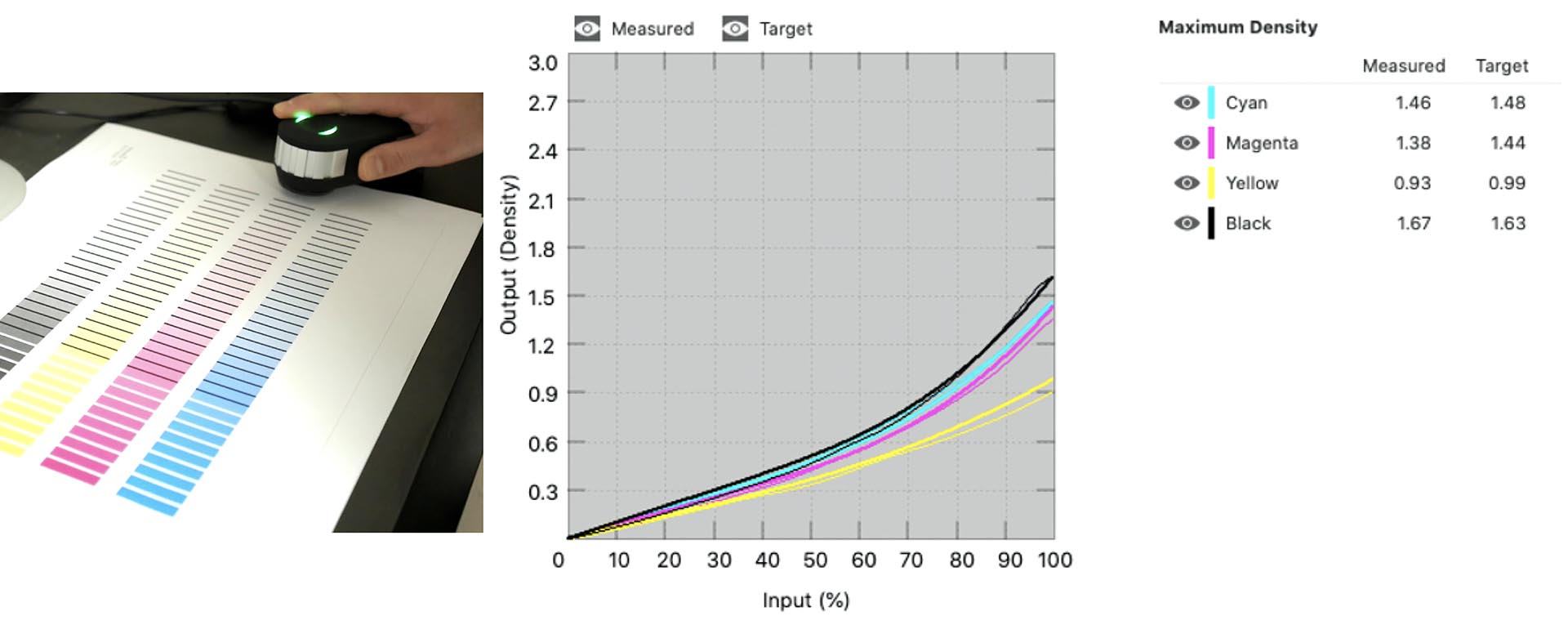
Using density as calibration method
What is CTV?
CTV is a printing calibration and color control method based on the colorimetric values LAB/XYZ obtained from spectral data. The key is to use color values (LAB), instead of density, to obtain a consistent and reliable visual result, such as a result where 50% of the dots have the same color appearance as 50% of the printed color, and effectively monitor the dot and dot color changes. CTV compensates the limitation of near neutral and density control. CTV is able to monitor both color and tonal values, and can be applied to different printing methods, spot color printing, 4C printing and multi-color printing. It can bring better print performance as compared with other calibration methods.
CTV in digital printing
For digital printing, CTV can be used for calibration across different types of paper, printing machines, and ink types, ensuring that the output color tonal achieves the target LAB values. This facilitates the objective of color consistency between “50% tonal value in the file and 50% tonal appearance in printing.” The CTV curve can integrate with output RIP systems in the market, significantly enhancing the color stability and repeatability of digital printing.
- Suitable for digital printing with continuous tone or FM screening, as well as spot colors, four-color, and multi-color printing, overcoming limitations associated with various inks and materials.
- Color value (LAB) can be directly measured during the digital printing process, allowing for the generation of precise tonal curves using CTV to accurately correct the color output of printing equipment.
- CTV is effective across different digital print technologies, substrates and printing machines. It is unaffected by the types of print dots or ink, easier to operate while maintaining high reliability and stability.
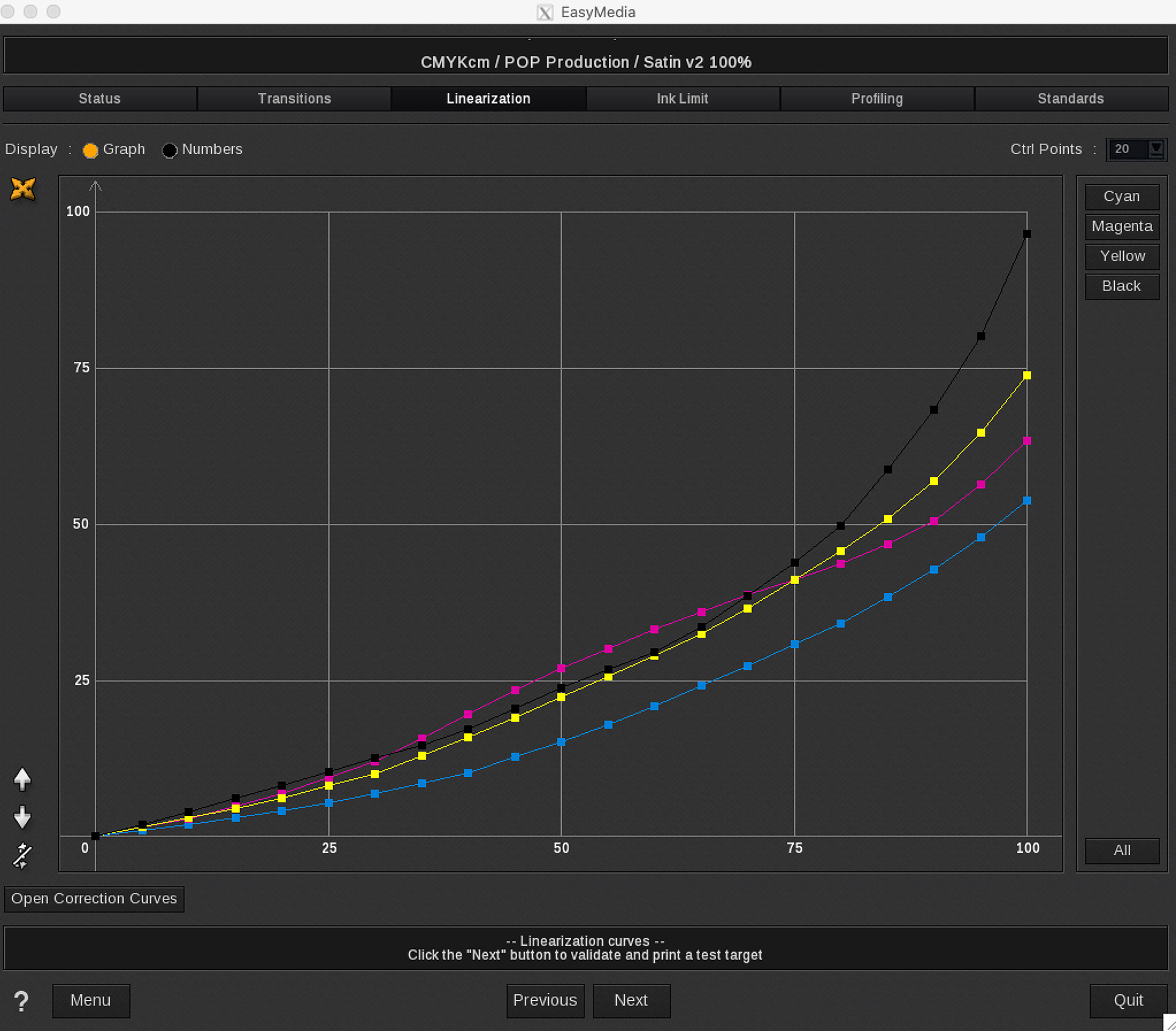
CTV calibration in wide-format inkjet (Caldera RIP EasyMedia)
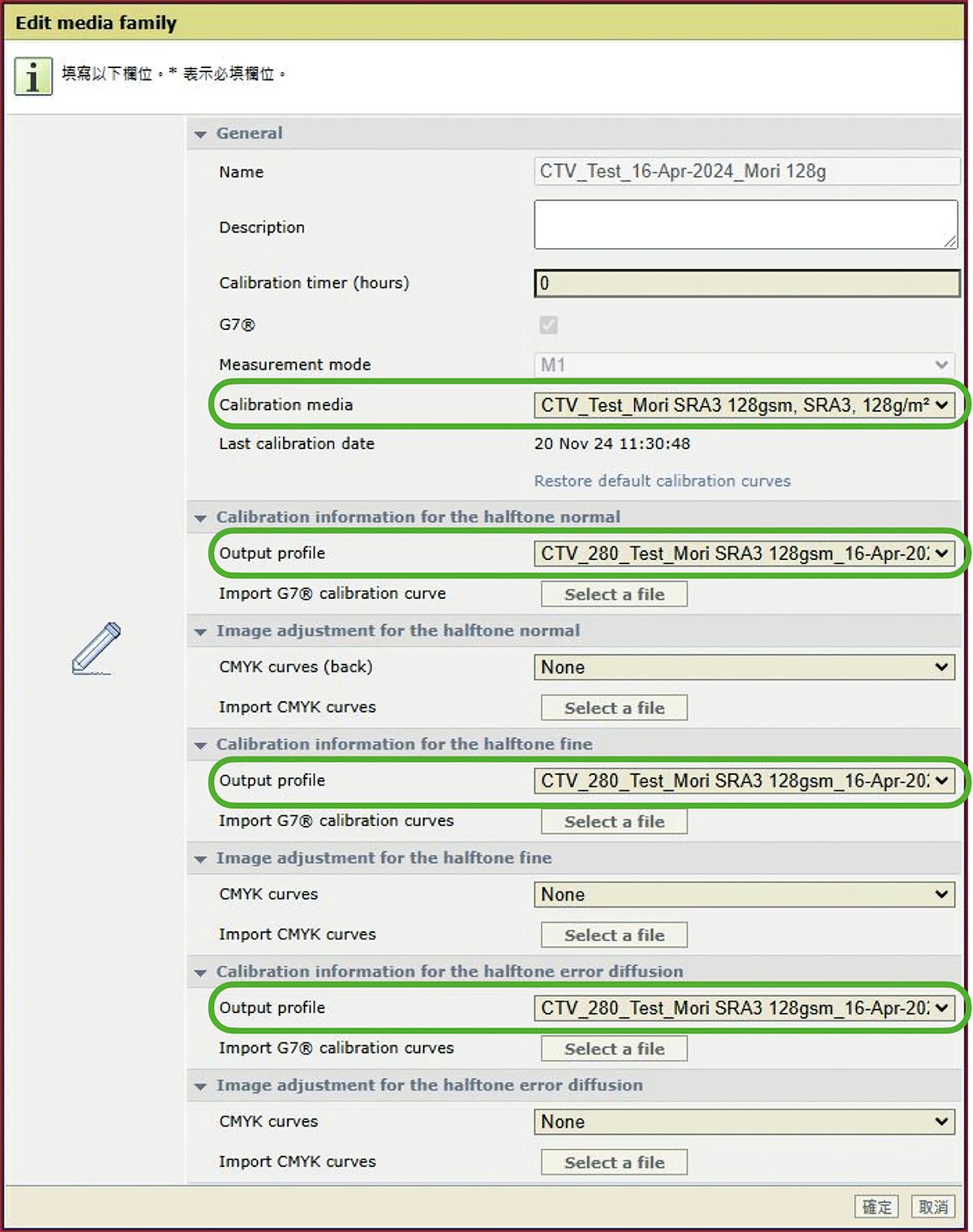
CTV in toner-based digital printing (Canon PRISMAsync)
Calibration Process:
- Digital printing machine: Check the status of the digital printing machine and adjust according to the recommendations provided by the printer manufacturer.
- Print samples with linearization: Print test chart for tonal range without any calibration.
- Measurement: Use spectrophotometer to measure the LAB values of each tonal range.
- CTV tone calculation: Calculate the CTV values for each tonal range by software, and determine the compensation curve.
- Apply in-RIP color management system: Import the calibration curve into the output system’s RIP.
- Verification: Print samples applied the calibration curve and check the calibration results.
- Create ICC profile: Measure the IT8 test chart with applied calibration curve, then establish the ICC profile in print production.
Combination of CTV Calibration and ICC Color Management
- ICC Profile: Primarily control color conversion to ensure consistent output colors across different devices using various inks and materials.
- CTV Calibration: Ensure the accuracy of tone reproduction, machine consistency, and stability, addressing the shortcomings of ICC.
CTV calibration does not replace ICC profiles. Both serve different purposes and have different characteristics, so they cannot substitute for one another. However, when combined, they can significantly enhance color accuracy, consistency, and stability in digital printing.
Conclusion
CTV calibration method breaks through the traditional limitations of density and TVI, using LAB colorimetric data as its foundation to precisely control tone and color reproduction. This not only enhances the quality consistency and stability of digital printing but also provides a reliable control solution for color across different digital printing technologies, materials and machine types. When CTV is combined with ICC color management, color accuracy and repeatability of digital printing can be significantly improved.
To know more about the application of CTV, please contact APTEC at [email protected] or visit www.ctv-aptec.org.
Next up: CTV in digital proofing