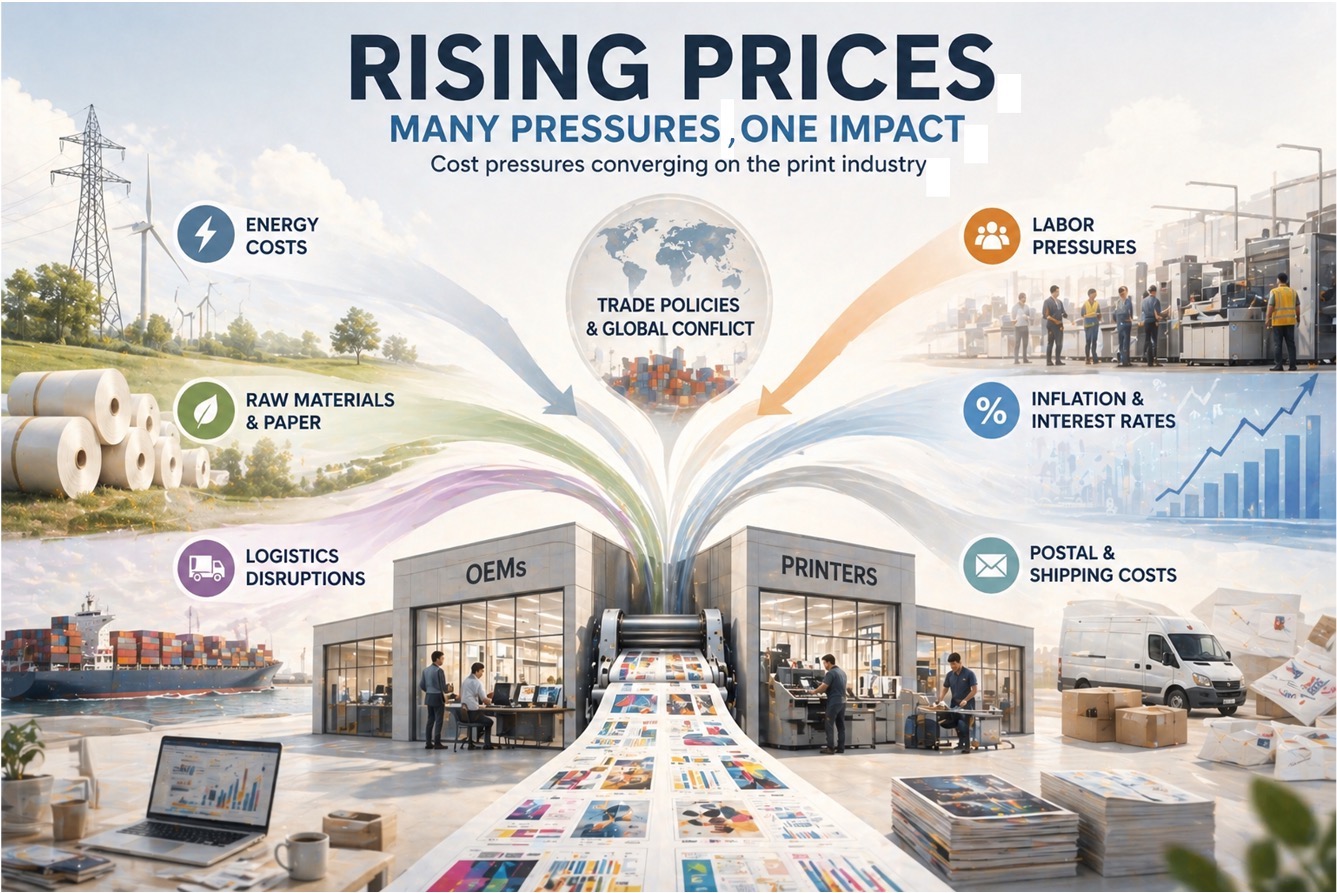
- The printing industry is particularly vulnerable to tariffs because of its reliance on a global supply chain.
- Direct imports from China might be declining, but a continued reliance on Chinese-made components is still a reality in the short term.
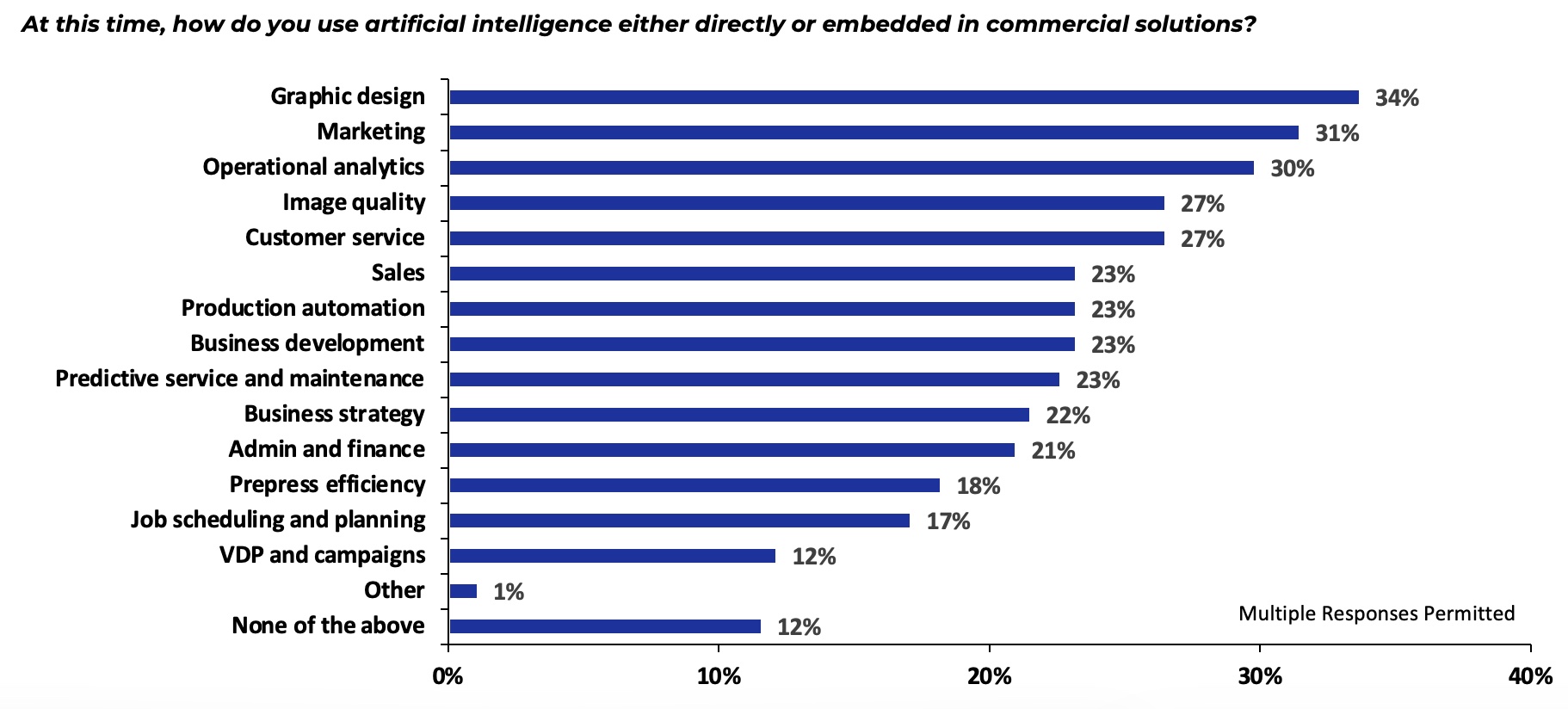
- Artificial intelligence can optimize procurement, help manage volatile pricing inputs, and power more responsive quoting tools.
- Automation is equally critical for shortening turnaround times, reducing human error, and ensuring consistency across runs.
By Johnny Shell
Introduction
The printing industry thrives on precision, so predictability has always been a quiet partner. You need it for inventory planning, pricing models, and customer timelines. Lately, however, predictability has felt like a luxury—and tariffs are only the latest disruption.
With new trade measures rolling out and retaliatory policies not far behind, the wide-format printing industry is facing another period of instability. Tariffs are creating ripple effects that touch every layer of the business: rising costs on substrates, longer lead times for imported components, and shifting strategies on everything from pricing to production. Businesses around the world are feeling the strain.
None of this is happening in a vacuum. For the past 5+ years, our industry has operated in a near-constant state of flux. COVID-19 triggered a cascade of supply chain breakdowns, labor shortages, and global shipping chaos. Some of those wounds are still healing. Tariffs are more fuel for the fire, and they’re forcing today’s business leaders to rethink everything.
Understanding the Consequences
The printing industry is particularly vulnerable to tariffs because of its reliance on a global supply chain. From ink to media to machine parts, much of what keeps print service providers (PSPs) running comes from overseas. Tariffs don’t just make those goods more expensive, they create ambiguity. How can you quote jobs six months out when you don’t know what import costs will look like in six weeks?
While some manufacturers are shifting final assembly out of China to areas like Japan, Thailand, Vietnam, Mexico, and Malaysia to avoid tariffs, the supply chain remains deeply tethered to China. Printheads, inks, and various core components are still primarily sourced from Chinese factories. This means that even when you’re not importing directly from China, you're still exposed.
All of this makes component-level assessment essential. It’s not enough to understand where a printer was assembled; you need to know where every part came from. Your competitors are already responding by closely monitoring these shifts and modifying sourcing strategies to minimize exposure. The bigger trend is a reduction in direct imports from China, but a continued reliance on Chinese-made components is still a reality in the short term. Strategic vigilance is no longer optional.
The truth is, we’re not going back to what was once considered “normal.” That old business rhythm, where you could count on price stability and predictable supplier timelines, is gone. The question isn’t how to get back on track—it’s how to build a better, more agile future. This involves:
- Redesigning processes so they can bend without breaking
- Building redundancy into your supply network
- Rethinking what inventory management looks like when you can’t rely on just-in-time delivery
- Putting digital intelligence at the heart of your business
To stay ahead, the printing industry must embrace the technologies that can keep it nimble. Artificial intelligence (AI) can forecast demand patterns with more precision than guesswork ever could. It can optimize procurement, help manage volatile pricing inputs, and power more responsive quoting tools. Automation—already a lifeline in the face of persistent labor shortages—is equally critical for shortening turnaround times, reducing human error, and ensuring consistency across runs. Robotics, smart finishing systems, and cloud-based workflows are the infrastructure for modern manufacturing. Together, AI and automation give print businesses the agility they need to adapt in real time. They replace fragility with flexibility and enable businesses to move from defensive maneuvers to proactive strategies.
Key Considerations for Wide-Format Printers
Here’s what you should consider when reframing your future with wide-format printing:
- Audit Your Supply Chain at the Component Level:Look beyond finished goods. Printheads, inks, and electronic components are often the hidden link to tariff exposure. Understand where they come from and how they’re routed.
- Monitor Competitor Adjustments:Keep a pulse on how your competitors are adapting. Many are shifting assembly outside of China while still leveraging Chinese components. This is a signal that agility at the margins can make a difference.
- Diversify and Redundancy:Spread sourcing across geographies to mitigate regional risk. Don’t allow a single supplier or country to become a point of failure.
- Double Down on Data:Use predictive analytics to guide procurement, production schedules, and customer engagement.
- Automate to Scale:From prepress to finishing, automation boosts productivity and can shield against labor gaps.
- Train for Agility:Upskill your team members to handle cross-functional roles. Agility isn’t just about tools, it’s about talent.
- Lead with Transparency:Communicate clearly with customers and partners about sourcing, pricing, and timelines.
?The Bottom Line
Our industry is at a turning point—this isn’t just another storm to ride out. It’s true that tariffs are exposing weak spots in supply chains, but they’re also revealing opportunities to build smarter, leaner, and more agile/resilient businesses. Rethinking how we work isn’t a temporary strategy, it’s a new way of life. The businesses that step up to the challenge will not only weather this disruption, they’ll also shape what comes next. The best way to survive, and even thrive, in these uncertain times is to stay informed, so keep reading and keep listening. In the meantime, we at Keypoint Intelligence will continue to deliver the insights you need to plan, adapt, and make better-informed decisions.
Johnny Shell is the Principal Analyst of Keypoint Intelligence’s Textile and Apparel Printing Service. He is a printing expert and recognized leader with over 35 years of industry experience. His solid commitment to organizational advancement and strategy-driven growth enable him to design and execute revenue-based strategies with his comprehensive knowledge of printing techniques and technology platforms.