Don’t Call It Old Type
This year marks the 10th anniversary of the Qwerkywriter, a mechanical computer keyboard designed to resemble a traditional manual typewriter. Unlike the old Underwoods or Remingtons, the Qwerkywriter connects to various computers, tablets, and phones using USB-C or Bluetooth 5.0.
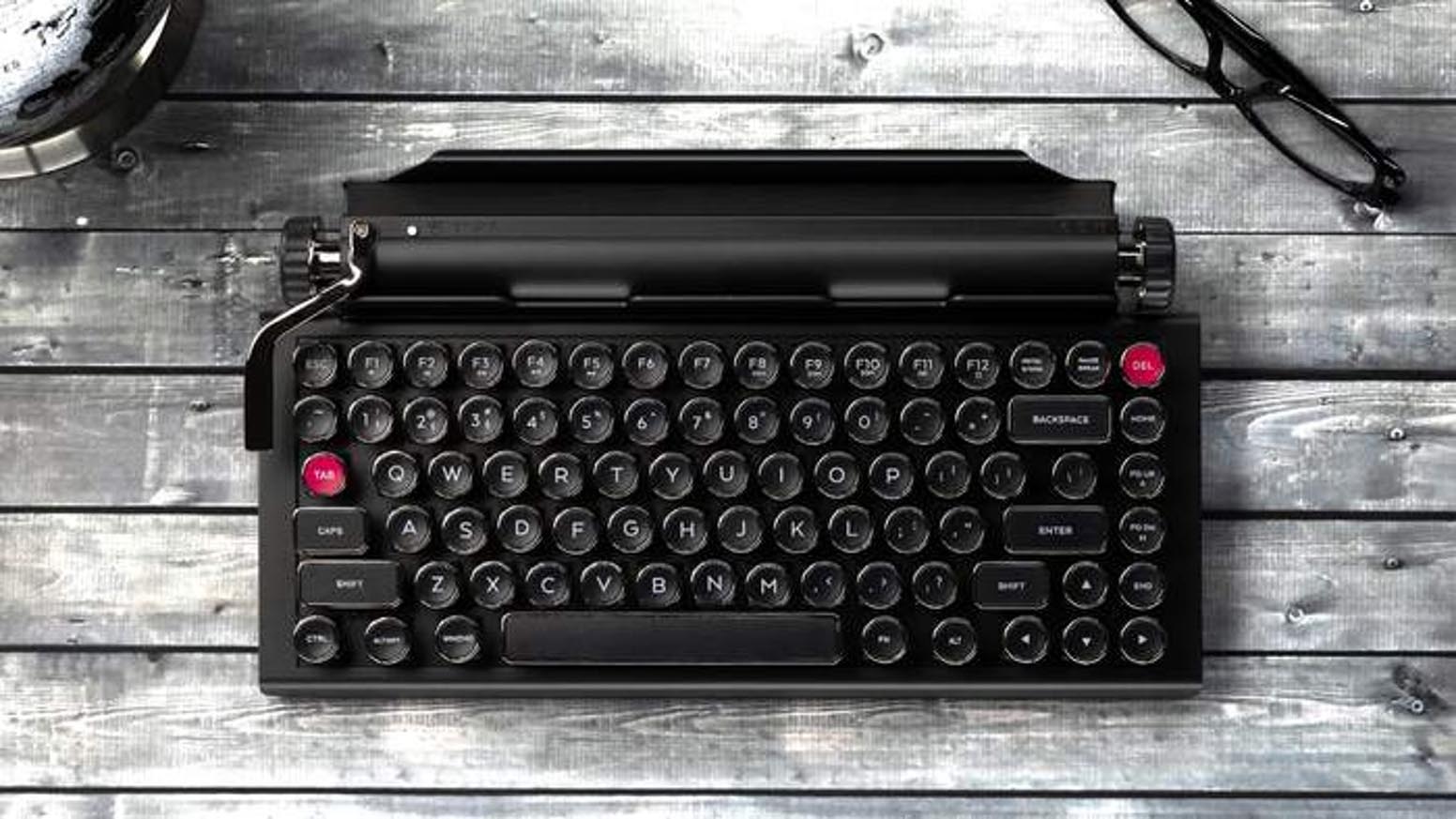
It was a bit of a hit on Kickstarter, and the anniversary edition features many upgrades, including better connectivity options and hot-swappable switches, among a variety of other usability and aesthetic improvements.
A steal at $219.
Curdless Keyboard
Looking for a keyboard but don’t want to go the vintage typewriter route? Here’s an idea: try a cheeseboard. Via Laughing Squid:
DirkMcGirk very cleverly designed a mechanical keyboard with letter and number keys that look like hunks of Swiss and Cheddar cheese. Additional keys are also fashioned to look like other cheeseboard items, such as cheese knives, graters, a bottle of wine, and a jar of jam with a little mouse peeking out from the other end.

(They also included instructions on how to make it here.)
The keys aren’t actual cheese, but the next time you are hosting a party and want to include a cheese board, try to replicate this using the real thing.
And the Winners Are…
Late last month, Print magazine announced the winners of its annual Print Awards, honoring the best in graphic design, typography, and other aspects of creative endeavors, in several categories: In-House and Self-Promotions, Invitations & Announcements, Website & App Design, Social Media & Content Design, and Data Visualization & Information Design, Motion Design & Video, and Environmental Design and Outdoor & Billboards. Read a complete rundown of the winners here.
A couple that caught our eye:
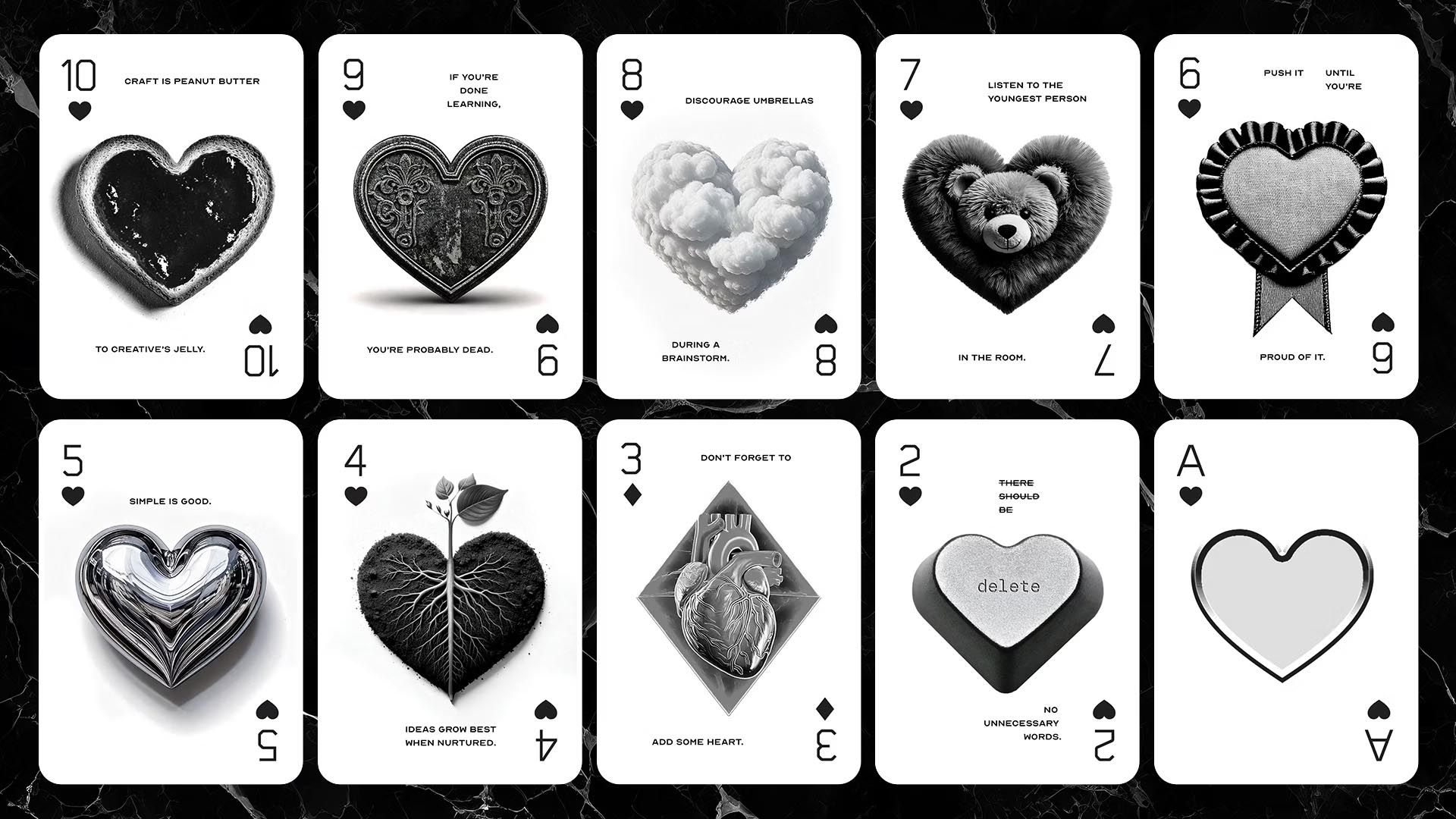
In the Self-Promotions category, first place was won by “Craft is King” by Tom, Dick & Harry Creative:
For an agency that has been around for 22 years, coming up with an annual promotional gift that feels fresh and non-disposable is no small feat, especially amid the churn of billable work. By reinventing a classic gift, the designers got the most bang for their brainstorm. They chose to develop the imagery with the assistance of AI, not only for agility’s sake, but also to ensure that the end product was firmly planted in the present—a time capsule of who they were in 2024 as advertisers, creators, and cooks of varying aptitude.
In Social Media & Content, First Place was won by the Dilworth Coffee Social Media Campaign, The Republik:
In 1989, Dilworth introduced serious coffee to North Carolina, providing small-batch, ethically sourced beans to independent shops and distributors. As the business expanded over the following decades, many independent coffee shops came to rely on Dilworth for turn-key supplies, equipment, and training. However, despite wider distribution and a growing retail presence, consumer awareness of the Dilworth Coffee brand remained limited.
For the brand’s 30th anniversary, the challenge was to demonstrate to a younger, trend-driven coffee culture that Dilworth still had meaningful coffee wisdom to share. The creative direction embraced a laid-back, confident tone, channeling a “Dude-like” persona to communicate the brand’s enduring vibe and experience.
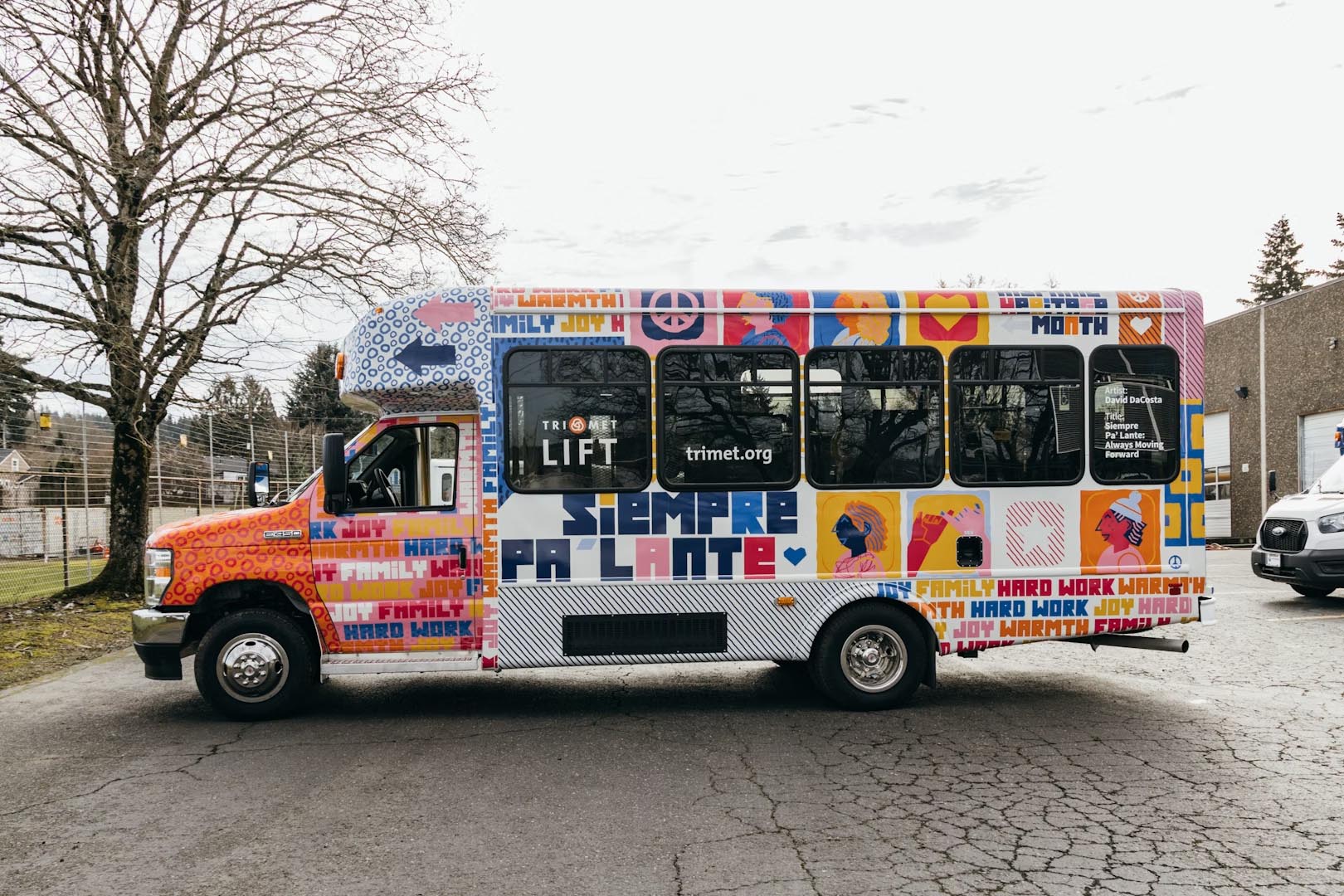
First Place in Outdoor & Billboards was won by Siempre Pa’ Lante, TheRealDaCosta:
Portland Trimet commissioned a bus wrap design to commemorate Hispanic Heritage Month, celebrating the rich contributions of Hispanic and immigrant communities in Portland, Oregon. The concept centers on the shared values of Family, Warmth, Joy, and Hard Work—qualities that drive these communities forward. The design is anchored by the phrase “Siempre Pa’ Lante,” meaning “always moving forward,” connecting cultural resilience with Trimet’s role in helping people advance through daily life.
If you ever need design inspiration, be sure to click through and check out the best of the best design.
Bates and Switch
Entomologists (people who study insects, not to be confused with etymologists, who study word origins, or entymologists, who study the origins of insect words—OK, we made that last one up) have long been fascinated by a phenomenon in nature called Batesian mimicry, whereby a particular creature (a generally harmless one) has evolved in such a way as to resemble another creature that is far more dangerous, the idea being to ward off mutual predators. It was named after the English naturalist Henry Walter Bates, who specialized in butterflies.
For example, one particular species of butterfly may be poisonous and thus predators have learned to avoid eating it, whilst another species of butterfly—which is not poisonous—has evolved physical characteristics/markings that make it look virtually identical (or close enough to fool, say, a bird) to the poisonous one. Thus they get the protection from being eaten without having to evolve any kind of toxicity, which, let’s face it, is not an easy thing for a butterfly to manage on its own.
Anyway, we mention this because there are aspects of Batesian mimicry that have flummoxed researchers, such as how it came about, how it works, and why some species are better at it than others. And a new study published in Nature sheds some light on the topic—a study that involved 3D printing. Says Discover:
researchers from the University of Nottingham took a high-tech approach. They created life-sized, 3D-printed insect models to simulate the look of real wasps and their harmless mimics, such as hoverflies. This method allowed scientists to precisely manipulate traits like shape, color, and pattern — something impossible to do with living specimens.
One fundamental question they had was, just how accurate does a mimic need to be to avoid being someone’s lunch?
The researchers then tested these mimic models in the wild, exposing them to predators like birds and spiders. They discovered that color was one of the most important traits in deterring birds, while size also played a role. Interestingly, spiders weren’t quite as picky. Less convincing mimics had better odds of escaping a spider’s notice in comparison to a bird’s, suggesting that different species of predators perceive mimicry to varying degrees.
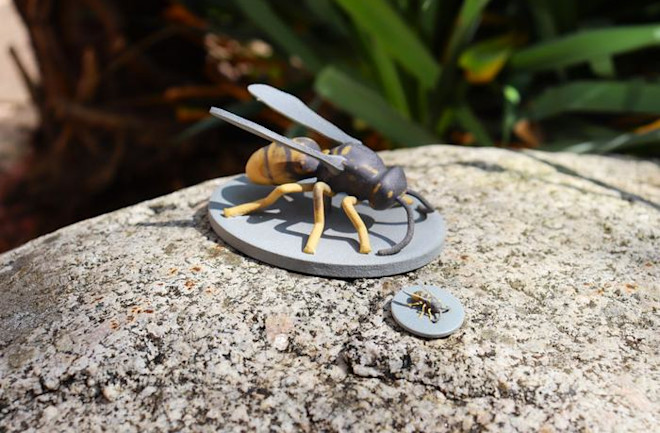
Caption from Discover: 3D printed models of a wasp (front), a fly (rear), and a series of intermediate mimics generated by 3D morphing. (Credit: Dr Tom Reader, University of Nottingham)
The study was also important in that it proved that 3D printing can function as a kind of “evolutionary time machine.”
This cutting-edge use of 3D printing has given researchers a new lens into how mimicry evolves and why some species become expert imposters while others can get away with just a rough resemblance. The study is a fascinating reminder that evolution doesn’t always aim for perfection, and that one only needs to fool a predator just enough to stay alive. Researchers hope to continue to merge 3D printing and life sciences to continue learning about insect evolution — past, present, and future.
Signs of the Times, Part the Ongoing: To Air Is Human
Now, you would think that erecting a fake sign would be a bad thing, and something that would be frowned upon. And nine times out of 10, you’d probably be right. However, in Wales, a fake airport sign has, for some reason, become so beloved by the locals, that there was an uproar when it was removed.
The sign, built in 2002 by Nicholas Whitehead along the A44 in mid-Wales, directs drivers to “Llandegley International Airport,” indicating that “Terminals 1 & 3” are supposedly located 2½ miles away.

The thing is, Llandegley Airport doesn’t exist. But, for reasons passing understanding, the sign has become a cultural landmark. Says Boing Boing:
As reported by the BBC, when the original sign was taken down in 2009, public outcry led to its reinstatement the following year. The spoof airport has gained such cultural significance that it's now listed in the Welsh Government's National Monuments Record database. This pretend airport maintains active social media accounts on Twitter and Facebook, despite having no actual runways or terminals.
Why Whitehead thought a fake airport sign was such a funny joke remains a mystery, but the joke was on him: over the years, it has cost him more than £25,000 to maintain it.
In November 2022, Whitehead decided to end his costly commitment to the joke. "Man ends 20-year Llandegley airport sign joke that cost (him) £25k," the BBC reported. However, the story doesn’t end there. Following a successful crowdfunding campaign, a new sign was installed in May 2023 at a new location where the landowner allows it to remain without charge.
Signage. Go figure.
Stanning Stans
Ars Technica takes note of what may become a new electronic display trend: large tablets on wheels. Say what? It was apparently kicked off a couple years ago by LG:
In 2022, the company launched the StanbyME, which is essentially a $1,000 27-inch tablet running LG's smart TV operating system (OS), webOS, but lacking a tuner. LG's press release announcing the device described it as a “wireless private TV screen with a built-in battery” that is easily portable and ideal for watching shows and movies, in addition to “video conferencing with family and coworkers and viewing online lectures.”
Et voilà:

I'm left curious about what's driving the growth of StanbyME-like devices, which are noticeably niche and expensive. I'm also uncertain whether these hybrid devices have an ongoing place in a consumer tech world already inundated with big-screen TVs, small-screen tablets, and beloved laptops.
Meanwhile, the KTC MegPad 32-inch Android Tablet (A32Q7 Pro) is essentially a 32-in. Android tablet that, unlike the StanbyME, doesn’t run a smart TV OS and is marketed as a form of streaming hardware. Could be useful if you don’t need a device physically connected to anything and just want to stream content via supported apps, and need something portable. Might also be useful to take outside and use as a kind of digital protest sign.
They Get Letters
As longtime readers of Around the Web (both of you) know, a favorite program (or programme) here in the AtW Cultural Accretion Bunker is British quiz panel show QI (Quite Interesting), in which Sandy Toksvig hosts four comedians who try to answer impossible questions. It easily one of the most fascinating and funniest (and sometimes bawdiest) shows on TV. And this week, series V finally turned up on Britbox, providing ample AtW fodder for the next few weeks.
In the episode “Vets,” the question was asked, “Who makes a habit of sending strongly-worded letters to vermin?” It turns out that in 19th-century New England, people in need of an exterminator did. Via Via Hedera, the Journal of American Folklore: Vol V (p.23) states:
In New England, as well as in other parts of the United States, it is still believed, by certain persons, that if a house is infested with rats, these can be exiled by the simple process of writing them a letter, in which they are recommended to depart, and make their abode in another locality.
And in James George Frazer’s study of mythology and religion The Golden Bough:
Some years ago an American farmer was reported to have written a civil letter to the rats, telling then that his crops were short, that he could not afford to keep them through winter that he had been very kind to them, and that for their own good he thought they had better leave him and go to some of his neighbors who had more grain. This document he pinned to a post in his barn for the rats to read.
The blog New England Folklore cites another letter found in Maine and dated October 31, 1888:
Messrs. Rats and Co., - Having taken quite a deep interest in your welfare in regard to your winter quarters I thought I would drop you a few lines which might be of considerable benefit to you in the future ... I wish to inform you that you will be very much disturbed during cold winter months as I am expecting to be at work through all parts of the house, shall take down ceilings, take up floors and clean out every substance that would serve to make you comfortable.
And a Mrs. Weed of East Sandwich, N.H., was a bit less genteel, writing, on May 9, 1845:
I have bourn with you till my patience is all gone. I cannot find words bad enough to express what I feel, you black devils you are, gnawing our trace corn while we are asleep! And even when we are awake you have the audacity to set you infernal jaws to going. Now, spirits of the bottomless pit, depart from this place with all speed. Look not back! Begone or you are ruined! ... Unless you want your detested garments dyed in fire and brimstone, you satans, quit here and go to Ike Nute's!
Whether any of these worked is a fair question, assuming of course that the rats could read. In our experience, the text messages to the ants in the kitchen are highly ineffective.
Better Dying Through Chemistry
We’re not particularly fans of true crime, but we did note the reports this week about the verdict in the Erin Patterson “Mushroom Murder” trial. In a nutshell, Patterson is a 50-year-old Australian woman who was found guilty of murdering her relatives by feeding them lunch laced with death cap mushrooms. Whilst we did not follow the trial, it did remind us of Agatha Christie, whose cozy mysteries involved all sorts of poisonings, although we are unsure if mushrooms were ever used.
Perhaps coincidentally, last week Big Think had an interview with Kathryn Harkup, chemist and author of V Is for Venom: Agatha Christie’s Chemicals of Death. The thesis of the book is that not only was Christie a terrific novelist (except for the Tommy and Tuppence books—if only they had been the murder victims) but also a brilliant science communicator.
“She puts across all the science you need to know in her stories to be able to figure it out,” Harkup tells me during our conversation. “You (probably) won’t because she’s very good at disguising who’d done it. But all the science is there, and you never feel that you’re sitting through a chemistry lesson.”
This is Harkup’s second look at Christie’s poisons, the first being 2017’s A Is for Arsenic.
In each, she explores a dozen of the author’s chemical killers: their composition and toxicology, their history and traditional uses, how Christie employs them, and how their antidotes work (if they have one). She even dives into some disturbing real-life cases.
Christie’s chemical knowledge was the result of her background: during the First World War, before she became a writer, she worked as a pharmacist’s assistant at a local hospital and thus had to pass various exams and undergo rigorous training, especially as
back in Christie’s day drugs didn’t come ready in pre-packaged pills. Pharmacists and their assistants were more like chemical cooks than dispensers. They measured, weighed, mixed, and packaged all manner of medical tinctures and creams in-house. They even added flavors and colorings to make bitter or unappealing concoctions palatable.
If you’ve ever seen the beginning of the movie It’s a Wonderful Life, where young George Bailey saves the pharmacist, Mr. Gower, from accidentally poisoning a customer, you know what can go wrong.
Anyway, what is Harkup’s favorite Christie poisoning? Hemlock, in Five Little Pigs (1942).
“It is brilliantly woven into the plot to the point where you need to read it twice to appreciate how good it is,” Harkup says. “When you go back, you’re like, ‘Oh God, yeah. I should have spotted that. That was damn obvious if I had paid attention to that particular bit.’ Her creativity is astonishing in that respect.”
Now we’re motivated to check out some classic Christie mysteries…and perhaps take notes…
Graphene Has Skin in the Game
Was it a good week for graphene news? It’s always a good week for graphene news! A graphene-based self-healing skin-like electronic material. From (who else?) Graphene-Info:
The new material is flexible, tough and self-healing and so it overcomes the known weaknesses of the rigid, brittle electronic materials currently used, which can't repair themselves. The DTU team combined the exceptional properties of graphene with the see-through polymer PEDOT: PSS, that is also electrically conductive and is, for example, used in flexible electronics and sometimes in transparent electrodes in solar cells. When the two are combined, they turn what's usually a weak, jellylike material into a solid, flexible, self-healing electronic material.
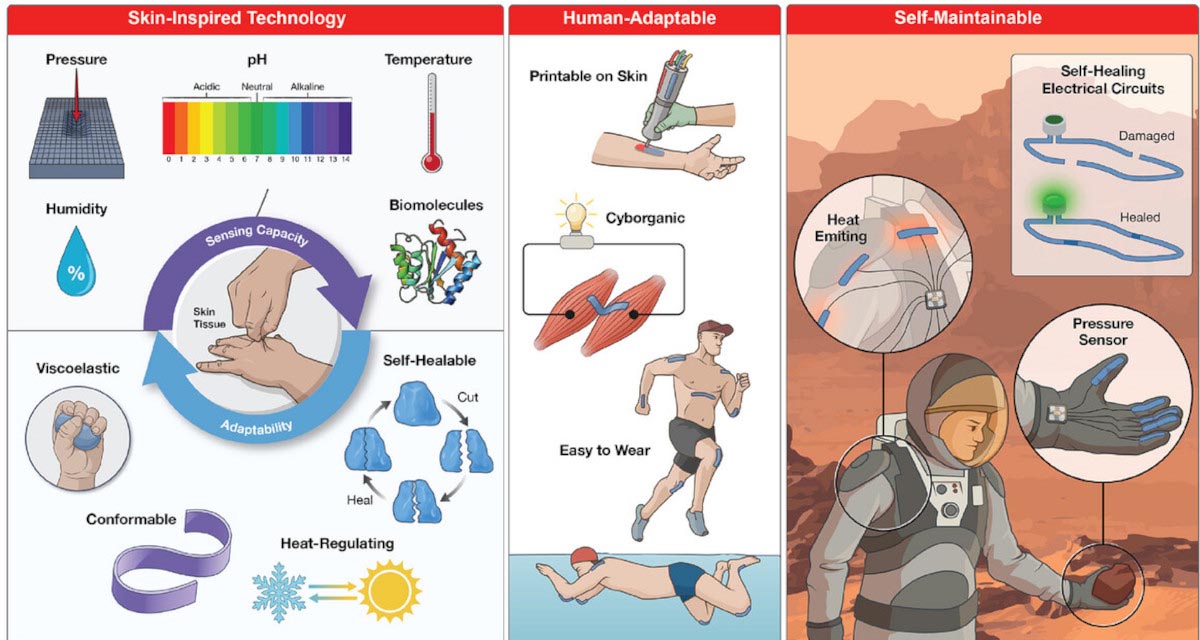
Ergo, electronic devices created using this material could be amorphous and shape-shifting, and thus capable of adapting to their environment and, the researchers say, “able to recover from damage the way biological systems do.”
Bummerang
Consider the boomerang. What are the two things we know about boomerangs? Well, they’re generally attributed to Australia—particularly Aboriginal culture—and they come back to the thrower. However, it turns out that the world’s oldest boomerang was neither of those things. Via the BBC, it was found in a cave in Poland in 1985 and is believed to be 40,000 years old.
Archaeologists say it was fashioned from a mammoth's tusk with an astonishing level of skill. Researchers worked out from its shape that it would have flown when thrown, but would not have come back to the thrower.
Kind of a bummer, but maybe they realized even back then that you don’t put all of the best features into a version 1.0 release. Gotta save something for Boomerang 2.0.
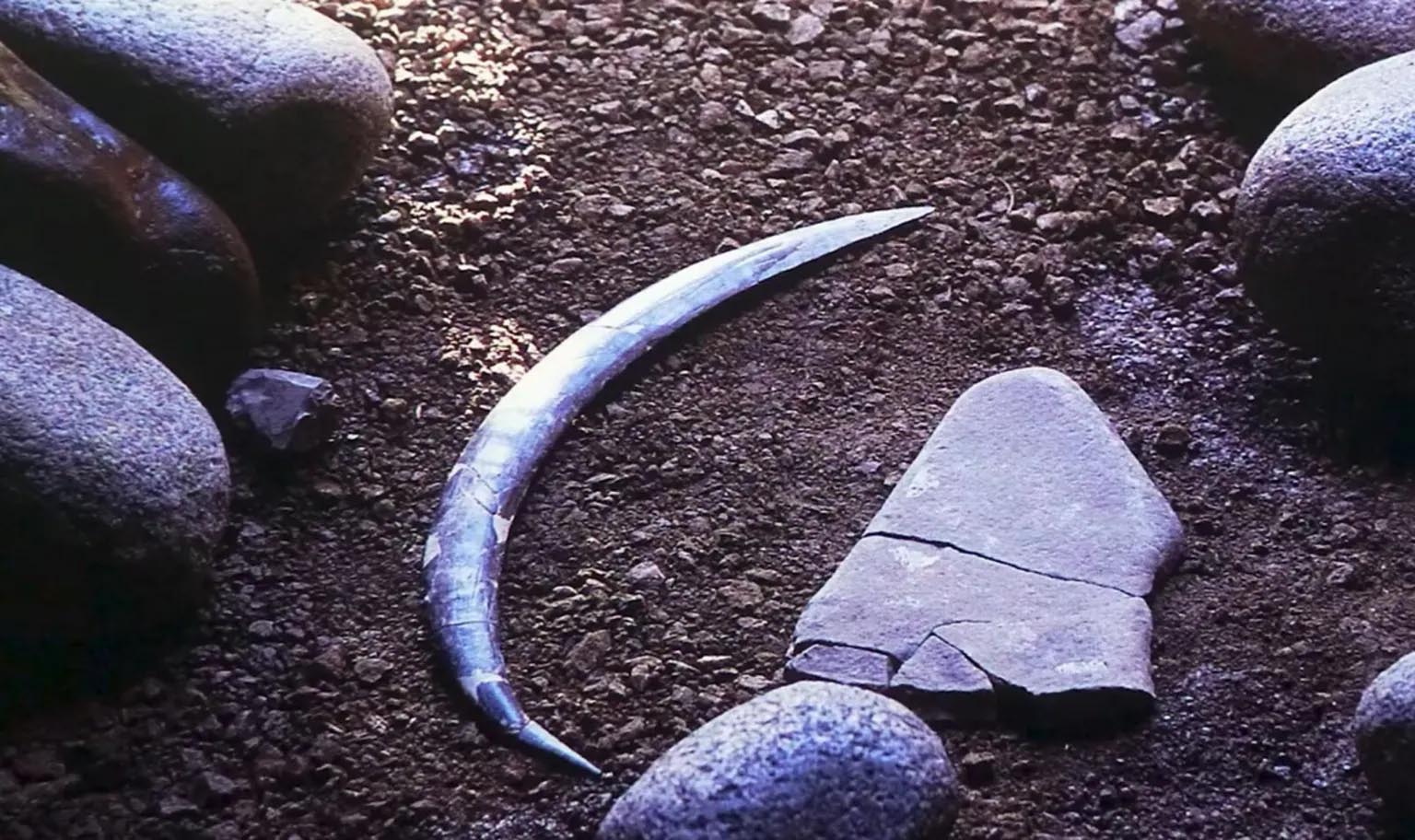
It was probably used in hunting, though it might have had cultural or artistic value, perhaps being used in some kind of ritual.
Still, it is pretty impressive.
It gives a “remarkable insight” into human behaviour, she said, particularly how Homo sapiens living as long as 42,000 years ago could shape “such a perfect object” with the knowledge it could be used to hunt animals.
A later version from 35,000 years ago offered Mammothtooth connectivity.
Penny Farming
Not sure why, but pennyfarthing motorcycles appear to becoming a thing. We mentioned one back in January, and now, via Laughing Squid, a New Zealand builder created a pennyfarthing style motorcycle using tractor parts. Dubbed the “PennyFarming” motorbike, it worked, but couldn’t stay upright. Slight design flaw. Thus, he decided he needed a trailer to balance it out.
I came up with this stupid idea and started building this monster of a machine 3 years ago. PennyFarming is all lightweight proof of concept so I could see if it was going to work. Today it’s time to fit a stabilizing trailer!
To Have a Burger and Have Not
Did you know that Ernest Hemingway had a culinary side? No, nor did we, but he did often include food and drink in his fiction and nonfiction. There is a “Hemingway Daiquiri,” although no one really knows if he created it—or even ever liked it. But, it turns out that Hemingway did create a burger recipe—and one that utilized 10 ingredients. Is it any good? Food & Wine had to give it a go—and the biggest challenge was finding all the ingredients, which are:
- Lean ground beef
- A beaten egg
- Dry red or white wine
- Minced garlic
- Green onions
- Capers
- Dried sage
- India relish
- Beau Monde Seasoning
- Mei Yen Powder
We’re good with the first seven, but what is India relish? Beau Monde Seasoning? Mei Yen Powder? It turns out Heinz, among others, makes India relish.
Next up was Beau Monde, a “sweet take on celery salt” that includes salt, dextrose (sugar), dried onion, and celery seed. Although this cult Southern ingredient is still available from Spice Islands (apparently Papa’s favorite spice company), I couldn’t find Beau Monde at any of my local grocery stores, so I ordered it online.
As for Mei Yen Powder, it’s an umami-rich seasoning once made by Spice Islands, but discontinued around 2008 or so. However, a recipe—approved by Spice Islands—is available that combines sugar, salt, MSG, and soy sauce.
As for making and cooking the burger itself, it’s odd given how sparse Hemingway’s fiction writing is how intensely detailed his hamburger recipe is.
Cut to chase: is it any good?
This burger is delicious. Not only was the sweetness surprisingly welcome, but the addition of sage gave it a distinctive herby flavor that was unexpected and extremely tasty.
Will this enter regular cooking rotation?
Probably not. But I certainly won’t make my own burgers the same way again. I’m holding on to the Beau Monde, and will use it to add a touch of celery sweetness to future burgers and grilled meats. I’m going to add sage to my patties. I may try other add-ins, and see what I get.
Author Cheryl Lu-Lien Tan wrote in detail about the Hemingway burger in The Paris Review, where she included the full recipe.
Hemingway’s instructions were to pan fry it, but if you’re looking to do something adventurous on the grill this summer, give it a shot. Hemingway would probably approve. If not, he’ll just punch you in the mouth.
This Week in Printing, Publishing, and Media History
July 7
1752: French weaver and inventor, inventor of the Jacquard loom Joseph Marie Jacquard born.
1907: American science fiction writer and screenwriter Robert A. Heinlein born.
1928: Sliced bread is sold for the first time (on the inventor's 48th birthday) by the Chillicothe Baking Company of Chillicothe, Missouri. At the time, it was said to have been the greatest thing since...hmmm…
1930: British writer Arthur Conan Doyle dies (b. 1859).
July 8
1822: English poet and playwright Percy Bysshe Shelley dies (b. 1792).
1889: The first issue of The Wall Street Journal is published.
1947: Reports are broadcast that a UFO crash landed in Roswell, N.M., in what became known as the Roswell UFO incident.
July 9
1901: Prolific English author Barbara Cartland born. She published 722 novels and holds the Guinness World Record for the most novels written in a single year (23 in 1976). When she died in 2000, the paper industry went into a severe recession.
1911: Decidedly less prolific English author and illustrator Mervyn Peake born.
1945: Decidedly more prolific author (but nowhere near Cartland’s output), Dean Koontz, born.
July 10
1851: French photographer and physicist, inventor of the daguerreotype Louis Daguerre dies (b. 1787).
1856: Serbian-American physicist and engineer Nikola Tesla born.
1863: American author and educator Clement Clarke Moore dies (b. 1779).
1871: French novelist Marcel Proust born. In Remembrance of Things Past, he probably wrote as many words in one novel as Cartland wrote in 722.
1888: Greek-Italian painter and set designer Giorgio de Chirico born.

1962: Telstar, the world’s first communications satellite, is launched into orbit.
1978: ABC World News Tonight premieres.
2008: Apple’s AppStore opens.
July 11
1804: He did not throw away his shot: U.S. Vice President Aaron Burr (spoiler alert) mortally wounds Alexander Hamilton in a duel.
1899: American essayist and journalist E. B. White born.
1927: American-Canadian physicist and engineer, inventor of the laser, Theodore Maiman born.
1960: To Kill a Mockingbird by Harper Lee is first published in the United States.
July 12
1493: Hartmann Schedel’s Nuremberg Chronicle, one of the best-documented early printed books, is published.
1580: The Ostrog Bible, one of the early printed Bibles in a Slavic language, is published.
1804: American general, economist, and politician, 1st United States Secretary of the Treasury Alexander Hamilton dies (b. 1755).
1817: American essayist, poet, and philosopher Henry David Thoreau born.
1854: George Eastman, founder of Eastman Kodak, born.
July 13
1793: Journalist and French revolutionary Jean-Paul Marat is assassinated in his bathtub by Charlotte Corday, a member of the opposing political faction.
1956: The Dartmouth workshop is the first conference on artificial intelligence.
1985: The Live Aid benefit concert takes place in London and Philadelphia, as well as other venues such as Moscow and Sydney.