A Bold Partnership Driving the Future of Print
For two decades, HP Industrial Print and Dscoop have cultivated one of the most admired alliances in the printing industry. More than a partnership, it’s a vibrant ecosystem—one that has empowered thousands of customers, galvanized innovation, and reshaped what’s possible in digital print and packaging. As HP and Dscoop celebrate 20 years together, this milestone marks not just a time for reflection, but a moment to set the pace for the next era of intelligent, sustainable print production.
Where It All Began: A Vision Backed by Bold Moves
In 2001, HP acquired Indigo with a clear ambition: to lead the digital print revolution. By 2006, HP had unveiled its Scalable Printing Technology, and just two years later, it launched the PageWide T300, its first production inkjet press.
Today, HP Industrial Print includes a global footprint of presses built on its two proprietary and complementary print platforms: HP Indigo LEP/LEPx and HP PageWide Thermal Inkjet. “From the start, our mission has been to empower our customers with transformative technologies,” says Haim Levit, Senior Vice President and Division President of HP Industrial Print. “And we’ve done so by staying ahead of the curve—developing technologies that anticipate what’s next and deliver measurable value.”
In 2005, the seeds of Dscoop were planted by a small but visionary group of 250 HP customers and partners. They identified a glaring need: a platform where industry stakeholders could collaborate, share, and innovate. Spearheaded by Jack Glacken, President of TGI and Dscoop’s first Chairman, that idea took root. Today, with over 22,000 members, Dscoop is the largest digital print community in the world — a thriving hub for education, inspiration, and co-creation.
Selling More Than Presses: A Solutions-First Mindset
While many vendors focus on hardware, HP Industrial Print doesn’t just sell presses—it delivers solutions. Through a carefully curated ecosystem of partners and application-specific solutions, HP helps customers evolve from concept to finished product in hours, not days—while reducing waste and increasing margins.
From full book production lines to label embellishment, flexible packaging, corrugated and folding cartons, HP’s value proposition is deeply integrated. “In every segment, we’re not just keeping up with trends,” notes Levit. “We’re setting the agenda—with a sharp focus on productivity, versatility, quality, total cost of ownership, and sustainability.”
HP’s strength lies in its full-stack innovation. By owning the core technology—inks, printheads, writing systems, and software—and fostering the largest partner network in the industry, HP builds fully connected, end-to-end production systems designed for modern print needs.
The Market Speaks: HP’s Leadership by the Numbers
Success isn’t just aspirational, it’s quantifiable. According to IDC (2024):
- HP Indigo accounts for 57.3% of the digital press market, with an installed base of over 4,500 presses.
- In labels, over 2,500 presses that amount to a 51% market share, anchored by the 6K series and the trailblazing V12.
- In flexible packaging, HP is the only field proven solution, driven by over 400 installations.
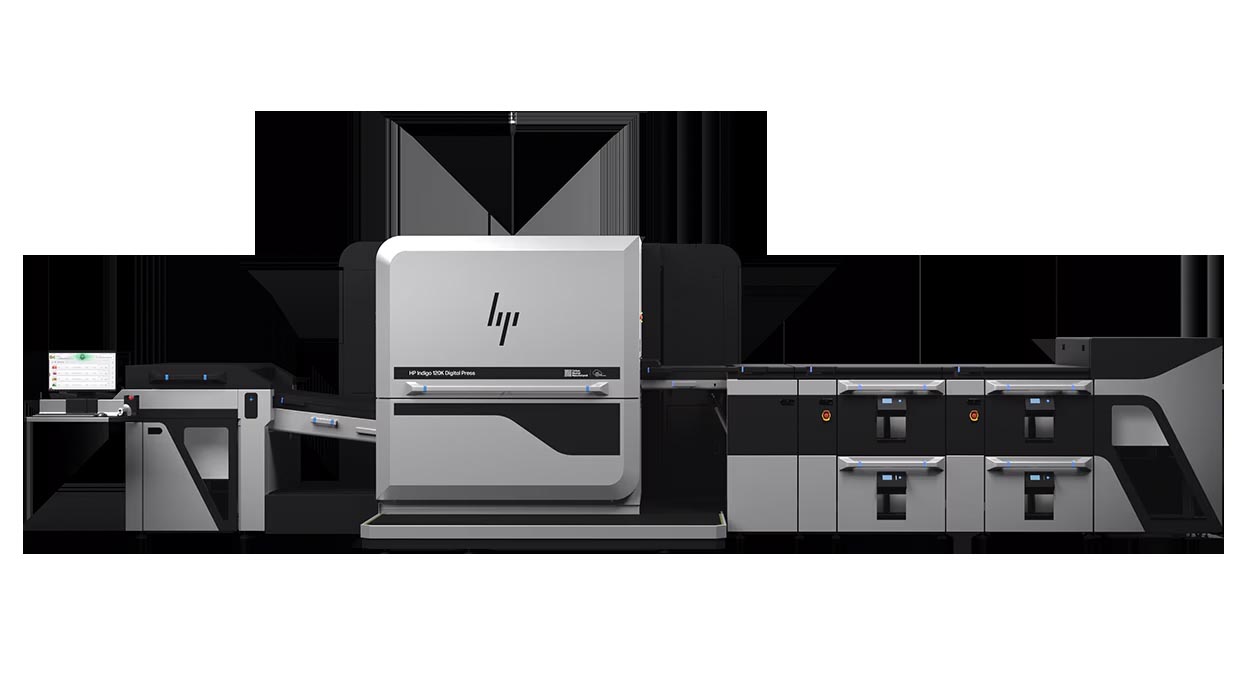
- In the commercial B2 sheetfed segment, HP Indigo has nearly 1200 presses installed, representing over 65% of the market - with strong momentum now coming from the new HP Indigo 120K and 18Kserving an agile, sustainability-conscious market.
- HP PageWide outperforms conventional inkjet at every step and holds the #1 position in its category, with 465 active presses and 37% market share.
- The T300 series, launched in 2008, evolved to serve a diverse lineup, meeting the needs of everything from monochrome books to high-speed, full-color commercial print.
In corrugated packaging, HP continues to push boundaries:
- The T1100S opened the digital preprint market in 2015.
- Recent innovations like the T470S, T1195i, T700i, and PageWide C550 redefine what’s possible in preprint and postprint for corrugated and folding carton applications.
The Power of Intelligent Automation
As market expectations shift toward agility and sustainability, Intelligent Automation (IA) and Artificial Intelligence (AI) are transforming how print businesses operate.
“We’re embedding intelligence across every layer of production,” says Levit. “Our goal is to reduce touchpoints, maximize output and quality, and help customers ship more jobs faster—with fewer resources.”
The introduction of HP Nio is a major step toward autonomous production. Acting as a digital agent, Nio offers real-time insights, data-driven recommendations, and productivity improvements.
In tandem, HP Brand Center and HP Site Flow connect brands with PSPs, accelerating onboarding, improving order tracking and bringing and end-to-end workflow automation for Commercial Print.
Built to Scale, Designed to Lead
HP’s innovation roadmap is grounded in three core pillars:
- More Jobs, Less Friction
- From 69,000 to over 14 million print jobs in high-volume short-run print, HP has proven that scale and efficiency go hand in hand.
- Deeper Brand Engagement
- By enabling hyper-customized, fast-turn campaigns, HP empowers converters to drive customer loyalty and capture new revenue.
- Intelligence at the Core
- AI and data-driven insights are integrated across HP systems to optimize performance at every level—from press settings to business operations.
Dscoop plays a pivotal role here—not just as a community, but as a catalyst. Its mission to foster collaboration, accelerate learning, and surface market insights keep HP tuned to the evolving needs of the industry.
Looking Ahead: The Future Is Collaborative
“As we move forward, we’ll continue to innovate—not in isolation, but in lockstep with our customers, partners, and the broader ecosystem,” says Levit. “We’re not just building smarter factories—we’re building the future of print.”
The 20-year mark is just a chapter, not the conclusion. HP and Dscoop are more aligned than ever in their mission to redefine the role of digital print across every segment.
More to Come…
As we explore the next frontier in manufacturing, packaging, and labels—from Industry 4.0 to Industry 5.0—future articles will dive deeper into hybrid workflows, intelligent production, and the bespoke manufacturing models shaping tomorrow’s print economy.
If you have unique applications or innovations to share, I’d love to hear from you. Contact me at [email protected].