- By developing campaigns that reflect differences in consumer preferences, brands can craft meaningful experiences that foster engagement and loyalty.
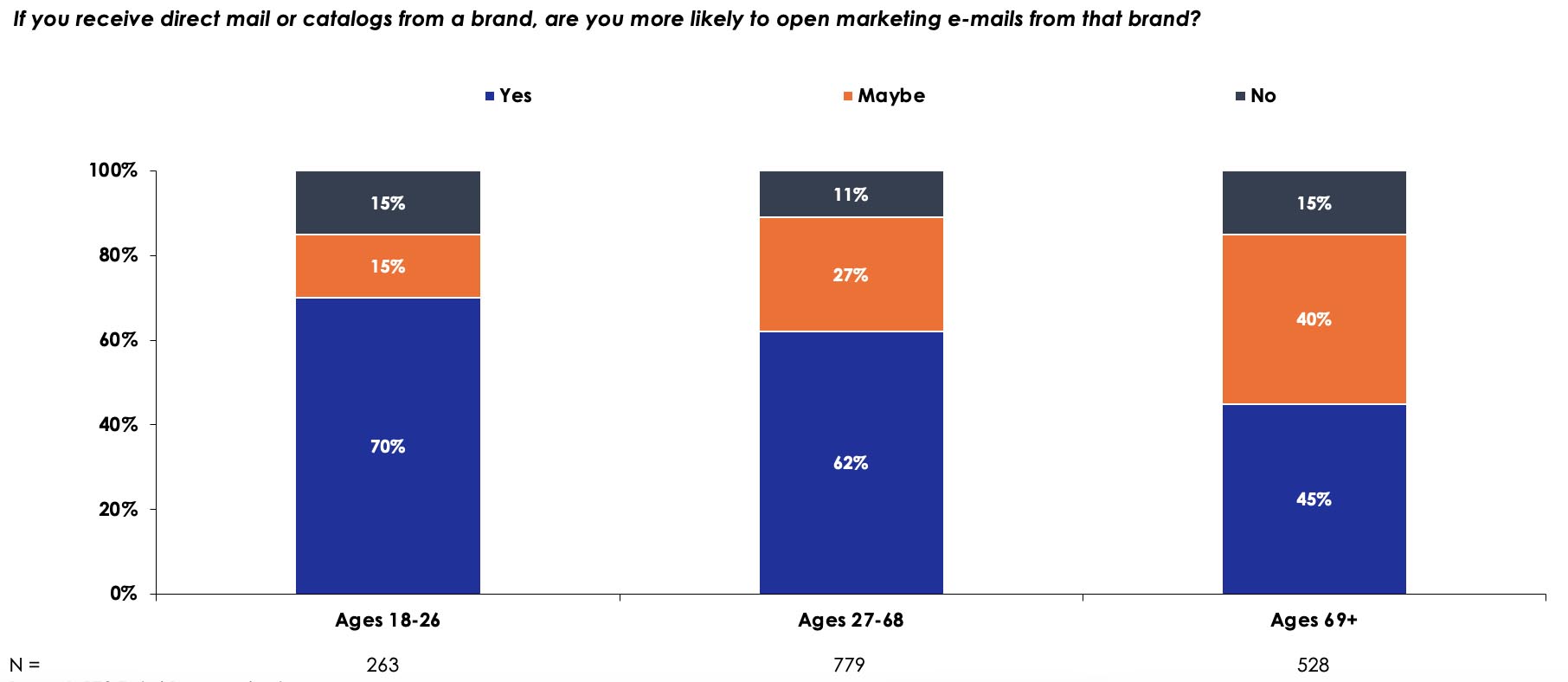
- While all age groups responded positively to direct mail, younger consumers were considerably more likely than the oldest respondents to engage with a marketing e-mail after receiving a piece of physical mail.
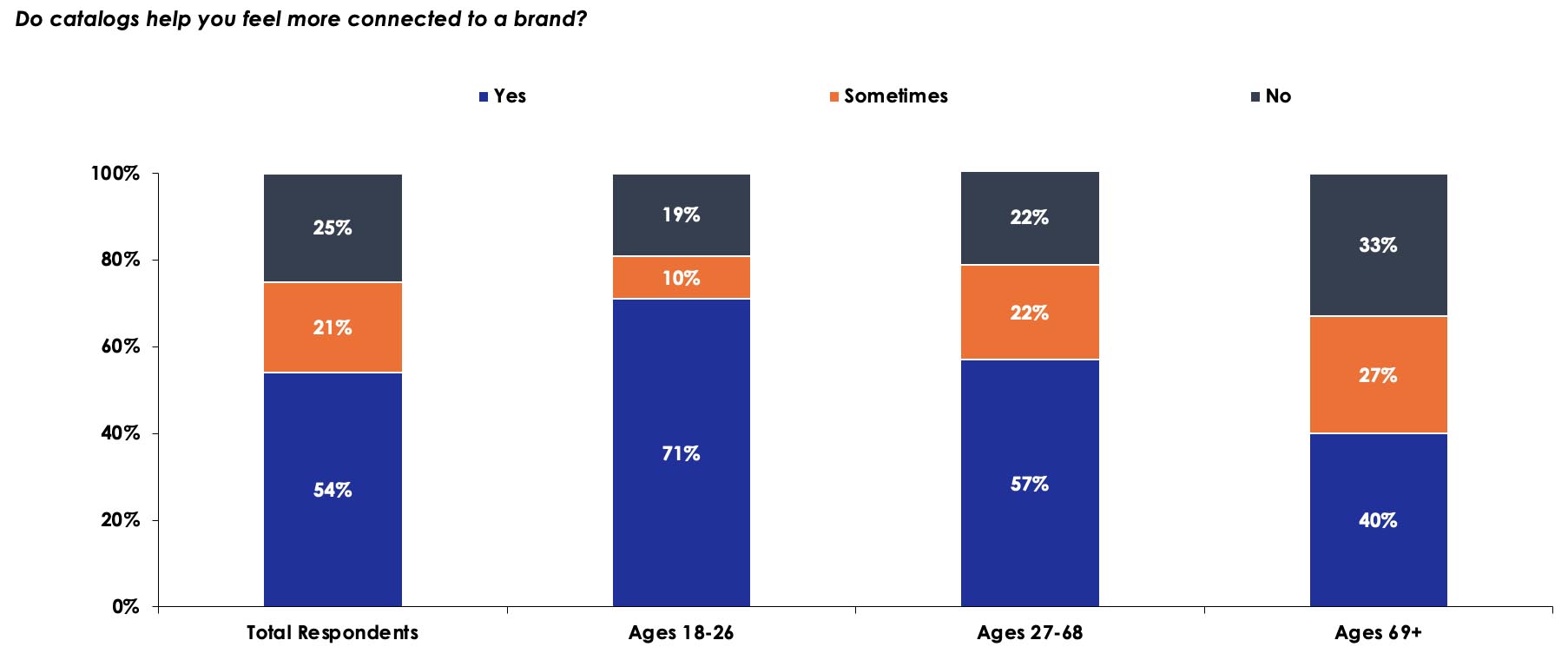
- Over half of all respondents agreed that catalogs still shaped their perception of brands, underscoring the effectiveness of well-crafted printed materials in driving engagement.
By Eve Padula
Introduction
Today’s consumers expect more from the brands they do business with than ever before. In addition to personalized interactions, they want their experiences to be seamless across all media channels. Although these demands can strain businesses’ marketing budgets, complex consumer behaviors also present opportunities for brands to form deeper connections with their audiences.
The success of any campaign hinges on understanding the varying needs and preferences of the target audience. According to recent research from Keypoint Intelligence, younger adults have different priorities and values than their older counterparts. By developing campaigns that reflect these differences, brands can craft meaningful experiences that foster engagement and loyalty.
This article explores the role that age can play in fostering connections and delivering better results. It focuses on younger adults (consumers between the ages of 18 and 26) and highlights how these respondents differ from older consumers. Understanding these differences is key to attracting loyal consumers that can be nurtured to become brand ambassadors for your products and services.
What the Research Tells Us
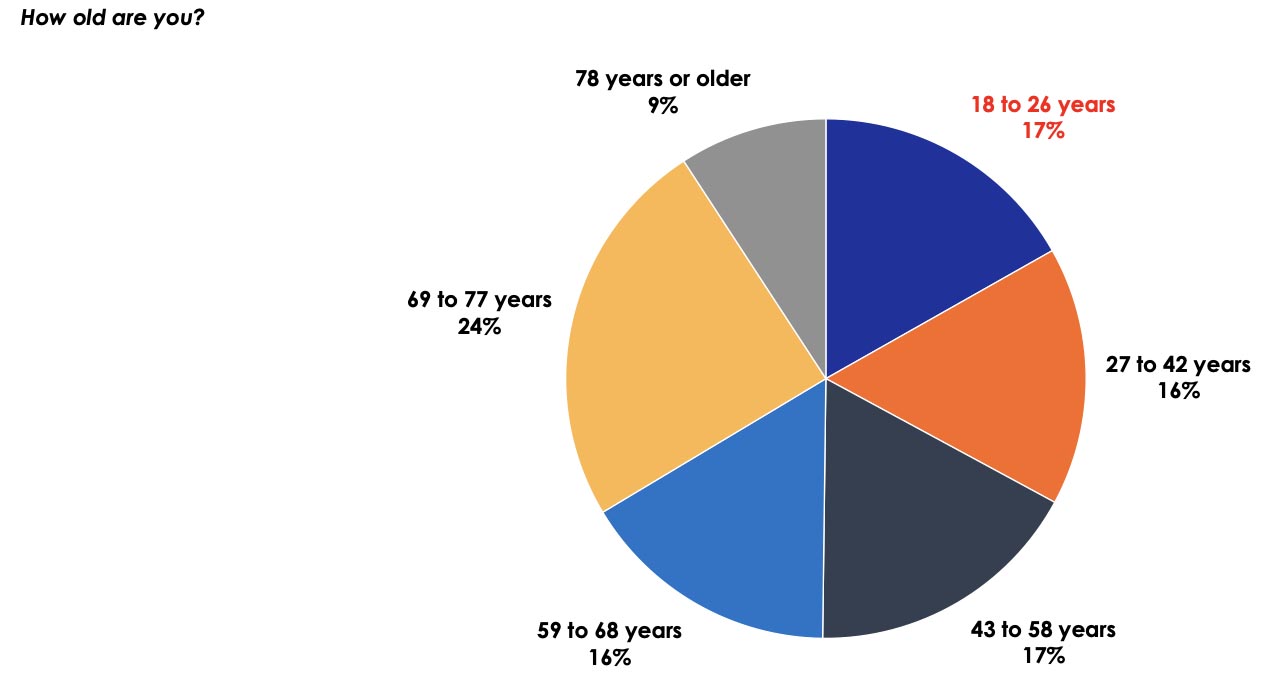
At the end of 2024, Keypoint Intelligence conducted a web-based survey of over 1,500 total consumers in the United States and Canada. Of these, 17% were younger adults below age 27.
Figure 1. Age
N = 1,570 Total Respondents
Source: Customer Communications Consumer Survey; Keypoint Intelligence 2024
Keypoint Intelligence’s research shows that direct mail plays a crucial role in driving digital interactions, even among younger consumers. While all age groups responded positively to direct mail, younger consumers were considerably more likely than the oldest respondents to engage with a marketing email after receiving a piece of physical mail. In fact, 70% of respondents aged 18 to 26 reported that they were more likely to open emails from a brand if they had previously received direct mail from that brand. This compares to only 45% among consumers over age 68.
Figure 2. Physical Mail’s Impact on Email Marketing
Base: 1,570 Total Respondents
Source: Customer Communications Consumer Survey; Keypoint Intelligence 2024
Diving deeper into the impact that direct mail can have on brand connections, catalogs emerge as a standout marketing tool across all age groups. As shown in the Figure below, over half of all respondents agreed that catalogs still shaped their perception of brands, underscoring the effectiveness of well-crafted printed materials in driving engagement. Significantly, the youngest consumers were especially likely to report that catalogs made them feel more connected to a brand. Catalogs remain successful due to their immersive nature, and because they deliver an experience that digital ads often struggle to match.
Figure 3. The Impact of Catalogs on Brand Connection
N = Varies; Base: 1,570 Total Respondents
Source: Customer Communications Consumer Survey; Keypoint Intelligence 2024
The good news for marketers is that relevance, clear messaging, and timeliness make it possible to deliver successful direct mail campaigns across all demographics. Thanks to ongoing advancements in production inkjet technology, marketing teams can now produce cost-effective short runs, enabling A/B testing, targeted messaging by demographics or location, and highly personalized campaigns without sacrificing brand identity or print quality. As a result, direct mail continues to be a powerful and competitive channel even in today’s digital-first world.
Production inkjet technology is a valuable tool for age-based marketing because it effectively caters to the unique preferences of different generations. Despite being digital natives, younger adults respond well to direct mail, making inkjet a great medium for fostering meaningful connections. By integrating interactive elements like QR codes and personalized URLs, marketers can seamlessly bridge print and digital channels to create an engaging omni-channel experience. Across all age groups, production inkjet's ability to support quick turnarounds and personalized content empowers marketers to respond swiftly to changing preferences. Relevance and timing are key to success in today's fast-moving marketing landscape, and production inkjet can help ensure that direct mail remains a competitive and influential channel across generations.
The Bottom Line
Age-targeted marketing is an important strategy for reaching a wide range of consumers. By recognizing the distinct preferences of each age group and leveraging the power of production inkjet technology, printers and mailers can craft campaigns that are visually striking as well as highly effective. Production inkjet provides the versatility and accuracy needed to excel in today’s competitive landscape. The chance to engage with audiences of all ages is here, so now is the perfect time to take advantage of it.
Eve Padula is a Senior Consulting Editor for Keypoint Intelligence's Production Services with a focus on Business Development Strategies, Customer Communications, and Wide Format. She is responsible for creating, analyzing, and formatting many types of content, including forecasts, blogs, industry analyses, and research/multi-client studies. She also manages editing and client distribution for many types of deliverables.