Printing Plant
Plants. They’re great to have around the house, but they’re pretty useless aren’t they? Do they ever do a stitch of housework? Well, via Boing Boing, ForgeCore—an engineer and 3D printer—has developed some functional plant-based ideas.
Leaf coasters, trellis storage, bonsai calendars – the mind boggles at how many uses he can squeeze out of just one plant, and it's that ingenuity that's helped him amass such a large following. They're perfect to go in your 3D-printed house!
Look Back in Anker
Looking to make beautiful, embossed or textured prints on your desktop for your own use or to sell via Etsy? If so, Gizmodo is keen on the new Anker eufyMake E1 UV printer.
The eufyMake E1 can print on practically any object, though it’s slightly slower than your average inkjet printer, taking around three minutes to add color to a small 2×2 inch square. It took approximately six minutes to print on two of those at once. Anker told me a larger pane may take between 15 and 30 minutes. A mid-sized painting with 3D texture could take upwards of 12 to 15 hours, plus use a fair amount of ink from your cartridges. It’s why I didn’t get to see the 3D printing in-person, though Anker had plenty of examples surrounding its machine. The effect is stunning, especially if you crave an image with the subtle textures of oil paints on canvas.
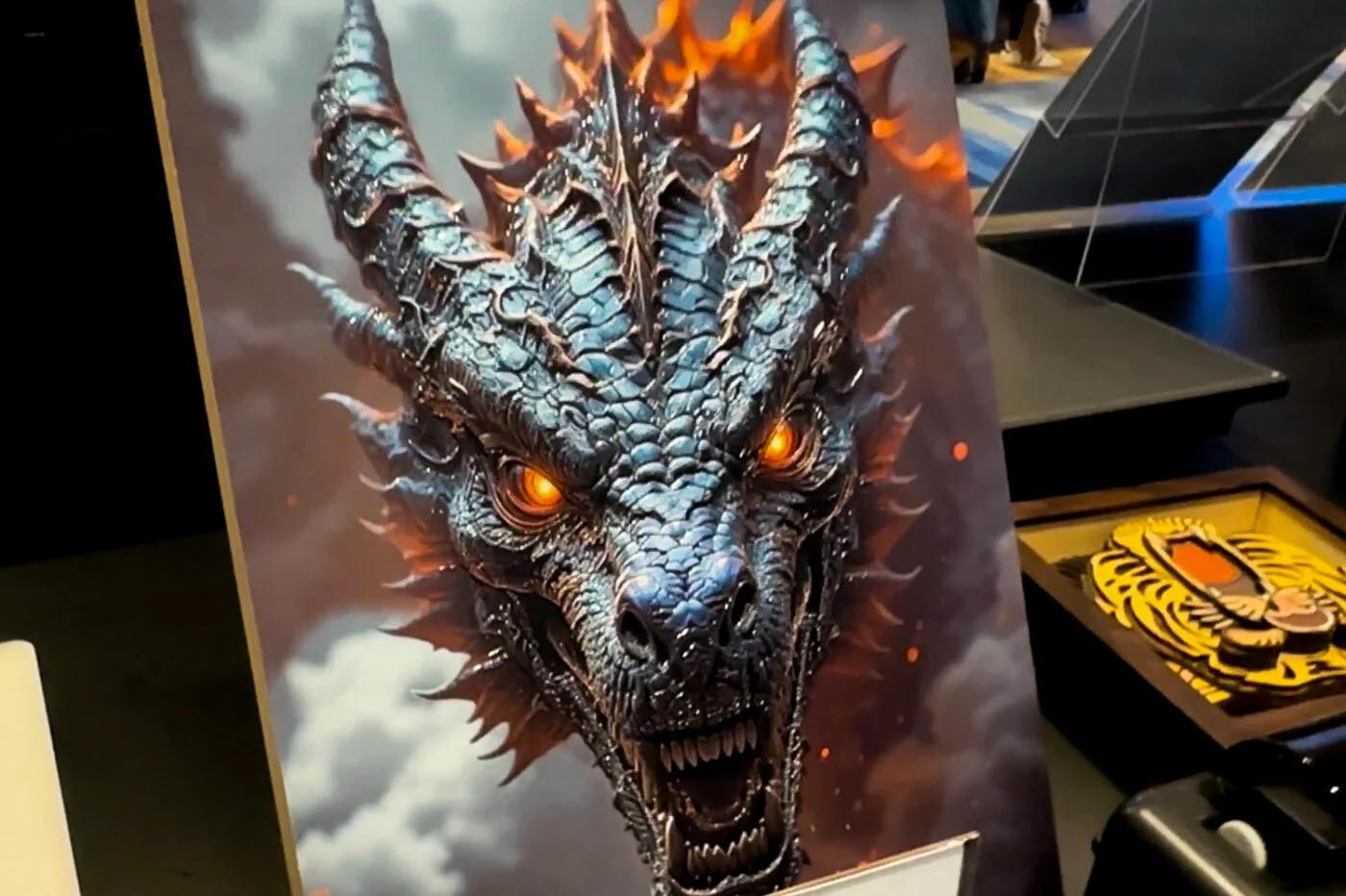
Anker considers the eufyMake device the “first” 3D texture UV printer for home use. A steal at $1,900.
The Pen Is Mightier Than…the Credit Card?
Keeping a pen in one’s shirt pocket is a fashion aesthetic not everyone is a fan of (especially if one does not have shirt pockets). But people often still need to carry pens around. Via Core 77, here’s an interesting idea: a pen that folds into the form factor of a credit card. Check out Hancept's Zero Mk2.
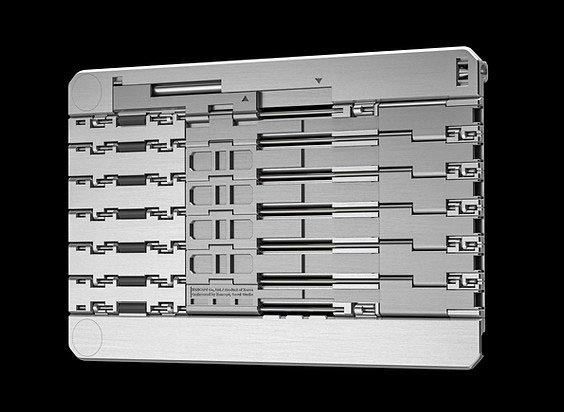
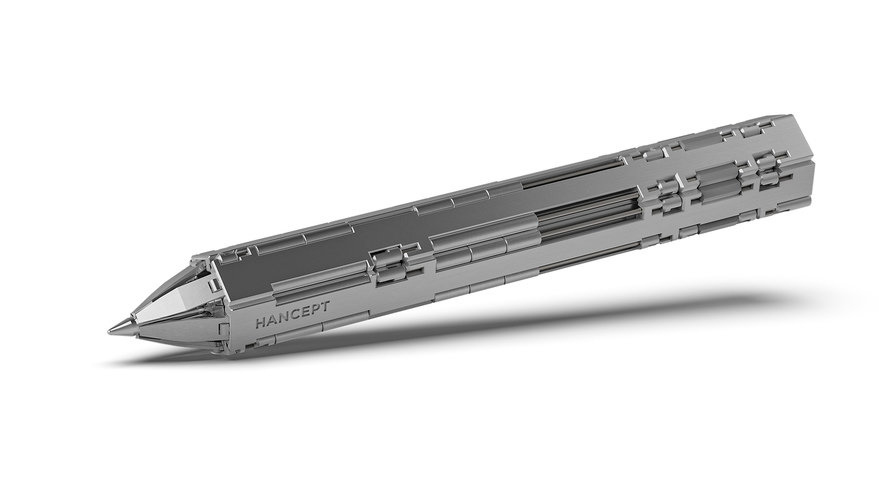
Core 77’s Rain Noe has issues.
The object is admittedly nifty, though obscene from a manufacturing standpoint; it consists of no less than 54 precision-made parts. The startup behind it, Hancept, announces this number as if it’s an accomplishment in its own right.
A steal at $170. Interestingly, it had been successfully Kickstarted with over $80,000 in pledges.
The Pencil Is Mightier
Maybe you don’t need a pen; perhaps a pencil will suffice.
Curious about the history of the pencil? While Henry Petroski’s 1992 book The Pencil is the gold standard for pencil scholarship, a new book takes a fun look at pencilular history. In Caroline Weaver’s The Pencil Perfect: The Untold Story of a Cultural Icon:
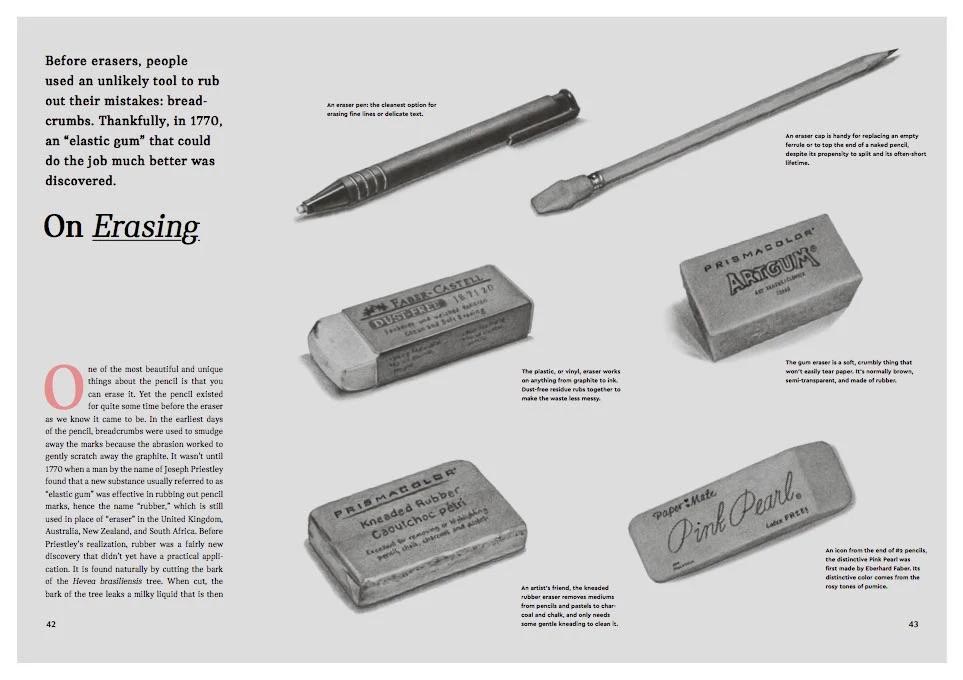
pencil connoisseur and CW Pencil Enterprise Shop owner, composes texts that extol the nuanced influence of her beloved and humble implement. Illustrations exclusively drawn for The Pencil Perfect by Oriana Fenwick, an artist from Zimbabwe who works with fine details and intense realism, pair with Weaver’s words to present a story that is both endearing and enlightening.
Through profiles of pencil makers, anecdotes about famous writers’ favorite pencils, and essays about the surprising role of pencils in world history and culture, the chronicle of a modest but mighty tool unfolds. Follow the charming contrivance as it guides the course of early communication in the Scientific Revolution, the American Revolutionary War, the Anglo-French War, and the French Revolution: it is a historical journey and a captivating memoir.
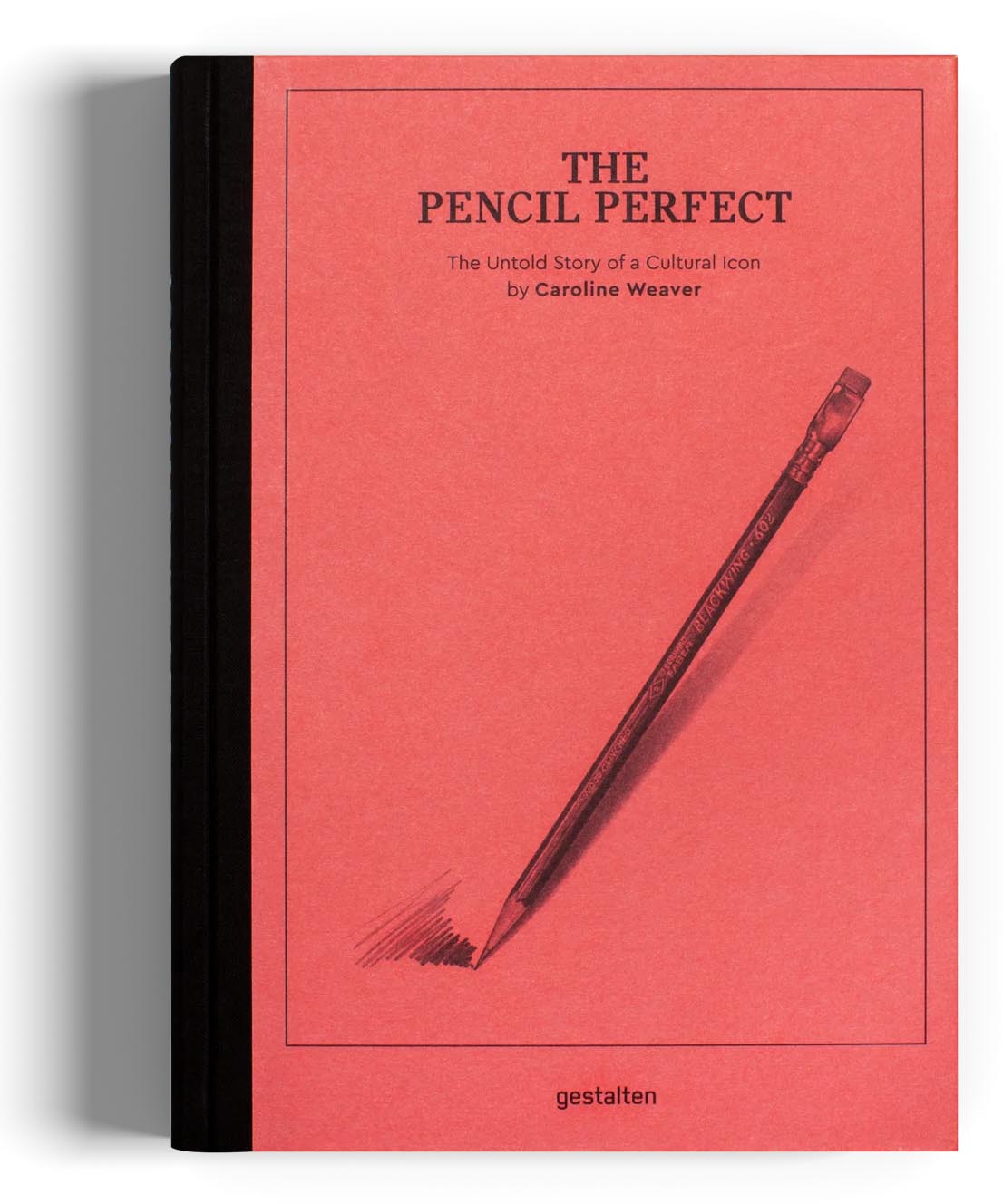
A steal at $40.
Sharper Image
If one has a pencil then what accessory does one also need? Yes, a pencil sharpener. In some ways, the pencil sharpener is resistant to technology—take, for example, via Boing Boing, this pencil sharpener from the 1890s seems to work as well as any more modern sharpener.
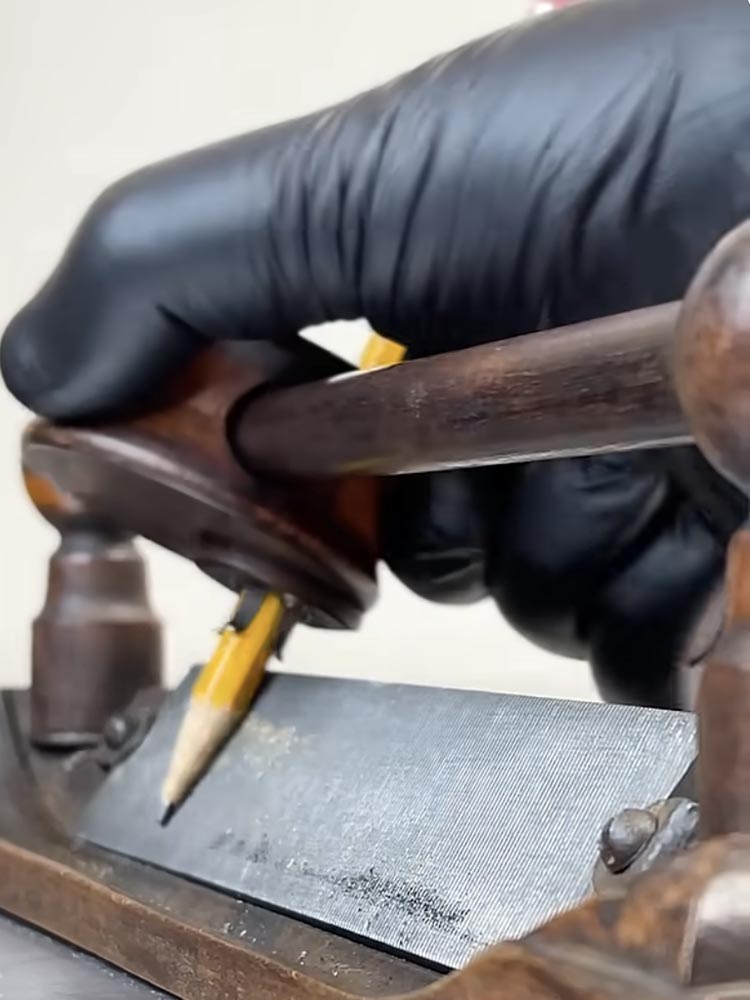
Watch it in action here.
Targeted Packaging
Did you know that retailer Target has a wine collection? (And, no, we will never pronounce the name of the store as TAR-zhay.) But they do (have wine), and the interesting thing about it is that they are using paper bottles. Says Food & Wine:
Rolling out to nearly 1,200 stores nationwide, the four-bottle line includes a California Cabernet Sauvignon, a Red Blend from Spain, a Sauvignon Blanc from Chile, and a Pinot Grigio from Italy. Each bottle is priced at $9.99 and comes packaged in the Frugal Bottle, a paperboard alternative made from 94% recycled material. It’s five times lighter than glass, shelf-stable, and fully recyclable, with wrap-around branding that stands out in the wine aisle.
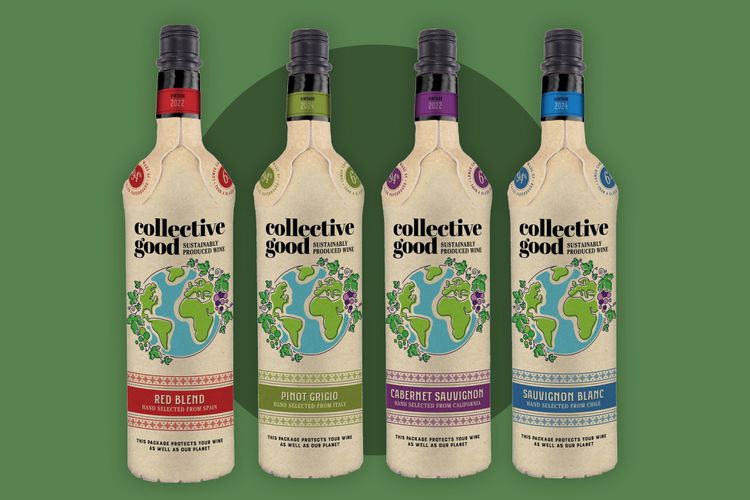
Glass has long been the default for wine — but it’s also one of the industry’s most carbon-intensive materials. Producing glass requires high-temperature furnaces and significant energy, often from fossil fuels. Once bottled, glass adds weight and bulk to shipping, driving up transport emissions. And even though it’s technically recyclable, actual recycling rates vary widely across the United States, with many glass containers ending up in landfills. According to the California Sustainable Winegrowing Alliance, packaging can make up as much as 40% of a wine’s total carbon footprint — with glass as the biggest factor.
The paper bottles are manufactured by by Frugalpac and, according to Target, each bottle has a carbon impact 84% lower than a glass bottle and Target’s initial inventory of 256,000 bottles will save an estimated 98.3 U.S. tons of carbon emissions.
Training Materials
Via The Guardian, subway riders in New York City are getting the first upgraded subway map in 50 years. Although some of us had no problem with the old design, it could be confusing to tourists and first-time visitors, especially in distinguishing express from local trains.
The outlines of the boroughs are still there, but far more simplified. Central Park has been reduced to a greenish square. The subway lines themselves, meanwhile, are far bolder and clearer, with separate paths shown for each train. The overlapping A, C and E trains, for instance, once shared a single blue line with tiny letters denoting which train stopped where. Now they form a thick blue trio that branches out when the lines separate.
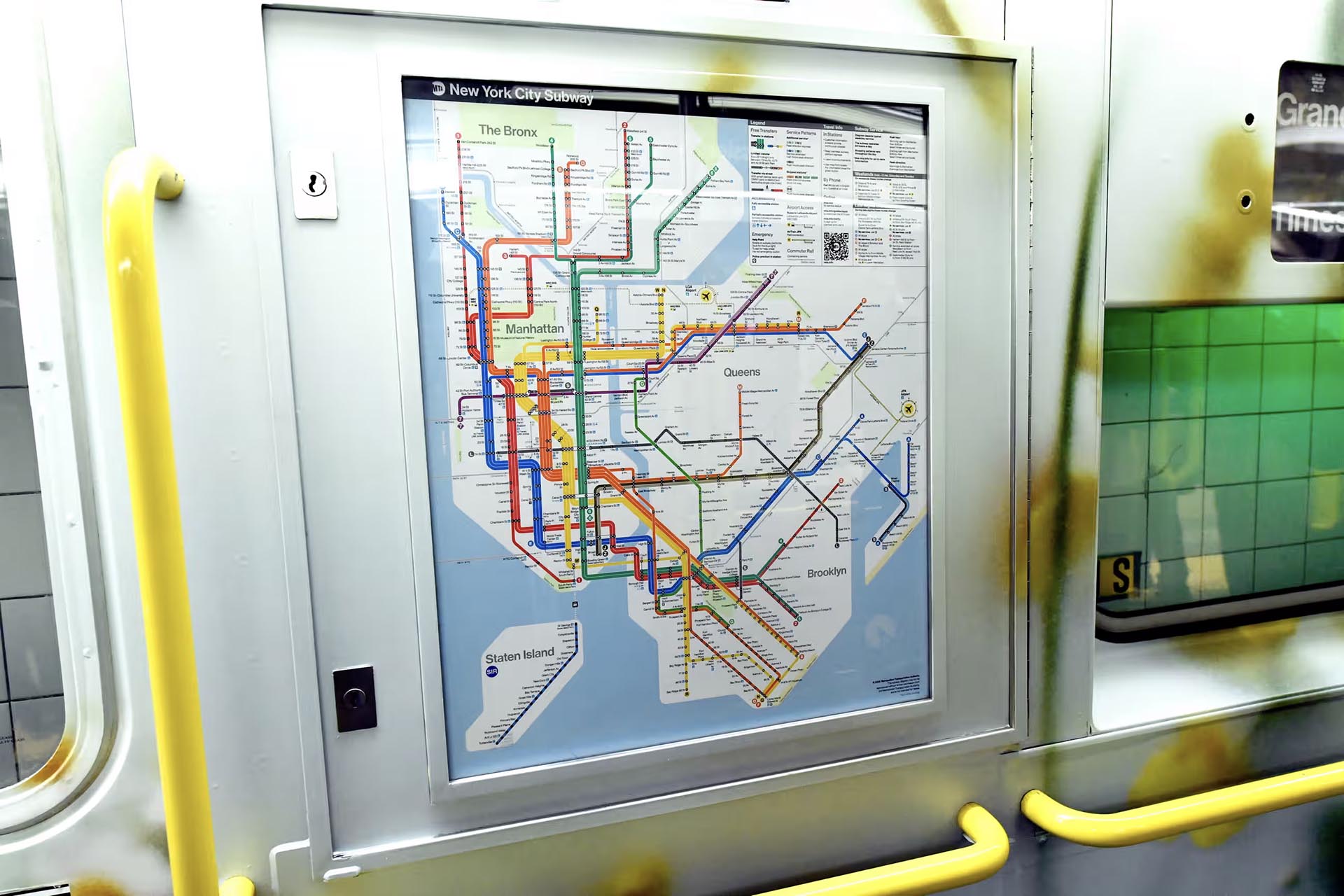
According to the MTA, the new diagram, the first major overhaul since 1979, seeks to simplify the image while offering “the most essential travel information in an easily readable, bright, bold, and orderly manner”. It hearkens back to a divisive predecessor: Massimo Vignelli’s 1972 diagram, known as the Unimark map, which firmly prioritized legibility for subway riders over an accurate representation of the New York landscape. Vignelli is something of a design hero, having helped shape the whole look of the subway system. But many New Yorkers hated his map, and it was gone by 1979, replaced by an early version of the Tauranac/Hertz map – the one you know if you visited the city before 2 April.
Meanwhile, Print magazine takes a closer look at the history of the NYC subway map, and they also tackle the controversy of the 1972 map.
At UNIMARK, along with the signage, Massimo Vignelli, Joan Charysyn, and Ine Wijtvliet worked on solutions to address the huge challenge of how to navigate a more and more complex subway system.
In 1972, a new map was introduced and installed throughout the entire subway system as well as all subway car interiors. This new creation was an instant hit with designers, architects, and people in the arts.
However, the ones who hated the map were the ones that had to use it to get around: the subway riders.
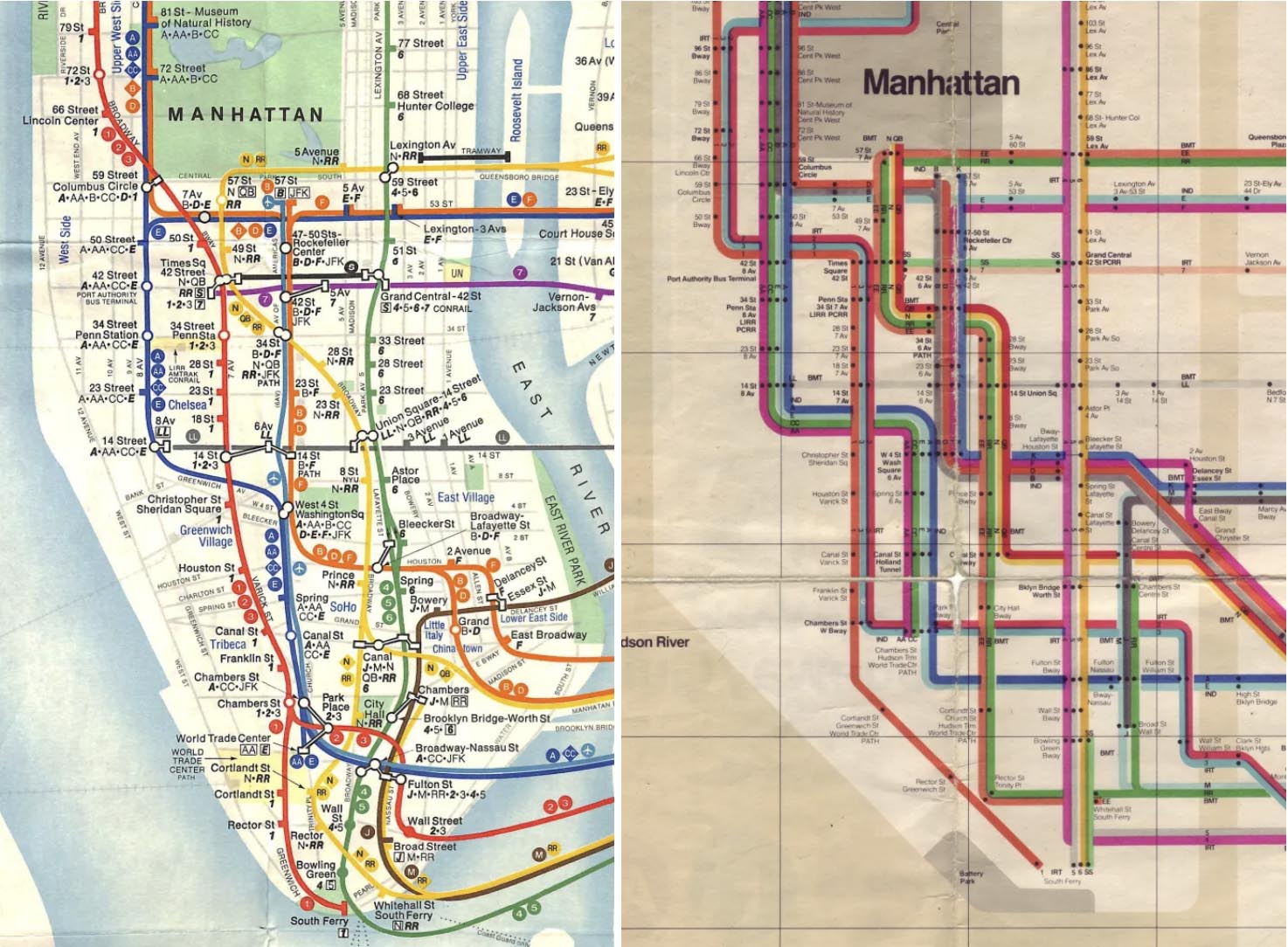
Left: The geography-based map by Michael Hertz and Nobu Siraisi created in 1979. Right: Vignelli’s 1972 designer-approved, rider-disapproved map.
Complicating subway map design is the changing nature of the system, and the addition of new lines.
After the 2017 introduction of the Second Avenue Line, the MTA launched a so-called Weekender, an app that was intended to give the traveling public information about disruptions due to maintenance and trackwork. The monitor hardware is provided by Outfront Media, and the software platform is provided by Mercury. Information is delivered in real-time, but a derivative of the original 1972 map design was still used.
So the new design that was just launched has much in common with the ill-fated 1972 design. But why does it work better?
Since the 1972 launch, it was quite obvious that the greatest flaw of the Vignelli design was the way in which the transfer points were designed.
Nobody really understood how to interpret this crucial map component. Until a few months ago, it was always agreed at the MTA that the philosophy of fewer elements, the better the design, was the only objective to solve navigation challenges. Consistently sticking to that rigid approach was the main obstacle to the conversion of a minimalist diagram into a powerful navigation tool.
So the consensus is that the new map is aesthetically appealing and, perhaps just as importantly, clearer to use as a navigation tool. Time and ridership will determine if both are true.
Anne Hathaway About Her
Conventional wisdom among Shakespeare aficionados is that the playwright left his wife behind in Stratford-upon-Avon while he journeyed to London to pursue a theatrical career. The implication, then, was that they did not have an especially happy marriage. However, via the Guardian, a fragment of a letter has turned up that casts serious doubt on this assumption, and indeed indicates that Anne Hathaway lived with Shakespeare in London.
Matthew Steggle, a professor of early modern English literature at the University of Bristol, said the text seemed to put the Shakespeares at a previously unknown address in Trinity Lane – now Little Trinity Lane in the City. It also has them jointly involved with money that Shakespeare was holding in trust for an orphan named John Butts.
…This document, which refers to the couple who “dwelt in trinitie lane”, suggests that she did spend significant time with her husband in the capital.
As we seem to find rather a lot, the letter was found in the binding of a book in Hereford Cathedral’s library. It had actually been found in 1978, but it has remained unknown because “no one could identify the names or places involved,” Steggle said.
Crucial evidence includes the 1608 book in which the fragment was preserved, Johannes Piscator’s analyses of biblical texts. It was published by Richard Field, a native of Stratford, who was Shakespeare’s neighbour and his first printer.
Steggle said that it would be a “strange coincidence” for a piece of paper naming a Shakspaire to be bound, early in its history, next to 400 leaves of paper printed by Field, “given Field’s extensive known links to the Shakespeares”.
There is also a second set of handwriting on the reverse of the letter. Could it be Anne’s? If so, says Steggle, it would be “the nearest thing to her voice ever known.”
Doomed
Do you like the old 90s videogame Doom? Do you also like QR codes? If so, then good news! Via Boing Boing, Kuber Mehta has developed Backdooms, a Doom-like game that fits inside a QR code—or, in other words, “the code of the game is so concise that it can be represented by a legit QR code, which offers a maximum of 3 kilobytes of data.”
The Backdooms is a compressed, self-extracting and infinitely generating HTML game inspired by DOOM 1993 and The Backrooms that can be launched and played in a web browser directly from a QR code. This project was a week-long study I performed (now slightly longer) designed to push the limits of QR code storage and compression, to demonstrate an innovative method of hosting lightweight web applications entirely within a QR code.
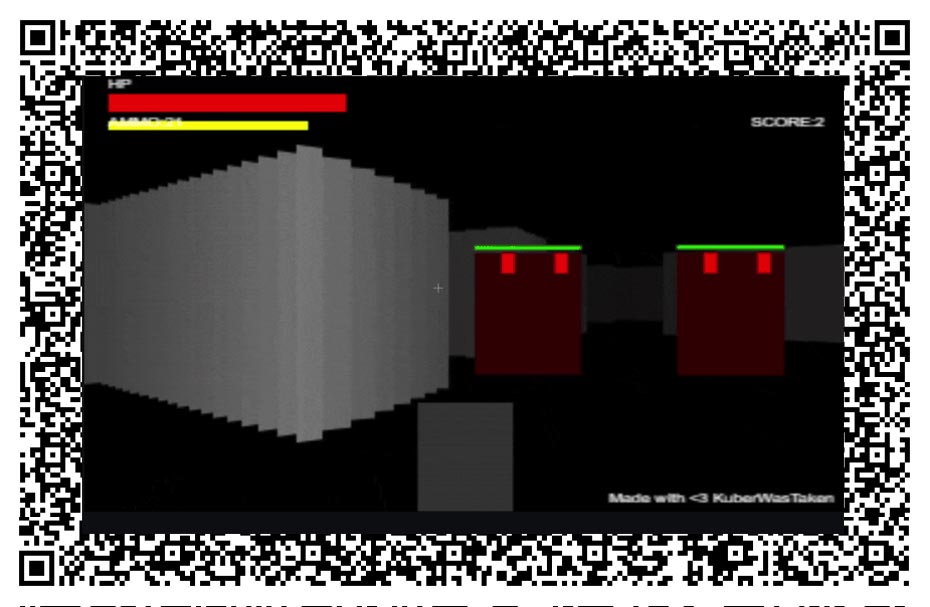
You can play it here. We’ll wait for a version of Myst that can fit into the UPC code on a gallon of milk.
Graphene On Ice
Was it a good week for graphene news? It’s always a good week for graphene news! 3D-printed graphene composites for efficient ice control applications. From (who else?) Graphene-Info:
Researchers from Hefei University and Chinese Academy of Sciences (CAS) have developed a novel 3D-printed graphene/polymer double-layer composite featuring high anisotropic thermal conductivity that offers improved photothermal and electrothermal performance for advanced ice control applications.
By “ice control,” they are referring to anti-/de-icing systems, essential elements in cold climates.
Around the Webb, Part the Cosmic Infinity: Asteroid Antics
Remember the “city killer” asteroid that, a couple of months ago, had been projected to potentially smack into the Earth? Happily (maybe…), the crisis has been averted, and the asteroid will miss us. Says Futurism:
2024 YR4 was first detected in December. By February, the chances it would strike Earth had exceeded 3 percent. Those were by no means guaranteed odds, but as the asteroid was deemed large enough to wipe out an entire metropolis, they were still way too high for comfort. But just as astronomers had anticipated, those threat estimates were quickly downgraded to no threat at all.
But the James Webb Space Telescope had a close look at our once-potential nemesis—and it turned out to be less impressive than we had thought.
Previously, our ground-based glances at 2024 YR4 in visible light had suggested that it could be as long as nearly 300 feet. Now, the latest observations reveal that it's somewhat smaller, between 174 to 220 feet in stature — or about the size of a 10-story building, according to NASA.
True, you don’t want that crashing through your roof, but still. Fairly weak tea.
Nevertheless, the episode rekindled both the public's and the scientific community's interest in planetary defense. There are over a million asteroids in the inner Solar System that we know about, and close to 40,000 near-Earth ones. If one suddenly pops up out of the blue, how can we quickly assess it?
The Webb can help!
"Most telescopes observe asteroids by measuring sunlight reflected from their surfaces, and it's hard to precisely determine their sizes from this information," he said in the statement. With the Mid-Infrared Insturment (MIRI), however, "the heat given off by asteroids themselves can be measured and used to directly give the asteroid's size."
And while 2024 YR4 won’t be hitting us directly, there's still a 3.8% chance it could crash into the Moon, which won’t be good.
Mac & Gold
Mother’s Day is approaching, and here’s a sure fire way to ensure that you’ll be written out the will: a 14-karat Kraft Macaroni necklace. Via (who else?) Food & Wine:
On Wednesday, the brand unveiled the limited-edition Kraft Mac & Cheese x Ring Concierge Forever Macaroni Necklace. Kraft noted that it's the ultimate homage to the classic gift; only this time, it's a 14-karat gold noodle strung on a 16-inch gold chain. And yes, it's presented in a blue box — Kraft Mac & Cheese royal blue, to be exact.
So…32 hours of labor (we were told…) and that’s what she gets, a gold noodle? [Insert Marge Simpson noise here]
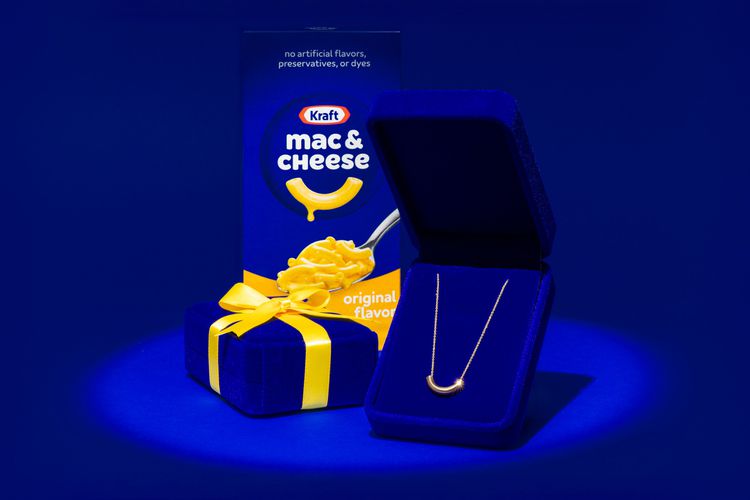
“This Mother’s Day, we’re offering families the ultimate way to say thank you, with an elevated twist on a timeless tradition. We hope families feel good knowing each time mom catches a glimpse of the golden noodle, she’ll remember special moments spent with her family, especially those enjoyed together over a bowl of Kraft Mac & Cheese.”
Were there any? It was a staple of a college dorm, but that was the extent of our interaction with Mac & Cheese, from what we recall, unless it’s something buried deep in the unconscious.
The company also noted that, despite this being a more high-end noodle than it usually sells, it still wants to keep things accessible, just as it does with its macaroni and cheese. So, it's offering the gold necklace at a “record low price – celebrating moms everywhere with gold that’s just as solid as she is.”
Hey, isn’t mom worth at least $25?
This Week in Printing, Publishing, and Media History
April 28
1926: American novelist Harper Lee born.
1948: Igor Stravinsky conducted the premiere of his American ballet Orpheus at the New York City Center.
1973: The Dark Side of the Moon by Pink Floyd, recorded in Abbey Road Studios, goes to number one on the US charts, beginning a record-breaking 741-week chart run.
April 29
1863: American publisher and politician William Randolph Hearst born.
1953: The first U.S. experimental 3D television broadcast showed an episode of Space Patrol on Los Angeles ABC affiliate KECA-TV.
1968: The musical Hair opens at the Biltmore Theatre on Broadway.
1980: English-American director and producer Alfred Hitchcock dies (b. 1899).
1986: A fire at the Central library of the City of Los Angeles Public Library damages or destroys 400,000 books and other items.
1996: The off-Broadway musical Rent opens on Broadway at the Nederlander Theatre. No day but today.
April 30
1897: J. J. Thomson of the Cavendish Laboratory announces his discovery of the electron as a subatomic particle, over 1,800 times smaller than a proton, at a lecture at the Royal Institution in London.
1927: Douglas Fairbanks and Mary Pickford become the first celebrities to leave their footprints in concrete at Grauman's Chinese Theater in Hollywood.
1938: The animated cartoon short Porky’s Hare Hunt debuts in movie theaters, introducing Happy Rabbit, an early version of Bugs Bunny.
1939: NBC inaugurates its regularly scheduled television service in New York City, broadcasting President Franklin D. Roosevelt's N.Y. World's Fair opening day ceremonial address.
1993: CERN announces World Wide Web protocols will be free.
May 1
1753: Publication of Species Plantarum by Linnaeus, and the formal start date of plant taxonomy adopted by the International Code of Botanical Nomenclature.
1786: In Vienna, Austria, Mozart’s opera The Marriage of Figaro is performed for the first time.
1840: The Penny Black, the first official adhesive postage stamp, is issued in the United Kingdom.
1971: Frank Romano’s national holiday—Amtrak (the National Railroad Passenger Corporation) takes over operation of U.S. passenger rail service.
1999: SpongeBob SquarePants premieres on Nickelodeon after the 1999 Kids’ Choice Awards.
2002: Dr. Joe Webb’s national holiday—OpenOffice.org releases version 1.0, the first stable version of the software.
May 2
1519: Italian painter, sculptor, and architect Leonardo da Vinci dies (b. 1452).
1611: The King James Version of the Bible is published for the first time in London, England, by printer Robert Barker.
1885: American actress and gossip columnist Hedda Hopper born.
1895: American playwright and lyricist Lorenz Hart born.
1952: The world’s first ever jet airliner, the De Havilland Comet 1 makes its maiden flight, from London to Johannesburg. (Certain airlines are still using it...)
1955: Tennessee Williams wins the Pulitzer Prize for Drama for Cat on a Hot Tin Roof.
2000: Rand McNally’s national nightmare—President Bill Clinton announces that accurate GPS access would no longer be restricted to the United States military.
2012: A pastel version of The Scream, by Norwegian painter Edvard Munch, sells for $120 million in a New York City auction, setting a new world record for a work of art at auction.
May 3
1469: Italian historian and philosopher Niccolò Machiavelli born.
1913: Raja Harishchandra, the first full-length Indian feature film is released, marking the beginning of the Indian film industry.
1935: American businessman and founder of the Ronco Company Ron Popeil born. But wait! There’s more!
1952: The Kentucky Derby is televised nationally for the first time, on the CBS network.
1957: Walter O’Malley, the owner of the Brooklyn Dodgers, agrees to move the team from Brooklyn to Los Angeles.
1958: Danish-English comedian, author, and radio host Sandi Toksvig born.
1959: English actor, director, and screenwriter Ben Elton born.
1960: The Off-Broadway musical comedy The Fantasticks opens in New York City’s Greenwich Village, eventually becoming the longest-running musical of all time.
1965: Welsh actor and comedian Rob Brydon born.
1973: The 108-story Sears Tower (now officially the Willis Tower) in Chicago is topped out at 1,451 feet as the world's tallest building.
1978: The first unsolicited bulk commercial email (which would later become known as “spam”) is sent by a Digital Equipment Corporation marketing representative to every ARPANET address on the west coast of the United States.
May 4
1939: Israeli journalist and author Amos Oz born.
1953: Ernest Hemingway wins the Pulitzer Prize for The Old Man and the Sea.
1959: The 1st Grammy Awards are held.
1972: The Don't Make A Wave Committee, a fledgling environmental organization founded in Canada in 1971, officially changes its name to “Greenpeace Foundation.”