Really Expanded Gamut
Via the BBC, scientists claim to have discovered a hitherto unknown color.
The research follows an experiment in which researchers in the US had laser pulses fired into their eyes.
Don’t try this at home!
By stimulating specific cells in the retina, the participants claim to have witnessed a blue-green colour that scientists have called “olo”, but some experts have said the existence of a new colour is “open to argument”.
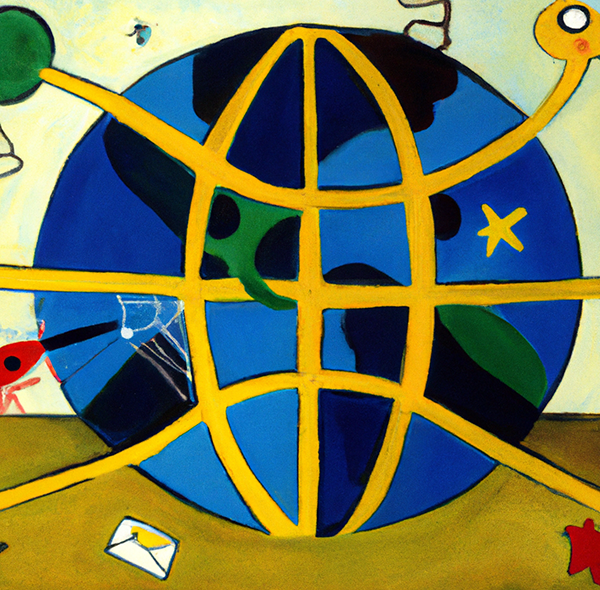
This is the closest approximation:

It gets less accurate when you convert to CMYK.
There are three types of cone cells in the eye - S, L and M - and each one is sensitive to different wavelengths of blue, red and green respectively. According to the research paper, in normal vision, "any light that stimulates an M cone cell must also stimulate its neighbouring L and/or S cones", because its function overlaps with them. However, in the study, the laser only stimulated M cones, "which in principle would send a colour signal to the brain that never occurs in natural vision", the paper said. This means the colour olo could not be seen by a person's naked eye in the real world without the help of specific stimulation. To verify the colour observed during the experiment, each participant adjusted a controllable colour dial until it matched olo.
Not everyone is buying it:
Prof John Barbur, a vision scientist at City St George's, University of London, who was not involved in the study, said that while the research is a "technological feat" in stimulating selective cone cells, the discovery of a new colour is "open to argument". He explained that if, for example, the red cone cells (L) were stimulated in large numbers, people would "perceive a deep red", but the perceived brightness may change depending on changes to red cone sensitivity, which is not unlike what happened in this study.
Needless to say, you’d probably be hard-pressed to find a digital press that could hit olo accurately, so it would be best not to choose it as your brand color.
Still:
the study's co-author Prof Ng admitted that although olo is "certainly very technically difficult" to see, the team is studying the findings to see what it could potentially mean for colour blind people, who find it difficult to distinguish between certain colours.
Art of Folio
Bibliophiles are likely familiar with The Folio Society, a London-based publisher known for its exquisite hardcover books. Founded in 1947, their titles have been exemplars of exquisite book design.
Now, via Print magazine, there are launching their first major US exhibition: “The Art of Folio,” hosted at the Society of Illustrators on New York’s Upper East Side. Running from April 16 to July 12, 2025, “the show marks a landmark moment in the intersection of illustration, design, and publishing.”
The two-floor, immersive exhibition features 91 illustrators from around the globe, with over 100 artworks curated by genre to transport viewers from the magical realism of A Wizard of Earthsea to the haunting landscapes of The Underground Railroad — a vibrant living archive of illustration’s role in literature that showcases how artists, through medium and imagination, make a good story unforgettable.
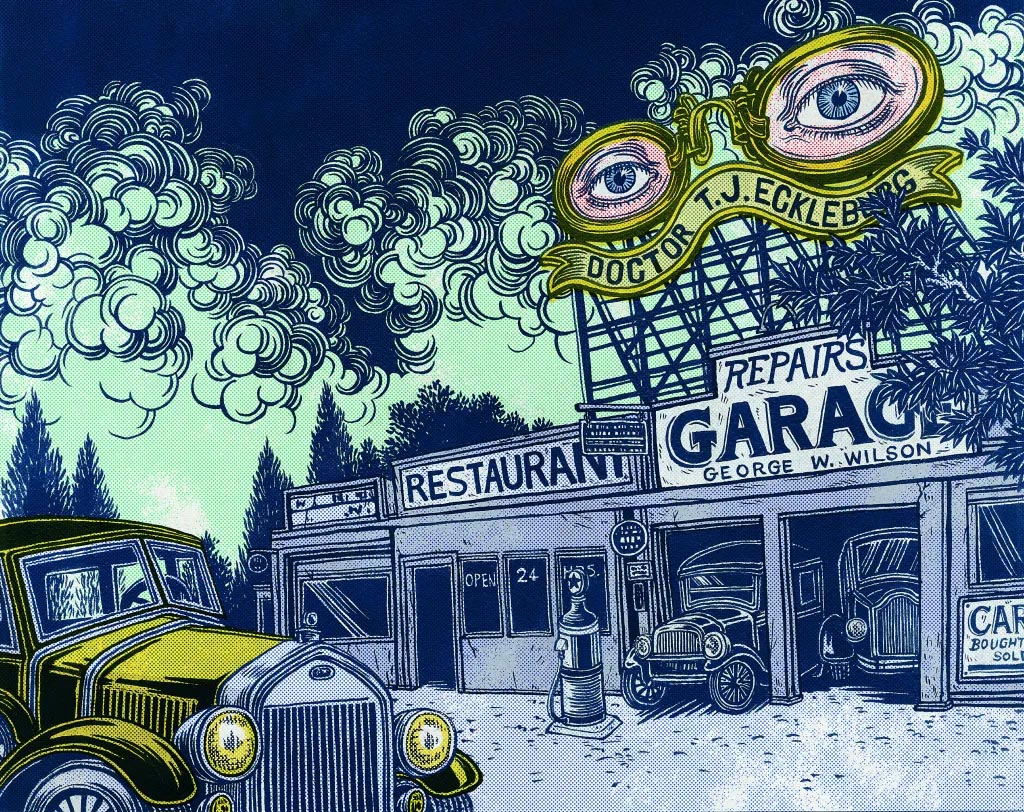
One thing that caught our attention is that there is a dedicated installation for The Great Gatsby to commemorate the novel’s 100th anniversary.
Featuring new illustrations by acclaimed artist Yuko Shimizu, this darkly sumptuous edition channels the decadent dissonance of Fitzgerald’s Jazz Age classic. Shimizu’s linework crackles with longing, disillusionment, and dangerous beauty—qualities that mirror the fragile glitter of Gatsby’s world. The display includes original artwork as well as a behind-the-scenes look at the craft behind every Folio book, offering a rare peek into the publisher’s meticulous design process.
Mailing Tubers
Here’s something we never realized: did you know that you can mail potatoes without packaging? As per the USPS’s own Postal Facts page:
It’s SPUDTACULAR! As with coconuts, potatoes can be mailed without a box. Simply write the address it’s going to and your return addresses on the spud, have it weighed for appropriate postage, and it can be shipped as-is. Let someone know they are special. Send a tater!
We can think of all sorts of direct mail applications—although they could just be some half-baked ideas.
Star Trek
Velvet Shark asks a probing question: “Why do AI company logos look like buttholes?” Hmm… Have we ever noticed this? Let’s see if we grant the premise…

Well, OK, yes, they do have a point. And why would this be? Are they just pulling logos out of their—um—you know? A reflection of company management?
FastCompany noticed this trend in 2023 and published an article about it, but (I could only presume) their editors and lawyers didn't let them title the article the way the wanted it to title, so it got published with a more safe for work title: The AI boom is creating a new logo trend: the swirling hexagon. They also were careful not to mention anything anatomical.
But, ultimately, “the logos of the Big AI companies…almost all have a circular or snowflake-like shape and a central opening.”
When we first delved into this topic, our first thought was a comment in Kurt Vonnegut’s novel Breakfast of Champions, which they do cite in relation to the logo of something called Anthropic’s Claude:
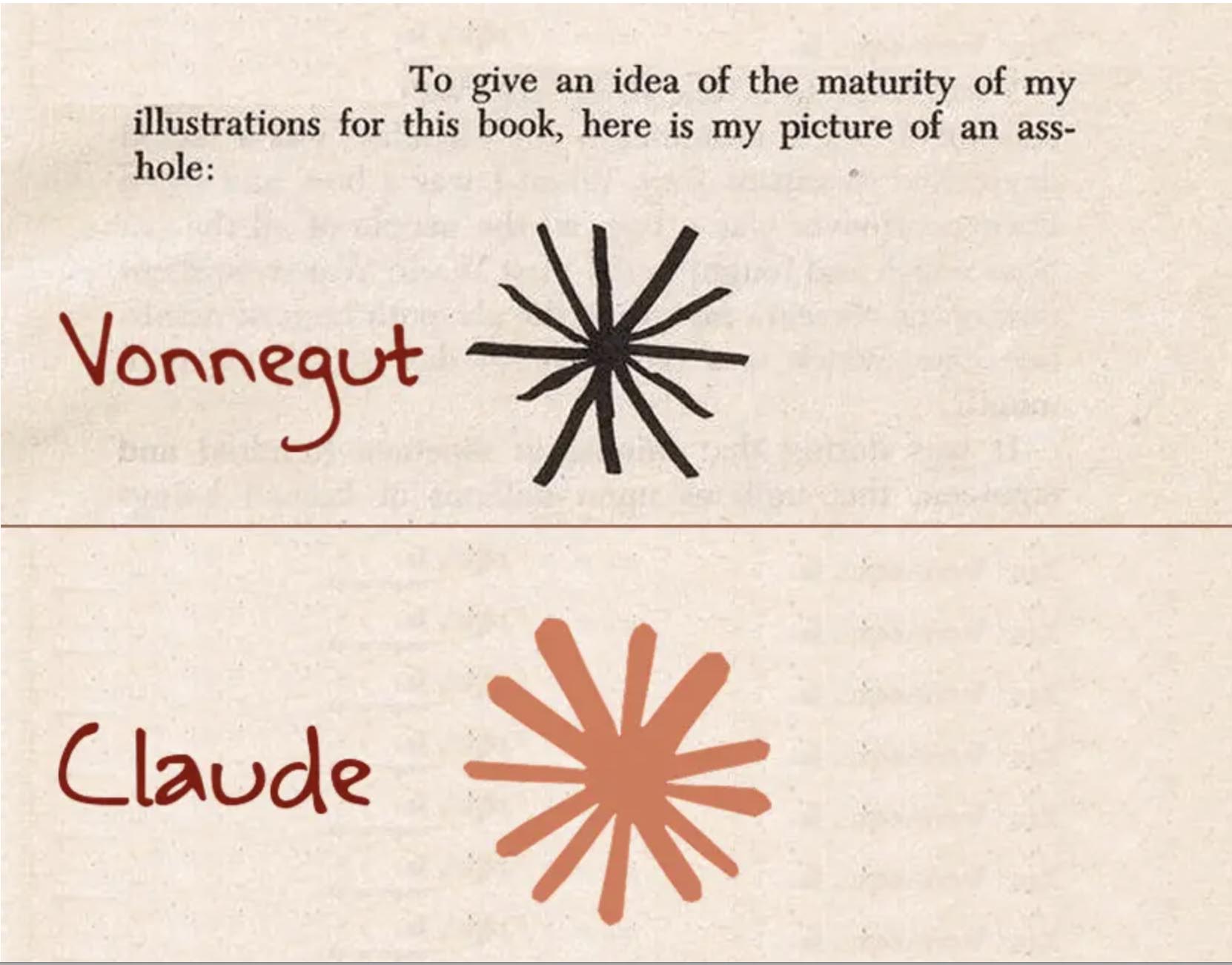
Cheeky.
So many examples abound, one has to wonder, why the “circular sphincter aesthetic”? Velvet Shark gets to the bottom of things. They cite a couple of reasons, including the design philosophy of circles (circles represent wholeness, completion, and infinity) as well as the tendency on the part of viewers to see familiar patterns in random shapes, although unless you’re a proctologist we wonder just how familiar a shape this is…
Or, they conclude, it could very well be the copycat effect:
Once a few major players adopted the circular sphincter aesthetic, everyone followed suit. Now we have an industry where standing out means looking exactly like everyone else's butthole.
QED (quod erat derriere).
Eero Images
Via Core 77, an interesting new book from Phaidon looks at mid-20th-century design. From the book’s website:
Embark on a surprising and joyful visual tour of American mid-century modernism through hundreds of photographs, drawings, and pieces of ephemera organized by the art museum at Cranbrook, where the movement began. Essential figures such as Charles and Ray Eames, Harry Bertoia, Florence Knoll, and Eero Saarinen are represented alongside other women and designers of color that have been historically eclipsed, including Joel Robinson, Ray Komai, Ruth Adler Schnee, Olga Lee, Miller Yee Fong, Lucia DeRespinis, Dorothy Liebes, and many others.


Many of us never knew that the style—so prevalent from film, TV, architecture, interior design, etc.—had a name, but if you have ever had a fascination with this style, this book is for you.
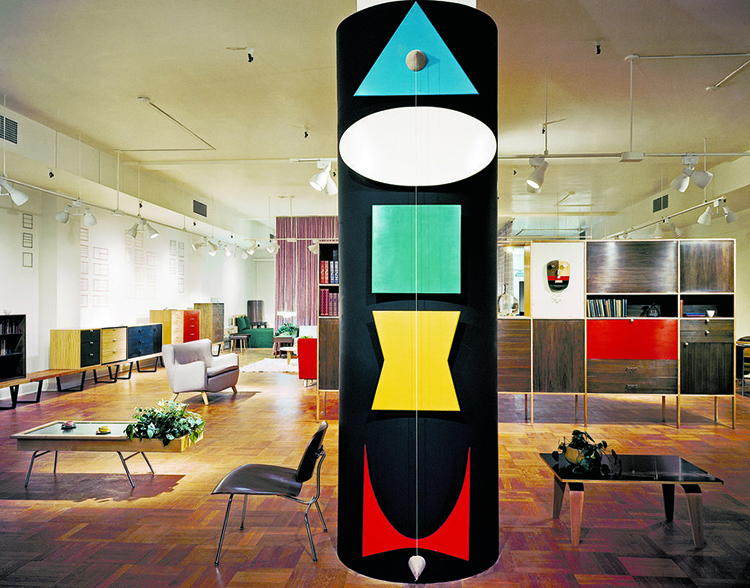
The book ships in July. A steal at $90.
Graphene Will Be Back in a Flash
Was it a good week for graphene news? It’s always a good week for graphene news! A Chinese team uses graphene to develop world’s fastest Flash memory device. From (who else?) Graphene-Info:
The device, called “PoX”, takes 400 picoseconds (0.0000000004 sec) to store one bit of information. Usually, traditional static and dynamic RAM (SRAM, DRAM) records data at a speed of 1 to 10 nanoseconds, but does not retain information in the event of a sudden power outage. Flash drives don’t need a power source to store data, but they take micro and milliseconds to store, which is too slow for modern artificial intelligence accelerators that send terabytes of data in real time.
So, a PoX upon both your houses.
Lyft Is Lystening
Well, our dystopian nightmare world just keeps getting more disturbing. Via Boing Boing, Lyft can now provide transcripts of the private conversations you have in a Lyft vehicle. Awesome.
As reported by CBC, a Toronto woman named Anvi Ahuja got a creepy text message containing a transcript of the private conversation she’d just had with her roommates during their 8-minute Lyft ride.
Did no one at corporate think there wouldn’t be some kind of pushback?
Lyft’s response has been a masterclass in corporate confusion. When Ahuja called Lyft that night to complain, they said “Oh, this is just our cool new pilot program!”
Really? How divorced are these people from reality?
A week later, they switched to “Bad driver! Very bad driver! We’ve punished them appropriately!” Then when the media started sniffing around, Lyft’s final answer became “Well actually, it’s definitely not our U.S. audio recording pilot program, but uh… look over there!”
Maybe we should all communicate ASL—until they install the cameras, that is.
Meanwhile, Lyft’s terms of service specifically prohibit recording passengers without consent — a rule that apparently matters as much as the “Do Not Remove” tag on your mattress.
We have no doubt that there will be an extra fee for “no surveillance”—which of course is basically blackmail.
Sphere of Influence
Fans of Star Trek: The Next Generation may recall the sixth-season episode “Relics,” in which the Enterprise comes across a Dyson sphere. Oh, and it’s also the episode where they find Scotty (James Doohan) from TOSstuck in the transporter buffer of a shuttlecraft in orbit around the sphere. Anyway, Dyson spheres are a real thing—or, that is, an actually postulated thing.
In the 1960s, physicist Freeman Dyson postulated an immense structure that could be built around a star and thus harness its energy.
[Dyson] envisioned that a sufficiently advanced society would have an insatiable need for living space and energy. And if they were industrious enough, they could solve both challenges by taking apart a planet and turning it into an enormous spherical shell. This sphere would enclose a star, providing billions of planets' worth of surface area and capturing vast amounts of solar energy.
He figured out that a hollow sphere made from a planet having the mass of Jupiter could completely enclose the sun at roughly the orbit of Earth. Cool idea, but with one fatal flaw: such an edifice would be massively unstable.
But the gravity inside a hollow shell cancels out, which means there’s nothing tethering the shell to the star. They are free to move in independent directions, which means that soon enough a star hosting a Dyson sphere will simply crash into the shell, destroying it.
Oops. But, via LiveScience, a new paper theorizes a way to stabilize a Dyson sphere.
In a paper published Jan. 29 in the journal Monthly Notices of the Royal Astronomical Society, Colin McInnes, an engineer at the University of Glasgow, found a way to theoretically stabilize a Dyson sphere. The trick is that you need a system with at least two stars.
Well, that’s easy enough. But:
McInnes started by searching for any points within a binary star system that could host a stable Dyson sphere arrangement, where the sphere could stay in place and the gravitational forces exerted on it would be uniform. He found one arrangement, where the sphere surrounds both stars. But that situation was only mildly stable and likely to suffer the same problem as the single-star case.
Another stable point arises when the sphere orbits independently, surrounding neither star. While this might be useful for space station outposts, it doesn't provide the energy-capturing benefits of englobing a star.
But he did find one configuration that could work, but:
This only happens in binary systems in which one star is much smaller than the other. In that specific case, the Dyson sphere can enclose the smaller of the two stars. The motion of that smaller star acts like a gravitational anchor, keeping the Dyson sphere in motion with the same orbit around the larger star, preventing a catastrophic collision.
There are still some caveats.
Ah, well, we’ll have to forget about Dyson spheres for now, but we can still get a Dyson Ball upright vacuum cleaner.
I’ll Follow the Sun The Sun Will Follow Me
We all often have a need for portable lighting—doing projects in dark attics or basements, etc.—but for many folks, such as first responders, crime scene investigators, nighttime construction workers, and so on, decent portable lighting is a necessity. Via Core 77, an interesting approach from a company called Freefly Systems: the Flying Sun 1000, a drone equipped with 288 LEDs, capable of illuminating an area as large as 437 feet in diameter, or 137,000 square feet.
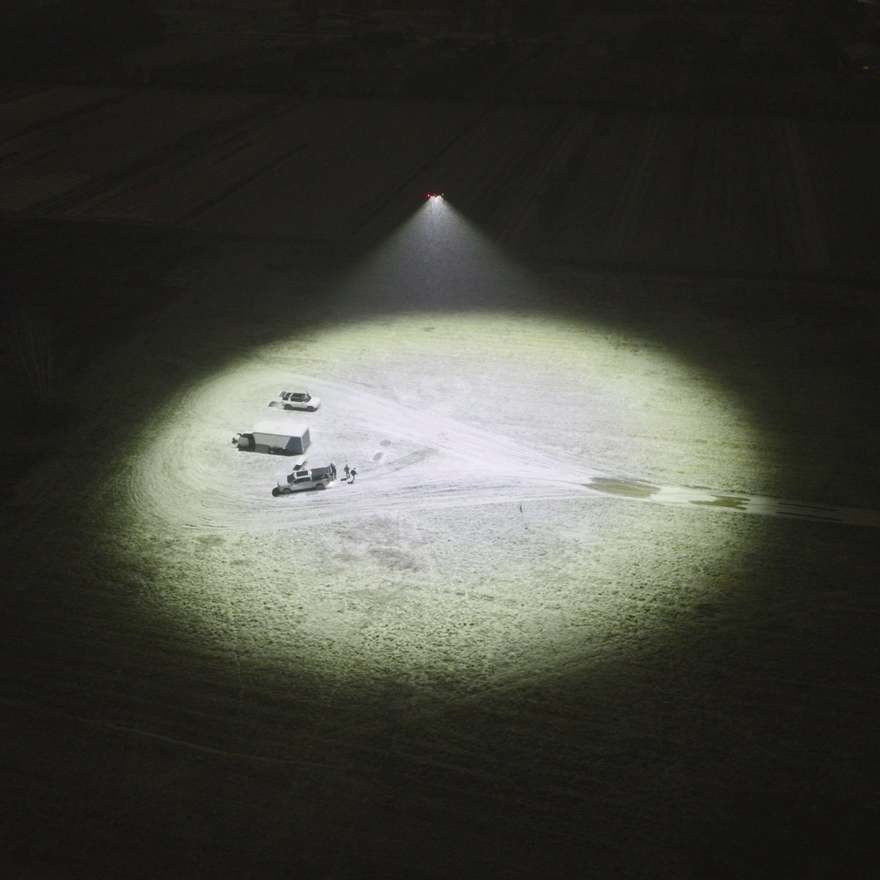
There are no cables to trip over. The drone's onboard batteries can keep it aloft and lit for five to ten minutes, which is admittedly not that long. For extended operations, the drone can be tethered to a generator on the ground, allowing it to run indefinitely. (The company recommends the drone be brought down and inspected after seven continuous days of flight time.)
It goes for $60,000 (there is a $50,000 model but no indication what the difference is) so it’s decidedly not targeted for the consumer sector. But someday…
Papal Bull
We acknowledge and mourn the passing of Pope Francis. Regardless of one’s faith, there can be no doubt that the Vatican has had no small impact on world events since the Church’s founding—and some of the men (and, regardless of one persistent but untrue rumor, always men) who sat at the head of the church were not without their idiosyncrasies. (We highly recommend John Julius Norwich’s 2012 book Absolute Monarchs for a good history of the papacy.)
As the search is now on for a successor, Atlas Obscura rounds up some of the more colorful characters from papal history. For example:
Intense political infighting within the early Church led to the Synodus Horrenda or Cadaver Synod of 897. The short version is that one pope had another pope’s dead body exhumed and forced the corpse to stand trial for crimes he was accused of in life. This bizarre, but true, story ushered in one of the most corrupt eras in the history of the papacy, a time that’s now referred to in all seriousness as the pornocracy.
Or:
Poor Hanno the elephant. Born in Portuguese-controlled India, he suffered the discomfort of a long voyage to Europe, where he drew massive crowds when he was presented to Pope Leo X in 1514. Though prized by the pope, Hanno survived only a short time in ill health before being buried under the Vatican.
And perhaps most famously:
The Earth does not take an even number of days to make one journey around the Sun, and by the late 16th century, the Julian calendar used in much of Europe was gradually getting out of sync with the changing seasons. So to keep Church holidays like Easter and Christmas at the same time of year, Pope Gregory XIII came up with a novel solution: He decreed that 10 days in October 1582 would be skipped.
This was also the inspiration for the great Harlan Ellison short story Paladin of the Lost Hour.
Paste in Space
Have you ever thought about opening a restaurant in space? If so, you may have to adjust for the fact that food cooked in space will taste different than Earthbound foods—and you thought high-altitude cooking presented challenges! Case in point: beans. Via CNN:
An experiment on board the International Space Station (ISS) has produced miso paste, thought to be the first food deliberately fermented outside Earth — a feat that scientists hope will shed light on the potential for life to exist in space, and broaden the culinary options for astronauts.
The miso was closely monitored for temperature, humidity, pressure, and radiation. As a control group, two other batches were fermented on Earth, one in Cambridge, Mass., and the other in Copenhagen, Denmark.
The result?
The “space miso” had a similar umami, or savoriness, to miso made on Earth. But according to the researchers who sampled it, there was a key difference: a stronger roasted and nutty flavor.
The unique environmental features of space—microgravity and increased radiation—could potentially affect how microbes grow and metabolize, and thus alter the fermentation process.
“By bringing together microbiology, flavor chemistry, sensory science, and larger social and cultural considerations, our study opens up new directions to explore how life changes when it travels to new environments like space,” Evans said.
The results of the experiment appeared in a paper released in the journal iScience.
Wired
Looking to give yourself a heart attack first thing in the morning? Why not combine a hyper-caffeinated beverage and hot sauce. We give you: 5-Hour Energy’s Caffeinated Hot Sauce. Via (who else?) Food & Wine:
Just in time for Cinco de Mayo, the energy shot that keeps you semi-functional through conference calls is now doing something a little… spicier. Indiana-based 5-Hour Energy just dropped a limited-edition Mango Habanero hot sauce — a collaboration with Taco John’s, the fast food chain known for “West-Mex” staples like softshell tacos and potato Olés. The idea? Combine the sweet-heat of mango and habanero with a little extra energy boost, in a format that’s portable, spicy, and — technically speaking — caffeinated.
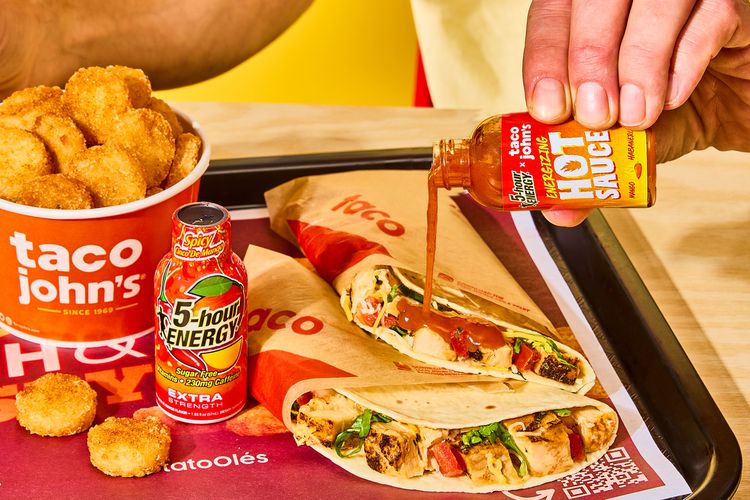
The sauce, which contains 200 milligrams of caffeine, is designed to go anywhere — think two-ounce bottle, shot-sized, and purse-friendly. Which may come in handy, given that about one in four millennials and Gen Z diners bring their own hot sauce to restaurants.
Do they?
The hot sauce is available for free starting April 28 when you buy a Spicy Cinco de Mango shot or as part of Taco John’s “No Siesta Fiesta” bundle at participating locations near Minneapolis, Milwaukee, Kansas City, and Boston. That combo includes six softshell chicken tacos, two orders of medium Potato Olés, and a bottle of the sauce.
Consider yourselves warned.
This Week in Printing, Publishing, and Media History
April 21
753 BC: Romulus founds Rome (traditional date), but not in a day.
1816: Cornish-English novelist and poet Charlotte Brontë born.
1838: Scottish-American environmentalist and author John Muir born.
1910: American novelist, humorist, and critic Mark Twain dies (b. 1835).
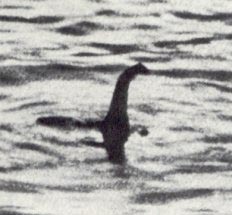
1934: The “Surgeon's Photograph,” the most famous photo allegedly showing the Loch Ness Monster, is published in the Daily Mail. (In 1999, it was revealed to have been a hoax.)
1977: Annie opens on Broadway.
April 22
1616: Spanish novelist, poet, and playwright Miguel de Cervantes dies (b. 1547).
1707: English novelist and playwright Henry Fielding born.
1724: German anthropologist, philosopher, and academic Immanuel Kant born.
1876: The first game in the history of the National League was played at the Jefferson Street Grounds in Philadelphia. This game is often pointed to as the beginning of Major League Baseball.
1899: Novelist and critic Vladimir Nabokov born.
1977: Optical fiber is first used to carry live telephone traffic.
April 23
1616: English playwright and poet William Shakespeare dies (b. 1564).
1850: English poet and author William Wordsworth dies (b. 1770).
1985: Coca-Cola changes its formula and releases New Coke. The response is overwhelmingly negative, and the original formula is back on the market in less than three months.
2005: The first ever YouTube video, titled “Me at the zoo,” was published by user “jawed.”
April 24
1704: The first regular newspaper in British Colonial America, The Boston News-Letter, is published.
1731: English journalist, novelist, and spy Daniel Defoe dies (b. 1660).
1800: The United States Library of Congress is established when President John Adams signs legislation to appropriate $5,000 to purchase “such books as may be necessary for the use of Congress.”
1905: American novelist, poet, and literary critic Robert Penn Warren born.
1940: B is for Birthday—American author Sue Grafton born.
1990: The Hubble Space Telescope is launched from the Space Shuttle Discovery.
April 25
1901: New York becomes the first U.S. state to require automobile license plates.
1908: American journalist Edward R. Murrow born.
1953: Francis Crick and James Watson publish “Molecular Structure of Nucleic Acids: A Structure for Deoxyribose Nucleic Acid” describing the double helix structure of DNA.
1954: The first practical solar cell is publicly demonstrated by Bell Telephone Laboratories.
1961: Robert Noyce is granted a patent for an integrated circuit.
April 26
1564: Playwright William Shakespeare is baptized in Stratford-upon-Avon, Warwickshire, England (date of actual birth is unknown). Much ado about nothing?
1785: French-American ornithologist and painter John James Audubon born.
1889: Austrian-English philosopher and academic Ludwig Wittgenstein born.
1970: The Convention Establishing the World Intellectual Property Organization enters into force.
1989: People’s Daily publishes the April 26 Editorial which inflames the nascent Tiananmen Square protests.
2019: Marvel Studios’ blockbuster film, Avengers: Endgame, is released, becoming the highest grossing film of all time, surpassing the previous box office record of Avatar.
April 27
1667: Blind and impoverished, John Milton sells the copyright of Paradise Lost for £10. (He never regained it.)
1791: American painter and inventor Samuel Morse born.
1882: American poet and philosopher Ralph Waldo Emerson dies (b. 1803).
1896: American chemist and inventor of nylon Wallace Carothers born.
1981: Xerox PARC introduces the computer mouse.