Keyboard to Keyboard
We’ve linked occasionally in Around the Web to people using typewriters as musical instruments—usually as some kind of percussion—but via Laughing Squid, musician Lord Vinheteiro attached one side of a set of strings to some piano keys and the other side to typewriter keys and “typed” out the “Ievan Polka.”
It’s a manual typewriter; no word on whether he plans to go electric.
Apple Play
Here’s a new word: biosonification, or using a living organism’s biorhythms to create sound or, more specifically, music. In this case, an apple tree is playing a guitar and what looks like a wok.
Sounds like early Pink Floyd.
The electrical signals from the leaves are converted into MIDI using a Spad Electronics Midisprout and then converted into movement using a Dadamachines Automat toolkit. There's also a bit of clever routing in Ableton to send the signals to the different arms.
They should get Robert Plant on vocals.
Rung Tomes
Have you ever fantasized about having a book ladder—or, that is, a book collection so big you need a ladder to reach the topmost books? No, nor have we (especially those who succumb to vertigo). But, according to Slate, apparently coveting thy neighbor’s book ladder is a thing.
The fantasy usually goes like this. A friend of mine comes over, and we wander into my shimmering Babylonian spire of a library, with shelves of books ascending into the atmosphere. The only way to access them is by using the star of the show: the book ladder.
Pretty tame as far as fantasies go, unless there’s some kind of Freudian underpinning.
The book ladder is the pinnacle of achievement for any aspiring book lover. Gliding along a railing system parallel to the bookcase, it is the finishing touch that completes any library, whether public or personal. Its presence makes tangible an embrace of learning, represented by a wall of needlessly high books anchored by the most specialized of ladders. It signals to guests that you’ve ostensibly read so many books and acquired so much alleged knowledge that you need extra assistance to get to it.
On the other hand, we’re reminded of a line from Harlan Ellison’s short story “Paladin of the Lost Hour”: “Who wants a library full of books you’ve already read?” Fair point. Still, we can think of no better wall décor than a big bookshelf. (And, no, not a wide-format print of a bookshelf.)
“There is—and has long been—a physical appeal to being blanketed by books,” Evan Friss, author of The Bookshop: A History of the American Bookstore, tells me. “The ladder is a symbol of the scale of the collection, which can be awe-inspiring—both just to look at aesthetically and to consider how much knowledge is held in those books (some, hopefully, imparted onto the reader).”
And it started with Gutenberg.
People wanting to display their books as trophies is nothing new, but it accelerated in the 15th century, when Johannes Gutenberg invented the printing press. Over the next few hundred years, the number of books that were printed underwent exponential growth—as did the yearning to show them off.
Ah, but then Benjamin Franklin invented an alternative.
He didn’t invent the book ladder, mainly because he didn’t think old men should be using ladders to grab books. (“Old men find it inconvenient to mount a ladder or steps for that purpose, their heads being sometimes subject to giddinesses,” he wrote.) So Franklin, an avid reader who was in many ways the original self-made man, conceived a contraption called the Long Arm, which involved a stick of pine with a sort of loop attached, allowing readers to lasso an out-of-reach book.
And if one used it in a law library, it would be the Long Arm of the Law. Boom!
No one knows who invented the book ladder, although it’s not such an off the wall idea (so to speak) that it couldn’t have been invented many times by different people/libraries.
You can also see such ladders in mercantiles, clothing stores, wineries, and anywhere that people need things in high places, but it’s with books that they hold the most charm.
And you can’t say that about ladders used to, say, clean gutters.
Ad Nauseam
Well, here’s a little peek at the potential future of driving and it’s even more hellish and annoying. Via Wired:
LAST WEEK, A Jeep driver turned to Reddit to do what people do best on the site—complain. Every time they hit the brakes on their Jeep, they wrote, a promotion for an extended warranty plan popped up in the center console. “Press the ‘call’ button to speak to a specialist,” they say the ad encouraged, welcoming the user to use their Bluetooth connection to complete the upsell then and there.
Is in-car advertising the next big thing? Although the Jeep incident was considered a glitch, automakers have started using in-car screens to promote various services.
Dodge owners, for example, get an infotainment push after 60 days of purchase offering the Dodge Complete Performance Package, a comprehensive warranty offering. Stellantis says that, on average, customers receive about two in-vehicle messages annually, containing safety, maintenance, or marketing information.
And the merging of drivers’ other drives (cellphones, for example) and the car’s infotainment system has been ongoing and will certainly not stop.
manufacturers’ vision of the future has been pretty consistent over the past few years, says Mark Wakefield, the global automotive market lead at consulting firm AlixPartners. “In an ideal world, they’ve totally blended the mobile phone and different services and apps into a nice, big coherent ecosystem that travels from work to play to home,” he says. It’s the perfect platform for advertising, for upselling, and for pushing premium trimmings. As with Jeep’s extended warranty offer, many services can show up with just a remote software push.
And increasingly automakers’ profits have come from software and services, not the car itself.
AlixPartners research estimates the connected vehicle services market will be worth more than $473 million globally this year, accounting for 11 percent of automotive revenue streams. By 2032, it could be worth $1.68 billion—more than a quarter of manufacturers’ revenue.
Do we want more ads in cars? And aren’t they a safety hazard?
Auto safety research suggests that when messages are sent to a car’s infotainment systems, and how long they’re displayed, determines whether they’re safe, says William Horrey, a technical director with the AAA Foundation for Traffic Safety. Generally though, “messages sent during any driving trip can be detrimental to safety as they pull drivers’ eyes away from the roadway,” he writes in an email.
Car buyers have also said a resounding no to subscription-based automobile features (like heated seats or advanced cruise control) so perhaps if there is enough pushback the idea will go the way of the AMC Pacer.
Up in the Air
We’ve been promised a flying car (and jetpacks) for decades, but it has proven elusive (which may be a good thing). However, Vice reports on U.S. automaker Alef Aeronautics’ recently released video of a flying car taking off and jumping another non-flying car. In the video, a black electric flying test car which, a press release states is “drivable on public roads and has vertical takeoff and landing capabilities,” is seen taking off, wafting over other cars, and landing.
“The test was conducted with thorough safety measures, ensuring the road was closed off during the flight test, no people were under or near the flight path, the area around was not densely populated, and all safety equipment and personnel were present. The test was completed successfully without any safety issues.”
They add:
“This drive and flight test represents an important proof of technology in a real-world city environment,” said Jim Dukhovny, CEO of Alef.
Assuming the real-world city has no people around and all the roads are closed.
“We hope it will be a moment similar to the Wright Brothers’ Kitty Hawk video, proving to humanity that new transportation is possible.”
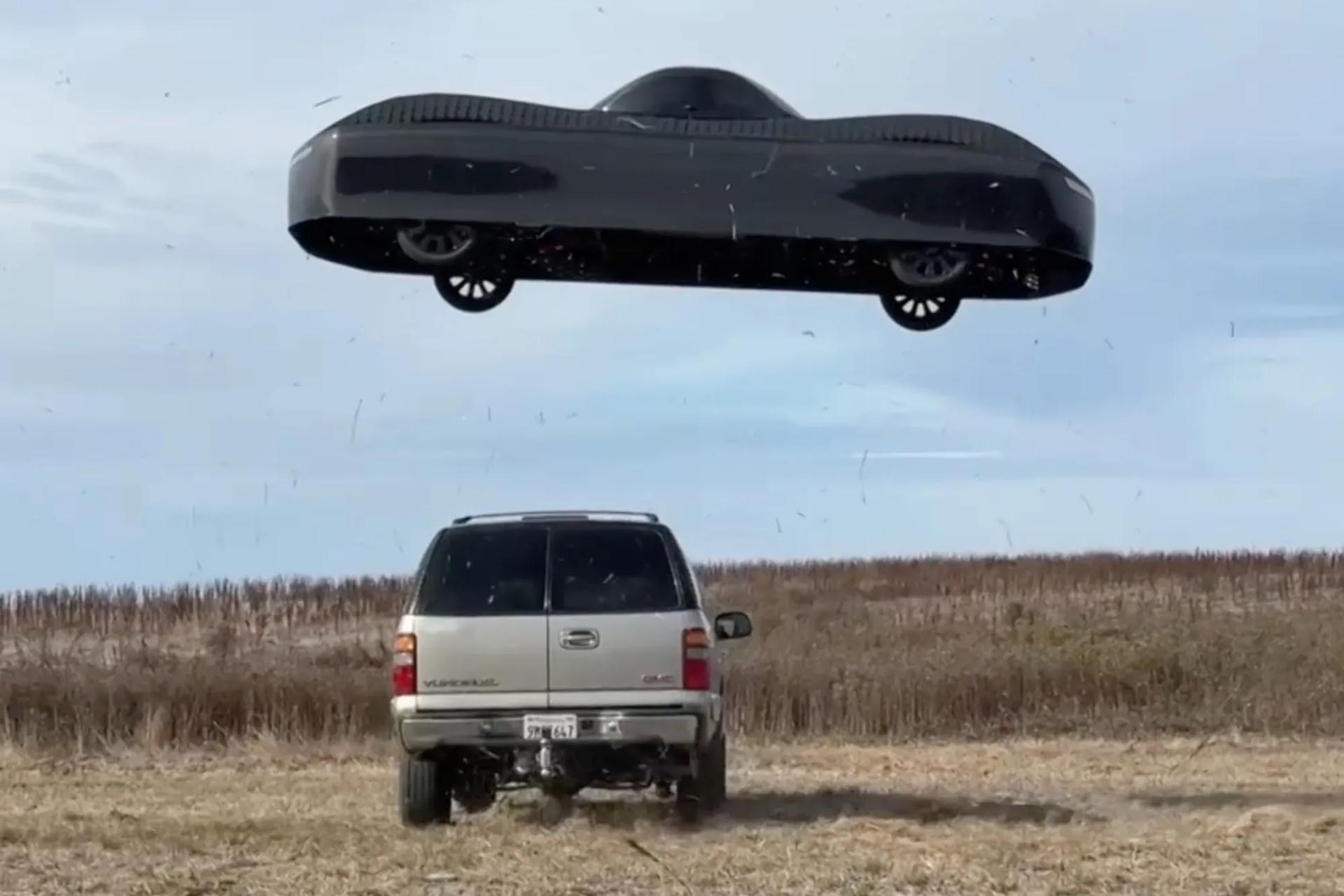
The TikToknoscenti were not impressed. “‘It’s clearly just a giant drone with a car shell,” one person wrote under the TikTok video.’”
And given that too many people are horrible drivers in two dimensions, three would be carnage. And let’s not even get into insurance issues. We’ll stay on the ground, thanks. And don’t even think of streaming ads to it!
Bracketology
There is a new, ostensibly addictive word game in town called Bracket City and, no, it has nothing to do with March Madness. Instead, says Boing Boing, “you need to solve nested brackets from the innermost pairs outward.” Say what?
- Start with the innermost brackets […] and solve those first
- Work your way outward, using the solved inner portions to help understand the outer clues
- The commas, dashes and other punctuation provide additional hints about how phrases connect
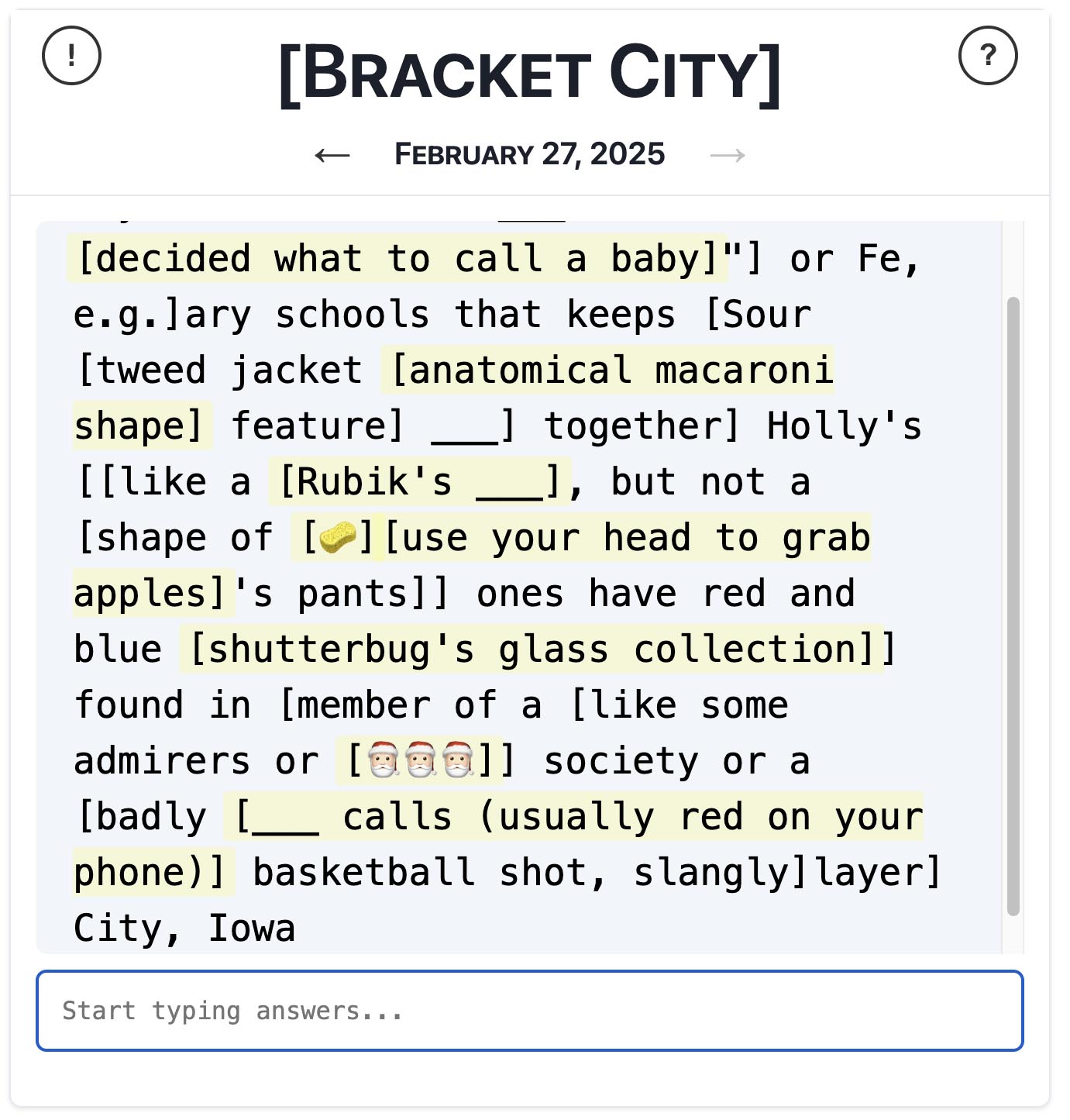
As you guess what some of the brackets might be, it explains it:
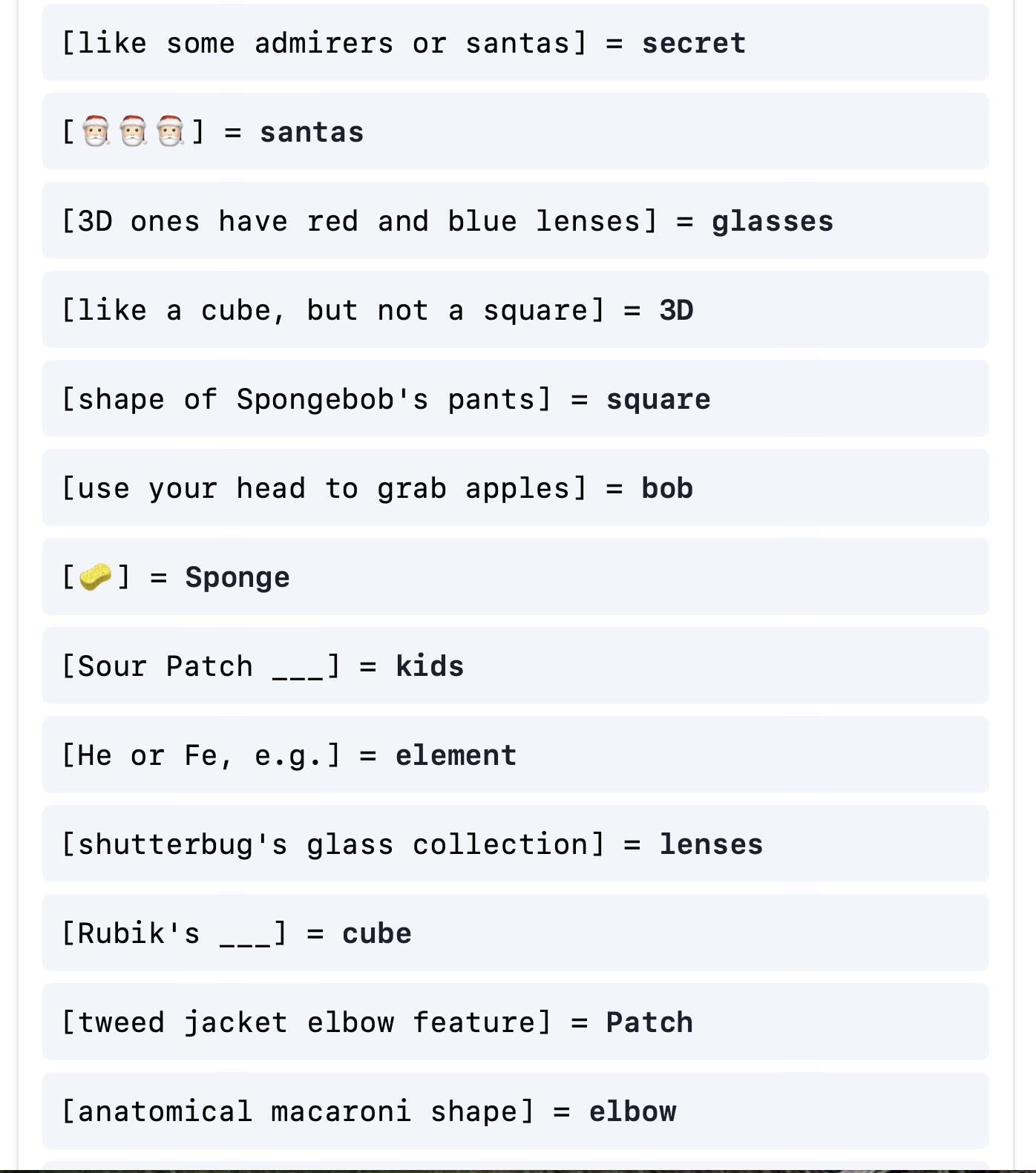
And it debrackets the passage:
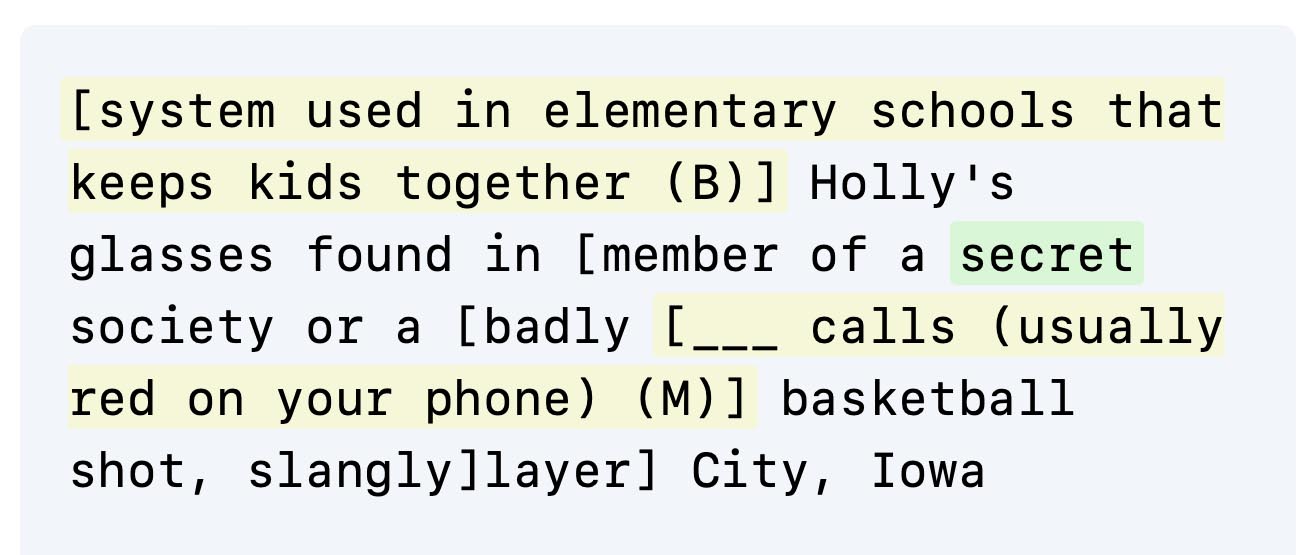
It’s not all that addictive. We’ll finish it later…
“One Time I Shot Some Graphene In My Pajamas…”
“…how it got in my pajamas I don’t know.” Well, now we know!
Was it a good week for graphene news? It’s always a good week for graphene news! Graphene-based “smart pajamas.” From (who else?) Graphene-Info:
Researchers from the UK's University of Cambridge and China's Capital Medical University and Beihang University have developed a washable, skin-compatible smart garment sleep monitoring system that uses graphene sensors to capture local skin strain signals under weak device–skin coupling conditions without positioning or skin preparation requirements.
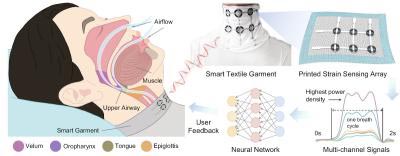
Caption from Graphene-Info: “The monitoring of sleep behavior begins by detecting subtle vibrations at the extrinsic laryngeal muscle, which are induced by physiological vibrations emanating from various anatomical locations such as the velum, oropharynx, tongue, and epiglottis. These vibrations are then captured by a six-channel strain sensor array printed onto the collar of a garment. The signals from the channel with the strongest response are processed by a deep learning neural network, SleepNet, which is designed for recognizing and analyzing sleep patterns. Image from PNAS.”
It is designed to monitor and detect sleep disorders like apnea without cumbersome equipment, sticky patches, or other gear that can itself cause sleep disorders.
Sleep is vital for human health, yet more than 60% of adults experience poor sleep quality, leading to the loss of between 44 and 54 annual working days, and an estimated one percent reduction in global GDP. Sleep behaviors such as mouth breathing, sleep apnea and snoring are major contributors to poor sleep quality, and can lead to chronic conditions such as cardiovascular disease, diabetes and depression.
Around the Webb, Part the Ongoing: Gutsy Moves
We have not checked in with the James Webb Space Telescope in a while. What’s it been up to? Well, this week it caught two planets in the midst of disintegrating. From LiveScience:
The first "disintegrating" exoplanet is a Neptune-size rocky world called K2-22b, which zips around its star so closely that it completes an orbit in just nine hours. Scientists say the star's heat literally roasts the planet: K2-22b's surface reaches temperatures of more than 3,320 degrees Fahrenheit (1,826 degrees Celsius), which is hot enough not just to melt rock, but to vaporize it. Recent observations of K2-22b using the James Webb Space Telescope (JWST) revealed that the evaporated rock has been sculpted into an extended, comet-like tail.
But wait, there’s more.
Another disintegrating exoplanet circling a different star was discovered by a separate team using the Transiting Exoplanet Survey Satellite (TESS). This roasted world, named BD+054868Ab, is the closest evaporating exoplanet to Earth discovered so far.
…"These planets are literally spilling their guts into space for us," Nick Tusay, a graduate student in the Penn State Department of Astronomy and Astrophysics who led the JWST study, said in the statement.
Not the most poetic image in the world(s), but fair enough.
Snaction
Do you like snacking while at work, but hate getting your fingers all gunky? If so, via Core 77, Unnecessary Design Studio, a/k/a Matty Benedetto, has invented a wrist-mounted vacuum for hands-free food delivery. It is of course called the Snackuum.
Our wrist mounted vacuum features a high suction hose just beyond your own finger. So now when you sit down with your snacks simply press the power button and dive into your dusty snack bag to firmly grip your chip without any human contact before your lips. No matter what the snack may be or where it's located, get a firm grip every time with the Snackuum."
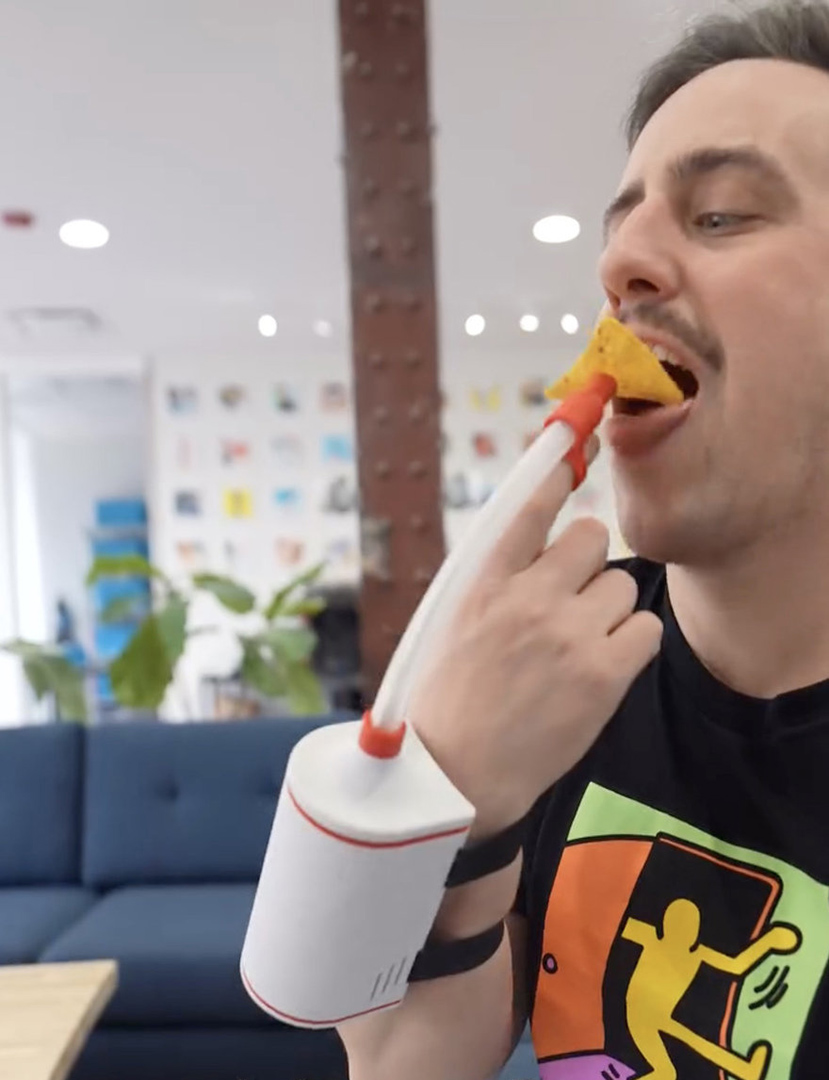
What sucks, as it were, is that he is not selling these, which is a shame.
Do Not Pass Go
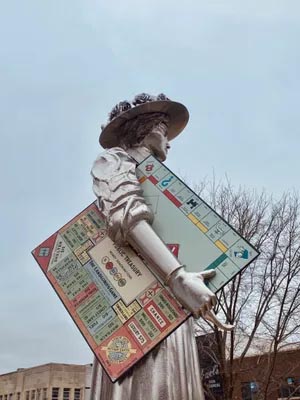
Do you like the game Monopoly? Really? Why? Anyway, should you find yourself in Macomb, Ill. (~240 miles southwest of Chicago, just west of Peoria as the flying car flies), you can visit the birthplace of Monopoly. In 1903, Macomb’s Elizabeth J. Magie Phillips invented “The Landlord’s Game” designed, says Atlas Obscura:
a clever game about realty and taxation. She hoped to use the game to teach the principles of economist Henry George, who believed that the government should be funded solely by taxing real estate.
So, New Hampshire, basically.
Magie patented the game in 1904, but like most players of the game, got utterly hosed and never saw a dime from the game based on it.
In 1933, a struggling salesman Charles Darrow heard word of an increasingly popular game about real estate juggling. He switched up the names of properties in the game for places in Atlantic City, New Jersey and a hit was born. When he sold the rights to Parker Brothers in 1935, he lied and said he'd made it up for his children during the worst years of the Great Depression. It would make him a millionaire.
A heartwarming story, to be sure. But Macomb never forgot Magie Phillips.
In 2024, officials unveiled 'Macombopoly,' "the world's largest Monopoly-style game board" to celebrate. The board is located on Macomb's Historic Courthouse Square, indicated by painted sections on the sidewalk. The location bears striking similarities to Elizabeth's board design, as the corner of the jail square aligns with where the town's real jail once stood.
And where Darrow should have ended up.
The center of Courthouse Square is decorated with silver sculptures inspired by the game's iconic play tokens. Visitors can admire a giant set of dice and a top hat, alongside a statue of Elizabeth herself. Original boardgames and other historic materials are on display outside the bank in Courthouse Square.
Berry Expensive
Another indication that some people have too much money. Consider: a $19 strawberry. What on Earth for? Says Yahoo!:
That seems well beyond the point of reason to me when it comes to grocery prices, but according to content creators who have been posting their reviews of a very special strawberry over the past few days, it might be the appropriate price to pay for a perfect piece of fruit.
For a strawberry. OK.
Multiple users have posted clips of themselves trying the luxury berries they purchased at upscale Los Angeles-based grocery chain Erewhon, with the reviews quickly racking up millions of views throughout last weekend. It’s no surprise that these videos garnered so much attention — in addition to their $19 price tag per fruit, these berries from luxury Japanese fruit vendor Elly Amai come packaged individually, set on a soft cushion inside a miniature plastic cloche to protect the strawberry.
Ah, so it’s probably the packaging they’re paying for, not the fruit.
Some content creators say this is the best strawberry they’ve ever had, while others note that it’s delicious but doesn't merit the hefty cost.
You don’t even want to know what a luxury egg would cost.
Frankly Speaking
Do you like Nathan’s Hot Dogs, aka Nathan’s Famous? If so, the company is helping customers prepare them in the “New York way.” (We shudder to think.) Via (who else?) Food & Wine:
the company announced that it's bringing the "magic of New York tap water to selected states across the country — because if you're going to boil a hot dog, why not try it the 100% New York way?"
And what would that be? Going to Coney Island and having one before throwing it up on the Cyclone?
The water, it added, is sourced "directly from the state's most famous resource," which the New York City official website explains comes from nine reservoirs and three controlled lakes spread across a 2,000-square-mile watershed upstate around the Hudson Valley and the Catskill Mountains.
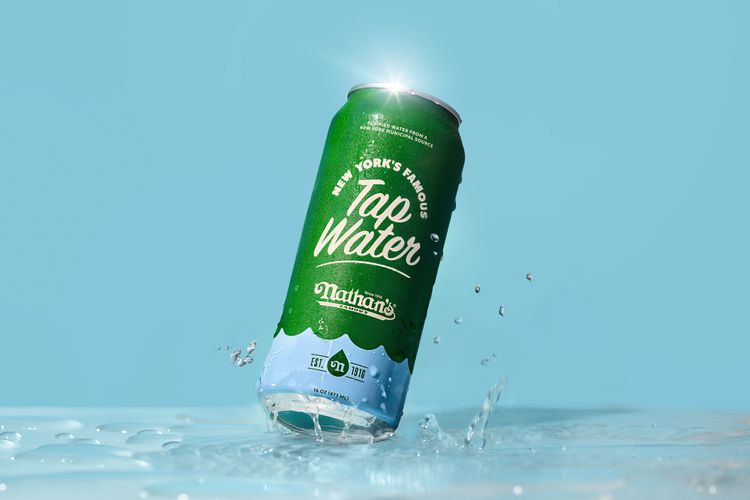
… "New York tap water is renowned for its role in the state's iconic food culture, and if you want to try boiling your Nathan's Famous the true 100% New York way, you'll need New York tap water — that's why we've canned it."
They’re selling New York City’s public water supply?! Ah:
However, there is one catch: The only way to get the water is to win it. Those interested can enter to win a limited-edition four-pack starting today at 2:20 p.m. EST through tomorrow at 2:19 p.m. EST at nathanfamous.com/nytapwater. If you win, you'll even get a coupon for a free pack of Nathan's Famous hot dogs to complete this free meal.
And furthermore:
the competition is also only open to those living in Alabama, Arizona, Colorado, Delaware, Florida, Indiana, Maryland, Michigan, Nevada, North Carolina, Ohio, Oregon, Tennessee, Texas, Virginia, Washington, and Washington, D.C.
Interesting choice of states…
This Week in Printing, Publishing, and Media History
February 24
1582: With the papal bull Inter gravissimas, Pope Gregory XIII announces the Gregorian calendar.
1607: L’Orfeo by Claudio Monteverdi, one of the first works recognized as an opera, receives its première performance.
1711: The London première of Rinaldo by George Frideric Handel, the first Italian opera written for the London stage.
1854: A Penny Red with perforations was the first perforated postage stamp to be officially issued for distribution.
1921: American actor Abe Vigoda born.
1955: American businessman and co-founder of Apple Inc. and Pixar Steve Jobs born.
1968: American comedian and actor Mitch Hedberg born.
1989: Ayatollah Ruhollah Khomeini issues a fatwa and offers a USD $3 million bounty for the death of Salman Rushdie, author of The Satanic Verses.
February 25
1644: English pastor, engineer, and inventor of the first practical steam engine Thomas Newcomen born.
1899: German-English journalist and businessman, founder of Reuters Paul Reuter dies (b. 1816).
1928: Charles Jenkins Laboratories of Washington, D.C. becomes the first holder of a broadcast license for television from the Federal Radio Commission.
1943: English singer-songwriter, guitarist, and producer George Harrison born.
1983: American playwright, and poet Tennessee Williams dies (b. 1911).
February 26
1564: English playwright, poet, and translator Christopher Marlowe born.
1616: Galileo Galilei is formally banned by the Roman Catholic Church from teaching or defending the view that the earth orbits the sun.
1802: French author, poet, and playwright Victor Hugo born. (We had a hunch.)
1909: Kinemacolor, the first successful color motion picture process, is first shown to the general public at the Palace Theatre in London.
1918: American author and critic Theodore Sturgeon born. (It was an amok time.)
February 27
1691; English publisher, founder of The Gentleman’s Magazine Edward Cave born.
1807: American poet and educator Henry Wadsworth Longfellow born.
1812: Poet Lord Byron gives his first address as a member of the House of Lords, in defense of Luddite violence against Industrialism in his home county of Nottinghamshire.
1891: American businessman and founder of RCA David Sarnoff born.
1902: American journalist, author, and Nobel Prize laureate John Steinbeck born.
February 28
1683: French entomologist and academic René Antoine Ferchault de Réaumur born. After observing wasps building their nests, Réaumur was the first to propose making paper out of wood.
1827: The Baltimore and Ohio Railroad is incorporated, becoming the first railroad in America offering commercial transportation of both people and freight.
1935: DuPont scientist Wallace Carothers invents nylon.
1939: The erroneous word “dord” is discovered in the Webster's New International Dictionary, Second Edition, prompting an investigation.
1940: Basketball is televised for the first time (Fordham University vs. the University of Pittsburgh in Madison Square Garden).
1944: English graphic designer and cofounder of Hipgnosis Storm Thorgerson born.
1954: The first color television sets using the NTSC standard are offered for sale to the general public.
1970: American journalist, author, and accordion player Daniel Handler born. Under the name Lemony Snicket, he is the author of the children’s book series A Series of Unfortunate Events.
1983: The final episode of M*A*S*H airs, with almost 106 million viewers. It still holds the record for the highest viewership of a season finale.
March 1
1790: The first United States census is authorized.
1869: Dmitri Mendeleev finishes his design of the first periodic table of elements and sends it for publishing.
1872: Yellowstone National Park is established as the world’s first national park.
1873: E. Remington and Sons in Ilion, N.Y., begins production of the first practical typewriter.
1893: Electrical engineer Nikola Tesla gives the first public demonstration of radio in St. Louis, Mo.
1896: Henri Becquerel discovers radioactive decay.
1914: American novelist and literary critic Ralph Ellison born.
1917: American poet Robert Lowell born.
1917: The Zimmermann Telegram is reprinted in newspapers across the United States after the U.S. government releases its unencrypted text.
1922: American publisher and founder of MAD Magazine William Gaines born.
1998: Titanic became the first film to gross over $1 billion worldwide. (It is worth checking out this site that adjusts the highest-grossing movies for inflation.)
2006: English-language Wikipedia reaches its one millionth article, Jordanhill railway station.
March 2
1545: English diplomat and scholar, founder of the Bodleian Library Thomas Bodley born.
1717: The Loves of Mars and Venus is the first ballet performed in England.
1791: Long-distance communication speeds up with the unveiling of a semaphore machine in Paris.
1904: American children's book writer, poet, and illustrator Dr. Seuss (né Theodor Seuss Geisel) born.
1930: English novelist, poet, playwright, and critic D. H. Lawrence dies (b. 1885).
1933: The film King Kong opens at New York's Radio City Music Hall.
1942: American novelist and screenwriter John Irving born.
1942: American singer-songwriter, guitarist, producer, and actor Lou Reed born. Just like Sister Ray said.
1982: American philosopher and author Philip K. Dick dies (b. 1928).
1983: Compact discs and players are released for the first time in the United States and other markets. They had previously been available only in Japan.
1995: Yahoo! is incorporated.
2010: Hailey Dawson, an American girl a with 3D-printed robotic hand, born.