Background
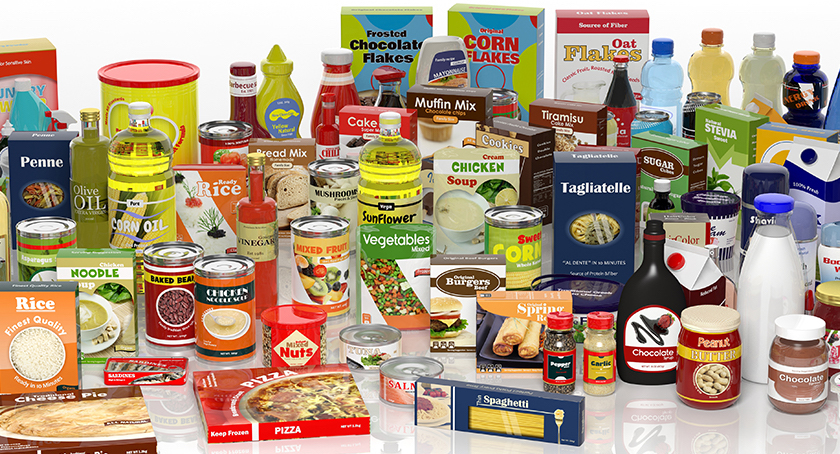
Flexible packaging is the fastest growing packaging application. Continued growth is projected for nearly all end-user markets from food, beverages and pet food to personal care, medical and pharmaceutical, and consumer products. Its projected growth rate to 2027 is at a CAGR of about 4.3%.
It is an attractive packaging format for many reasons. It minimizes package transport costs between converter, packer/filler, retailer and end user. It not only takes up less space than rigid packaging when empty, but it can also be constructed from roll materials at the filling location, thereby minimizing transportation of ready-formed packaging. It also offers product protection and the ability to reseal, reducing spoilage. Flexible packaging for food items often contains a barrier layer that extends shelf life, which reduces the amount of food waste associated with perishable items.
But, There Is a Problem
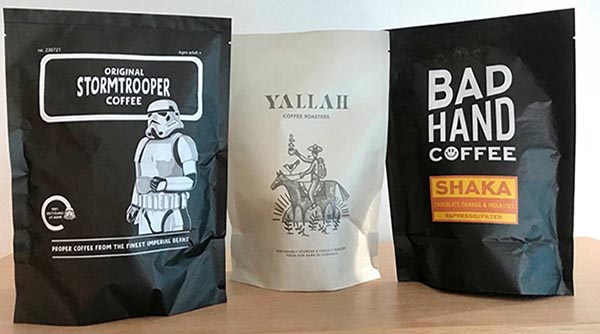
Globally, plastic-based flexible packaging accounts for around 93% of consumption, compared to paper-based flexible packaging, which accounts for just under 5%.
A survey of European consumers commissioned by Two Sides in 2020 concluded that 62% of consumers see paper and cardboard packaging as better for the environment, while 70% of consumers surveyed said they were actively taking steps to reduce their use of plastic packaging.
Historically, papers have been used in flexible packaging for many applications, including confectionery, pet food and dried food. However, with the increased scrutiny of plastic use in flexible packaging, there is an increased interest in moving from plastic to paper.
Plastic’s properties make it ideally suited for protecting products during shipment, but it is made of a non-renewable resource. While plastic can be recycled, it is currently difficult to achieve high levels of post-consumer recycled content in plastics due to post-consumer waste contamination. Paper is far more biodegradable than plastic and is easily recycled as it can be repulped, which gives it an environmental advantage as a substrate for flexible packaging.
Today, much of the paper-based flexible packaging is often laminated with plastic/aluminum or coated with resin, which makes it non-recyclable. Research on this has led some brands to increasingly consider replacing plastic and non-recyclable packaging with recyclable and compostable paper.
So what is required to treat the paper to maintain the important characteristics of protecting the contents yet still keeping recyclable and compostable characteristics?
Ingenuity
In 2003, Simon Balderson founded the Sirane group in the UK. He is a scientist, specifically a physicist, and his background is mainly in electronics and packagaing research.
 Sirane is still very much a research organization with scientists and engineers developing packaging technologies. They are also the largest flexible packaging converter in the UK, with additional manufacturing plants in the Czech Republic, North America, South Africa and various other distribution hubs in Australia, Singapore and Dubai.
“Our main business area is flexible packaging, particularly in the plastic replacement area," Balderson said. "We are very big in the board industry. We also have a decent size absorbency business around the world as well, and a number of other smaller interests.”
The one central theme of Sirane’s research, development and manufacturing is “a huge thirst for innovation, a huge thirst for differentiation, plus some very strong environmental drivers towards reducing packaging waste and extending shelf life, but also more recently coming out of plastics into other sustainable technologies.”
It was around 2014 that they started looking at paper-based flexible packaging, but at the time they were a bit of a “lone wolf.” While there was interest in the market, it wasn’t until around 2019 “with the release of David Attenborough’s ‘Blue Planet’ that really set things off.”
They researched paper as a plastic alternative for flexible packaging for a while, but the technologies were not really there beyond what was being done in universities. There was some early development coming from research centers in Japan, Germany and the United States, such as that coming from DuPont, with some interesting coatings. They were based on polysaccharides, non-chain sugars or cellulose-type materials. With these coatings, you could create water-based emulsions.
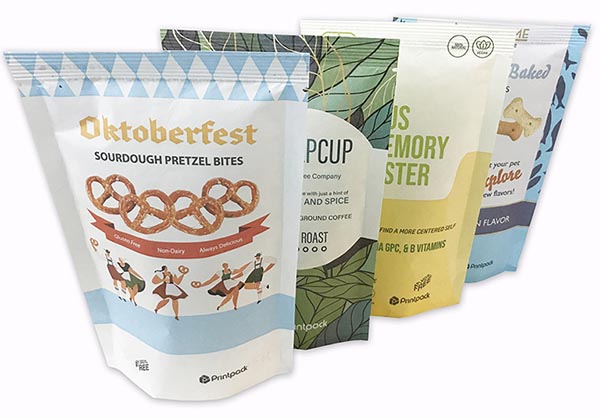
So Sirane started putting them down onto papers and found that it would give the paper more strength, more barrier, more grease resistance, more moisture resistance, and, critically, in some cases a good heat-seal ability. That was important, because in flexible packaging, the problem with paper was always to make it heat sealable.
Since then, more materials have come onto the market, some of which are water-based, plastic- free bio coatings. These will allow you to do things with paper to make it much more acceptable as a substrate to replace plastic in particular barrier properties, moisture-resistance properties, and heat-seal ability.
What’s Old Is New Again
A lot of new technology is also coming out from the paper industry, like materials from cellulose, and, as you can imagine, there are a lot of materials in the natural world.
Some of these are natural gums or what you might call “natural poly.” Agar is a good example; it is a plant-based material, but it’s a gum. We used to make adhesive from it before plastics came along, and now we’re going back to them again.
Since the paper industry is not big on small-batch coating, Sirane is buying the materials in bulk liquid form, mixing their emulsions, and then coating them on the papers. Today almost 80% of Sirane’s flexible packaging business has moved from plastic to paper, and all of their flexo printing inks are water based. Their latest addition, an HP Indigo 200K, uses food-compliant toner and prints on the coated papers.
Others Are Transitioning As Well
Sirane is not the only company beginning to look at recyclable and compostable papers for flexible packaging. Recently, SAPPI put up a website to introduce sustainable paper-based flexible packaging, packmockup.com, where you can order a packaging mockup to see how it works with your product.
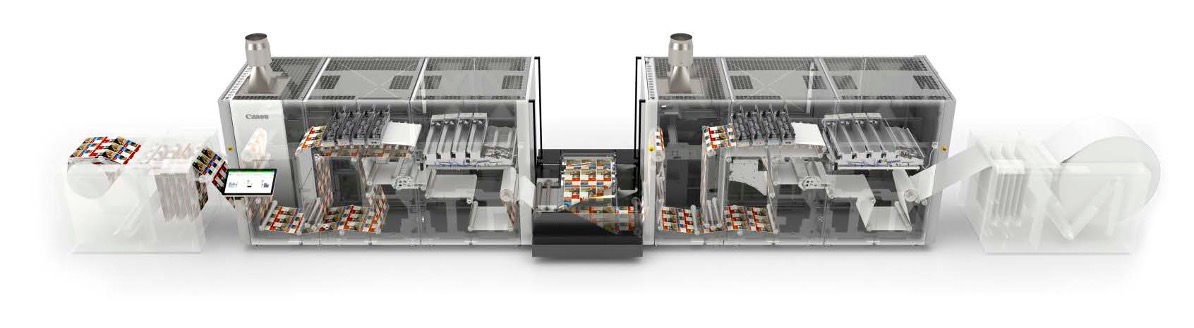
Xeikon introduced their Titon CX500t specifically designed to run paper-based flexible packaging. They have been working with the Koehler NexPlus line of sealable substrates. This line is produced from at least 95% virgin pulp-based material combined with a natural and biodegradable monomer and seal coating. This provides a barrier for aromas, grease, oil or water vapor and barriers for gases, which are combined with the paper’s own characteristics in a 100% recyclable substrate.
As more consumers and CPGs take up the sustainability pledge, we will undoubtedly see more conversion from plastic to paper based flexible packaging.
Watch David Zwang’s full interview with Simon Balderson here.
More to Come…
I would like to address your interests and concerns in future articles as it relates to the manufacturing of Print, Packaging, and Labels, and how, if at all, it drives future workflows including “Industry 4.0.” If you have any interesting examples of hybrid and bespoke manufacturing, I am very anxious to hear about them as well. Please feel free to contact me at [email protected] with any questions, suggestions, or examples of interesting applications.