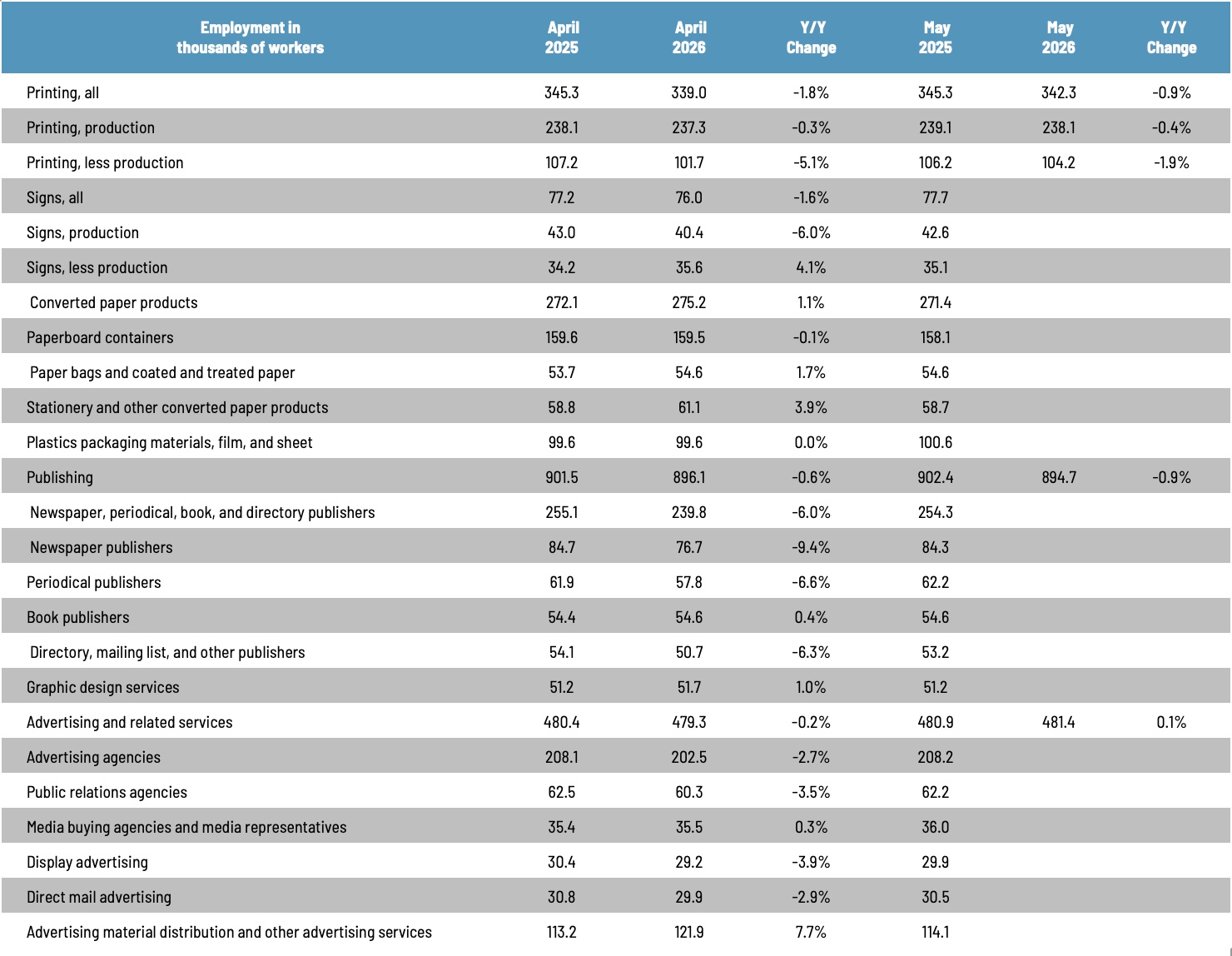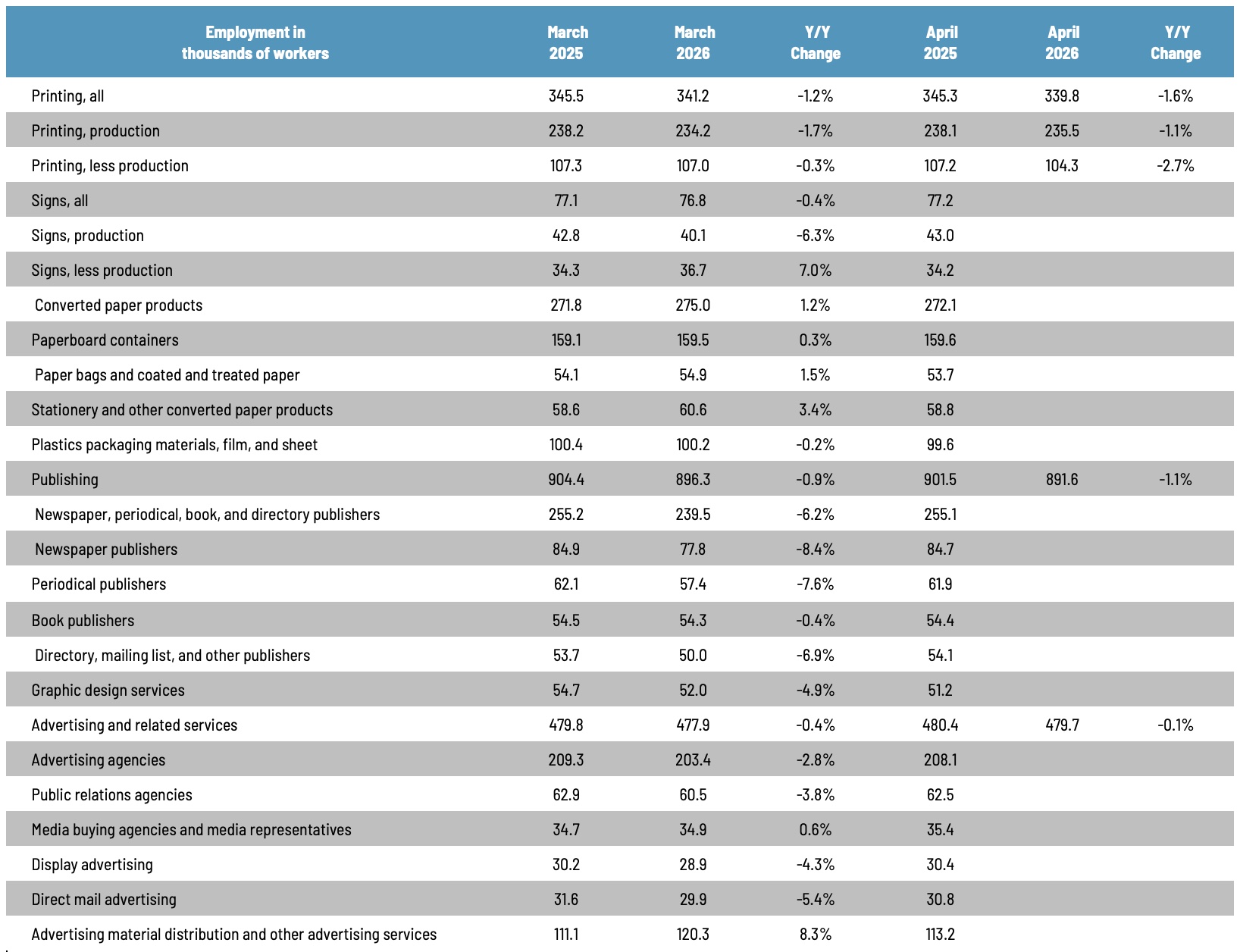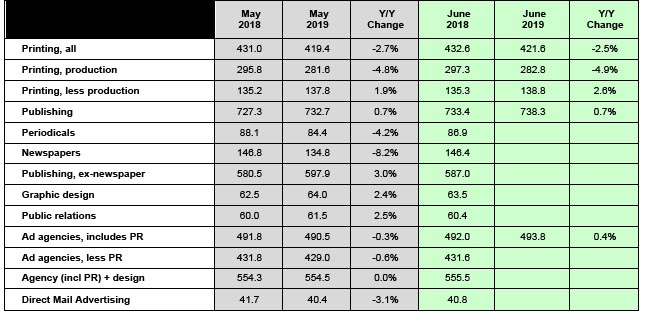
June employment numbers from the Bureau of Labor Statistics came out last month, and overall printing employment grew +0.5% from May to June 2019. However, on a year-over-year basis, it is down -2.5%. Production employment grew +0.4% from May to June, but year-over-year was down -4.9%. Non-production employment was up +0.7% from May to June, and up +2.6% from June 2018.
In publishing, employment grew from 732,700 in May to 738,300 in June, and grew +0.7% year-over-year. Newspapers continued to take a hit employment-wise: down -8.2% from May 2018 to May 2019. Periodicals are not far behind, with a -4.2% decline in employment from May to May.
The creative markets, as usual, are doing better than printing and publishing, although the traditional hotspot, public relations, was only up +2.5% from May 2018 to May 2019. (Back in May, we reported that PR employment was up +6.7% From March 2018 to March 2019.) Among agencies, employment was down -0.3%, but if we back out PR, agency employment was down -0.6%. Graphic design employment was up a little, and direct mail advertising was down a little more of a bit.
Overall, the employment situation in the economy has been good; the June jobs report had been better than expected, with 224,000 jobs created that month and an unemployment rate of 3.7%. Still, if we look at the employment rate for prime age workers (ages 25 to 54), in June it was 79.7%—down from the 2000 peak of 81.9%, the pre-recession peak of 80.3%, and even the 79.9% peak earlier this year. So while the headline unemployment number looks pretty good, there is still a bit of room for employment growth.
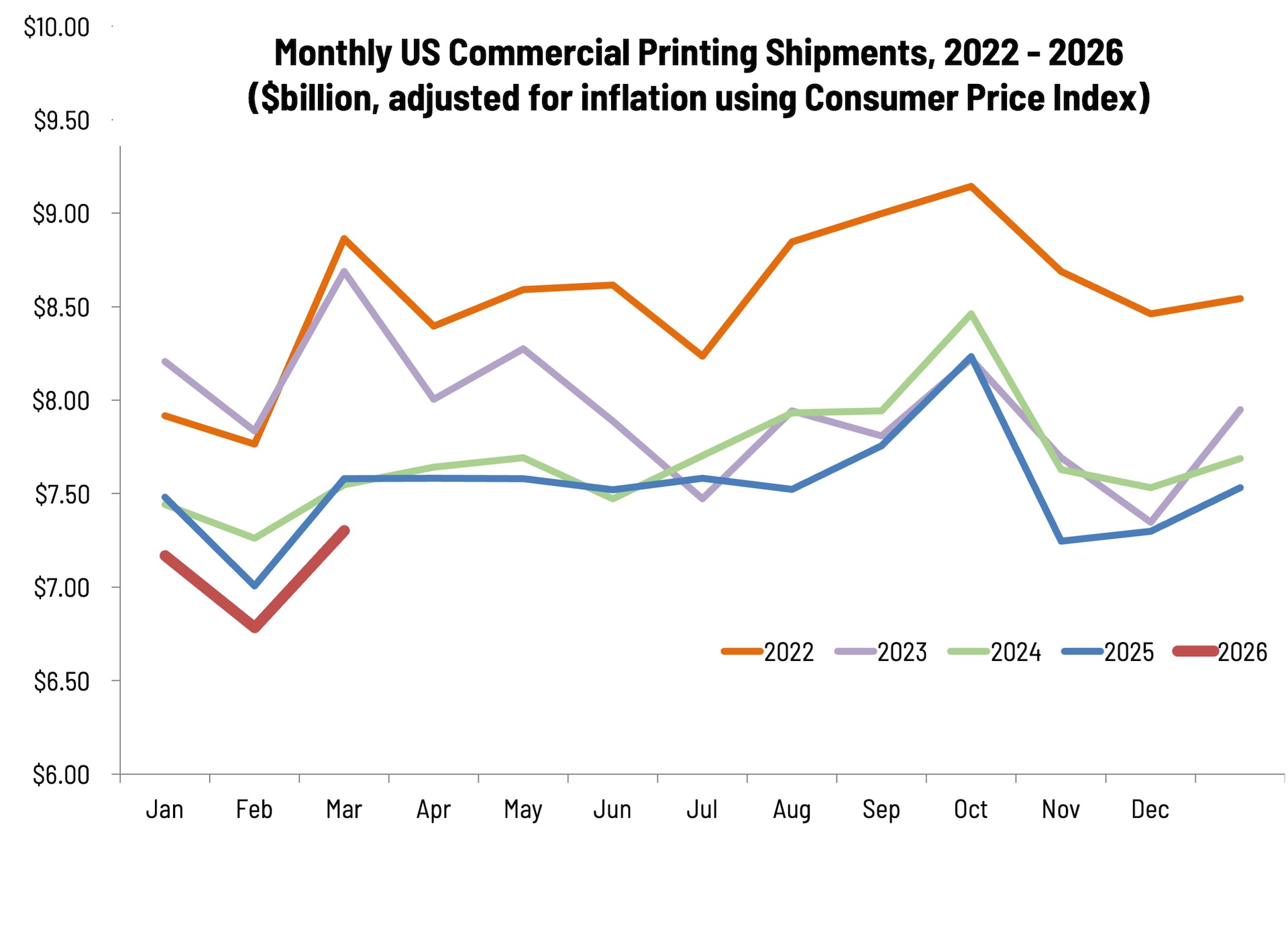
(Employment figures for July come out later this morning after “press time”; we’ll have our analysis of industry employment in a few weeks after we look at the latest shipments data.)
The industry has a tough enough time attracting workers even when the labor market isn’t tight, so finding workers is not going to get any easier. (We did see an interesting press release earlier this week from book printer Worzalla which boasted impressive Q1 hiring numbers—impressive enough to send out a press release about it.)
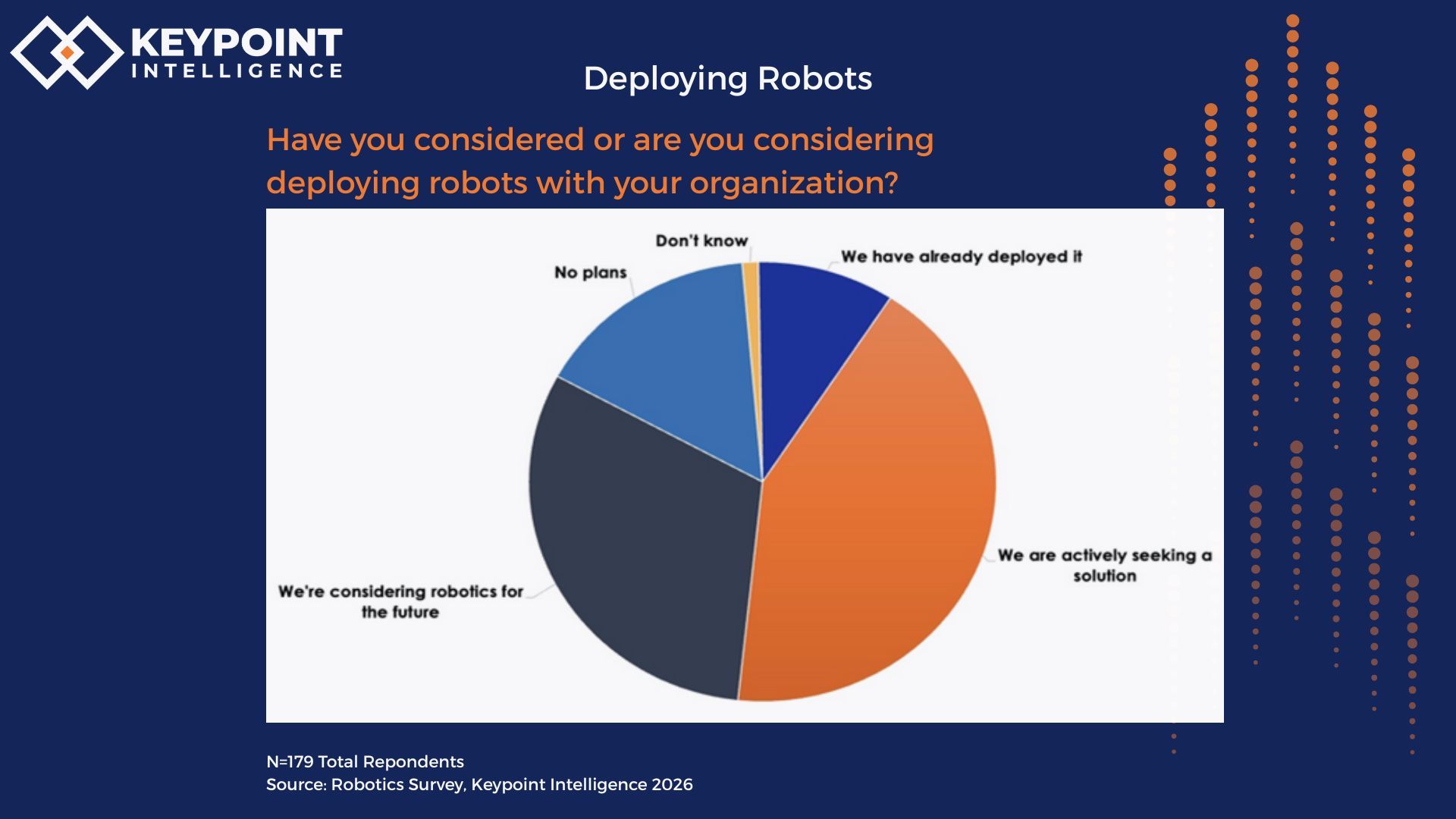
As we note in our Around the Web feature today, Chase recently announced that it was replacing the copywriters for its marketing materials with artificial intelligence (AI)—not because it has a shortage of copywriters, but because customers were more responsive to machine-written content. Automation may be a solution to the problem of finding elusive employees, but it is also being implemented (in our industry and elsewhere) primarily to reduce costs and improve quality. While the “robots are taking my job!” fear is a little overblown (for now...), it’s entirely possible at some point that there may be a surfeit of potential employees coming on the market.