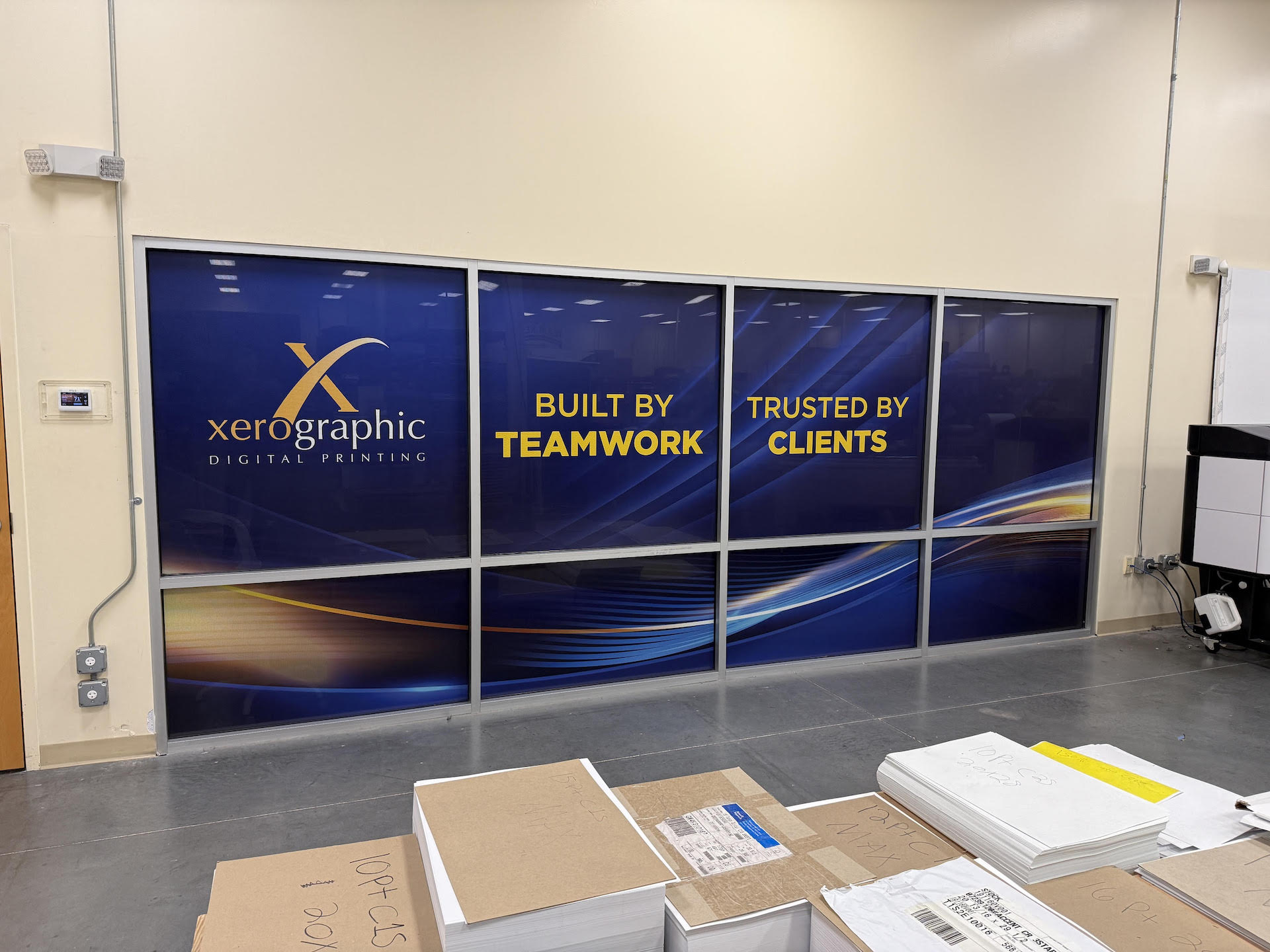
Xerographic started about 35 years ago, originally located in downtown Orlando, as a walk-in copy shop catering to the law industry, primarily copying black-and-white case files. Since the equipment used was digital and constantly evolving, “embracing technology was a core value of the ownership, and continues today,” according to Richard Smith, one of two current co-owners.
Seeing how technology went from copying to digital printing was something that they embraced very quickly. Xerographic expanded beyond a copy shop, and became one of the pioneering digital printers in the Central Florida. As the business continued to grow, they built their own facility.
Smith joined Xerographic after spending 17 years at Xerox. Seeing the company’s vision, momentum, and commitment to innovation, he recognized a unique opportunity and became part of the team helping shape its future.
Rethinking
Being in the Orlando area, said Smith, “our major markets are restaurant, hospitality, and timeshares. We’ve really grown over the last couple of years with destination management companies and event planning companies who work with corporate America to coordinate their meetings”.
To support these new business opportunities, for the first time Xerographic actually looked at other vendors outside of Xerox. “As we started to look and evaluate press manufacturers, one of the things that we were looking at, was not just the equipment that they had in the market today and how it compared, it was also their roadmap and commitment to the industry,” said Smith. “Since we were determined to grow with those new markets and that new business, we needed to make sure we had the right equipment and the right partner.”
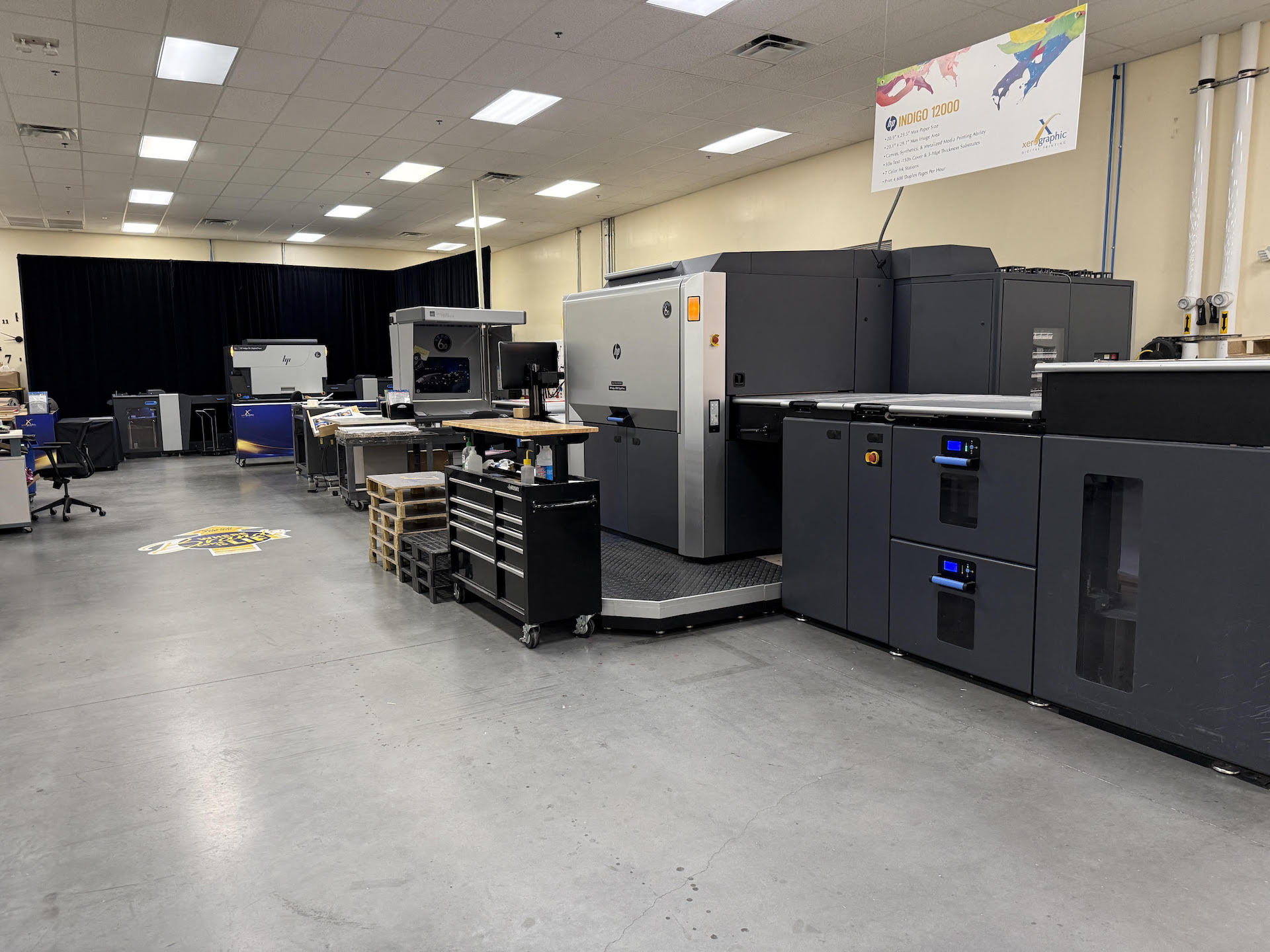
The HP salesperson told them about the B2 sheet size, the HP Indigo 12000. We looked at it and wound up purchasing what was the first HP Indigo 12000 in North America.” Additionally, they purchased an HP Indigo 5900 which provided them a 13 x 19 platform. “Those acquisitions replaced the two iGens, and rounded out the color for us. It’s been a game changer ever since, the B2 sheet size on the Indigo 12000 has been a competitive advantage for us.”
They saw a huge advantage in the quality and the consistency of the work they were now producing. “Work came to us that customers had previously done with offset, because they prefer the print that we're producing. They're paying a little bit more, and they understand that, but for a company that sells million dollar boats, or are extremely particular about their marketing materials and their branding, we could deliver.” So the Decisions were made to pay more, and get it produced on the Indigo versus offset.
“The quality and consistency of HP Indigo have been game changers for us,” Smith explains. “We’re producing premium applications that help our customers strengthen their brands, and that's created a clear competitive advantage.”
Defining a New Direction
Until the Indigo purchases, there was zero focus on any agency, marketing, or creative groups. The concern of management was that it’s “too complicated and it’s too hard,” said Smith. “If you screw it up, it costs too much money. You have too much waste.” They found the same thing with synthetic substrates.
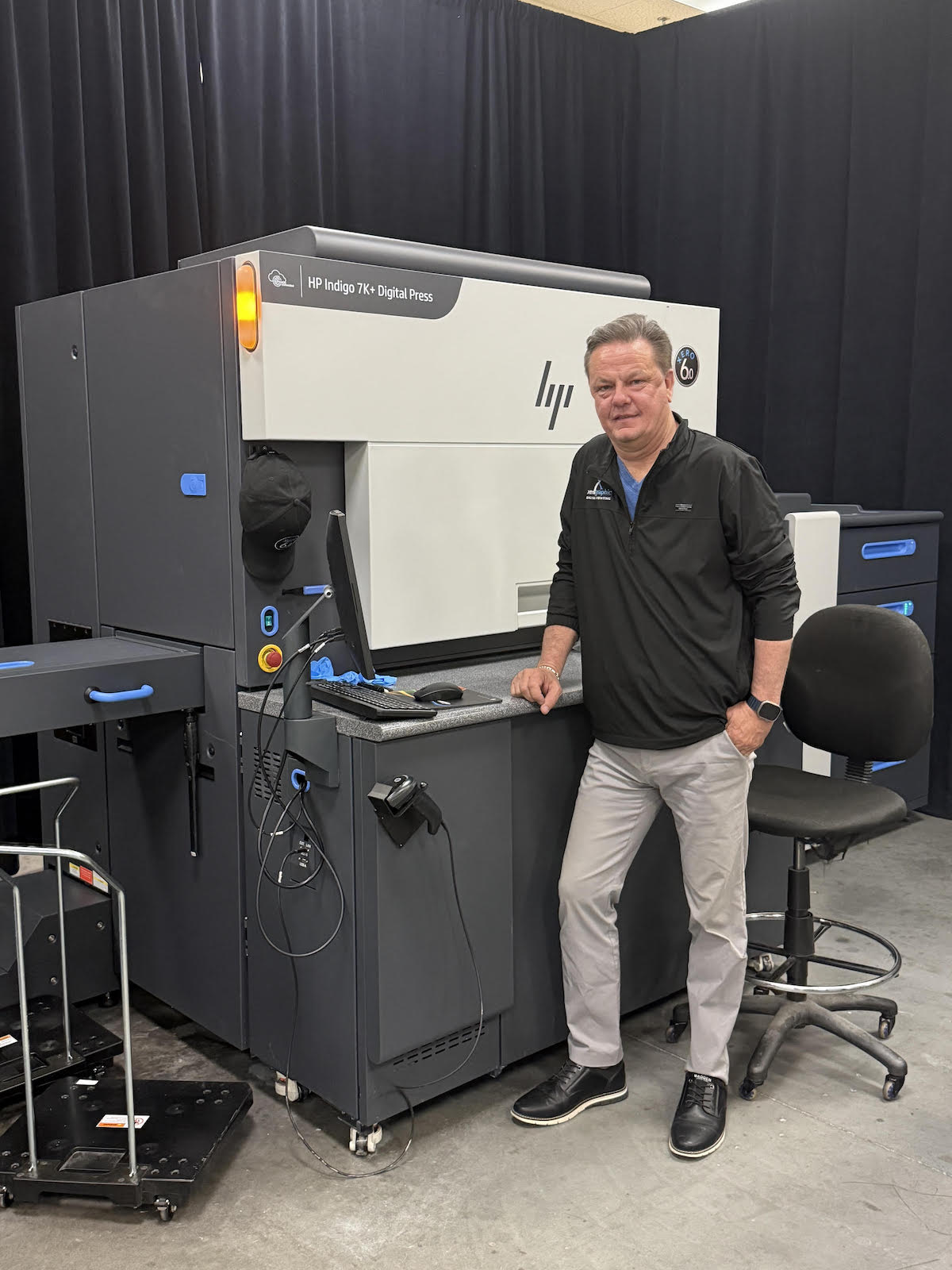
Their Indigo 5900 served them well, but it was very dated. As a result, it was time to replace it. Their salesman told them about the Indigo 7K+, and suggested that they get in on the 7K+ beta program.
Made for Us
Once the press was baselined, “it’s the same workflow, and it’s very similar to what we were experiencing,” said Smith. “While we had not used specialty inks other than white in the past, during the beta period we were printing silver and invisible yellow on live jobs. Overall, it really wasn’t a difficult transition.” They were able to use a lot of the new features from the time they dropped it on the floor.
“We were already familiar with EPM, and were running about 35% of our training material work on 60-lb. offset paper in EPM, so we knew that ECO would perform well there,” said Smith, but they needed to try it on their other work. “We proofed every job we ran in ECO, EPM, and four-color. From there, we started to figure out where the ECO mode played and where it didn’t. We then focused on our typical four-color work to see where we might be able to use it.” They were looking for a way to drive profit by producing the same work and getting a result that was acceptable to the customer and save on click charges. To prove it, not only did they look at it and have the team evaluate each job, but they also proved it to the customers. Today, they are producing close to 40% of their work ECO, and finding more jobs every day that they can run ECO.
“It’s almost like the Indigo 7K+ was made for us, since we have a very large portion of business that’s low quality commodity training material, and this high-end business where people are looking for embellishments and specialty inks,” said Smith. “We can produce both of those with the same press. We call it the Swiss Army knife of printers, because it does so much in one box. We don’t see anything in the market that that compares to it. And for a lot of small to medium printers, it’s at a price point that works.”
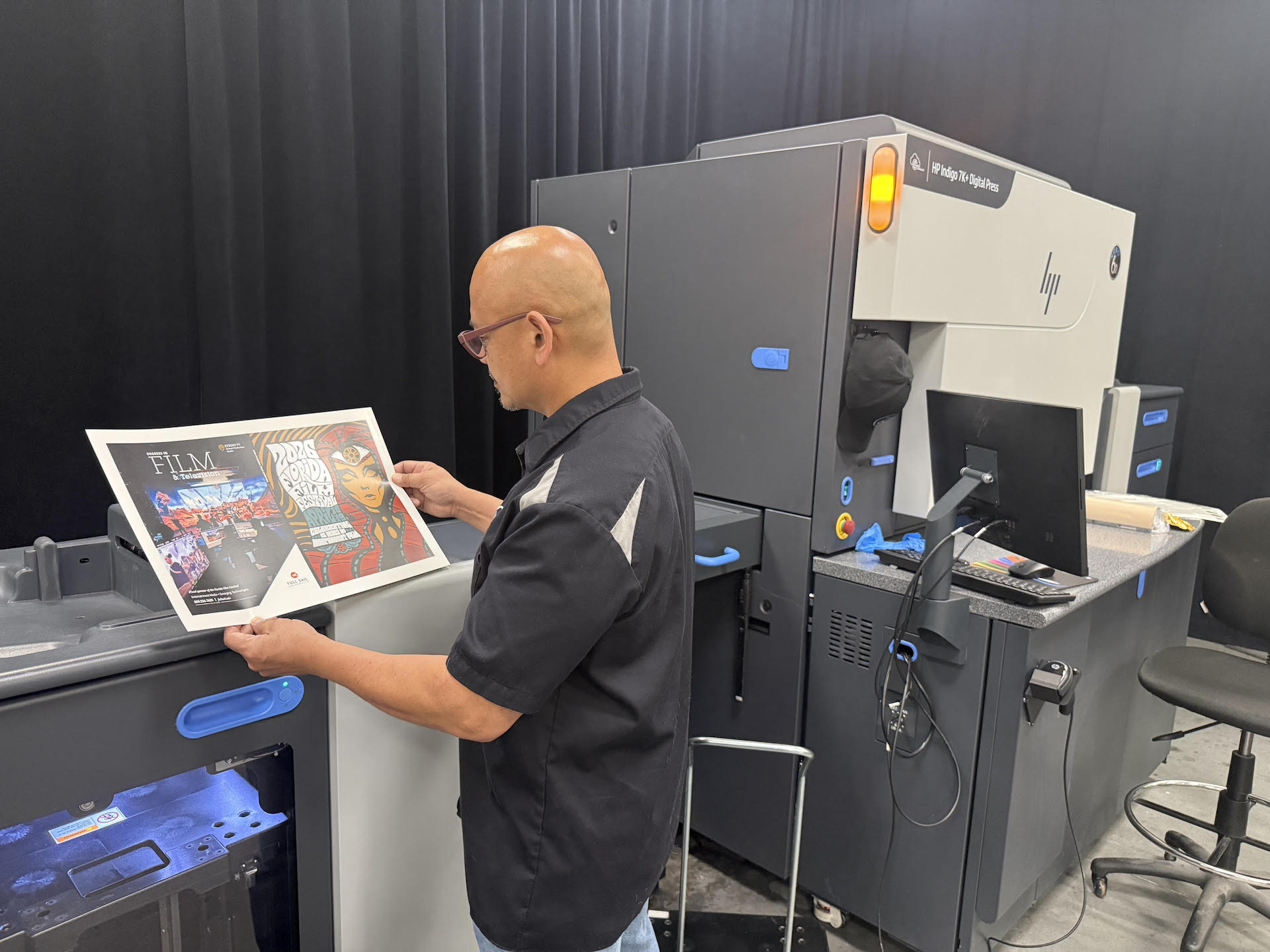
Besides the cost efficiencies, the new ink set and ECO mode on the Indigo 7K+, there were other new features, including new ink formulations and PIP+ (Photo Imaging Plate), which reduces maintenance and increases press availability. “For us, it’s night and day, when you think about where we came from,” said Smith. “Our older 5900 needed maintenance just about every shift. We were spending anywhere from half an hour to three hours per shift, while on the Indigo 7K+ we're probably spending about an hour a day. The maintenance is not only simpler, but it's less physical and easier to do. The pressmen love it.”
What About Nio?
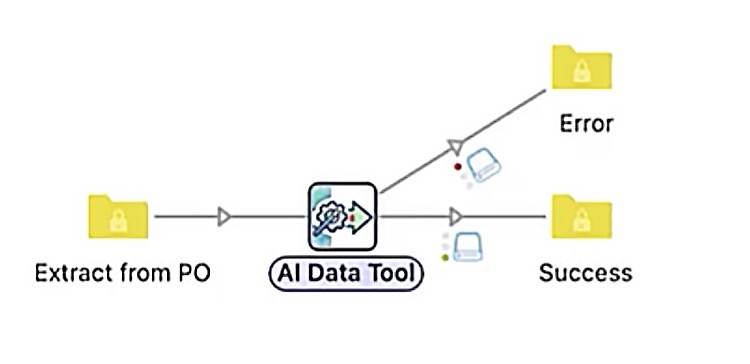
They just started playing with HP Nio. AI has been something that Xerographic was trying to figure out, and that now extends to Nio. “HP has our production data, so now we need to figure out what questions to ask about our data that will give us some decision indicators,” said Smith. “We have always used PrintOS, and what we loved about it is that you could see your performance against the other machines in your region, in North America or the world. We use that in production meetings to see where we're weak versus everyone else. It allows us to see where we could invest time, money, training, or whatever might be necessary to get there. Nio is still new to us, but we were thinking about how to use that talk track to evaluate our work and make suggestions, instead of us having to come up with it.”
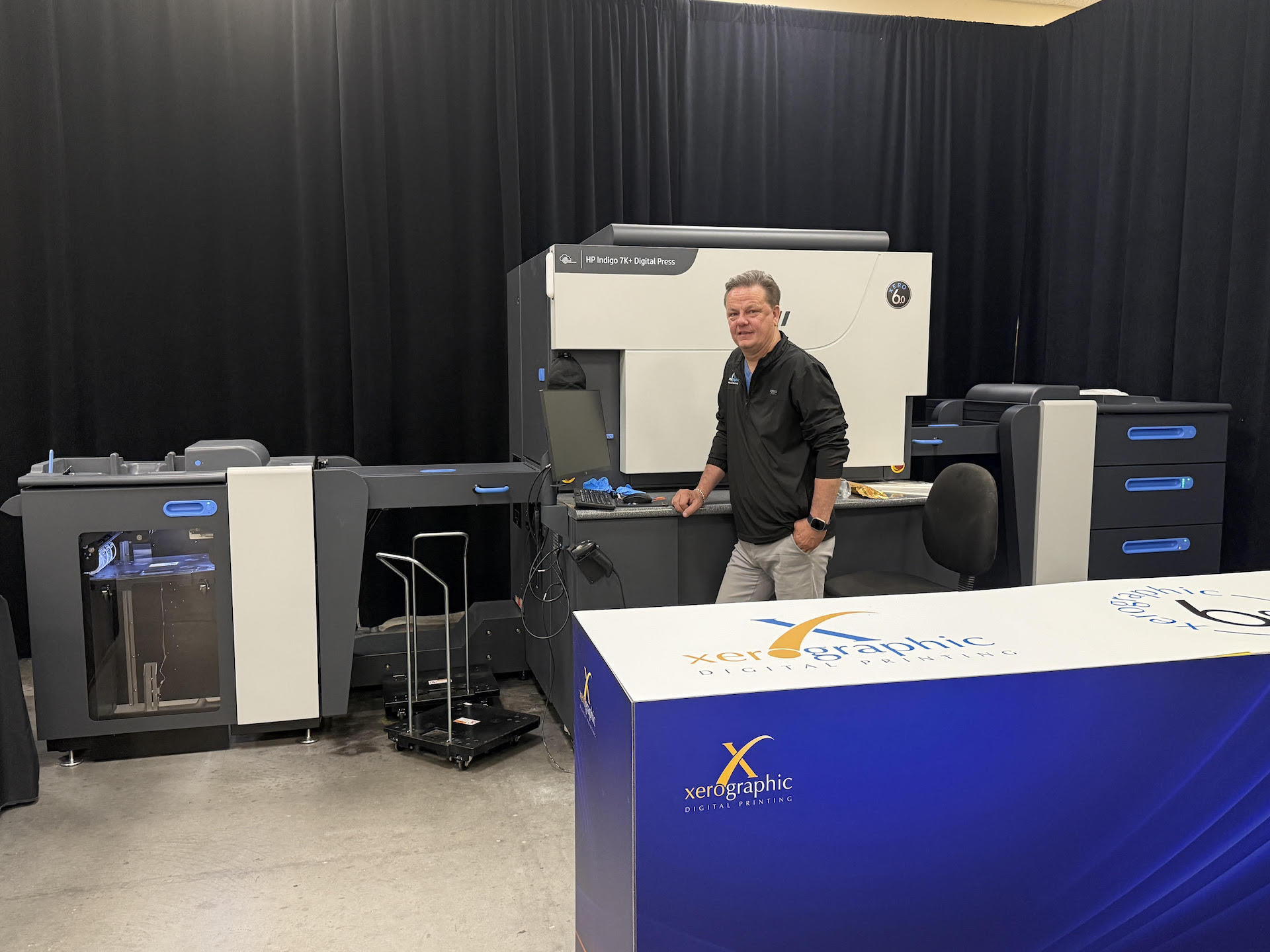
“Overall,” Smith added, “I’m just completely impressed. But it goes back to why we chose to go with HP from the very beginning. It was their constant development of products, their future product platforms, the directions they’re going. You know, we feel like we can grow with them for many, many years. They’re a partner.”
More to Come…
2026 is moving at an increased pace. I would like to address your interests and concerns in future articles as it relates to the manufacturing of Print, Packaging, and Labels, and how, if at all, it drives future workflows including Industry 4.0 and 5.0. If you have any interesting examples of hybrid and bespoke manufacturing, I am very anxious to hear about them. Please feel free to contact me at [email protected] with any questions, suggestions, or examples of interesting applications.