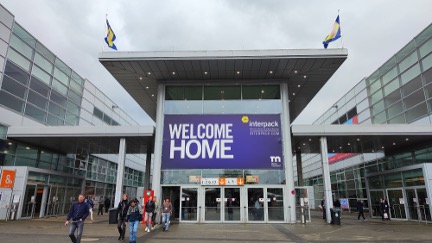
From December 2 to December 5, 2025, the largest dedicated labels and package printing event in the region was held in Shanghai, China, attracting over 30,560 visitors from 114 countries. The show, held at the Shanghai New International Expo Centre, highlights the strength of the Asia-Pacific market, specifically the Chinese market. Seizing the opportunity of being on their home turf, the Chinese OEMs demonstrated a wide lineup of products for labels and package printing.
Much of the spotlight was on digital inkjet printing, which has seen significant growth in recent years. Although only a small percentage of labels are produced digitally, the digital printing label market is growing faster than the overall label market. Demand for shorter runs, increased SKU complexity, brand versioning and faster product refresh cycles is pushing converters to digital printing.
According to the Smithers report, “The Future of Labels and Release Liners to 2030,” digital’s market share by volume is expected to more than double, growing from 5.3% in 2020 to 11.3% in 2030. In the Asia-Pacific region, digital’s share is still catching up. However, it is the fastest-growing region for label printing, with China currently being the largest market.
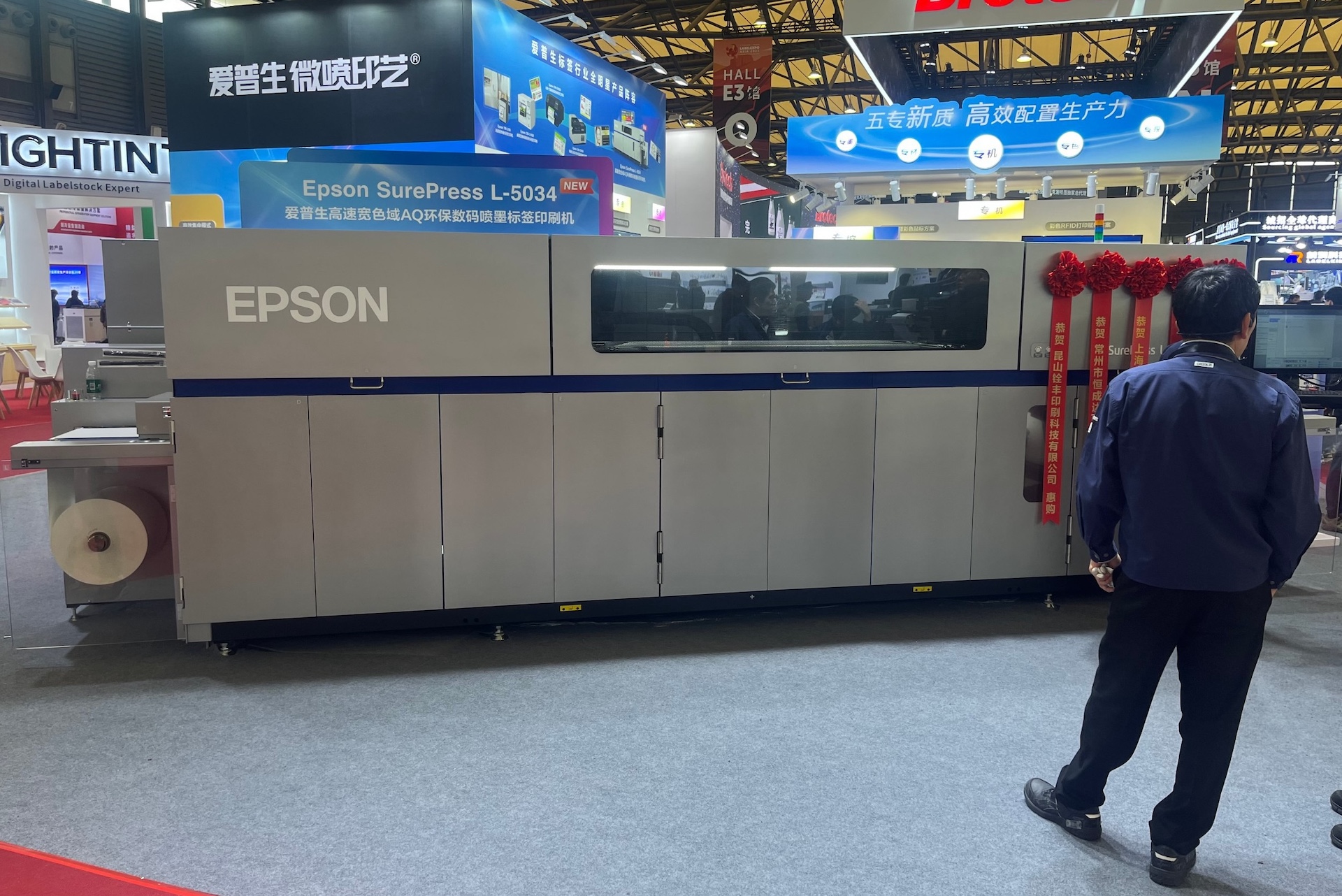
No wonder the Chinese inkjet label presses took center stage, with almost a dozen companies displaying their equipment. Among the more than 450 exhibitors, a few Western digital label press vendors were present. These included HP, which showcased its HP Indigo 6K+ and HP Indigo 200K presses; Konica Minolta, with the AccurioLabel 230 and 400 toner presses; and Xeikon, which debuted the 330mm-wide Ecolyne, an entry-level subscription-based press. Epson featured the water-based SurePress L-5034 inkjet press and celebrated selling six units in China at the event.
A number of trends have emerged among Chinese manufacturers. These include a shift toward hybrid inkjet presses, which combine digital inkjet units with traditional flexo stations and in-line finishing modules to handle complex jobs. Companies such as Hanlabel, Pulisi and Weigang presented inkjet presses with integrated flexo modules, embellishment, varnishing and semi-rotary die-cutting. Other OEMs also offer analog and digital modules for their label presses.
To compete directly with global digital press leaders, manufacturers are moving toward the 1,200 dpi standard. Most of these high-definition presses use the Kyocera KJ4A-EX1200-RC printhead, which was announced last year. However, RTZ Flora opted for the new Epson D3000 series. Interestingly, Shenzhen KINGT Technology, which launched the 1200 dpi L-Press 510/330s featuring a Fuji Samba head in 2023, did not attend the show.
Additionally, new water-based presses for labels and flexible packaging were on display. These included the Pulisi WD-790, with a maximum substrate width of 790 mm for flexible packaging; the Blue Jet LB-C4235 water-based inkjet press and the Shanghai UPG Group LQ-MD 320HD.
Here’s a look at the 12 vendors who brought their inkjet label presses to the show.
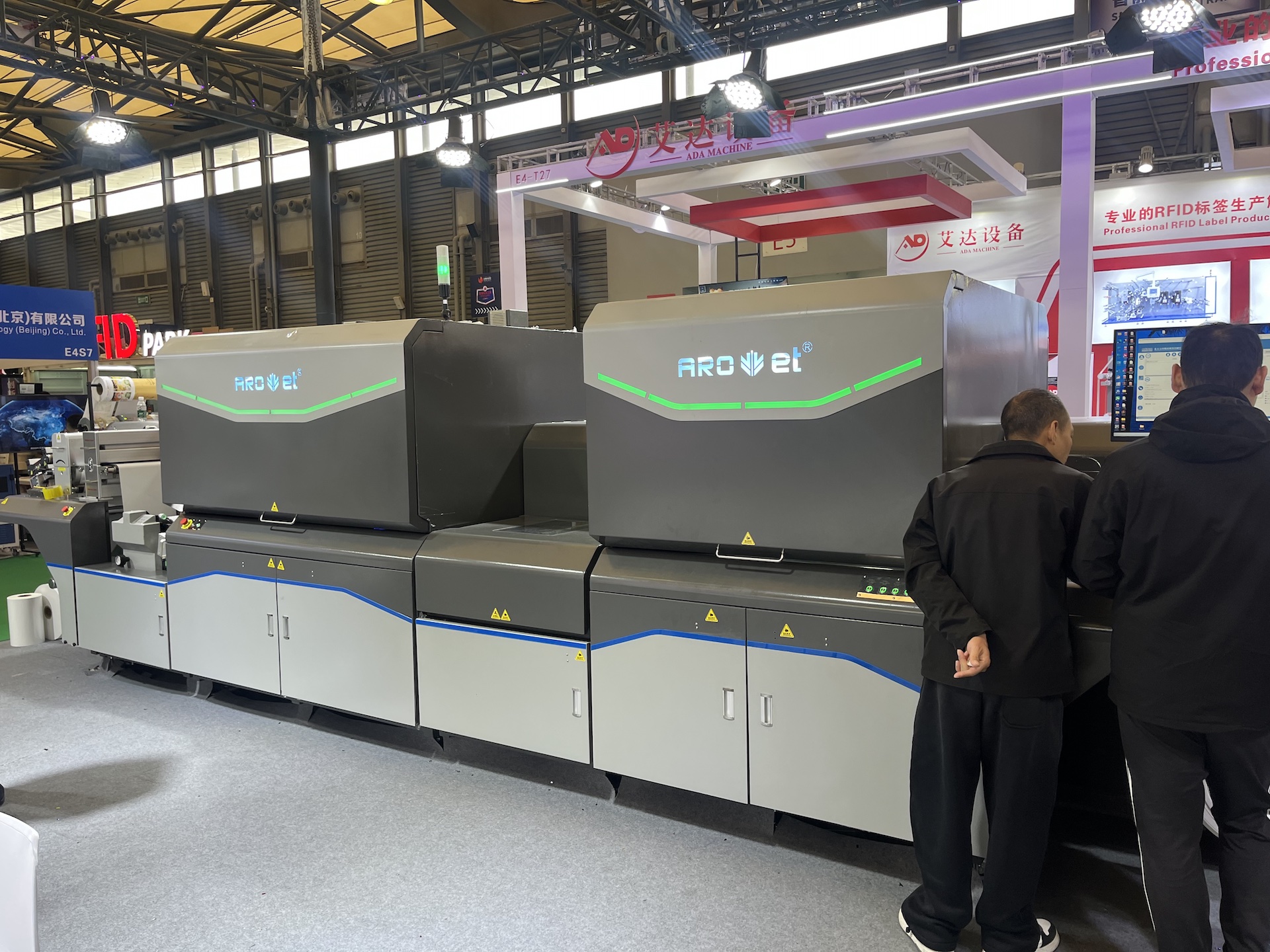
Arojet (Guangdong Arojet Inkjet Technology Co., Ltd.) put on display new 1200 dpi DF-330-HD press with printing speed 80 m/min. at full resolution and 160 m/min. at 1200x600 dpi. It can have up to eight rows of Kyocera printheads (W+CMYK+special colors) and flexo priming unit. Also, the visitors can see a hybrid Arojet iLabel-330 with integrated flexo section and digital embellishment unit.
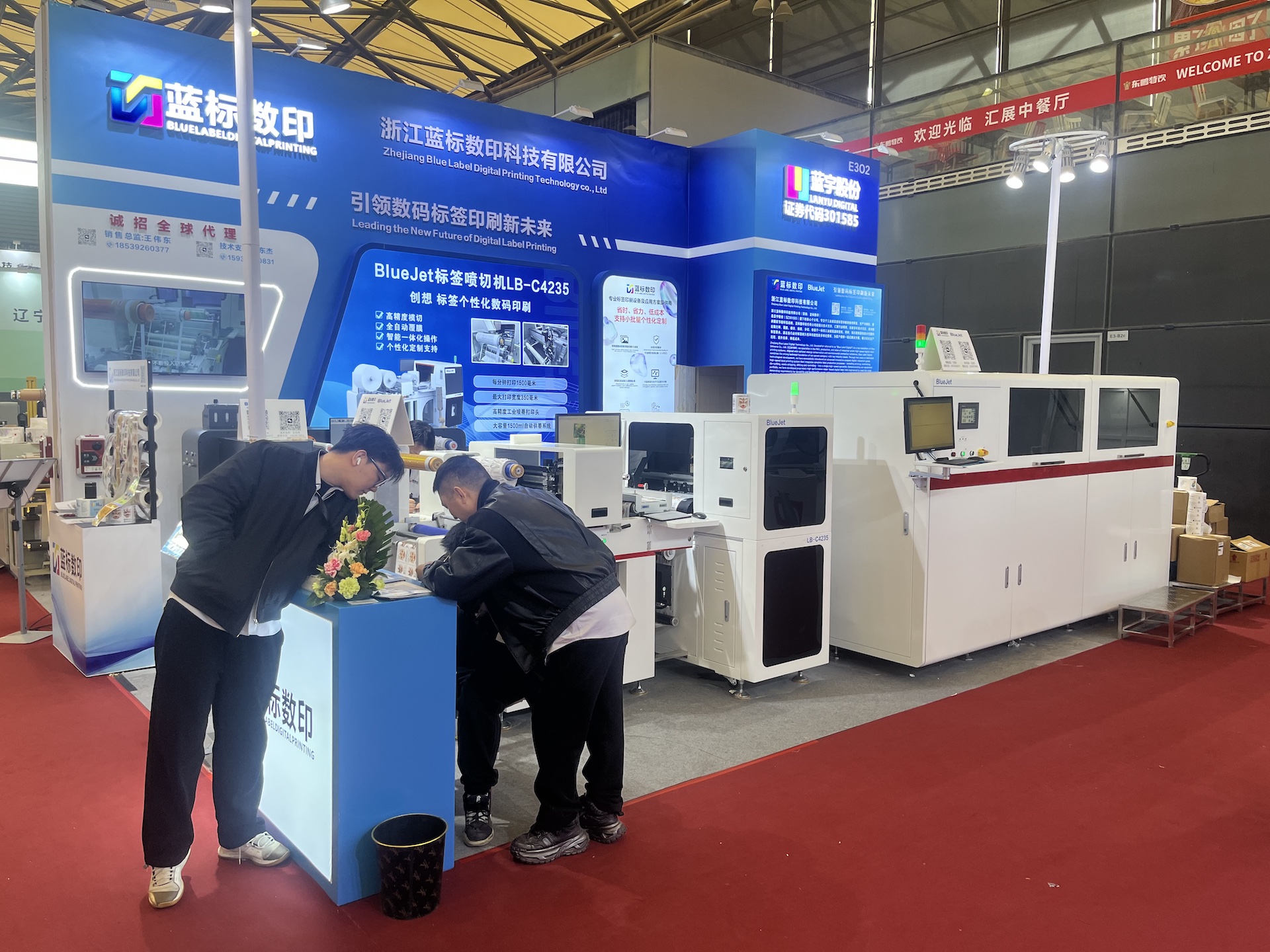
BlueJet (Zhejiang Blue Label Digital Printing Technology Co., Ltd) debuted its water-based LB-C4235 press. The manufacturer calls it an all-in-one “intelligent manufacturing” machine with integrated digital printing, laminating, digital die-cutting, waste removal, slitting, and rewinding. The multi-pass press uses two Epson i3200 print heads and has a printing speed of 1.5 m/min., a width of 350 mm, and a resolution of 720 x 1,200 dpi.
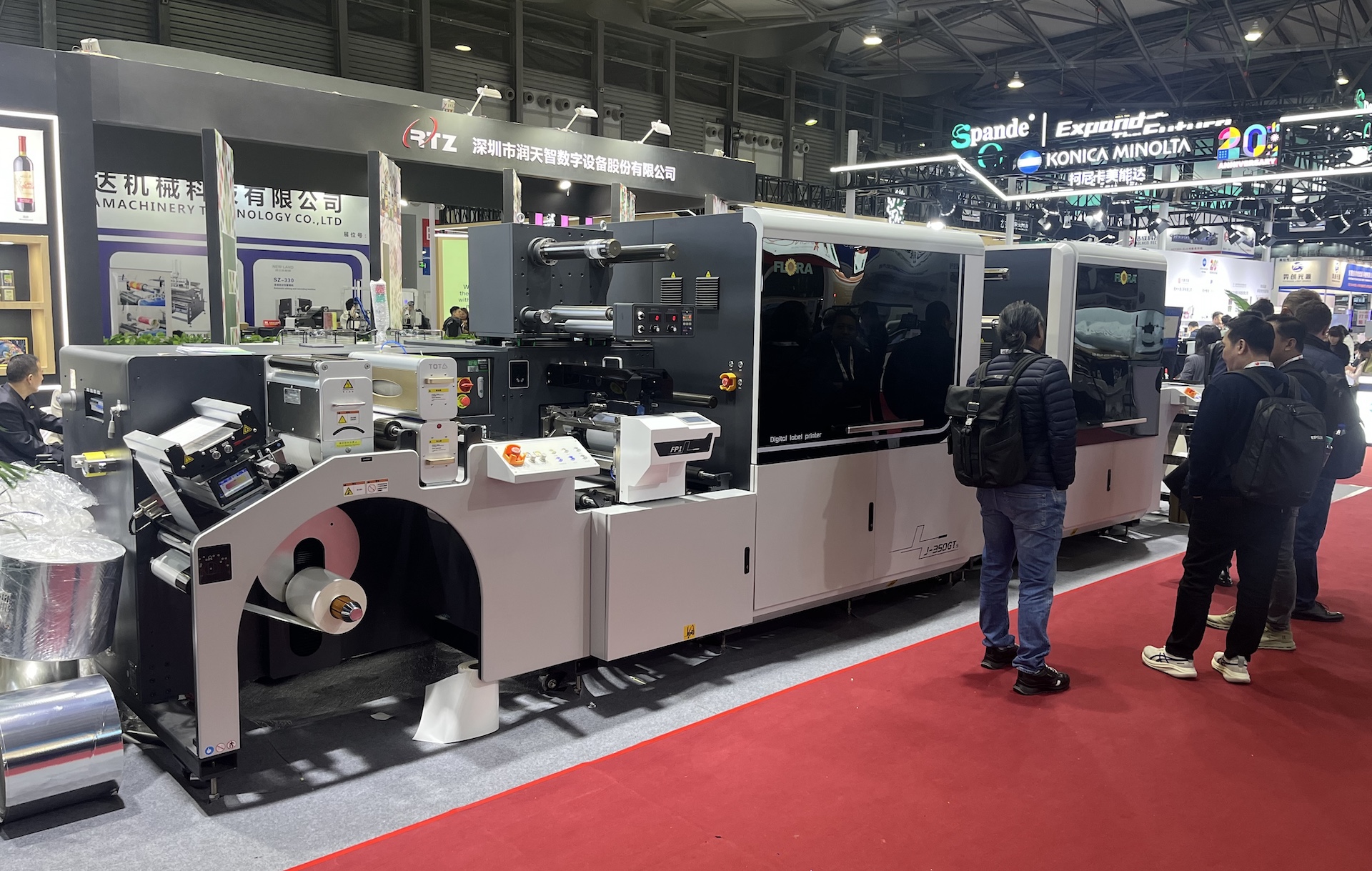
Flora (Shenzhen Runtianzhi Digital Equipment Co., LTD (RTZ)) showcased the new generation Orca 350 ULTRA digital press featuring an Epson D3000 print head with 1,200 x 1,200 dpi resolution and speed up to 80 m/min. It is a highly integrated modular system that combines digital inkjet printing and embellishment with conventional processes, including flexo printing, cold stamping, varnishing, and laminating in a single pass. Customers can choose workflow from ONYX, ColorGATE, or Hybrid Software.
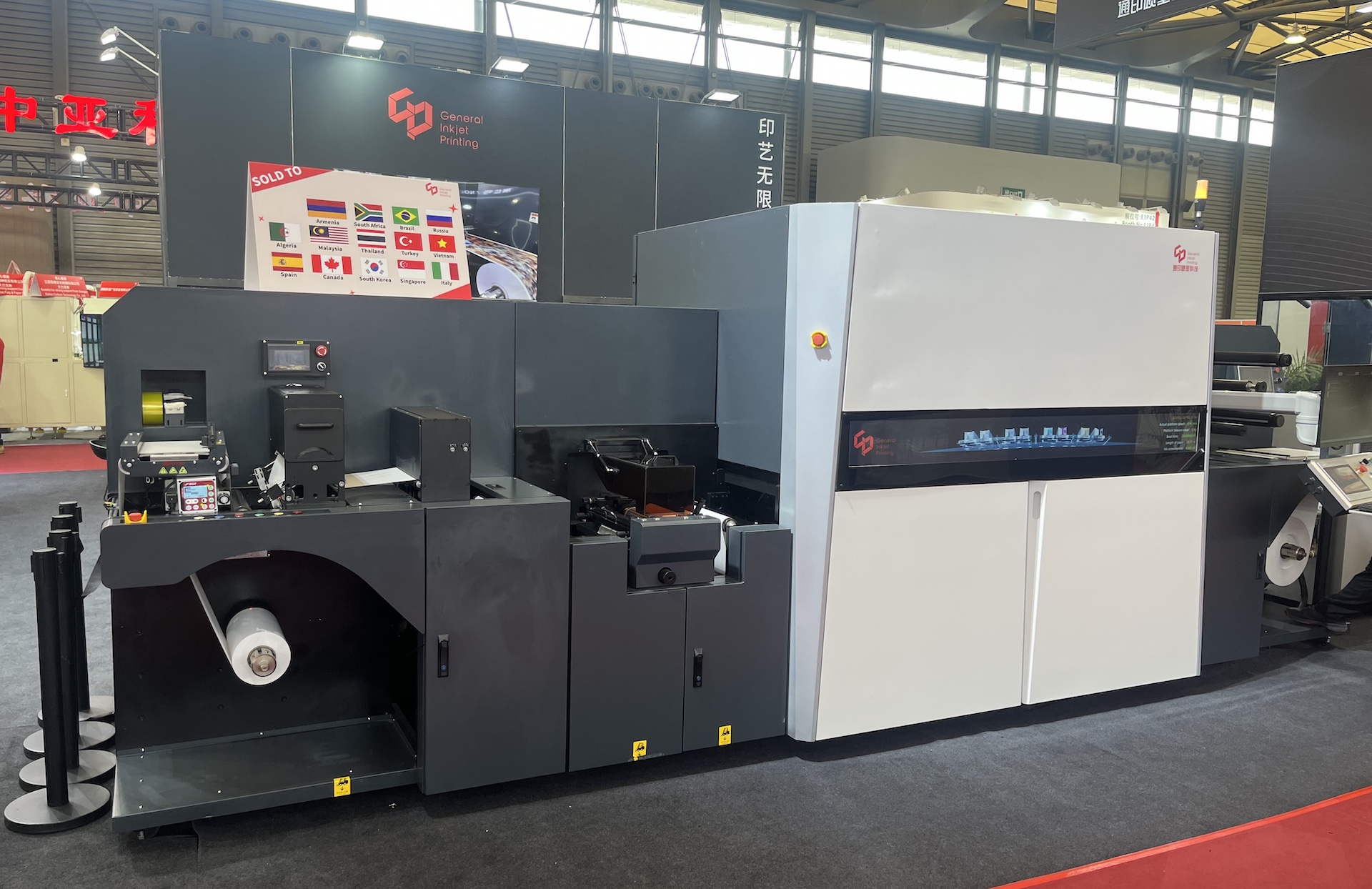
GIP (General Inkjet Printing Technology Co., Ltd.) demonstrated its three core products: the cost-effective Label Smart series, the professional Label Ultra series, and the Falcon mobile digital printing platform.The compact Label Smart series offers a CMYK + double white configuration.The Label Ultra series features a new 1,200 dpi printhead and a printing speed of 75 m/min. This series supports up to eight color channels and has modular add-ons, such as varnishing and foil stamping.The Falcon series was developed in collaboration with Spande, a flexo press manufacturer. The Falcon digital engine is a movable unit that can be installed on existing flexo lines, enabling converters to combine digital and flexographic printing processes.
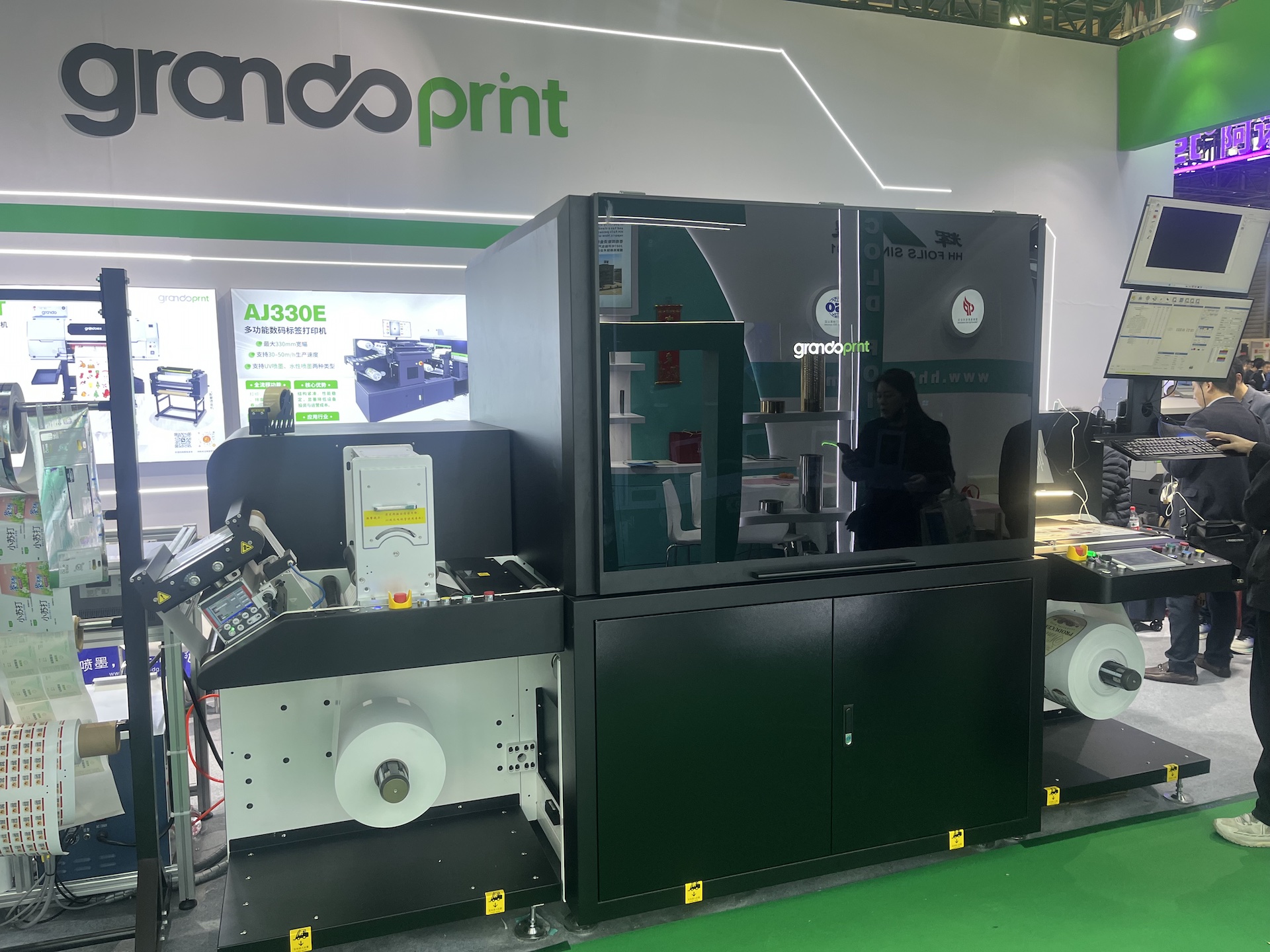
Grando Print (Nanjing Grando Digital Technology Co. Ltd), with a history in large-format and textile printing, debuted its entry into the high-speed digital label press market, unveiling its GR350S UV digital inkjet label press and AJ330E multifunctional digital label printer. The GR350S has a maximum print width of 350 mm and a speed of 20–50 m/min. It is equipped with Epson S3200 printheads for CMYK+W printing. You can add an additional printheads for spot varnish.
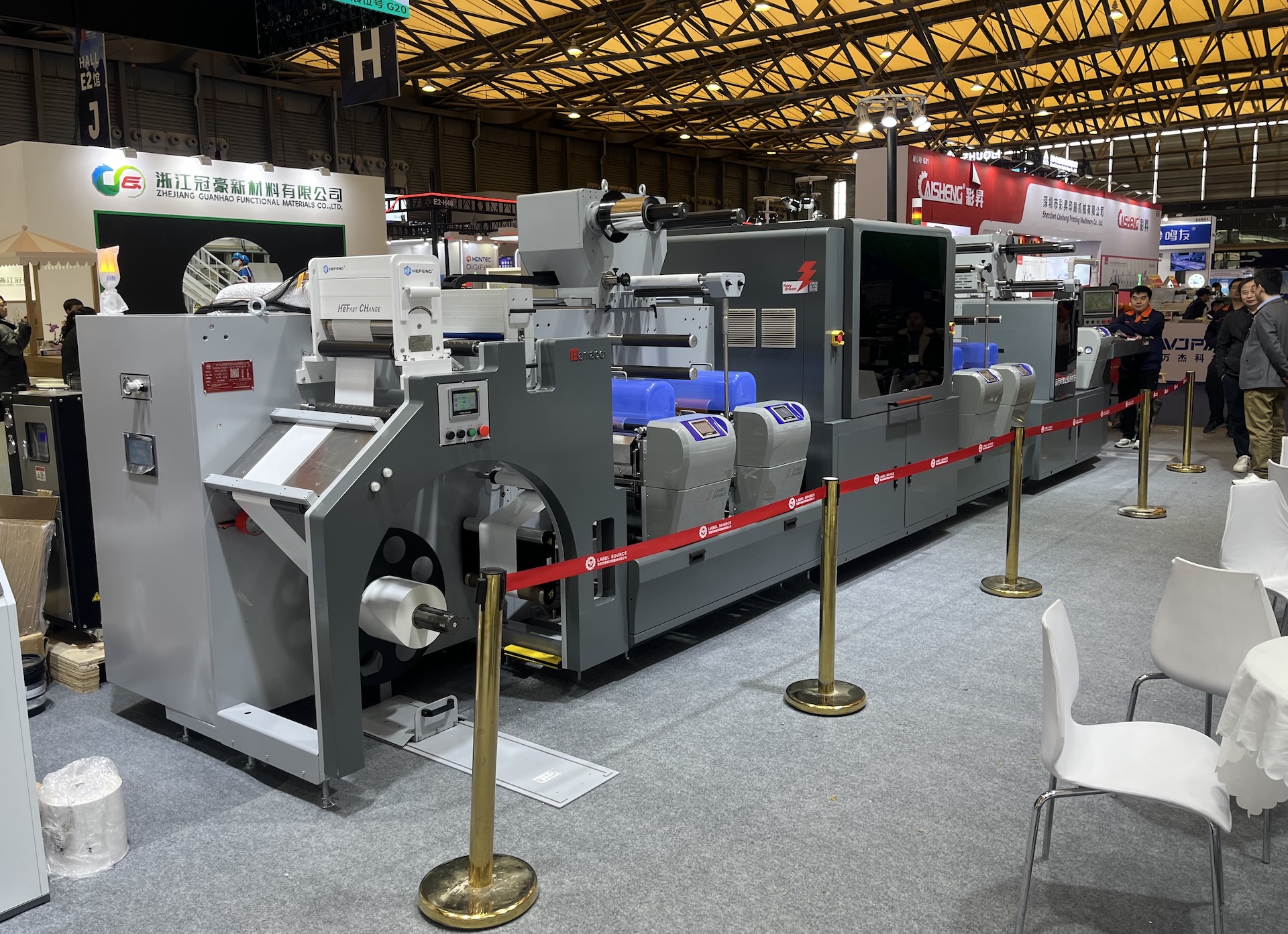
HanLabel (Shenzhen Hanglobal Digital Solutions), a joint venture with flexo press specialist Label Source, presented its LabStar 330S hybrid press and standalone LabStar 330HD. The LabStar 330HD is equipped with Kyocera KJ4A-EX1200-RC 1200 dpi printheads and operates at speeds of up to 80–120 m/min.
The hybrid press has a dedicated digital embellishment unit with Ricoh printheads that can produce 3D embossed varnish effects. Available conventional technology modules include cold foiling, high-gloss or matte flexo varnishing, and semi- or full-rotary die-cutting. The press has multiple flexo stations and non-stop unwinding, rewinding, and matrix removal capabilities. The LabStar utilizes the Fiery Impress DFE thanks to the partnership between HanGlobal/Hanlabel and Fiery, LLC.
Haotian (Yu Tian Guangzhou Machinery Manufacturing Co., Ltd.) showed the entry-level PRPC 330 UV, an all-in-one digital label press that prints CMYK with an optional White. The fifth-generation hybrid press, the HTS330-9C, can have up to nine colors. It uses Kyocera 1200 dpi print heads and can print at speeds of up to 80 m/min. The press has a flexo unit before the digital printing module to apply the primer.
Thanks to its modular design, the press can accommodate additional finishing modules after the printing unit. For digital spot UV and cold foiling, customers can choose to install a Kyocera 600 dpi or a Xaar 720 dpi printhead.
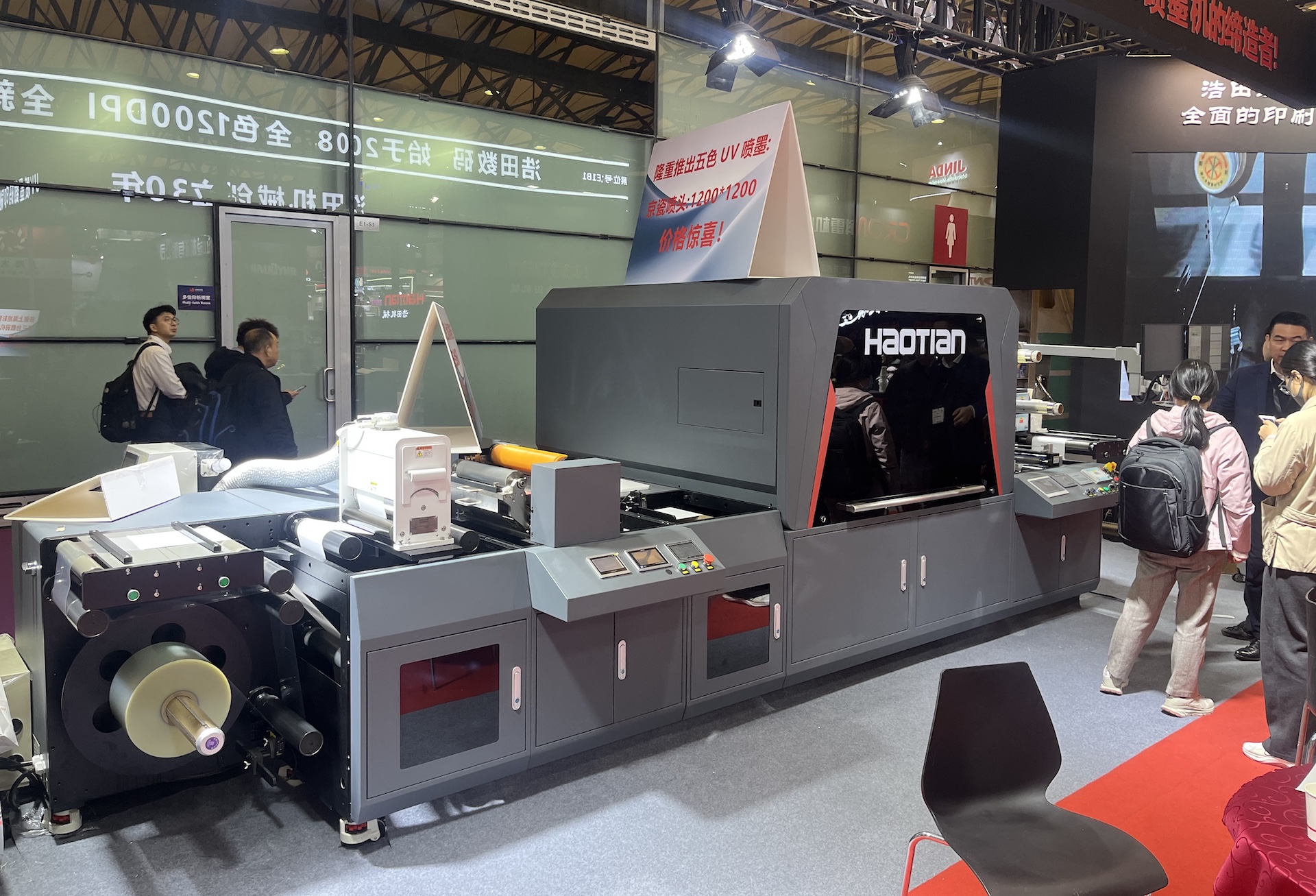
Pulisi (Guangzhou Pulisi Technology Co.,) exhibited its flagship modular Aobead DPIM-330F UV hybrid UV label press, which is available with a printing width of up to 520 mm. It can have front flexo modules for primer or coating, dual-station digital cold or hot foiling, digital varnish (including 3D embossing effects), as well as rotary die-cutting, lamination, and slitting modules.
Another press on display was the compact DSMART-220/220Pro. The 220Pro version offers a resolution of 1,200 x 1,200 DPI and can reach production speeds up to 150 m/min. Apart from that, Pulisi promoted a water-based flexible packaging press, the WD-790, which is tailored specifically for flexible packaging. With a resolution of 1,200 DPI, a CMYK+W+W configuration, and speeds of up to 60 m/min., the press can handle PET/BOPP substrates ranging from 12 to 80 microns and coated paper from 80 to 350 g.
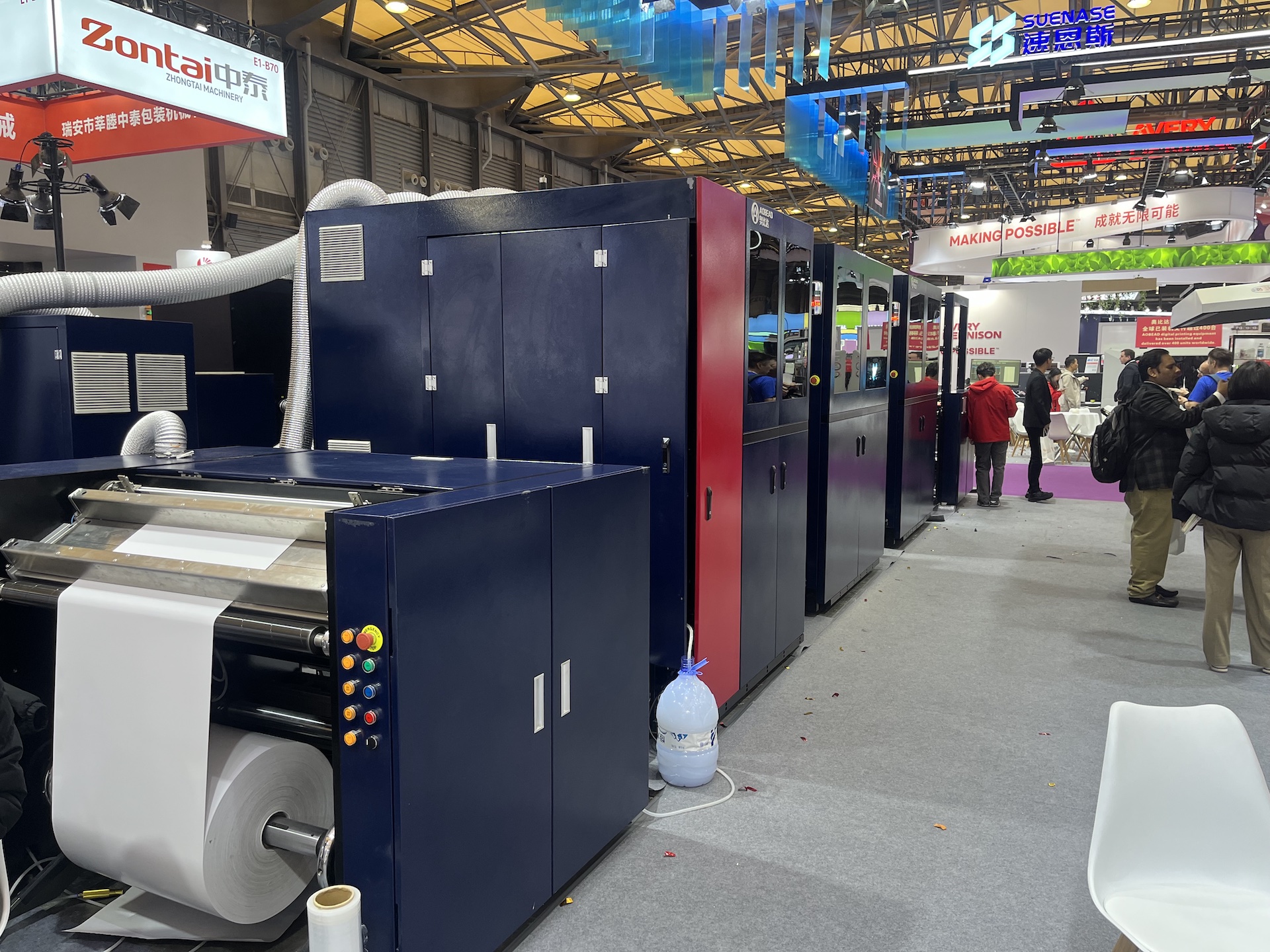
Shanghai UPG Group demonstrated the LQ-MD UV330 multi-pass UV inkjet press combining printing, laminating, cutting, and slitting functions. It is equipped with four Epson i3200-U1 printheads and supporting CMYK + White + Varnish. It is 330 mm wide and has a printing speed of approximately 0.8–1 m/min. in high-resolution scanning mode.
Another model on display was the LQ-MD 320HD, a digital water-based dye ink press with a resolution of up to 1200 x 1200 dpi and a maximum speed of 48 m/min.
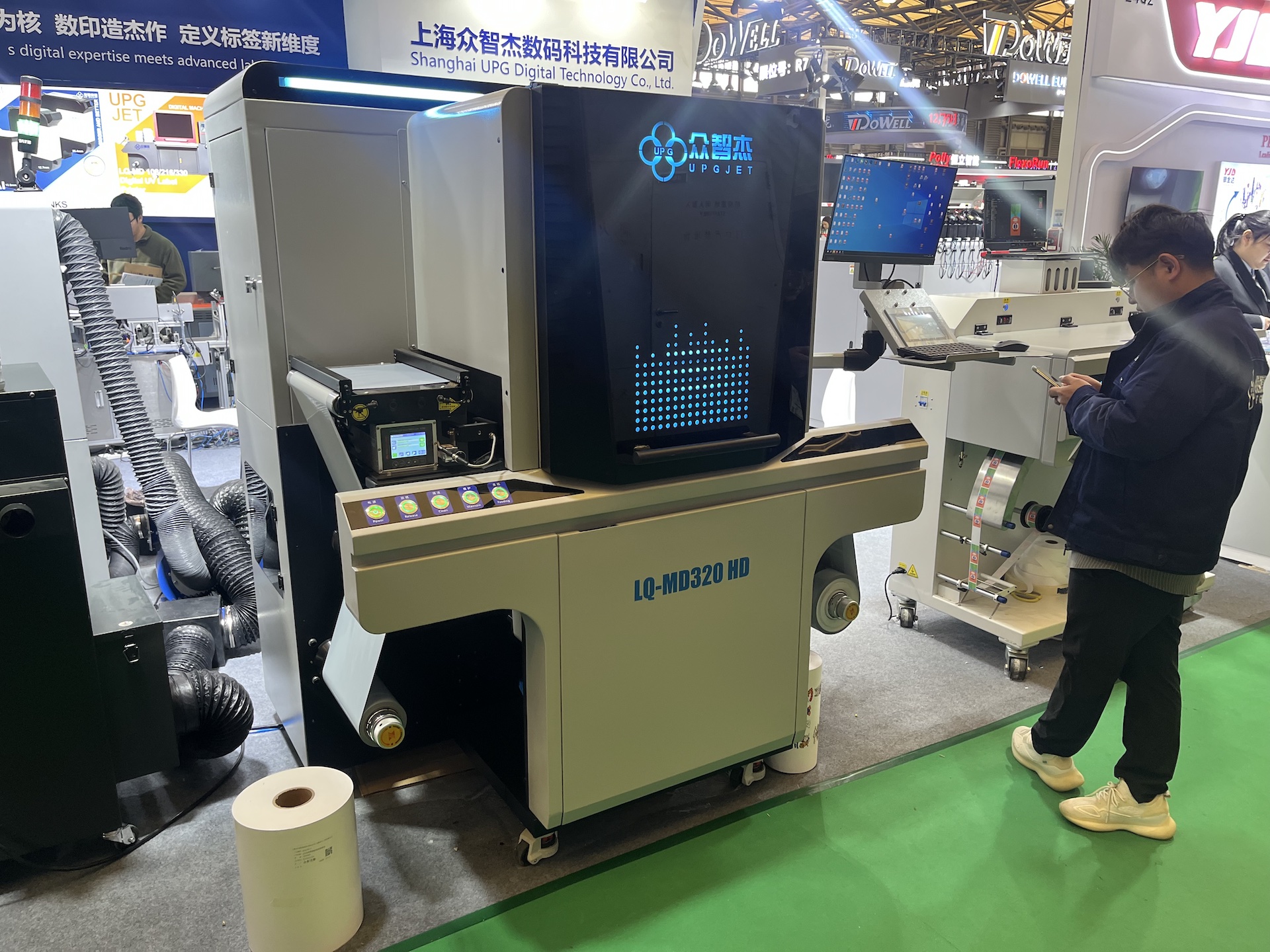
Weigang (Zhejiang Weigang Machinery Co., Ltd., a well-known manufacturer of flexo and rollfed offset presses, launched two UV inkjet presses at Labelexpo Asia 2025: the WG S350 Ultra and the entry-level WG S230 UV press. The WG S350 Ultra is equipped with a Kyocera KJ4A-1200RC and can print at speeds of up to 75 m/min. at 1200 x 1200 dpi. The WG S230 utilizes Epson S3200 U1/U3 printheads and can reach a maximum speed of 60 m/min. at 600 x 600 dpi. Both models have a standard CMYK + White configuration, and optional varnish and spot colors (Pantone) are available.
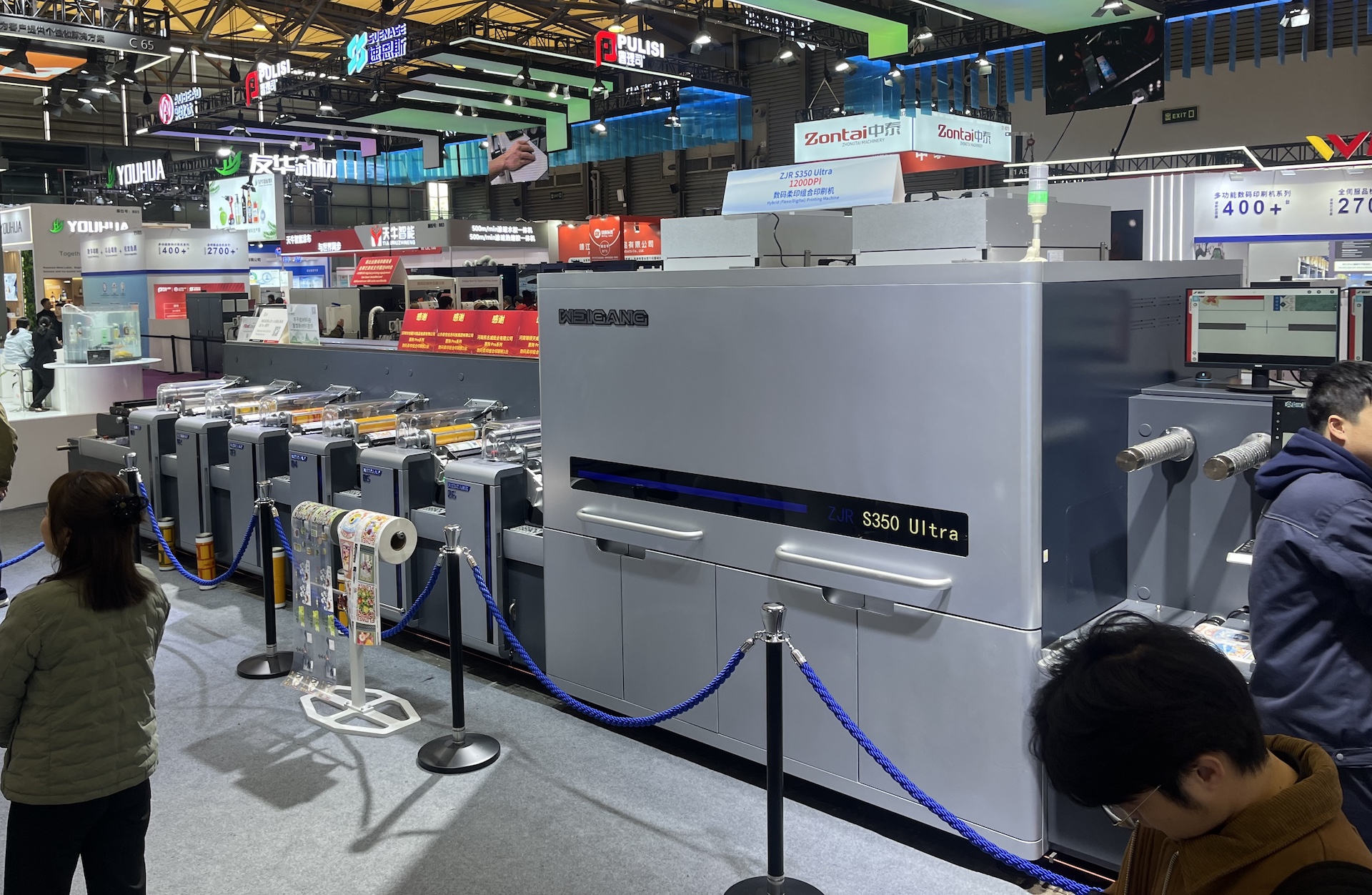
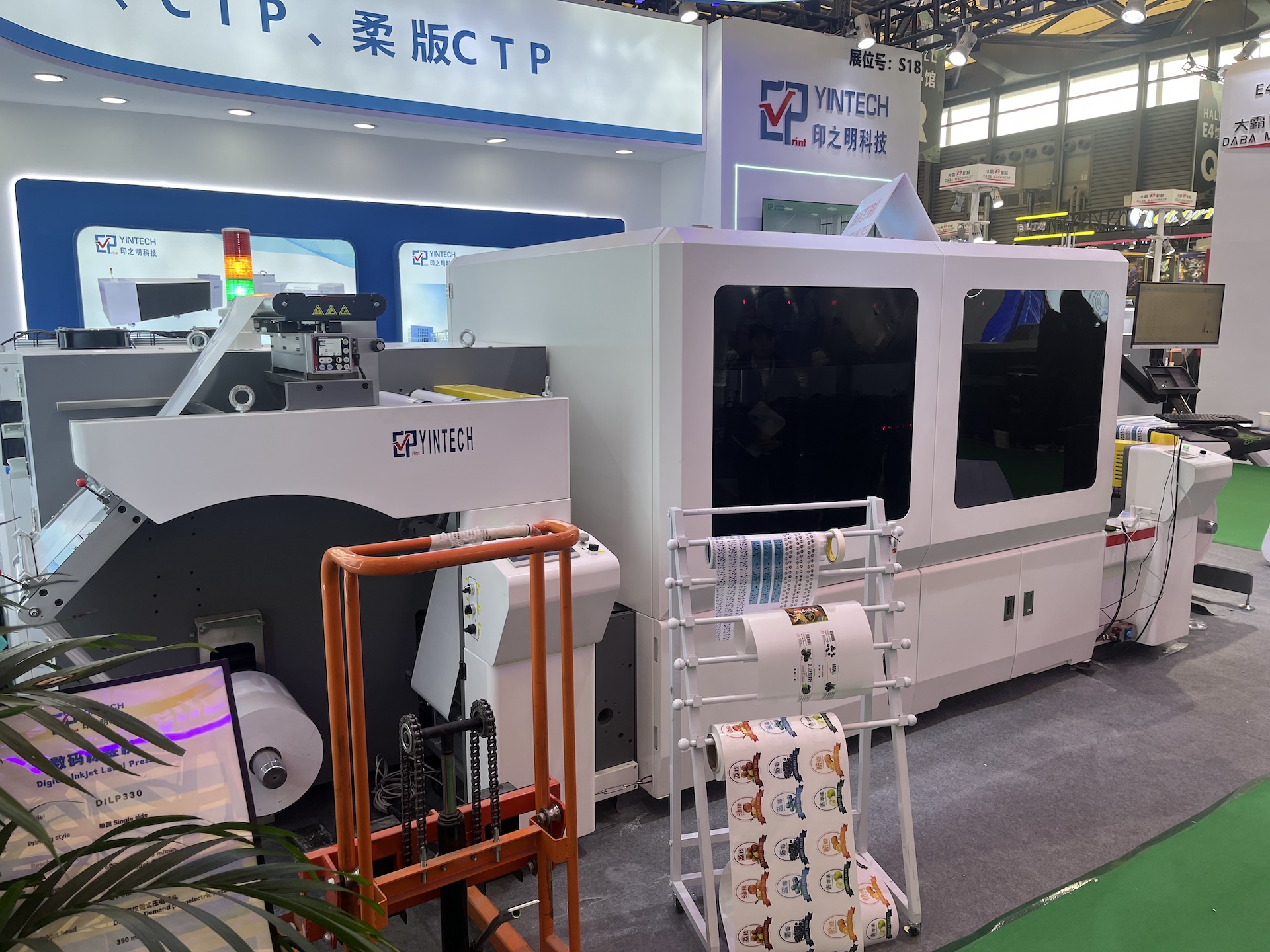
Yintech Group (Shenzhen Yintech Co., Ltd.) showcased its modular digital inkjet label press, the DLP 220/330, with printing width 216/330 mm. It prints CMYK + double W (orange, green, violet, and varnish are optional). The press uses 600 dpi Kyocera print heads and prints at speeds of up to 50 m/min. Coating, varnishing, and hot foiling are available options.
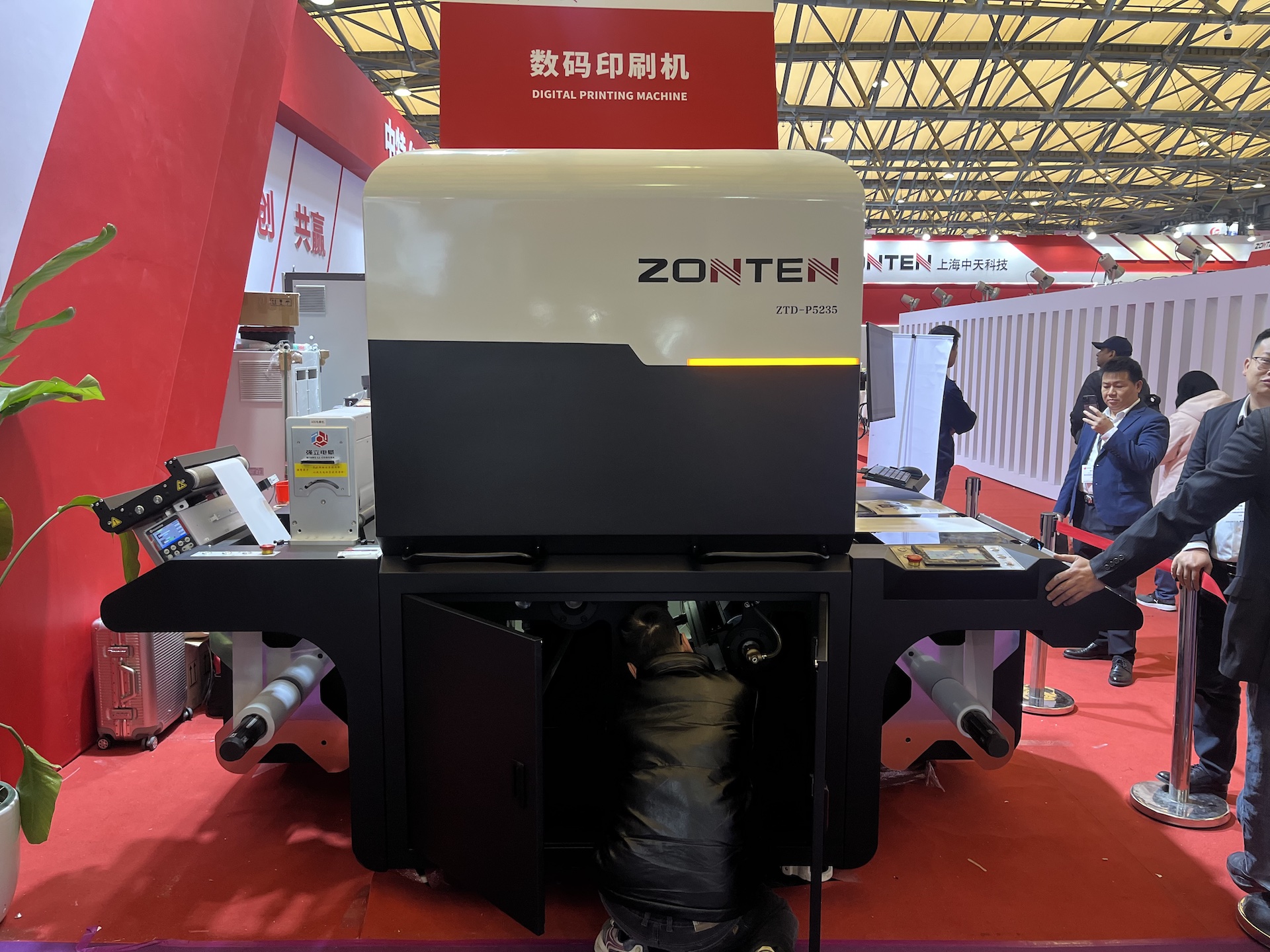
Zonten (Zhejiang Zhongte Machinery Technology Co., Ltd.), well-known for manufacturing semi-rotary offset printing presses, flexo presses, and postpress equipment, showcased the ZTD-P5235 label press. This compact, five-color (CMYK +W) digital UV inkjet press has a maximum web width of 235 mm. It is positioned as an entry-level or secondary press for converters who need to add digital capacity without making a high initial investment. The press is available as a standalone machine or as part of a hybrid system with conventional flexo units for inline coating or varnishing.
According to the International Data Corporation (IDC), the market size for digital packaging and label printing machines in China reached 830 million renminbi (RMB) (approximately US$120.14 million) in the first half of 2025, representing a year-on-year increase of 9.3%. Due to its speed and substrate versatility, inkjet technology is growing faster than toner-based systems, with a projected compound annual growth rate (CAGR) of 14.25% through 2031. Facing economic challenges, many small and medium-sized enterprises are shifting from laser printers to more cost-effective inkjet alternatives.
Thanks to the stable growth of the digital label market, more and more manufacturers are entering the market, intensifying competition. Many vendors have started focusing on overseas markets to achieve greater profit margins. Chinese-made inkjet label presses have become more mature and the value proposition of inkjet presses from China is becoming increasingly compelling. Leading manufacturers quickly adapt to the latest high-resolution printheads, such as those from Kyocera and Epson, as well as advanced DFE and color management from well-known companies.
As usual, Chinese OEMs enter these markets through local distributors. For example, the collaboration between the Italian company Fornietic and Hanglobal has resulted in 11 installations, including standalone solutions and hybrid configurations. Pulisi claims to have sold more than 400 machines, 40% of which to clients overseas. Nesil Makina, a Turkish dealer of Flora, reported its first five label press sales within the past year.
More than 50 Chinese-manufactured inkjet label presses have been sold in Russia over the past four years, following sanctions imposed on Russia by Western economies.
Chinese inkjet come in at a competitive price and the development speed in China is very quick. Many different options or variants typically offered, including the choice of printing heads. This allows potential customers to buy “à la carte” system that fits their exact needs. The cost of Chinese-made ink could also be attractive. For the best printing quality, however, many vendors are selling rebranded inks from well-known international suppliers like Fuji, Siegwerk or Toyo Ink.
Although the performance gap with European and Japanese brands is narrowing, several challenges remain. Some of these challenges include ensuring long-term stability under heavy workloads, extending component lifespan and enhancing DFE/RIP features. Customer support, service networks, spare parts logistics, and the availability of trained technicians are also in need of special attention.
Overall, as export ambitions grow, the trajectory is positive, and we will likely see more inkjet label presses from China entering the Western market.