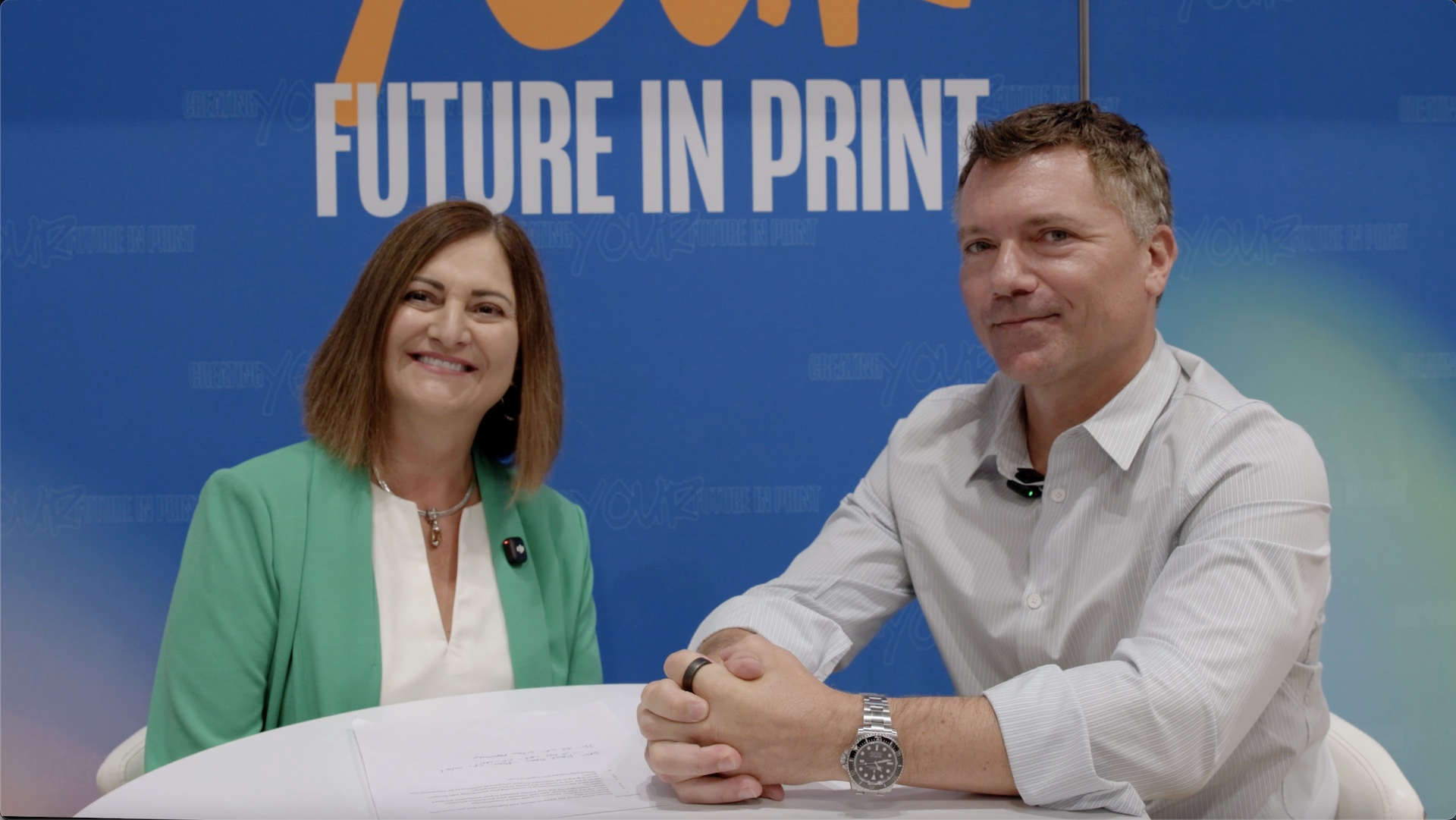
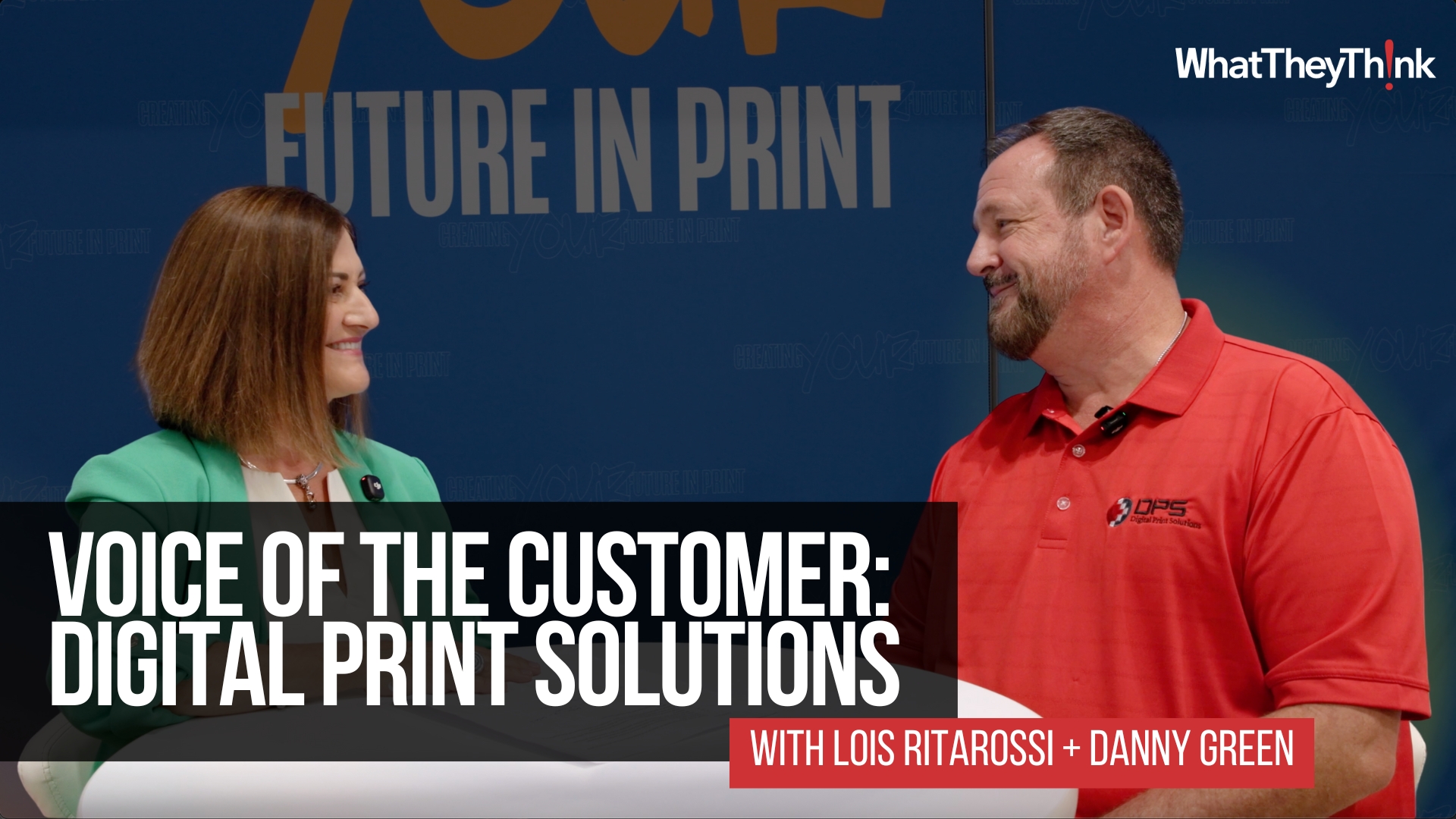
(Watch Lois Ritarossi’s video interview with Danny Green here.)
The PRINTING United show floor and conference sessions hummed with conversation about AI, automation, data-driven communications, and next-generation inkjet systems. I had the opportunity to speak with Danny Green, Sales Solution Manager at Digital Print Solutions (DPS), Screen Americas’ newest dealer partner, which is offering their commercial print customers new inkjet solutions. DPS is focused on enabling their customers to embrace digital first, rethink workflows and partner deliberately to unlock the next wave of growth.
Recognizing the Disruption: From Commodity to Value-Added
Green explained that DPS’ customers are operating in an environment where traditional print volumes are being squeezed by digital alternatives and shorter runs. “Clients are demanding faster turnarounds, personalization, and multi-channel output,” he said. They realize that staying in the commodity offset world is no longer sufficient. Instead, DPS began positioning production inkjet as a value enabler.
“That shift happened when we saw the hardware evolve—but more importantly when workflows and finishing caught up with press speed,” Green noted. He emphasized that inkjet had to be part of a larger ecosystem: digital composition, variable data, finishing automation, and intelligent scheduling—all to deliver on the client expectation of “yes” and “now.”
Partnering for Success: Choosing the Right Technology and Ecosystem
When DPS evaluated inkjet systems, Green said they considered criteria beyond speed and throughput: reliability, service, operator training, and future readiness. “We needed a partner who looked past the spec sheet and helped us shape the business case,” Green explained. “Service uptime, remote monitoring, consumable cost trends—all of those matter.” The result: DPS is now offering commercial printers Screen Americas next-gen rollfed inkjet solutions. Continuous-feed inkjet enables a broad shift in capabilities rather than a narrow replacement of existing equipment.
Realizing Operational and Market Benefits
Green described several tangible results. First: reduction in manual touchpoints. Second: run-length flexibility. “With inkjet, our customers can now respond to 1,000-piece personalized runs and scale to 50,000 without changing platforms—something they couldn’t do five years ago.” Third: time to market. Aggressive SLAs with 24 to 48-hour turnarounds are now realistic.
For a print operation often constrained by makeready, finishing bottlenecks, and staffing, inkjet’s flexibility opened new business lines: on-demand collateral, direct mail with highly customized messaging, and variable data-driven applications. Green observed: “Because customers running continuous-feed inkjet can turn things around faster—and more accurately—they are winning work they didn’t even quote before.”
Elevating the Business Model: Beyond Print-Only
A key part of Green’s message is that it’s not just about printing—it’s about communication. DPS is positioning Screen’s inkjet solutions as they assist customers with improving workflow and adding value to existing print applications.
Green added that inkjet technology has changed the sales conversation: from machine-first to strategy-first. “When the conversation starts with a specific press, you get boxed in. When it starts at the customer’s business challenge, inkjet becomes an enabler.”
Future-Proofing: Workflow, Data, and Finishing Integration
Green does not view inkjet as a one-time investment but as a platform. He emphasized that to fully harness the return, finishing and workflow automation must be part of the offering to meet end customers’ needs for time to market. In his view: “We must enable our customers to bridge composition, data integration, job scheduling and finishing automation. That’s what turns the press into a growth machine rather than an operational cost.”
Green’s advice for print and mail managers:
- “Start with the business case—not with the machine. Ask: ‘What new business can we win if we had inkjet and integrated finishing?’ Then work back to equipment.”
- “Make sure your team is ready. Training, maintenance, culture, and operational discipline matter more than the fastest speeds.”
- “Don’t treat inkjet as just another press. It’s a gateway into communication solutions, data workflows, and higher-value work.”
- “Partner with a supplier who understands your business, not just the machine specs. The real value comes from service, uptime, consumables stability, and support.”
Inkjet as the Foundation of Growth
Green was unambiguous: “Inkjet is the foundation for the next era of print and mail. It’s not just faster, it’s different. It demands different thinking, different workflows, different markets.” For DPS, inkjet does not solve all problems—but it unlocks growth opportunities, supports high-value work and moves the culture from reactive to strategic.
With the right investment, mindset and partner, print operations can re-invent themselves. For managers and leaders in commercial print and mail operations, the takeaway is clear: inkjet isn’t just a technology upgrade, it’s a business transformation opportunity.